Over the past decade, we have seen the media place blame for our changing climate on cattle. Scientific evidence does not support this claim though for cattle in the United States.
Cattle produce a lot of methane gas, primarily through enteric fermentation and fermentation of their manure. Methane is a powerful greenhouse gas that, along with nitrous oxide, carbon dioxide and some other compounds in the atmosphere, create a blanket around our planet. This is good; without this atmospheric blanket, the earth would be too cold for us to survive. The current problem is that concentrations of these gases in the atmosphere are increasing, which is thickening our blanket.
Greenhouse gases and the atmosphere
The methane that cattle produce is part of a natural carbon cycle that has been happening since the beginning of life on our planet. Through photosynthesis, carbon dioxide is extracted from the atmosphere and fixed as carbohydrates in plant material. Cattle consume and digest these carbohydrates, where some of the carbon is transformed to carbon dioxide and methane gases that are respired back to the atmosphere. This methane is oxidized in the atmosphere through a series of reactions, transforming that carbon back to where it started as carbon dioxide in the atmosphere.
In contrast, when we burn fossil fuels, we are taking carbon that has been stored in the earth since pre-historic times and converting it to “new” carbon dioxide released to the atmosphere. For every gallon of fuel consumed, about 20 pounds of carbon dioxide are created and released to the atmosphere. We are releasing this gas more rapidly than it can be absorbed in our oceans and soils. Thus, we are observing a rather rapid increase in atmospheric carbon dioxide concentration, and the effect of this change will be with us for 1000s of years. Whereas cattle are part of a natural cycle with short-term impact, burning of fossil fuels has a more permanent impact.
Cattle numbers and greenhouse gas emissions
We must also consider the number of cattle and their productivity. Cattle numbers in the United States have been stable or declining for many years. Beef cow numbers peaked in 1975, and the current number is similar to that maintained in the early 1960s. Dairy cow numbers are the lowest they have been in over 100 years.
We also have to consider that modern cattle are getting larger and more productive. They consume more feed and produce more methane per animal, but they are also more efficient producing more meat or milk per unit of feed consumed. Considering cattle numbers and these increases in productivity and efficiency, methane emission from cattle in the United States has not increased over the past 50 years.
This is recent history; what if we look further back? Ruminant wildlife were prevalent in North America before European settlement. Although there are not accurate numbers for the buffalo, elk, deer, and other ruminants on the continent at that time, estimates are available. Based upon those estimates, these animals produced methane in the range of 50% less to 25% more than the current population of cattle, other farm ruminants and wildlife. This indicates that cattle today are not contributing a substantial increase in the methane emissions from U.S. lands compared to pre-settlement times.
So what might be increasing methane concentration in the atmosphere? Global cattle numbers are increasing. Methane is also released during the extraction, refining, and transport of fossil fuels. This methane also oxidizes in the atmosphere to form carbon dioxide, but this is not part of a natural cycle. Like the combustion of fuels, this removes carbon stored in the earth to create new carbon dioxide in the atmosphere with very long-term effects.
Can cattle be part of the solution?
The fact remains that cattle produce a lot of methane. This methane is essentially wasted energy escaping the rumen. Reducing this waste by increasing the efficiency of the rumen may provide a substantial benefit by producing more meat or milk with less feed consumed. Dietary changes can reduce enteric methane production, and feed supplements are being explored to improve feed efficiency and reduce emissions.
Depending upon the cost of dietary changes and supplements, these interventions may provide economic benefit to the producer. In addition, there is the possibility of claiming carbon credits for this reduction. Companies and other institutions desiring to reduce their carbon footprint may be willing to pay cattle producers to use these mitigation practices. This is largely in the future for now.
So, although cattle in the United States are not causing an increase in global warming and related climate change, they may become part of the solution. Reducing any source of greenhouse gas emission will benefit our planet.
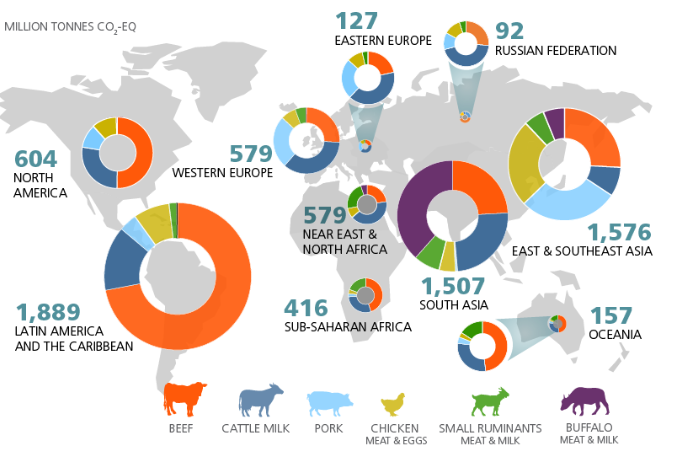
Belching bovines are a primary culprit when it comes to greenhouse gas emissions. Farmed livestock are responsible for 14.5% of all emissions related to human activity, and cows make up by far the largest proportion of that.
Although vegan diets are on the rise in countries like the UK and US, and meat alternatives are increasingly available, cattle farming is still widespread.
Image: FAO
So attention has turned to putting a cork in the volume of methane cows produce, by targeting their gut microbes.
Researchers looked at more than 1,000 cows on farms throughout Europe, and found they had a large proportion of their gut bacteria in common. By inoculating calves with targeted probiotics, the scientists suggest the mix of microbes could be altered, and the volume of methane produced limited. By eliminating the worst-offending gut bacteria, emissions could be cut in half, they say.
Livestock production around the world.
Image: FAO
Environmentally friendly cows?
The researchers say the gas-causing bacteria in cows’ digestive systems are linked to their genetic make-up. Longer-term, this could mean some of the most problematic microbes could potentially be eliminated by selective breeding.
Previous studies have suggested mixing seaweed into cattle feed could also be a way to cut the volume of methane produced. And it might also help cows grow bigger and stronger. However, there are still questions about how this might work in reality: growing seaweed on the scale necessary is likely to be problematicand environmentally damaging in itself.
Failure to mitigate the effects of climate change is one of the primary threats facing the planet, according to the World Economic Forum’s Global Risks Report. And methane is one of the biggest causes of the problem, after the more commonly discussed carbon dioxide.
Given the pure number of cows in the world, farmed for beef and milk, intrepid scientists have spent a lot of time investigating their burps and belches.
But unfortunately, it would seem these aren’t the only bovine emissions we need to concern ourselves with – cattle urine is also a climate offender. It releases nitrous oxide, another harmful gas, particularly in poor-quality pastures, new research has demonstrated.
The entire food system needs to change, researchers say. Image: By nima hatami on Unsplash
To feed 9 billion people by 2050, and keep planet Earth from overheating, will mean massive and radical food changes – and not just in the way food is grown.
To contain global temperatures to no more than 2 °C above the average for most of human history will require humanity to change its diet, contain its appetite and reform the entire system of food production and distribution.
This is the verdict of the latest study of the challenge set in Paris in 2015, when 195 nations promised to limit global warming – driven by profligate use of fossil fuels and by the conversion of forest, grassland and wetlands into commercial use – to “well below” 2 °C by 2100.
Researchers report in the journal Sustainability that they looked at 160 studies and analyses of global agriculture and food systems and most closely at the world’s smallholders and markets that sustain as many as 2.5 billion people, mostly in the developing world.
Agriculture, together with forestry and changes in land use, accounts for a quarter of all the carbon dioxide, methane and oxides of nitrogen that fuel global warming.
Just on its own, the action of growing grain, fruit and vegetables or feeding grazing animals accounts for no more than 12% of global warming, but a third of all the food that leaves the farm gate is wasted before it arrives on the supper table.
The researchers see reductions in food loss as a “big opportunity” that will benefit farmers and consumers as well as reduce emissions. A more challenging problem is to change global appetites: the meat and dairy business accounts for about 18% of all human-triggered emissions, counting the clearance of forests and the impact of changes in the way land is used to feed the demand for meat, milk, butter and cheese.
“This means reducing emissions by stopping deforestation, decreasing food loss and waste, reducing supply chain emissions and rethinking human diets, if we really want to get on track to that target.”
“The global health benefits from climate policy could reach trillions of dollars annually, but will importantly depend on the air quality policies that nations adopt independently of climate change,” they write in the journal Nature Communications.
And Mark Budolfson of the University of Vermont, one of the authors, said: “We show the climate conversation doesn’t need to be about the current generation investing in the further future. By making smart investments in climate action, we can save lives now through improved air quality and health.”
The concept of a carbon budget is dead simple: figure out how much CO2 humanity can pump into the atmosphere without pushing Earth’s surface temperature beyond a dangerous threshold
The concept of a carbon budget is dead simple: figure out how much CO2 humanity can pump into the atmosphere without pushing Earth’s surface temperature beyond a dangerous threshold (AFP Photo/PATRIK STOLLARZ)
More
Paris (AFP) – The concept of a carbon budget is dead simple: figure out how much CO2 humanity can pump into the atmosphere without pushing Earth’s surface temperature beyond a dangerous threshold.
The 2015 Paris climate treaty enjoins the world to set that bar at “well below” two degrees Celsius (3.6 Fahrenheit) in order to avoid an upsurge in killer heatwaves, droughts and superstorms made more destructive by rising seas.
Last year, the UN’s climate science body concluded this already hard-to-reach goal may not be ambitious enough.
Only a 1.5C cap above pre-industrial levels, for example, could prevent the total loss of coral reefs that anchor a quarter of marine life and coastal communities around the globe, the Intergovernmental Panel on Climate Change (IPCC) said in a landmark report.
But calculating exactly how much CO2 — produced mainly by burning fossil fuels but also deforestation — we can emit without busting through either of these limits has been deceptively hard to calculate.
Indeed, scientific estimates over the last few years have differed sharply, sometimes by a factor of two or three.
“The unexplained variations between published estimates have resulted in a lot of confusion,” Joeri Rogelj, a lecturer at Imperial College London, told AFP.
To help clear up that muddle, Rogelj and colleagues set out to solve the carbon budget puzzle — or at least make sure that everyone is reading from the same page.
This seemingly academic exercise, published Wednesday in the journal Nature, has huge real-world repercussions.
“The trillion-dollar question is how much of a carbon budget do we have left?”, Rogelj said.
– Wild cards –
About 580 billion tonnes, or gigatonnes (Gt), of CO2, if we’re willing to settle for a 50 percent chance of capping global warming at 1.5C, according to the October IPCC report, for which Rogelj was a coordinating lead author.
At current CO2 emission rates — 2018 saw a record 41.5 Gt — that budget would be exhausted in less than 14 years.
The CO2 allowance for a coin-toss chance of holding the rise in Earth’s temperature to 2C is more generous, about 1,500 Gt, and would last roughly 36 years.
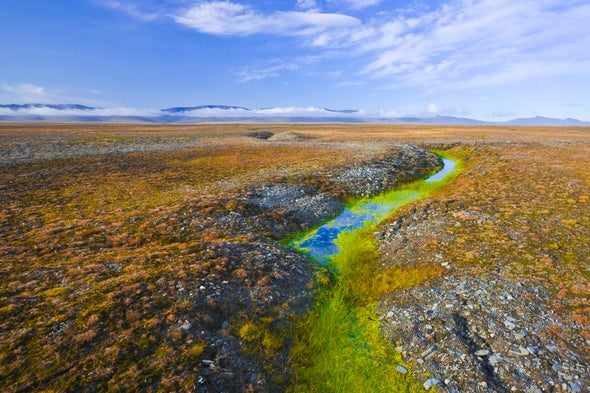
As temperatures rise in the rapidly warming Arctic, scientists are growing more and more concerned about the region’s permafrost—the carbon-rich, frozen soil that covers much of the landscape. As permafrost warms up and begins to thaw out, microbes in the soil may release large quantities of both climate-warming carbon dioxide and methane into the atmosphere, potentially worsening the effects of climate change.
Researchers are carefully monitoring the natural emissions from permafrost in the Arctic. And in recent years, they’ve also begun designing their own experiments aimed at investigating the way the frozen soil might react to future climate change.
They’re finding that even a little bit of warming may cause permafrost to release significantly higher levels of greenhouse gases into the air.
New results from one of these studies, published yesterday in Proceedings of the National Academy of Sciences, suggest that the microbe communities are the key. Warming can alter the types of organisms that live and thrive in the frozen soil, favoring microbes that tend to produce more methane and carbon dioxide.
The new study relied on experiments from a special research site in Alaska, where scientists have designed a way to manipulate the natural landscape to investigate the effects of rising temperatures. They’ve built special fences that allow snow to pile up deeper on the ground, forming a kind of insulation and causing the permafrost below the surface to warm up. Permafrost at the experimental sites was around a degree Celsius warmer than nearby sites that hadn’t been insulated.
The research site—known as the Carbon in Permafrost Experimental Heating Project—provides a unique opportunity to simulate the effects of future climate change. In a laboratory setting, it might be more difficult to exactly reconstruct the natural landscape, making scientists less sure of their results.
For the new study, the researchers conducted special forms of genetic sequencing to determine how microbe communities changed in the warmer plots. The shifts were apparent after less than five years of elevated temperatures.
In shallower layers of the soil, they found an increase in microbes that produce more carbon dioxide. And in deeper layers, they found an increase in microbes that produce larger amounts of methane, an even more potent greenhouse gas. At the same time, methane emissions from the experimental sites also increased.
The methane-producing microbes are a particular concern, the researchers note. Both carbon dioxide and methane have a warming effect on the climate—but if a greater proportion of the soil’s greenhouse gas emissions shift to methane, the stronger of the two gases, then the permafrost’s effect on the climate could be even more powerful than scientists currently anticipate.
The study provides experimental support for scientists’ ongoing fears about thawing permafrost. Throughout the Arctic, researchers are finding that large swaths of frozen soil are steadily heating up, sometimes faster than scientists had previously predicted.
The research also underscores a growing scientific interest in the links between climate change and the world’s tiniest organisms.
Just last month, a group of more than 30 scientists jointly published a statement warning of the many ways that climate change may affect microbe communities, and the ways that microbes may in turn affect the progression of global warming.
In addition to permafrost, they pointed to changes in microbe communities that affect the ocean’s carbon uptake and the marine food web, lead to algae blooms, alter the growth of vegetation, influence agricultural production, and contribute to the spread of infectious diseases.
The statement “documents the central role and global importance of microorganisms in climate change biology,” the authors write. “It also puts humanity on notice that the impact of climate change will depend heavily on responses of microorganisms, which are essential for achieving an environmentally sustainable future.”
Reprinted from Climatewire with permission from E&E News. E&E provides daily coverage of essential energy and environmental news at www.eenews.net.
Trump announced plans to slash the size of Bears Ears national monument in Utah. Photograph: Andrew Cullen/Reuters
Donald Trump is set to hail his administration’s “environmental leadership” on Monday in a speech in which he is expected to declare the US a world leader on the issue.
But since taking office two and a half years ago, the US president has been at the helm of an administration that has pursued numerous cuts in environmental protections and last year saw a rise in greenhouse gases of 3.4% – the biggest rise in emissions since 2010.
He has also regularly publicly aired his doubts over the existence of climate change – previously calling it a “hoax”, suggesting that the climate could “change back again” and falsely claiming it was a phenomenon invented by China.
A report by the State Energy and Environmental Impact Center at New York University’s school of law published in March said the Trump administration had “set its sights on watering down or outright repealing a half-dozen health and environmental rules critical to the health and welfare of all Americans as well as the planet”.
Here are five of the biggest environmental setbacks under Trump:
1) Departure from the Paris climate agreement
In June 2017, less than five months after his inauguration, Trump announced his plan to pull the US out of the Paris climate agreement. He told an audience outside the White House: “I was elected to represent the citizens of Pittsburgh, not Paris”. He claimed the agreement, signed by the US and nearly 200 countries in 2015, promising to cut greenhouse gas emissions to keep global heating below 2C, unfairly disadvantaged the US and negatively impacted jobs and factories.
2) Shrinking national monuments and animal protections
Trump attracted broad criticism in December 2017 when he announced plans to slash the size of two national monuments in Utah. Bears Ears was cut from 1.5m acres to 228,784 acres and Grand Staircase-Escalante almost halved from approximately 2m acres to 1,006,341 acres – marking the biggest elimination of public lands protection in America’s history. In August 2018 officials announced plans to allow more mining on the land and to sell some of it off – despite previously vowing not to. The following month, the administration announced plans to remove key provisions from the Endangered Species Act – prompting conservationists to warn it could put vulnerable plant and animal species in more danger.
Emissions spew from a coal-fired generating station in Newburg, Maryland, on 10 October 2017. Photograph: Mark Wilson/Getty Images
3) Rollback of the Clean Power Plan
Advertisement
The Environmental Protection Agency is in the process of finalizing plans to dismantle the Clean Power Plan, an Obama-era rule intended to cut emissions from power plants and encourage them to move towards natural gas and renewable power. The regulations, which were announced in 2015 and had the backing of hundreds of businesses, were billed at the time as the “biggest step that any single president has made to curb the carbon pollution that is fueling climate change”.
4) Cuts to clean water protections
The Trump administration plans to remove protections from thousands of America’s streams and millions of acres of wetlands, which is feared will harm wildlife and enable pollution to enter drinking water. Under the proposal, fewer waterways would require permits to pollute – including agricultural runoff and industry waste. Currently, protected waterways provide drinking water to approximately 117 million people.
5) More methane
In September 2018, the Trump administration announced its plans to repeal rules that aim to restrict methane leaks on public and tribal lands. The Obama administration tried to cut leaks by forcing oil and gas companies to capture methane (a key gas involved in global heating), update technology and arrange to monitor leaked gas. But the Department of the Interior has branded the rule “flawed” and “unnecessarily burdensome on the private sector”.
Underneath the lazy demeanor of a cow is a complex digestive system that transforms grass into the complex carbohydrates cows need to live. A byproduct of that digestion is methane—a lot of methane—one of the most potent greenhouse gases found on Earth.
Though methane stays in the atmosphere for less time than carbon, it’s highly effective at trapping heat. The EPA estimates around 25 percent of methane in the U.S. comes from cows.
Reducing those methane emissions is a major goal for environmentalists trying to mitigate the impacts of climate change, and new research indicates that they may be able to achieve that goal by altering the genetic makeup of common cows.
Some microbes inside cows more actively contribute to producing methane than others. A new study in the journal Science Advances shows that many methane-producing microbes are inherited, and by selectively breeding cows without those inherited traits, scientists think they’re one step closer to engineering a more environmentally friendly cow.
Get more of the inspiring photos and stories we’re known for, plus special offers.
By signing up for this email, you are agreeing to receive news, offers, and information from National Geographic Partners, LLC and our partners. Click here to visit our Privacy Policy. Easy unsubscribe links are provided in every email.
It’s a prospect that makes scientists hopeful. Meat and dairy consumption have been on the rise for the past decade, and many countries are scrambling to feed growing populations while simultaneously reducing emissions.
What 1,000 European cows can tell us
In 2012 the European Union commissioned a team of more than 30 scientists to research the relationship between livestock and methane emissions.
They called their research project Ruminomics—ruminants are a category of animals like cows, buffalo, yaks, and sheep. The rumen is the first of four compartments found in a ruminant’s stomach, where grass is partially digested via fermentation before passing through the rest. Ninety-five percent of the excess methane is expelled via their burps.
It’s in the rumen that the methane production process begins. Bacteria produce hydrogen as they begin fermenting carbohydrates, and single-celled organisms called archaea combine that hydrogen with carbon dioxide to produce methane.
Scientists had suspected that a set of genes might be controlling this methane production, but it was unclear how they fit together.
You can think of it “like a triangle,” says study author John Wallace from the University of Aberdeen. “At the corners of the triangle you have three things: one is emissions, two is the rumen microbiome, and the third is the host animal’s genome. The aim of our study was to see how connected those were.”
They looked at Holstein cows on farms in the U.K. and Italy, as well as Nordic Red dairy cows in Sweden and Finland. Specialized tools were designed to collect samples by inserting a brass cylinder into a cow’s mouth and pulling fluid from the rumen where the scientists could see a pool of protozoa, fungi, bacteria, archaea, and DNA crucial to the experiment. Breath samples were also taken to measure how much methane cows were burping.
Pause
Unmute
Current Time 0:10
/
Duration 0:15
Loaded: 0%
Progress: 0%
Fullscreen
AD ENDS IN: 0:05
CLIMATE 101: AIR POLLUTIONWhat is air pollution? Learn how greenhouse gases, smog, and toxic pollutants affect climate change, and human health. SELECT FOOTAGE COURTESY OF NASA
Of each cow’s core microbes in the rumen, Wallace says their results identified which microbes were passed down from one generation to the next. Certain microbes like the succinovibrionaceae were common in cows that produced less methane.
Greener pastures for greener cows
“Our idea now is that since we know these organisms are heritable and interconnected, this can be a target for breeding animals with improved milk yields, lower emissions, or other properties that people might want,” says Wallace. “If we could inoculate young animals with a low-methane microbiome, we have every reason to believe that will persist throughout life, which will lead to animals producing much less methane.”
Kebreab said he was excited by the study’s results, and that it’s a good first step toward work that will still take years to practically execute. His own work has centered on how diet affects the amount of methane produced by cows. Last year he found that adding methane to their feed significantly reduces the emission.
Both Kebreab and Wallace said a big hurdle will be convincing farmers to let their cows be bred for low-emission traits, since farmers tend to select for money-making traits like milk production and size, but lower emissions wouldn’t have any direct financial benefit. In regions without emissions reduction targets, Kebreab said farmers would need additional economic incentive.
Wallace says selective breeding of lower-methane cows has already begun, and there have yet to be noticeable negative side effects.
Leading microbiologists have issued a warning, saying that not including microbes — the support system of the biosphere — in the climate change equation will have major negative flow-on effects.
Share:
FULL STORY
More than 30 microbiologists from 9 countries have issued a warning to humanity — they are calling for the world to stop ignoring an ‘unseen majority’ in Earth’s biodiversity and ecosystem when addressing climate change.
‘Scientist’s warning to humanity: microorganisms and climate change’ was published today in the journal Nature Reviews Microbiology. Professor Rick Cavicchioli, microbiologist at the School of Biotechnology and Biomolecular Sciences at UNSW Sydney, has led the global effort.
With their statement, the researchers are hoping to raise awareness both for how microbes can influence climate change and how they will be impacted by it — calling for including microbes in climate change research, increasing the use of research involving innovative technologies, and improving education in classrooms.
“Micro-organisms, which include bacteria and viruses, are the lifeforms that you don’t see on the conservation websites,” says Professor Cavicchioli.
“They support the existence of all higher lifeforms and are critically important in regulating climate change.
“However, they are rarely the focus of climate change studies and not considered in policy development.”
Professor Cavicchioli calls microbes the ‘unseen majority’ of lifeforms on earth, playing critical functions in animal and human health, agriculture, the global food web and industry.
For example, the Census of Marine Life estimates that 90% of the ocean’s total biomass is microbial. In our oceans, marine lifeforms called phytoplankton take light energy from the sun and remove carbon dioxide from the atmosphere as much as plants. The tiny phytoplankton form the beginning of the ocean food web, feeding krill populations that then feed fish, sea birds and large mammals such as whales.
Sea ice algae thrive in sea ice ‘houses’. If global warming trends continue, the melting sea ice has a downstream effect on the sea ice algae, which means a diminished ocean food web.
“Climate change is literally starving ocean life,” says Professor Cavicchioli.
Beyond the ocean, microbes are also critical to terrestrial environments, agriculture and disease.
“In terrestrial environments, microbes release a range of important greenhouse gases to the atmosphere (carbon dioxide, methane and nitrous oxide), and climate change is causing these emissions to increase,” Professor Cavicchioli says.
“Farming ruminant animals releases vast quantities of methane from the microbes living in their rumen — so decisions about global farming practices need to consider these consequences.
“And lastly, climate change worsens the impact of pathogenic microbes on animals (including humans) and plants — that’s because climate change is stressing native life, making it easier for pathogens to cause disease.
“Climate change also expands the number and geographic range of vectors (such as mosquitos) that carry pathogens. The end result is the increased spread of disease, and serious threats to global food supplies.”
Greater commitment to microbe-based research needed
In their statement, the scientists call on researchers, institutions and governments to commit to greater microbial recognition to mitigate climate change.
“The statement emphasises the need to investigate microbial responses to climate change and to include microbe-based research during the development of policy and management decisions,” says Professor Cavicchioli.
Additionally, climate change research that links biological processes to global geophysical and climate processes should have a much bigger focus on microbial processes.
“This goes to the heart of climate change, so if micro-organisms aren’t considered effectively it means models cannot be generated properly and predictions could be inaccurate,” says Professor Cavicchioli.
“Decisions that are made now impact on humans and other forms of life, so if you don’t take into account the microbial world, you’re missing a very big component of the equation.”
Professor Cavicchioli says that microbiologists are also working on developing resources that will be made available for teachers to educate students on the importance of microbes.
“If that literacy is there, that means people will have a much better capacity to engage with things to do with microbiology and understand the ramifications and importance of microbes.”
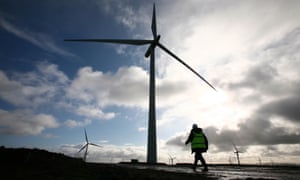
Whitelees windfarm in East Renfrewshire. Onshore wind is now cheap form but there are few new projects.
Photograph: Graham Hamilton/Epicscotland
The net zero carbon target will require sweeping changes to almost every aspect of British life, affecting our homes, food and the way we get around, as well as jobs and businesses across the board. Ministers hope there will be health benefits and improvements to the natural environment along the way, as well as helping to stave off the global climate emergency.
On some of the key areas where rapid change is needed, however, the signals so far have been mixed.
The UK must wean itself off gas. Photograph: Alamy
Phasing out coal use and bringing more renewable energy on stream are the key planks of the government’s strategy. Gas has become an increasingly important source of fuel in the last three decades, particularly for domestic heating, but to reach net zero it will have to be phased out too.
Advertisement
Support for renewable energy has been reduced and in some cases scrapped by the government. Onshore wind is now one of the cheapest forms of energy, but the withdrawal of subsidies and stricter planning rules have resulted in a dearth of new projects, though offshore wind is continuing to make progress.
The number of new solar installations plunged by 94% in April, according to Labour, after the government’s withdrawal of support. Chris Hewett, the chief executive of the Solar Trade Association, says: “Solar and wind are now the lowest cost forms of power generation in the UK, yet there is no route to market and government is continuing to subsidise the fossil fuels it is aiming to phase out.”
The number of jobs in renewable energy in the UK fell by about a third, from 36,000 in 2014 to 25,000 in 2017, according to the union Prospect.
Carbon capture and storage will be needed if we are to continue to use any fossil fuels. A long-running £1bn competition to build the first large-scale demonstration project for the technology was scrapped by George Osborne, but the government says that smaller projects not requiring taxpayer assistance could start to develop.
Controversially for some, the Committee on Climate Change says fracking is compatible with a net-zero target – but only if the gas produced displaces gas which would otherwise have been imported.
The government has slashed support for electric vehicles. Photograph: Scott Barbour/Getty Images
Advertisement
There are only about 210,000 electric vehicles in the UKAbout 1% of households use an all-electric car and about 2% hybrids, so tens of millions of cars will have to be replaced. Public transport, walking, cycling and ways of working that avoid travel will also be part of the solution.
Darren Shirley, the chief executive of the Campaign for Better Transport, says: “In the coming weeks the government should commit to restarting the programme of rail electrification, outlining further incentives to rapidly grow the market in electric vehicles in the UK, and start work on publishing a national strategy for buses with investment to grow the network and green the bus fleet to be published by 2020.”
The government has pledged to phase out diesel and petrol cars by 2040, but that target should be brought forward to 2030, according to the CCC.
The government has slashed support for electric vehicles, resulting in slower take-up. A lack of charging points is also hitting demand. There are about 8,500, but they are not spread evenly across the country, and some towns have few or none.
The CCC notes that the number of flights we take can continue to grow at least in the short term provided emissions come down in other areas, but campaigners say the decision to allow Heathrow’s expansion will blow away any chance of reducing the UK’s overall transport emissions.
Measures to insulate the existing housing stock were scrapped by the government. Photograph: Newscast/UIG via Getty Images
All newly built homes – of which the UK needs a record number to solve the housing crisis – were meant to be zero emissions from 2016 under plans from the Labour government in 2006. Those plans were scrapped in 2015 on cost grounds, and now there are few requirements for new-build houses to incorporate energy-saving features or renewable generation.
Government policy is key to making the built environment, which accounts for roughly 40% of the UK’s carbon footprint, more climate friendly, says Juliet Barfield, an architect at Marks Barfield. “The government must regulate if we want to bring down emissions.”
Repurposing and refurbishing existing buildings is nearly always preferable to demolishing and rebuilding, unless the existing construction is dangerous or of such poor quality it cannot be remedied. Concrete is one of the most commonly used construction materials, but associated emissions are sky-high. If the global concrete industry were a country, it would be the world’s third biggest emitter. Alternative materials from timber to wool are not widely used, and while innovators are working on ways to bring down emissions from concrete – using additives from coffee grounds to beetroot, for instance – it remains a significant source of carbon.
When new buildings are needed, a long-term vision – at least 50 years, for the lifetime of a building – and resisting cost-cutting temptations are also important. Barfield notes that high ceilings make buildings more liveable and easier to adapt in future, as well as having benefits in ventilation and light that help in designing ways to reduce energy use. BMany architects, however, come under pressure to reduce ceiling height to squeeze in more rooms, which limits the building’s future potential.
Less than 1% of Britain’s housing stock each year is newly built, and old homes tend to be leaky, draughty, costly to heat and inefficient. The government scrapped measures, such as the “green deal” policy, to insulate existing housing stock. Cash-strapped local authorities lack the resources to offer the insulation needed, even though it would save residents money and improve their health. The CCC recommends turning down heating to 19C in winter, but that may be of little comfort to people in unsuitable and uninsulated homes.
It is not clear what will replace the emissions trading scheme that covers heavy industry after Brexit. Photograph: Ben Birchall/PA
Advertisement
Heavy industries such as steel and chemicals currently come under the EU’s emissions trading scheme. Companies are awarded a certain number of allowances to emit carbon dioxide, some free and some paid for, and the most efficient can sell any spares to laggards, who are supposed to be spurred by the additional cost to mend their ways. The system has suffered many setbacks in its nearly 15 years of operation, but it is still one of the main ways in which industry is held to account for its contribution to global heating.
It is not yet known what, if anything, will replace emissions trading after Brexit, when manufacturers and other heavy industries are likely to come under increasing economic pressure if trade is disrupted. Manufacturingoutput has already come under pressure from the prospect of a no-deal exit, but losing manufacturing in the UK will not reduce carbon emissions overall, but will increase reliance on imports.
The UK must reduce its meat consumption Photograph: Alamy Stock Photo
More than a tenth of greenhouse gas emissions comes from agriculture and this proportion is rising as other sectors have been able to reduce emissions faster.
Growing more trees is the key plank of the government’s strategy on land use, along with better soil management. Michael Gove, the environment secretary, has set out plans for the UK’s first soil strategy since the “dig for victory” campaigns of the second world war. Soil is one of the world’s biggest carbon sinks, but can also be a major source of carbon depending on the farming techniques used.
Details of the strategy are still to come, and when it comes to tree planting farmers face some uncertainty. There are benefits under the common agricultural policy for planting new and maintaining existing trees, but these can be complex and hard to access. The government has promised £50m for rural tree planting in England to meet its target of 10m new trees across the countryside. The UK is one of the least wooded countries in Europe, with 10% of land forested in England, 15% in Wales, 19% in Scotland and only 8% in Northern Ireland.
Urban trees can also be a vital way of reducing carbon, cleaning air and reducing the impact of climate change by providing shade and health benefits. The government has put up £10m for 130,000 new trees in towns and cities in the next two years. There is no national policy, however, and some local authorities and landowners such as Network Rail have embarked on tree-cutting programmes without clear oversight of the environmental costs and benefits.
Our heavy consumption of meat is taking a toll on our health as well as the planet, and farmers can help reduce emissions from livestock, for instance by improving their diet so they produce less methane. Ultimately, however, meat consumption must be reduced. Moving from a high-meat to a low-meat diet would cut emissions by 35%, the CCC found.
Biodegradable food waste must not be sent to landfill, where it rots to produce methane, after 2025, according to the CCC. Food waste should be avoided as far as possible to bring down agricultural emissions. Unavoidable food waste, treated properly with anaerobic digestion, can be a source of natural gas to be used for heating or electricity generation, displacing fossil fuels.
Tim Benton, the dean of strategic research at the University of Leeds, says food will only increase in importance as a source of greenhouse gases. He says: “When you have reduced everything else – energy, transport, and so on – the thing you’re left with is food.”
A ‘just transition’
When the UK first made its “dash for gas”, it was in the context of closing coal mines and the aftermath of the miners’ strike of the 1980s. Hundreds of thousands of workers in traditional coal-mining areas lost their jobs and the devastation is still keenly felt across swathes of the UK. The recent and enduring memory of that loss and upheaval should act as a warning of how not to engineer a transition to a new form of economy, trade unions believe.
Sue Ferns, Prospect’s senior deputy director general, says: “We need a just transition for all the workers affected and this means we need to work proactively to ensure that the damage inflicted on coal communities in the 1980s is not repeated.”
A picture of a cow used for a research project in 2008 has been circulating on social media with a false claim that “fringe leftist[s] are now advocating for cow fart bags to capture farts as a way to help prevent ‘global warming.’”
Full Story
A cow used in an Argentine research project in 2008 has become the star of a misleading post on social media in 2019.
The cow, which is shown wearing an inflatable pink cylinder on its back, has had its pictureshared more than 35,000 times on Facebook with this text: “I wish this was a joke but fringe leftist [sic] are now advocating for cow fart bags to capture farts as a way to help prevent ‘global warming.’ You can’t make this stuff up folks.”
But that claim is made up.
The backpack was used to collect gas produced during the cow’s digestive process so that scientists could study the effect its diet has on the production of methane and other volatile organic compounds in ruminants that contribute to climate change. The backpack was connected to the cow’s stomach through a hole in its ribs, and was collecting what would have been burps, not “farts,” as the Facebook post claims.
But, most importantly, the backpack was not intended as a device to keep methane out of the atmosphere. Rather, it was used to help scientists study how cow’s digest what they eat.
The same researchers who worked on that project used a similar gas collection system a year earlier to study the methane produced in the digestion of dairy cows. That study, which lasted 28 days and included six cows, found that the addition of tannins (an additive derived from plants) to the cows’ diet led to a 28 percent decrease in methane production.
A later project by the same researchers, done in 2013, used the collection system to transform the methane into biofuel.
According to the Environmental Protection Agency, between 50 percent and 65 percent of methane emissions around the world come from human activity, including the use of livestock, and the impact on the global climate is 25 times greater than the impact of carbon dioxide over 100 years.
The agriculture sector was responsible for about 9 percent of total U.S. greenhouse gas emissions in 2017, according to the EPA.
Editor’s note: FactCheck.org is one of several organizations working with Facebook to debunk misinformation shared on social media. Our previous stories can be found here.
A photo caption claims: “I wish this was a joke but fringe leftist [sic] are now advocating for cow fart bags to capture farts as a way to help prevent ‘global warming.’ You can’t make this stuff up folks.”

 Print
Print











 Exposing the Big Game