A POLAR BEAR LOOKS FOR FOOD AT THE EDGE OF THE PACK ICE NORTH OF SVALBARD, NORWAY. CREDIT: WOLFGANG KAEHLER/LIGHTROCKET VIA GETTY IMAGES.
Rapid and “devastating” Arctic warming is now almost unstoppable, United Nations researchers warn in a major new report.
Unless humanity makes very rapid and deep pollution cuts, Arctic winter temperatures will rise 5.4° to 9.0°F (3° to 5°C) by 2050 — and will reach an astounding 9° to 16°F (5° to 8.8°C) by 2080 — according to a report by the U.N. Environment Program released Wednesday.
Even worse, the report, “Global Linkages: A graphic look at the changing Arctic,” warns that warming will in turn awaken a “sleeping giant” in the form of vast quantities of permafrost carbon. This carbon has been frozen in the permafrost for up to thousands of years, but as the atmosphere warms, the permafrost will thaw. This will release the trapped carbon, and trigger more planet-wide warming in a dangerous feedback loop.
As the report explains, warming in the Arctic is occurring at least twice as fast as warming across the planet as a whole, thanks to Arctic amplification. One reason for this amplification is that when highly reflective snow and ice melts due to higher temperatures, it is replaced by the dark blue sea or darker land, both of which absorb more solar energy than they reflect, leading to more melting.
THE ARCTIC WARMING AND SEA ICE FEEDBACK LOOP. CREDIT: NASA.
“Arctic amplification is most pronounced in winter and strongest in areas with large losses of sea ice during the summer,” researchers explain, so winter warming in the region is projected to rise three times faster than the world as a whole.
But as this feedback loop plays out, it also triggers another one: the thawing of the Arctic permafrost and the release of the carbon that it contains.
Thawing permafrost is an especially dangerous amplifying feedback loop because the global permafrost contains twice as much carbon as the atmosphere does today . The permafrost, or tundra, is soil that stays below freezing (32°F or 0°C) for at least two years. It acts like a freezer for carbon, but now humanity has decided to leave the freezer door open.
The thawing releases not only carbon dioxide but also methane — a far more potent greenhouse gas — thereby further warming the planet. And as the planet continues to warm, more permafrost will melt, releasing even more greenhouse gases in a continuous feedback loop.
“New evidence suggests that permafrost is thawing much faster than previously thought,” the report warns. Indeed, a recent study found that Siberian permafrost at depths of up to 30 feet warmed a remarkable 1.6°F (0.9°C) from 2007 to 2016.
The most dangerous climate feedback loop is speeding up
The U.N. report quotes the saying: “What happens in the Arctic does not stay in the Arctic.”
For instance, the Arctic’s rapid warming is weakening the jet stream, which leads weather patterns to stall, and that drives more extreme weather in this country, such as heavy precipitation on the East Coast and extreme drought on the West Coast.
And the quicker the Arctic heats up, the quicker the land-based Greenland ice sheet melts and the quicker sea levels rise. One 2017 study concluded that Greenland ice mass loss has tripled in just two decades.
But the authors of the U.N. report explain that simply meeting the initial emissions reduction targets in the 2015 Paris Climate Accord will not be enough to stop “devastating” warming and the loss of nearly half the permafrost this century. Those initial targets would not limit total warming to 2°C (3.6°F), which is why the agreement calls for ratcheting down those targets over time in order to keep warming “well below 2°C.”
So, to avoid accelerated warming, massive permafrost loss, ever-worsening extreme weather, and multi-feet sea level rise, the nations of the world must not only make deep cuts in CO2 emissions over the next decade, but also they must then keep ratcheting down global emissions to near zero around mid-century.
Scientists say Ocasio-Cortez’s dire climate warning is spot on
Yet, President Donald Trump is taking the country in the dangerously wrong direction by starting the process of withdrawing from the Paris agreement and rolling back domestic climate efforts.
What humanity needs to avert catastrophe are the kind of rapid emissions reductions envisioned in the Green New Deal, which aims for a carbon-free power sector by 2030 and the decarbonization of all other sectors as fast as technically possible.
Plans to reduce greenhouse gas (GHG) emissions by 30% per kilo of milk in the next decade have been developed by Arla Foods as part of its sustainability strategy.
Arla has a wide ranging plan to reduce its global emissions impact from dairy farming
Issues around the impact of dairy farming on the climate have consistently been one of the big topics for addressing climate change globally. A cow can produce around 70 to 120kg of methane each year – the equivalent of 2,300kg of CO2 – with the Food and Agriculture Organisation of the United Nations (FAO) stating the overall agriculture sector is responsible for 18% of global emissions.
Arla Foods aims to mitigate the issue of emissions from a dairy value chain comes by reducing a cow’s methane emissions through a series of techniques, such as optimised feed composition. Additionally, the food firm is working with its farmers to quantify and increase the carbon captured and stored in the soil.
According to a recent analysis from the FAO, global milk production has become more sustainable with a global average of 2.5kg CO2 per kilo of milk, but Arla farmers aim, on average, for 1.15kg CO2 per kilo or half of the global level.
The company has conducted 5,000 climate assessments on its 10,300 farms since 2013, and now is accelerating the work through the use of a digital documentation system where farmers can input data about their herd, milking system, feed, grazing, land use, and animal welfare. It claims to be one of the largest dairy farm benchmarking datasets in Europe.
Dairy farmer and chairman of Arla Foods, Jan Toft Nørgaard, said: “The climate assessment is highly motivating because it identifies your farms’ potential for CO2 reductions, which will often lead to cost savings.
“A next step is to include parameters that will indicate the farm’s impact on climate and environment. This will give us an opportunity to see in which areas we have the biggest potential, to identify best practice farms that we can learn from across our cooperative.”
Farming initiatives
The news follows a number of initiatives by farmers and agriculture firms to mitigate the impact on the environment of their businesses.
Additionally, last August, Northern Ireland-based dairy manufacturer Dale Farm announced it was now running one of its cheese manufacturing plants with 100% renewable energy after bringing a self-consumption solar farm online.
Rep. Alexandria Ocasio-Cortez spent plenty of air time explaining “farting cows,” as she defended her so-called Green New Deal on the premiere of Showtime’s “Desus & Mero.”
According to an initial outline of the measure, the freshman Democrat and Sen. Edward Markey (D-Mass.) said they “set a goal to get to net-zero, rather than zero emissions, in 10 years because we aren’t sure that we’ll be able to fully get rid of farting cows and airplanes that fast.”
The language was later changed to “emissions from cows.”
On Thursday night, comedy duo Desus Nice and The Kid Mero asked Ocasio-Cortez why she thought the initial reaction to the Green New Deal focused on bovine exhaust.
“In the deal, what we talk about, and it’s true, is that we need to take a look at factory farming, you know? Period. It’s wild,” Ocasio-Cortez said, according to Fox News.
“And so it’s not to say you get rid of agriculture, it’s not to say we’re gonna force everybody to go vegan or anything crazy like that. But it’s to say, ‘Listen, we gotta address factory farming. Maybe we shouldn’t be eating a hamburger for breakfast, lunch, and dinner. Like, let’s keep it real.’”
“Slow down,” Desus joked.
“But we have to take a look at everything,” the ultra-left-wing pol continued, “and what we need to realize about climate change is about every choice that we make in our lives, you know?”
The Democratic socialist also defended her call for a 70 percent marginal tax rate on incomes over $10 million.
“It really comes down to the question of, ‘Isn’t $10 million enough?’ Like, when does it stop?” she said. “At what point is it amoral that we’re building Jeff Bezos a helipad when we have the most amount of homeless people in New York City?”
Ocasio-Cortez rips media for reporting on her new luxury high-rise
Got beef? No assumptions on carbon emissions should be made before production maturity, warns lab meat innovator
21 Feb 2019 — A widely-publicized comparison of the greenhouse gases (GHG) produced by lab-grown and farm-raised beef suggests that the benefits of reducing methane, resulting from cattle, could in the long term be outweighed by increased CO2 levels. As a result, the involved Oxford University researchers have put forward that sustainable “labriculture” will depend on a large-scale transition to a decarbonized energy system and new tech. This study may at first sight come as a disappointment to proponents of lab-grown meat. But considering that the technology is still in its infancy, and that the world would benefit from more clean energy in general, could this be a moot point?
Mark Post, MD, Ph.D., Professor of Physiology at Maastricht University, a key figure in the development of lab-grown meat, warns that no assumptions about “any novel technology should be made before it reaches mature production,” and that also goes for the idea that culturing meat will lead to less GHG emission.
Still some years from large-scale commercialization, the lab-grown meat scene is progressing rapidly, both in terms of R&D and regulatory clarity. “Labriculture” – meat grown in the lab using cell culture techniques – has captured the industry and consumers’ attention for its promise of authentic tasting meat, without the need to raise, and ultimately slaughter, livestock.
Although not an inherent promise of lab-grown meat, environmental concerns have also been put forward as a reason for consumers to perhaps choose this type of meat instead of traditionally farm-reared sources, with agricultural greenhouse gas emissions currently responsible for around a quarter of current global warming.
Mark Post, MD, Ph.D., Professor of Physiology at Maastricht University and Co-Founder of Mosa MeatThe researchers found that although some projections for the uptake of particular forms of cultured meat could indeed be better for the climate, others could actually lead to higher global temperatures in the long run. Currently proposed types of lab-grown meat, they say, cannot provide a “cure-all” for the detrimental climate impacts of meat production.
Considering culture
Current estimates of the environmental benefits of lab-grown meat over farm-reared meat are based on carbon-dioxide equivalent footprints, the researchers note. This can be “misleading” because not all greenhouse gases generate the same amount of warming or have the same lifespan.
“Cattle are very emissions-intensive because they produce a large amount of methane from fermentation in their gut,” says study co-author Raymond Pierrehumbert, Halley Professor of Physics at the University of Oxford.
“Methane is an important greenhouse gas, but the way in which we generally describe methane emissions as ‘carbon dioxide equivalent’ amounts can be misleading because the two gases are very different. Per ton emitted, methane has a much larger warming impact than carbon dioxide, however, it only remains in the atmosphere for about 12 years whereas carbon dioxide persists and accumulates for millennia.”
Methane’s impact on long-term warming is, therefore, not cumulative and is impacted greatly if emissions increase or decrease over time, the researchers warn.
Sustainable labriculture depends on clean energy and new tech
To compare the potential climate impacts of lab-grown meat and beef cattle, the researchers examined available data on the emissions associated with three current cattle farming methods and four possible meat culture methods, assuming current energy systems remained unchanged.
The researchers modeled the potential temperature impact of each production method over the next 1,000 years. And while cattle was found to initially have a greater warming effect through the release of methane, the model showed that in some cases the manufacture of lab-grown meat may ultimately result in more warming.
This is because even if consumption of meat were entirely phased out, the warming from carbon dioxide would persist, whereas warming caused by methane would cease after a few decades.
“This is important because while reducing methane emissions would be good – and an important part of our climate policies – if we simply replace that methane with carbon dioxide it could actually have detrimental long-term consequences,” warns lead author Dr. John Lynch, part of Oxford Martin’s LEAP (Livestock, Environment and People) program.
The study also highlights that both cultured meat and cattle farming have complex inputs and impacts that need to be considered to fully appreciate their effect on the environment.
“The climate impacts of cultured meat production will depend on what level of sustainable energy generation can be achieved, as well as the efficiency of future culture processes,” Lynch concludes.
Future food security
Although widely reported as a potential thorn in lab-grown meat’s proverbial side, the study and the involved researchers are by no means dismissive of the potential of lab-grown meat to be beneficial in environmental terms. They do, however, emphasize the need for continued and expanded labriculture research and especially the development of ways to produce cultured meat as efficiently as possible.
Post, for his part, notes that there are “good reasons to assume three environmental advantages.”
The first is that lab-grown meat could lead to “less GHG through either less energy use (heavily depending on assumptions what the outcome is) or emission poor energy consumption.” Secondly, lab-grown meat would entail less water usage, and thirdly, less feedstock resources and so less land, important for future food security.
“These benefits are interrelated, which makes the modeling very complex. Less land use will, depending on alternative usage of the land, reduce CO2 emission and increase CO2 capture. Less water usage will reduce the need for energy consuming desalination strategies,” Post continues.
“The entire paper is not realistic about what clean meat production will entail at scale. For example, the study assumes current and worst-case energy production for clean meat, but since clean meat uses about 1 percent of the land required by livestock, that is not realistic.”
“Clean meat production will use a tiny fraction of the land required for livestock and that freed up land could be used for clean energy production and carbon sequestration. By freeing up so much land, clean meat production should be a significant net positive for climate change,” he asserts.
Consumer acceptance key Modeling specifics aside, addressing the environmental constraints to lab-grown meat could prove vital to successfully finding consumer acceptance.
“My expectation is that adverse environmental effects will easily outweigh other potential societal and personal benefits among consumers. The target group for cultured meat will not be willing to compromise with respect to sustainability,” says Wim Verbeke, Professor of Agro-food Marketing and Consumer Behaviour at Ghent University.
“Proven environmental benefits of cultured meat compared to conventional meat production are crucial because this constitutes a key promise and expectation in terms of societal benefits, and it is the issue that spontaneously raises doubt among consumers,” he explains.
“When comparing farm-reared meat and the concept lab-grown options, consumers perceive hardly any personal benefits (e.g. taste, nutrition, health), which is logical because of lack of personal experience with the product,” he notes.
“Therefore, societal benefits are crucial for future acceptance. These relate to ethical animal welfare benefits, global food security and a reduced environmental impact. There seems to be little uncertainty among consumers about the first two, but there are doubts among consumers about the latter,” Verbeke adds.
To this end, he puts forward that technological developments related to energy use and emission in the upscaling and industrial production, convincing life cycle analyses studies and scientific consensus about the environmental impacts of alternative meat production systems will be vital to convincing consumers.
Room for growth Since we are still a few years away in scaling up lab-grown meat to offer to the mainstream consumer, there is arguably time for the “labricultural” industry to invest in the technologies
“Culturing meat is a controlled system that has ample opportunities for further economization, both financial as resource-related,” Post notes. “As biotechnology and clean energy advance, cultured meat production will become more and more efficient, and thus help to address all of these pressing problems. Conversely, the efficiency gain in conventional meat production has been incremental and is biologically limited, especially in ruminants.”
The higher versatility, he states, of cultured meat production over conventional meat can be translated for instance into co-locating cultured meat production facilities with carbon-neutral energy sources.
“This is already being done by plant-based meat companies. For example, Turtle Island, the makers of Tofurky, has their production facility in the Columbia River valley, so all their power is renewable hydroelectricity. Companies such as Black and Veitch who have decades of experience building large-scale sustainable manufacturing plants are already involved doing forward-looking work with cultured meat companies, even before production has started to scale up.
“It is extremely important to look at individual variables like global warming, but one should also keep an eye on other benefits of cultured meat production over conventional meat production,” he emphasizes.
Such benefits include elimination of antibiotics use for food production, elimination of zoonoses by reducing intensity of livestock farming, and last but not least, the moral issues associated with livestock farming that will be under increasing scrutiny by consumers.
“Early LCAs such as this study are on the one hand very useful in emphasizing the areas where the technology has to develop, but they are also tenuous in the absence of an established industrial practice. This is obviously true for LCAs that are favorable for cultured meat as the ones that are more critical,” Post concludes.
Livestock are a leading source of the rise in methane levels. Photograph: Alamy
Dramatic rises in atmospheric methane are threatening to derail plans to hold global temperature rises to 2C, scientists have warned.
In a paper published this month by the American Geophysical Union, researchers say sharp rises in levels of methane – which is a powerful greenhouse gas – have strengthened over the past four years. Urgent action is now required to halt further increases in methane in the atmosphere, to avoid triggering enhanced global warming and temperature rises well beyond 2C.
“What we are now witnessing is extremely worrying,” said one of the paper’s lead authors, Professor Euan Nisbet of Royal Holloway, University of London. “It is particularly alarming because we are still not sure why atmospheric methane levels are rising across the planet.”
Methane is produced by cattle, and also comes from decaying vegetation, fires, coal mines and natural gas plants. It is many times more potent as a cause of atmospheric warming than carbon dioxide (CO2). However, it breaks down much more quickly than CO2 and is found at much lower levels in the atmosphere.
During much of the 20th century, levels of methane, mostly from fossil fuel sources, increased in the atmosphere but, by the beginning of the 21st century, it had stabilised, said Nisbet. “Then, to our surprise, levels starting rising in 2007. That increase began to accelerate after 2014 and fast growth has continued.”
Studies suggest these increases are more likely to be mainly biological in origin. However, the exact cause remains unclear. Some researchers believe the spread of intense farming in Africa may be involved, in particular in tropical regions where conditions are becoming warmer and wetter because of climate change. Rising numbers of cattle – as well as wetter and warmer swamps – are producing more and more methane, it is argued.
This idea is now being studied in detail by a consortium led by Nisbet, whose work is funded by the Natural Environment Research Council. This month the consortium completed a series of flights over Uganda and Zambia to collect samples of the air above these countries.
“We have only just started analysing our data but have already found evidence that a great plume of methane now rises above the wetland swamps of Lake Bangweul in Zambia,” added Nisbet.
However, other scientists warn that there could be a more sinister factor at work. Natural chemicals in the atmosphere – which help to break down methane – may be changing because of temperature rises, causing it to lose its ability to deal with the gas.
Our world could therefore be losing its power to cleanse pollutants because it is heating up, a climate feedback in which warming allows more greenhouse gases to linger in the atmosphere and so trigger even more warming.
See How Intelligent Storage Can Help You Find Valuable Insights Powered By AI-Driven Data Management. Check It Out.
In 2016, in Paris, nations agreed to cooperate to hold global temperature rises to 2C above preindustrial levels and, if possible, to keep that rise to under 1.5C. It was recognised that achieving this goal – mainly by curbing emissions of CO2 from fossil fuels – would always be difficult to achieve. Accelerating increases in a different greenhouse gas, methane, means that this task is going to be much, much harder.
This point was backed by Martin Manning of Victoria University of Wellington in New Zealand. “Methane is the gas … that keeps us to a 2C rise in global temperatures. And even more significantly, we do not really know why.”
If nothing can be done about this, he added, then even more cuts will have to be made in CO2 emissions. Continued increases in methane levels will only make this situation worse, he said.
This point was backed by Nisbet. “It was assumed, at the time of the Paris, agreement, that reducing the amount of methane in the atmosphere would be relatively easy and that the hard work would involve cutting CO2emissions.
“However, that does not look so simple any more. We don’t know exactly what is happening.
“Perhaps emissions are growing or perhaps the problem is due to the fact that our atmosphere is losing its ability to break down methane.
“Either way we are facing a very worrying problem. That is why it is so important that we unravel what is going on – as soon as possible.”
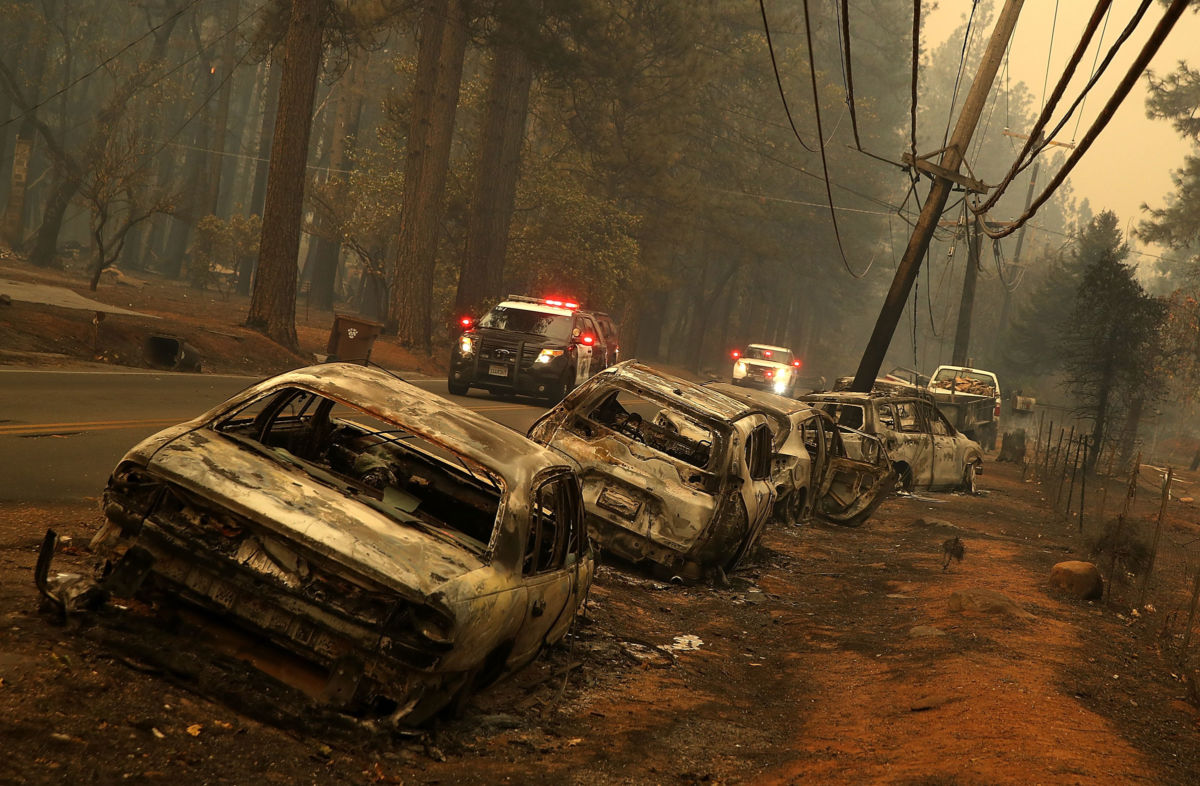
A line of burned out abandoned cars sit on the road after the Camp Fire moved through the area on November 9, 2018, in Paradise, California.JUSTIN SULLIVAN / GETTY IMAGES
The 20 warmest years ever recorded have been within the last 22 years, and the four warmest of those have been 2015, 2016, 2017 and 2018, according to the World Meteorological Organization (WMO). The WMO has stated that if these trends continue (and there is no reason to believe they won’t), global temperatures may rise from between 3-5 degrees Celsius (3-5°C) by 2100. The organization warned that if humans exploit all known fossil fuel reserves, “the temperature rise will be considerably higher” than even those catastrophic levels.
“It is worth repeating once again that we are the first generation to fully understand climate change and the last generation to be able to do something about it,” WMO Secretary-General Petteri Taalas announced in a recent WMO press release.
Yet even with this stark wake-up call, it may well already be too late, given that we are already living in the Sixth Mass Extinction. A study published earlier this year, conducted by an international team of researchers from 17 countries whose findings were published in Nature Geoscience, showed that global temperatures could eventually double those that have been predicted by climate modeling.
The vast majority of governments around the globe are responding in ways that range from laughable to pathetic, given the consequences that are upon us already.
Stay in the loop
Never miss the news and analysis you care about.
Your Email
2018 has been yet another year of records and alarming developments as runaway climate change continues apace. Here are ten significant climate-related phenomena from 2018.
1. Arctic Sea Ice
The Arctic sea ice is close to historic lows in both extent, volume, and mass. The annual minimum Arctic ice volume, based on observations (not projections), is following a trend that shows we should expect periods of an ice-free Arctic Ocean in the summer by 2023, and possibly sooner.
World-renowned Arctic Sea Ice expert Peter Wadhams predicted this during an interview with Truthout.
Warm temperatures have become the norm in the Arctic, so the now increasingly rapid loss of sea ice should come as no surprise. Some of the ground in the Arctic is not even freezing any more, even during the winter.
Militaries from around the world, particularly from the US and Russia, are racing to stake claims in the region and project their presences there in order to advantage of the fragile Arctic region for exploitation of oil and gas reserves, as well as those countries actively exploring shipping across the increasingly accessible region as the sea ice continues to melt away.
The loss of Arctic Sea ice will lock in several runaway climate feedback loops that will dramatically altar global climate, causing water availability and food-growing capacity to be severely diminished across large swaths of the planet.
2. Increasingly Warm Oceans
Earth’s oceans have already absorbed 93 percent of the warmth humans have generated since just the 1970s.
We continue pumping CO2 into the atmosphere, 25 percent of whichcontinues to be absorbed by the oceans, along with the heat the CO2 traps in the atmosphere.
2017 was the second warmest year ever recorded for the oceans, and according to NASA, the five hottest years ever recorded for the oceans have occurred since 2010. The oceans are thus becoming increasingly warmer and more acidic with each passing day.
And, according to the WMO, “For each 3-month period until September 2018, ocean heat content was the highest or second highest on record.”
And Australia’s Bureau of Meteorology warned this November the “chance of an El Niño forming in the coming months is 70 percent,” which would bring warmer than normal ocean temperatures.
3. Methane
One extremely worrying development in the Arctic came in the form of bubbling lakes. A report showed that large numbers of lakes across the region were leaking methane, a far more potent greenhouse gas than CO2.
In what is perhaps a harbinger of things to come, one lake in particular was found to be bubbling vigorously as methane from below escaped through the lake and into the atmosphere.
These lakes that are bubbling from methane being released from the thawing permafrost beneath them don’t completely freeze during the winters, which causes them release even more methane as the permafrost does not reach the cold temperatures it had prior to this phenomenon. Hence, another runaway climate feedback loop is born.
This distressing development comes on top of numerous other feedback loops in the Arctic that have already kicked in.
More bad news about methane came in the form of a report illustrating how large amounts of methane (up to 41 tons daily) were being released from a glacier in Iceland via its meltwater. This is an amount equal to the methane produced by more than 136,000 belching cows.
4. Wildfires
Wildfires, amped up by climate change, ravaged many regions of the world in 2018.
California saw its most destructive wildfire on record, surpassing the previous record set only the year before, as scores died from incineration that likely released radiation and toxic chemicals into the air in Southern California.
Wildfires across Canada’s British Columbia, as well as other parts of that country, were the largest ever for the second year in a row.
Wildfires across Queensland, Australia during November were unprecedented, given that the area is technically a rainforest, and it was springtime there.
Insects, and hence the global food web, are in crisis, according to several studies, one of which was published earlier this year.
A study published this October in the Proceedings of the National Academy of Sciences (PNAS) showed how massive the collapse of insects is, and that it is far more widespread that previously known. Climate change is implicated as the leading cause.
This comes on the heels of a study from last year showing a 76 percent decrease in flying insects in the past few decades in nature preserves across Germany. This was a dramatic uptick from a 2014 study by an international team of biologists which estimated in the previous 35 years the abundance of invertebrates like bees and beetles had decreased by 45 percent.
Everywhere long-term data on insects is available, particularly across Europe, the numbers of insects are plummeting.
“This study in PNAS is a real wake-up call — a clarion call — that the phenomenon could be much, much bigger, and across many more ecosystems,” David Wagner, an expert in invertebrate conservation at the University of Connecticut, told the Washington Post. “This is one of the most disturbing articles I have ever read.” He added, “I’m scared to death.”
Without these pollinators, which are being annihilated, the already beleaguered global food production system is in even greater danger of collapse.
6. A Broken Global Food System
The global food system is already broken, according to the 130 of the world’s science and medicine academies.
Tim Benton, a professor of population ecology at the University of Leeds who was involved in the large report, told the Guardian: “Whether you look at it from a human health, environmental or climate perspective, our food system is currently unsustainable and given the challenges that will come from a rising global population that is a really [serious] thing to say.”
Staggeringly, nearly one billion people went hungry last year. This number is guaranteed to climb, due to worsening climate impacts as atmospheric CO2 content continues to increase and the nutritional value of crops decreases as the result.
As Truthout reported earlier this year, two studies investigating corn and vegetables warned of an increasing risk of food shocks around the world, along with malnutrition, if climate change continues unchecked.
Both studies, published in the Proceedings of the National Academy of Sciences, showed how climate change will increase the risk of simultaneous crop failures across the planet’s largest corn-growing regions, as well as sapping nutrients from critical vegetables. For example, an increase of 4°C — which is essentially the current mid-range trajectory we are on to reach by 2100 — could cut US corn production nearly in half. Meanwhile, the likelihood of simultaneous crop failures for the four biggest corn exporters (US, Argentina, Brazil, Ukraine) suffering yield losses of 10 percent or greater increases from 7 percent at 2°C warming to 86 percent at 4°C.
Another study warned of how climate change already poses a serious threat to the nutritional value of crops, and a lack of action could well have major global implications for both food security and global health. The same study showed that global crop yields could be reduced by nearly one-third with a 4°C temperature increase.
The country has been physically, socially, and psychologically devastated as tens of thousands of people have struggled to survive without electricity, health care or basic services long after the reconstruction of the island should have taken place.
Another example of this in the last year was Florida’s panhandle, portions of which were obliterated by Hurricane Michael. Government aid was slow to arrive.
Meanwhile, increasingly intense and extensive heat waves, coupled with broadening drought, and climate change forecasts showing more of all of these, revealed that countries across North Africa and along the Persian Gulf will become literally uninhabitable in the not-so-distant future. Rising seas infiltrating water tables, and thus contaminating many people’s drinking water source, are also going to be a large factor in this equation.
8. Great Barrier Reef
A record heat wave in Queensland, Australia, in November shattered the previous high temperature record by a stunning 5.4°C. The heat wave alarmed scientists, raising fears of another bleaching event that could further weaken the already beleaguered Great Barrier Reef, the largest coral reef in the world.
The heatwave increased already above-average marine temperatures, driving up the likelihood of the coral once again dying off in the overheated waters.
Marine heatwaves in 2016 and 2017 already killed off and/or damaged large regions of the Great Barrier Reef, as scientists worried about the fact that without breaks in the annual heatwaves, the coral will not have a chance to recover.
The scientific consensus shows that coral reefs typically need a minimum of 10-12 years to recover from bleaching events. However, climate change is causing the bleaching events to occur on nearly an annual basis now.
Hence, a 2011 NOAA report warning that the planet could lose most of its coral reefs by 2050 is looking increasingly like an over-conservative projection.
Additionally, with scientific institutions already warning the odds are high that another El Nino could occur next year does not bode well for Earth’s already overheated oceans.
9. UN Report: Only 12 Years Left to Limit Warming
A landmark UN report released in October served as an imminent warning that if governments fail to act swiftly and dramatically (and within the next dozen years), droughts, flooding, and increasingly extreme heat waves will increase drastically.
In the Paris Climate Change Agreement, global governments pledged to try to keep warming within a limit of 1.5°C above pre-industrial levels, in order to prevent increasingly catastrophic impacts.
In the recent UN report, experts stated that without urgent and unprecedented changes, meeting the 1.5°C limit would be impossible.
The report pointed out several important thresholds: just an extra 0.5°C of warming beyond 1.5°C would essentially completely annihilate corals and dramatically accelerate the loss of what is left of the Arctic sea ice, and the proportion of the global population exposed to water stress would be at least 50 percent higher.
Additionally, at 2°C warming, extremely hot days would become much more common, there would be more forest fires and the number of heat-related deaths would increase. Plants would be nearly twice as likely to lose half their habitat than they would at 1.5°C, and sea level rise would increase by at least 10cm.
10. Nowhere Near Meeting Climate Change Goals
While many world leaders met in Poland for the COP24 climate talks in December, it was already clear that we are nowhere near on track to attain the goal of limiting global warming to 1.5°C.
Given we are currently already at 1.1°C, the Paris climate agreement in 2015 was non-binding, and the majority of the planet’s countries are still nowhere near doing what would actually be necessary to curtail emissions radically, we are on track to see at least 3.5°C warming by 2100, and much more after that.
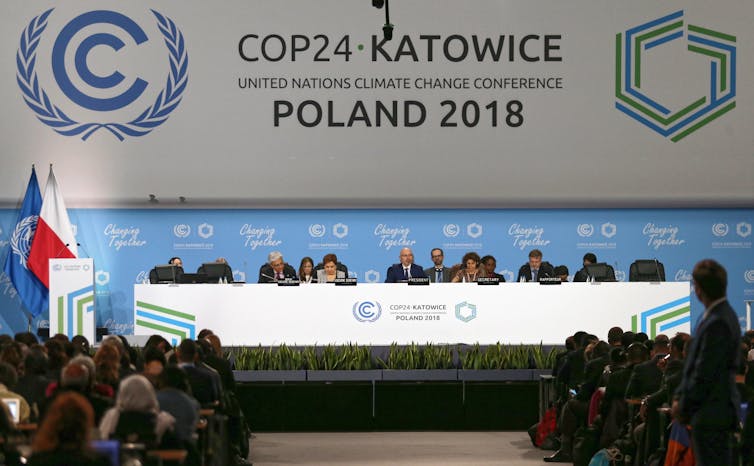
World leaders are gathering in Katowice, Poland, to negotiate the world’s response to climate change. The 24th Conference of the Parties (COP24) will last from December 3-14 and its primary aim is to reach agreement on how the Paris Agreement of 2015 will be implemented. In a year which saw record weather extremes and an extraordinary announcement from the UN that we have only 12 years to limit catastrophe, the need for meaningful progress has never been greater.
To explain how the COP works and what it means for the fight against climate change, we asked our academic experts to share their views.
Rulebook: this is the conference’s main goal – to establish consensus on how nations should implement the Paris Agreement and report their progress.
Emissions targets: COP24 is expected to resolve how emissions will be regulated, although it’s unlikely that sanctions for countries failing to meet their targets will be agreed on.
Finance: the rich countries need to find US$20 billion to fulfil their pledge of providing US$100 billion a year in funding to help poorer countries adapt to climate change by 2020. Agreeing when this will be paid is likely to be contentious.
Role of “big” states: the international political climate casts a long shadow over the talks. Domestic politics in the US, the UK, Russiaand Brazil threaten to undermine climate change leadership among larger emitters at COP24.
How did we get here?
1997: Creation of Kyoto Protocol, which set binding emissions targets. It failed as the US did not ratify it.
2009: COP15 in Copenhagen failed to yield any agreement on binding commitments.
2013: COP19 in Warsaw failed to finalise any binding treaty.
2015: COP21 in Paris generated considerable optimism with agreement reached on a legally binding action plan. But two years later, US president Donald Trump announced his intention to withdraw the US from the Paris Agreement.
COP24 opens in Katowice, Poland.Andrzej Grygiel/EPA
Where are we on the road to catastrophic climate change?
The world’s poorest and most vulnerable people are most at risk from the effects of climate change, with many having to migrate from sea level rise, crop failure and pollution. Sahia – a woman from Bangladesh– lost her home and her family’s livelihood.
“My life has become a living hell” – Sahia. (by Sonja Ayeb-Karlsson, senior researcher, Sussex University)
As global temperatures near 1.5°C above pre-industrial levels, the limit set in the 2015 Paris Agreement, scientists are increasingly anxious about how changes in the environment could work to accelerate the pace at which the rest of Earth is warming.
The Arctic is warming twice as fast as the rest of the planet and strange recent events here, such as heathland turning brown, could be a sign that previous natural stores of carbon are no longer working properly.
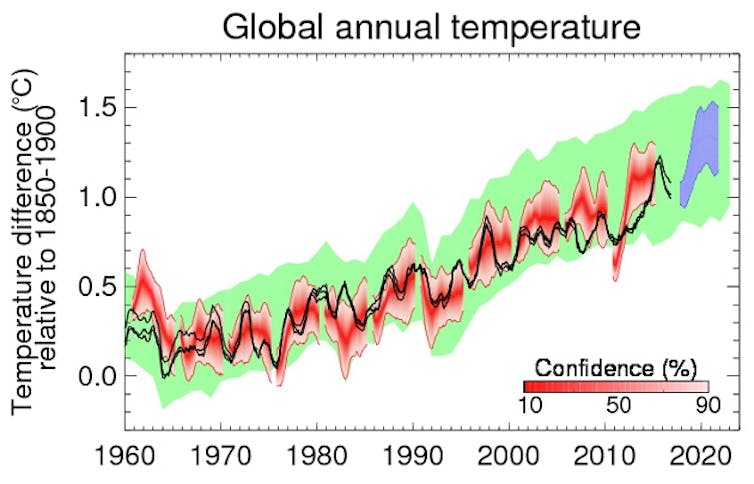
Black, observed temperatures; blue, probable range from decadal forecasts; red, retrospective forecasts; green, climate simulations of the 20th century. Global temperatures are fast approaching the 1.5°C limit.The Met Office
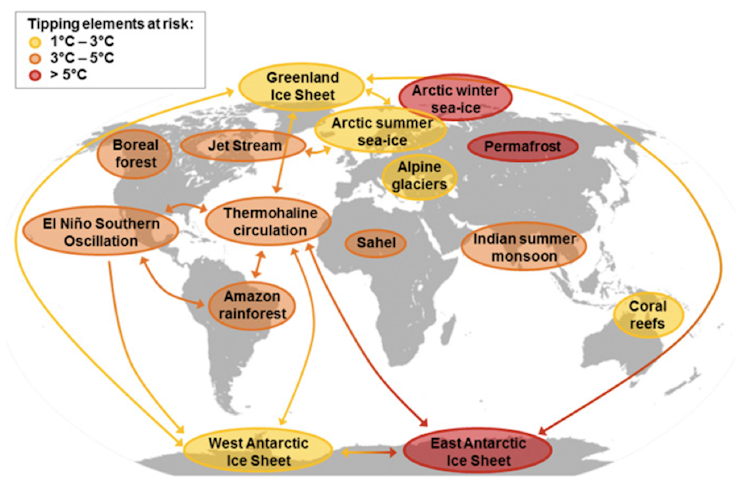
Methane released from Arctic permafrost and other rapid changes could take the matter of limiting greenhouse gas emissions out of our hands in the near future. A paper published in 2018 warned that runaway climate change could lead the planet into a “Hothouse Earth” state:
Global map of potential tipping cascades, with arrows showing potential interactions.Steffen et al/PNAS
What does the science demand we do to tackle climate change?
Whatever is agreed at COP24 will be what is politically possible, but experts urge us to bear in mind what the science demands to avoid the worst impacts of climate change and keeping global warming below or at 1.5°C.
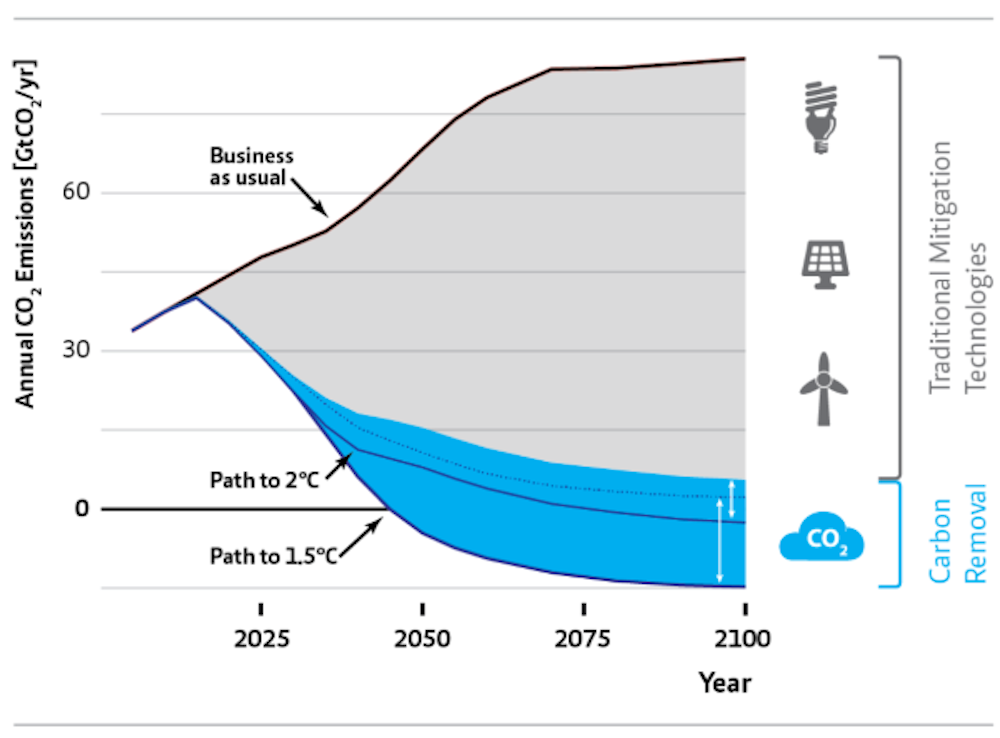
We’re failing to cut down our emissions, the technologies for NETs [Negative Emissions Technologies] don’t exist at any meaningful scale yet, and there are no political drivers in place to enforce their deployment. There is also a real risk of a dramatic rise in methane in the near future. COP24 will have to consider emergency plans – Hugh Hunt, reader in engineering, University of Cambridge.
Limiting warming to 1.5°C or 2°C requires mitigation (energy efficiency and renewable generation) and CO₂ removal.MCC
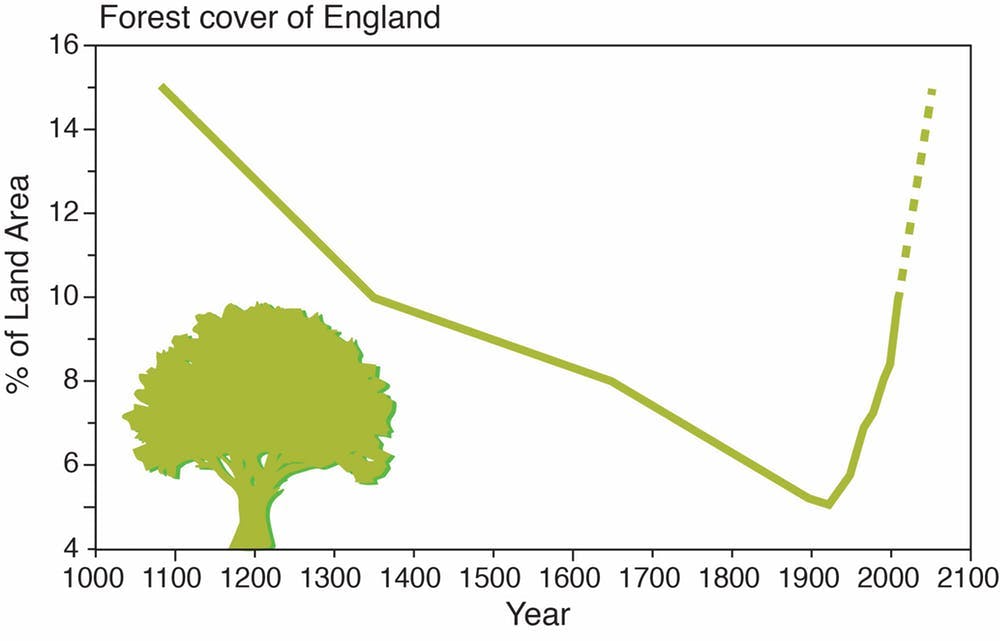
A more radical approach at COP24 could highlight the ample opportunity there is for slowing climate change by restoring habitats. For many countries, reforestation is a more immediate way to slash emissions and make society happier and healthier in the process.
Forest cover in England has fallen sharply over the last 1,000 years. Fighting climate change presents an urgent opportunity for reforestation.DEFRA, Author provided
However, while the climate has changed radically since global warming was first declared a man-made phenomenon 30 years ago, international efforts to tackle it haven’t. Many experts argue that the involvement of commercial interests at COP24 limits what is possible for mitigating climate change.
Ten years after the financial crisis, COP24 should not legitimise large financial investors as the architects of a transition where sustainability rhymes with profitability – Tomaso Ferrando, lecturer in law, University of Bristol
Representatives from pension funds, asset managers and large banks will be lobbying world leaders to favour investments in infrastructure and energy production as part of the transition towards a low-carbon economy.
Finance sector sees this transition as an opportunity to generate profit. If climate change is fought according to the rules of Wall Street, says Ferrando, people and projects will be supported only on the basis of whether they will make money.
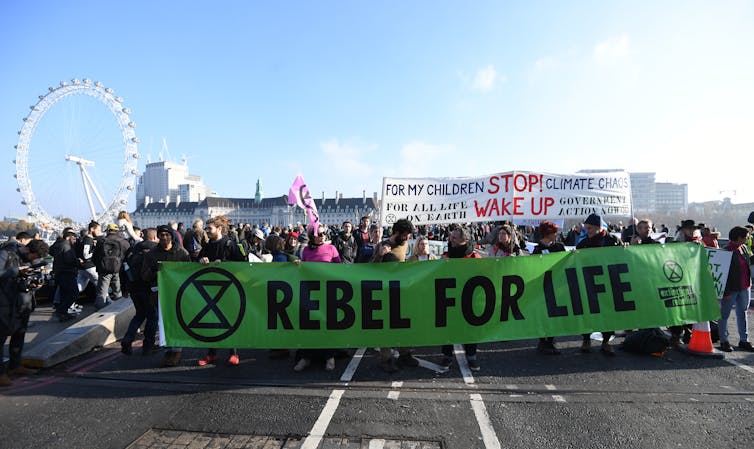
Social movements need to fill the leadership gap left by wavering politicians.Facundo Arrizabalaga/EPA
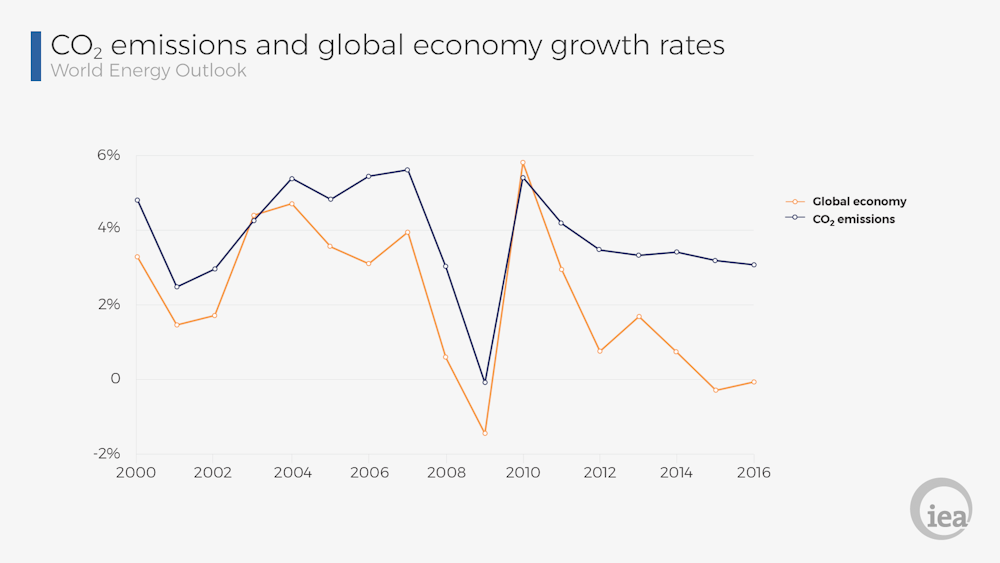
To bring about radical action on the environment, many academics believe we need an equally radical social movement. They argue that protesters should seize the initiative to attack the root causes of climate change, such as economic growth.
Economic growth and carbon emissions are tightly linked. To limit one we must limit the other.International Energy Agency
Debunking the climate change denialists
2018 marks 30 years since climate change was first declared a man-made phenomenon, during a congressional committee in Washington DC. The testimony of NASA climatologist James Hansen was met with both concern and scepticism at the time, but the science is in: anthropogenic climate change is incontrovertible.
Climate change is happening and is being caused by humans. This is the academic consensus, backed by science. But for climate change deniers:
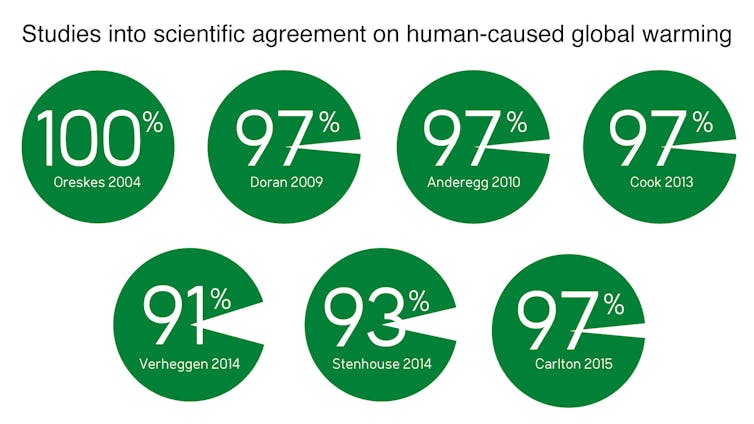
The 97%
97.5% of scientists who had published peer-reviewed research about climate change agreed with the consensus that global warming is human-caused (2010 study from Princeton University).
97.1% of relevant climate papers published over 21 years affirmed human-caused global warming (2013 study involving multiple institutions).
97% consensus in published climate research found to be robust and consistent with other surveys of climate scientists and peer-reviewed studies (2016 study involving multiple institutions).
What do the other 3% think?
There is no consistent theme among the reasoning of the other 3%. Some say “there is no warming”, others suggest the sun, cosmic rays or the oceans as a reason.
An analysis by American professor Robert Brulle found that from 2003 to 2010, organisations promoting climate misinformation received more than US$900m of corporate funding a year. From 2008, funding through untraceable donor networks (so-called “dark money ATM”) increased. This allowed corporations to fund climate science denial while hiding their support.
In 2016, an analysis of more than 40,000 texts from contrarian sources by Justin Farrell, another American professor, found that organisations who received corporate funding published more climate misinformation.
At an individual level, however, there is considerable evidence that shows that political ideology is the biggest predictor of climate science denial. People who fear the solutions to climate change, such as increased regulation of industry, are more likely to deny that there is a problem in the first place.
Consequently, groups promoting political ideology that opposes market regulation have been prolific sources of misinformation about climate change, as three American academics found.
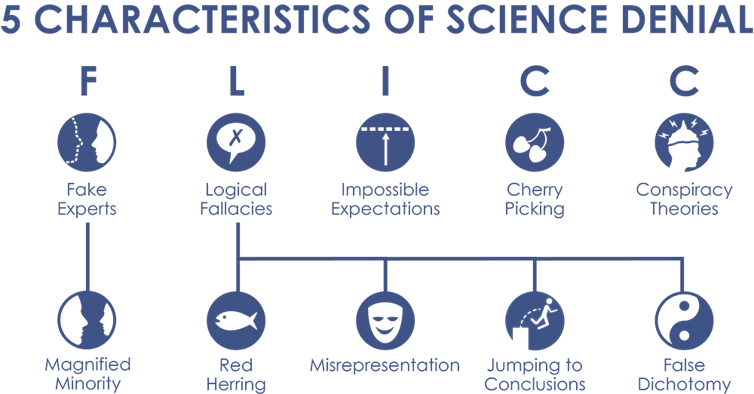
Five Techniques used by climate change deniers to look out for:
Five characteristics of science denial.Dr John Cook, Author provided
Fake experts: create the general impression of an ongoing debate by casting doubt on scientific consensus.
Logical fallacies: logically false arguments that lead to an invalid conclusion. These usually appear in myths, in the form of science misrepresentation or oversimplification.
Impossible expectations: demand unrealistic standards of proof before acting on the science. Any uncertainty is highlighted to question the consensus.
Cherry-picking: best described as wilfully ignoring a mountain of inconvenient evidence in favour of a small molehill that serves a desired purpose.
Going down the up escalator. Source: skepticalscience ‘The Escalator’. Data: NASA GISS
Conspiracy theories: if the evidence is against you, then it has to be manipulated by mysterious forces in pursuit of a nefarious agenda. It is central to denial.
An estimated 46 million turkeys are killed each year for Thanksgiving alone, but more people are switching to a plant-based Thanksgiving meal not only for the animals, but for their health and the environment.
Transitioning to a plant-based meal doesn’t mean you have miss out on any Thanksgiving treats; you can easily make a few simple tweaks to your favorite recipes.
A plant-based diet is the best for the environment and it is extremely healthy as it is linked with the lowest risks of chronic diseases, compared to diets rich in meats, according to research from the World Health Organization and studies published in Environmental Research Letters.
An outbreak of salmonella linked to raw turkey has left one person dead, 63 people hospitalized and sickened 164, the Centers for Disease Control and Prevention said Thursday, Nov. 8.
“The outbreak strain of Salmonella Reading has been identified in various raw turkey products, including ground turkey and turkey patties,” the CDC said.
Starting this eating style at Thanksgiving is a wonderful time to do so, as it is a time of reflection, kindness and gratitude. Plus, all of the leftovers won’t go bad as quickly.
“Vegan alternatives are widely available these days so it’s easy to ‘veganise’ dishes by replacing non-vegan ingredients with cruelty-free counterparts, such as meat substitutes, vegan cream and butter, or egg-free desserts,” Dominika Piasecka, spokesperson for The Vegan Society, said.
Tofurky offers a turkey roast, ham and a feast with gravy and stuffing. It is made from ingredients such as wheat, water, organic tofu, onion, carrot, celery, garlic, leek and more. This alternative is healthy, doesn’t add grease or fat, doesn’t go bad as quickly and is a smaller portion.
Thanks to our beer buddies @HopworksBeer our Plant-Based Ham Style Roast is smothered by a Velvety Beer Glaze… we YUM IT UP. @theveganchalboard https://bit.ly/2qub5Nu
Erin Ransom, director of marketing for Tofurky said the Tofurky Roast is healthier for the planet because it uses less water and has less energy requirements. Animal welfare is also a plus and human health is a big component because there is less saturated fat and cholesterol with great protein and fiber content, Ransom said.
“When compared to animal protein, the Tofurky roast is cholesterol free, a good source of fiber and an excellent source of protein,” Ransom said.
Plant-based protein requires much less energy to produce.
“For example, a Tofurky roast requires 5.5 lbs less grains than it takes to feed a live turkey, who produces the equivalent 26 oz of animal protein, for one’s dinner table,” Ransom said.
Field Roast also offers plant-based holiday roasts for the ultimate grain-and-veggie main course.
“The World Resources Institute predicts that by 2025 at least 3.5 billion people will experience water shortages. It takes 815 gallons to make one pound of turkey, while one pound of soy beans, which are used to make a Tofurky roasts, uses just 242 gallons,” Ransom said.
It’s easy to switch since sides are typically vegetarian and vegan, such as baked stuffing, green bean casserole, sweet potatoes, mashed potatoes, brussels sprouts, cranberries and pumpkin pie, Sharon Palmer, award-winning registered dietitian nutritionist, plant-based food and nutrition expert, author and blogger, said.
“If you are going vegan, you can make sure to make vegan versions of these recipes, which is super simple. Often the main problem is butter and dairy, but you can sub vegan margarine or olive oil for butter, and plant-based milk for milk in recipes. You can even use vegan cheese in many recipes, such as broccoli au gratin,” Palmer said.
Then, all you have to do is perhaps add one entree to the mix, such as veggie “meat” balls, nut loaf or lentil patties, according to Palmer.
Don’t want to cook this #Thanksgiving? You don’t have to! Check out these 5 vegan meal options we’ll be trying out this holiday season. >> http://bit.ly/2PKBkO1
“Research consistently shows that vegetarians and especially vegans have the lowest environmental footprint, compared to other diets. That’s because animal foods have a greater environmental impact, because we grow plants to feed the animals, so it’s much greener to just eat the plants directly,” Palmer said.
Animals produce methane and concentrated sources of manure, and farms contribute to deforestation and require more water than plants.
“Heart disease is far and away the leading cause of death and disability is the U.S. A recent study shows vegetarian dietary patterns reduce cardiovascular disease mortality and the risk of coronary heart disease by a whopping 40 percent,” doctor and nutrition expert Janet Brill said.
Even if you don’t want to go completely plant-based, making a significant cut of animal foods in your diet and eating more whole plant foods makes a big difference, according to experts.
When high-flying global entrepreneur Richard Branson announced in 2014 he was giving up beef for the good of the planet, Australian Farm Institute director Mick Keogh couldn’t resist having a dig at his integrity and mental competence.
“Is Mr Branson a knave or a fool?” asked Keogh, now deputy commissioner of the Australian Competition & Consumer Commission, wondering whether the Virgin Airlines founder was perhaps deliberately deflecting public attention away from his own commercial activities by demonising meat and cattle production.
“If Mr Branson is truly concerned about this issue and not just seeking publicity, he should look at his own business first rather than pointing a finger at beef,” Keogh said.
Branson said he had been forced into vegetarianism by his concern that meat consumption — and so livestock farming — was causing global warming, environmental degradation, Amazonian jungle deforestation and water wastage. He also said keeping cattle in barns and intensive systems such as feedlots where they are fed grain were wasteful and worsening global warming.
Keogh pointed out that greenhouse gas emissions from global livestock production contribute between 5 per cent and 10 per cent of total human-related carbon emissions, which are leading to harmful global warming and climate change.
In contrast, the latest report from the Intergovernmental Panel on Climate Change found the transport sector worldwide — planes, cars and trucks combined — contributes a massive 22 per cent of carbon dioxide emissions (second only to power generation), a figure growing at the rate of 2.5 per cent a year.
Keogh also noted that a one-way flight between London and Sydney added 3500kg of carbon dioxide-equivalent greenhouse gases per person to the atmosphere, while CO2-equivalent emissions associated with producing a 100g beef hamburger were 1kg.
“The IPCC itself has stated that reducing travel distances, moving to energy-efficient vehicles and non-fossil fuels and avoiding unnecessary travel are (among) the most promising mitigation strategies to reduce global greenhouse gas emissions,” said Keogh, querying why Branson’s evangelism for reducing greenhouse gases did not extend this far.
This week, when the latest IPCC report came out on how the world could limit damaging global temperature increases to less than an average 1.5C — a target that needs to be achieved by 2050 if irreparable and lasting climate change is to be prevented — abandoning or limiting meat consumption was again listed as a top-10 mitigation strategy
It is also, worryingly for Australia’s $18.5 billion red meat industry and 82,500 sheep and cattle farmers, becoming a refrain that is accepted without question within the wider community: that eating meat is damaging the environment.
To western Victoria cattle and sheep farmer Mark Wootton, it doesn’t have to be this way.
Together with his partner Eve Kantor, Wootton farms 3500ha of lush green pastures in the western foothills of the Grampians north of Hamilton, where they run more than 25,000 merino sheep for their wool and meat lambs, and 800 cattle.
The couple, together with Kantor’s family, helped found the Climate Institute think tank and policy group — credited with encouraging changed business and community attitudes towards the urgent need to limit greenhouse gas emissions — and they believe climate change remains the biggest threat to their own, and Australia’s, agricultural activities.
“But that doesn’t mean you can’t do something about it,” says Wootton. “For us, that meant testing the theory that Australian farmers can run their properties and businesses in a way that is carbon neutral — or even positive — in terms of greenhouse gas emissions, but that is still about normal farming practices and highly productive.”
Since 2001, Wootton and Kantor have set about boosting the carbon stored on their Jigsaw Farms properties, while also working with Melbourne University professor Richard Eckard to measure — and endeavour to reduce — all the carbon emissions associated with their farming operations to the point where they became a zero carbon business.
For the couple, that meant planting thousands of trees on their farms while also investing in solar power, to offset the carbon emitted as methane by their livestock and their heavy use of pasture fertilisers and fuel.
Against expectations, Wootton says livestock-carrying capacity and returns have actually increased, while more than 37,000 tonnes of carbon was sequestrated in their growing trees in 14 years, putting the business well on the way to becoming carbon-neutral.
Such stories are music to the ears of Richard Norton, chief executive of Meat & Livestock Australia.
Rare among nations, industries or even agricultural producer groups, the MLA ambitiously decided more than a decade ago that it would commit Australia’s red meat industry to being carbon-neutral by 2030: a big ask given the large amounts of methane emitted daily by Australia’s 28 million cattle and 70 million sheep because of their rumen digestive systems.
“No one thought it was feasible but already we have reduced total emissions by the red meat industry by 45 per cent between 2005 and 2015, according to CSIRO, mainly by genetic improvements that mean the animals we farm today grow quicker and are more efficient converters of grass to meat,” Norton says.
There is no dispute in the academic and climate change world that livestock is one of the biggest contributors to carbon gas build-up in the atmosphere and total global greenhouse gas emissions, and therefore a key driver of global warming.
The latest report by the IPCC attributes 14 per cent of all emissions to agriculture. The bulk — contributing 10 per cent of harmful emissions — come from livestock production, mostly dairy and beef cattle belching and farting methane (a harmful greenhouse gas, like carbon dioxide).
While figures vary depending on farming systems and feed, numerous studies have shown beef cattle emit 50-90kg of methane a year, dairy cows 100-150kg a year and sheep about 8kg.
On the positive side, methane is a short-lived pollutant; it lasts in the atmosphere for 12 years after production while a kilogram of CO2 will linger for more than a century. But the harmful effect of 1kg of methane emissions on potential warming is 36 times worse than CO2 over a 100-year period.
Eckard, an animal production professor and director of the Primary Industries Climate Challenges Centre, says the magnified impact of methane on short-term global warming is the reason the IPCC report suggests cutting meat intake would be one of the biggest and best changes individuals and society can make.
“It’s low-hanging fruit — a get-out-of-jail card free, if you like, as far as the IPCC report goes,” he says. “Livestock is the biggest single easiest way to reduce methane emissions; each kilogram of methane produced now has 86 times the impact of a kilogram of carbon dioxide on global warming, so if you immediately start to cut methane emissions from one major source, it’s going to have a quicker impact on the IPCC aim of limiting global temperature increases to below 1.5 degrees by 2050.”
The big impact of animal farming on the warming atmosphere is made worse because, with estimates the world’s population will grow by nearly three billion by 2050, red meat consumption and demand is set to take off. Global meat production is projected to double from 229 million tonnes in 2000 to 465 million tonnes in 2050 to meet the new demand for red meat, while annual milk and dairy output is set to climb from 580 million to 1043 million tonnes.
The number of cattle needed to meet beef and dairy demand is expected to balloon from the present 1.5 billion to three billion, increasing calls for red meat consumption to be slashed to reduce the pace of climate change.
But Eckard argues that animal farming is being unfairly targeted.
“If, as an individual, you want to have an impact on climate change, do it in balance; there is no point in stopping eating red meat if you still drive a gas-guzzling 4WD and don’t have solar panels on your roof, because switching to a hybrid Prius and solar power will have just as big a benefit for the environment and world climate as turning vegetarian.”
Recent studies by Virginia Tech University also question whether plant-based diets equal sustainability and are the only route to reducing agriculture’s heavy global warming footprint.
As researcher Doug Liebe told this week’s BeefEx conference in Brisbane, it is easy for the impact of removing animals from the human food chain to be oversimplified and twisted.
The Virginia Tech studies show that if all animals were taken out of agricultural production — with the grain they had been fed directed to human consumption — the US could produce 23 per cent more human food. But the overall impact on greenhouse gas emissions would be significantly less — cutting US emissions by just 2.6 per cent — because animal-produced fertilisers used in farming would need to be replaced by synthetic ones.














 Exposing the Big Game

_Studies_consensus.jpg)