Exposing the Big Game

Forget Hunters' Feeble Rationalizations and Trust Your Gut Feelings: Making Sport of Killing Is Not Healthy Human Behavior

Exposing the Big Game

Are Meat Eaters Contributing to Climate Change?

https://www.webmd.com/food-recipes/news/20180328/are-meat-eaters-contributing-to-climate-change#1
By Robert Preidt

HealthDay Reporter

WEDNESDAY, March 28, 2018 (HealthDay News) — Climate change scientists have a beef with all the steaks and burgers Americans are eating.

Beef is a major source of greenhouse gas emissions associated with food production, the researchers said in a new study.

They found that one-fifth of Americans account for nearly half of all U.S. food-related greenhouse gas emissions that contribute to climate change.

And America’s love affair with beef is the main reason, said Martin Heller, the study’s first author.

“Reducing the impact of our diets — by eating fewer calories and less animal-based foods — could achieve significant reductions in greenhouse gas emissions in the United States,” said Heller, a researcher with the University of Michigan School for Environment and Sustainability.

CONTINUE READING BELOW
YOU MIGHT LIKE

“It’s climate action that is accessible to everyone, because we all decide on a daily basis what we eat,” he added.

For various reasons, “the production of both beef cattle and dairy cows is tied to especially high emissions levels,” Heller and his colleagues said in a university news release.

These bovines eat lots of feed that involves use of fertilizers and other substances manufactured through energy-intensive processes. There’s also the fuel used by farm equipment.

“In addition, cows burp lots of methane, and their manure also releases this potent greenhouse gas,” the researchers said.

Heller’s team created a database on the environmental effects of producing more than 300 types of foods. They linked that to data on the diets of more than 16,000 U.S. adults.

The researchers found that on any given day, 20 percent of Americans were responsible for 46 percent of all food-related greenhouse emissions in the country. Those with the greatest impact were linked with eight times more emissions than those with the lowest impact.

Beef consumption accounted for 72 percent of the difference in greenhouse gas emissions between the highest and lowest groups, according to the study.

The researchers only looked at emissions from food production. Emissions from processing, packaging, distribution, refrigeration and cooking of food would likely increase total emissions by 30 percent or more, according to Heller.

Revised regional methane emission factors required for dairy cattle

dairy cows eatingmaq123/iStock/Thinkstock

http://www.feedstuffs.com/news/revised-regional-methane-emission-factors-required-dairy-cattle

Revised methane emission conversion factors for specific regions are required to improve emission estimates in national inventories.

Mar 20, 2018

An international consortium of animal scientists has concluded that revised methane emission factors for specific regions are required to improve methane emission estimates for dairy cattle in national inventories, according to an announcement from Wageningen University & Research (WUR).

The scientists, including some from WUR in the Netherlands, collated a large global database of methane production from dairy cattle to develop intercontinental and regional models of methane emissions. The results have recently been published in Global Change Biology.

Dairy cattle produce methane, a greenhouse gas with considerable impact on climate change. To reduce the impact of dairy cattle production on the environment, the amount of methane produced needs to be quantified accurately, WUR said. Measuring methane production is complex and expensive. Therefore, models are commonly used to predict methane production, WUR explained, and results are used in national inventories of greenhouse gas emissions.

The present study is based on a data set of measurements from more than 5,200 lactating dairy cows assembled through a collaboration of animal scientists from 15 countries. The core project, GLOBAL NETWORK, was developed by a consortium of eight countries — the U.S., the U.K., the Netherlands, France, Spain, Ireland, Switzerland and Finland — and was funded by national governments, mostly via The Joint Programming Initiative on Agriculture, Food Security & Climate Change.

WUR said the project represents a “true collaboration” of animal scientists around the globe who shared their experimental data. The main goal of the project was to develop robust enteric methane prediction equations that can be used by scientists, government agencies and nonprofit organizations interested in adopting or assessing methane mitigation strategies and abating the trends in Earth’s climate.

Simplified models

This large study showed that methane emissions from dairy cattle can be predicted by simplified models requiring readily available feed-related variables. Feed intake is the key factor for methane production prediction, the researchers said. Although complex models that use both feed intake and detailed chemical composition had the best performance in predicting methane production, models requiring only feed intake and dietary fiber content had the second best predictive ability and offer an alternative to complex models.

A major finding is that revised methane emission conversion factors for specific regions are required to improve emission estimates in national inventories, WUR said.

The concept of methane emission conversion factor was introduced by the Intergovernmental Panel on Climate Change to indicate the proportion of the animal’s energy intake that is converted to energy in methane. This factor is widely used for national greenhouse gas emission inventories and global research on mitigation strategies, the announcement said.

The research by the consortium offers opportunities to include region-specific methane conversion factors in national inventories. This is essential to improve the accuracy of carbon footprint assessments of dairy cattle production systems in several regions worldwide and to help devise mitigation strategies, according to WUR.

The team that conducted the study is currently developing similar databases for predicting and mitigating methane emissions from beef cattle and small ruminants (sheep and goats).

Vegan climate letter

Dear Editor,
If a picture is worth a thousand words, then the cartoon at the top right hand corner on page 4 of the March 14, 2018 edition of the Methow Valley News is worth at least that many–depending on how it’s interpreted. In case you missed it, the drawing featured a wide-eyed, fearful pig, fish, cow, goat, bear, deer and other allegedly delectable and destroy-able beings on a cracker, being shoveled into the gaping mouth of a ginormous human head.
Though it’s caption was, “Bite of the Methow,” it seemed to symbolize the ‘Bite of Humanity,’ as in the chunk that meat-eating is taking out of this once vibrant planet.
If you can’t find it in yourself to care about cruelty issues, you might at least consider your food choices in regards to the fact that animal agriculture is the “third-largest source of greenhouse gas emissions, after the energy and industrial sectors,” according to “The Case for a Carbon Tax on Beef” by Richard Conniff in the New York Times, March 17, 2018.
And as Chatham House, an influential British think tank, points out, livestock production is responsible for more greenhouse gas “ than the emissions produced from powering all the world’s road vehicles, trains, ships and airplanes combined.” Conniff adds, “including grazing, the business of making meat occupies about three-quarters of the agricultural land on the planet.”
Call it food for thought, but what you eat is actually affecting our weather these days.
Jim Robertson

3 Stats About Meat and Climate Change That Can Change the World

3 Stats About Meat and Climate Change That Can Change the World


February 26, 201

There has been a lot of buzz recently about climate change because whether skeptics want to admit it or not, climate change is a reality. With drastic temperature changes, water scarcity, extreme drought and destructive storms, climate change is one of the biggest global challenges of our time. Given the importance of the issue, many are looking for ways to lower their carbon footprint to help the planet.

Unplugging electronics when they aren’t in use, turning off the faucet while brushing your teeth, biking instead of driving, and planting gardens and trees are all great ways to fight climate change. But what if there was one thing you can do TODAY that could have a greater impact than all of the above? What if you could have a positive impact on the planet simply with your food choices? Consider these stats…

1. Think Fossil Fuels Are the Only Source of GHGs? 


That’s right, more than the entire transportation sector combined. Not to mention, the global livestock system accounts for 23 percent of global freshwater consumption and 45 percent of the total land use.  Crazy, right?

2. Would You Rather Bike Everywhere to Cut Emissions or Eat a Beyond Burger?


Shockingly, beef eaters use 160 percent more land resources than people who eat a plant-based diet. From all of the emissions involved in deforesting land to make way for grazing cattle and grow hundreds of acres of corn and soy (which is used as livestock feed) to the methane emissions from the animals themselves, producing meat is a gassy business.

3. The BEST Way to Shrink Your Carbon Footprint


By simply leaving animal products off of your plate for a year, you can cut your carbon footprint in HALF. And all you have to do is eat yummy, plant-based foods!

As we learn more about the impact of factory farms on the environment and animals, we are faced with a choice – either buy into this destructive industry – or choose better. For more impactful stats like these and to learn how you can help the environment with your book choices, check out the new #EatForThePlanet book!


Lead Image Source: yairventuraf/Pixabay

China wants to lead the climate-change fight. It better solve its milk problem.

https://qz.com/1215017/china-wants-to-lead-the-climate-change-fight-it-better-solve-its-milk-problem/

In its effort to lead the global push against climate change, the world’s second-largest economy has assigned soldiers to tree-planting duty, spent billions of dollars on cleaner energy (pdf), and has actively pushed some of its cities away from using coal.

Still, China has yet to figure out what to do about one of its biggest environmental hurdles—its demand for milk.

That’s because the world’s most populous country is expected to almost triple its consumption of dairy across the next 30 years, according to a study published this month in the journal, Global Change Biology. To figure out just how much the world would be impacted by China’s appetite for dairy by 2050, a team of researchers led by the Chinese Academy of Sciences set out to assess what factors in the country would drive milk consumption and measure the ultimate impact.

In short, the rising demand for for dairy in China will increase the amount of greenhouse-gas emissions coming from dairy herds by 35%, it’ll require 32% more land be dedicated to dairy, and it will boost nitrogen pollution from production by 48%, according to the study.

The bad news is there’s no way to avoid the increases. The possible good news is that by modernizing how farmers handle nitrogen-rich manure, changing dairy cow diets to reduce methane emissions, and improving land management, the increases could be more modest.

The world’s 270 million dairy cows live on farms that produce the manure, ammonia, methane, and nitrous oxide that are negatively impacting the climate. The agricultural sector accounts for about 14% of the world’s total greenhouse gas emissions, according to the United Nations.

“The consequences of sticking to a ‘business-as-usual’ scenario are unthinkable,” the lead author of the study, Zhaohai Bai, has said.

Between 1961 and 2016, milk consumption in China increased more than 25 times to 31 kg (68 lb) per capita each year. (Milk is measured by the weight of its milk-fat content.) It’s now the world’s largest importer of milk and per-capita consumption is expect to increase to 82 kg per year by 2050, according to the study.

It’s become a familiar narrative, one that’s been unfolding in the nation for some time. China is developing rapidly, creating a larger middle class with more purchasing power. With more money to spend, the more people are indulging in dairy and meat products.

“For a more sustainable dairy future globally, high milk demanding regions, such as China, must match the production efficiencies of the world’s leading producers,” Bai said.

How to Read Between the Lines When Scott Pruitt Talks About Climate Science

Scott Pruitt, the administrator of the Environmental Protection Agency, suggested this week that climate change might not be a danger for humanity.

During an interview Tuesday with KSNV television of Las Vegas, Mr. Pruitt said that rising global temperatures are “not necessarily a bad thing” and that “humans have flourished’’ during times of warming trends. His comments represent a new wrinkle in Mr. Pruitt’s history of questioning the established science of climate change.

At the E.P.A., Mr. Pruitt has championed the elimination of policies intended to mitigate climate change. He also has long expressed doubt about the role of humans in rising global temperatures, despite the scientific consensus that human activity is the dominant cause of climate change.

His recent comments go a step beyond some of his previously stated views, some scientists say.

“I do think how Mr. Pruitt talks about climate tells us something important about how folks on the right view climate,” said Joseph Majkut, director of climate policy at the Niskanen Center, a libertarian think tank that advocates conservative solutions to climate change. Mr. Majkut cited in particular the search for what he referred to as “counter-narratives.”

Here is a selection of Mr. Pruitt’s comments on climate science:

Jan. 18, 2017: Mr. Pruitt’s confirmation hearing

Senator Bernie Sanders: 97 percent of the scientists who wrote articles in peer-reviewed journals believe that human activity is the fundamental reason we are seeing climate change. You disagree with that?

Mr. Pruitt: I believe the ability to measure, with precision, the degree of human activity’s impact on the climate is subject to more debate on whether the climate is changing or whether human activity contributes to it.

During his first appearance before the Senate Environment and Public Works Committee in 2017, as part of his confirmation hearing to be the head of the E.P.A., Mr. Pruitt walked a fine line on the subject. The climate is warming, he told lawmakers. But he also said, inaccurately, that the extent to which humans are responsible is not known.

When pressed by Senator Sanders, a Vermont independent, to offer his view on what is causing the climate to change, Mr. Pruitt responded, “My personal opinion is immaterial to the job.” 

March 9, 2017: Interview with CNBC’s ‘Squawk Box’

CNBC: Do you believe that it’s been proven that CO2 is the primary control knob for climate? Do you believe that?

Mr. Pruitt: “I think that measuring with precision human activity on the climate is something very challenging to do and there’s tremendous disagreement about the degree of impact, so no, I would not agree that it’s a primary contributor to the global warming that we see. But we don’t know that yet. We need to continue the review and the analysis.”

The Squawk Box appearance offers one of Mr. Pruitt’s most definitive denials of established climate science, which holds that human activity is primarily responsible for the rise in carbon dioxide emissions.

The Intergovernmental Panel on Climate Change, the top climate-science body at the United Nations, calls carbon dioxide the biggest heat-trapping force and says that it is responsible for about 33 times more added warming than natural causes.

Mr. Majkut of the Niskanen Center pointed out that some conservatives mistrust authoritative groups like the I.P.C.C., believing they have been “captured by environmental ideology.” By casting doubt on established science, Mr. Pruitt’s words reflect that skepticism, Mr. Majkut said.

A few months later, on NBC’s “Meet the Press,” Mr. Pruitt shifted his stance a bit, acknowledging the role of carbon dioxide as a cause of climate change.

June 4, 2017: Interview with ‘Meet the Press’

Chuck Todd, speaking of climate change: Do you believe that CO2 is the primary cause?

Mr. Pruitt: CO2 contributes to climate change, much like — Methane actually is more potent.

Mr. Todd: You don’t believe that CO2 is the primary cause.

Mr. Pruitt: No, no. I didn’t say that. I said it’s a cause.

Mr. Todd: Primary?

Mr. Pruitt: It’s a cause of many. It’s a cause like methane and water vapor and the rest.

Mr. Pruitt’s evolving statements on climate science represent a form of “political communication,” as opposed to an effort to discuss scientific findings, said Nicole Lee, an assistant professor of communication at North Carolina State University who focuses on how scientists convey the complexity of climate change to the public. “It’s about not wanting to move the conversation to what to do about climate change,” she said.

In late 2017, Mr. Pruitt spoke on the television show “Fox & Friends,” promoting a plan to hold televised debates on climate change science. (Planning for the debates, called “red team-blue team” exercises, is still in the works, he said recently.) In his televised remarks, Mr. Pruitt raised the idea that even if temperatures are rising, it might not be a bad thing for humanity.

September 19, 2017: Interview on ‘Fox & Friends’

Mr. Pruitt: “I mean, with this climate change we know certain things. We know the climate’s always changing. We know that humans contribute to it in some way. To what degree, to measure that with precision is very difficult.

But what we don’t know is, are we in a situation where the next essential threat, is it unsustainable with respect to what we see presently? Let’s have a debate about that.”

Mr. Pruitt also maintained in the same interview that it isn’t possible to measure the degree to which human activity contributes to climate change.

That point is refuted by a sweeping climate-change study issued in November by the E.P.A. and other federal agencies. It is “extremely likely,” the report found, that more than half of temperature rise over the past half-century can be attributed to human activity. “There are no alternative explanations.”

January 31, 2018: Senate Environment and Public Works hearing

Mr. Pruitt: “There are questions that we know the answer to, there are questions we don’t know the answer to. For example, what is the ideal surface temperature in the year 2100, is something that many folks have different perspective on.”

That comment, made before a Senate panel, about knowing the “ideal surface temperature in the year 2100,” has become a recurring talking point. Mr. Pruitt has repeated it several times since.

According to the I.P.C.C., if greenhouse gas emissions continue to increase at their current rate, global temperatures will rise nearly 4 degrees Celsius above preindustrial levels by 2100. The World Bank has found that would mean “a frightening world of increased risks and global instability,” including severe declines in crop yields, the migration of diseases into new regions and significantly rising sea levels.

“Some places will be essentially unlivable,’’ said Michael MacCracken, chief scientist for climate change programs at the Climate Institute, a Washington research group. “It’s a tremendously different world.”

When asked to comment on Mr. Pruitt’s statements or to frame his views on climate change, Jahan Wilcox, a spokesman for the E.P.A., referred to an interview Mr. Pruitt conducted with The New York Times podcast The Daily, where he discussed his position. “Here’s my view on it,” he said in that interview. “There are things we know and there are things we don’t know.”

Cows exude lots of methane, but taxing beef won’t cut emissions

https://phys.org/news/2018-01-cows-exude-lots-methane-taxing.html

January 15, 2018 by Michael Von Massow And John Cranfield,
Cows exude lots of methane, but taxing beef won't cut emissions
Cows produce a lot of methane. But there’s not much evidence a tax on beef would be effective in fighting greenhouse gas emissions. Credit: Shutterstock

Will taxing meat products based on their carbon footprint reduce greenhouse gas (GHG) emissions and improve public health? The answer is maybe, but not notably —and it will come with significant costs.

recent study in the journal Nature Climate Change advocates applying taxes to the  of  as a means of lowering GHG emissions.

The idea is that if meat is more expensive, consumers will buy less of it. In turn, when faced with reduced consumption, farmers will produce less .

Not all meat production produces the same volume of emissions. Since cows produce a lot of methane (a ), fewer cows should mean less methane, which in turn should help lower GHG emissions. Pigs and chickens don’t spew methane the way cows do, but there are also the emissions associated with feeding them, as well as with the decomposition of manure.

While it’s clear we need to proactively reduce GHG emissions globally, we believe the emissions tax approach is unlikely to achieve success.

It will likely increase food  for consumers and decrease the prices farmers charge for their products, but it’s unlikely to lower meat consumption significantly and therefore unlikely to lower GHG emissions from the livestock sector. There may be other detrimental impacts to taxation too.

Price hikes don’t usually curb consumption

Food consumption is not as strongly linked to price as one might think. Changes in consumption of food are typically much smaller than changes in the price consumers face in the grocery store. This is a phenomenon that has been recognized and measured for decades.

We would need to implement huge taxes to achieve a small decrease in consumption. As an example, the study in the Nature Climate Change journal suggests a 40 per cent tax on beef would only reduce beef consumption by 15 per cent.

Because taxes on food at the retail level tend to raise the prices paid by consumers, it’s also worth noting that any increase in the price of meat would tend to affect low-income consumers more than more affluent consumers. Low-income consumers would pay relatively more than the rich.

We also need to consider substitution effects. While a high tax on beef and other meats will lower beef consumption somewhat, it may also lead to economizing by consumers through increased consumption of lower quality or more highly processed cuts of meat.

This could actually increase the relative prices of these cuts, making the negative impact of the tax on lower-income consumers even stronger, and would undermine some of the suggested health benefits.

It’s worth noting that beef consumption is generally falling in Canada and the U.S., independent of price. Other factors are likely to be more effective at reducing beef consumption than taxation.

All cattle are not raised equally

It’s also important to recognize that different types of cattle production create different volumes of emissions.

There is a suggestion that any tax on meat should reflect the production system. Those that raise cattle on grasslands or in pastures, for example, would have lower taxes than cattle raised using intensive production systems, like those used throughout North America, which create higher emissions.

While cattle in North America spend their early life on pasture, most beef cattle are finished in feedlots where they are grouped and fed high-energy grain rations to efficiently produce the preferred texture and taste of beef.

A tax based on how cattle are raised, however, would be both politically and logistically difficult.

If grassland and pasture rearing of cattle is favoured because of lower GHG emissions, we could see significant deforestation in those countries that produce beef extensively, but not a substantial reduction in consumption as desired.

We could end up in a situation where many differences in production practices, even within countries, create different emissions estimates and therefore cattle producers would seek different tax levels.

Unintended consequences

There’s also a risk that a meat tax would reduce the incentive to initiate research and development that could help cut emissions within the sector.

Examples of such R&D include efforts to improve the feed efficiency in cattle production. At the farm level, feeding more cattle on a forage-heavy pasture diet could increase the costs of producing cattle and change the characteristics of the while eroding the incentive to adopt climate-friendlier production practices.

It’s worth noting that the United Nations Food and Agriculture Organization has said that emissions could be reduced by 30 per cent today if current best practices were broadly implemented. This is beyond the impact of a 40 per cent tax. The incentive to adopt these best practices would be removed by the implementation of a tax.

Progress can be made

As experts in food and agriculture economics, we agree that reduced GHG emissions are important for the future of humanity. We also believe that we are likely to substitute plant or insect proteins or cultured meats for traditional meat products over time.

Even if it were possible to get broad-based agreement for a global (or even just a Canadian) tax on meat, however, it is important to look not only at whether these efforts would reduce GHGs, but also at the unintended consequences of these efforts.

In the case of the proposed meat tax, it is not only unlikely to achieve the intended outcome, it is equally likely to create a spate of unintended consequences that would negatively affect not just cattle producers, but also .

 Explore further: Eating less meat might not be the way to go green, say researchers

Read more at: https://phys.org/news/2018-01-cows-exude-lots-methane-taxing.html#jCp

Meat and Dairy Greenhouse Emissions ‘Could Lead Us to a Point of No Return’

https://www.ecowatch.com/meat-dairy-emissions-2508107935.html?utm_source=EcoWatch+List&utm_campaign=652071ea62-EMAIL_CAMPAIGN&utm_medium=email&utm_term=0_49c7d43dc9-652071ea62-85986361

Three of the world’s largest meat producers emitted more greenhouse gases in 2016 than France, putting them on par with oil companies such as ExxonMobil, BP and Shell, a recent study found.

GRAIN, a non-profit organization, collaborated with the Institute for Agriculture and Trade Policy and the Heinrich Böll Foundation to estimate the greenhouse emissions of meat and dairy corporations, a figure that few companies calculate or publish.

The study was published as meat and dairy industry representatives arrived in Bonn, Germany for the COP23 to emphasize their role in food security.

In stark terms the study warns that if unchecked, the world’s top meat and dairy producers’ greenhouse emissions “could lead us to a point of no return.”

Projections showing business-as-usual meat and dairy greenhouse emissions.GRAINThrough lobbying, major meat and dairy companies have promoted policies that have led to increased production and consumption around the world. Livestock production now contributes 15 percent of global greenhouse emissions, more than the transportation sector, according to the study.

If livestock production continues to grow at the rates estimated by the Food and Agriculture Organization of the United Nations, greenhouse emissions from the meat and dairy industries will undercut attempts to keep global average temperatures below 2°C.

The paper’s authors warned that industry representatives will arrive at the COP23 in Bonn pushing their agenda—the expansion of livestock production—as a solution. This will amount to criticism of small-scale farmers, which is where the solution in cutting greenhouse emissions lies, according to the authors of the study.

Rather than continuing to subsidize factory farming and agribusiness that undercuts millions of small farmers, governments should redirect public money to support “small-scale agroecological” farms, the study suggests.

Graph showing the top 20 meat and dairy companies’ greenhouse emissions.GRAINThree out the world’s five biggest meat and dairy greenhouse gas emitters are U.S.-based companies.

A previous study showed beef, when compared to staples like potatoes, wheat and rice, has a per calorie impact that requires 160 times more land and produces 11 times more greenhouse gases.

Another study published in Environmental Research Letters calculated that a 50 percent reduction in mean per capita meat consumption in the developed world is needed by 2050 to meet global greenhouse gas emissions targets.

Unfair Trade: US Beef Has a Climate Problem

Growing global demand for beef is hindering efforts to combat climate change, scientists say

Concentrated Animal Feeding Operations (CAFOs) and industrial agriculture have been linked to the overuse of antibiotics, pollution of ground and surface water, as well as air pollution and greenhouse gas emissions.

Go to any US city and you’ll spot Americans gorging on Big Macs and Whoppers at McDonald’s and Burger King. Visit Japan, and you’ll see folks slurping down gyudonbeef bowls, an incredibly popular dish featuring rice, onion and fatty strips of beef simmered in sweet soy sauce. Culture, tradition and geography might divide us, but a love for fast, cheap food that’s rich in beef definitely unites us.

But that growing demand for beef has immense environmental repercussions, especially regarding a stable climate – a fact not addressed by global trade agreements.

Back in January, one of Donald Trump’s first actions as president was to pull the US out of the Trans-Pacific Partnership (TTP), a multi-country trade deal that would have ramped up commerce with Asian countries — and opened Japan to a flood of US beef.

But Trump’s move slammed the door on the US beef industry’s designs for the lucrative Japanese market, the top export market for American ranchers, thanks partly to dishes like gyudon.

What lies ahead for the industry now that TPP is off the table is unclear. But no matter what transpires, environmentalists fear for the planet’s future if trade deals like TPP don’t start taking climate change into account, instead of encouraging more consumption, production and harm to the Earth.

Japan is hooked on beef

Japan wasn’t always sold on red meat, or any meat at all. But today, you need only look at how beef-bowl outlets have conquered Asian city streets to see how that has changed. Yoshinoya, the Japanese fast-food chain, can now be found in US cities. The company only uses US beef, and this allegiance is so strong that the Yoshinoya beef bowl became a pork bowl in 2003 when Japan banned US beef imports for 20 months over fears of foot-and-mouth disease.

Japan’s demand for beef doesn’t look like it will slow down any time soon. Its government is looking to attract 40 million tourists every year by 2020, when it hosts the Olympics, and with tourists come a whole lot of mouths to feed. “It’s pretty exciting,” Philip Seng, CEO of the US Meat Exporters Federation, says. “If you have that many tourists, they’re going to want to eat… We see that consumption is going to increase for the foreseeable future in Japan.”

The same beef boom is playing out across Asia, with increasing wealth and disposable income driving demand in previously meat-light countries. In South Korea, a new appetite for craft burgers is just the tip of a beefy iceberg: in 2007, the US exported 25,000 tons of beef to South Korea; last year that figure reached nearly 180,000 tons.

The Chinese beef market is expected to grow by as much as 20 percent between 2017 and 2025, and is part of a wider trend toward meat eating; in 1982 the average Chinese person ate around 13 kilograms (28.6 pounds) of meat per year, and today it’s around 63 kilograms (138.8 pounds). McDonald’s plans to open 2,000 more restaurants across the country by 2025 — signs that beef consumption is only going to grow.

Asia is clearly fertile ground for those looking to plunge deeper into the market.

What’s the beef with beef?

While all of that growth may be good for the market and profits, beef continues to be the most climate change-intensive foodstuff in the American diet, says Sajatha Bergen, policy specialist in the Food and Agriculture Program at the National Resource Defense Council. And with the beef habit now catching on across Southeast Asia, that problem is only deepening.

But defining the range of that problem is tricky. US beef industry carbon dioxide “emissions are actually coming from a few different places,” Bergen says. In the industrial production model, grain is grown to feed cattle, using chemical pesticides and fertilizers, and that requires a lot of fossil fuels. Next, the cow’s digestive system turns some of what it eats into methane — over 20 times more potent a greenhouse gas than CO2, according to scientists. And finally, cow manure is either spread or stored in lagoons, and that can produce additional methane emissions. Taking all this into account, Bergen believes that it’s not unfair to describe cows as “mini-greenhouse gas factories.”

Renée Vellvé, a researcher at GRAIN, an international NGO, believes that we have to expand our vision to include the entire industrialized food system in order to get a true sense of just how staggeringly costly beef, and agriculture in general, is to the environment. She notes that, in addition to the obvious impacts, meat must also be packaged, refrigerated all along the supply chain, transported — usually over long distances — and stored in supermarket and home refrigerators.

Every step contributes to climate change, says Vellvé, from fertilizing seedling crops all the way to your dinner plate. Thinking about the “food system at large,” not just how the food is produced, is essential, she says: “If you isolate agriculture it’s not enough.”

Research by GRAIN in 2014 found that when using this comprehensive approach, our food system accounts for roughly half of all greenhouse gas emissions — with much of that meat-related. In the US, the EPA currently estimates that agriculture contributes around 9 percent of total greenhouse gas emissions; of that, livestock takes up around 5 percent.

For Gidon Eshel, research professor of environmental physics at Bard College, New York, the direct climate impact of beef production isn’t the worst of it. “Beef is responsible for the lion’s share of land use [in the US],” he says. And by overusing fertilizers the industry is also responsible for the release of massive amounts of reactive nitrogen into water supplies, which can undermine water quality in lakes, rivers and estuaries. By spurring algae growth, which can in turn lower oxygen levels when bacteria feed on it, the release of nitrogen can suffocate bodies of water, creating so-called dead zones. Just this year the largest dead zone ever recorded hit the Gulf of Mexico — a calamity tied to meat production.

The source of all this harm can be found in the industrial model of agriculture, says Ben Lilliston, director of corporate strategies and climate change at the Institute for Agricultural Trade Policy. “In many ways, it’s been fairly disastrous for the environment.”

The industrial system, he explains, is based on producing far more product than is needed and then exporting that product around the globe – an incredibly inefficient system. It has, however, created a global market for really cheap meat, while externalizing all the environmental costs of production to nation states and communities, Lilliston said. “Of course, we’ve expanded that model around the world to other countries.”

Bergen agrees: “Even if we export the beef, we still keep the water pollution, the air pollution… is it really fair for US communities to bear the brunt of environmental damage?”

Enter TPP, or exit it

The Trans-Pacific Partnership, from which Trump withdrew the US after taking office, would have offered another boost for the industrial agriculture model, Lilliston said. The negotiations, which were highly influenced and dominated by big business, “facilitated a fairly serious expansion of this industrial model of agriculture where you produce way more than you need.”

And that is to be expected. For decades trade deals have been designed to benefit business and make goods flow more smoothly between countries in order to open up new markets. To do this, the deals reduce tariffs (designed to protect local industries) and remove or weaken trade-limiting regulations, including public health and environmental standards.

What was really at stake for the US beef industry with TPP was deep access to Japan.

Japan used to be a “controlled market,” says Seng, one that always looked after its domestic production first, at the expense of imports. That’s why it’s been a tough nut to crack for beef exporters like those in the US. But over time exporters have penetrated the market, to the point that today about 60 percent of Japan’s beef is imported. In 2015, Japan imported nearly 500,000 tons of beef, around 200,000 tons of it from the US.

TPP would have progressively whittled tariffs on frozen beef from 38.5 percent down to 9 percent by 2032 — a boon for the US. A report released by the US International Trade Commission prior to Trump’s decision to pull out of TPP estimated the value of beef exports to be worth $876 million per year by the end of the 16-year tariff reduction period.

Trump’s actions represent a “clear loss” to the industry, according to Andrew Muhammad, associate director of the USDA’s Economic Research Service Market and Economics Division.

KORUS, a free-trade agreement between the US and South Korea that was signed in 2012 (which included tariff reductions and the removal of “government-imposed obstacles” to trade, according to the National Cattlemen’s Beef Association) resulted in a 42 percent jump in US beef exports over a five-year period there, and an 82 percent rise in annual sales.

So it’s easy to see why Trump’s TPP decision wasn’t popular with the US agricultural sector. With his thumbs down, expanded access to the Japanese market was put out of reach for US beef exporters.

The problem for the American cattlemen and beef processors didn’t end there. Now Australia has managed to negotiate a bilateral trade agreement with Japan, gaining improved market access, while US beef still is at the mercy of high Japanese tariffs. In August, the tariffs on frozen beef from countries without economic partnership agreements with Japan were raised from 38.5 percent to 50 percent, an increase triggered by a built-in emergency system to guard against spikes in imports.

That’s why the US beef industry is now desperate to thrash out a trade deal with the Japanese. “Our organization, NCBA [National Cattlemen’s Beef Association], will work with [the Trump] administration on bilateral trade deals, if that’s the way to go,” NCBA president Craig Uden told agriculture.com. “We know that our trade partners want our product, and if we don’t fill the demand, someone else will.”

However, speaking from 45 years of experience working with the Japanese, Seng says it will be very difficult to get a bilateral deal that comes close to the benefits TPP would have provided. He explains that there was a “tremendous amount of political capital put on the table” by the Japanese to come down to 9 percent. This included overcoming the doubts of their own agricultural sector who feared an influx of cheap beef would damage their own market share. From Seng’s viewpoint, the objective now is to figure out a way to get back into TPP.

In November, the remaining 11 member nations committed to the TPP agreement are due to restart negotiations and plow ahead without the United States. But it looks as if TPP-11, as it has been dubbed, could be tweaked only slightly to encourage the US to enter later.

Vellvé isn’t ruling this out. She believes that in the next three or four years the US could well join the TPP, with or without Trump in office, as the business voices calling for it are influential: “The [beef] industry is pushing very hard and is very creative at getting what it wants.”

Lilliston, of the Institute for Agricultural Trade Policy, echoes this and says that TPP saw beef-producing multinational corporations, like Cargill, JBS and others, come together to form a “beef alliance” and push their agenda. “They are real forces in these trade negotiations and it’s not the same as seeing things through a national agenda.”

Climate change, meet trade; trade, meet climate change

But even as TPP moves forward, with or without the US, another important constituency has not been invited to the negotiating table: Nature, and the NGOs and national environmental agencies that represent her.

In a 2009 report, the World Trade Organization and the United Nations Environmental Programme said free trade agreements (FTAs) “most likely” lead to increased CO2emissions.

The “trading regime in general, and the United States led [FTAs]… are in tension with the policies for aggressive climate action,” Kevin Gallagher wrote in “Trade in the Balance: Reconciling Trade Policy and Climate Change,” a report released in 2016 by Boston University.

“Trade is intrinsic to the success and robustness of the industrial system” of food production, Vellvé says. But trade agreements “very much drive climate change coming from the food system, insofar as the [deals] create demand for cheap commodities,” she explains. For instance, an influx of cheap American beef has made it possible for gyudon chain stores like Yoshinoya to offer their beef bowls to Japanese consumers for around $3 a pop, in the same way that cheap beef has allowed McDonald’s to sell its Big Macs for $4.79 in the States.

Those low prices create more consumption, demanding higher industrial production, with bigger environmental costs. But nowhere in the industrial food chain, or in global trade treaties, are allowances made for the mounting environmental harm. This is a dangerous blind spot that, ignored for long enough, is going to bite back with increased climate and weather instability, more severe heatwaves, droughts and hurricanes, rising sea levels and increased ocean acidity — all of which will directly impact food security.

Vellvé argues that to reach our climate goals, countries will need to overhaul the way our food is grown. To do so, we’ll need to get rid of large-scale monocrop cultivation, big plantations and the current model of big trade.

“That’s a huge shift,” she acknowledges.

Vellvé points to other systems of agriculture as models, like small-scale farming, that could replace industrial-sized Concentrated Animal Feeding Operations (CAFOs). This “small is better” approach would not only be less harmful from an environmental point of view, but could also be beneficial for farmers, cheaper to run and involve less labor in some cases.

But bridging the disconnect between an agribusiness industry focused on profit, global trade agreements that primarily serve business, and escalating climate change impacts, certainly won’t be easy. A mention of climate change didn’t even appear in the final TPP draft agreement, at the behest of Washington, despite it appearing in some initial drafts. The Paris Agreement also didn’t acknowledge TPP, or any other trade deals for that matter.

“By having an [industrialized food economy] like the US – one of the biggest [carbon] polluters – say we don’t care about the Paris Agreement – we’re going to negotiate trade agreements as if climate change doesn’t exist – that’s very problematic,” Lilliston says. The issue is being discussed in places like the WTO, he adds, but those people who matter, the trade negotiators, are proceeding as in the past, and acting as if environmental concerns didn’t exist.

As it stands, he says, strict trade rules furnish global markets with cheap goods that can price out local producers, and those treaties deregulate in a way that almost always favors industrial farming, making it impossible for smaller-scale operations to compete.

Lilliston argues that unless we change trade agreements to nurture local and sustainable food producers, allowing them to grow and participate on a level playing field in global markets, or at least put climate-friendly policies in place, we’ll soon be in a tough spot economically and environmentally.

Take drought, for example: it has deepened significantly over the US Midwest and West in recent decades, and severely impacted cattle herds and curtailed industry profits. And severe drought, like that seen in 2012, is projected to only worsen in future years as climate change escalates, further affecting the beef industry.

The good news: moves are being made by the beef sector to encourage sustainability, cut waste and decrease its climate impact. Seng at USMEF says that the beef industry is “working tenaciously to reduce any kind of greenhouse gases.” Jude Capper, an agricultural sustainability consultant, suggests the US beef industry has already made advances along this road in past decades: “US beef is considerably more productive and has a lower carbon footprint per unit than in many less efficient countries,” she says.

But others, like Vellvé, question whether these baby steps will be nearly enough. She acknowledges the efforts of the industry, but describes that work as little more than “eye shadow”.

“It’s not going to get us where we need to [go, to] stay within the [emissions] targets that were set at the Paris Agreement,” she says.

NRDC’s Bergen agrees. There are a lot of ways to cut the environmental costs of beef production, but the rapidly rising demand for beef worldwide will negate any positive effects: “Ultimately we need to reduce the amount of beef we eat.”

The decision by Donald Trump to back out of TPP has halted, at least for now, the beef industry’s drive to gain Japanese market share. But what is truly needed now is not the same old type of treaty, but a new deal — a TPP that acknowledges and addresses the deep links between industrial food production and climate change.

With the US now out of TPP, will the other 11 countries work climate change back into the agreement? It’s possible, and would be a big step forward, says Lilliston, but only on one big condition: “If TPP was to include climate considerations, how does the enforcement work on that?”

It’s pretty simple what needs to be done, Lilliston concludes: Future trade deals in the US, and around the world, must explicitly assure that trade and profit do not override climate policy: “That’s a fairly radical idea and would be a major change in trade agreements,” he says. “But at some point we are going to have to make that decision.”

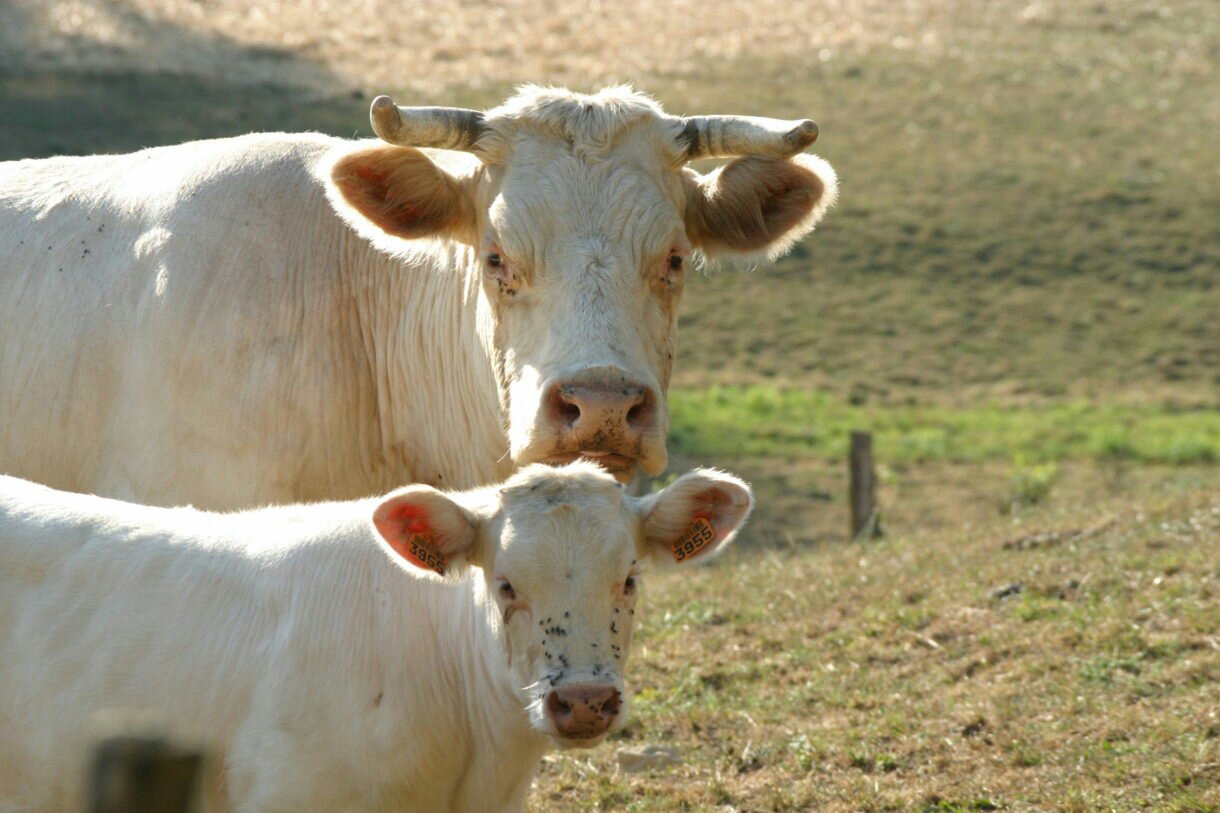
Increased Methane Levels?: Cows Are to Blame, Says New Study

Increased Methane Levels?: Cows Are to Blame, Says New Study

Who is to blame for increased methane levels in the earth’s atmosphere: humans, or cows? For years, the question was posed tongue in cheek by skeptics of human-caused global warming. Methane is a hydrocarbon, which, at room temperature and normal pressure, appears as a colorless, odorless gas. It is also the main component of natural gas. In recent years, atmospheric methane levels have become a concern for environmentalists, who note that global methane levels have increased from roughly 1750 parts per billion in the early 2000s to 1830 parts per billion today. A new study claims to have found the source of the missing methane emissions: cows.

“Our results suggest that livestock methane emissions, while not the dominant overall source of global methane emissions, may be a major contributor to the observed annual emissions increases over the 2000s to 2010s,” conclude researchers in a new study published by Carbon Balance and Management, an academic journal.

The new study reevaluates estimates of the methane emissions produced by livestock in the U.S., finding that previous studies had underestimated these emissions by as much as 11 percent. Even more curiously, the researchers found that the largest increases in livestock methane emissions were in the northern tropics. The results of the study have the potential to impact how environmentalists and policy-makers treat agriculture when dealing with the problem of greenhouse gases.

The study used data from the U.S. EPA when considering the impacts of livestock raised around the world. As a result, it is one of the most comprehensive studies of the impact of livestock on global warming done to date.

The study showed that livestock played a large role in the increased methane levels observed recently. Cattle and other ruminants that break down food in the first of four stomachs, naturally produce methane as a product of digestion. While this has long been understood as a fact of biology, its impact on the environment has not been so fully studied. Increased consumption of meat in China and other parts of the world has increased the impact of methane emissions from livestock.

Using data from 2006 Intergovernmental Panel on Climate Change report, the researchers found that the report failed to account for changes in livestock breeding and management. In recent years, cattle have been bred to be larger and also, manure has been stored in open pits, which release methane into the air as they decay. Accounting for these two changes, global estimated emissions from livestock digestion went up 8.4 percent, while estimates for manure management went up 36.7 percent.

Methane has been a focus for environmentalists in recent years, after studies showed that atmospheric levels were increasing. Methane is released both by cows themselves and also by fermenting piles of manure, which release the gas as part of their natural decay process. Although the gas is naturally occurring, environmentalists are concerned about methane levels, believing the gas to be 25 times more potent as a warmer than carbon dioxide.

The study has the potential to significantly alter major industries in the U.S. For oil companies, methane is serious business. The gas is often found alongside deposits of oil. In many areas, these pockets of natural gas had been deemed not economically feasible to extract. As a result, for years, many companies had vented, or released, this methane into the atmosphere at drill sites. Since it remained unregulated, and therefore, unmeasured, the full impact of this practice was never realized.

The Obama administration attempted to clamp down on the practice through a rule that would curb the “wasteful release of natural gas” from wells operating on public and Native American lands. The oil industry complained about the decision, saying that it would increase production prices. After the inauguration, the Trump administration has since tried to repeal this rule but encountered resistance from Congress.