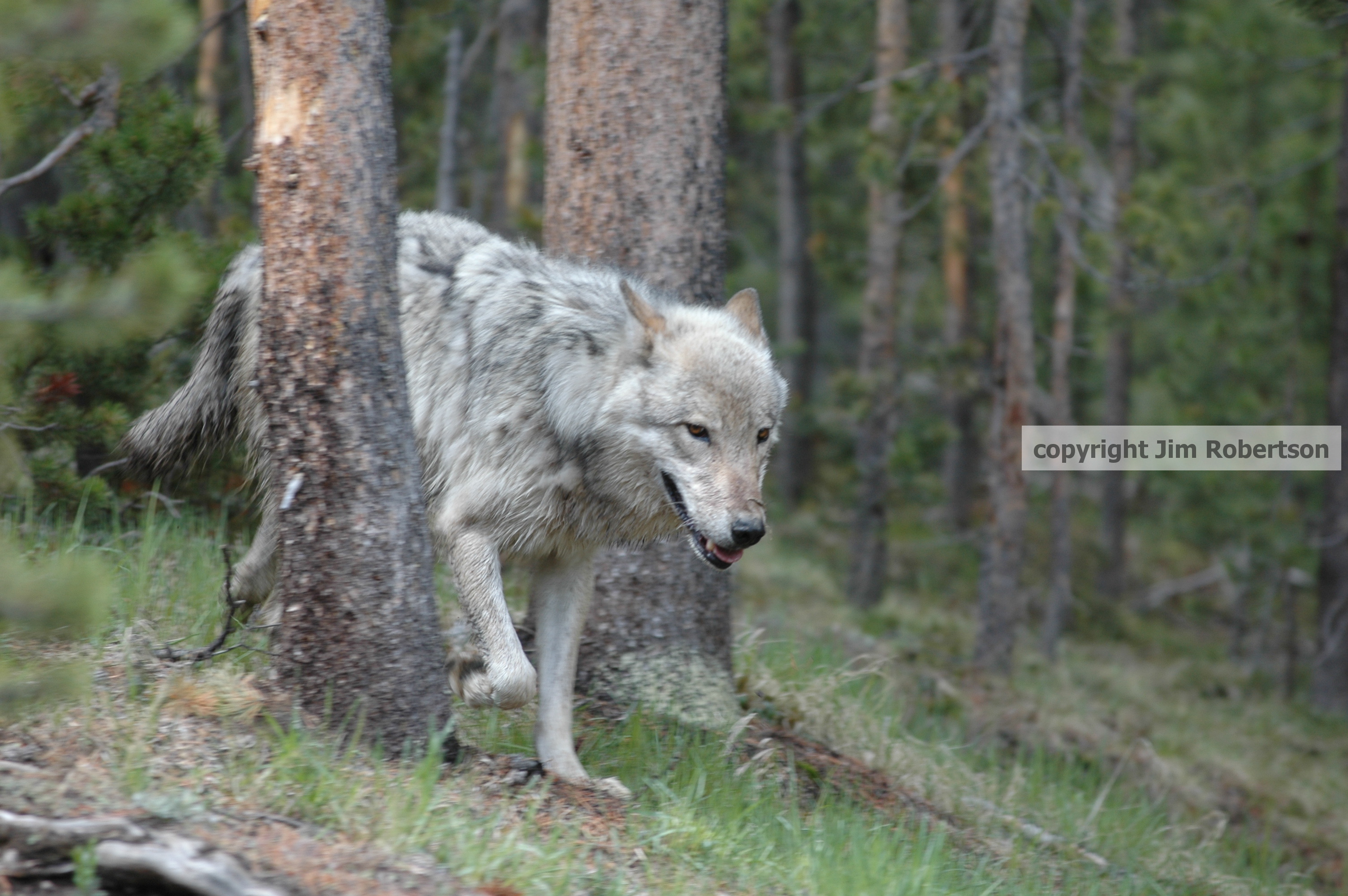
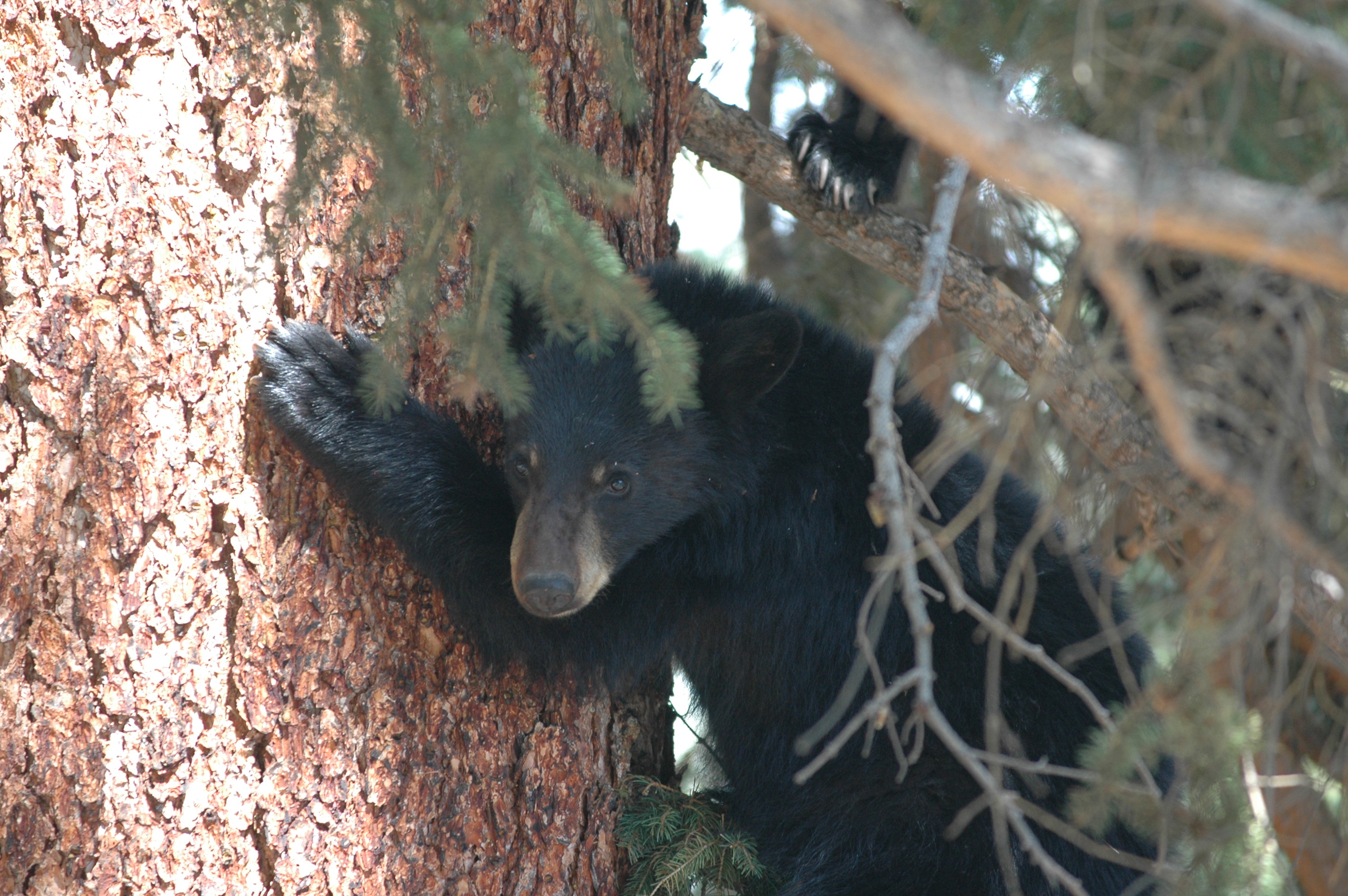
‘Wolf’ shot by Lolo resident was a dog hybrid

Wolf-dog hybrid shot

2013-10-24 missoulian.com

3 hours ago  •  By Rob Chaney

LOLO – What appeared to be a white wolf threatening a Lolo resident’s horses on Sunday was really something else.

“It turned out to be a wolf-dog hybrid,” Montana Fish, Wildlife and Parks wolf biologist Liz Bradley said on Wednesday. “It looked very wolfy, but it was neutered.”

The landowner shot and killed the dog after seeing it eyeing his horses Sunday morning. Bradley said she also got reports from a resident in Florence of a similar animal chasing her house cat up a tree.

“It’s a concern if somebody is releasing hybrids in the area,” she said. “Sometimes they can be more troublesome than wolves. They come a lot closer to people and can be dangerous.”

Bradley said she hadn’t had any other wolf incidents reported near homes in the Missoula or Bitterroot valleys this fall.

However, hunters have killed 12 wolves in FWP Region 2 since the 2013 season started on Sept. 15. The kills have been in the Bitterroot, lower Clark Fork River drainage and in the Blackfoot River drainage.

Statewide, hunters have taken 36 wolves this season. That number should grow rapidly when general big-game season opens Saturday.

In past seasons, most wolves have been shot by deer and elk hunters who encounter them by chance. Wolf hunting in Montana requires a $19, over-the-counter license.

FWP updates wolf hunting results online daily at fwp.mt.gov/hunting/planahunt/huntingGuides/wolf.

_________________

[I don’t normally peruse the comments section in newspaper articles like this (my stomach is queasy enough already lately). This kind of comment is the reason why]:

onetwopunch – 4 hours ago As a hunter and an anti wolf advocate [hmm, he comes right out and admits it] I am pleased to see that even the hybrids are being shot here. I don’t own a ranch but my elk [what makes them “his” elk?] are suffering and it makes it really hard for us hunters to sell out of state hunters Montana elk when the dang wolfs [by “wolfs,” I assume he means “wolves”] are eating them up!! outfitting is one of the most important industries in Montana and we don’t need stupid wolfs killing off our children and our elk. Get with it Missoula and join us in eradicating these vermin! At $2000.00 per elf [by “elf;” I assume he meant “elk”;)] we cannot afford to lose any to predators.

Numbers down for antelope, pheasant hunting near Havre

http://www.greatfallstribune.com/article/20131024/LIFESTYLE0506/310240011/Numbers-down-antelope-pheasant-hunting-near-Havre?nclick_check=1

Oct. 23, 2013

Overall hunting numbers were down, but hunters took more of some upland birds and waterfowl in the Havre area during the weekends of Oct. 12-13 and Oct. 19-20, according to numbers gathered from Montana Fish, Wildlife and Parks Region 6 game check station outside Havre.

“Over the first two weekends of the season, harvest for most species has been down,” said FWP Havre-area wildlife biologist Scott Hemmer. “Antelope numbers and licenses have remained low since the winter of 2010-11, and this fact is reflected in the check station harvest being down 92 percent from the long-term average. Most antelope hunters reported having to hunt harder to find animals, but most have reported good horn growth in the bucks they did find and harvest this year.”

The general antelope season opened Oct. 12, as did pheasant season.

Pheasant harvest has been down slightly from last year, and hunters have reported pheasant hunting as spotty.

Sharp-tailed grouse harvest is down from last year, but Hungarian partridge harvest is up. Duck harvest has remained strong again this year.

Montana’s special two-day youth deer hunt was a week earlier this year, and that resulted in additional mule deer and white-tailed deer being harvested during this reporting period. In previous years, only archery deer hunting was open during this time of the year, Hemmer said.

However, white-tailed deer numbers are still down overall this year in FWP Region 6. That’s due to a long recovery period from a series of especially hard winters and significant outbreaks of epizootic hemorrhagic disease, also known as EHD, in 2011 and again this year.

Elk harvest reported at the check station thus far may have been limited by the temporary closure of the Charles M. Russell National Wildlife Refuge, but Hemmer said not enough elk have been harvested yet for a meaningful comparison to past years’ harvest.

Overall, hunter numbers continue to be low so far this year, Hemmer said.

Total hunter numbers are down 6 percent from last year and are still well below those seen prior to the winter of 2010-11.

Wildlife Photography ©Jim Robertson, 2013. All Rights Reserved

Wildlife Photography ©Jim Robertson, 2013. All Rights Reserved

Feds Reopen Waterfowl Hunting Areas in MT

“They’re willing to accommodate hunters thanks to intense pressure from hunting groups and the NRA…WTF!!!” ~ JB

http://missoulian.com/news/local/feds-reopen-waterfowl-areas-including-ninepipe/article_f9fef894-32b7-11e3-a27c-001a4bcf887a.html

By Vince Devlin

RONAN – Cancel that.

The U.S. Fish and Wildlife Service on Friday afternoon reopened waterfowl production areas to the public, 11 days after they – and other public lands, ranging from national parks to national wildlife refuges – were closed because of the federal budget impasse.

National wildlife refuges administered by FWS, such as the Bison Range and the Lee Metcalf National Wildlife Refuge, remain closed.

The decision came on the eve of opening day of pheasant season in several states, including Montana – and after earlier warnings to hunters that the areas were closed to all public access because of the partial government shutdown.

Federal wildlife officer Mike Koole, who had posted “closed” signs at entrances to the nine separate WPAs in the Ninepipe area to help hunters know where they weren’t supposed to be, was assisting at the Lee Metcalf Metcalf Refuge in the Bitterroot Valley on Friday afternoon when the decision was made in Washington.

Koole, who is furloughed from his job and working without pay, said it was his intention to return to the Flathead Indian Reservation, where he works out of the National Bison Range, and have all the “closed” signs down in the Ninepipe area before pheasant season starts Saturday.

“If I have to stay until midnight, I’ll make every effort to take them down,” he said. “Depending on how dark it gets, I might miss one or two.”

Koole said he would also try to post some copies of the news release announcing the decision to reopen the public lands. The Ninepipe area, a patchwork of federal, state, tribal and private lands, includes 3,268 acres designated as FWS waterfowl production areas.

***

In Friday’s news release, FWS spokesman Bruce Decker said that “despite limited staffing, the Service has undertaken an assessment to determine what, if any, potential exists to open lands to public use with our obligations under the government-wide shutdown. It has been determined that allowing public access to Waterfowl Production Areas will not incur further government expenditure or obligation, and is allowable under a government shutdown.”

Koole received the advisory at 2:22 p.m. Friday, saying that “effective immediately, all WPAs will reopen to public use.”

Decker acknowledged that the closures had come “at an extremely difficult time with hunting seasons just underway, fall migratory bird migrations at their peak, and hundreds of communities forced to cancel events as part of National Wildlife Refuge Week.”

Initially, he went on, “with the approximately 78 percent of its employees furloughed, we determined it would be difficult for the remaining, non-furloughed workforce to ensure the safety of facilities, lands and resources, in a manner that incurs no further financial obligation to the U.S. government.”

Decker said the closures could be reinstated if the stalemate in Washington continues, and the service determines that keeping the waterfowl production areas open is costing money that Congress has not authorized it to spend.

Doing so would violate the Anti-Deficiency Act, Decker said.

The decision to reopen waterfowl production areas was likely to please Pheasants Forever and Quail Forever, national organizations that early in the week “demanded” Congress and the service reopen WPAs, wildlife refuges “and other publicly purchased lands for recreational use by hunters and the general public.”

“Waterfowl production areas are the most used publicly owned resources by waterfowl and upland hunters,” Dave Nomsen, Pheasants Forever vice president of governmental affairs, had said Monday. “Now, after years of supporting these lands through their purchase of federal duck stamps, hunters are locked out during the brief season they are allowed to pursue their hunting passion.”

Photo copyright Jim Robertson

Photo copyright Jim Robertson

Does It Really Make Sense for 6,000 People to Kill 600 Wolves?

http://www.care2.com/causes/wolf-hunter-gets-it-all-wrong-in-interview-but-hes-on-the-winning-side.html

Does It Really Make Sense for 6,000 People to Kill 600 Wolves?

In a short video recently released, the Center for Biological  Diversity asks if you would pay $19 to kill a wolf. You probably wouldn’t, but  6,000 people in Montana just did.

Montana has an estimated 625 wolves left. Sadly, new changes to the hunting  season, which started in September, could prove to be a disaster for those  remaining wolves. It was extended to run for six months during which time  hunters will now be allowed to take five wolves each, and they’ll be able to use  traps, bait and electronic calls. The extra long season could also put pregnant  and nursing females in the crosshairs because they’ll be allowed to continue  through the spring. As an added bonus for hunters, out of state hunting fees  have been reduced from $350 to $50.

In an attempt to get the other side of the story, the Digital Journal’s  Justin King interviewed Montana hunter Jason Maxwell, who runs a pro-wolf hunting Facebook page.  According to him, no one wants wolves in the state, and they “should be hunted  24/7 just like the coyote.” He also believes they were never actually endangered  because there are thousands in Canada and Alaska and that people who don’t live  in wolf states shouldn’t get to have an opinion.

While he sounds almost reasonable in the interview, he spews vitriol in the  comments section and elsewhere on the Internet, proving that, at least for some,  wolf hunting is about nothing more than hate, arrogance, intolerance and  sometimes petty revenge. While he cites numbers from  the state, trying to get a straight answer from  wildlife officials about where the science is and how they came up with them in  the first place is apparently as easy as trying to herd cats.

Last year, Montana Fish, Wildlife and Parks reported that 225 wolves were  killed – 128 by hunters, 97 by trappers –  during the 2012-2013 season.  This was an increase from the previous year, with more than half of the wolves  being killed on public lands. Another 104 were killed by the state throughout  the year.

Conservationists fear the consequences of such policies if hunting is allowed  to continue at this rate under state management. This year, Wyoming wants to  reduce numbers by 60 percent, which will leave only abut 100 wolves. Since they  lost ESA protection in the Great Lakes and Northern Rockies, more than 1,700  have been brutally killed.

When asked whether the government or environmentalists have hunters’  interests at heart, Maxwell responded that the “pro wolf side is fighting for  the preservation of one animal while hunters and sportsmen are fighting for the  preservation of all wildlife. The introduction is not just about the wolf it is  also about maintaining the wildlife the wolf preys on.”

If that were true, predators would have dibs on prey, and if anything still  needed to be “managed” then maybe human interference could be justified. In  Montana’s case, indiscriminate killing with the sole intent to reduce the number  of wolves to appease special interest groups isn’t management; It’s just a  bloodbath.

Also, for conservationists, fighting to protect an apex predator and keystone  species has beneficial cascading effects on other species, including plants, in  the environments they’re present in. For some areas, they’re also a popular  tourist draw which helps support local economies.

When it comes to wolf management, the very agencies charged with keeping  track of numbers and deciding their fate have a serious conflict of interest due  to the facts that hunting licenses generate revenue and there are no  consequences for poor management policies or ignoring science unless the wolf  population drops below the number required by the federal government, at which  point they would lose management authority.

The Feds Still Want Them Off the Endangered Species List

The U.S. Fish and Wildlife Service (FWS) is still defending its proposal to  remove Endangered Species Act (ESA) protections for all wolves in the lower 48,  with the exception of Mexican gray wolves, despite how terrible state management  has proven to be.

As of September, there were 18,000 public comments opposing the delisting.  There were also three public hearings scheduled; While one hearing in Washington  D.C. took place, the other two in California and New Mexico were canceled thanks  to the shutdown. However, organizations are still calling for more public  hearings in states where wolves live or may appear so the public can actually  have an opportunity to weigh in.

An independent peer review is also required to remove a species from the ESA.  However, at the end of the summer the process was put on hold when three  scientists were kicked off the peer review because they had added their names to  a letter that was sent to the Department of the Interior questioning the science  behind the proposal to delist wolves.

According to the Center for Biological  Diversity, this is the first time the FWS has put restrictions on scientists who  may have an “affiliation with an advocacy position.” In this case the scientists  in question didn’t necessarily have a stance as wolf advocates, they just did  exactly what they were supposed to do. They looked at the available data and  formed an opinion. Their opinions just didn’t match the objectives of the FWS,  so they got blacklisted.

The FWS should continue to do its job, which is to ensure wolves are not  subjected to out of control hunting policies and intolerance or the special  interests of very vocal hunting and ag groups who continue to call for more to  die.

Keeping ESA protection for wolves in the lower 48 won’t impact decisions in  the northern Rocky Mountains or western Great Lakes, where wolves are present,  but it will keep protections for the rest who are venturing into their historic  range in other parts of the U.S. where there is suitable habitat in Pacific  Northwest, southern Rocky Mountains, Northeast and California. Their continued  survival depends on their ability to expand, instead of being confined by  arbitrary lines they’ll never understand.

TAKE ACTION!

There’s still time to speak up on behalf of wolves. Since the peer review  debacle, the FWS has extended the comment period until October 28. Please submit a comment asking that wolves remain  protected under the ESA.

As for Maxwell, yes there is a petition calling on Facebook to  shut down his page for promoting violence towards animals if you care to sign  it.

Read more: http://www.care2.com/causes/wolf-hunter-gets-it-all-wrong-in-interview-but-hes-on-the-winning-side.html#ixzz2hIH0SZo4

Would You Pay $19 to Kill a Wolf?

Gray wolf

 Alert from the Center for Biological Diversity
Breaking news: The anti-wolf zealots are losing ground.

After weeks of intense pressure from the Center for Biological Diversity and other groups, the U.S. Fish and Wildlife Service just admitted to excluding key wolf experts from the scientific analysis of its infamous, nationwide wolf-delisting plan. The Service has dissolved its hand-picked panel and turned over the entire review process to an independent research institute. Now the nation’s top wolf scientists –once improperly disqualified for questioning the Service’s proposal to delist wolves — will be reconsidered as candidates for the review panel.

This is a victory in our fight to keep federal protections for gray wolves — but another battle is raging in the northern Rockies and Great Lakes. The wolf-killing season is starting, and hunters and trappers are lining up by the thousands.

In case you missed my last email, the Center urgently needs 6,000 wolf heroes to counter 6,000 wolf killers in Montana. Will you help now by giving to our Wolf Defense Fund and become a hero for these beleaguered animals?

In Montana 6,000 people just paid $19 to kill a wolf. Selling cheap $19 wolf tags to 6,000 people is an atrocity, because  Montana only has 625 wolves left after last year’s killing season. Not satisfied with the massacre, the state has lined up 10 times as many rifles as there are wolves to finish the job.

I’m writing today because the Center for Biological Diversity needs help balancing the odds. We need 6,000 wolf heroes to donate to our Wolf Defense Fund to ensure that federal protections are not stripped from all wolves across the country.

By donating, you’ll help stop the killing and send Montana a powerful message that a wolf’s life is worth far more than $19.

We can’t let these extermination practices spread nationwide. Wolf haters are putting up money to wipe out wolves. Wolf supporters need to do the same if we’re going to stop the killing.

One-third of Montana’s wolves dead‏

From Defenders of Wildlife:

Last year more than ONE-THIRD of Montana’s entire wolf population was killed — and with a number of new and deadly hunting and trapping provisions, the death toll is expected to rise this season.

Anti-wolf forces are determined to drive the wolf population down to the bare minimum, and Montana is adopting more extreme wolf management tactics – making it cheaper and easier to kill wolves.

We need YOU to help us stop this relentless killing before it’s too late.

The killing has resumed.

Montana’s hunting season began in earnest on September 15th. Last year hunters and trappers killed off more than one-third of the state’s entire wolf population.

With a host of new and deadly hunting and trapping provisions, Montana is set to become a wolf tragedy in the making. We can’t let that happen.

Anti-wolf forces are determined to drive wolf populations down to the bare minimum. Earlier this year, they introduced a shameful batch of anti-wolf measures in the Montana legislature.

And they could spell disaster for Montana’s wolves:
•The cost for out-of state-hunters to purchase MT hunting licenses to kill wolves dramatically dropped from $350 to only $50, thus encouraging hunting of more wolves by out-of-state hunters;
•It’s now legal this season to use electronic devices to lure wolves to their death;
•The number of wolves a person can kill during hunting and trapping season has increased from one wolf in 2011 to five wolves this season; and
•As of now, hunters can now walk right up to the Yellowstone National Park border and shoot any wolf that crosses the invisible park boundary – even if it’s just for a minute.

Montana is adopting more extreme wolf management tactics, making it cheaper and easier to kill wolves.

With your help we’re fighting for the wolves.
1.We’re fighting against proposed bills that would put a shockingly low cap on the wolf population instead of maintaining healthy numbers like other wildlife species;
2.We’re on the ground in local communities to dispel misconceptions and anti-wolf propaganda ; and to build political opposition to the host of crazy anti-wolf bills sure to come with the start of the state legislative session in January;
3.And we’re working with ranchers, private landowners and others to pioneer non-lethal strategies so that wolves and livestock can peacefully coexist.

The war to save wolves now spans the country…from the Northern Rockies, where the killing has claimed nearly 1,200 wolves since 2011…to the Southwest, where the Mexican gray wolf is struggling to survive…to Washington, D.C., where anti-wolf forces are driving a misguided delisting proposal through the federal bureaucracy.

copyrighted Hayden wolf in lodgepoles

Wildlife Watchers Outnumber Hunters 5-1

Wages from wildlife watchers

FWP takes measured approach to adding new wildlife stakeholders

LAURA LUNDQUIST, Chronicle Staff Writer September 15, 2013

Autumn can seem distant if you’re a hunter with a license burning a hole in your pocket and more than a month left until rifle season.

Big-game rifle hunters must bide their time, sighting in their scopes or scouting their locations while waiting for Oct. 26. Meanwhile, bird hunters and archers are already out in the fields, enduring summer temperatures as they make the best of the time they have.

Such has been the fall ritual for many Montanans.

But just as fall now has fewer cool days, it also has fewer hunters.

That doesn’t bode well for Montana Fish, Wildlife & Parks, which depends on sportsmen’s dollars.

FWP is reassessing its finances to decide how much to increase license fees to manage wildlife through another decade. The dwindling number of sportsmen may require FWP to turn to a new funding pool: the nongame user.

Wildlife watchers and photographers are a growing segment of the population that outnumbers sportsmen 5-to-1 nationwide. In 2011, wildlife watchers spent more than $400 million on viewing equipment and travel in Montana.

While some wildlife watchers agree that they should contribute to wildlife agencies, the details of how to target a fee and what it should pay for have eluded managers for more than 20 years.

“State Parks had that challenge, and they got those license-plate fees,” said Montana Audubon Program Director Janet Ellis. “The Legislature needs to figure out how FWP can get a little slice of something like that.”

For a century, sportsmen have been the financial backbone of state wildlife management because of license fees and taxes on guns, ammunition and fishing gear.

Prior to the digital age, such funding was solid.

According to a U.S. Fish and Wildlife Service national survey, conducted every five years, the number of hunters with Montana tags has been fairly steady since 1991, bouncing around 200,000.

In 2011, when the number of hunters appears to have rebounded nationwide, 50,000 fewer hunters ventured into Montana’s wildlands, according to the survey.

That estimate is not exact, but FWP financial analyst Hank Worsech said license sales supports that decline.

He calculated that license sales have declined 2.5 percent over the past three years. Last year was the first that nonresident hunting licenses didn’t sell out.

The Wildlife Society calculated a 36 percent drop in the sale of Duck Stamps, required for all who hunt waterfowl, since the 1970s.

Some claim nonresident hunters aren’t coming to Montana due to perceptions that predators have eliminated game.

But states without wolves have similar problems. For instance, Vermont had a 50-percent drop in nonresident hunters.

A more worrying explanation is that older hunters are retiring from the game and fewer youth are coming in. Half of hunters are 50 or older. Young people tend to be more interested in video games and social media.

“Western states are competing for less and less people,” Worsech said.

Fishing has managed to hold on to greater popularity, but it too has seen a decline.

The trend could destabilize future FWP funding.

FWP depends on license sales for half its budget because it receives no money from the state’s general fund. Federal money accounts for most of the rest.

“We operate in a world of, ‘We have a product to sell and we run on the revenue we collect.’ We’re different from other state agencies — we run more like a business,” said FWP Finance Division administrator Sue Daly.

License sales were brisk enough until four years ago. But since 2009, sales totals have decreased while the bills continued to increase, putting the agency in the red.

Part of that deficit is planned.

Montana’s Legislature, like those in several states, considers license fee increases every 10 years. During the ensuing decade, the FWP bottom line slides from black to red as inflation rises.

This time, it’s different.

Fewer license sales have combined with inflation to force the bottom line down faster. To slow the decline, FWP cut some programs, and committees are proposing to eliminate some discounted licenses.

If the negative-sales trend continues, legislators will have to hike license fees significantly to keep the budget on par.

That’s bound to prompt complaints from some hunters.

But some, like Randy Newberg, think Montana’s fees are low considering the hunting opportunity they provide and the conservation efforts that benefit the state economy.

“We need to tie (fee increases) to an annual consumer price index. Small increases are easier to swallow than a big increase,” Newberg said. “If hunters aren’t willing to pay more, they’re saying, ‘I’m willing to give up my seat at the table.’”

That table may get a bit more crowded in the next few years.

“I’m trying to sell my members on (fee increases) because there is pushback,” said Montana Wildlife Federation spokesman Nick Gevock. “But we need to look beyond hunters and anglers because everyone enjoys wildlife. Funding will be the conservation challenge of the 21st century.”

FWP has watched as other states recently confronted that challenge.

Wyoming Game and Fish had to cut its 2014 budget by $4.8 million because of declining license sales and the Wyoming Legislature’s refusal to approve a fee increase.

Last summer, after watching its license sales decrease by 25 percent, Idaho Fish and Game organized the Idaho Wildlife Summit to find alternative funding.

“As far as trying to find non-consumptive funding, that was never the overall plan. But we knew we were plowing new ground,” said Idaho game spokesman Mike Keckler. “Since then, the regional working groups have helped us come up with a few ideas for funding nongame programs.”

Keckler said the summit was meant to renew enthusiasm for wildlife.

But some hunting groups weren’t enthusiastic because wildlife watchers include wolf watchers. So controversy overshadowed the search for solutions.

Some groups, such as Sportsmen for Fish and Wildlife, accused the Idaho Summit and the Association of Fish and Wildlife Agencies of favoring wildlife viewers and photographers over hunters.

Non-consumptive users shouldn’t have a say in the wildlife management that sportsmen have paid for, according to a Lobo Watch blog post written by Toby Bridges.

Big Game Forever spokesman Ryan Benson said wolves caused the financial problem, along with associated lawsuits.

“I don’t think we should scrap the user-based model,” Benson said. “States couldn’t protect their wildlife because of a federal program. The federal wolf recovery was a major contributing factor so there should be some help from the federal level.”

In Montana, FWP Commissioner Dan Vermillion recently suggested that wildlife advocates could contribute to that user-based model.

When wolf advocates claimed thousands opposed increasing wolf-hunt quotas, Vermillion suggested that they buy wolf tags. If FWP saw a sudden surge in license sales, then they’d have a better feel for the number of wolf advocates, Vermillion said.

That didn’t go over well with wolf advocates, but Vermillion said FWP needs to find ways to bolster hunters’ contributions.

“I think we’re tricking ourselves if we don’t recognize that Montana and the U.S. are changing. Look at Bozeman – it’s full of wildlife enthusiasts,” Vermillion said. “Hunting and fishing are important, but we need to bring new stakeholders to the table.”

Wolves of the Rockies spokeswoman Kim Bean said advocates would never buy tags because they fund only collaring and lethal control.

Wolfwatcher Coalition executive director Diane Bentivegna said her 250,000 members would send contributions to wildlife agencies in every state that manages wolves but there’s a catch: The money could go only toward non-lethal wildlife programs.

“Under current budgetary structure, we aren’t allowed to say where our contributions go. We would like to introduce legislation that would allow us to fund agencies and have it go toward the programs that we support,” Bentivegna said.

Not every species has a support group, and direct donations aren’t regular enough to help.

Wildlife agencies need to find a vehicle, such as a tax on equipment or a license plate fee, that provides a steady flow of money if non-traditional contributions are to be helpful.

Montana has a non-game donation that residents can make when they file their taxes, but it brings in only about $27,000 a year.

This summer, FWP non-game section chief Laurie Hanauska-Brown organized a meeting to “have the first discussion” with wildlife and birding organizations about how to bring more users in.

“The message can’t be communicated as, ‘C’mon you non-consumptive users, it’s time to step to the table,’” Hanauska-Brown said. “We want to make sure we’re covering all the species so that we can bring more people on board.”

FWP is taking a very long-term approach with non-consumptive funding and will focus on more concrete options first, Hanauska-Brown said.

Newberg, although not opposed, is skeptical that recreational users will step up. He cited the failure of the Conservation and Reinvestment Act in 2000, when several manufacturers and groups rejected a tax on outdoor equipment.

“It was finally their chance to do what hunters do, but they bailed out,” Newberg said. “Hunters and anglers pay an excise tax. It’s disingenuous to say, ‘We want a say in wildlife, but we don’t want to pay for anything.’”
Wildlife Photography ©Jim Robertson, 2013. All Rights Reserved

Wildlife Photography ©Jim Robertson, 2013. All Rights Reserved

Wolf hunting season opens in Montana

The Associated Presscopyrighted Hayden wolf in lodgepoles

First Published Sep 14 2013

Billings, Mont. • Montana’s general wolf season opens Sunday with much looser rules than in past years, as state wildlife officials ramp up efforts to reduce the predators’ population in response to public pressure over livestock attacks and declines in some elk herds.

Lower license fees, a five-wolf per person bag limit and a longer season top the list of changes put in place for the 2012-2013 season.

Only two areas in the state — near Glacier and Yellowstone National Parks — have limits on how many gray wolves can be killed.

Conservation groups have criticized the state’s liberal wolf hunting rules as a threat to their long-term population. But livestock owners and hunters have pushed for even more wolves to be killed, and state officials say they intend to maintain a smaller, but still viable, wolf population.

At the beginning of 2013 Montana had 625 wolves. That was a slight drop from the prior year and the first decline since Canadian wolves were brought to the Northern Rockies in the mid-1990s as a way to bolster the population.

State officials hope to continue driving the population down this year but have not set a target number.

The number of out-of-state hunters buying licenses is up sharply this year, with 370 purchased through this week compared to 55 at the same point last year. That comes after the Legislature reduced out-of-state licenses from $250 to $50.

Almost 6,000 state residents have purchased wolf licenses so far for $19 apiece. That’s roughly in line with last year’s sales figures.

The general rifle season runs through March 15.

Trapping season for wolves starts Dec. 15 and runs through Feb. 28. The two-week archery season for wolves ends Saturday, with two harvested as of Friday.

Hunters Murder Two Bears, Then Whine About Injuries

Wildlife Photography ©Jim Robertson, 2013. All Rights Reserved

Wildlife Photography ©Jim Robertson, 2013. All Rights Reserved

Alright, I’ve had enough of this one-sided, narcissistic reporting!

Do I have to point out to the AP that their article completely missed the point here by making a hunter the victim of the story? They report that an hour after wounding the bear with an arrow… “The hunter located the wounded bear and shot it twice more with his bow. The bear then ran down the hill and encountered a man who had arrived to assist the hunter.”

WTF? How much suffering does a non-human animal have to go through before her plight is even considered by the media and she’s seen as the victim? Here’s how the AP titled the article:

Injured black bear injures hunter near Thompson Falls

Associated Press

KALISPELL — State wildlife officials say a 150-pound female black bear wounded by a bow hunter bit the arm of the hunter’s companion before succumbing to its injuries.

Fish, Wildlife and Parks spokesman John Fraley says a man was hunting near Thompson Falls on Tuesday when he shot a black bear with a bow and arrow.

The hunter waited for several hours to make sure the bear was dead before he started tracking it. The hunter located the wounded bear and shot it twice more with his bow. The bear then ran down the hill and encountered a man who had arrived to assist the hunter. The bear bit the second man’s arm before it died.

The injured man was treated at the hospital in Plains and released.

FWP says the hunter legally tagged the bear.

….and here’s another article with the same slant, which also ends with a dead bear. Note that the real victim was just out eating berries…

September 11, 2013 at 2:43 PM

Shots from other hunters halted grizzly attack in Alaska

Posted by

ANCHORAGE (AP) — An Alaska grizzly bear wounded by a Rhode Island hunter survived more than 90 minutes before attacking the man and slashing his head.

Alaska State Troopers say John Matson sustained injuries Monday to his head and body. The wounds were not considered life-threatening.

Troopers tell the Anchorage Daily News that Matson was hunting with another hunter and an assistant guide.

Matson shot a bear feeding on berries. The bear rolled into brush but popped out and ran.

The hunters waited about 90 minutes before going into thick cover after the bear.

Troopers say the assistant guide heard Matson scream as the bear attacked. The other men fired shots and the bear ran off.

The men walked about a mile to their camp. Matson was flown Tuesday to Anchorage

Wolf hunt: Montana’s longer season starts Sunday with bag limit now at five

copyrighted Hayden wolf walking

Montana’s general wolf hunting season opens Sunday and runs through March 15. The archery season is underway now and closes Saturday. Trapping runs from Dec. 15 to Feb. 28.

Written by Erin Madison Tribune staff writer Sep. 12, 2013

Hunters will have a longer season this year to pursue wolves and will be able to take more wolves compared to last year.

Montana’s general rifle season for wolves opens Sunday and runs through March 15. This year’s season is about a month and a half longer than last year’s. The archery season for wolves opened Sept. 7 and goes through Saturday. Trapping will begin Dec. 15 and run through Feb. 28.

This year, wolf hunters and trappers will be able to take a total of five wolves, whether through hunting or trapping. Last year, trappers were limited to three wolves. Hunters were limited to one wolf until a bill passed midway through the Legislative session boosting that number to three.

With a higher bag limit and longer season, George Pauley, wildlife management section supervisor for Montana Fish, Wildlife and Parks, expects more wolves to be harvested this year than last year.

“The population is larger than we want it to be,” he said.

[Well, same to you, buddy.]

Last year hunters and trappers took a total of 225 wolves in Montana.
• Montana wolf specialists counted 625 wolves, in 147 verified packs, and 37 breeding pairs in the state at the end of 2012. The count dropped about four percent from the previous year and marked the first time since 2004 that the minimum count declined.
• Last season the total hunting and trapping harvest was of 225 wolves. Hunters took 128 wolves and trappers 97.
• A total of 108 wolves were removed through agency control efforts in 2012 to prevent further livestock loss and by private citizens who caught wolves chasing or attacking livestock, up from 64 in 2011.

A history of wolf hunts in Montana

• 2009: During Montana’s first regulated wolf hunt, hunters harvested 72 wolves during the fall hunting season. As hunters approached the overall harvest quota of 75 wolves, FWP closed the hunt about two weeks before the season was scheduled to end.
• 2010: The hunting season was blocked by a federal court ruling in August 2010 that returned wolves to the federal endangered species list. In April 2011, the U.S. Congress enacted a new federal law delisting wolves in Montana and Idaho, and in portions of Washington, Oregon and Utah.
• 2011-12: The wolf hunting season ended with a total harvest of 166 wolves, 75 percent of the overall quota of 220 wolves. The season was initially set to end Dec. 31, but was extended to Feb. 15.
• 2012-13: This was the first time wolf trapping was allowed in the state. There was no statewide quota.

2012 wolf season details

• 128 wolves hunted, 97 trapped, 225 total
• 123 resident and three nonresident hunters harvested wolves
• 124 hunters took one wolf
• Two hunters took two wolves
• No hunter took three wolves
• 62 trappers took one wolf
• 13 trappers took two wolves
• Three trappers took three wolves
• One wolf was taken with archery equipment
• 18,889 wolf licenses were issued (18,642 resident and 247 nonresident)
• 2,414 trappers completed a wolf trapper education course
• 48 percent of wolves were harvested on federal land, 37 percent on private land and 3 percent on state land
• 117 females and 108 males were taken
• The largest harvested wolf weighed 120 pounds

The story continues here: http://www.greatfallstribune.com/article/20130912/LIFESTYLE05/309120003/Wolf-hunt-Montana-s-longer-season-starts-Sunday-bag-limit-now-five