Tuesday Is Soylent Green Day Again

Last night I watched the timeless 1973 movie, Soylent Green, again and was again impressed (unfavorably) by how much the futuristic world that it depicted mirrored the world we’re headed for now. The temperature of the overcrowded New York of the future was a constant 90 degrees; the oceans were dying (presumably from overfishing and pollution, they hadn’t heard of acidification at the time); and the world was running out of food..

Spoiler Alert:

Set in 2022, the film opens with a slide show of earlier eras, back when the Earth was covered with forests and open fields, and there were only a few scattered settlements of people who travelled in horse-drawn wagons.

As the images pass quickly by, we see the first automobiles (tail pipes spewing toxic climate-changing carbon gases), followed by a massive blacktop parking lot jam packed with Model Ts. The pictures begin to flash almost more rapidly than we can focus, but we catch glimpses of factories with smokestacks billowing and crowds of people barely able to

move without trampling one another. (Come to think of it, what we are witnessing looks a lot like the inside of an average modern-day poultry barn, where chickens and turkeys are forced to live out their lives in intense confinement.)

The first scene of action takes place in a cramped little New York City apartment, the dwelling of the film’s two main characters, Thorn, a semi-corrupt detective, and his elderly room-mate and research partner, Sol, who is constantly going on about the good old days—a world that Thorn can’t possibly envision or relate to.

They are among the lucky few; most people sleep on the stairways or in the hallways or anywhere they can find shelter from the oppressive heat caused by an out of control greenhouse effect. We overhear a program on their worn out old TV which is an interview with the governor of New York, touting a new food product called “Soylent Green,” ostensibly made from the ocean’s plankton. (Everyone in that day and age knows that the land is used up, but they’re told the oceans can still provide for them).

Food in this depressing, human-ravaged world comes in the form of color-coded wafers, distributed under strict government supervision. Hordes of people stand in line for their ration of Soylent yellow or blue made from soy, or other high protein plants grown behind the fortress-walls of heavily guarded farms.

Signs remind the throng that “Tuesday is Soylent Green day.”

The multitudes are exceptionally unruly on Tuesday. Brimming with anticipation, they can’t wait to obtain a ration of the special new product. When the food distributors run out of soylent green, people start rioting and things get out of hand. “Scoops” (garbage trucks fitted with backhoe-like buckets on the front) are called in to scrape up the angry masses and haul them off…

By the end of the film, Thorn learns that the oceans are dead and the actual ingredients of Soylent Green are something a bit harder to stomach than plankton. In the final scene, a mortally-wounded Thorn is carried away on a stretcher as he desperately tries to tell bewildered onlookers, “Soylent Green is People!” “They’re making our food out of people. Next thing, they’ll be breeding us like cattle for food!”

Could it ever happen? Could the human race ever stoop so low? If the scenario seems too hard to swallow­, consider this: the conditions animals are forced to endure on today’s factory farms would have seemed unimaginable to people living a hundred years ago.

Hunters: Control Your Own Population

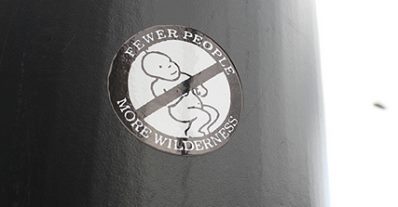
One of the unwelcome, unapproved hunter-comments received today asked the hypothetical question, “So what do you suggest?… Control the human population limiting each family to one child so we stop ‘encroaching’ animal habitat?” He surely knew not the wisdom of his words.

Dave Foreman, founder of the original Earth First!, posits in his book, Man Swarm and the Killing of Wildlife, that no one can call themselves a conservationist (and what hunter doesn’t like to call themselves a “conservationist”?) if they’re unwilling to at least acknowledge the human overpopulation problem.

The following quote from Man Swarm should make this point clear.

“…whenever conservationists spotlight threatened landscapes or wildlife, we need to bring in the ways high population and ongoing growth are behind that threat.

“Right now this is not being done. When horror stories pop up about the dreadful loss of wildlife somewhere in the world, population growth is rarely mentioned, much less blamed for it. A glaring example comes from a 2009 news story about the crash in wildlife numbers in the big game haven of Kenya. Nowhere in the article is Kenya’s skyrocketing population mentioned. Of the fabled big five animals only the buffalo is not now endangered, while Kenya could lose the others—lion, elephant, rhino and leopard. In all cases wildlife are threatened because swarming new populations of Men are pouring into former wildlife habitat. When conflicts arise, the wildeors are killed.

“In 1963, 20,000 lions lived in Kenya. In 2008 there were only 1,970. A ninety percent loss. Elephants went from 167,000 in 1963 to 16,000 in 1989. They are back at 32,000, which is still piddling. Black rhinos were poached down to 20,000 in 1970 to 391 in 1997. Now they are at 603 only with tough protection. Other big, wide-ranging wildlife are at all-time lows. Conservationists need to take such figures and show how exploding human populations are to blame and that, without serious birth reduction, wildlife will go.

“Now, let’s look at how growth is behind the Seven Ecological Wounds. Wound 1: overkill

“When I was in grade school I read the Weekly Reader telling us how more thorough harvesting of the seven seas would feed more and more mouths. Well, we did that. The upshot is crashing fisheries throughout the world, die-off of coral reefs, and the functional extinction of once-teeming highly interactive species such as cod, sharks, and tuna. When highly interactive species are killed off, their neighborhoods crumble and whither.

“As hungry little settlements swell and spread out, they gobble up bigger wildlife from rainforests and other wild lands. Even a little knot of huts with near-Stone Age tools can clean out the bigger wildlife in a nearby protected area. As more babies become more mommies and daddies, hunters go ever farther afield with snares, nets, and old guns. There are tropical National Parks still full of tall, never-cut trees and heavy lianas that are empty of big wildeors thanks to this belly-driven hunting.

“Historically, hunting has caused the extinction, local extirpation, or near extinction of wildlife, including once-highly abundant bison, passenger pigeons, shore birds, whales, cod, elephants, sea turtles, and many more. Such hunting has been driven by the “need” for meat and for new settlements and cropland by growing populations of Men worldwide and locally.”

1451324_650954518277931_1616731734_n

227,000 more people born every day!

10678776_10152936650136840_7539051632152355942_n

Today’s my birthday. Big deal, huh? It may have seemed like a big deal for someone born in 1960, but nowadays, 227 HUNDRED THOUSAND people are born each and every day!

Here’s some light reading on overpopulation, for those who want to take a look at the bigger and bigger picture: http://www.biologicaldiversity.org/programs/population_and_sustainability/

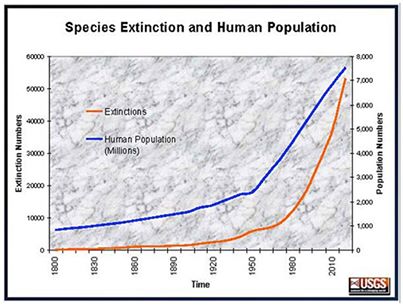
Human population growth and overconsumption are at the root of our most pressing environmental issues, including the species extinction crisis, habitat loss and climate change. To save wildlife and wild places, we use creative media and public outreach to raise awareness about runaway human population growth and unsustainable consumption — and their close link to the endangerment of other species.

There are more than 7 billion people on the planet, and we’re adding 227,000 more every day. The toll on wildlife is impossible to miss: Species are disappearing 1,000 to 10,000 times faster than the natural rate. It’s clear that these issues need to be addressed before it’s too late…

1451324_650954518277931_1616731734_n

CALL TO ACTION: Oppose the Planned Killing of 16,000 Cormorants Along the Columbia River

http://www.seashepherd.org/news-and-media/2014/07/07/call-to-action-oppose-the-planned-killing-of-16000-cormorants-along-the-columbia-river-1602

Cormorants are being targeted simply because they eat salmonCormorants are being targeted simply
because they eat salmon
Photo: Sea Shepherd
The U.S. Army Corps of Engineers has announced plans to shoot thousands of double-crested cormorants in the Columbia River Estuary beginning next year.

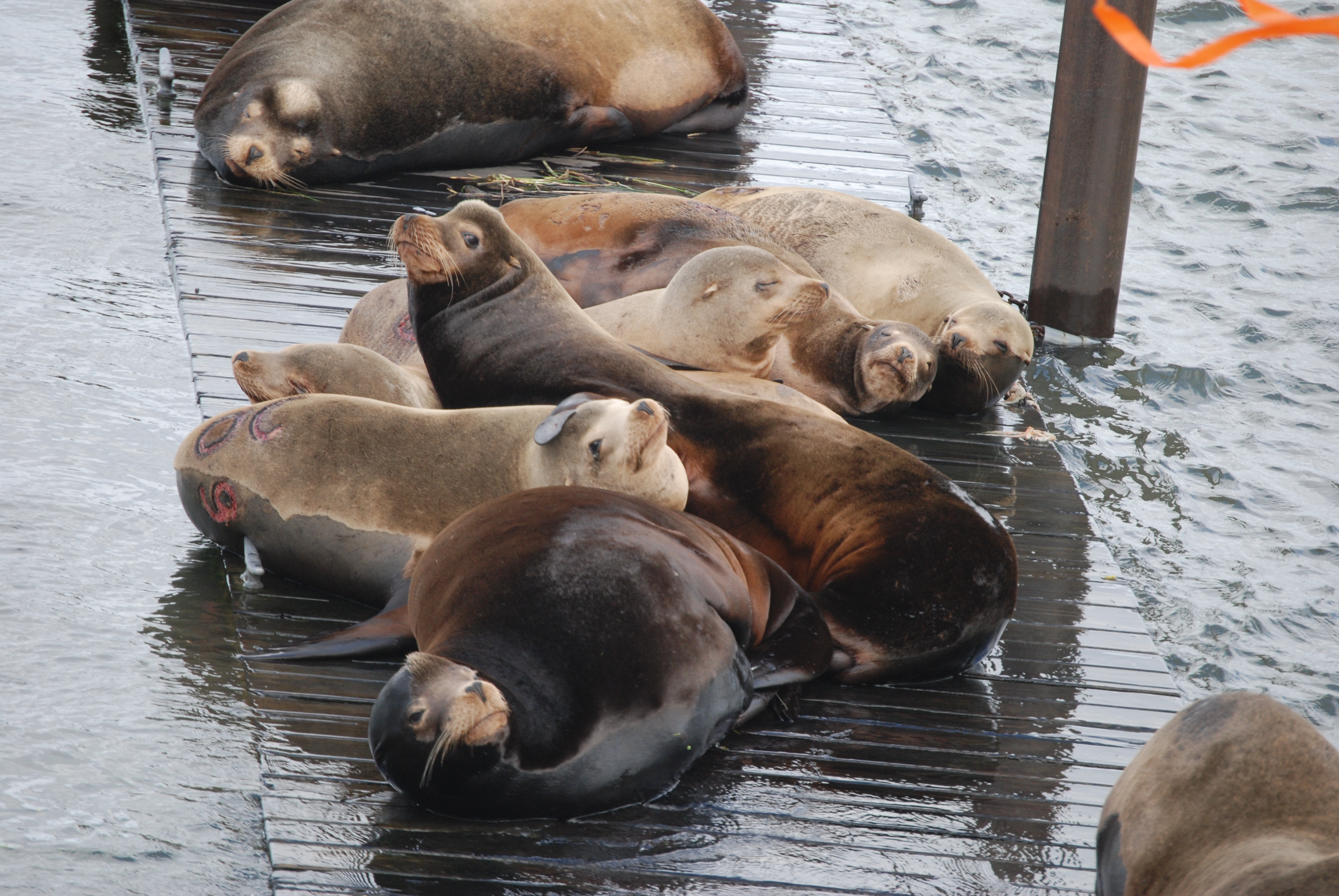
Much like California sea lions at the Columbia River, cormorants are being targeted simply because they eat salmon. Federal officials are claiming that these seabirds, protected under the Migratory Bird Treaty Act, eat too many juvenile salmon, as well as steelhead, as the fish migrate through the river estuary to the Pacific Ocean. The proposed cull program would claim the lives of 16,000 cormorants over the course of four years, with killing taking place during the birds’ nesting seasons. Oil will also be spread over cormorant eggs to suffocate the eggs and ensure that they do not hatch. While the Army Corps emphasizes the increase in the East Sand Island double-crested cormorant population in recent years, populations of these birds in general have been declining and the sustainability of this large-scale cull is questionable at best.

Sea Shepherd’s Dam Guardians were on the frontlines along the Columbia River and at the Bonneville Dam in 2012 and 2013, documenting the hazing, trapping and cruel branding of sea lions by the Oregon and Washington Departments of Fish & Wildlife for the “crime” of eating salmon. If any of the branded sea lions are determined to be eating “too many” salmon, they are killed – and the federal government has allowed these states to kill up to 92 federally protected sea lions each year until June 2016. It is important to note that “too many salmon” might constitute just one salmonid. The sea lion cull continues, despite the fact that they consume only 1-4% of the salmon, while fisheries are typically allowed to take 10-12%.

USDA bird hazer sets off explosives at the Bonneville Dam, May 2013USDA bird hazer sets off explosives at the
Bonneville Dam, May 2013
Photo: Sea Shepherd
The Army Corps reports that non-lethal methods – including “hazing with lights, reducing nesting habitat, and using human presence to flush double-crested cormorants off potential nesting sites” – have been tested. Sea Shepherd has documented bird hazers from the USDA harassing cormorants along the river, frightening the birds with explosives.

Just as the taxpayer-funded culling of sea lions at the Bonneville Dam will not solve the problem of a declining salmon population, nor will the shooting and killing of cormorants – set to cost up to $1.5 million each year of the four-year cull. The scapegoating of these innocent animals redirects the public’s focus from the real problems at the Columbia – overfishing, a polluted river filled with toxins, and the dam itself.

CALL TO ACTION: Though Sea Shepherd does not currently have Dam Guardians on the ground, we remain dedicated to protecting the animals who call the Columbia River home and exposing the true threats to this endangered salmon population. Please join us in speaking out against the planned killing of 16,000 cormorants for the “crime” of eating salmon. Here are ways you can help:

1) Attend one or both of the upcoming public meetings scheduled by the Army Corps of Engineers to discuss the proposed cull to show that you stand with the cormorants and the sea lions, as well as the salmon:

July 10 from 2:30pm to 5:30pm PT
Matt Dishman Community Center
77 N.E. Knott St.
Portland, Oregon

July 24 from 3pm to 6pm

Best Western Lincoln Inn
555 Hamburg Ave.
Astoria, Oregon

2) Submit public comments against the cull:

Email: Cormorant-EIS@usace.army.mil

Mail:

Sondra Ruckwardt
U.S. Army Corps of Engineers, Portland District
Attn: CENWP-PM-E / Double-creasted cormorant draft EIS
P.O. Box 2946
Portland, OR 97208-2946

The deadline for public comments is August 4, 2014.

First sea lions. Now cormorants. Where and when will it end?

Dam Guardians
Visit our
Dam Guardians
site

Scuba diving assault caught on camera off Kona Coast

By Tim Sakahara
http://m.hawaiinewsnow.com/#!/newsDetail/25497853

An assault is caught on camera 50 feet underwater. The video shows one
diver ripping off the air supply of another diver. Now authorities are
investigating.

Environmentalists and reef fish collectors have had disputes in the past,
but this one may have crossed over into criminal action with one party
calling for serious charges to be filed.

The video was taken off the Kona Coast last Thursday. The dive turned ugly
when one diver darts over and rips off Rene Umberger’s breathing supply 50
feet underwater. The scene was captured on two cameras.

“This man needs to be arrested. I think this man needs to be arrested
immediately for attempted murder,” said Rene Umberger, coral reef
consultant and scuba diver.

Umberger, 53, was eventually able to get her regulator back in and breathe
again. That’s when she captured the suspect make another threatening
gesture with his arms toward her.

“I honestly thought he was coming back for a second attack,” said Umberger.
“I got up on the boat and I said oh my God, someone just tried to kill me
underwater.”

Umberger and the others were documenting damage to coral reefs when they
came across the pair of divers who clearly didn’t want their picture taken.
She credits her experience and more than 10,000 dives with saving her life.

“An inexperienced diver would likely panic. Either panic from the stress of
the situation and shoot for the surface. They may panic because their air
source is missing and they can’t find it. Any of those things causes a
diver to shoot for the surface and those incidents often lead to death,”
said Umberger. “Never in a million years. Never in a million years did I
think that someone would attack like that, especially from such a distance.
It’s not like we were close up or in their face.”

She believes she knows who the suspect is and wants to press charges.

The State Division of Conservation and Resources Enforcement says it is
investigating and will turn its information over to the County Prosecutors
office.

“The greater issue is that Hawaii’s reefs are being emptied by these
commercial operations,” said Umberger. “Hawaii’s reefs are suffering
incredibly from this unlimited collection.”

The video shows how aggressive people can be.

Collecting reef fish is legal if you have a permit and are in a designated
area and meeting fish size, season and quantity rules. There’s no word from
the State if the suspect was diving legally.

images

Would You Help Save the Earth by Being Childfree?

http://www.psychologytoday.com/blog/complete-without-kids/201403/would-you-help-save-the-earth-being-childfree

Would You Help Save the Earth by Being Childfree?

Consider the environmental benefits of not having kids.

Most people consider whether or not to have kids based on lifestyle factors such as career goals, finances, and leisure time, but there’s another group of folks who are doing so primarily for environmental reasons.

This past summer, Time Magazine published a cover story about the childfree life that discussed why people decide to not have kids. Author Lauren Sandler wrote that the birthrate in the US is the lowest in recorded history and that the fertility rate actually dropped by 9 percent between 2007 and 2011. She cites cost ($234,900 to raise a child born in 2011 for a family earning less than $100,000 per year) as a major factor in this decline. Careers are also impacted, especially for women, who may lose out on as much as a million dollars because of lost promotions and other missed opportunities in the workplace that result from taking time off to raise kids.

Sandler also points to the sense of freedom that comes from being childfree. Childfree adults have an abundance of time to spend with friends and family, at their jobs, and on their own leisure activities and self-care.

 But there’s a third factor that Sandler neglected to discuss in her popular article—the green angle. Lisa Hymas, writer for Grist.org, wrote about this in a follow-up to the Time story. Hymas points out that the global population is now at 7.1 billion and is projected to reach 9.6 billion by 2050. That’s a lot of people stressing an already exhausted earth. She cites a Global Environmental Change study that boldly discusses the impact of each child on the earth.

The bottom line from this research is that all of the environmentally conscious deeds a person may do — recycling, riding the bus, etc. —  pale in comparison to not having a child. As Hymas states, “The climate impact of having one fewer child in America is almost 20 times greater than the impact of adopting a series of eco-friendly practices for your entire lifetime.”

Hymas is in the lead in her willingness to boldly address this controversial issue and to encourage potential parents to consider the future of the earth when contemplating their own future. Bringing these issues to the forefront may lead them to forego having a child or to adopt instead.

Would you choose to not have kids primarily for the good of the environment? And if you wanted to be a parent, would you choose adoption for this same reason?

safe_image

When Humans are Gone, Who’ll be Around to Brand the Sea Lions?

The hot iron is something right out of the Inquisition era. But while the Spanishlittleboyc09 Inquisition was a necessary evil to prevent heresy and extract confessions from witches, branding sea lions serves no real purpose. Oh sure, the modern day inquisitors will argue that the tortuous process helps them decide which individual sea lions are most responsible for the capital crime of eating salmon at the Bonneville dam upriver.

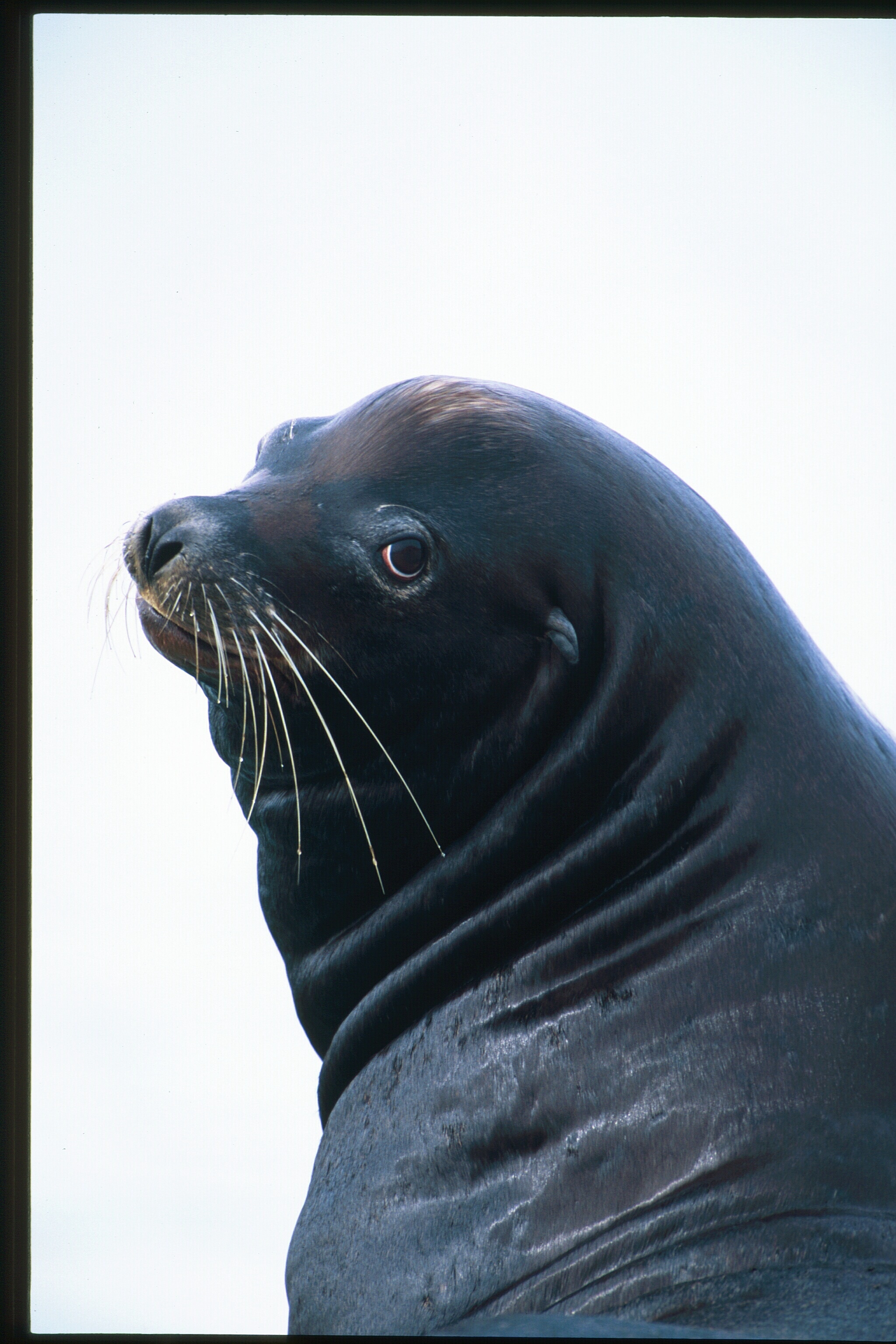
What you don’t hear them say is that sea lions have been eating fish for some 50 million years, ever since they left the land and evolved back into sea creatures. For the ensuing millennia, everyone got along just fine—until humans came by to fuck things up.

First, the humans strung nets and placed weirs out into the salmon’s migration path. Next they built canneries along the Columbia River; and while some people were busy killing off the salmon in droves, sealers murdered all the seals and sea lions and otters they could find, to fuel the booming, psychotic fur trade (for which the town of Astoria was first made famous). California sea lions were primarily rendered into oil by the equally-debased whaling industry.

The many dams built along the river were the coup de grace for any salmon still surviving the ever-advancing human onslaught. Not only do spawning salmon have to make it up past the massive new impediments, but warmer water behind the manmade reservoirs is hard on the young fish fry. And then there was the threat of the dam turbines…

Now, when a few sea lions are seen eating fish—as they’ve always done—they’re practically burned at the stake.

Text and Wildlife Photography© Jim Robertson

Text and Wildlife Photography© Jim Robertson

The Economic Case for Taxing Meat

264431_455824994498980_1177070538_n

http://www.businessweek.com/articles/2014-03-31/the-economic-case-for-taxing-meat

By Charles Kenny March 31, 2014

As tax season ramps up, we’re bound to hear proposals aimed at making the revenue system simpler and more efficient. A perennial is the “sin tax.” Rather than tax earnings—when we really want people to earn money—why not tax things we don’t want people to do? Add duties to cigarettes, alcohol, and carbon dioxide to slow people’s smoking, drinking, and polluting, and you’ll do them and the world a favor while raising revenue for schools, hospitals, and roads. But why stop there? It’s time to add one more sin to the list of habits that should be taxed: excessive meat consumption.

Meat has always been part of the human diet. Few dishes are as wonderful as a bolognese sauce made with a combination of pork, lamb, and beef. But taxing pigs, sheep, and cows is essential to contain the spiraling costs associated with massive meat eating.

When it comes to gorging on meat, Americans remain at the top of the global league tables. U.S. consumption of beef per person has actually declined over the past few decades, from 52 kilograms a year in 1970 to 41 kilograms in 2008. But chicken consumption approximately tripled over that period, to 44 kilograms per person, and overall meat consumption climbed from 105 to 122 kilograms a year—considerably more than the average personal weight (although some of that meat is thrown away or eaten by pets). By comparison, Indians consume less than 5 kilograms of meat per person.

Story: Keeping the Mystery Out of China’s Meat

But as the rest of the world gets richer, it’s closing the gap with the U.S. The Food & Agriculture Organization of the United Nations reports that in 2012, 966 million pigs, 1.5 billion cattle, and 22 billion chickens were roaming (actually, mostly not roaming) the world’s farms. For cattle, that’s five times the number in 1890 and for pigs about a tenfold increase, according to Clive Ponting’s Green History of the World. That’s one factor behind the growing global obesity epidemic: a British study comparing meat eaters and vegetarians found average differences in weight between meat eaters and vegans of 5.9 kilograms in men and 4.7 kilograms in women—and a recent U.S. study also suggested that meat consumption was positively linked to obesity.

At the other end of the consumption scale, all that meat production also makes for more expensive staple foods for the world’s undernourished. About one-third of the world’s cropland is given over to growing feed for animals. Including pastureland, livestock production occupies 30 percent of the land surface of the planet. Some of that land could be used instead to cultivate crops for human consumption. If you are concerned that growing corn for ethanol is raising food prices, you should be even more concerned by the larger impact of factory livestock farming.

Beyond meat’s impact on malnutrition, the livestock industry presents a growing global threat in its relationship with infectious disease. Domesticated animals have been the incubators of many of the world’s greatest killer diseases, from smallpox through measles to tuberculosis. The recent emergence of swine and bird flu suggests an increasing risk of pathogens jumping from the planet’s burgeoning domestic animal population to humans. We’ve added to that risk by regularly feeding factory animals antibiotics. Eighty percent of all antibiotics consumed in the U.S. are used on animals. This widespread use has been linked to the rapid emergence of antibiotic-resistant bacteria, including methicillin-resistant Staphylococcus aureus (MRSA), which kills 18,000 people a year in the U.S.

Story: Farm Bill Stinks for the Meat Industry, and That’s Not Entirely Bad

Greater meat production also has negative environmental effects. Livestock accounts for about 8 percent of global human water use (the proportion is a little higher in the U.S.) Wheat takes about 1,000 to 2,000 cubic meters of water per ton of crop; rice takes approximately double that. Taking into account the water demands of feedstock, cattle take between 13,000 and 20,000 cubic meters per ton of beef (although chicken does considerably better at around 4,000 cubic meters per ton). Land-based meat production is also a big factor behind declining fisheries worldwide. Millions of tons of fish each year are crushed into fish oil and dry feed to be fed to farmed fish as well as to pigs and chickens. And the effluence those animals produce creates “dead zones” in rivers and coastal areas.

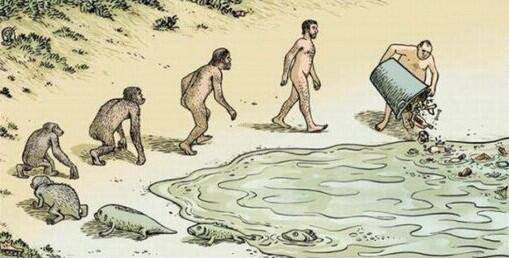
Human “Progress”

Rosemary commented: “We are seeing a longing for so-called ‘traditional’ ways of life, a manic nostalgia for something that really never was–except it was a less crowded world.”

To which I replied: I’ve thought that same thing many times. The only reason human life ever seemed to be in any kind of harmony with the rest of nature is that there were a LOT fewer of us. Sorry, but there’s no way an ever-growing population of humans can hope to be sustainable.

Here is a simple yet accurate depiction of human evolutionary “progress.”

1527138_271312873037188_1829199472_n

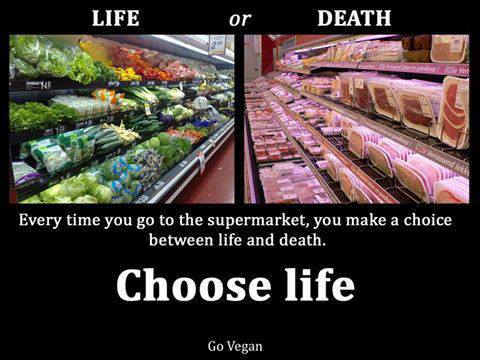
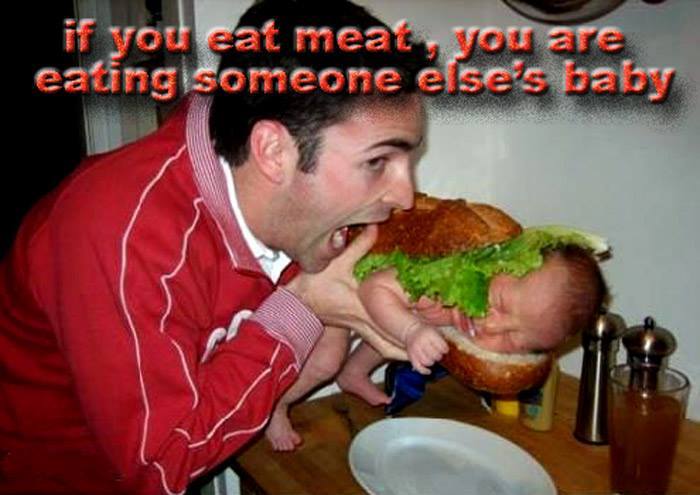
If You Eat Meat

1782018_10152293762567498_482181499_n

If you eat chicken or pork, you’re supporting extreme animal abuse on factory farms;

If you eat beef, you’re supporting the livestock industry that kills bison, elk and wolves;

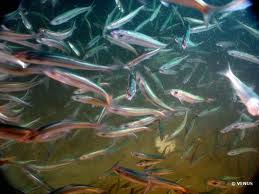
If you eat fish, you’re supporting the demise of our living oceans;

If you hunt, your selfish food choice robs a life and cheats a natural predator;

If you eat meat, you’re part of the problem instead of the solution;

1797410_10201246274383855_1764880622_n