Guns, Guns and More Guns

We Americans sure love our guns. Big ones, small ones, single shot or semi-automatic, antiques or shiny new ones. This year’s Black Friday gun sales set an all-time record (The FBI said it received 154,873 calls for background checks for new gun purchases on Nov. 23, a marked increase over the agency’s previous record number of calls: 129,166 last year. The bureau was so overwhelmed with calls that outages occurred at some centers). Americans’ infatuation with guns takes a back seat only to that which they have for cars; and as you would expect, the homicidal havoc wreaked by firearms is second only to the body count chalked up to automobile accidents.

With so many avid gun hoarders out there, the rest of us would have to amass a small arsenal to try to keep up with the Joneses. It seems U.S. gun owners so outnumber those who conscientiously object to personal weapon stockpiles that non-gun owners are about as few and far between as vegans at an NRA potluck.

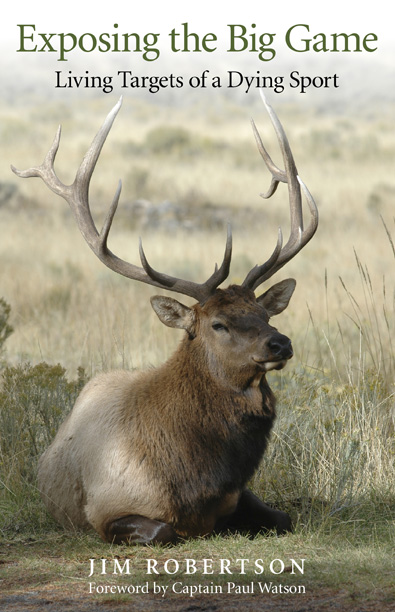
But while keeping a pistol or shotgun in the home to dissuade intruders is innocuous enough, this excerpt from my book, Exposing the Big Game: Living Targets of a Dying Sport, is a good example of the obsession some folks have with guns:

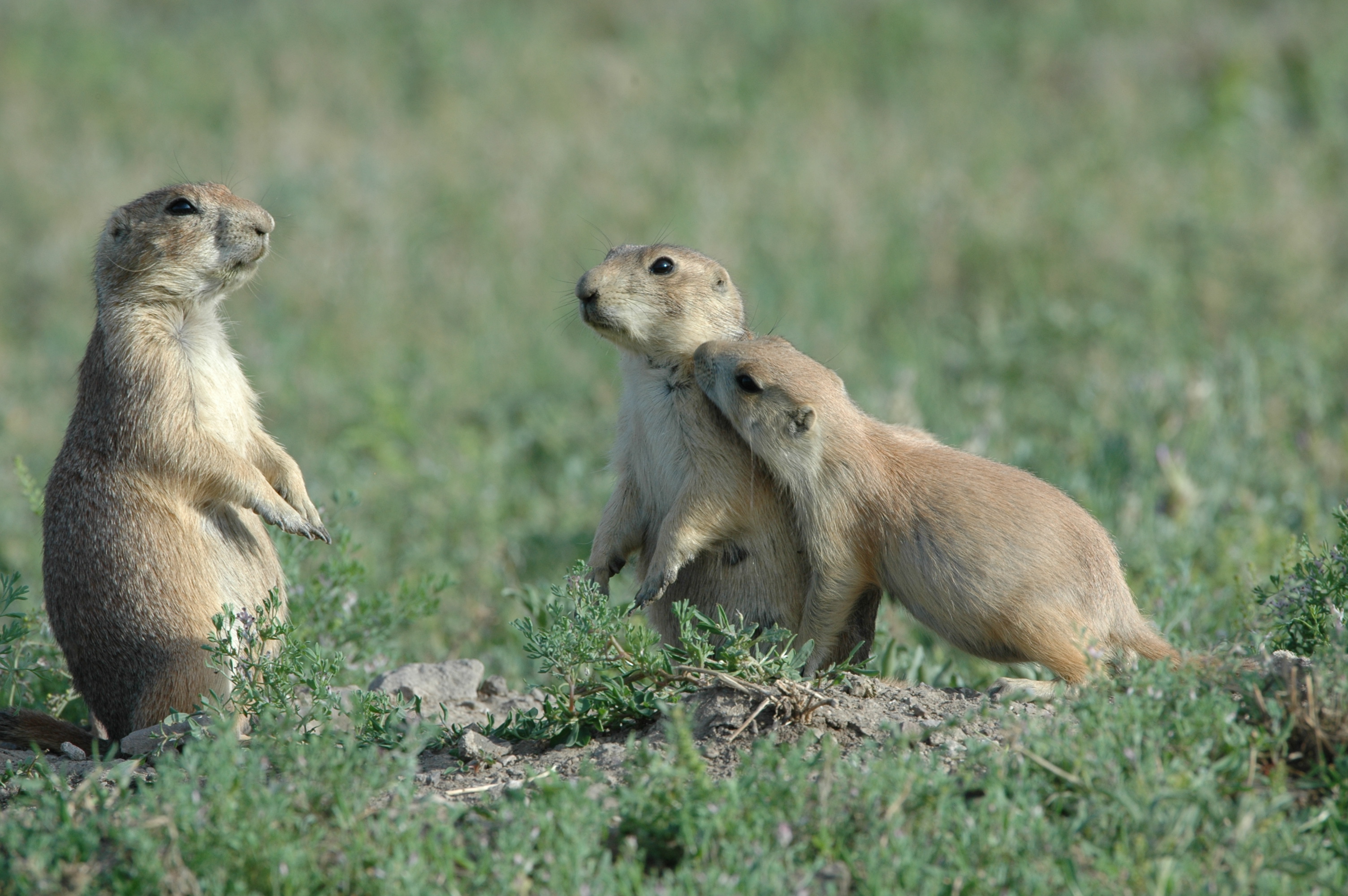
People in “cattle country” often entertain themselves by using the beleaguered prairie dogs as living targets, taking all the more sick pleasure in shooting an attentive mother as she pops up from her burrow to see if it’s safe for her youngsters to come out. Hunters glibly assign the term “double tap” for a shot that kills both the mother and her adoring baby. “Tap” is a particularly perverse moniker considering that the hollow point bullets they sometimes use cause their victims to literally explode on impact—a sight that must really get the shooter’s blood up. Ladies beware: there’s a demonstrated link between cruelty to animals and domestic abuse, assault and other crimes on a killer’s violence continuum [including, school-shootings and the mass murder of Christmas shoppers at the mall].

One thrill-killer describes his sport this way: “Prairie dog hunting is a blast, on both private and public lands. I like to start by clearing everything within 50 yards with an AR-15, then switch to my .223 Remington for anything out to about 150 and finally trade up to the bull barrel .22-250 for the longer shots.” The only thing stopping a sportsman with this much bloodlust is the melting point of his gun barrel…

Coincidentally (or not), an AR-15 was also the weapon of choice of Jacob Tyler Roberts, the 22 year old Portland mall gunman, and a .223 was the assault weapon used by the Connecticut school shooter, 20 year old Adam Lanza. The .223 was also the semi-automatic rifle used by the D.C. Beltway snipers, John Allen Mohammed and John Lee Malvo. While there’s truth to the saying “Guns don’t kill people, people kill people,” the fact is, those who kill the most are the people who’re the most fixated on their guns, i.e: hunters. The Columbine mass-murderers, the serial killer known as Zodiak, and untold others practiced on killing animals before graduating to people. Chances are good that when we learn the backstory of the mall shooter and the Connecticut kid-killer, we’ll find that they were quite the little nimrods as well.
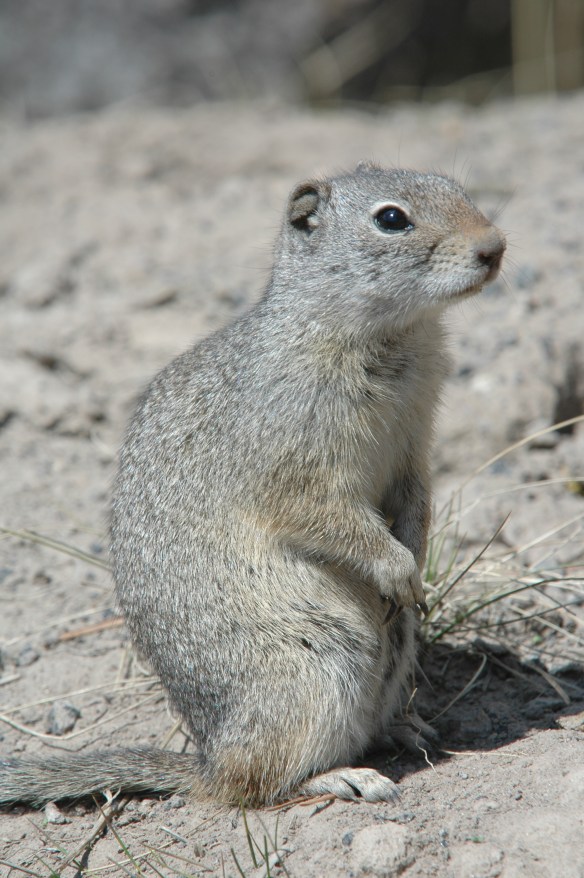
Text and Wildlife Photography© Jim Robertson
Text and Wildlife Photography© Jim Robertson
Hello Mass Extinction

In yesterday’s post, “Bye Bye Biodiversity,” I mentioned the hundreds of miles of Iowa cornfields where nothing else grows or lives. Humans have seen to it that nothing else lives in that region, at first by physically killing off the birds and mammals through hunting and trapping, and next with poisons to eradicate those species they deemed “pests:” the insects and burrowing mammals, along with any competing plants, collectively known as “weeds.”

To see to it that only the resultant monoculture thrives, their chosen plants are genetically modified to repel any other life that might find its way into the wasteland 524958_3325028303604_654533903_n(also so they won’t reproduce on their own without the parent corporation’s seed stock). Much of the corn is grown to serve as feed for those other monoculture “crops:” cows, pigs and chickens stuck on factory farms.

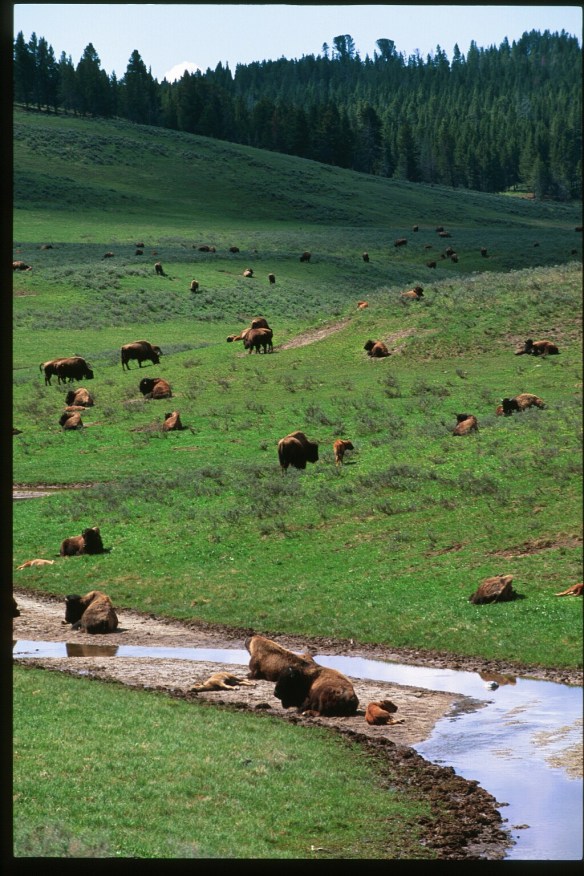
It requires huge tracts of open, flat land to allow for this kind of whole-Earth manipulation to go on, and the Midwest, once known as The Great Plains—the former home to vast herds of migratory bison and elk, pronghorn and prairie dogs, wolves, grizzly bears and more—was just the ticket.

As long as there are still miles of farm roads to speed their pickup trucks along and an occasional deer, coyote or “planted” pheasant to hunt, folks growing up there consider it to be the “country,” blissful in their ignorance of the biological diversity that thrived across the once wild land they call home.

It’s a similar story out west, where so much of the ancient forests have been removed and replanted with single-species tree plantations. Though the slopes are still mostly green, much of the wondrous diversity of life has been lost, along with the memory of whom and what once lived there.

By the same token, anyone arriving by transatlantic schooner would have no way of knowing that mass extinction in North America had already begun with the arrival of the first human hunters to cross the Bering land bridge a dozen centuries before. The megafauna which evolved on the Western Hemisphere—in glorious isolation from predacious human primates, whose greatest achievement may well be the complete undoing of all that evolution has created during this, the tail end of the age of mammals—would have brought to mind the African savanna; an American Serengeti.

Futuristic films, such as Soylent Green and Silent Running, suggest that when humans inevitably destroy the planet, there will be absolutely nothing left. But mass extinction does not necessarily equate to a totally denuded planet. The otherwise lifeless Midwest monoculture cropland, where one or two dominant species have displaced all others, is closer to what a mass extinction looks like.

In other words, we aren’t on the “verge of causing” a mass extinction, as the mainstream media (loath to report on anything that might affect the stock market) would tell you; we are among the living-dead in the midst of a human-caused mass extinction. It may not be the “Zombie Apocalypse,” but as far as life on Earth is concerned, it’s pretty damned scary.

Text and Wildlife Photography© Jim Robertson

Text and Wildlife Photography© Jim Robertson

Chapter Titles

Here’s the Table of Contents for Exposing the Big Game?
Foreword by Captain Paul Watson

Introduction

Chapter 1) Hide-hunting Holocaust Survivors Still under Fire

Chapter 2) An Act of Bison Altruism

Chapter 3) War on Coyotes an Exercise in Futility and Cruelty

Chapter 4) Time to End a Twisted Tradition

Chapter 5) Avian Superstar Both Athlete and Egghead

Chapter 6) From the Brink of Oblivion and Back Again?

Chapter 7) A Day in the Sun for the Hayden Wolves

Chapter 8) Critical Cornerstone of a Crumbling Castle

Chapter 9) Bears Show More Restraint than Ursiphobic Elmers

Chapter 10) The Fall of Autumn’s Envoy

Chapter 11) Inside the Hunter’s Mind

Chapter 12) A Magical World of Oneness

Chapter 13) Living Targets of a Dying Sport

Chapter 14) A Few Words on Ethical Wildlife Photography

In Closing

Acknowledgements:

Looking back, this was not, at the outset, planned as a podium from which to lambaste anyone’s hobby or heritage, but was originally intended as a venue for relating some of the behaviors and capabilities I’d observed among animals living in the wild, and as a celebration of life along the compassion continuum. However, after delving deeper into the histories of the species covered here—thanks in part to the invaluable references listed below—I found it impossible to simply depict their natural activities without also chronicling the shocking stories of abuse they have suffered at the hands of man. It would have been doing the animals a disservice to merely record how they naturally lived without at least alluding to the far-reaching and pervasive ways that human actions have altered their lives and sometimes their very natures. And the facts are clear: there has been no greater direct human impact on wildlife than the ongoing threat of hunting. As with the other pertinent and profound quotes from a variety of enlightened sources, this one from Edward Abbey proficiently puts it in a nutshell, “It is not enough to understand the natural world. The point is to defend and preserve it.”

Some People Simply Like to Kill Other Animals

In the title of an October 2nd post to his blog column in Psychology Today, University of Colorado evolutionary biology professor Marc Bekoff, PhD, asked, “Do Some People Simply Like to Kill Other Animals?”

The answer seems to me a foregone conclusion.

Bekoff writes, “Many know that Mark Zuckerberg, founder of Facebook, made a pledge in May 2011 only to eat meat he hunted so that he could be ‘thankful for the food I have to eat.’ Of course, it’s not obvious that he has to eat other animals… Surely, in the arena of who, not what, winds up in our mouth, Mr. Zuckerberg and others are not my moral compass. It’s always good to remember that a significant percentage of the food we eat was once sentient beings who cared deeply about what happened to them and to their friends and family. They should be referred to as “who” not “that” or “what.” So, when someone wants to talk about a meal it’s a matter of who’s for dinner, not what’s for dinner.”

His post included the subheading, “‘Ethical hunting’ raises numerous difficult and sticky issues,” about which Bekoff states, “I see no reason to kill other animals for a meal that isn’t needed. Every time I read an essay about “ethical hunting” it makes me reflect on a number of different and challenging issues. One that comes up time and time again is that maybe some people simply like to kill other animals and then offer a wide variety of excuses about their lust for blood (consider also the unrelenting war on wildlife including the wanton killing of wolves, the man who used a trapped wolf for target practice…)”

Sea Shepherd’s Captain Paul Watson backs up the assertion that some people enjoy killing other animals, “Behind all the chit-chat of conservation and tradition is the plain simple fact that trophy hunters like to kill living things.”

But no one makes the case as clearly as hunters themselves. One anonymous thrill-killer recently posted the following shocking admission to an animal advocacy site: “What i like to do as a hunter is go in the woods and kill everything possible and let my dogs chew on it. I once shot a deer and it layed in the creek and i had to shoot it again in the head while it was crying and it kicked me lol when i stuck my knife in its belly so my brother cut its throat it was soo funny. Me and my uncle was guttin one he told me to hold its head and when i did he pushed on its belly and made it bahh at me and scared the crap out of me haha. Hunting is awesome like when you see a herd of deer and just start firing right in the middle and then go and see how many different blood trails there are.”

Prairie dog hunting is a popular “sport” that can in no way be defended as “ethical” or necessary for subsistence (people don’t eat them). Private ranches offer “sportsmen” the chance to kill prairie dogs to their heart’s content—for a fee. The following is an ad for a typical prairie dog hunting excursion: “We approach the edge of a prairie dog town and set up and shoot for an hour or two or until the prairie dogs start getting scarce, then we pull up and drive over the hill and continue prairie dog hunting…after you get tired of the carnage, it‘s also fun to try shots over 1000 yards.”

Note that the ad uses the word “fun,” laying to rest any doubt that they enjoy the killing. So, why shouldn’t people be allowed to have their fun? Beyond the obvious answer that their animal victims are not enjoying this “sporting” behavior, society at large should discourage this kind of conduct for public safety reasons.

Keith Hunter Jesperson’s history of aggression toward animals began when he was only six. An avid hunter and part-time serial killer, Jesperson got his first taste of killing living beings by bashing in the heads of gophers. He discovered that he enjoyed it. Later, while living with his parents in a mobile home park in Washington State, he started killing larger animals. He would beat stray dogs and cats to death with a shovel, strangle them with his bare hands, or shoot them with his BB gun. His proud father bragged to others about how Keith had gotten rid of the stray cats and dogs in the trailer park.

“All this did is spawn in me the urge to kill again,” Jesperson told an interviewer. “I began to think of what it would be like to kill a human being. The thought stayed with me for years, until one night it happened. I killed a woman by beating her almost to death and finished her off by strangulation,” he said.

Keith Jesperson is by no means the first hunter to go on to become a serial killer of humans. As long as we enshrine hunting in books, magazines, cable TV shows and acts of Congress, there will always be people wanting to expand their species hit list to include our own.

Text and Wildlife Photography ©Jim Robertson

“Recreational Shooting Opportunities” Have Taken Their Toll

Every place I have lived in the West, I’ve been fortunate enough to locate or stumble upon the rare or secretive creatures native to the locality, be they cougars, wolves, grizzly bears, lynx, otters, fisher, mink, pine marten, or badgers, even crossing paths with the shadowy wolverine on four separate occasions. So it was with confidence that I set out across eastern Montana and Wyoming in search of the amicable, diurnal rodents that call the prairie their home. Surely they must be thick out there. How hard could they be to ferret out? It’s not like I was searching for Bigfoot this time. 

I combed hundreds of miles of what should be prime prairie dog habitat, scouring gravel back roads amid over-grazed cattle allotments and between functioning and defunct oil rigs, but found almost no sign of them. What I did find were prairie dog ghost towns and a lot of lonely, parched and denuded ground desperately in need of the vital cornerstone of the treeless grasslands. 

Frustrated, I stopped at the headquarters of a national recreation area and asked the park service spokeswoman why there were no prairie dogs anywhere in the vicinity. She replied with a shrug, “Uh…Target practice?” Apparently, unregulated “recreational shooting opportunities” (glib game department jargon for their year-round open season on prairie dogs) have taken their toll. No one at that government compound could direct me to a single place where prairie dogs still existed, yet this vanishing keystone species is left unprotected by ESA safeguards. What will good ol’ boys shoot at when they run out of prairie dogs, marmots or ground squirrels—each other? Okay, fair enough, but let’s hope they don’t hit anyone who doesn’t deserve it. 

Driving back home to southwest Montana on I-90, I spotted a sign for Greycliff Prairie Dog Town State Park. As the name implies, there is an active prairie dog town there—one of the last of its kind. The trivial excuse for a park, located right along the interstate with a busy railroad just beyond, is, oddly enough, a surprisingly decent place to see them living otherwise undisturbed. But with the constant whirr of the freeway punctuated by locomotives dragging eternal black streams of overflowing coal cars, it’s also a good place to get a glimpse into what’s happened to the world of the prairie dogs and why there are so few left of their kind.

     ____________________________________________________

The preceding was excerpted from Jim Robertson’s book, Exposing the Big Game: Living Targets of a Dying Sport 

Wildlife Photography Copyright Jim Robertson

Essential Species Quiz

Here is a short multiple-choice quiz to test your knowledge of our fellow animals. 

Instructions: Choose the species that best fit the descriptions below. 

Note: Although some may share a few of the characteristics, they must meet all the criteria listed in order to qualify as a correct answer. 

1. Which two species fit the following description? 

  • Highly social
  • Live in established communities
  • Master planners and builders of complex, interconnected dwellings
  • Have a language
  • Can readily learn and invent words
  • Greet one another by kissing 

A. Humans

B. Prairie Dogs

C. Dolphins

D. Penguins 

Answer:  A. and B

2. Which two species fit the following description? 

  • Practice communal care of the youngsters on their block
  • Beneficial to others who share their turf
  • Essential to the health of their environment
  • Without them an ecosystem unravels
  • Have been reduced to a tiny portion of their original population
  • Vegetarian 

A. Humans

B. Prairie Dogs

C. Bison

D. Hyenas 

Answer:  B. and C. 

3. Which two species fit the following description?

  • Out of control pest
  • Multiplying at a phenomenal pace
  • Physically crowding all other life forms off the face of the earth
  • Characterized by a swellheaded sense of superiority
  • Convinced they are of far greater significance than any other being
  • Nonessential in nature’s scheme 

A. Humans

B. Prairie Dogs

C. Cockroaches

D. Sewer Rats 

Answer:  Sorry, trick question; the only species fitting the criteria is A. 

If this seems a harsh assessment of the human race or a tad bit misanthropic, remember, we’re talking about the species that single-handedly and with malice aforethought blasted, burned and poisoned the passenger pigeon (at one time the most numerous bird on the entire planet) to extinction and has nearly wiped out the blue whale (by far the largest animal the world has ever known). Add to those crowning achievements the near-total riddance of the world’s prairie dogs, thereby putting the squeeze on practically all their grassland comrades, and you can start to see where this sort of disrelish might be coming from. 

When the dust settles on man’s reign of terror, he will be best remembered as an egomaniacal mutant carnivorous ape who squandered nature’s gifts and goose-stepped on towards mass extinction, in spite of warnings from historians and scientists and pleas from the caring few…

                                   ____________________

The preceding was an excert from the book, Exposing the Big Game.

Text and Photography Copyright Jim Robertson

The Time They Feel Most Alive

While we’re exploring the similarities between serial killers and sport hunters, another thing they both have in common is, the time they feel most alive is when they’re out killing. A serial killer can’t be satisfied with a quiet walk in the night air any more than a hunter can take a hike on a trail without a weapon. 

That might explain why there’s no closed season on prairie dogs or coyotes in states that “manage” them for “recreational shooting opportunities.” “Game” managers must be able to relate to their hunter constituents well enough to know that killing just once a year isn’t enough for many of them. Like serial killers, sport hunters have a cooling off period between kills which doesn’t always last throughout the winter, spring and summer until the next hunting season. 

Prairie dogs and coyotes are two species that are heavily hunted, but never for food. Their killers can’t claim a need for sustenance; they’re just out for a bit of “fun.” One thrill-killer describes his sport this way: “Prairie dog hunting is a blast, on both private and public lands. I like to start by clearing everything within50 yardswith an AR-15, then switch to my .223 Remington for anything out to about 150 and finally trade up to the bull barrel .22-250 for the longer shots.” Clearly, it’s the act of killing that really gets their blood up.

Wildlife Photography Copyright Jim Robertson