Exposing the Big Game

Forget Hunters' Feeble Rationalizations and Trust Your Gut Feelings: Making Sport of Killing Is Not Healthy Human Behavior

Exposing the Big Game

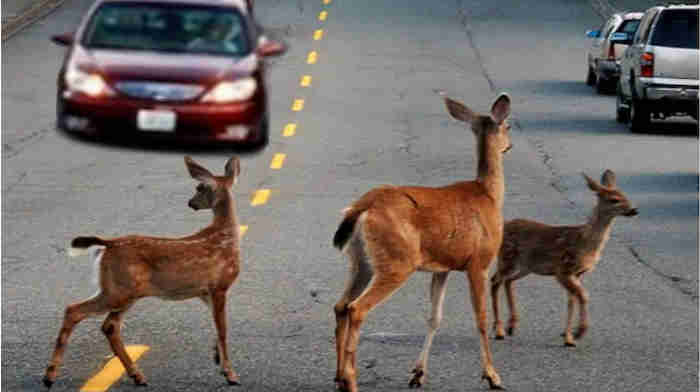
Bambi’s Relatives Are Killers


Bambi's Relatives Are Killers“Man killed by tiger at San Francisco Zoo.” “Teenager mauled by shark off Hawaii beach.” “Pit bull attacks neighbor.” These types of incidents get massive media coverage but are very rare occurrences. Deer on the other hand don’t get near the press, but are much more dangerous.

Deadliest animals to humans

If someone had asked you “What is the most dangerous creature you might encounter in the US, what would you answer? Without reading the title of this article, would you have guessed deer? I doubt it. Sharks? Snakes? Bees? Marc Siegel’s comments are quite appropriate, “Media obsession not only misinforms but also diverts attention from the real danger.” 1

Here’s a recent example from Science Daily: “The animals most commonly responsible for human fatalities are farm animals, insects (hornets, wasps, and bees) and dogs.” 2 Note no mention of deer.

Here’s a table listing animals most dangerous to humans 3. Again, no mention of deer.

Animals most dangerous to humans

Animal Humans Killed Per Year
Mosquitoes 1,000,000
Snakes 50,000
Dogs 25,000
Tsetse flies 10,000
Scorpions 3,250
Crocodiles 1,000


Here’s what you may not have heard: Up to 1.5 million cars collide with deer annually in the United States, killing more than 200 Americans, causing approximately 10,000 injuries, and resulting in almost a billion dollars worth of damages. By these numbers, deer are roughly two hundred times deadlier than sharks. 4

While the National Highway Traffic Safety Administration (NHTSA) keeps annual figures for car-deer accidents, the figures lack a measure of exactness and certainty because there currently is not standardization in the reporting of deer-related accidents throughout the country, and because what constitutes a ‘reportable accident’ varies so much between states. Also, with a portion of drivers on the road uninsured, unlicensed or driving under the influence, many more deer collisions probably go unreported. 5

Here are the top five states for claims from a collisions with deer, elk, moose or caribou in 2018. 6

Top five states for claims from a collisions with deer, elk, moose or caribou in 2018

Rank State 2018 odds
1 West Virginia 1 in 46
2 Montana 1 in 57
3 Pennsylvania 1 in 63
4 Wisconsin 1 in 72
5 Iowa 1 in 73

In 2017, the total deer population in the United States was an estimated 33.5 million, down from 38.1 million in 2000. Yet even at their current population, deer are ravaging ecosystems across the country. 7


Scientists estimate that when white people first arrived in Wisconsin, the northern forests of the state held four to eight deer per square mile. As a result of human intervention, there are now roughly 25 to 30 deer per square mile in parts of northern Wisconsin, and double that in some middle and southern countries. The same challenge extends to many other parts of the country.

In Virginia, state officials estimate that deer densities in Fairfax County parks, not far form Washington DC, have reached more than 100 animals per square mile. Scientists in New York and Pennsylvania have turned up ecological impacts from whitetails as well, prompting groups such as the Nature Conservancy to argue that high deer numbers may pose a greater threat to forests in the eastern United States than climate change. 8

Deer devoured countless wildflowers close to extinction and devastated saplings of cedar, hemlock and oak. All of this eating, amounting to more than 2,000 pounds of plant matter per deer per year might account for widespread declines of North American songbird populations, which rely on many of the plants upon which deer gorged themselves.

Another issue is ticks that carry Lyme disease and a faster spread of threats such as chronic wasting disease (CWD) which attacks the nervous system of deer and causes them to lose weight and eventually die. The misshapen protein that causes CWD hasn’t been shown to affect humans, but concerns over it are leading some hunters to avoid certain areas or give up the sport entirely. That, in turn, could make it harder for the remaining hunters, already an aging and dwindling group, to keep the herd in check. Nationally, the number of hunters dropped 16 percent from 2011 to 2016. The level of hunting in 2016 was the lowest measured in the past 25 years. 8

What to do?

Until scientists discover a way to deer-proof our roadways, the best advice for avoiding them is to take it slow in rural wooded areas in the evening hours, especially on winding roads with blind approaches.

References

  1. Marc Siegel, False Alarm: The Truth About the Epidemic of Fear, (John Wiley & Sons, New York, 2005)
  2. “Number of people killed by animals each year in the US remains unchanged,”, February 28, 2018
  3. “List of deadliest animals to humans,” , June 30, 2019
  4. Ross Pomeroy, “Deadlier than sharks: the science of deer in the headlights,”, April 7, 2014
  5. Bengt Halvorson, “Deer vs. car: no winners here,” The Car Connection, October 4, 2004
  6. “Facts + statistics: deer vehicle collisions,”
  7. Ross Pomeroy, “Deer are a menace and we need to kill a lot more of them,” , December 20, 2018
  8. Jason Stein, “The hunt for answers,”

Lucky the lynx killed in car accident

The male lynx was killed on a state road along with the deer he was hunting. Lucky was one of the first lynx to be resettled in the wilderness of the western German state of Rhineland-Palatinate.

A Eurasian Luchs lynx licking its paw (picture-alliance/blickwinkel/R. Sturm)

Lucky, a 4-year-old male lynx, was killed on Monday, May 13, when he and the deer he was chasing jumped out onto a state road and were hit by a car. Both animals were killed in the accident. The driver of the car was uninjured.

Lucky, who was orphaned as a pup, was one of the first lynx to be resettled in the wilderness of Rhineland-Palatinate in western Germany. He was a year old when he was released into the Palatinate Forest in the summer of 2016.

Release was part of an EU environmental project

To date, some 16 lynx have been released in the area, with four more to come. The release was sponsored by the EU Life project, which funds environmental and climate change activities.

Watch video05:36

Palatinate Forest – Nature without borders

Not all of the animals released in the Palatinate Forest have survived. Two female pups died shortly after their release and another male left the area for the neighboring Vosges region in France.

Authorities say that at least seven pups have been born since the animals were originally released. The surviving animals have spread across large areas of the forest.

A lover and a hunter

Lucky was the first of the animals to make headlines, however. Though his first appearance in the papers was negative — he attacked a herd of sheep — he was also the first lynx in the area to become a father.

More recently he made news again by visiting the female Kiara at the Palatinate Forest Nature Park in Kaiserslautern, even disappearing into her pen.

Ultimately, it was Lucky’s penchant for hunting that led to his demise, yet his case is not unique. According to the Rhineland-Palatinate State Hunting Association, some 23,400 animals were involved in automobile accidents across the state in 2018.

Coyote pup rescued after mother is hit, killed by car while crossing road

Play Video

A state trooper helped rescue a coyote pup Sunday night after the pup’s mother was hit and killed by a car while crossing the road near Suffolk Downs.

State police said Trooper Carlo Mastromattei was originally dispatched to a report about a wounded dog Sunday night, but found the frightened pup on the busy Revere Beach Parkway. The trooper called various state agencies for help, but none were available.

Lisa Cutting, of Oceanview Kennel in Revere, was able to respond and brought a crate for the 4-week-old pup.

Mastromattei brought the pup home in the crate overnight, state police said.

Oceanview Kennel brought the pup, which was named Carlos, to Tufts Wildlife Center in Grafton the next day.

Veterinarians there examined the pup and found he was healthy, state police said.

“The little guy is going to be transferred to the care of a wildlife specialist in the Berkshires, who will rehabilitate him and acclimate him to life in the wild, where he will eventually be released,” state police said.

Follow this story to get instant e-mail alerts from WCVB on the latest developments and related topics.

Animals are using Colorado’s wildlife crossings, reducing collisions, CDOT says

PUBLISHED:  | UPDATED: 
A herd of deer walk through a wildlife crossing in the snow.
Colorado Department of Transportation, supplied

A herd of deer walk through a wildlife crossing in the snow.

Wildlife bridges and underpasses led to a dramatic decline in animal-related car crashes, …

For full story, visit:

Animals are using Colorado’s wildlife crossings, reducing collisions, CDOT says


“ON THE ROAD”

Poem from Rosemary Lowe:
I HAVE BEEN LYING HERE FOR HOURS, SINCE THE COLD NIGHT’S DEATH WIND HURTLED MY LIVING BODY INTO THE COLD GRIP OF DEATH…
SO SOON  MY  YOUNG LIFE,  TORN FROM ME, TERRIFIED BY THE CRUSH OF METAL UPON MY FLESH–OH, THE BLOOD AND THE PAIN….
THE ROAD– HUMANS CALL IT– WITH THEIR POWERFUL KILLING MACHINES, SO FAST, SO FINAL—GOING WHERE?
MILLIONS OF MY KIND–FOUR LEGGEDS–WITH PLACES TO GO, FAMILIES TO BE WITH, NEVER TO MAKE IT TO OUR DESTINATION…
NEVER TO SNUGGLE AGAIN, AGAINST FAMILIAR FUR, THE WARMTH AND LOVE OF ONE’S OWN KIND…
TOO FAST, TOO BIG–HARD METAL AGAINST A SOFT LIVING BODY–THAT BREAKS AND BLEEDS..DO YOU HEAR MY CRIES?
DO YOU SEE MY SHATTERED, BLOOD-SOAKED BODY ON THE ROAD?— DO YOU EVER SEE?
I AM NOT JUST A BODY, A THING.
I WAS SOMEONE’S MATE, SOMEONE’S CHILD, I WAS SOMEONE.
I WAS AN ANIMAL, JUST LIKE YOU.
——Rosemary Lowe

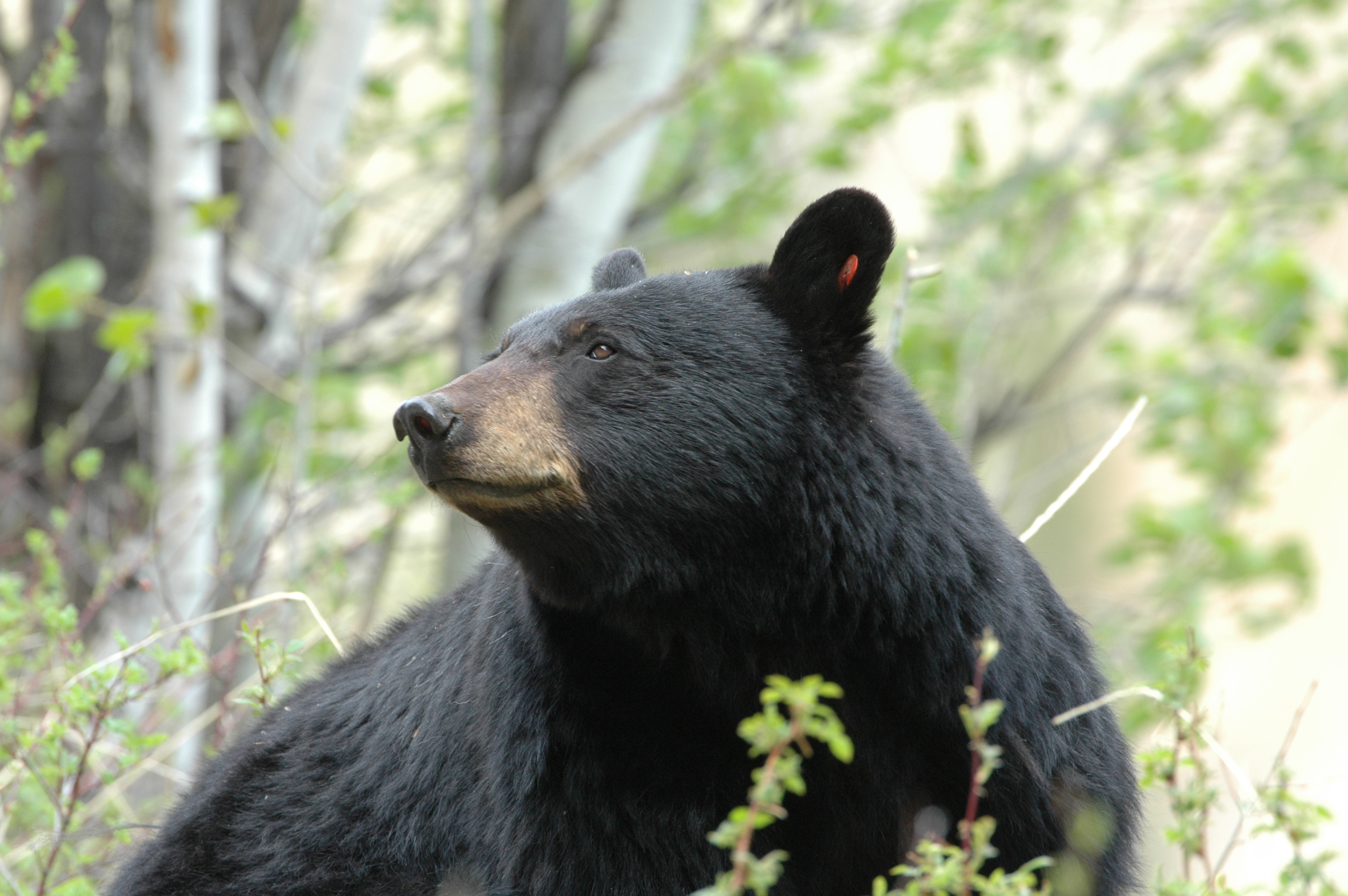
More bears dying in Rockies

Photo Copyright Jim Robertson

Photo Copyright Jim Robertson

By Colette Derworiz, Calgary Herald August 6, 2014

It’s been another challenging couple of weeks for bears in the Rockies.

In the past week, wildlife officials confirmed grizzly No. 138 lost her second cub. A tagged grizzly bear, No. 144, was spending time in Harvie Heights, a community on the boundary with Banff National Park.

And two black bears were hit on the highways in the national parks on the weekend, but it’s unknown whether either bear survived.

“It’s been a really tough year for roadside bears,” said Brianna Burley, human/wildlife conflict specialist with Banff, Yoho and Kootenay national parks.

So far, there have been 15 black bears hit on the highways — with at least seven of those bears dying from their injuries. An eighth black bear was hit and killed on the railway tracks.

In late July, a grizzly bear was also struck and killed by a vehicle on Highway 93 N.

The bear, No. 149, was struck around Hector viewpoint on July 21, but was only found a few days later after a mortality signal on its GPS collar went off.

“It looked like it had died from the impact,” said Burley, noting it was a young male bear they had been keeping a close eye on since the July long weekend when they kept it safe from traffic on the Trans-Canada Highway. “It’s so disappointing.”

Similarly, wildlife officials were disappointed to see that No. 138 — a female bear who emerged from her den around the Lake Louise ski hill — was without either of her two cubs late last week when she showed up near the townsite.

She had lost one of her cubs in mid-July due to predation. It’s believed a similar fate struck the second cub.

“We have our assumptions again that she got tangled up with the big males,” said Burley. “We’re not totally sure what happened.”

Another tagged bear from Banff National Park, No. 144, kept wildlife officials busy as it ate berries around the community of Harvie Heights, just outside of the national park boundary.

Provincial officials said the three-and-a-half year old male started making its way back west on Tuesday morning.

“He packed up his bags and moved to Banff,” said Dave Dickson, a Fish and Wildlife officer in Canmore.

Bear biologist Jay Honeyman said they will continue to monitor the bear with their counterparts within Banff National Park.

“We don’t want him in the residential area,” he said, noting they were able to haze the bear out of the area.

All of the collared bears are part of a joint project between Parks Canada and Canadian Pacific to come up with ways to reduce grizzly bear mortalities.

cderworiz@calgaryherald.com

© Copyright (c) The Calgary Herald


http://www.calgaryherald.com/news/calgary/More+bears+dying+Rockies