Exposing the Big Game

Forget Hunters' Feeble Rationalizations and Trust Your Gut Feelings: Making Sport of Killing Is Not Healthy Human Behavior

Exposing the Big Game

Makah Whaling – Whales Must Be Protected in U.S. Waters

Makah Whaling – Whales Must Be Protected in U.S. Waters

March 11, 2015 

http://www.seashepherd.org/commentary-and-editorials/2015/03/11/makah-whaling-whales-must-be-protected-in-us-waters-692

Commentary by Sea Shepherd Founder, Captain Paul Watson

Gray WhaleGray Whale
Photo courtesy of Wiki media commons.

Sea Shepherd Legal (SSL) will make a presentation on April 27th in Seattle at a hearing to be held by NOAA Fisheries on the proposal by the Makah Tribe to kill gray whales in the waters off Washington state. SSL’s position is that this permission should not be granted and that whales must be protected 100% in U.S. waters.

SSL is also exploring legal avenues of opposition to this proposal. Tradition and culture must never be a justification for the killing of whales and dolphins or for violating international conservation law.

In 1998, Sea Shepherd exposed documents released under the Freedom of Information Act that exposed negotiations between the Makah and the Japanese whaling industry that would have sold meat from the “traditional” hunt to the Japanese market.

As Makah Tribal Elder Alberta Thompson said at the time, “This is not tradition. It was part of our culture to weave baskets and to pick berries in the mountains. It was part of our culture to speak our language. No one want to weave baskets or to speak Makah. What they want to do is to kill a whale with an anti-tank gun – and that has never been a part of Makah culture.”

Sea Shepherd Legal is a 501(c)(3) entity, operating separately from Sea Shepherd Conservation Society.

Makah tribe grey whale hunt question reopened by NOAA report

Should dolphin hunting be completely banned?

dolphin_228398

Vote in Poll Here: https://netivist.org/debate/should-dolphin-hunting-be-banned

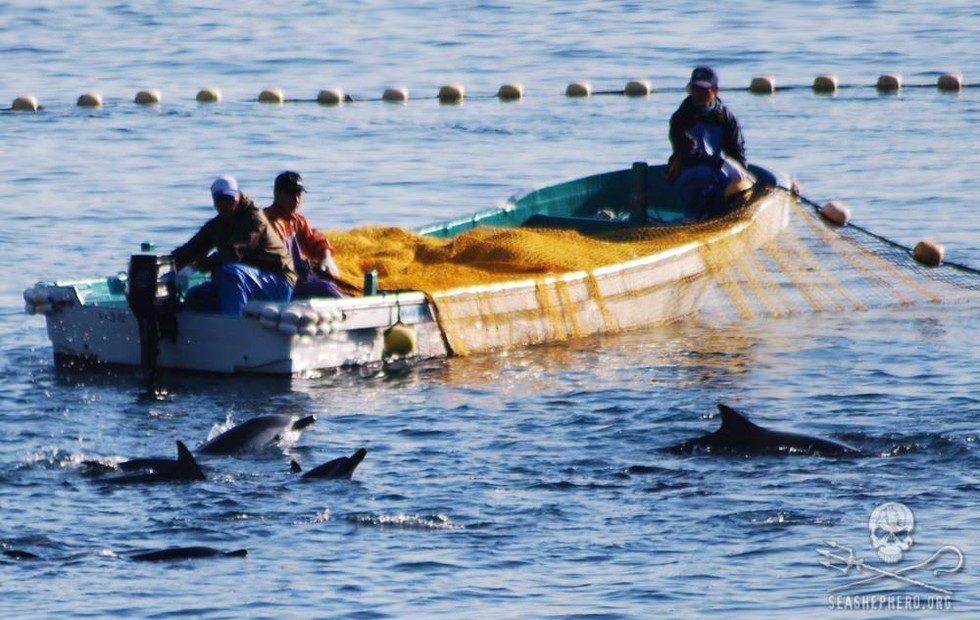
Dolphin meat is part of the cuisine of some countries, however this is not the only driver for dolphin hunts. Dolphins are often hunted to be sold to aquatic parks and dolphinariums for shows and swimming courses. Dolphin hunting has become highly controversial and has raised international criticism, not only due to the cruelty toward dolphins but also to the possible health risk that the often polluted meat causes. Despite criticisms, thousands of dolphins are caught in drive hunts each year. Many of them are killed for their meat but many others end up in dolphinariums and aquatic parks. The Taiji dolphin drive hunt is probably the most famous of those traditional hunts and provide income for hundred of local residents. The residents of Taiji and the surrounding area have been refining whaling techniques since the 17th century and now run annually a large scale dolphin drive hunt.

Is dolphin hunting following traditional methods justifiable? What if dolphins are not slaughtered but sold to aquatic parks? Do dolphins deserve a special treatment compared to other animals? Should dolphin hunting be completely banned?

Protesters in contempt of court for anti-whaling campaign

http://www.komonews.com/news/national/Protesters-in-contempt-of-court-for-anti-whaling-campaign-286457501.html

Protesters in contempt of court for anti-whaling campaign
File – In this Feb. 20, 2013 file photo provided by Sea Shepherd Australia, the Japanese whaling vessel Nisshin Maru, right, collides with the Sea Shepherd ship Steve Irwin in waters near Antarctica. (AP Photo/Sea Shepherd Australia, Tim Watters, File)
SAN FRANCISCO (AP) – Radical environmentalists who threw acid and smoke bombs at Japanese whalers were found in contempt of court for continuing their relentless campaign to disrupt the annual whale hunt off the waters of Antarctica.

The 9th U.S. Circuit Court of Appeals Friday ordered a commissioner to determine how much Paul Watson and members of the Sea Shepherd Conservation Society he founded owe Japanese whalers for lawyer fees, damage to their ships and for violating the court order to stop their dangerous protests.

The Japanese whalers are demanding $2 million in addition to their attorney fees and damage and cost to their ships for warding off the protests.

The environmentalists’ exploits have been documented on the long-running Animal Planet reality TV series “Whale Wars.”

Sea Shepherd said in a statement it is disappointed with the ruling and considering its legal options.

“We are considering our legal options at this time, including the possibility of an appeal,” it said.

In 2012, the court ordered Sea Shepherd to stay at least 500 feet from Japanese whalers and to halt dangerous activities like attempting to ram the whalers and throwing smoke bombs and bottles of acid at their ships. The crews of Sea Shepherd ships also drag metal-reinforced ropes in the water to damage propellers and rudders, launch flares with hooks, and point high-powered lasers at the whalers to annoy crew members.

The Japanese whalers filed a lawsuit in Seattle in 2011 seeking a court order halting the Sea Shepherd’s campaign.

The 9th Circuit in December 2012 ordered the Sea Shepherd’s to stop harassing the Japanese fleet and for the group’s four ships to stay at least 500 feet from the whalers.

Watson then transferred all of Sea Shepherd’s U.S. assets to foreign entities controlled by the group. Sea Shepherd has organizations in Australia, Belgium, France, Germany, the Netherlands and the United Kingdom.

Watson also stepped down from the board of directors of Sea Shepherd organizations in the U.S. and Australia. Sea Shepherd Australia took over management of “operation zero tolerance,” the group’s annual harassment campaign of the whalers in the Southern Ocean.

Watson also resigned as captain of the Sea Shepherd’s flagship the “Steve Irwin,” but remained aboard as an “observer.”

In February 2013, the 9th Circuit appointed a commissioner to investigate whether Watson and members of the Sea Shepherd should be held in contempt. The commissioner concluded on Jan. 31 that the Sea Shepherd wasn’t in violation of the court order because the harassment campaign was being managed outside the United States. The same month, the group’s “Steve Irwin” vessel with Watson aboard collided with a Japanese whaler.

More: http://www.komonews.com/news/national/Protesters-in-contempt-of-court-for-anti-whaling-campaign-286457501.html

Japan Prevents Dolphin Activist From Entering The Country

https://www.thedodo.com/taiji-dolphin-activist-denied-869369435.html?utm_source=The+Dodo+Newsletter&utm_campaign=86a143d85e-12_10_2014_NL&utm_medium=email&utm_term=0_4342b46fc5-86a143d85e-142095821

By Melissa Cronin

An activist flying into Japan hoping to document the annual dolphin and whale slaughter in the infamous cove in Taiji was detained by officials at Tokyo’s Narita Airport and eventually forced to leave the country.

Melissa Sehgal, a member of the Sea Shepherd Conservation Society who has documented the slaughter for four years now, says that she was questioned for nine hours and detained for 24 hours in a holding cell. She was then reportedly escorted onto a flight and forced to leave Japan.

Sea Shepherd says that several of their other staff and volunteers have been denied entry to Japan this year as well. Japanese immigration authorities say that they are not technically “tourists,” and in violation of visa restriction. The incident has not been reported in any Japanese news sources, and government representatives have not officially commented.

“Since when is taking pictures of what Japan contends is their ‘culture’ not considered a tourist activity?” said Sehgal. “Japan is so ashamed of their serial killing and kidnapping of wild dolphins that they are trying to stop activists like me from showing the world the truth. It is a testament to our effectiveness that they are trying to keep us out.”

Last year Ric O’Barry, former dolphin trainer and head of the Dolphin Project, was turned away when he tried to visit a juvenile albino calf after she had been captured. When he was denied entry by the park’s staff at the gates, O’Barry sued the marine park for discrimination.

“They don’t want people like me to go into the Taiji Whale Museum to monitor Angel,” O’Barry told AP last May in Tokyo.

Meanwhile in Taiji, the drive hunt season continues. Just this week, a pod of some 50 striped dolphins was ushered into the cove and slaughtered for their meat. Since Sept. 1, 20 pods of dolphins, nearly 300 total, have been killed in the cove.

(Sea Shepherd Conservation Society)

URGENT CALL TO ACTION: Oppose the Planned Killing of 16,000 Cormorants Along the Columbia River

http://www.seashepherd.org/news-and-media/2014/07/07/call-to-action-oppose-the-planned-killing-of-16000-cormorants-along-the-columbia-river-1602

Cormorants are being targeted simply because they eat salmonCormorants are being targeted simply
because they eat salmon
Photo: Sea Shepherd
The U.S. Army Corps of Engineers has announced plans to shoot thousands of double-crested cormorants in the Columbia River Estuary beginning next year.

Much like California sea lions at the Columbia River, cormorants are being targeted simply because they eat salmon. Federal officials are claiming that these seabirds, protected under the Migratory Bird Treaty Act, eat too many juvenile salmon, as well as steelhead, as the fish migrate through the river estuary to the Pacific Ocean. The proposed cull program would claim the lives of 16,000 cormorants over the course of four years, with killing taking place during the birds’ nesting seasons. Oil will also be spread over cormorant eggs to suffocate the eggs and ensure that they do not hatch. While the Army Corps emphasizes the increase in the East Sand Island double-crested cormorant population in recent years, populations of these birds in general have been declining and the sustainability of this large-scale cull is questionable at best.

Sea Shepherd’s Dam Guardians were on the frontlines along the Columbia River and at the Bonneville Dam in 2012 and 2013, documenting the hazing, trapping and cruel branding of sea lions by the Oregon and Washington Departments of Fish & Wildlife for the “crime” of eating salmon. If any of the branded sea lions are determined to be eating “too many” salmon, they are killed – and the federal government has allowed these states to kill up to 92 federally protected sea lions each year until June 2016. It is important to note that “too many salmon” might constitute just one salmonid. The sea lion cull continues, despite the fact that they consume only 1-4% of the salmon, while fisheries are typically allowed to take 10-12%.

USDA bird hazer sets off explosives at the Bonneville Dam, May 2013USDA bird hazer sets off explosives at the
Bonneville Dam, May 2013
Photo: Sea Shepherd
The Army Corps reports that non-lethal methods – including “hazing with lights, reducing nesting habitat, and using human presence to flush double-crested cormorants off potential nesting sites” – have been tested. Sea Shepherd has documented bird hazers from the USDA harassing cormorants along the river, frightening the birds with explosives.

Just as the taxpayer-funded culling of sea lions at the Bonneville Dam will not solve the problem of a declining salmon population, nor will the shooting and killing of cormorants – set to cost up to $1.5 million each year of the four-year cull. The scapegoating of these innocent animals redirects the public’s focus from the real problems at the Columbia – overfishing, a polluted river filled with toxins, and the dam itself.

CALL TO ACTION: Though Sea Shepherd does not currently have Dam Guardians on the ground, we remain dedicated to protecting the animals who call the Columbia River home and exposing the true threats to this endangered salmon population. Please join us in speaking out against the planned killing of 16,000 cormorants for the “crime” of eating salmon. Here are ways you can help:

1) Attend one or both of the upcoming public meetings scheduled by the Army Corps of Engineers to discuss the proposed cull to show that you stand with the cormorants and the sea lions, as well as the salmon:

July 10 from 2:30pm to 5:30pm PT
Matt Dishman Community Center
77 N.E. Knott St.
Portland, Oregon

July 24 from 3pm to 6pm

Best Western Lincoln Inn
555 Hamburg Ave.
Astoria, Oregon

2) Submit public comments against the cull:

Email: Cormorant-EIS@usace.army.mil

Mail:

Sondra Ruckwardt
U.S. Army Corps of Engineers, Portland District
Attn: CENWP-PM-E / Double-creasted cormorant draft EIS
P.O. Box 2946
Portland, OR 97208-2946

The deadline for public comments is August 4, 2014.

First sea lions. Now cormorants. Where and when will it end?

Dam Guardians
Visit our
Dam Guardians
site for more information.

CALL TO ACTION: Oppose the Planned Killing of 16,000 Cormorants Along the Columbia River

http://www.seashepherd.org/news-and-media/2014/07/07/call-to-action-oppose-the-planned-killing-of-16000-cormorants-along-the-columbia-river-1602

Cormorants are being targeted simply because they eat salmonCormorants are being targeted simply
because they eat salmon
Photo: Sea Shepherd
The U.S. Army Corps of Engineers has announced plans to shoot thousands of double-crested cormorants in the Columbia River Estuary beginning next year.

Much like California sea lions at the Columbia River, cormorants are being targeted simply because they eat salmon. Federal officials are claiming that these seabirds, protected under the Migratory Bird Treaty Act, eat too many juvenile salmon, as well as steelhead, as the fish migrate through the river estuary to the Pacific Ocean. The proposed cull program would claim the lives of 16,000 cormorants over the course of four years, with killing taking place during the birds’ nesting seasons. Oil will also be spread over cormorant eggs to suffocate the eggs and ensure that they do not hatch. While the Army Corps emphasizes the increase in the East Sand Island double-crested cormorant population in recent years, populations of these birds in general have been declining and the sustainability of this large-scale cull is questionable at best.

Sea Shepherd’s Dam Guardians were on the frontlines along the Columbia River and at the Bonneville Dam in 2012 and 2013, documenting the hazing, trapping and cruel branding of sea lions by the Oregon and Washington Departments of Fish & Wildlife for the “crime” of eating salmon. If any of the branded sea lions are determined to be eating “too many” salmon, they are killed – and the federal government has allowed these states to kill up to 92 federally protected sea lions each year until June 2016. It is important to note that “too many salmon” might constitute just one salmonid. The sea lion cull continues, despite the fact that they consume only 1-4% of the salmon, while fisheries are typically allowed to take 10-12%.

USDA bird hazer sets off explosives at the Bonneville Dam, May 2013USDA bird hazer sets off explosives at the
Bonneville Dam, May 2013
Photo: Sea Shepherd
The Army Corps reports that non-lethal methods – including “hazing with lights, reducing nesting habitat, and using human presence to flush double-crested cormorants off potential nesting sites” – have been tested. Sea Shepherd has documented bird hazers from the USDA harassing cormorants along the river, frightening the birds with explosives.

Just as the taxpayer-funded culling of sea lions at the Bonneville Dam will not solve the problem of a declining salmon population, nor will the shooting and killing of cormorants – set to cost up to $1.5 million each year of the four-year cull. The scapegoating of these innocent animals redirects the public’s focus from the real problems at the Columbia – overfishing, a polluted river filled with toxins, and the dam itself.

CALL TO ACTION: Though Sea Shepherd does not currently have Dam Guardians on the ground, we remain dedicated to protecting the animals who call the Columbia River home and exposing the true threats to this endangered salmon population. Please join us in speaking out against the planned killing of 16,000 cormorants for the “crime” of eating salmon. Here are ways you can help:

1) Attend one or both of the upcoming public meetings scheduled by the Army Corps of Engineers to discuss the proposed cull to show that you stand with the cormorants and the sea lions, as well as the salmon:

July 10 from 2:30pm to 5:30pm PT
Matt Dishman Community Center
77 N.E. Knott St.
Portland, Oregon

July 24 from 3pm to 6pm

Best Western Lincoln Inn
555 Hamburg Ave.
Astoria, Oregon

2) Submit public comments against the cull:

Email: Cormorant-EIS@usace.army.mil

Mail:

Sondra Ruckwardt
U.S. Army Corps of Engineers, Portland District
Attn: CENWP-PM-E / Double-creasted cormorant draft EIS
P.O. Box 2946
Portland, OR 97208-2946

The deadline for public comments is August 4, 2014.

First sea lions. Now cormorants. Where and when will it end?

Dam Guardians
Visit our
Dam Guardians
site

Makah whalers commemorate 15th anniversary of last legal whale kill

http://www.peninsuladailynews.com/article/20140518/NEWS/305189969/makah-whalers-commemorate-15th-anniversary-of-last-legal-whale-kill

By Joe Smillie
Peninsula Daily News

Also see:  Makah group plans to mark whale hunt anniversary Saturday in Neah Bay

NEAH BAY –– Fifteen years after returning from their tribe’s last legal whale kill, some members of the crew of Makah whale hunters who led that hunt set out again into the bay aboard the Hummingbird whaling canoe Saturday.

“It gives me chills. It just gives me chills,” said Charlotte Williams King.

Descended from a long line of whalers, King thought of her ancestors as she watched the canoes paddle in Neah Bay.

Her great-grandfather, John “Hiska” McCarty, dove underwater to tie closed the mouths of harpooned whales.

“I didn’t really realize it, but 15 years is a long time,” she said.

Saturday’s paddle, which included a chase canoe, was organized by the Makah Whaling Commission.

It commemorated the anniversary of the tribe’s successful whale hunt on May 17, 1999. It was the first time in 50 years that the Makah had harpooned a whale, and it happened aboard Hummingbird.

Members of the 1999 hunt crew led by Capt. Wayne Johnson were Theron Parker, Mike Steves, Darrell Markishtum, Glenn Johnson, Keith Johnson, Arnie Hunter, Franklin Wilson, Bruce Gonzelas, Dan Greene, Gordon Parker, Andy Noel, Donald H. Swan and Greg Arnold.

Most were aboard Hummingbird on Saturday.

Keith Johnson, president of the whaling commission, recalled the controversy that surrounded the 1999 kill of a gray whale, nicknamed “May,” whose skeleton now hangs in the Makah Cultural and Research Center in Neah Bay.

“Last time we had a whaling crew in that [canoe], those terrorists, those eco-terrorists, that were out there in their Zodiacs waking our boat and throwing smoke canisters at us,” Keith Johnson remembered.

The last whale killed by Makah tribal members was in 2007, when a group of five illegally shot dead a gray whale.

Members of the 2007 crew were Wayne Johnson, Parker, Noel, Gonzales and William Secor Sr.

Wayne Johnson served five months in federal prison and Noel 90 days for their roles in the kill.

Hummingbird was retired in 2006 after it capsized, killing Joseph Andrew “Jerry” Jack, a hereditary chief of the Mowachaht/Muchalaht tribe of Vancouver Island, during an InterTribal Canoe Journey.

Some had called for Hummingbird to be burned, Keith Johnson said, saying it had been cursed.

“You don’t burn a whaling canoe,” he said Saturday. “You bless it.”

The Makah voluntarily stopped hunting gray whales in the 1920s when populations diminished. Gray whales were listed as endangered species in 1970.

When the species was taken off the list in 1994, the Makah worked to resume subsistence hunting.

In the 15 years since the legal kill, the tribe’s right to hunt whales, guaranteed in the 1855 Treaty of Neah Bay, has been embroiled in court reviews over science.

After being allowed to hunt in 1998 and 1999,which ended in the killing of one whale, whale hunts were stopped shortly thereafter by a federal court order saying the Makah needed an environmental impact statement to obtain a waiver from the federal Marine Mammal Protection Act.

The International Whaling Commission in 2007 granted the tribe the right to kill as many as 20 whales over five years — with no more than five in a single year — but it still must get a federal waiver to conduct a hunt.

“We have judges that are animal rights activists that will do anything to put a road block in front of our treaty right to hunt whales,” Keith Johnson said.

“Just leave us alone.”

Conservationists say they are pleased that it’s been 15 years since the last legal hunt.

“We feel differently about the 15th anniversary,” said Margaret Owen, who formed Peninsula Citizens for the Protection of Whales with her husband, Chuck, to speak against the tribe’s whale hunts.

“There’s 60 whales that could have been killed in that time,” Owens said.

A draft environmental impact statement underway in 2008 was stopped by new scientific information that found the group of gray whales that frequents the Washington coast has distinctive genetic markers that differentiate them from the 20,000 gray whales that migrate along the West Coast.

“Those resident whales would have been gone,” Chuck Owens said.

Donna Darm, associate deputy administrator for NOAA’s west region, said Thursday a new statement incorporating that information should be ready for public review by the fall.

Darm and Keith Johnson noted that the tribe’s hunt plan calls for kills of transient whales only.

The 1999 hunt was uplifting for many members of the tribe, according to Makah General Manager Meredith Parker.

“There’s a lot of pride that has stuck with us from that 1999 hunt,” Parker said, “because we did it the right way.”

But the rogue 2007 hunt created divisions, Keith Johnson said, pointing out there was no event to mark the 10-year anniversary of the 1999 hunt.

“Do you see the whole tribe here?” he asked as he pointed to the three dozen people on the beach before Saturday’s commemorative paddle.

Saturday’s paddle began with a prayer for more unity from Gordon Lyons and a song for good luck from Darrell Markishtum.

Keith Johnson expressed hope that divisions within the tribe could be closed.

“It’s our traditional food, and people still want it,” Johnson said. “And if for no other reason, a lot of people here will support us for the treaty right.”

Johnson also pointed to the tribe’s cohesion in 1999.

“When we all get attacked, we all stick together. Because we’re one community.”
DSC_0036


Oregon Officials Execute Fifteen Sea Lions at the Bonneville Dam

May 15, 2014

Dozens More Could be Killed in 2014

[Just a few days ago, the sport fishing season was extended for an entire month.]

http://www.seashepherd.org/commentary-and-editorials/2014/05/15/oregon-officials-execute-fifteen-sea-lions-at-the-bonneville-dam-651

Commentary By Sandy McElhaney, Sea Shepherd Conservation Society

The once “mighty” Columbia River is now a toxic chemical soupThe once “mighty” Columbia River is now a toxic chemical soup
Photo: Sea Shepherd / Sandy McElhaney
April 2014 was a record-setting month at the Bonneville Dam. On April 30th, 17,972 salmon passed through the Dam’s fish ladders. This was the third-highest single-day fish count at the Dam since 2002. With current projections of a salmon run size of 185,000, state officials are now adding days to the sport fishery season. There is, however, a catch. If you want to sport fish for salmon on the Columbia River, you must be human. If you are a California sea lion caught fishing near the Bonneville Dam, you will be killed.

April 2014 also has the dishonorable distinction of being the deadliest month on record for California sea lions along the Columbia River. On three consecutive Tuesdays, state workers mercilessly killed twelve sea lions because they had the audacity to eat salmon near the Bonneville Dam. The killing spree began on Tuesday, April 15. On that date, six sea lions were executed. One week later, on April 22, state workers lethally injected three more sea lions. On April 29, three more lives were extinguished. Sadly, the month of May began just as ominously as April ended, with another three sea lions killed on the first day of the month, bringing the death toll for the year up to 15 — so far. Authorization from the federal government to the states of Oregon, Washington and Idaho, allows these states to put to death as many as 92 sea lions annually through 2016, simply for eating salmon near the Bonneville Dam.

The kill notices are posted on the Oregon Department of Fish & Wildlife (ODFW) website. The first notice of 2014 read simply, “Six California sea lions, on the list for removal, were trapped and euthanized at Bonneville Dam today.” That was it. Just 17 dispassionate words were used to sum up the tragic and senseless end to the lives of six individuals who were once a vital part of the ecosystem of the Columbia River. A mandated report from the state of Oregon to the National Marine Fisheries Service (NMFS is the federal entity that authorized the killings in 2012) further stated that “various biological samples were collected for examination and the remaining materials were disposed of in accordance with applicable laws and regulations.” If the sea lion executioners are still following the same practices used when they killed their first victim (branded by Oregon as C265) in 2009, then the skeletons of these poor animals will be articulated and used for research and their flesh sent off to Darling International Rendering Plant in Tacoma, Washington, where they could eventually become fertilizer.

Five of the sea lions killed on April 15 were among those “championed” by Sea Shepherd supporters in 2013 so they could be remembered by name as unique individuals, instead of being known only by the hideous brands on their backs. Their names and their champions are as follows:

Number Champion Name
C027 Frances Holtman Oceanus
C028 Graziella Garri Proteus
C035 Stephan Oelgardt Thery
U254 Brian Lochlaer Barack Obama
U262 Elke Simmons Ahimsa

RIP U84RIP U84
Photo: Sea Shepherd / Be Bosworth-Cooper
Also killed was U84, who died nameless, but whose image was forever captured on film by Dam Guardian Be Bosworth-Cooper at the Port of Astoria. Several of the now slain animals were branded at the Port in 2013. This charming waterfront town was made famous by the 1985 movie, “The Goonies,” but today it is best known for its ongoing cruelty to sea lions. Tourists and other visitors to the Port are often alarmed to see workers from ODFW “haze” resting sea lions with nowhere to go off of the “goondocks”. Periodically, sea lions are trapped in cages and forcibly branded with hot irons. Sea Shepherd’s Dam Guardians documented this barbaric practice on multiple occasions in 2012 and 2013. Our footage shows state employee Matthew Tennis standing on, kicking and setting sea lions on fire. These findings were shared with NMFS and Sea Shepherd was informed in writing by the agency that Tennis would henceforth be supervised when capturing and “marking” (branding) sea lions.

An update posted to the ODFW website dated Tuesday April 22 reported, “Seven California sea lions were trapped. Three were on the list for removal and were euthanized. Four were branded and released.” The three sea lions killed were those branded with the numbers C020 (“Dewey,” championed by Allison Cabellon), C029 (“Rocky,” championed by Benjamin Bell), and C930 (“Cesare,” championed by Selena Rhodes Scofield). Three more sea lions were reported to have been euthanized on Tuesday, April 29: C033, U267 and U312. On May 1, the state killed sea lions C031, U264 and B409.

Conveniently, the six sea lions killed on April 29 and May 1 were added to the official NOAA-authorized “hit list” on April 28, 2014, along with five others who are now literally marked for death. Sea lion U312 was killed because he was “observed at the dam on 7 days in 2014 with 2 documented salmonids consumed.” News of his death comes as an especially harsh emotional blow to Sea Shepherd’s Dam Guardians, who witnessed and documented his cruel branding by Oregon state workers in Astoria on March 24, 2013.

The ODFW website talks about California sea lion “management” and “restoring the balance between predators and salmon”. The most recent report from the Army Corps of Engineers claims that California sea lions have consumed 222 salmon at the Bonneville Dam since January; meanwhile, The Seattle Times reported that recreational anglers had landed and kept 9,358 Chinook from March 1-April 14. The state’s concept of “management” is, at best, draconian; at worst it is a display of total ignorance of the real problems in the Columbia River, and the efforts by real conservationists who care deeply about preserving the river, the salmon and the sea lions.

With our history of defending, conserving and protecting marine wildlife and habitats spanning 37 years, Sea Shepherd knows that the real predators are not the sea lions. The real predators are the people who have desecrated one of our nation’s great and beautiful rivers by flushing it with 92 contaminants which have been found in Columbia River fish, including polychlorinated biphenyls (PCBs), dioxins, furans, arsenic, dieldrin, mercury, and DDE – a breakdown product of DDT. The Oregon Environmental Council has classified the Columbia River as being on “Red Alert,” meaning it has serious water quality problems, including toxins that are dangerous to both human and aquatic health. A 2012 study by the Columbia Riverkeepers found PCB concentrations in fish to be 27,000% above levels considered by the EPA to be safe for unrestricted human consumption. So while ODFW is wasting your taxpayer dollars to brand, haze and kill sea lions, the salmon are still swimming in a cesspool of cancer-causing poisons.

As a cancer survivor, I would encourage anyone I care about to avoid consuming toxic fish from the Columbia, and as a Sea Shepherd Dam Guardian I encourage everyone to call upon the governors of Oregon and Washington to immediately redirect their efforts away from killing sea lions and toward restoring the health of the water – before it’s too late.

Oregon Governor John Kitzhaber
State Capitol Building
900 Court Street Salem, OR  97301
phone: (503) 378-4582 begin_of_the_skype_highlighting (503) 378-4582 FREE  end_of_the_skype_highlighting
fax:  (503) 378-6827
Internet: Request Assistance
Facebook: John Kitzhaber
twitter: @govkitz

Washington Governor Jay Inslee
Office of the Governor
PO Box 40002
Olympia, WA  98504-0002
phone: (360) 902-4111 begin_of_the_skype_highlighting (360) 902-4111 FREE  end_of_the_skype_highlighting
fax:  360-753-4110
Internet: Contact Gov. Inslee
Facebook: Governer Inslee
twitter: @govInslee

Our friends at the Humane Society of the United States, who have long championed the Columbia River sea lions in court, have letters for you to send to the governors at this link: Humane Society – Six Sea Lions Killed at Bonneville Dam

Our friends at the Sea Lion Defense Brigade are leading the ground campaign along the Columbia this season. To join them on the ground, please contact: sealiondefensebrigade@gmail.com. The Sea Lion Defense Brigade is asking concerned citizens to contact NOAA and to urge the agency to cancel the states’ authorization to kill sea lions. Up to 77 more sea lions could be killed in 2014. Please contact NOAA using the contact information below and ask them to grant clemency to these marine mammals who simply eat salmon to survive:

Donna Wieting
Director, Office of Protected Resources
NOAA
Phone 301 713-2332 begin_of_the_skype_highlighting 301 713-2332 FREE  end_of_the_skype_highlighting
Fax 301 427-2520
Email: donna.wieting@noaa.gov
1315 East-West Highway
Silver Spring MD 20910

Sea Shepherd UK Offers Reward for Conviction of Anyone Illegally Killing Iconic Scottish Seals

http://www.seashepherd.org/news-and-media/2014/04/27/sea-shepherd-uk-offers-reward-for-conviction-of-anyone-illegally-killing-iconic-scottish-seals-1581

This article was originally written and published by Sea Shepherd UK

Sea Shepherd UK is offering a £5000 reward for photographic or video evidence leading to the successful prosecution of employees, representatives, contractors or agents of the Scottish Wild Salmon Company (AKA – Usan Salmon Fisheries Limited) or any companies or individuals for illegally killing iconic Scottish seals.

Scottish Wild Salmon Company employees with firearm used for shooting seals at Gardenstown Harbour - April 2014Scottish Wild Salmon Company employees with firearm used for shooting seals at Gardenstown Harbour – April 2014Sea Shepherd UK is currently engaged in our Scottish Seal Defence Campaign based near Banff in Aberdeenshire. We are extremely pleased that the Scottish Wild Salmon Company has announced that they are currently not taking out firearms in order to shoot seals in Gamrie Bay, this is solely due to the presence of our campaign crew who have been monitoring their activities to ensure that no seals are killed. However, the Scottish Wild Salmon Company needs to understand that Sea Shepherd is relentless in its mission to defend ocean wildlife, and we will extend our Scottish Seal Defence Campaign for as long as the seals need protection.

The government of Scotland provides companies, including the Scottish Wild Salmon Company, with licenses to kill seals. However, the legislation requires that seals may only be shot as a last resort after all other methods of control have been applied. The actions of the fishing companies themselves are attracting seals to the salmon. Seals in this particular area do not typically eat salmon, but are being drawn by the large catches of salmon trapped in nets.

Scottish Wild Salmon Company has a non-lethal solution available for us in the form of Acoustic Deterrent Devices (ADDs), and they have recently announced they will now rely on ADDs at other Salmon netting sites.  Unfortunately, bullets are always cheaper and easier than non-lethal alternatives. Although shooting seals in Gamrie bay is currently suspended due to Sea Shepherd UK’s monitoring and patrols – the shooting of seals could return if we were to leave (which we have no intention of doing).

Why does it take policing by an NGO to make companies do the right thing under the law? Without effective policing by Marine Scotland (the agency responsible for the seal killing licenses), it is left to Sea Shepherd to once again uphold national and international laws which governments neither cannot, nor will not enforce.

David Scott, Director of Sea Shepherd UK stated, “Since the Scottish seal cull resumed in January 2011, Usan Salmon Fisheries Ltd has slaughtered more seals than any other firm holding licences to kill these wonderfully friendly and inquisitive animals. The damage they are doing to Scotland’s reputation as a world leading eco-tourism destination cannot be overstated. The damage to the local seal population is evident for all to see.”

Seal which washed up on Gardenstown Beach after being shot by the Scottish Wild Salmon Company in 2013Seal which washed up on Gardenstown Beach after being shot by the Scottish Wild Salmon Company in 2013The Scottish people recently voted for the seals to be one of Scotland’s Big 5 iconic species, and by needlessly slaughtering beautiful Scottish seals the Scottish Wild Salmon Company is damaging Scotland’s image around the world.

The only course of action for the Scottish Wild Salmon Company is to immediately relinquish their seal killing licences and publically announce that they are now a seal-friendly company.

 In order to qualify for any Sea Shepherd reward, the information or evidence provided must directly lead to the apprehension and conviction of the person(s) responsible for the crime and the case for which information is supplied must still be open with the appropriate authorities. Law enforcement officers (and any persons who obtain such information by way of their occupation) are not eligible for Sea Shepherd rewards.

To encourage local residents to help defend their seals – Sea Shepherd UK is also offering £100 for new (taken after 27th April 2014) clear images or video of the Scottish Wild Salmon Company shooting seals within their current licence conditions in Gamrie Bay.

To submit information or evidence on the illegal killing of seals by the Scottish Wild Salmon Company or any other company or individuals – please e-mail Sea Shepherd UK’s campaign crew at: report@seashepherduk.org including as many details, clear photographs and video as possible.

Violent Seal Killers Threaten Sea Shepherd UK Crew – Caught on Camera

[“The Scottish government issues companies such as the Scottish Wild Salmon Company with licenses to shoot seals, which they claim threaten fish stocks. However the legislation requires that seals may only ever be shot as a last resort after all other methods of control have been applied.”
Sound familiar? Just as the wolves are scapegoated for preying on elk, seals and sea lions are scapegoated for eating salmon. Yet another case of an overinflated sense of entitlement. 
This is a huge, worldwide problem for wildlife. Wherever there’s fish that humans want to exploit, the marine mammals pay the price for human greed.]


http://www.seashepherd.org/news-and-media/2014/04/21/violent-seal-killers-threaten-sea-shepherd-uk-crew-caught-on-camera-1576

Sea Shepherd crewmembers were being threatened with violence by the Scottish Wild Salmon Company’s seal killersSea Shepherd crewmembers were being threatened with violence by the Scottish Wild Salmon Company’s seal killers
Photo: Sea Shepherd UK
As predicted by Sea Shepherd on Good Friday, the killing team of the Scottish Wild Salmon Company escalated tensions in the Scottish seal killing grounds with an unprecedented attack on a member of Sea Shepherd UK’s campaign crew.

As residents of Gardenstown were preparing for breakfast on Easter Monday, Sea Shepherd crewmembers were already being threatened with violence by the Scottish Wild Salmon Company’s seal killers.

In a dramatic 8 a.m. confrontation which took place away from the Harbour in the town’s New Ground, three employees of the Scottish Wild Salmon Company, one carrying a rifle, cornered just one of our crewmembers, leaving him fearful of extreme violence.

The crewmember had the presence of mind to keep his camera running throughout, and the situation was saved when other members of the Sea Shepherd campaign crew arrived with their own cameras. Realizing that any further illegal acts on their part were being recorded, the thugs backed away and returned to their command base.

In a dramatic 8 a.m. confrontation which took place away from the Harbour in the town’s New Ground, three employees of the Scottish Wild Salmon Company, one carrying a rifle, cornered just one of our crewmembers, leaving him fearful of extreme violenceIn a dramatic confrontation, three employees of the Scottish Wild Salmon Company, cornered one of our crewmembers
Photo: Sea Shepherd UK
Sea Shepherd UK has now reported the situation and shown video footage to Police Scotland. Sea Shepherd UK is confident that charges can now be brought against the ringleader of the Scottish Wild Salmon Company’s out-of-control thugs.

Given the escalating situation, Sea Shepherd UK has now asked the Hunt Saboteurs Association to reactivate their undercover teams as well as introduce new covert operatives to the area. Other Sea Shepherd volunteers and specialist intervention teams are also now heading to Banffshire in order to defend Scottish seals from these violent people.

The Scottish government issues companies such as the Scottish Wild Salmon Company with licenses to shoot seals, which they claim threaten fish stocks. However the legislation requires that seals may only ever be shot as a last resort after all other methods of control have been applied. The actions of these companies themselves are drawing seals to the salmon. Seals in this area do not normally eat salmon, but when salmon netting companies trap wild fish in large numbers, it is only natural that the captured fish attract seals.  As we’ve seen with the sea lions on the Columbia River on the Oregon/Washington border here in the U.S., these animals are being targeted for the simple “crime” of eating fish. Moreover, the wild salmon that are heading up the coast are being caught by fishermen before they have a chance to spawn, so the fishing itself is killing this particular fishery and is therefore completely unsustainable.

The non-lethal solution is to deploy Acoustic Deterrent Devices (ADDs), which the Scottish Wild Salmon Company does have available to them.  Unfortunately, lethal bullets are cheaper than the non-lethal alternative, and so, without effective policing by Marine Scotland (the agency responsible for the seal killing licenses), it is left to Sea Shepherd to once again uphold national and international laws which governments neither can’t nor won’t enforce.