More Pro-Hunt Drivel: Locavore movement takes to deer hunting across US

http://news.yahoo.com/locavore-movement-takes-deer-hunting-across-us-171134620.html?soc_src=mediacontentstory&soc_trk=ma

MONTPELIER, Vt. (AP) — A decades-long national decline in the number of hunters has prompted states to tap into a new group of hunters — people who demand locally produced food, but don’t know the first thing about bagging a deer.

Books and blogs on the topic are numerous, and state wildlife departments are offering introductory deer hunting classes in urban areas to recruit newbies who want to kill their own local, sustainable and wild meat in what some say is an ecologically friendly way.

“It’s not easy and it’s not a surefire way to fill a freezer every year but it’s certainly more rewarding than even raising a cow behind your house and butchering it,” said Chris Saunders, hunter education coordinator for the Vermont Department of Fish and Wildlife. The department offered an introductory deer hunting course in Burlington this fall to recruit new hunters.

The number of people holding hunting licenses nationally had dropped over the last 30 years starting in 1983, mostly because of changes in demographics, such as an aging population and more people moving into urban areas, said Mark Damian Duda, executive director of Virginia-based Responsive Management, which does surveys for federal and state fish and wildlife departments.

But hunting participation increased by 9 percent from 2006 to 2011, the latest U.S. Fish and Wildlife Service’s national five-year survey found, and wildlife officials around the country suspect that it’s local food connoisseurs — or locavores — partly helping to level it off.

Reasons for hunting vary — recreation, spending time with friends and family, finding a trophy buck. The number of those hunting for meat nearly doubled from 16 percent in 2006 to 35 percent in 2011, according to a national survey of 1,000 hunters published last year by Responsive Management and other outdoors agencies. The survey found that part of the increase was driven by the locavore movement.

That’s why graduate student Francis Eanes, 27, enrolled in an introductory hunting course this summer and fall in Madison, Wisconsin.

“The motivation really was something that I can do for myself as a way of knowing where my food comes from,” he said. “I’ve worked on farms for a number of years and enjoy picking and helping grow some of my own produce and it seemed like a natural extension to apply that to at least some of the meat that I eat.”

He’s slaughtered pasture-raised rabbits and chickens, and said he feels at ease about killing a deer since it’s able to roam free and grow in a natural habitat. With a clean shot, the deer dies quickly, Eanes said.

“It’s definitely easier to pull carrots or pick tomatoes, but I’m fairly confident that if an opportunity were to present itself, I’d be able to take the shot,” said Eanes, who plans to get a deer during the state’s rifle season, which started Saturday.

Success isn’t guaranteed. Saunders told his hunting class — where meat was the No. 1 motivation for the attendees — that the success rate of hunters is between 15 and 18 percent.

But for many new hunters, it goes beyond knowing where your food comes from.

They enjoy the outdoors, the skill and the unknown — and there’s no negative ecological footprint, said Tovar Cerulli, author of “A Mindful Carnivore.” The 34-year-old former vegetarian and vegan turned hunter wrote his master’s thesis on what he calls adult-onset hunting.

Deer are part of the forest where he lives in Marshfield, Vermont, he said, and if he gets one, he shares it with friends and family. The frozen meat tends to last he and his wife an entire year.

The experience of taking a piece of venison that he shot and butchered out of the freezer is more satisfying than taking out store-bought food out to cook.

“There’s such a specific and direct connection to where that came from and I know that individual animal, where it was, exactly when I killed it,” he said. “It’s all very specific and direct and personal.”

Onlookers dismayed by elk-herding hunters

Elk ambush

Elk ambush

A crowd of hunters participating in the Teton park hunt herded elk from a no-hunting area into a barrage of bullets on Wednesday, upsetting nonhunting passersby.

Thursday, November 20, 2014 4:30 am

Witnesses say hunters in Grand Teton National Park drove a herd of elk from a no-hunt zone and toward an awaiting firing line Wednesday.

The scene at the sage flats north of Kelly was a surprise to Michigan resident and Jackson Hole visitor Joanna Childers, who was on a wildlife safari during her first visit to Teton park.

Subscription Required

An online service is needed to view this article in its entirety. You need an online service to view this article in its entirety.

http://www.jhnewsandguide.com/news/environmental/onlookers-dismayed-by-elk-herding-hunters/article_a21e928d-926e-5fd9-b92c-9886d4d0fe3e.html?mode=story


“It looked like a bunch of hunters surrounded a pack of elk,” Childers said. “Hunters were staked out in the road and around the field.

“You see these animals and they’re in a pack and there a bunch of rifles pointed at them from every direction,” she said. “Overall, it was kind of sad and pretty unfair.”

Wildlife photographer Tom Mangelsen — long an opponent of the park hunt — said hunter behavior Wednesday was as egregious as he’s seen.

By Mangelsen’s account, around 11 a.m. a person pushed a herd of about 100 elk out of an area off limits to hunters near Kelly. Once the herd was on the move, chaos ensued, he said.

“All the sudden somebody shot and they just opened fire on them,” Mangelsen said. “It’s really poor sportsmanship — it was illegal and it was just a display of totally barbaric hunting.”

The photographer estimated that 30 people were involved in the drive, that 25 shots were fired and that eight to 10 elk were killed.

Teton park officials did not corroborate many of the details described by Mangelsen and others, but said some hunters were ticketed Wednesday.

“There was quite a bit of action as far as hunters go and the movement of elk near Kelly,” park spokeswoman Jackie Skaggs said. “At least two citations have been issued.”

Two hunters shot and killed bull elk Tuesday in the park, where harvest is restricted to cows and calves. The elk were confiscated by the Wyoming Game and Fish Department, Skaggs said.

One of those hunters was also cited for shooting at a running herd, she said.

Rules unique to the park hunt prohibit firing more than one shot at a group of running animals.

Seven park rangers were still in the field at the time Skaggs spoke with the Jackson Hole Daily, and she said it’s possible there were other violations.

It’s legal for hunters to drive elk out of areas where hunting is prohibited in the park, Skaggs said.

Mangelsen said some people were firing from the road, which is illegal. Photos he provided show hunters with rifles and shooting sticks setting up on the roadside.

Jeff Soulliere, another local photographer, said the display left him speechless.

“It absolutely was a mess,” Soulliere said. “This is a national park, and you’ve got tourists on the road right next to hunters with high-powered rifles.

“It really struck me as, ‘you got to be kidding me,’ ” he said. “No one was taking safety into consideration because they were herding and surrounding them and they could have shot each other.”

[Too bad they didn’t.]

On hunting predators

1453351_1488724231352782_186999841_n

We hunt predators but we can’t say why

The New West / By Todd Wilkinson | Posted: Wednesday, November 12, 2014 1:15 pm

Consider this loaded question: Should grizzly bears, wolves and cougars be hunted for sport? Worldwide, given their rarity and declining numbers, should lions, leopards, cheetahs, jaguars and tigers?

If so, why?

Across North America we find ourselves in another big game hunting season. For many the harvest is as much about putting meat in the freezer — a form of modern subsistence — as it is about the profoundly personal act of communing with nature.

From an early age, a lot of us were taught two guiding ethical principles: Don’t take the life of an animal unless you intend to eat it, and, if you do kill, there ought to be a good reason.

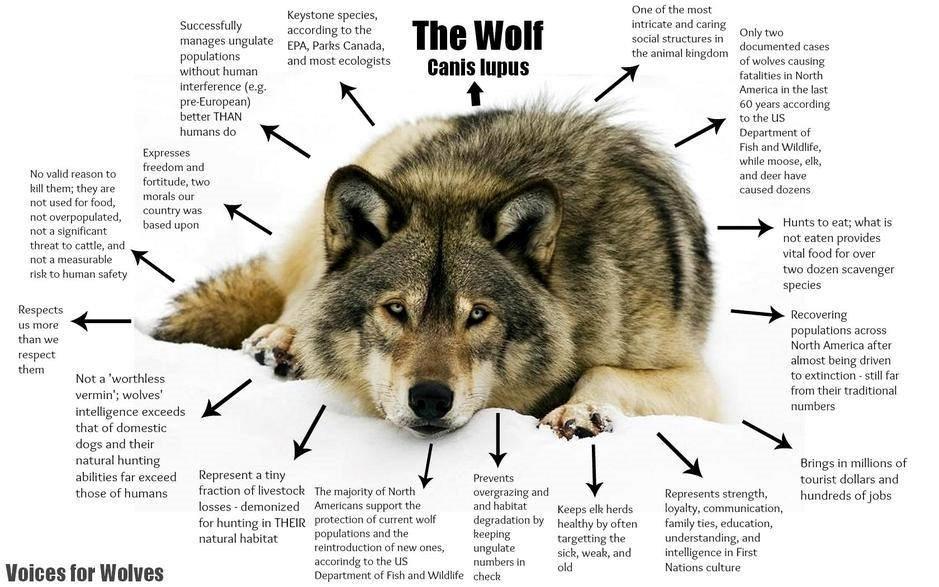
As states sanction hunts of iconic predators (grizzlies and black bears, wolves, mountain lions and coyotes), there remains a fact: People will eat little of those animals that they kill.

The search for a rationale in targeting predators must necessarily speak to reasoning beyond the simplistic argument advanced by fish and game departments that selling hunting tags generates revenue.

The issue of whether there’s an underlying moral — and compelling biological — justification for killing predators is taken up by two university professors in a new thought-provoking scientific analysis, “Wolf Hunting and the Ethics of Predator Control,” soon to be included in a new book, “The Oxford Handbook of Animal Studies.”

Author John Vucetich is a well-known Midwest wolf researcher and conservation biologist at Michigan Tech University; Michael P. Nelson is on the faculty at Oregon State University. In their paper they examine why large carnivores — which possess undeniable ecological value — are hunted.

Before we proceed let it be clear that Vucetich and Nelson did not write the paper to advance an anti-hunting agenda. They wanted to determine if any “good reason” for hunting predators exists.

“What counts as an adequate reason to kill a sentient creature?” they ask. “The hunting community has long recognized the value of this question to understanding the conditions under which various kinds of hunting is appropriate.”

Vucetich and Nelson consider the spectrum of societal attitudes toward predator hunting as expressed by trophy hunters, government wildlife managers, those who hunt for food, those who eat no meat and animal rights advocates.

They dissect the premise that predators must be controlled to ensure healthy populations of elk, deer, moose and pronghorn — and even, as is sometimes asserted, to protect people. They test the assertion that the best way of promoting conservation of a species is to place a value on its head and hunt it.

They also scrutinize the attitudes of so-called “wolf haters,” pointing out that unlike hunters of edible big game, whose pursuit seems to make humans more respectful of the animal, many who kill wolves are actually driven by a lack of empathy.

In a statement certain to spark debate, they charge: “Many instances of wolf poaching … are wrong because they are primarily motivated by a hatred of wolves. These instances of poaching qualify as wrongful deaths, if not hate crimes.

“To legalize such killing does not make them any less wrong. Moreover, people who threaten to poach wolves unless wolf killing is legalized are engaging in a kind of ecological blackmail … .”

Vucetich and Nelson also share thoughts about trapping: “A trophy is a kind of prize, memento or symbol of some kind of success. To kill a sentient creature for the purpose of using its body or part of it as a trophy is essentially killing it for fun or as a celebration of violence.

“And although there was once a time when trapping wolves for their pelts might have been a respectable means of making a living because wolf pelts were then a reasonable way to make warm clothing,” they state, “we no longer live in that time.”

Ultimately Vucetich and Nelson conclude that killing predators for sport isn’t justified biologically or on moral and ethical grounds.

They take government agencies and universities to task for not brokering honest discussions about such controversial issues as wolf management and predator control with citizens and students.

So often we do things in our society, they suggest, without bothering to provide the “good reason” for why.

Readers can judge for themselves. A copy of the analysis is attached to the online version of this story.

Rural America Loves Sport Hunting

It may be a given that for many (if not most) American ruralites, hunting season is their favorite time of year. Like pumpkins at Halloween or colored lights at Christmastime, camo, orange vests and empty beer cans are symbolic of the season. But don’t let the PR puff about self-sufficiency or sustainability fool you, this celebration is strictly motivated by the thrill they get from killing.

Few, if any, western hunters actually need to “harvest” wild “game” to survive in the modern world. It’s all about the “sport” these days, and perhaps for some, outdated “tradition.” It’s never made more clear than when you pull up to a gated logging road in your muddy, decades-old light pickup to look for mushrooms and find yourself parked between a pair of shiny new $50,000.00, ¾ ton mondo trucks, just off the showroom floor—their owners out for a day of hunting. That $50 grand would go a long way toward feeding a hungry family, if that was really the reason for their vicious exploits.

Want more proof that they don’t really need the deer or elk meat to survive? For the past couple of weeks, I’ve been trying to get ahold of the local construction company to have a load of gravel delivered before the rainy season makes my driveway impassable to anyone without a 4×4. Finally, the owner of the company returned my call and sheepishly confessed that he’s been away on “vacation” (no second guesses doing what) and since returning, hasn’t been able to reach any drivers. “They’re all out hunting,” he explained, expecting me to understand.

Well, the problem is, the elk and deer are the only neighbors I consider my true friends. Sorry, but I’m not too understanding when I hear that folks can afford to take time off from high-paying trucking jobs to go on weeks-long trips to murder my friends.

It’s clearly just a sport to them, not a matter of survival.

Text and Wildlife Photography ©Jim Robertson, 2014. All Rights Reserved

Text and Wildlife Photography ©Jim Robertson, 2014. All Rights Reserved

Hunters: An Ecological Disaster

Hunters: An Ecological Disaster

Editorial By Marla Stormwolf Patty

Comment by PRO-HUNTING man: “without hunters, there would be no wildlife left, they give millions of dollars to conservation”.

Comment by CONSERVATIONIST: “Because of hunters there is very little wildlife left, they give millions of dollars to their lobbyist groups in Washington who allow them to destroy the habitats and wild life and also give millions to start smear campaigns against conservationists who they call terrorists.”

The advent of firearms made it easier for hunters to mass murder animals. When hunters scream “No one will take away my rights to bear arms!!” What they are really saying is “No one will stop me from hunting into extinction any animal that I want to”. And hunting, despite what hunters want you to think, is not a right. No where in the Constitution does it state that you have the right to kill animals. It is considered a “privilege”, not a right. Before conservation laws, virtually anything was deemed fair game: elephants, tigers, rhinos, gorillas, wolves, deer, elk and most other large animals, and even then those laws vary depending upon what lobby the hunters appeal to.

Conservation laws in the United States are more or less based on who or what agency wishes to enforce them. And they are rarely enforced within the last few decades. Hunters have more legal maneuvering and protection than any citizen of this country does. And they know it. Laws are established based upon whether hunters will be protected from the laws outlawing any hunting. When we first went to battle on Capital Hill regarding getting animal crush videos banned, the primary concern of the NRA and political parties was “Yes, but will this law banning animal crush interfere with our need to show footage of us murdering animals?” There were only a handful of politicians and one Supreme Court judge who cared more about getting crush outlawed than the complaints of hunters who wanted to ensure that they could continue to post hunting photos, several of which showed themselves simulating sex with the animals they had murdered.

10440964_803687746340893_6959726758224441634_n

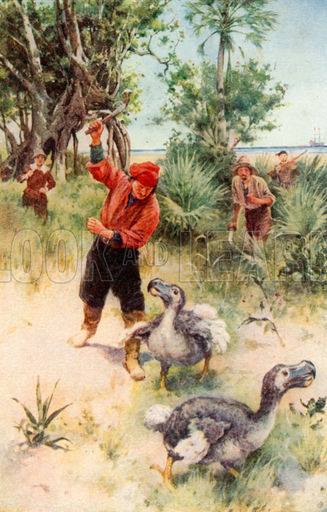
Hunting has obliterated species, both on land and in the oceans. The dodo bird’s disappearance is attributed in large part to hunters, and the historical decimation of the American buffalo from hunters nearly pushed that species to total extinction. Big game hunting was a craze beginning in the 1800’s, and their effect on animal populations was, and still is, devastating. Species of dolphins, sharks and whales are extinct or near to extinct due to the insatiable blood lust and trophy hunting of hunters. Hunters are by and large, ignorant of issues like sustainable breeding populations, and there were no protected species until the first conservation laws were passed in the 20th century. Laws had to be established in order to stop the hunters (and trappers) from destroying, like a virus, everything in their paths. When a hunter tells you that he or she is a conservationist, that is a lie. Hunters care nothing for the ecosystem.

1656140_803685979674403_7794898984029229049_n

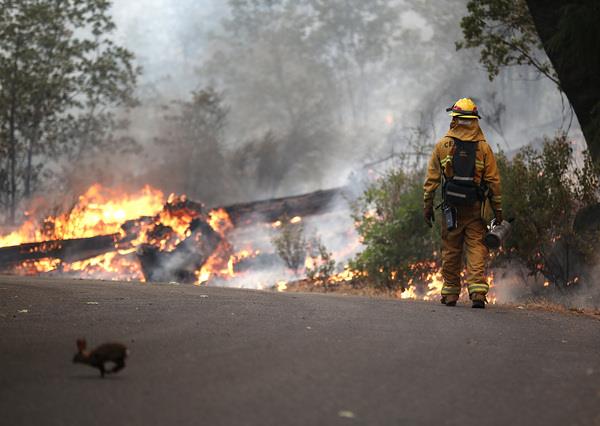
The proof of that is seen all too often, a recent example is the Yosemite forest fire that blazed out of control on Aug. 17th, 2013. Because of high fire danger across the region, the Forest Service had banned fires outside of developed camping areas more than a week before the fire started. It cost tax payers over 127 million to fight, and in an economy that has the highest unemployment listings not seen in decades, this was something that citizens could ill afford and with families struggling to feed and clothe their children, hunters and trappers helped to make the hardship just that much harder on these families, on all of us.

1925327_803686099674391_1889230852795001727_n

Listed as one of the largest forest fires in California state’s history, it has all but gutted Yosemite. It burned more than 250,000 acres in and around Yosemite National Park, consuming 257,314 acres, or 402 square miles, and destroyed habitats, homes, commercial properties, outbuildings, untold animal populations before it was contained months later. Started by a hunter whose illegal small camp fire grew out of control. The hunter has yet to be arrested or held accountable for one of the worst fires in recorded state history. This fire managed to rival the record of the last forest fire, started by yet another hunter in 2003, the blaze in the Cleveland National Forest east of San Diego, was sparked by a novice deer hunter who became lost and set a signal fire in hope of being rescued. Causing untold damage and destruction and loss of life.

1891241_803686339674367_6730252749194600097_n

And on occasion, hunters deliberately set fire to their own homes, killing the pets of their children and endangering the lives of family and the surrounding area. As is the case of Tara Andvik, a notorious hunter who initially blamed acts of arson on animal rights activists however, it was discovered that Mrs. Andvick was guilty of setting the fires, herself.

Please view liveleak video below of the arson and this article regarding the verdict.

Other examples are the on-going attempted extinction of keystone animals who hunters and trappers see as a threat to the animals they wish to murder. Again and again, real conservationists have had to bring animals back from the brink of extinction due to hunters and their insatiable blood lust. An example of that is the recent 2013 USA Government shut down, where upon hunters took advantage of that shut down to illegally hunt wolves and other animals in Yellowstone Park.

10426144_803686576341010_1490686452790669544_n

Hunters complain about Invasive Species, when by and large they are the ones who brought the animals here in order to hunt and being that hunters and trappers are ignorant of environmental issues, their actions brought about a change in the landscape that many countries are still grappling with. For example, it was a hunter who in 1859, released rabbits into his woodland property in Australia to have something to hunt; introducing rabbits to Australia, to which the rabbits and their new environment both suffered, due to a major issue of non-sustainability. Hunters have caused the ecological damage, by importing non-indigenous species to satisfy their hunting appetites. In the early 21st century, several hunters in the American South were discovered to be importing and breeding “hogzillas”, extremely large and territorial wild boars to have another new animal to hunt. These animals are released into the local forests and do not integrate well within the existing ecosystemic structure. Hunters blame the innocent animals, however, it is the recklessness of hunters, their insatiable blood thirst and complete disregard for anything living, that is to blame.

Hunting has the direct effect of dangerously and unnaturally reducing animal populations; unless hunting is tightly regulated (which it is not in the United States and elsewhere), hunting can and does decimate species and disrupt the balance of ecosystems. It is significant to note that deer populations in the States became manipulated by humans only after the decimating of wolves and large wild cats by hunters. For more information on the hunter manipulations of animals, see Anthony Damiano’s article, Threats against activists made by hunters.

Armed with ignorance and more often than not, a 6-pack of alcohol, hunters and trappers blithely head off into the wilderness in search of trophies to mount on their walls and take photos to upload onto social internet network and websites in an effort to “ego-boost” and “show off” their kills. Much in the same manner that serial killers take trophies of their victims.

I have often wondered what it is about wolves that make hunters pathologically want to murder them. And after spending my whole life as a wolf advocate, the only answer that keeps coming back to me is the independence of a wolf is something hunters are jealous and envious of, indeed, afraid of. I have read articles, comments, posts, and websites by hunters who all spend hours upon hours despising wolves together. And invariably, in most of what I have read by hunters and have been told by hunters, and in many cases yelled at by hunters, (in a few incidences with a loaded gun at my head) what stands out the most are the complaints by hunters that wolves are a competition to hunters and wolves are better hunters altogether than humans, and their independence disturbs the hunters. Many hunters also despise cats in the same pathological way that they hate wolves. Cats are also natural hunters. And better hunters than human hunters.

10675544_803686889674312_1267598600764804149_n

In several instances, hunters even appear to encourage poaching. And poaching is never okay, and is one of the primary reasons for animal extinction on the planet, next to habitation loss from human encroachment and habitat destruction, caused by humans.

1622869_803740806335587_6507496012193243598_n

So it would seem to me that hunters kill for a blood lust. A need to feel superior and a need to kill that which they will never be, which is independent, free and a part of the natural world. By extension, hunters often express a loathing for humans who are fighting for the environment, and have a litany of words they use to describe humans who want to restore the natural balance to the planet. Most hunters often come across as hostile, dangerous, threatening and have expressed enjoyment at murdering animals for every activist they loathe. Hunters are not environmentalists. In fact, they refer to Environmentalists as “terrorists” in order to confuse the public as they continue to help to destroy the ecosystem.

In addition to the mass fires they have caused, wrecking untold disaster on national parks, water supplies, homes, acres of habitat lost and thousands of lives gone forever. If that isn’t enough, they also spend thousands flying to other countries to murder all the wildlife there whilst imperialistically stating that they are managing that country’s eco-system (ie: destroying it). It is the height of arrogance. Going to another country and telling the indigenous people there that they should be grateful for the mighty hunters who invade their countries and destroy their lands. It’s the type of mentality that allows for slavery, savagery and genocide.

Hunters are not conservationists, they have absolutely no respect for other species, nor the environment. And if a stray bullet enters your home during “hunting season”, you can expect your fears and outrage to be ignored by the hunting community at large in the same manner that they ignore property rights and the sentience of every life on the planet for that next trophy kill, that next fix for their insatiable blood lust addiction, the need for that next wolf which they can murder in order to proclaim themselves as masters of the universe.

10557467_803758046333863_3370020821136313594_n

U.S. proposal to “protect” African lions hands their heads to hunters

U.S. proposal to “protect” African lions hands their heads to hunters

Vier Pfoten/Lionsrock Sanctuary

WASHINGTON D.C.––“Wild” African lions may in the future exist only as a species cultivated for trophy hunting, anticipates an October 29, 2014 U.S. Fish & Wildlife Service proposal to list them as a “threatened” species.

Published in the October 29, 2014 edition of the Federal Register, the U.S. Fish & Wildlife Service notice of proposed rulemaking is open for 90 days of public comment, ending in January 2015, before taking effect.

The listing proposal was hailed as a victory for the trophy hunting industry by Safari Club International, and was mourned as an at least partial defeat by the Humane Society of the U.S., Humane Society International, International Fund for Animal Welfare, Defenders of Wildlife, and Born Free USA, whose 2011 petition to the U.S. Fish & Wildlife Service initiated the “threatened” species listing process.

Lions down by half since 1980

The International Union for the Conservation of Nature estimates that there are now about 32,000 to 33,000 African lions, down from 75,000 circa 1980. Most of the remaining African lions, the IUCN believes, are concentrated in 10 regions of eastern and southern Africa. Barely 400 lions are believed to survive in the whole of west Africa.

The IUCN numbers are conservative. Laurence Frank of the University of California in a September 2003 article for New Scientist argued that the African lion population had plummeted from as many as 230,000 circa 1980 to just 23,000.

Vier Pfoten/Lionsrock Sanctuary

Accepting the IUCN figures, the U.S. Fish & Wildlife Service population analysis also took into account that, “Captive-held African lions, including those that are managed for trophy hunting in South Africa and lions held in captivity in zoos, are believed to number between a few thousand and 5,000 worldwide.”

Wild vs. captive

Failing to distinguish fully wild and free-roaming African lions from lions raised in captivity or quasi-captivity for much of their lives, the U.S. Fish & Wildlife Service lion population analysis concluded––almost by default––that lions have little or no future as a part of the African wildlife ecology, except within protected habitat.

The U.S. Fish & Wildlife Service lion population analysis also did not qualitatively differentiate between habitat protected as a complete working ecosystem, as in large national parks, and habitat protected exclusively to propagate hunted species.

In effect, the U.S. Fish & Wildlife Service lion population analysis puts animal advocates in the awkward position of having to argue against a proposal which for the most part assigns equal status to both wild and captive lions.
Animal rights and welfare philosophies, and animal rights and welfare organizations, mostly hold that wild and domesticated animals should have equivalent moral standing, with equivalent protection from exploitation.

Lion_March498a1923cfeb3274cbEffectively opposing the U.S. Fish & Wildlife Service lion population analysis would appear to require either overturning much of the scientific data it incorporates, frequently taken from some of the same sources used by the Humane Society of the U.S., Humane Society International, International Fund for Animal Welfare, Defenders of Wildlife, and Born Free USA in their petition to protect African lions, or arguing that wild and free-roaming African lions should be regarded as intrinsically different and more valuable than those raised in captivity to be shot.

Captive hunting

The animal advocacy organizations contended in petitioning for African lions to be protected that the existence of the lion trophy hunting industry jeopardized wild lions in several different ways: among others, by directly encouraging the deaths of wild lions; by encouraging African nations to allow populations of wild and free-roaming lions to be replaced by populations of short-lived captives; and by permitting the growth of a lion bone export industry which––for a time, anyhow––might be supplied by the bones of wild lions as well as those of lions who had in effect been farmed.

The petitioners hoped that obtaining a “threatened” designation for African lions from the U.S. Fish & Wildlife Service would close the U.S. to all imports of lion trophies. This would not only have protected wild African lions, but also have all but closed the “canned lion” hunting industry, a longtime focus of humane concern.

David Macdonald of the Oxford University Wildlife Conservation Research Unit, editor of the Encyclopedia of Mammals, in a September 2003 address to the Zoological Society of London mentioned that hunters caused 63% of the lion mortality he had recently documented in a five-year study of lions in Botswana and Zimbabwe.
Macdonald’s findings helped to fuel a decade of activism leading to the petition for African lions to be listed as threatened.

Lions in Kenya.  (Elissa Free photo)

Indigenous hunting

But the U.S. Fish & Wildlife Service recognized hunting as a threat to the survival of African lions as a species only in contexts involving indigenous African people.

“The lion’s prey base has decreased in many parts of its range for various reasons, “ the U.S. Fish & Wildlife Service lion population analysis said, “but a large factor is due to competition for meat from humans…Historically, subsistence hunting with spears was traditionally used to hunt wildlife, which had minimal impact to wildlife populations. Spears have since been replaced by automatic weaponry, allowing for poaching of large numbers of animals for the bushmeat trade.”

Among the species most often poached for bushmeat, most of which is exported to cities and sold for cash, are the hooved animals forming most of the African lion prey base.

The U.S. Fish & Wildlife Service also recognized threats to African lions from farmers and pastoralists trying to protect livestock.

“In Tanzania, which is home to more than 40% of the African lion population, conversion of rangeland to agricultural use has blocked several migratory routes for wildebeest and zebra populations,” the U.S. Fish & Wildlife Service observed. As both wildebeest and zebras are staples of the African lion diet, this “likely forces lions to rely more on livestock.”

Kenya Wildlife Service deputy director Samuel Kasiki and Elly Hamunyela, director of the Natural Resources Department of Namibia, estimated in April 2014 that loss of prey and retaliatory killing by pastoralists accounted for 95% of lion mortality in Kenya. Kasiki and Hamunyela reported that Tanzania had allowed trophy hunters to kill about 2,000 lions from 1999 through 2008, 870 lions had been shot for trophies in Zimbabwe during the same years, and 168 had been killed in Namibia.

Trophy hunting

As of May 2014, 18 nations allowed lion hunting for trophies, the U.S. Fish & Wildlife Service found, but only nine of them had any actual lion trophy hunting activity––possibly because they no longer had lions. Twelve nations had suspended or banned lion trophy hunting.

Vier Pfoten/Lionsrock Sanctuary

The British organization LionAid told Reuters earlier that lions have been extirpated from 25 African nations, and have nearly disappeared from 10 more, leaving only about half a dozen nations whose lion populations are not in imminent jeopardy.

“South Africa has not set a quota for the take of wild lions,” the U.S. Fish & Wildlife Service noted, “since 99% of the trophy-hunted lions [in South Africa] are reportedly not of wild origin, but captive-born.”

South Africa has about 2,800 wild lions, plus as many as 3,500 captive-bred lions, of whom 680 to 1,000 per year are shot for trophies, according to Kasiki and Hamunyela––markedly more than were killed in South Africa a decade ago, according to data reported in 2007 by Humane Society International wildlife director Teresa Telecky.

“Most of the nearly 1,200 lion trophies exported from South Africa from 1994 to 2005 went to the U.S.,” Telecky said then. “In 2005, 206 of the 322 lion trophies exported were captive-bred. One hundred twenty of those went to the U.S.”

Money talks

Altogether, 480 lions were known to have been killed in South Africa in 2006, 444 of them bred in captivity.
Hunters paid from $6,000 and $8,000 to shoot a female, and $20,000 and $30,000 to shoot a maned male.

The U.S. Fish & Wildlife Service acknowledged the amount of money involved in lion trophy hunting. “Lions are reported to generate the highest daily rate of any mammal hunted (USD $2,650 per day), the longest number of days that must be booked, and the highest trophy fee ($24,500),” the population analysis mentioned.

The United Nations Food & Agricultural Organization has separately estimated that the average price of a lion trophy is $29,000.

Vier Pfoten/Lionsrock Sanctuary

“Given the financial aspects of sport hunting,” the U.S. Fish & Wildlife Service allowed, “it is reasonable to assume that corruption and the inability to control it could have a negative impact on decisions made in lion management by overriding biological rationales with financial concerns.”

U.S. Fish & Wildlife Service director Daniel M. Ashe told media that his agency “will want to know what’s happening to the revenue” derived from hunting.

“Does it go back to support the conservation of the species in the wild?” Ashe asked. “What do [lion trophy hunting nations] have to show us to determine if there’s a clear conservation benefit?”

Habitat

But the U.S. Fish & Wildlife Service lion population analysis assigned greatest weight to the numbers of lions purportedly conserved, rather than to the conditions in which the lions exist.

“Results of modeling indicate that by 2050 about 43% of lion populations in unfenced reserves may decline to less than 10% of the carrying capacities of the unfenced reserves, including those in Botswana, Kenya, Cameroon, Ghana, Tanzania, and Uganda,” the U.S. Fish & Wildlife Service summarized, naming several of the nations––Botswana, Kenya, and Cameroon––which prohibit lion trophy hunting.

Josphat Ngonyo,  founder of Youth for Conservation in 1999 and the African Network for Animal Welfare in 2005,  has long fought the trophy hunting lobby to preserve the Kenyan ban on sport hunting.  (ANAW photo)

Kenya banned all sport hunting in 1977. The ban has been under almost constant political attack from Safari Club International, the African Wildlife Federation, and other pro-hunting organizations ever since. Botswana suspended lion hunting from 2001 to 2005, but lifted the suspension for two years after intensive lobbying by former U.S. President George H. Bush, former U.S. Vice President Dan Quayle, and retired U.S. Army General Norman Schwarzkopf, on behalf of Safari Club International. Lion hunting in Botswana was again suspended in 2008.

“According to the same modeling results,” the U.S. Fish & Wildlife Service continued, “lion populations in fenced reserves are expected to remain at or above the carrying capacity of the fenced reserves for the next 100 years, although most are small protected areas with small lion populations,” typically maintained by captive breeding among a limited gene pool.

USFWS conclusion favors hunters

Concluded the U.S. Fish & Wildlife Service, “Although there is some indication that trophy hunting could contribute to local declines in lion populations through unsustainable quotas, corruption, and possible disruption of pride structure through infanticide and take of males who are too young, we do not find that any of these activities rises to the level of a threat to the African lion subspecies at this time…Because habitat loss has been identified as one of the primary threats to lion populations, it is notable that trophy hunting has provided lion range states incentives to set land aside for hunting throughout Africa…The total amount of land set aside for trophy hunting throughout Africa exceeds the total area of the national parks, providing half the amount of viable lion habitat…Therefore, we conclude, based on the best scientific and commercial information available, that trophy hunting is not a significant threat to the species.”

The U.S. Fish & Wildlife Service rejected the idea that the lion bone export trade, supplied mainly by the captive hunting industry, might be contributing to pressure on the lion population.

Vier Pfoten/Lionsrock Sanctuary

“Lion products, such as the trade in lion bone, seem to be primarily byproducts of trophy hunting; hunters are primarily interested in the trophy and skin, and therefore the bones and other parts are sold separately,” the U.S. Fish & Wildlife Service said.

Summarized Washington Post environment reporter Darryl Fears,  “The proposal by the U.S. Fish and Wildlife Service would make the African lion the last big cat to receive federal protection under the Endangered Species Act,” but affords African lions little or no protection from trophy hunters.

“Hunting an animal listed as ‘endangered’ in Africa is legal if the host nation permits it,” Fears explained, “but the remains of the animal cannot be imported to the U.S. for a trophy. Hunting and trophies are allowed in the U.S. for ‘threatened’ animals, but hunters must apply for permits and the government can refuse a permit if it believes the plight of the species has worsened.

“Under the ‘threatened’ designation,” Fears wrote, the U.S. Fish & Wildlife Service “will put in place a new permitting system for importing lion hunting trophies. Such trophies will be permitted only from nations that [convince USFWS that they] carefully use hunting as a way to manage lions to help preserve the species. The proposal takes about a year to become final.”

Petitioners respond

Said IFAW North American regional director Jeff Flocken, “We thank the U.S. government for acknowledging that this iconic species is in grave trouble, but to allow trophy hunting to continue unabated is kicking an animal while it’s already down.”

Humane Society International wildlife department director Teresa Telecky took a more optimistic view. “While we are disappointed that the U.S. government appears poised to continue allowing the import of some lion trophies,” Telecky said, “it is vital that protective trophy import standards be put in place and that there will be transparency in that process. American hunters import about 400 trophies of wild lions each year, so we hope that the Endangered Species Act protection will significantly curtail this destructive activity.”

Pledged Born Free USA chief executive Adam Roberts, “Born Free and our partners on the ground in Africa will keep vigilant watch on lions and lion trade to ensure that the government’s decision today enhances conservation. The lion has no margin for error.”


Please donate to support our work: http://www.animals24-7.org/donate/

Teach Your Children Well

10649843_1571652913053574_3670545342819385134_n

A PETITION TO TEACH CHILDREN RIGHT—HAVING A CHILD READ ABOUT “BAMBI”, and then teaching them to kill animals, or partake in what others kill, is a destructive to their psyches and their bodies….please, sign and share below, to say we must teach ANIMAL RIGHTS IN SCHOOLS…this is the only way, to ensure a kinder and GENTLER WORLD….thanks, Animal Freedom Fighters…

http://www.petitionbuzz.com/petitions/animalrightsinschool

Montana man pulls knife on hunting partner after sexual advances rebuffed: police

http://www.nydailynews.com/news/national/montana-man-threatens-hunting-partner-police-article-1.1992402

Ravalli County Sheriff’s Offic. Robert Saunders, 31, was found drunk by police and refusing to leave his hunting partner’s property, according to an affidavit.

A Montana man allegedly pulled out a knife on his hunting partner when the friend turned down his drunken sexual advances after a day of hunting and drinking together, according to police.

Robert Dale Saunders, 31, was charged with felony assault with a weapon Monday.

Saunders reportedly “became verbally abusive and aggressive” with hunting partner Michael Smith when they returned to Smith’s home in Hamilton, Montana, Sunday night, according to an affidavit obtained by The Smoking Gun.

After cursing at Smith, Saunders allegedly grabbed him around the neck and pushed against his body. Saunders then grabbed his own groin and said, “You know what this is about.”

Smith told police he rebuffed Saunders’ sexual advances and asked him to leave, but Saunders refused.

As his hands were around Smith’s neck, Saunders allegedly pulled a 4-inch hunting knife from a sheath on his hip.

Fearing for his safety, Smith said he reached for his own knife. The two men entered into a stand-off, each holding a knife in the other’s direction, according to the affidavit.

Full story: http://www.nydailynews.com/news/national/montana-man-threatens-hunting-partner-police-article-1.1992402

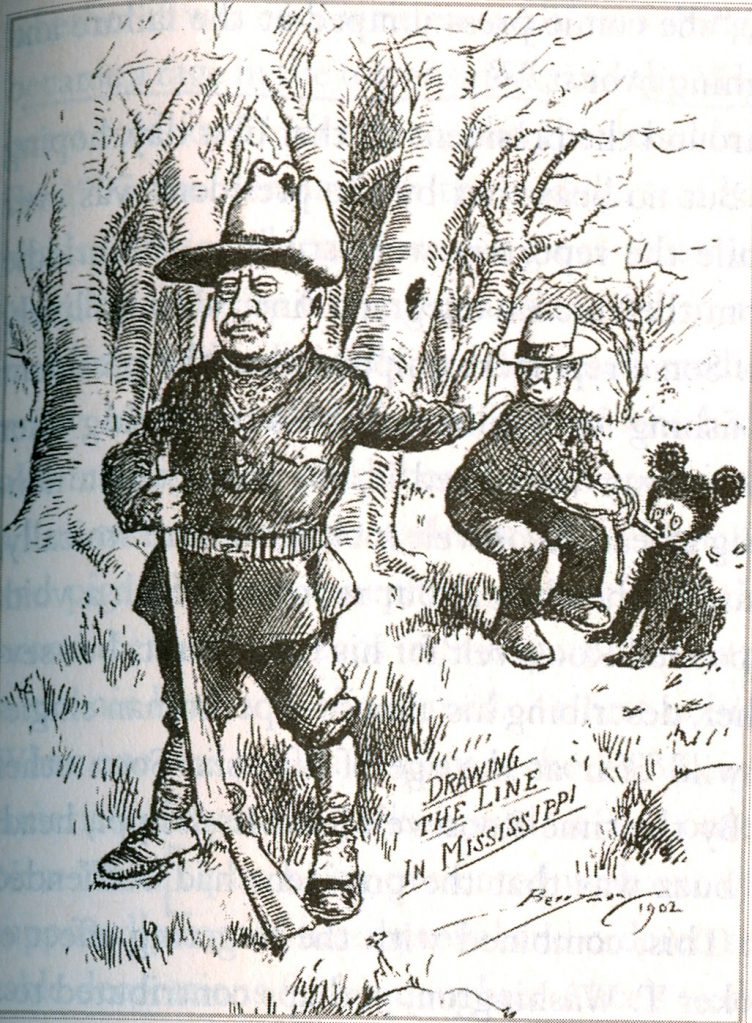
And to think Teddy Roosevelt called it a “manly sport.”

This cartoon that appeared in The Washington Post led to the creation of the first "Teddy Bear" stuffed toy.

Hunter’s Code of Conduct [translated for laypersons]

 
imagesQB1DEJIT

Respect the Environment & Wildlife

  • Show respect for the wildlife you hunt by taking only clean, killing shots…[Remember, nothing shows respect like killing.]
  • Learn to tread lightly while afield…[this may be a physical impossibility for some hefty hunters.] Use vehicles only on established roads and trails, practice low-impact camping and travel, and pack out your trash, including cigarette butts and spent shell casings…[and poop.]
  • Report illegal activities immediately[such as someone trying to murder an animal.]

Show Consideration of Non-Hunters

  • Remember that the future of hunting depends on hunters and non-hunters alike. Be considerate of non-hunters’ sensibilities, and strive to leave them with positive images of hunting and hunters[Yeah right, good luck on that one.]
  • Don’t flaunt your kill. Treat game carcasses in an inoffensive manner particularly
    Serial killer, Robert Hansen, shown here treating a carcass in an inoffensive manner.

    Serial killer, Robert Hansen, shown here treating a carcass in an inoffensive manner.

    during transport…[even though you just treated the living animal in an extremely offensive manner by taking his or her life.]

  • Be considerate of all outdoor users, including other hunters…[of course, this rule does not apply to the wildlife.]

Hunt Safely

  • Exercise caution at all times…[You don’t want to end up another statistic.]
  • Fire your gun or bow only when you are absolutely sure of your target and its background…[Enough said?] 
  • Wear hunter orange whenever appropriate…[or not.]

Support Wildlife & Habitat Conservation

  • Provide hands-on and financial support for conservation of game...[to ensure a healthy supply of victims for future hunting.]
  • Become involved in wildlife conservation organizations…[i.e.: political trophy hunting groups like the Safari Club.]
  • Purchase state and federal wildlife conservation stamps, even if such stamps are not required for hunting…[to help blur the line between hunter and non-hunter wildlife conservation contributions.]

Pass on an Ethical Hunting Tradition

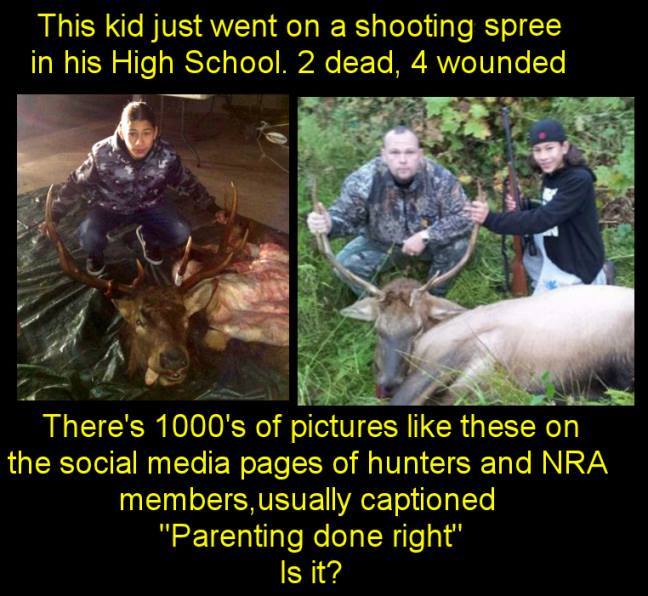
  • Invite a young person or a non-hunter next time you go afield to scout or hunt…[every future school shooter need a mentor.]
  • Attend a hunter education course, and urge others to do the same…[and don’t forget to try to graduate from high school.]
  • Set high ethical standards for future generations of hunters to help ensure hunting will continue…[because all that really matters is that the sport of hunting will continue in perpetuity.]

Hunt Only with Ethical Hunters

  • Take pride in being an ethical hunter…[even if such a thing is fictitious, like
  • Smalfut Bigfoot or the Loch Ness monster.]

And remember that hunting and alcohol don’t mix…[so, you might want just to stay home and watch the ball game instead.]

Adapted from:

http://wdfw.wa.gov/hunting/conduct/