Anti-hunters Outnumber Hunters by Three to One

whoownschart

It’s like the 1% vs. the 99% ratio. This graph came from an opinion piece entitled, “Who Owns the Wildlife?” which starts out:

More and more we as a society are facing problems with how wildlife of all types are managed in the United States. We see increasing conflicts and polarization between hunting and anti-hunting groups. On the one side, invoking the pioneer tradition of our ancestors, hunting groups contend that the right to hunt is undeniable and is essential to the sound management of our wildlife resources. On the other hand, anti-hunting groups contend that the need to kill wildlife animals is no longer justified and hunting represents a next to barbaric act against living, feeling animals.

Long line of hunters on a mountain trail.

Long line of hunters walk a mountain trail. Hunters contend that they are the only ones who should have a say in how wildlife are managed.
[I just want to interject here that as a wildlife photographer/watcher, the parking permit I purchase (the same one that comes with a hunting or fishing license) allegedly goes toward enhancing habitat. I recently saw the results of my contribution when I pulled down what used to be a quiet road which ends at a river and found that the “game” department had built a huge paved parking lot with 20 lined, blacktop spaces for trucks and boat trailers. They also put in a boat launch with a brand new dock and installed a shiny new 2-seater pit toilet–all for the sake of duck hunters and sport fishermen. Meanwhile, they did nothing for ducks or wildlife habitat.]


On one side, hunters contend that because they pay the bills for the management of wildlife resources through their licenses and a federal excise tax on their hunting equipment, they are the only ones who should have a say in how wildlife are managed. On the other side, anti-hunters argue that moral objections to the slaying of innocent animals overrides any priority as to who has a say in these matters. 

And the arguments go on and on….

A Hunter Weighs in

Here’s a nuisance, pro-kill comment I received this morning on the post, “What’s the Difference Between a Poacher and the Owner of Jimmy John’s Gourmet Sandwiches?” It is quoted here, verbatim, to share some insight into how these kind of people think:

“Apart from the elephants and rhinos, a lot (not saying all) of the big cats hunted in Africa are typically neucense animals to local tribes, farms, and villages. The hunters are the ones who pay the money for the guided hunt (by locals) and almost all of the animal is utilized for it’s furs, meats, and bones. It doesn’t just go to waste. On top of that it also removes the neusence animal from the area; which in turn makes life for the locals a little bit easier. Or I’m wrong and he likes to murder awesome animals. Either way, I am for it.”

1794802_600379583390084_2056398278_n

What’s the difference between a Poacher and the Owner of Jimmy John’s Gourmet Sandwiches

http://catastrophemap.org/wordpress/?p=3180

ANSWER: One does it for money, the other does it for fun Jimmy John Liautaud

Jimmy John’s Owner Jimmy John Liautaud Likes To Kill Large Mammals
NO STUDIES YET AVAILABLE ON COMPENSATION ISSUES FOR BIG GAME HUNTERS WHO OWN COMPANIES THAT MAKE TORPEDO SHAPED SANDWICHES

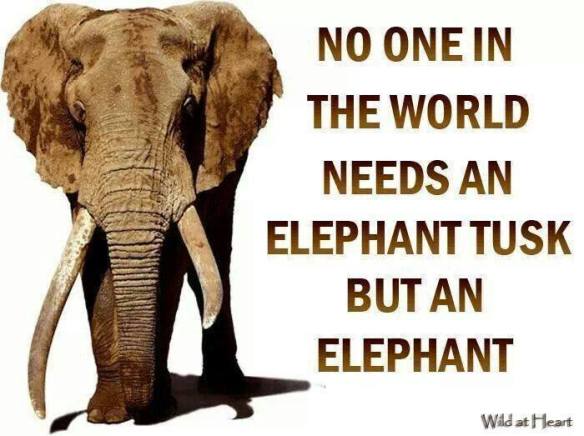
In addition to loss of habitat, elephants, rhinos and big cats are being hunted to extinction globally by humans who need their parts. In the case of elephants and rhinos, the tusks and horns are the booty. These are valuable commodities, used primarily in Asia to make little religious trinkets (ivory tusks) and as aphrodisiacs (rhino horns). The animals are usually alive when the poachers tusks and horns are cut away. The world’s remaining big cat are hunted for their skins.Is heinous as this trade it, the motive is profit, enough profit that poachers are less likely to be individuals and more likely to be warlords, or even members of various African military forces moonlighting. They’re in it for the money and the authorities are losing the battle nearly everywhere. 2012 was a record year for rhino massacres, with four out of five remaining species nearing final extinction.Congo elephant massacre

This is a fundamentally different motivation than that of Jimmy John’s sub sandwich empire Jimmy John Liautaud, who loves to go on safari for the sheer pleasure of killing large animals. Look at the big grin of triumph as he poses with their corpses. This is a happy fellow who has proven once again that he can master nature as long as he has a safari staff and a big fucking gun.

Jimmy participates in the safaris on private game preserves, where the safari companies essentially own the prey whose guaranteed death is their profit center. In fact, here’s a handy link to Johan Calitz Safaris’ photo page, featuring a host of mighty men with their subdued trophies.

In case you are looking for patterns, Johnny is also politically inclined to the right wing. He just hates providing health care for his workers, and publicly announced plans to reduce workers’ hours in order to avoid the Affordable Care Act’s requirement to provide health coverage or pay a penalty.

_____________________________

[As I pointed out in my post “‘Kill ‘Em All Boyz’ Are ‘Ethical’ Hunters Once Again,” Poachers or not, it all ends the same for the animals they killed.]

Jimmy John is a big man. With the photos to prove it.

http://www.smilepolitely.com/splog/jimmy_john_is_a_big_man._with_the_photos_to_prove_it/

        June 10, 2011 / 4:29pm /                   Robert Hirschfeld
.
..for now tales of Jimmy John’s violent exploits are limited to using his (tax-dwindled) funds to live out fantasies of stalking, predation, and slaughter in exotic locales.

Jimmy, I’ll finance your next trip if you think you’re man enough to do it bare-handed.

p.s. Your sandwiches are shit.

——-

An update based on my thoughts in communicating with a few commenters:

Thank you to all who have read, forwarded, and provided insightful commentary or information-and this would include an invitation to and preemptive thanks for anyone who can provide a legitimate defense beyond, “Who cares?”  I think it’s immediately apparent that a lot of people care.

Also, a special tip of the hat to Jonathon Childers, who alerted SP to these photos.

I fully appreciate skepticism and the withholding of support for the targeting and criticism of another human until reason and sense dictate otherwise.  I believe the photos do dictate such responses, though context and additional information are always warranted.

I could have written a longer, investigative piece, and tied in trophy hunting with the ills of our civilization, but I chose not to.  Positive and negative consequences follow.  One of the positives is that, in deferring from framing the discussion analytically, readers have felt inclined to weigh in on important subjects like economic models, animal cruelty, debased human behavior abroad and on-site (if I want to feel apocalyptic I go read internet comment threads), and the need to find constructive solutions.

– See more at: http://www.smilepolitely.com/splog/jimmy_john_is_a_big_man._with_the_photos_to_prove_it/#sthash.pY1dfzRz.dpuf

Is Nowhere Safe? Oregon “Refuge” May Allow Elk Hunting

elk-000-home17300

March 08, 2014 12:45 am
By Bennett Hall, Corvallis Gazette-Times

Half a century ago, when the William L. Finley National Wildlife Refuge south of Corvallis was established to protect migratory waterfowl, sightings of Roosevelt elk were a rare occurrence in the Willamette Valley.

In recent years, however, the majestic animals have made quite a comeback on the valley floor. In the last decade, the Oregon Department of Fish & Wildlife estimates, the population has mushroomed from 100 to at least 600 individuals.

The biggest herd in the region makes its home on the Finley Wildlife Refuge, where an estimated 200-plus elk have become a major draw for visitors — and a growing problem for neighboring landowners.

State and federal wildlife managers say the animals cause extensive damage when they periodically wander off the 6,000-acre refuge, eating or trampling crops and knocking down fences that stand in their way.

Now, to reduce the damage, ODFW and Finley biologists are floating a plan to reduce the herd by opening the refuge to elk hunting for the first time.

If approved by the U.S. Fish & Wildlife Service, the plan would allow a three-month hunting season for antlerless elk (cows and “spikes,” or yearling bulls) in the late summer and early fall.

Five permits would be issued to Willamette Valley elk tag holders each month from August through October for a total take of up to 15 elk, and only bowhunting would be allowed the first year.

“We have a goal to reduce the size of the elk herd by 20 percent over five years,” said Jock Beall, the refuge biologist at Finley.

The plan is being welcomed by most area farmers and duck-hunting clubs, which plant corn to attract waterfowl.

But the idea is not without controversy. A large number of Finley’s 100,000 annual visitors come to the refuge to watch or photograph wildlife. To them, the elk are rock stars.

“Elk are a charismatic species,” Beall acknowledged. “(Visitors) like them and they like the viewing, and they think (the hunt) will change the opportunity or decrease the opportunity to view them.”

You can count Ricardo Small among that group.

A retired Arizona real estate appraiser who now spends most of the year in the mid-valley, he’s a regular at Finley. From his perspective, any damage the elk may be doing on private property shouldn’t be the refuge’s problem.

“The elk are a major magnet for visitors, and there is no information I can find in any Fish & Wildlife report to indicate the elk are doing any damage to resources on the refuge,” Small pointed out.

“My position is there’s no reason to open up the refuge to elk hunting. Let them open up their land to hunting — but I guess that’s not palatable to the private landowners.”

As recently as 1989, there were only about 20 elk on the Finley National Wildlife Refuge. A decade later the tally had jumped to 100, and last year the Finley herd numbered 163 animals.

A second herd of 38 elk has taken up residence since then, according to Beall, and there’s another group of 10 to 15 bachelor bulls that hangs around the fringes of the two established herds.

There’s plenty of forage and tree cover on the refuge, and because hunting currently is not allowed at Finley, it provides a safe haven for the animals during the valley elk season, which runs from August through March.

It’s good habitat for Roosevelt elk, the largest North American subspecies, which can weigh in at half a ton and stand 5 feet tall at the shoulder. In fact, the biggest Roosevelt bull on record was taken just south of the refuge boundary in 2002. The taxidermied trophy is now on display at Cabela’s sporting goods store in Springfield.

Even though the refuge proposal would not allow hunting of mature bulls (which tend to be targeted by off-refuge hunters and are underrepresented in the Finley herd), some wildlife lovers fear any hunting would make Finley’s elk skittish.

“I oppose the plan mainly because of what it would do to the recreational aspect — viewing elk on the refuge,” said Phil Hays, another refuge regular, in an email to the Gazette-Times.

“The (environmental assessment) specifically states that hunting causes elk to remain hidden during the day, and they come out to feed at night,” he added. “The refuge is open dawn to dusk. Seems to me that hunting will make the already elusive herd less visible to visitors at the refuge.”

more: http://www.gazettetimes.com/news/local/refuge-may-allow-elk-hunting/article_c93d5bb6-a665-11e3-befe-0019bb2963f4.html

Urge Georgia Legislators to Oppose Raccoon Torture!

If House Bill (H.B.) 423 passes, it will allow hunters to trap and cruelly confine raccoons for use in field trial competitions. This bill has passed through the House and is now with the Senate Natural Resources and Environment Committee, which may discuss it as early as March 11. Your voice and the voices of everyone you know are desperately needed right now. Please forward this alert far and wide!

Every minute in confinement is already a terrifying eternity for raccoons, who, during field trial competitions, are flung high into trees or hauled across fields and bodies of water as frantic dogs give chase. They must repeatedly endure this hellish ordeal, often for hours on end, and many are badly injured or even killed during the trials. Survivors risk developing chronic and contagious stress-induced disorders, which could eventually prove fatal after their release.

Please urge the members of the Senate Committee  and your senator to oppose H.B. 423. Let them know that field trials are inhumane and harmful to local ecosystems and can spread disease. Tell them that these events should remain illegal in Georgia!

Action Alert Here:  https://secure.peta.org/site/Advocacy?cmd=display&page=UserAction&id=5343

Wildlife Photography Copyright Jim Robertson

Wildlife Photography Copyright Jim Robertson

Whither the Hunter/Conservationist?

By George Wuerthner On March 5, 2014

Many hunter organizations like to promote the idea that hunters were the first and most important conservation advocates. They rest on their laurels of early hunter/wildlife activist like Teddy Roosevelt, and George Bird Grinnell who, among other things, were founding members of the Boone and Crocket Club. But in addition to being hunter advocates, these men were also staunch proponents of national parks and other areas off limits to hunting. Teddy Roosevelt help to establish the first wildlife refuges to protect birds from feather hunters, and he was instrumental in the creation of numerous national parks including the Grand Canyon. Grinnell was equally active in promoting the creation of national parks like Glacier as well as a staunch advocate for protection of wildlife in places like Yellowstone. Other later hunter/wildlands advocates like Aldo Leopold and Olaus Murie helped to promote wilderness designation and a land ethic as well as a more enlightened attitude about predators.

Unfortunately, though there are definitely still hunters and anglers who put conservation and wildlands protection ahead of their own recreational pursuits, far more of the hunter/angler community is increasingly hostile to wildlife protection and wildlands advocacy. Perhaps the majority of hunters were always this way, but at least the philosophical leaders in the past were well known advocates of wildlands and wildlife.

Nowhere is this change in attitude among hunter organizations and leadership more evident than the deafening silence of hunters when it comes to predator management. Throughout the West, state wildlife agencies are increasing their war on predators with the apparent blessings of hunters, without a discouraging word from any identified hunter organization. Rather the charge for killing predators is being led by groups like the Rocky Mountain Elk Foundation, and others who are not only lobbying for more predator killing, but providing funding for such activities to state wildlife agencies.

For instance, in Nebraska which has a fledging population of cougars (an estimated 20) the state wildlife agency has already embarked on a hunting season to “control” cougar numbers. Similarly in South Dakota, where there are no more than 170 cougars, the state has adopted very aggressive and liberal hunting regulations to reduce the state’s cougar population.

But the worst examples of an almost maniacal persecution of predators are related to wolf policies throughout the country. In Alaska, always known for its Neanderthal predator policies, the state continues to promote killing of wolves adjacent to national parks. Just this week the state wiped out a pack of eleven wolves that were part of a long term research project in the Yukon Charley National Preserve. Alaska also regularly shoots wolves from the air, and also sometimes includes grizzly and black bears in its predator slaughter programs.

In the lower 48 states since wolves were delisted from the federal Endangered Species Act and management was turned over to the state wildlife agencies more than 2700 wolves have been killed.

This does not include the 3435 additional wolves killed in the past ten years by Wildlife Services, a federal predator control agency, in both the Rockies and Midwest. Most of this killing was done while wolves were listed as endangered.

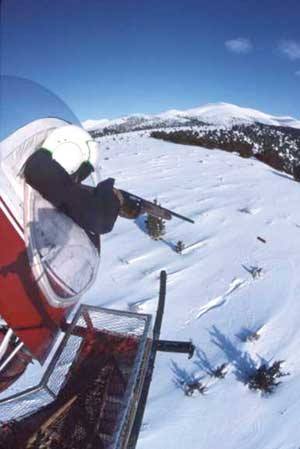
As an example of the persecutory mentality of state wildlife agencies, one need not look any further than Idaho, where hunters/trappers, along with federal and state agencies killed 67 wolves this past year in the Lolo Pass area on the Montana/Idaho border, including some 23 from a Wildlife Service’s helicopter gun ship. The goal of the predator persecution program is to reduce predation on elk. However, even the agency’s own analysis shows that the major factor in elk number decline has been habitat quality declines due to forest recovery after major wildfires which has reduced the availability of shrubs and grasses central to elk diet. In other word, with or without predators the Lolo Pass area would not be supporting the number of elk that the area once supported after the fires. Idaho also hired a trapper to kill wolves in the Frank Church/River of No Return Wilderness to increase elk numbers there.

Idaho hunters are permitted to obtain five hunting and five trapping tags a year, and few parts of the state have any quota or limits. Idaho Governor Butch Otter recently outlined a new state budget allotting $2 million dollars for the killing of wolves—even though the same budget cuts funding for state schools.

Other states are no better than Idaho. Montana has a generous wolf six month long season. Recent legislation in the Montana legislature increased the number of wolves a hunter can kill to five and allows for the use of electronic predator calls and removes any requirement to wear hunter orange outside of the regular elk and deer seasons. And lest you think that only right wing Republican politicians’ support more killing, this legislation was not opposed by one Democratic Montana legislator, and it was signed into law by Democratic Governor Steve Bullock because he said Montana Dept of Fish, Wildlife and Parks supported the bill.

Wyoming has wolves listed as a predator with no closed season or limit nor even a requirement for a license outside of a “trophy” wolf zone in Northwest Wyoming.

The Rocky Mountain West is known for its backward politics and lack of ethics when it comes to hunting, but even more “progressive” states like Minnesota and Wisconsin have cow-towed to the hunter anti predator hostility. Minnesota allows the use of snares, traps, and other barbaric methods to capture and kill wolves. At the end of the first trapping/hunting season in 2012/2013, the state’s hunters had killed more than 400 wolves.

Though wolves are the target species that gets the most attention, nearly all states have rabid attitudes towards predators in general. So in the eastern United States where wolves are still absent, state wildlife agencies aggressively allow the killing of coyotes, bears and other predators. For instance, Vermont, a state that in my view has undeserved reputation for progressive policies, coyotes can be killed throughout the year without any limits.

These policies are promoted for a very small segment of society. About six percent of Americans hunt, yet state wildlife agencies routinely ignore the desires of the non-hunting public. Hunting is permitted on a majority of US Public lands including 50% of wildlife “refuges as well as nearly all national forests, all Bureau of Land Management lands, and even a few national parks. In other words, the hunting minority dominates public lands wildlife policies.

Most state agencies have a mandate to manage wildlife as a public trust for all citizens, yet they clearly serve only a small minority. Part of this is tradition, hunters and anglers have controlled state wildlife management for decades. Part of it is that most funding for these state agencies comes from the sale of licenses and tags. And part is the worldview that dominates these agencies which sees their role as “managers” of wildlife, and in their view, improving upon nature.

None of these states manage predators for their ecological role in ecosystem health. Despite a growing evidence that top predators are critical to maintaining ecosystem function due to their influence upon prey behavior, distribution and numbers, I know of no state that even recognizes this ecological role, much less expends much effort to educate hunters and the public about it. (I hasten to add that many of the biologists working for these state agencies, particularly those with an expertise about predators, do not necessarily support the predator killing policies and are equally appalled and dismayed as I am by their agency practices.)

Worse yet for predators, there is new research that suggests that killing predators actually can increase conflicts between humans and these species. One cougar study in Washington has documented that as predator populations were declining, complaints rose. There are good reasons for this observation. Hunting and trapping is indiscriminate. These activities remove many animals from the population which are adjusted to the human presence and avoid, for instance, preying on livestock. But hunting and trapping not only opens up productive territories to animals who may not be familiar with the local prey distribution thus more likely to attack livestock, but hunting/trapping tends to skew predator populations to younger age classes. Younger animals are less skillful at capturing prey, and again more likely to attack livestock. A population of young animals can also result in larger litter size and survival requiring more food to feed hungry growing youngsters—and may even lead to an increase in predation on wild prey—having the exact opposite effect that hunters desire.

Yet these findings are routinely ignored by state wildlife agencies. For instance, despite the fact that elk numbers in Montana have risen from 89,000 animals in 1992 several years before wolf reintroductions to an estimated 140,000-150,000 animals today, Montana Department of Fish, Wildlife and Parks does almost nothing to counter the impression and regular misinformation put forth by hunter advocacy groups like the Rocky Mountain Elk Foundation or the Montana Sportsmen for Fish and Wildlife that wolves are “destroying” Montana’s elk herds.

I have attended public hearings on wolves and other predator issues, and I have yet to see a single hunter group support less carnivore killing. So where are the conservation hunters? Why are they so silent in the face of outrage? Where is the courage to stand up and say current state wildlife agencies policies are a throw-back to the last century and do not represent anything approaching a modern understanding of the important role of predators in our ecosystems?

As I watch state after state adopting archaic policies, I am convinced that state agencies are incapable of managing predators as a legitimate and valued member of the ecological community. Their persecutory policies reflect an unethical and out of date attitude that is not in keeping with modern scientific understanding of the important role that predators play in our world.

It is apparent from evidence across the country that state wildlife agencies are incapable of managing predators for ecosystem health or even with apparent ethical considerations. Bowing to the pressure from many hunter organizations and individual hunters, state wildlife agencies have become killing machines and predator killing advocates.

Most people at least tolerant the killing of animals that eaten for food, though almost everyone believes that unnecessary suffering should be avoided. But few people actually eat the predators they kill, and often the animals are merely killed and left on the killing fields. Yet though many state agencies and some hunter organizations promote the idea that wanton waste of wildlife and unnecessary killing and suffering of animals is ethically wrong, they conveniently ignore such ideas when it comes to predators, allowing them to be wounded and left to die in the field, as well as permitted to suffer in traps. Is this ethical treatment of wildlife? I think not.

Unfortunately unless conservation minded hunters speak up, these state agencies as well as federal agencies like Wildlife Services will continue their killing agenda uninhibited. I’m waiting for the next generation of Teddy Roosevelts, Aldo Leopolds and Olaus Muries to come out of the wood work. Unless they do, I’m afraid that ignorance and intolerant attitudes will prevail and our lands and the predators that are an important part of the evolutionary processes that created our wildlife heritage will continue to be eroded.

Whither the Hunter/Conservationist?

copyrighted wolf in river

“Sportsmen” donate $15,000 to Wildlife “Services”

http://ravallirepublic.com/news/local/article_2dcae02a-a419-11e3-83ec-0019bb2963f4.html

By Perry Backus

[While you and I hate Wildlife “Services with a passion…] The Montana Sportsmen for Fish and Wildlife recently contributed $15,000 to the federal agency focused on reducing damage to livestock caused by coyotes and wolves.

The sportsmen’s organization made its contribution to the U.S. Department of Agriculture’s Wildlife Services in hopes the funding will have some residual benefit to ungulate herds, said Keith Kubista, president of the sportsmen’s group.

“We are pleased to be able to participate in this way which results in reducing the burden of government on the taxpayer and at the same time is consistent with our policies and mission,” Kubista said. “Primary among them is to focus our efforts and funds to preserve our rights to hunt, trap and fish and to protect livestock and pets from predation.”

Kubista said the group recognizes the need to help landowners and livestock producers who suffer impacts from predators.

“These management actions by USDAWS which are focused on the removal of coyotes and wolves causing predation on livestock will also minimize the potential for predation on wildlife,” said the group’s press release.

Montana Wildlife Services State Director John Steuber views the contribution as a cooperative funding agreement similar to what it shares with livestock organizations, counties and others.

“This one may be a little different from others,” he said. “This sportsmen group apparently wants to show its support for the livestock industry.”

Other sportsmen’s groups – like the Rocky Mountain Elk Foundation – have signed cooperative funding agreements in the past.

With federal funding in decline, Steuber said the cooperative funding agreements have played an important role in augmenting the Service’s annual budget.

Steuber said Wildlife Services has evolved quite a lot in the 27 years that he’s spent with it.

“We encourage people to use more non-lethal methods for protecting their livestock from predators,” he said.

As an example, Steuber said the agency is doing a guard dog study in Montana using breeds that aren’t common to the state. The agency is also encouraging people raising chickens in their backyards to use electric fence as a deterrent to bears, he said.

“There are a lot of things that people can do to keep wildlife out of trouble,” he said. “We certainly encourage people to use those.”

____________________________

Wildlife “Services” in action on the Idaho/Montana border:

1920332_613143138754489_331154733_n

12 Year Old Montana Girl Murders Her First Mountain Lion

[The oh boy, happy day reporting is about as hard to take as the photo of the dead cougar. Here’s the headline the mainstream paper gave this vile act of murder: ]

Darby girl bags her first mountain lion

                                                                               
 2014-03-03   Two weeks after her 12th birthday, Darby girl bags her first mountain lion                         missoulian.com
March 02, 2014 6:00 pm  •
DARBY – Taylor Wohlers was 3 years old when she experienced her first mountain lion hunt.

It was something she never forgot.

The excitement of the chase through snow, over rocks and up steep mountains. The sound of the dogs baying at the base of the tree. And then finally, the sight of a snarling mountain lion high up in the tree.

From that first hunt seen from a backpack carried by her father, Wohlers has been on well over 20 mountain lion hunts in the past decade.

All through those years, she counted the days until she would actually be old enough to have a hunting license.

She turned 12 on Feb. 12 and bought her first license that very day.

Montana state law required that she wait another five days to actually use her mountain lion tag. By then, the state-set quota for mountain lions in the southern Bitterroot was down to one female.

Her dad, Ben Wohlers, was determined to do his best to help his daughter fill her first tag.

On Wednesday – exactly two weeks after she turned 12 – Taylor was called into the school office and told to grab her snow gear.

Her dad had found a mountain lion near Sula.

“It had come down and crossed in my tire tracks,” Ben Wohlers said. “I knew it was close. When I turned the dogs out, they were on it right away. She’s been on a lot longer chases than this one.”

The longest chase the father and daughter enjoyed covered close to 11 miles as they walked from the lookout tower at Gird Creek to the bottom of the mountain.

*****

After the much shorter hike Wednesday, Taylor remembers seeing the lion snarling up in the tree.

“I stood there and looked at it for a little while,” Taylor said. “And then I used my dad as a rest to take aim.”

Her father sat down on the ground and she placed the barrel of the AR-15 .223-caliber rifle across his shoulder.

A short time later, the mountain lion hunting season in the Bitterroot officially came to an end.

“Ideally, we would have looked for a big tom, but that part of the season was closed,” Ben Wohlers said. “This was the last one in the valley for this year.”

Taylor had only been legally old enough to hunt in Montana for two weeks.

This wasn’t the first time that she’s hunted. In the summer of 2012, she traveled to Alaska to shoot a black bear while being filmed by the Skull Bound TV production company.

She used a .300 Winchester Magnum to kill the bear at 168 yards.

Her dad took her to Canada last year in search of a mountain lion, but they couldn’t find the right one there.

Last week’s hunt was one that neither father nor daughter will ever forget.

“I want a life-size mount,” Taylor told her dad inside his taxidermy shop filled with life-size mounts of a wide variety of critters.

Wohlers looked at his daughter and smiled.

“That’s probably what we’ll do then,” he said. “We’ll probably do a life-size mount for you.”

A Big Deal Out of Nothing?

As most of you know, this blog, as a rule, does not allow comments from self-proclaimed wildlife killers or their apologists, for the same reason a victim’s rights group might have a policy not to approve comments from abusers of vulnerable human victims. However, once in a while I post a hunter’s comment if it gives us particular insight into how their minds work.

According to the following comment to the post “High School Class Sponsoring Crow Hunting Tournament,” crows, coyotes, deer, hogs and ducks are “nothing,” but domesticated chickens may have some value…

“I think you are all making a big deal of out of nothing. I grew up in Sasakwa, I graduated from Sasakwa, and I hunt deer, ducks, and hogs. I don’t see why crows or coyotes are any different. My family lives in the country and we have animals. Coyotes will come and kill our chickens if we don’t keep an eye out for them.

“And we are not ruthless killers. Many kids and adults in Sasakwa have taken Hunter Safety Courses and hunt. Just because our community puts a hunting event together doesn’t mean there will be a big school shooting.”

Well, that’s what the shooters from Columbine would have said. Granted, not every bully becomes a serial killer, but the shooting of crows or coyotes for the sake of a sporting event is abusive in its own right. The contest-killing of sentient beings may not qualify as mass murder according to the laws of the day, but it’s certainly not “nothing.”

Text and Wildlife Photography ©Jim Robertson, except where noted

Text and Wildlife Photography ©Jim Robertson, except where noted