Please Don’t Eat the Aliens

Though they’re often seen as invaders, “alien” animals didn’t choose their current status or situation. Practically without exception, unwanted, unwelcome, “exotic” or “alien” animals were brought to this country by humans or followed some anthropogenic path (on a ship or along a freeway median), usually into some freshly human-degraded habitat.

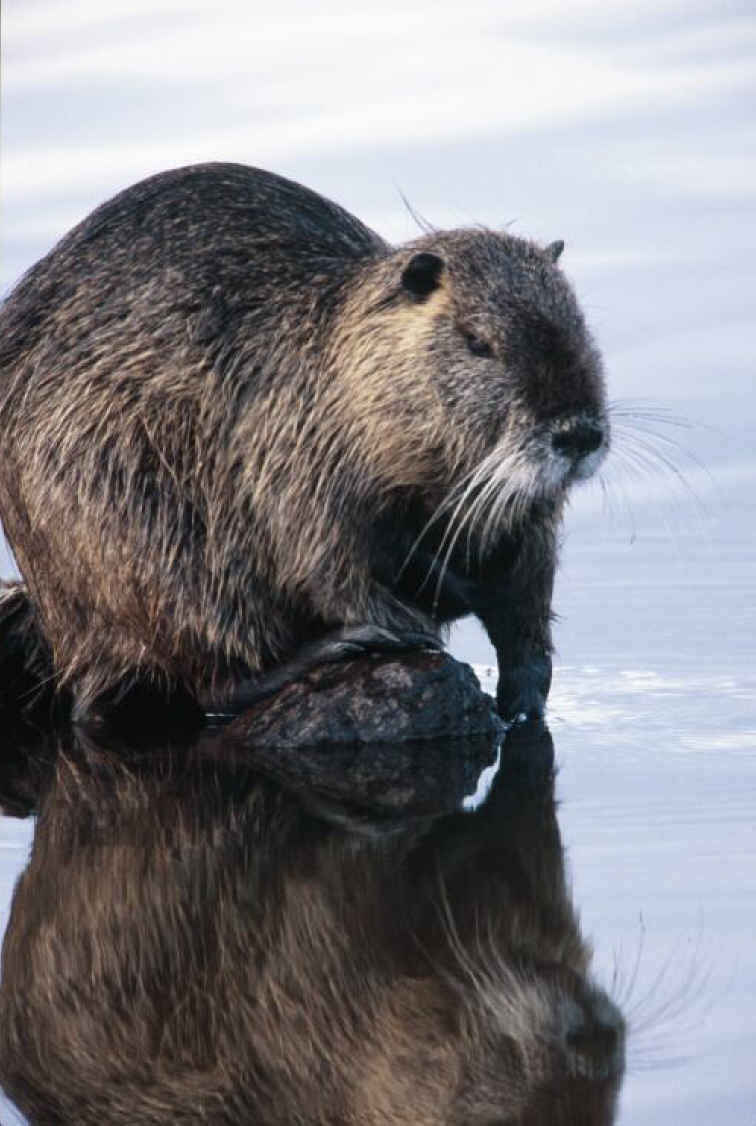
In the case of the nutria, the now reviled aquatic rodent was brought into this country from South America to live as captives for the fur trade, after trappers had nearly decimated all the indigenous muskrat and beaver. How soon people forget history when they decide to label an animal a “pest” and call for their extermination when said species has successfully adapted to their new surroundings. Instead they use exotic species to justify the continued cruelty of trapping, snaring and sometimes gassing or poisoning.

One self-promoter even wrote a hip pro-hunting book called, “Eating Aliens,” in the vein of idiotic reality TV shows like “Duck Dynasty” or “Swamp People.” I’ve had more folks contact me to purchase the rights to use my nutria photos in their publications than any other species in my files, but I always end up having to turn them down after asking them what their article is going to be about.

I don’t allow my photos to be used in any publication that promotes lethal “control” of some poor animal who is a victim of human expansion. The producers of Swamp “People” found that out when I refused to let them use this nutria photo on their stupid show…

Text and Wildlife Photography ©Jim Robertson, 2013. All Rights Reserved

Text and Wildlife Photography ©Jim Robertson, 2013. All Rights Reserved

Beware the Beaver

Apparently some folks need to be reminded: don’t try to manhandle a beaver that doesn’t want to be touched.

A fisherman in Belarus learned that the hard way; when he reached down to pick it up, the beaver—no doubt feeling cornered—bit him in what was unfortunately a major artery. The 60 year old angler died of his wounds, but he was probably too old to learn from the experience anyway. Perhaps others can learn from it instead.

Again, in case you missed it above, DON’T TRY TO PICK UP WILD ANIMALS! Humans aren’t known for being the most benign of creatures, especially to a beaver, whose species we once hunted and trapped practically to extinction. It’s perfectly understandable that they would distrust an approaching two-legger, especially one who is intent on hooking fish. Any animal will do what it can to defend itself against the threat of being killed and/or eaten. Beavers have a couple of very sharp, tree-lopping teeth to resort to when push comes to shove.

Some papers reported that the human victim was trying to pick the animal up to pose with it for a photo. If so, it was another case of stupidity for the sake of vanity. Still, it won’t necessarily earn him a coveted Darwin Award; others have him beat. I knew a photographer that used to frequent Yellowstone (past tense, since he’s no longer with us) who would creep up to within a few yards of a grizzly bear’s fresh kill, hoping for a close-up shot.

Although the aim of wildlife photography is non-lethal, photographers shouldn’t take it as a free pass to disturb animals at will. Unfortunately, some who “shoot” with a camera have a mind-set similar to that of a typical trophy hunter. Wearing face paint and cammo from head to toe (some are in fact off-season hunters, while others just enjoy dressing up like one), these self-serving photographers are often seen standing along the roadway photographing animals who are quite obviously aware of their presence. Believing themselves invisible (cleverly disguised as a tree or a bush), they crowd in and get as chummy as they want to their quarry, no matter that their urge for closeness isn’t mutual.

I couldn’t count how many times I’ve seen people, both professionals and point-and-shooters, run right up to a bison, elk, moose or bear hoping for a trophy shot or souvenir. Every year, irresponsible photo-getters are gored, trampled or charged by animals annoyed enough to feel they must defend themselves. But untouchably elite Homo sapiens don’t like being put in their place, and over-protective parks’ departments routinely execute a one-strike-you’re-out policy in response to any defensive actions taken by ordinary nonhumans.

Careless behavior by photographers can force animals to leave their familiar surroundings, separate mothers from their young or interrupt natural activities necessary for survival. Hardly a day goes by without the inevitable park visitor committing the amateurish, impatient act of yelling or honking at a peaceful herbivore so he or she will quit grazing and look up towards the camera. And there’s always some joker who throws part of his sandwich out the window to draw in a bear or coyote.

Once in Yellowstone I reported such an incident to a ranger who pointed at the coyote and asked, “Is that the culprit?” “No,” was my exasperated reply, “The culprit is the guy who threw out his sandwich!”

Portions of this post were excerpted from the book, Exposing the Big Game: Living Targets of a Dying Sport

Text and Wildlife Photography ©Jim Robertson, 2013. All Rights Reserved

Text and Wildlife Photography ©Jim Robertson, 2013. All Rights Reserved

HCN: Trappers catch a lot more than wolves

From High Country News – From the April 29, 2013 issue by Jodi Peterson

As the feds handed management of gray wolves to Idaho, Montana and Wyoming over the last few years, reactions were mixed. Conservationists worried that wolf numbers would plummet, while hunters and trappers were thrilled they’d get to legally pursue the predators. All three states have hunting seasons now. Idaho started allowing wolf trapping last year; this year, Montana had its first season.

Despite mandatory state-run education classes, though, trappers have been catching a lot more than wolves — mountain lions, coyotes, bobcats, eagles, fishers, deer, moose, even family pets. Hikers and skiers have encountered wolf traps on public lands close to trails. In January, a National Park Service employee accidentally stepped into one, just outside Glacier National Park; the next month, a dog got three of its legs caught in two different traps at once south of Livingston, Mont. Below are some figures from Idaho’s 2011-2012 wolf trapping season. (Complete data from the current season aren’t yet available for either state.)

123 Total wolves trapped

143 Number of people who reported setting traps for wolves *

557; 111 Greatest number of wolf snares set in one night in one game-management unit; foothold traps set *

45; 33 White-tailed deer caught; released alive *

45; 1 Coyotes caught; released alive *

9; 3 Mountain lions caught; released alive *

9; 7 Domestic pets caught; released alive *

39; 22 Other non-target animals caught, including bobcats, geese, skunks, raccoons, golden eagles and ravens; released alive *

$37,115 to $1,256,966 Estimated monetary value of one Northern Rockies wolf **

$38.25; $333.50 Cost for license and tag to trap one wolf for Idaho residents; for nonresidents

* Based on responses to a survey sent to 460 people who took Idaho’s wolf trapper education class and purchased a 2011-2012 trapping license.

** according to 2011 Duke University study

Sources: Idaho Fish and Game Department, Duke University.

Wolf-Killers’ Admit They’re Sadistic Perverts

7d547853b294cf28b7b6c4ff5a69dda1
Paul Watson was right. In his foreword to my book, Exposing the Big Game: Living Targets of a Dying Sport, Sea Shepherd’s Captain Paul Watson wrote:

“Any man who has to kill a magnificent bear or bull elk to mount its head on his wall has some very deep and disturbing psychological and sexual problems. Hunting is no longer necessary for our survival but trophy hunting was never necessary for human survival. Trophy hunters can be described quite adequately as sadistic perverts and social deviants.”

Worst of all, they freely admit it.

An article by Cathy Taibbi in Examiner.com entitled “Wolf-killers admit it’s all about the sadistic sexual thrill” includes photos, links and quotes from one of the many anti-wolf Facebook pages where members brag about “’getting wood’ when seeing wolves trapped, tortured and killed, whether in images or in real life.” Flaunting the fact that they’re still legally entitled to their predatory perversions as long as the abused are only wild animals, they don’t hesitate to tell their Facebook friends that they “feel ‘orgasmic’ when hunting, trapping, killing, butchering, and even eating their victims.”

And they wonder why we call them psychopaths or compare them to serial Killers?

Anyone who gets sexually aroused at the sight of a trapped, struggling or suffering animal should be preemptively executed for the good of the many. They are what the FBI’s Behavioral Science team refers to as “sexual sadists,” the most dangerous of all offenders to their victims.

The Examiner article goes on to say “…in a nutshell, what they are saying plainly is that torturing animals is sexually arousing for them. Do we really want people like this freely expressing their fetishes on the Internet (where children can be traumatized – or worse, titillated – by them), or acting them out using our wildlife or pets?

“What’s happened to our society, when any show of ethics, decorum or empathy is treated as a liability to be ridiculed, threatened and treated derisively, while a site enabling perverted, sadistic sexual thrills from abusing animals is considered free speech?

“These kinds of pages are no better than so-called ‘crush videos’ (movies of innocent, live animals being stomped, cut apart with scissors, burned, etc., and sold to perverts who like to masturbate while watching) except that, being based more in the ‘traditional sports’ of hunting and trapping, these (for now, at least) manage to sneak by legally.

“Hunting, trapping and other hate/fetish sites need to be dealt with in the same fashion as perpetrators of illegal crush videos. The penalties for gratuitous animal abuse need to be severe. The moral fiber and safety of our society is definitely at risk.

“Yup. These are scary individuals. And our politicians are pandering to them. It’s a sad and disheartening statement about where America is at this point.”

The article includes a slide show of graphic photos of which they caution: “Viewer discretion is advised.” If you’re already well aware of the depth of wolf-hater depravity, then you might want to spare yourself the mental and emotional scarring. But if you have any doubts that wolf trapping is as evil as the Inquisition, then by all means view the slide show.

New Rule

Children the world over are taught a version of the golden rule, roughly along the lines of, “Do unto others as you would have them do unto you.” Kids are generally told that this directive applies to everyone, from their parents and teachers to their siblings and friends—not just to members of their in-group. And a lot of parents wouldn’t hesitate to invoke the golden rule to stop a child from hurting the family pet. Yet for many people, the bias of speciesism is so entrenched that they can’t seem to recognize a wild animal as a deserving other. But biases and isms are not written in stone. If humanity keeps evolving along a compassion continuum, we will inevitably apply the same rules of consideration to all creatures who have the ability to think and feel.

Perhaps it’s time to update and clarify the golden rule to read: “Do unto other sentient beings as they would have you do unto them.”

The golden rule is an age-old edict rooted in the qualities of empathy and compassion. The former asks that we put ourselves in someone else’s “shoes” while the latter compels us to modify any actions that would harm or aggravate them. Empathy helps us to envision what an animal’s needs and wants are, and how their life in the wild is different from our own. Compassion, in turn, obliges us to respond to signals that we’re alarming or irritating them.

If we act out of empathy and compassion, our conduct should cause a minimum of intrusion into the lives of animals and the wild areas they call home. And naturally if we live by a golden rule that includes all of the animal kingdom, we will never keep anyone captive, trap, poison or snare them or use them as living targets in a bloody, imbalanced game.

This post was excerpted from the book Exposing the Big Game: Living Targets of a Dying Sport

Text and Wildlife Photography ©Jim Robertson, 2013. All Rights Reserved

Text and Wildlife Photography ©Jim Robertson, 2013. All Rights Reserved

Montana FWP ignored public comment on wolf trapping

FWP ignored public comment on wolf trapping
Guest column in the Missoulian, by MARTY ESSEN

The ability to comment on proposed state and federal government regulations is an important right for all Americans. Since we live in a republic, not a direct democracy, public comment helps our representatives make informed decisions on our behalf.

No one expects public comment to be the equivalent of voting. But even so, public comment should not be ignored. After all, if our representatives just did what they pleased, they could hardly be considered representatives. This is especially true when government officials are appointed, not elected.

But if public comment isn’t voting, is there some percentage where public officials are morally obligated to put aside their preformed opinions and abide by the wishes of their constituents? If 60 percent is a supermajority, certainly 70 percent is a mandate, and ignoring anything over that percentage would make a mockery of the process.

What if our representatives passed a new regulation that disregarded the wishes of 90 percent of all public comments? Now that would be extreme! Yet that is exactly what the Montana Fish, Wildlife and Parks commissioners did last year.

In May of 2012, Montana FWP asked for public comments on proposed wolf killing regulations that for the first time would allow trapping. And boy did Americans speak out! Of the 7,750 comments registered, 6,997 opposed trapping. That’s 90 percent saying “no” to trapping.

Later, without publicly acknowledging the results or even indicating the general viewpoint of the public comments, our FWP commissioners voted 4 to 0 (with one abstention) to open up wolves to the barbaric practice of trapping.

What an insult to the public comment process. Not only does it prove that the FWP commissioners had already made up their minds, but it also discourages citizens from making public comments in the future. After all, if such an overwhelming landslide of comments had no effect on this decision, when would public comments ever have an effect on any decision?

Had the commissioners at least been honest enough to admit they were ignoring the thoughtful comments so many people had taken time to write, appropriate political pressure might have rectified the situation. Unfortunately, the injustice wasn’t discovered until Footloose Montana was able to count the comments, long after the damage was done. As a result, not only were wolves callously tortured, so were many family pets.

Since the terms have expired for three of the five commissioners involved, asking for resignations is impractical. Consequently, all we can do now is look forward to next season and demand that the new FWP Commission follow the wishes of the vast majority of the public. Should they ignore us again, Gov. Steve Bullock must take appropriate action.

In the meantime, the first action taken by the new Montana Fish, Wildlife and Parks Commission should be an out-loud reading of their own website, where it states: “We understand that serving the people of Montana to achieve this vision is both a privilege and a responsibility. We also understand that we cannot achieve our vision alone … We will actively involve people in decisions that affect them; help people to participate by providing them with credible and objective information; and, develop programs with a clear understanding of public expectations for FWP service.”

Marty Essen writes from Victor. He is the six-time award-winning author of “Cool Creatures, Hot Planet: Exploring the Seven Continents.” He is also a founding member and past president of Footloose Montana. His website is http://www.coolcreatureshotplanet.com.

MFWP Sued Over Lynx Trapping

Today the Missoulian reported that:

– Three conservation groups filed a federal court lawsuit Thursday against Montana Fish, Wildlife and Parks commissioners and Director Jeff Hagener for allowing trapping and snaring in Canada lynx habitat.

The Friends of the Wild Swan, the WildEarth Guardians and the Alliance for the Wild Rockies say FWP reported at least nine incidents since 2000 of lynx being caught in traps set for other species; and say four of those animals died. They alleged that this violates the federal Endangered Species Act, which lists lynx as a threatened species and warranted for protection, and want the trapping prohibited in lynx habitat.

“In one instance, a young female lynx was found in a pool of her own blood, with extensive muscle damage, and an empty stomach — all from lingering far too long in a cruel, steel-jawed trap,” Wendy Keefover, carnivore protection program director for WildEarth Guardians, said in a news release. “Montana allowed this unnecessary death, which impedes lynx recovery, especially when it involves potential breeding animals.”

The lawsuit outlines some of the cases in which lynx were caught and died, including one that starved to death. 

Yes, you read that right, a lynx STARVED TO DEATH in a trap! Obviously there’s no 24 hour trap check required for species like bobcat or whoever trappers are “legally” targeting. How many more precious animals have to bleed to death, lose limbs or starve in traps before the world wakes up and trapping ends for good?

525140_440817092654544_311118433_n

This Should be Required Before Getting a Trappers Licence…

Trappers! Put Up or Shut Up!

by Oliver Starr 

Enough of this trapping is humane, traps don’t injure animals bullshit! I’m tired of hearing these trappers spout their inane lies so here’s what I’m going to do.  I’m putting up a bounty.

I’m offering $100 to the first trapper that posts a full length, uncut video of themselves placing their own hand (ungloved, un-sleeved, un-jacketed) into a full size, un-modified, un padded and professionally anchored #9 wolf trap.  I want them to sit there, in the woods, just like if they were a wolf, for the full minimum trap check time of 24 hours before they are released by someone else.  No weapons, no food, no water.  Just like it is for any trapped animal. (Well, not just like, at least they will know who trapped them and why – plus, they can have their clothes on… see, I’m generous)

The first trapper to do this and provide the full length video documentary proof gets the prize.  I’d offer more but that’s all I can currently afford.  Who’s with me?  Who will contribute to up the bounty.  I’ll bet there’s not a single taker in the entire world.  Not one.  These guys need to either put up or shut up.

(yep, one of these, with both springs.)  If they want to really show us that they aren’t painful or that the animals so trapped don’t suffer, call the media so they can document it for us.

Bounty Update!  As of 9AM on 3/20/13 the bounty is up to $2070.00!  It’s time for the wolf killers to put their arms where their mouths are… You can contribute to the bounty here.

No, Trapping in Wisconsin State Parks Can’t Be Done Without Hurting Someone

Some articles in the mainstream media are so completely one-sided that they’re nothing short of sales pitches for animal exploiters. Reading them gives me the overwhelming urge to call “bullshit” at the top of my cyber-lungs (apologies to those with tender sensibilities). The following are excerpts from one such article (this one is from a Wisconsin newspaper).

My comments are between paragraphs (in parenthesis)….

Carolyn Schueppel was walking her dog in a privately owned conservation area near Lake Waubesa where dogs were commonly, but illegally, let off the leash. She let Handsome, her three-year-old Border collie mix, stretch his legs, and he raced out of sight. She found him just beyond the conservancy border in a Conibear trap that had been set to catch and kill raccoons. Terrified, Schueppel struggled with the trap but was unable to open it, and was forced to watch Handsome die.

(Sick. No one should have to go through that—raccoons or otherwise. The article makes a point to mention that she let her dog off leash “illegally,” yet does not condemn people for setting baited torture devices in the woods).

“It was horrible,” Schueppel says. “It’s still horrible. I’m struggling. The trapper set his trap on private land about 100 yards from where he was supposed to be. I don’t want to walk in the woods by myself anymore.”

(Typical, the animal exploiter ruins it for the rest of us.)

A year later Fred Strand and his golden retriever, Hank, were hunting for grouse and woodcock in northern Wisconsin when Hank stepped on a foothold trap intended to catch wolves. This time, the dog’s story ended happily. Strand is a wildlife biologist for the Wisconsin Department of Natural Resources and knew how to pry open the jaws of the trap. The foothold trap is the same design used by biologists who capture large predators to attach radio collars for studying their habits. Hank ran on without injury.

(Had it been a wolf, rather than a dog, the story would not have ended “happily.”)

New legislation will open most state parks to trapping for the first time this April. These parks will also be open for trapping from Nov. 15 to Dec. 15. Under the law traps need to be set more than 100 yards from trails, park shelters and other high-traffic areas.

(100 yards is not very far. Again, the laws are to protect people and pets; wildlife be damned.)

Conservationists say trapping is a useful tool for maintaining healthy wild animal populations. Trappers say they are harvesting a renewable resource to supply a global market for fur clothing.

(If I hear the words “useful tool” or “renewable resource” in reference to trapping animals again, I’m going to go on the warpath!)

Opponents say trapping is unnecessary and inhumane.

(Yep, it sure is.)

Beyond the philosophical differences, are we going to see an increase in the number of pet injuries or deaths in the state parks that now allow trapping? And how safe are hikers who step off the trails?

John Olson, a DNR furbearer biologist, says that traps on dry land “won’t have any impact on dogs at all.”

(Tell that to Carolyn Schueppel and her dog—rest his soul.)

He also doesn’t see any problem with traps set in water to catch beaver and muskrats. Olson says that hunting dogs used for game birds and water fowl have been sharing the trapping landscape for years without much conflict, and that trappers are experienced in trying to avoid places where their traps could catch a dog.

(Of course he doesn’t see any problem with it; he’s a DNR trapper-lackey.)

Trapping is increasing

The DNR Fur Trapper Survey of 2011-12 showed the number of trappers, the number of traps they set and the number of animals they caught are all increasing. The number of animals trapped during that time period by licensed trappers has been estimated at 588,000. That includes 151,400 raccoons.

(Sadly, trapping doesn’t seem to be a dying sport in that state.)

Brad Lease, a trapper from Ridgeway, began trapping about seven years ago. Lease used to bow hunt but quit when gun hunting was allowed during bow season in his part of the state, a change made by the DNR in response to the presence of chronic wasting disease in the local deer herd. He didn’t think it was fair to the deer, especially during the rutting season, when the animals are easy to shoot.

With trapping, he says, he can “be outdoors and enjoy everything you can see there. My son was 3 when I started trapping. I would bundle him up, put him in my trapping pack, and we’d go check traps.”

(Gee, lucky kid…)

Lease traps mostly raccoon and muskrat. When his son was 8, Lease signed them both up for a trapping class. “But catching the animal is only half the battle,” says Lease. “You have to skin the animal and comb it out and flesh it, which is taking all the meat and fat off the hide, and then stretch it on a form and let it dry so it’s ready to go to the auction.”

(Pretty morbid stuff to be teaching an 8 year old.)

Lease’s son, who is now 10, puts his trapping earnings into his college fund. He averaged $23 a raccoon in the January auction of the North American Fur Auction.

($23 every time he takes a life. Either tuition is dirt cheap in Wisconsin or the kid will have to murder and skin a whole lot of raccoons to pay for his schooling. Hopefully he’ll take a course in cognitive ethology and learn that non-humans experience pain and fear the way he would if he were caught in a trap.)

Heart of the fur trade

The fur trade in Wisconsin goes back long before statehood. By 1830 overhunting drove the furbearer populations almost to extinction.

(It was wrong then and it’s still wrong.)

Today Wisconsin is once again at the heart of the fur trade. The bulk of the international fur trade passes through the North American Fur Auction, held four times a year in Toronto. The company’s website states that it auctioned nearly one million raccoon skins in the past year, adding “it is these very large quantities that make NAFA the preferred supplier to our buyers, especially the Chinese.”

(One million skins of torture victims sold; what a thing to brag about—sounds like a McDonalds slogan.)

Many of these furs are funneled through the auction house’s facility in Stoughton. The bulk of the furs processed there are farm-raised mink, which are devoured by the global fashion industry. Most Americans have become repelled by the idea of wearing fur…

(Now that makes me proud to be American.)

Fur is seen as a renewable resource…

(Aaargh, they said it again!! Fur is not a fucking “resource,” it’s the hair and skin of a sentient being! Why don’t they get it?)

Only 2% of the wild fur harvested in the United States stays here, according to Dennis Brady, who is the trapper liaison for NAFA in Stoughton.

(“Harvested” is another one of those arrogant, anthropocentric words.)

Though he works for the auction house, Brady says money is the wrong reason to be a trapper.

“It’s hard to break even when you add up your time and fuel. I’m in it to learn. I’ve been trapping for 46 years, and I do know a lot, but I learn something new every day.

(It’s called an obsession—an unhealthy obsession with a victim, like a stalker or serial killer. And there are a lot of non-lethal ways to learn about wildlife.)

“Once you become a trapper and start learning where and how these animals live, it wakes up your awareness. Just because you are a trapper doesn’t mean you are out there just to kill everything.”

(Yes it does! It’s not like you’re not out there picking flowers, or mushrooms or berries, or observing an animal’s behavior through binoculars.)

For example, a foothold trap, which will not be permitted in Wisconsin state parks on land, is commonly used elsewhere to trap coyotes and wolves. “People think this is a monster trap with big teeth. But that kind of trap is not legal now,” says Olson. “You see old bear traps like that hanging on the walls in hunting lodges, but today we only allow small foothold traps that have been modified to improve animal welfare. It may have an offset that closes with the jaws slightly apart so the animal is held but not pinched. Some have padded jaws. Some are laminated to spread out the clamping force.”

(The monsters are the people who leave a wolf or coyote stuck in a trap for days and nights, unable to join the rest of their pack. Trapped animals aren’t out there thinking: “Boy, isn’t this a comfortably padded trap.” They are desperate to free themselves. Though trappers like to downplay or dismiss it, trapped animals often resort to chewing their own foot off to escape. I’ve seen several three-legged coyotes throughout the West and found the chewed-off foot of a lynx in British Columbia.)

In Wisconsin, says Olson, there were “61 reported foothold incidents with dogs since 1997, roughly four a year.”

(That’s not a low number in my opinion, although Montana has had 51 dogs get caught in traps this year alone!)

Cruel and inhumane

There are many who do not believe that any trap can be considered humane. The Humane Society of the United States opposes trapping as well as fur ranches. The group objects to any killing of animals for the production of apparel and accessories. However, the Dane County Humane Society has created a position statement recognizing that “wildlife populations may exceed the carrying capacity of their natural habitat” and that “trapping may be a useful and necessary method for managing these populations through appropriately trained individuals and entities such as state wildlife agencies.”

(Clearly, the Dane County “Humane” Society is not affiliated with the HSUS.)

The local opposition to trapping of any kind is led by Patricia Randolph, an artist who maintains a wildlife refuge on her property near Wisconsin Dells. She writes a nature column in The Capital Times called Madravenspeak every other week.

Randolph says the expansion of trapping on publicly purchased land will “in the most cruel and dark-ages way, destroy the rest of our wildlife.” She urges those who oppose hunting and trapping to get involved in the state’s Conservation Congress, which helps to determine regulations for hunting, trapping and fishing in Wisconsin.

(And it doesn’t get much darker than trapping.)

The Humane Society of the United States sees no justification for any form of trapping except where live trapping benefits animals or their ecological systems.

Laura J. Simon, wildlife biologist for the group, says that “foothold traps cause animals to suffer tremendously. Wild animals panic when they are caught in a trap. Plus, if predators see a trapped animal, it can be eaten alive. Being caught in a trap is a pretty bad experience for most wildlife.”

(Well said, except for the use of the word, “most.”)

Learn what to do if your pet is caught in a trap.

The Lincoln County Humane Society has prepared a comprehensive guide to freeing a dog from three common traps that are legal in Wisconsin: the foothold trap, snares and the body-gripping (Conibear) trap. Print it out and put it in your glove box: http://www.furrypets.com/pets/images/documents/RemoveDogFromTrap.pdf
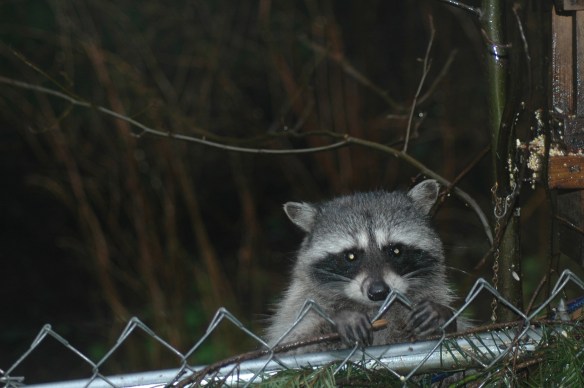
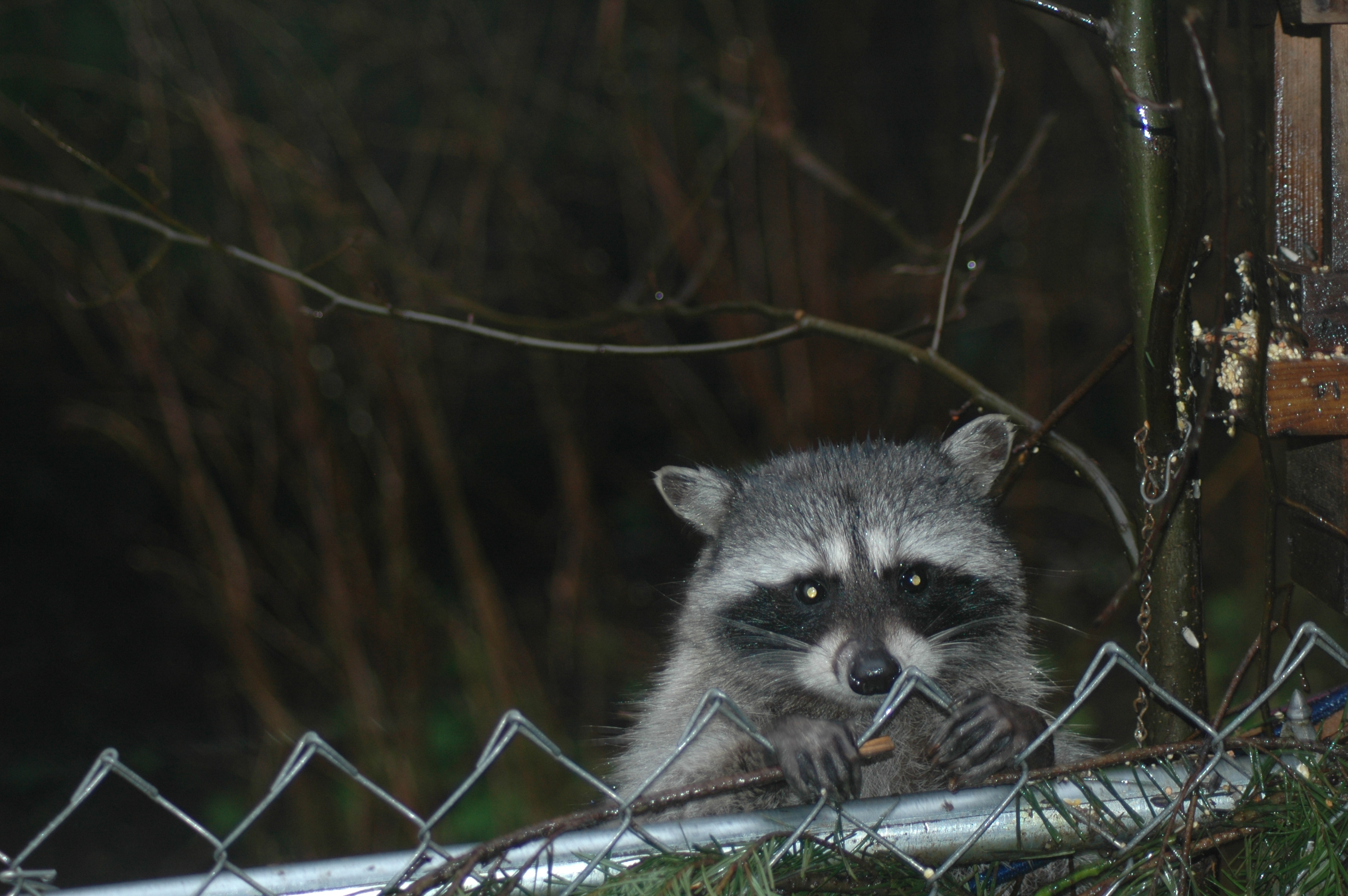
Wildlife Photography ©Jim Robertson, 2013

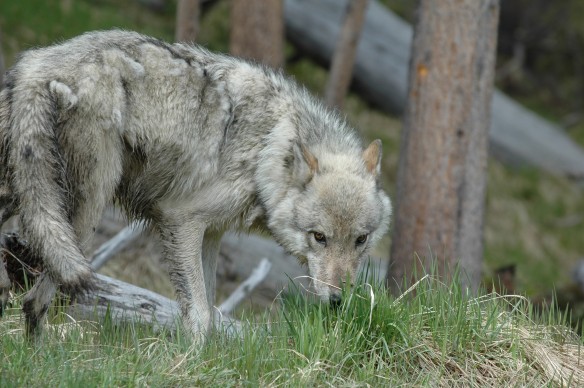
Wildlife Photography ©Jim Robertson, 2013
 

Who’s the “Varmint?”

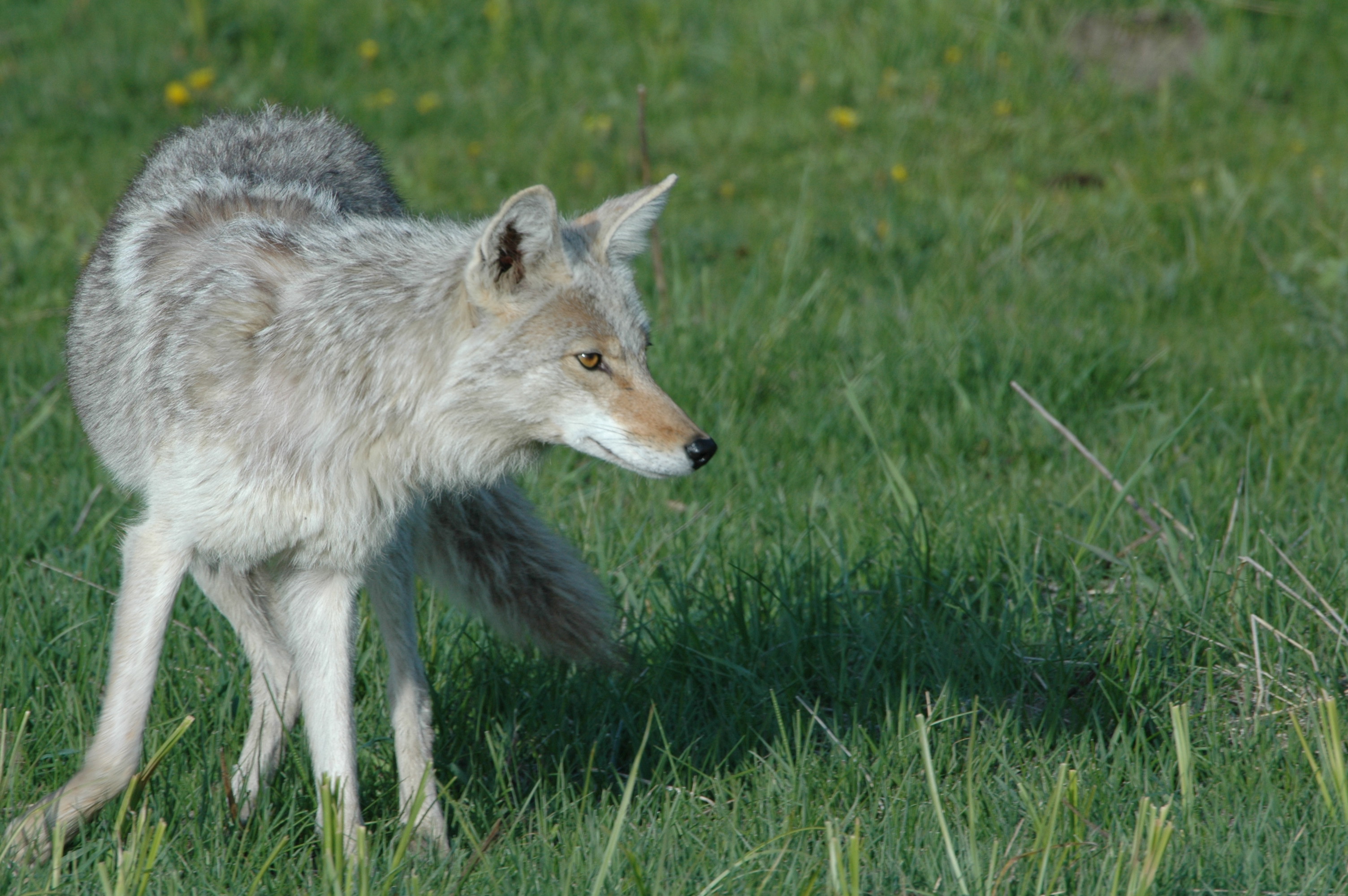
Who the fuck do the South Dakotians (or South Dakotites, or whatever the hell they’re called) think they are, labeling wolves “varmints”? Last week, their state legislators passed a bill to reclassify wolves from protected to “varmint,” lumping them in with coyotes, foxes, skunks, gophers, ground squirrels, chipmunks, jackrabbits, marmots, porcupines, crows, and prairie dogs, all of whom were native to the state before modern humans came along and branded them with that degrading epithet.

The reclassification of wolves in South Dakota seems a bit hasty, as there are currently no known wolves living there. Sure, they occasionally pass through the state in search of greener, or wilder, pastures. Three such adventuresome lone wolves (probably young males) were killed in different parts of the state in 2012—one was hit by a car near Pine Ridge, one died in a lethal trap set for coyotes and another was shot outside the town of Custer, in a case of “mistaken identity” (mistaken, no doubt, for a coyote—a “varmint” species which can be killed on sight year-round).

Wolf advocates should know that the malicious evil the wolves have been forced to endure at the hands of humans for the past couple of years is the same kind of brutality coyotes have suffered from the get go. Now, with their reclassification, anyone with a South Dakota hunting license that allows them to shoot predators will be able to shoot wolves too.

There isn’t a more arrogant term than “varmint” for a species far better suited to life on the open plains and prairies than humans could ever hope to be.

Var•mint
noun. Informal [vahr-muhnt] Chiefly Southern and Mid-U.S.
Definition:
a. One that is considered undesirable, obnoxious, or troublesome.
b. An objectionable or undesirable animal, usually predatory, as a coyote or bobcat.
c. A despicable, obnoxious, or annoying person.

Considering the kind of mindset displayed in the following quote, “My only real regret, is that there aren’t more days in the week and more hours in a day and more days off to hunt coyotes!” the burning question is, who’s the real varmint?

The quote is from one of the operators of “Varmint Safari.”

To give you an idea what kind of people hunt “varmints,” below are their ads for a series of hunting videos this particular brand of varmint sells.

(Note the comment, “Filmed almost entirely on public land” as well as their unabashed exuberance in stating, “Hundreds of spectacular kills”)…

Four great varmint hunting videos!
Varmint Safari 4 features:
• 90 minutes of action packed coyote hunts!
• 40 kills by recreational callers just like you!

Varmint Safari 3 features:
• Western Rock Chuck hunting at its finest!
• Filmed almost entirely on public land

Varmint Safari II features:
• 3 Hours of solid varmint hunting action!
• Coyotes, Prairie Dogs, Chucks, Rabbits

Varmint Safari features:
• 2 Hours of hunting and information!
• Hundreds of spectacular kills!

Still not sure who the varmints are? See Definition c., above.

Text and Wildlife Photography ©Jim Robertson, 2013. All Rights Reserved

Text and Wildlife Photography ©Jim Robertson, 2013. All Rights Reserved