‘These bears are worth more alive’: New eco-tours aim to end B.C.’s grizzly hunt

Last Updated Wednesday, May 3, 2017 6:51PM PDT

A Victoria-based conservation group has B.C.’s grizzly hunt in its crosshairs – hoping a new type of eco-tour will help put an end to the controversial practice for good.

The Raincoast Conservation Foundation is readying the 20-metre research vessel “Achiever” as it prepares to offer photographic tours deep in the heart of the Great Bear Rainforest.

While photographic tours of the province’s iconic grizzlies are nothing new, the foundation says all four trips it’s offering this year will be strictly by donation.

“We’re taking guests up there to hunt bears with cameras,” said Nicholas Sinclair, marine operations coordinator with Raincoast. “It really gives them a chance to view these animals in their pristine habitats.”

But it’s the donations that are helping limit the grizzly bear hunt in the Great Bear Rainforest.

At a minimum suggested donation of $5,000 a pop, money from the tours is helping the foundation snap up guiding rights away from trophy hunters.

So far, Raincoast has purchased guiding rights for 32,000 square kilometres along B.C.’s Central Coast.

“We’re purchasing the exclusive guiding rights over large territories, and we’re partnered with coastal First Nations on this in order to gain control of the commercial hunting, non-residents of B.C. coming to kill grizzly bears for trophies,” said Brian Falconer, a guide outfitter coordinator with Raincoast.

The guiding rights require tour operators to go on hunts, but Falconer said with a smirk “our hunts haven’t been, to this point, successful.”

B.C.’s current government sanctions limited hunting, and grizzly bears aren’t considered endangered in Canada.

But Raincoast hopes its new revenue stream will mean more land for bears and less for hunters.

“The message is pretty simple,” said Sinclair. “These bears are worth more alive than they are dead.”

Trips aboard the “Achiever” will be offered in spring and fall, and will each last about nine days, according to Raincoast.

http://vancouverisland.ctvnews.ca/these-bears-are-worth-more-alive-new-eco-tours-aim-to-end-b-c-s-grizzly-hunt-1.3397266

High cost of big game hunting

http://www.jamestownsun.com/sports/outdoors/4243504-high-cost-big-game-hunting

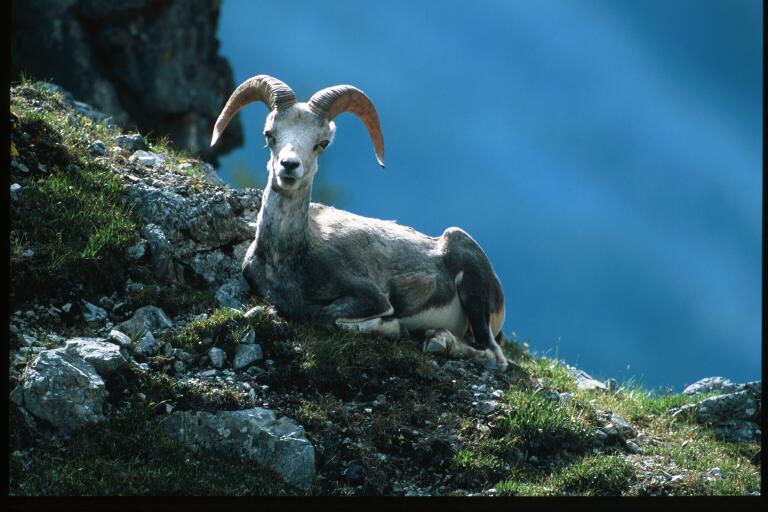
Of the couple hundred big game hunts I have embarked upon on this fortunate continent, only about 15 were guided, and most of those were hunts where a guide was required by law (i.e., grizzly bears in British Columbia, Dall and Stone sheep in B.C., the Yukon and Northwest Territories.)

I have nothing against guided hunting trips. However, the current cost of most North American hunting trips has become almost unaffordable. Some hunts almost cause me to swallow my cigar in disbelief!

How about a Stone sheep-hunt? In northern B.C. it runs $43,000. Any additional animals taken require extra costs. For example, a Stone sheep hunt in the Yukon costs $41,500. Add mountain caribou for $6,500, grizzly bear for $8,500, moose for $11,500. That’s $68,000 and you haven’t even bought your plane ticket, bush plane flight, license or paid any tips. I daresay a fellow could spend a month or six weeks in Africa and shoot a dozen animals for about the same cost.

The cheapest Dall sheep hunt I was able to uncover was a 10-day hunt in the Brooks Range of northern Alaska for $16,500. Bear in mind that you have to fly commercially all the way to Anaktuvuk Pass before paying for a bush plane flight into the Brooks Range.

Alaska Range horseback Dall sheep hunts run about $19,000. Go to the Yukon for Dall sheep and the price is $20,500 to $23,500. One outfitter charges an extra $6,000 for a helicopter charter.

I hunted caribou in Alaska four times, only one of those was a guided trip and that cost about $2,000 plus air charter. I shot three good barren ground caribou on those four trips. Today a seven-day guided caribou hunt, two hunters per guide, costs about $7,000. That is for one caribou — not two—as it was when I last hunted caribou in Alaska in 1998.

I went on my one and only mountain goat hunt in B.C. in 1972 and it cost $1,000. Today the price runs from $10,000 to $13,500.

My last northern moose hunt was in Alaska in 2001. I hunted unguided with three partners and managed to shoot a respectable 55-inch bull. One of my partners used his frequent flier miles to buy me a commercial plane ticket. So the hunt cost me little more than my share of the bush plane flight, hunting license and groceries. I don’t think I spent much more than $1,000. Today, a guided moose hunt in Alaska starts at around $18,500. Again, that is just the outfitter’s fee.

My only guided grizzly bear hunt took place in B.C. in 1973. It cost $750. Today grizzly bear hunts run $15,000 to $17,000. Coastal brown bear hunts in Alaska cost $20,000 to $25,000. (I hunted Alaska brown bears three times in the mid-1980s as a resident, and never spent $500 on any single trip.)

One might think that deer and elk hunts in the West might be a comparative bargain. Not so. A guided mule deer hunt in Montana, for example, runs in the $5,000 to $7,000 range. Hunt in Utah with a landowner’s permit (no drawing required) and you are looking at $8,000.

A guided six-day elk hunt in Montana sells for $7,000 to $8,000. A five-day elk hunt in Colorado costs $4,800. Add two days to the hunt and the possibility of taking a mule deer buck, and the charge goes to $7,500.

Guided elk hunts in New Mexico and Utah, utilizing landowner tags, run $9,000 to $13,000 and more.

So you can see that guided hunting for big game in North America has become a high-cost activity. I wish it were not so, and that we could go back to the day when a working man had the ability to save his money and hunt anything in North America. It occurs to me that I did some hunting that a younger man could never do, unless he is making $150,000 a year.

I am glad I was not born any later.

Stone Sheep Photo Coyright Jim Robertson


Money Talks; Grizzly Bears Die

by Barry Kent MacKay
Senior Program Associate

Born Free USA’s Canadian Representative

03/31/17

If they knew how pathetic they looked to ordinary people, would they feel
shame? Nah. They probably don’t care what others think. I speak of those
whose idea of fun is to end the life of a magnificent animal, pose over his
or her cooling carcass while photos are snapped, and keep remnants of the
slaughtered being in their trophy rooms.

The Premier of British Columbia, Christy Clark, who heads the Liberal Party,
is the darling of Safari Club International. She supports trophy hunting
because, well, it brings in money. That-not the lives of innocent
wildlife-is what matters to her ilk. Blood money is still money: the
fervently worshipped material deity of all that matters. Safari Club
International recently donated $60,000 to help assure that, in the May 9
provincial election, the National Democratic Party would not unseat Ms.
Clark.

If elected, the National Democratic Party-far more progressive than the
Liberal party-has promised to end trophy hunting for grizzlies. Thus, rich
and powerful Safari Club International members in both Canada and the U.S.
dug into their change drawers and donated the $60,000 to the Liberal
election campaign, apparently through the Guide Outfitters Association of
British Columbia (which has honored Clark with its President’s Award,
cheered by her refusal to change the laws in order to limit such
munificence).

The more rare and more magnificent the animal, the more these trophy hunters
seem to want to kill. Perhaps it’s out of some deep psychological need to
dominate, as if owning the stuffed remains of these glorious animals somehow
imbues the hunter with some of the glory. (Although, of course, to most of
us, it does the opposite.) And, few animals left in North America are more
rare than the grizzly bear, extirpated through so much of its former range.

Poll after poll and survey after survey have shown that more than 90% of
British Columbia residents don’t approve of the grizzly bear trophy hunt.
Even hunters, many of whom hunt for food and sport, disdain the trophy
hunter; they recognize that the “trophy” is the result of wealth, not of
what they would consider skill or need. British Columbia’s National
Democratic Party leader, John Horgan, clarifies that he does not oppose
hunting, but that he would end the British Columbia trophy hunt if he
becomes Premier.

Wildlife biologists, including those on the government’s own payroll, often
stand firmly opposed to the trophy hunt on ecological and conservation
grounds. That’s an important economic consideration, as two major studies
have shown that bear viewing generates more tourist income than bear trophy
hunting. But, you need to have bears to view-and the grizzly, with its need
for extensive wilderness and its slow reproductive rates, is particularly
vulnerable to endangerment.

The Liberals ended a moratorium on grizzly trophy hunts when they came to
power. Now, it’s time for things to change.

Barry Kent MacKay

Senior Program Associate

Born Free U.S.A.


Outrageous Anti-Animal Acts Planned for Alaska

From: HSUS.org

Earlier this week, the U.S. Senate chose to turn nightmare into reality for animals living in our nation’s wildlife refuges — federal land in Alaska specifically set aside for them to thrive, not to become targets of inhumane and unsporting killing methods.

By a 52 to 47 party-line vote, Senators voted to repeal a 2016 U.S. Fish and Wildlife Service rule forbidding the most outrageous acts:

Black bears being caught in painful snare traps while foraging for food …

Wolf pups being shot point-blank in their dens …

Grizzly bears being chased by plane or helicopter before being shot down by trophy hunters …

All this cruelty and suffering for trophies.

With this heartbreaking vote, Congress enabled 76 million acres of our national wildlife refuges to become killing fields for trappers, baiters and spring trophy hunters.

The politicians in Washington who voted to allow these cruel practices do not represent the views of regular Americans on animal welfare or wildlife conservation. They sided with the special interests who want to kill wolf pups and hibernating grizzly bears for pleasure.

And this is only one of the recent attacks on animals:

  • Congress is trying to cherry-pick wolves from the federal list of endangered species, exposing them to trophy hunting, commercial trapping and hounding.
  • The Department of the Interior will allow millions of birds and other animals to suffer from lead poisoning by reversing an order restricting the use of toxic lead ammunition on U.S. Fish and Wildlife Service lands.
  • Tennessee walking horses are still at risk of having chemicals burned into their skin until the anti-soring rule is unfrozen under the new administration.
  • And the U.S. Department of Agriculture has purged its website of government inspection reports on thousands of puppy mills, roadside zoos and other facilities.

Hunt with the Trumps for $1million

: President-elect is throwing a fundraiser the day after inauguration where donors can win the chance to go shooting with Donald’s sons

  • The $1million package offers a photo with Trump and a hunting trip with his sons, Donald Jr and Eric
  • The cheapest package for fundraiser in Washington is valued at $25,000
  • Toby Keith, Alabama and ‘other surprise entertainers’ will be performing  
  • The appropriate attire is described as ‘camouflage and cufflinks’ 

Donald Trump’s sons are looking to start the President-elect’s first full day in office with a bang.

Following his inauguration, wealthy donors have the chance to go on a shooting excursion with Donald Trump Jr and Eric Trump in a fundraiser, entitled ‘Opening Day’, honoring their father.

For $1million, the top package offers a photo opportunity with President Trump for up to 16 people and a multi-day hunting or fishing trip with one or both of the Trump sons.

Donald Trump Jr (left) and Eric Trump (right) are the stars of Opening Day, a fundraiser held in their father’s honor. For a modest sum of $1million, the top package offers a multi-day hunting or fishing trip with one of both of the Trump sons

For $1million, the Bald Eagle package at the fundraiser offers the chance for 16 people to take a photo with President Donald Trump

For $1million, the Bald Eagle package at the fundraiser offers the chance for 16 people to take a photo with President Donald Trump

Along with the event full of rich donors, Toby Keith, Alabama and other ‘surprise entertainers’ will be performing at the Walter E. Washington Convention Center in Washington DC on Saturday, January 21.

Opening Day is described as a chance to ‘play a significant role’ as the Trump family honors the billionaire’s inauguration by celebrating ‘the great American tradition of outdoor sporting, shooting, fishing and conservation.’

The attire for the fundraiser is described as ‘camouflage and cufflinks… jeans, boots and hats are welcome’ and all proceeds will go to conservation charities.

This isn’t the first time Donald Jr and Eric have shown their fondness for hunting, both domestically and internationally.

In the past the two sons have come under fire for big-game hunting and posing with their kills, including Donald Jr smiling next a dead buffalo and in another holding up a tail of an elephant.

Eric is pictured sitting on top of a water buffalo, with his hat hanging off its horn and three rifles propped up against the animal’s body.

The two also have a photo that sparked outrage on social media where they proudly hold up a dead cheetah.

In the past the two sons have come under fire for big-game hunting and posing with their kills. Trump has said that his 'sons love to hunt'

In the past the two sons have come under fire for big-game hunting and posing with their kills. Trump has said that his ‘sons love to hunt’

Donald Jr is seen here with a 40' Cape Buffalo Bull and is said to have 'the precision of a true marksman'

Donald Jr is seen here with a 40′ Cape Buffalo Bull and is said to have ‘the precision of a true marksman’

Eric Trump sits on top of a water buffalo in Zimbabwe, with three rifles and a hat propped up against the dead animal 

Eric Trump sits on top of a water buffalo in Zimbabwe, with three rifles and a hat propped up against the dead animal

Trump turned to his children to boost support for his campaign and many political analysts think they aided to his win.

Daughter Ivanka Trump played a large role in his campaign and was seen at her father’s side at conventions, rallies and debates.

The 35-year-old is now the star of her own fundraiser, where a lucky bidder can have a 45 minute coffee break with the mother-of-three.

The sit-down is estimated at $50,000 and once the bidder forks over the money to Eric Trump’s foundation and vetted by a background check, the two can chat about politics and life.

Read more: http://www.dailymail.co.uk/news/article-4040272/Donald-Trump-throwing-fundraiser-sons-donors-shooting-Donald-s-sons.html#ixzz4TDFDYu24

NDP pledge to end grizzly hunt brings debate out of hibernation

By Ezra Black

In 2008, Elk Valley hunter Mario Rocca shot a grizzly bear.

It was the culmination of over two decades of effort. Permits to hunt grizzlies are hard to come by and that year only one was issued for the Elk Valley.

In next May’s provincial election, hunters like Rocca could be setting their sights on New Democrat John Horgan who has promised to end B.C.’s grizzly bear hunt if his party forms the next government.

They’ll be armed with votes and not rifles.

“I know a lot more about bears than the leader of the NDP. I don’t know if he’s ever seen a grizzly bear in the wild,” said Rocca, a past-president of the Fernie Rod and Gun Club. “He’s not a hunter. He doesn’t know what he’s talking about when it comes to wildlife. He’s governed by emotion, not science. From the hunters’ perspective things are being managed. We’re not going to run out of grizzly bears.”

In 2000, the NDP banned the grizzly hunt. In 2001, the Liberals were elected and ended the ban.

Tom Shypitka, the Liberal candidate for East Kootenay, said the New Democrats lost several rural seats in 2001 in part because of their stance on grizzly bear hunting. He said their decision to go for another ban betrays an urban bias.

“My reaction to the NDP’s announcement was astonishment and disappointment,” he said. “They have rural members. They went through this in 2001. They have to know there are enough bears to hunt and that rural people believe in hunting. The only explanation for their decision to ban something that is supported in rural B.C. is that they have written off rural B.C. They must remember. Obviously they don’t care about rural seats.”

Shypitka accused the NDP of making “a wildlife management decision on the basis of emotion, politics and urban bias.”

“Wildlife management decisions should be made on the basis of what the science supports,” he said. “If there are enough bears in a unit to support a hunt, a hunt is allowed. If there are insufficient bears to support a hunt, no hunt is allowed. That is how wildlife should be managed.”

Further left on the political spectrum, Randal Macnair, the NDP’s candidate for East Kootenay, said he’s “always supported science-based wildlife management,” but that the Liberals have got it all wrong.

“I understand why a ban has been proposed,” he said. “It is in large part a result of the appalling mismanagement of wildlife and habitat by the BC Liberals.”

Macnair said that while the Liberals have been touting their environmental management system, the fact remains that grizzly bear populations in the East Kootenay are in trouble.

“Grizzly bears used to roam from Manitoba to Mexico all across western North America,” he said. “B.C. is now their last stronghold and they are no longer living in some areas in the southern portion of our province including the Rocky Mountain Trench. A BC NDP government will work to bring everyone together to protect this special, iconic animal.”

Horgan’s announcement is dividing politicians and hunters but recently published studies suggest the real losers in the Elk Valley are bears.

Corinne Hoetmer, project coordinator for The South Rockies Grizzly Bear Project in the Elk Valley, said that while hunting accounts for a number of grizzly bear deaths a much larger number are killed in other human-bear conflicts.

The South Rockies Grizzly Bear Project is a long term, ongoing population inventory of grizzly bears lead by the Ministry of Forests, Lands and Natural Resource Operations in the Kootenay Region.

Hoetmer said the Elk Valley has become an ecological trap for grizzly bears. The animals are drawn to the valley because of food and are then killed by humans.

“More grizzlies die from non-hunting related causes in this area than anywhere else in B.C.,” she said.

Citing a paper published by Mowatt and Lamb on the population of grizzly bears in the Southern Rockies and Flathead, Hoetmer said the South Rockies grizzly bear population declined by 40 per cent between 2006 and 2014. This decline was most likely due to a decade of poor foraging in combination with an increase in human-caused mortality.

There were 116 grizzly bear mortalities recorded in the South Rockies and 44 in the Flathead during this period.

Of the human-caused mortalities in the South Rockies, 38 per cent were hunter kills, 25 per cent were for animal control and other similar reasons, 28 per cent occurred on highways and railways and 8 per cent were illegal. In the Flathead, 91 per cent of recorded kills were by hunters and 9 per cent were control kills.

“This non-hunting mortality is much more difficult to mitigate than the regulatory changes involved with mitigating mortality due to hunting,” said Hoetmer.

Joe Caravetta, an inspector with the B.C. Conservation Service’s Kootenay-Boundary region, explained the number of grizzly bears hunted in the Elk Valley varies from year to year depending on population estimates.

“There are bears shot in self-defense, there are bears that are shot for protection of property, there are bears killed on the highway and there are bears killed by railways,” he said. “After taking those things into consideration we decide on what the population can handle.”

The Wildlife Act requires certain parts of an animal to be packed out of the bush once it’s been shot. While a hunter may choose to pack out its hide, paws or head, there is no requirement to pack out a grizzly bear’s meat, he said.

Grizzly bear meat is not generally eaten because it can carry the parasite that causes trichinosis, said Caravetta. The number of grizzly hunting permits issued in the Elk Valley is small. From 2013 to 2015, only one was given out.

“It’s probably the most intensely managed hunt in the province,” he said. “It’s the highest profile.”

Calling the practice “primarily a trophy hunt,” Wildsight, a Kootenay-based environmental group, has come out in favour of the ban.

“It is clear that hunting has a significant impact on grizzly bear populations in the region,” said John Bergenske, Wildsight’s conservation director. “Eliminating the hunt should significantly increase grizzly bear survival. Grizzly bears are very slow reproducers, so loss of any females in a population can significantly impact the long-term health of a population.”

http://www.thefreepress.ca/news/405699036.html

Students put pressure on premier to ban trophy hunting of grizzlies

431125_10150547334526188_1114807436_n

– Victoria News

Students at Glenlyon Norfolk School are trying to ban trophy hunting of grizzly bears in the province.

For more than a year, Marisa Smith, Giulia Giommi and Lily Wieczorek have been researching and sending letters to B.C. Premier Christy Clark, advocating for the provincial government to abolish trophy hunting of grizzly bears.

“The grizzly bear population is really important to the ecosystem. If the grizzly bear population is taken out of the environment, then the entire ecosystem will collapse and become imbalanced,” said Marisa, 13.

“It’s really important and we need to make sure the ecosystem remains balanced…We want to stop some of these issues that are really hurting the environment and that ultimately affects us and all the animals around us.”

According to Pacific Wild, an organization that defends wildlife and its habitat on the Pacific Coast, between 300 and 400 grizzlies are killed every year in B.C. by hunters who want their heads as trophies.

Thirteen-year-old Giulia had the opportunity to see grizzly bears in their natural habitat during a bear watching tour in the summer. As part of the tour, they climbed up a tower and were able to see 12 different grizzly bears going about their business within a few hours.

“We can’t just have a place where there’s some bears alive…all of B.C. should be protected, not just some of it,” Giulia said.

Since then, the group has been spreading the word, telling local politicians about the cause.

In November they met with NDP MLA for Victoria-Swan Lake Rob Fleming, who was in support of the cause, calling the practice outdated and backwards. A few days later, the NDP pledged to ban grizzly bear trophy hunting if they’re elected into office during the next provincial election in May.

“The government has become more and more out of step with its citizens…We could be doing so much better, not just for the bears but for British Columbians who need jobs and who want to promote the wonderful tourism experience that our diverse regions have to offer,” Fleming said, adding the government should be focused on promoting bear watching tours, not killing them.

“This is another group of students who are doing amazing things in our community and learning and becoming experts on issues that our province has to tackle. It’s always great to see students learning essentially to become effective advocates and researchers on public policy.”

The girls remain optimistic they’ll be able to set up a face-to-face meeting with the premier to advocate for their cause. In the meantime, they plan on meeting with other NPD MLAs and doing a speech about the ban to the NDP caucus in the new year.

The advocacy is part of the school’s United Conservationists Environmental Club, which meets twice a week to discuss a number of environmental issues. Groups are also working on helping tigers, penguins and sharks.