Exposing the Big Game

Forget Hunters' Feeble Rationalizations and Trust Your Gut Feelings: Making Sport of Killing Is Not Healthy Human Behavior

Exposing the Big Game

Trump administration moves to lift restrictions on hunting, trapping in national preserves in Alaska

Under proposed changes hunters could bait brown bears, hunt black bears with dogs and kill wolves

The Associated Press · Posted: May 22, 2018 3:33 PM CT | Last Updated: May 22

<https://i.cbc.ca/1.2735917.1407976946!/cpImage/httpImage/image.jpg_gen/derivatives/16x9_780/travel-trip-alaska-katmai-bears.jpg&gt;

A brown bear catches a salmon in Katmai National Park and Preserve, Alaska in July 2013. Under proposed changes to sport hunting and trapping regulations for national preserves, hunters could bait brown bears with bacon and doughtnuts. (The Associated Press)

The Trump administration is moving to reverse Obama-era rules barring hunters on some public lands in Alaska from baiting brown bears with bacon and doughnuts and using spotlights to shoot mother black bears and cubs hibernating in their dens.

The National Park Service issued a notice Monday of its intent to amend regulations for sport hunting and trapping in national preserves to bring the federal rules in line with Alaska state law.

Under the proposed changes, hunters would also be allowed to hunt black bears with dogs, kill wolves and pups in their dens, and use motor boats to shoot swimming caribou.

Cruel and harmful hunting methods like killing bear cubs and their mothers near dens have no place on our national preserves.- Collette Adkins, lawyer and biologist

These and other hunting methods — condemned as cruel by wildlife protection advocates — were outlawed on federal lands in 2015. Members of the public have 60 days to provide comment on the proposed new rules.

“The conservation of wildlife and habitat for future generations is a goal we share with Alaska,” said Bert Frost, the park service’s regional director. “This proposed rule will reconsider NPS efforts in Alaska for improved alignment of hunting regulations on national preserves with State of Alaska regulations, and to enhance consistency with harvest regulations on surrounding non-federal lands and waters.”

Alaska has 10 national preserves covering nearly 95,830 square kilometers.

<https://i.cbc.ca/1.4673578.1527022003!/cpImage/httpImage/image.jpg_gen/derivatives/original_780/alaska-black-bears.jpg&gt;

A black bear and cub seen in Anchorage, Alaska. The Trump administration plans to reverse a ban on using spotlights to shoot mother black bears and cubs hibernating in their dens on some public lands in the state. (The Associated Press)

The Alaska Department of Fish and Game was “pleased to see the National Park Service working to better align federal regulations with State of Alaska hunting and trapping regulations,” Maria Gladziszewski, the state agency’s deputy director of the Division of Wildlife Conservation, said in an email to the Associated Press.

She said the proposal is “progress in that direction, and we appreciate those efforts. Alaskans benefit when state and federal regulations are consistent.”

Gladziszewski said the state doesn’t conduct predator control in national preserves.

“Predator control could be allowed in preserves only with federal authorization because such actions are subject to NEPA (National Environmental Policy Act) review,” she said.

Expanding hunting rights on federal lands has been a priority for Interior Secretary Ryan Zinke, a former Montana congressman who displays a taxidermied bear in his Washington office along with mounted heads from a bison and an elk.

<https://i.cbc.ca/1.4673491.1527019877!/cpImage/httpImage/image.jpg_gen/derivatives/original_780/u-s-senate-ryan-zinke.jpg&gt;

Expanding hunting rights on federal lands has been a priority for Interior Secretary Ryan Zinke. (Jacquelyn Martin/The Associated Press)

The Obama-era restrictions on hunting on federal lands in Alaska were challenged by Safari Club International, a group that promotes big-game hunting. The Associated Press reported in March that Zinke had appointed a board loaded with trophy hunters to advise him on conserving threatened and endangered wildlife, including members of the Safari Club.

President Donald Trump’s sons are also avid trophy hunters who have made past excursions to Africa and Alaska.

Collette Adkins, a lawyer and biologist with the advocacy group Center for Biological Diversity, expressed outrage at the rollback.

“Cruel and harmful hunting methods like killing bear cubs and their mothers near dens have no place on our national preserves,” she said.

The Humane Society of the United States said it would oppose the new rules.

“These federal lands are havens for wildlife and the National Park Service is mandated to manage these ecosystems in a manner that promotes conservation,” said Anna Frostic, a lawyer for the animal rights group. “This proposed rule, which would allow inhumane killing of our native carnivores in a misguided attempt to increase trophy hunting opportunities, is unlawful and must not be finalized.”

http://www.cbc.ca/news/canada/north/trump-restrictions-hunting-trapping-alaska-preserves-1.4673467
Jimmy Kimmel scoop: Donald Trump “hates baby bears”

Jimmy Kimmel scoop: Donald Trump “hates baby bears”

https://www.fastcompany.com/40577274/jimmy-kimmel-scoop-donald-trump-hates-baby-bears

While we know that Donald Trump hates sharks, at least according to Stormy Daniels. Turns out the president also hates baby bears, at least according to Jimmy Kimmel.

Kimmel’s realization came in the wake of news that the Interior Department is ending a ban on hunting hibernating bears and their cubs in their dens. The National Park Service, under Interior Secretary Ryan Zinke, apparently has a problem with some of the current protections for black bears, “including cubs and sows with cubs,” that prevent hunters from “harvest practices” that include using bait to lure bears out, using lights to find hibernating animals, and using dogs to kill bear cubs.

The National Park Service now wants to roll back those pesky rules that stop people from killing baby bears for fun, according to a proposal, which was published in the Federal Register on Tuesday. Under the proposed changes, hunters will now be able to hunt black bears with dogs, use motorboats to shoot swimming caribou, and kill wolves and pups in their dens. According to Kimmel, it’s all part of Trump’s plan to make America great again—and get rid of those evil baby bears.

Donald Trump Is the Great White Hunter

Sometimes you have to cull what you love.

Nambia’s health-care system is increasingly self-sufficient,” said President Trump last September, during a meeting with African leaders at the United Nations. No singular slip of the tongue, Trump repeated the gaffe again in a speech whose audience included the presidents of both Namibia and Zambia. Hilarity ensued in the Twitterverse: “Can’t wait for Trump to visit Nambia and their technologically advanced neighbors in Wakanda,” quipped Stephen Colbert. (Wakanda is the fictional home of the Marvel Comics’ character Black Panther.)

Yes, it is funny in the abstract, this malapropism of the dear leader. But whether Trump is ignorant, blind, or demented, he consistently confuses individuals for races, races for nations, nations for continents, continents for contagion, and contagion for individual irresponsibility. That’s why all this is ultimately so unfunny in practice: The Trump administration has cut global development aid, reduced funds for UN peacekeeping in war-torn countries, and urged a “merit-based” system of US immigration policy where “merit” excludes “people from high crime countries which are doing badly” and whose preemptive breadth apparently finds no merit in anyone from “hut”-dwelling Nigerians or from any African country, real or (mostly) imagined.

At the same time, Trump, ever the tone-deaf imperial entrepreneur, just loves Africa’s “tremendous business potential…”: “I have so many friends going to your countries, trying to get rich. I congratulate you. They’re spending a lot of money.”

Sometimes it’s just so hard to know where to begin, but let me follow one small thread—to wit, the entrenched narrative of the Great White Hunter and erstwhile Deliverer of Little Brown Brothers. Indeed, there’s a literal manifestation of this mindset within the extended Trump clan: After a 2011 safari to Zimbabwe where he killed an elephant, a leopard, a crocodile, a Cape buffalo, and oh-so-much-more, our president’s son Donald Trump Jr. wrote of his beneficence: “Bottom line with out [sic] hunters’ $ there wouldn’t be much left of africa [sic].”

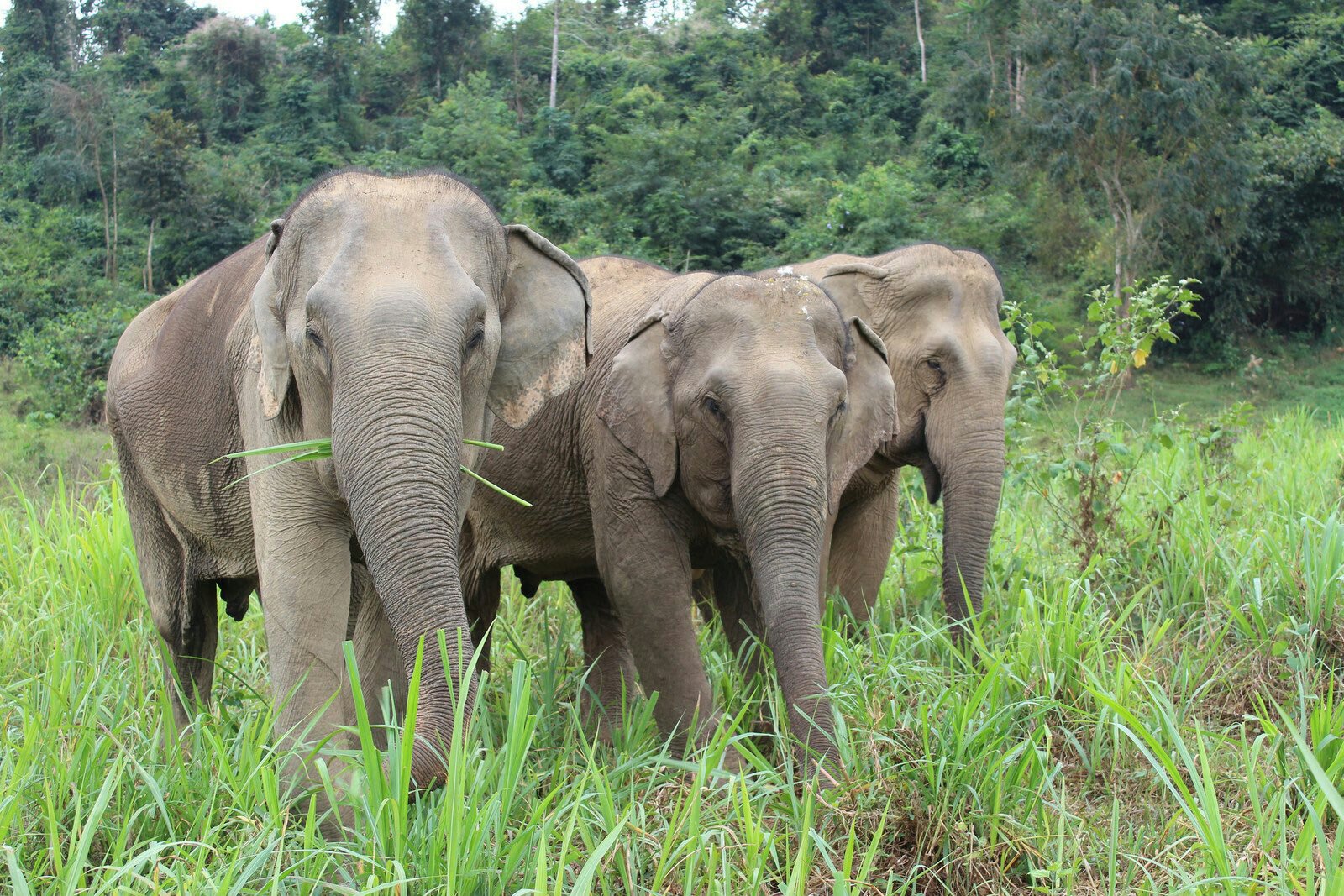
This logic may seem opaque to the uninitiated: After all, there has been a 65 percent decline in the population of forest elephants across central Africa just in the decade between 2004 and 2014. In addition, the population of savannah elephants declined continent-wide by 8 percent every year between 2010 and 2014. At that rate, the population will decrease by half every nine years. If Trump Jr.’s wisdom escapes you, it might help to recall the controversy around Corey Knowlton, a man who won an auction at the Dallas Safari Club back in 2014. He bid $350,000 for the privilege of shooting a black rhino, a species close to extinction then, and which may be extinct by now. Mr. Knowlton explained that he was actually helping their survival because he planned to cull only an older cranky bull, giving younger black rhino males the chance to rise to the top of the hierarchy of aggression. It’s the circle of life! Plus, the money would go to the government of Namibia, which needs it to pay its park rangers to protect against poachers, which Mr. Knowlton most emphatically is not. (That would be the circular thinking of life.)

It oughtn’t be so surprising, then, that this past November of the first year of his presidency, Donald Trump Sr. drafted a policy that reversed an Obama-era ban on importing trophies from elephant kills in Zimbabwe and Zambia, using an exception to the Endangered Species Act that permits importation of trophies if “hunting actually benefits conservation for that species.” Wayne Pacelle, president of the Humane Society, describes the arrangement as nothing more than “pay-to-slay,” and, after a great deal of public outcry, President Trump suspended the suspension of the ban, promising a thorough review before making a final decision. As CNN reported on January 9, 2018, “White House officials declined to say whether the review is ongoing, when it might conclude, or when the President’s decision may be announced.”

The thrill of the kill is not just about going on African safari, however. Hunting rare and “exotic” animal populations is a billion-dollar business just within the United States. The Fish and Wildlife Service allows the killing of certain rare or threatened species if game-hunting businesses take measures such as contributing 10 percent of hunting proceeds to conservation efforts. At Ox Ranch in Uvalde, Texas, trophy hunters pay $7,500 to kill a Himalayan tahr, $9,500 for an Arabian Oryx, $12,000 for a sitatunga antelope, $15,000 for a black wildebeest, and $35,000 for an African bongo antelope. “We love the animals, and that’s why we hunt them,” says Ox Ranch’s CEO, Jason Molitor. And according to John Tomecek, of Texas A&M’s AgriLife Extension Service, “Ranchers can sell these hunts and enjoy the income, while doing good for the species.”

More enjoyable yet, Ox Ranch “offers its guests the opportunity to drive and shoot World War II-era tanks. People fire at bullet-ridden cars from atop an American M4 Sherman tank at a shooting range built to resemble a Nazi-occupied French town.”

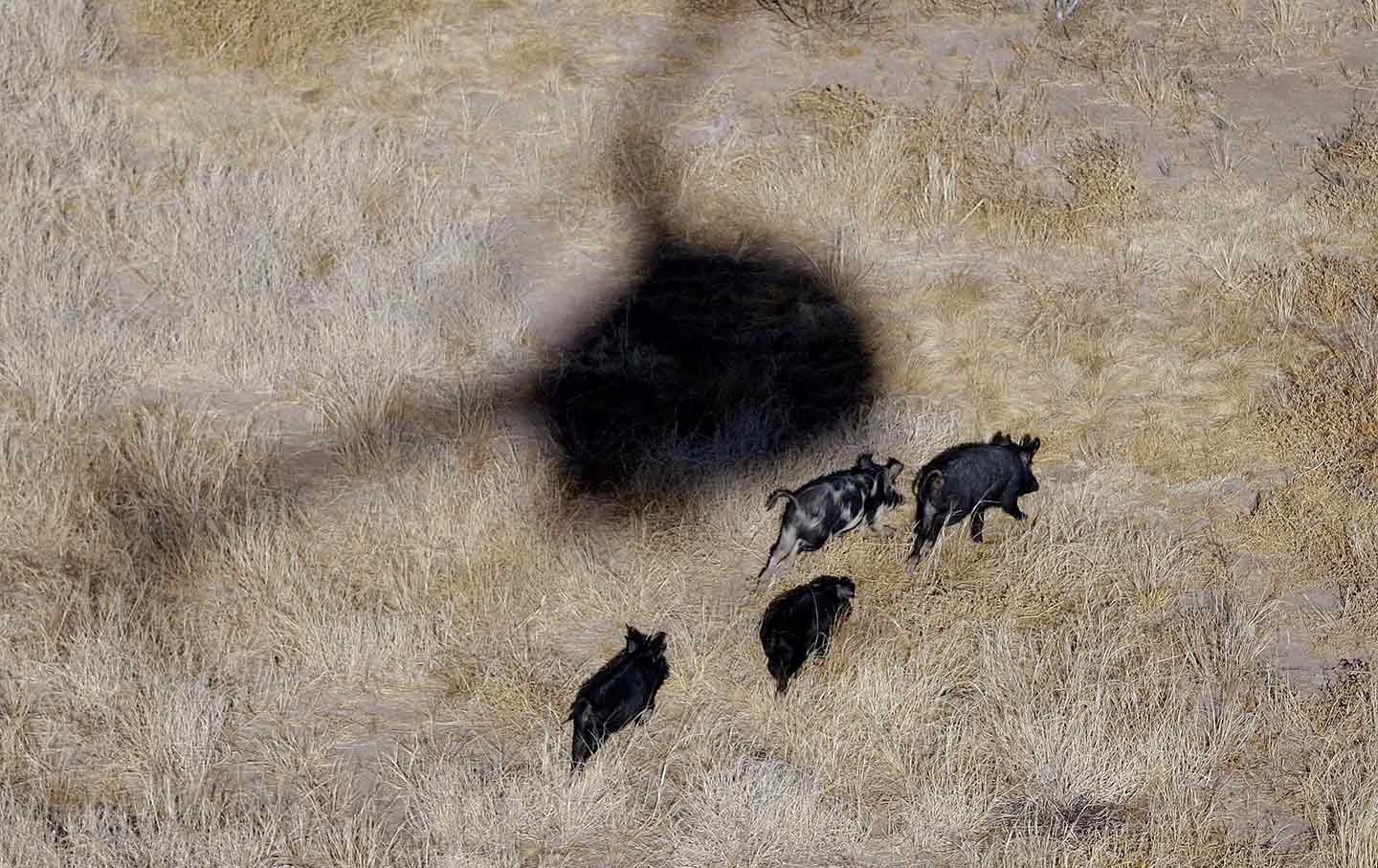
Elsewhere in Texas, wild boars have been deemed far from extinct. Indeed, there’s an overpopulation of them, at least as asserted by many farmers over whose land they roam. In an act of public-spirited volunteerism, Ted Nugent—hard-rock singer and self-proclaimed guru to Donald Trump—Ted Nugent saved the day. Nugent enjoys “machine-gunning hogs,” as he expressed it. “Pigs turn me on.” Armed with a helicopter and a machine gun he flew over a range spraying a wide arc of bullets down upon on the ground. In a swooping rain of firepower, he killed 455 of the varmints. He had quite a good time, apparently, since he conducted the hunt live on SiriusXM, and dedicated the kill to Bill Maher and “other animal rights freaks.”

It should be noted that there is a law in Texas against aerial sport hunting, but in an efficient economy of public-private exchange, Nugent’s sortie was not considered “sport-hunting,” but rather population control. It’s a view that he and that other happy hunter Donald Trump Jr. share. As does their friend Joe Arpaio, newly pardoned by Trump and newly announced candidate for Senator from Arizona. In 2011, then-Sheriff Joe, in his endless hunt for migrant laborers, launched what he has called an “air posse.” As the word “posse” implies, it was made up of 30 private planes, staffed by “citizen vigilantes and deputies from human smuggling and drug enforcement units,” armed with M-16s and a .50-caliber machine gun. According to Arpaio, “We’re going to use our automatic weapons if we have to, and I’m tired of my deputies having to chase these people and I’m sure the air posse will be able to spot these guys running as they constantly do from us.”

Kafka once observed that “A myth becomes true and effective by daily use, otherwise it only remains a bewildering play of fantasy. For that reason, every myth is bound up with the practical exercise of a rite.” The rite of hunting reminds us that without the Great White Hunter’s money, there’s not much else to Africa. Without a little culling of the herds, feral bulls will ravage everything in sight.

As the wise man said: Myth is always bound up with the practical exercise of a rite.

Trump’s sons opened a private hunting preserve in upstate New York and neighbors say it sounds like ‘a war zone’


February 14, 2018

Chip Somodevilla/Getty Images

Donald Trump Jr. and Eric Trump are enthusiastic hunters, although that does not explain why their 171-acre private hunting preserve in Wingdale, New York, sounds “like you’re in a war zone,” as one neighbor put it to The Associated Press.

It’s not just the regular deer hunting rifle fire residents are used to, though. Neighbors say they hear the deafening sounds of target practice as well as exploding targets and gunfire ringing out from a wooden tower on the property. “It’s bad,” said another neighbor. “It shakes the windows.”

The Trumps bought the property anonymously in 2013 after unsuccessfully attempting to get a discount by arguing it was haunted. The brothers used a limited liability company to scoop up the land, although paperwork traces back to Trump Jr. and Eric Trump directly.

Jeffrey Ferraro, who is listed as the LLC’s organizer and manages the land, told one neighbor who complained about the noise that his partners “have the Secret Service coming, and they shoot, too.” When confronted by the AP, Ferraro said: “Guns make noise. That’s all I can tell you.” Jeva Lange

Tell the Trump Administration: Stop Promoting International Trophy Hunting!

https://act.nrdc.org/letter/trophy-hunting

In a new low, the Trump administration has created an advisory council dedicated exclusively to promoting the killing of imperiled wildlife species for sport.

Filled with trophy hunters and gun industry lobbyists, the International Wildlife Conservation Council now wields considerable influence over America’s international hunting policies, putting the future of vulnerable species like elephants, lions, and giraffes at grave risk.

Tell Interior President Trump and Interior Secretary Ryan Zinke to stop promoting international trophy hunting and immediately dismantle the IWCC.

Your message will be sent to:

Interior Secretary Ryan Zinke
President Donald Trump

Subject line:

Dismantle the International Wildlife Conservation Council

(Consider adding your own thoughts — personalized messages are especially effective)

Your Information

First name*
Last name*
Email address*
Street address

Grizzly Bears Are Now the Victims of the Trump Administration’s Climate Denialism

http://www.slate.com/articles/health_and_science/science/2017/06/we_can_t_trust_this_administration_s_climate_decisions.html

We can’t trust this administration to make science-based decisions.

A female Grizzly bear exits Pelican Creek October 8, 2012 in the Yellowstone National Park in Wyoming
A female grizzly bear exits Pelican Creek on Oct. 8, 2012, in Yellowstone National Park.

Karen Bleier/AFP/GettyImages

Interior Secretary Ryan Zinke announced Thursday that the Yellowstone grizzly bear will no longer be listed as protected under the Endangered Species Act. The grizzly’s population has rebounded and it now “stands as one of America’s great conservation successes,” he crowed.

A species being removed from the ESA is rare and, in normal circumstances, should be celebrated. It means that a population has recovered enough to no longer require extra protections, which should be considered a good thing. And the grizzly bear has: When the species was listed in the 1970s, it was estimated that a mere 150 existed. Today, there are about 700 individuals.

This decision, however, seems unlikely to be met with applause. As the New York Times reports, environmental organizations are already lining up to sue to stop it. And 125 Native American tribes have banded together to oppose the delisting because they weren’t consulted in the decision-making. Also, any good feelings animal lovers get from the words “conservation success story” are likely to be squashed by the fact that the delisting means the bears could now be hunted. People really don’t like it when charismatic megafauna get killed.

Should the grizzly bear be delisted—or this just yet another awful environmental move by the Trump administration, divorced from science and decency? One political litmus test is to check what the Obama administration thought of the grizzly bear’s fate. In March 2016, Dan Ashe, then the director of the U.S. Fish and Wildlife Service, defended the delisting. And the recovery numbers do look strong (700 sure sounds small, but Yellowstone grizzlies are a top-of-the-food-chain predator living in a small land mass—what matters more is the populations’ stability, not its size).

But scientists have dramatically different opinions about how to read those numbers. Luke Whelan over at Wired has a good rundown of how the two sides of the debate see the issue. One school of thought says that because the bears’ populations have plateaued, that means they’ve hit the carrying capacity, or the number of animals the habitat can sustain, and are in good shape. Under this logic, delisting makes sense. The counterargument suggests that the carrying capacity is lower than it should be because its habitat and food sources have changed since the bear was listed in the ’70s, primarily due to climate change—which means that the bear needs to stay protected. In fact, most of the environmental groups planning to sue over the move basically want to keep the bear listed because of the threat climate change will increasingly pose. And climate change does pose a threat—warmer temperatures are causing white pine beetles to move further and further into grizzly habitat, killing pine trees and hurting a critical food source.

Who’s right? It’s hard to say definitively—it depends on how you read the science, and how you think the ESA should be applied based on that science. Arguing that climate change is going to pose a threat to an animal and therefore warrants (somewhat) proactive listing is a tough sell—honestly, on a long enough scale, climate change and the cascading food chain and habitat problems could justify listing most animals on the ESA. That would be an interesting precedent to set. It’s also unclear how ESA protection could help address the pine beetle problem. The ESA has limited resources and offers limited protections—indeed, many conservationists think it is actually most successful when wielded as a stick to inspire (or coerce) proactive solutions before a species requires listing, rather than as a real way to solve environmental problems. And through that lens, it’s clear that what the grizzly bear really needs is for climate change to be taken seriously, and minimized. The ESA can’t force that—it’s not equipped to.

When the government is this bad at accepting basic truths, it makes it hard to have faith that their decisions are good ones—even decisions that seem positive or reasonable. It also creates a world in which we have to fight to keep species listed on the ESA because we know we’re not going to do much else to stop climate change from screwing them over in the long run. It is exhausting and demoralizing to live in a world like this.

DONALD TRUMP JR. SHOULD BE DEPORTED FOR HUNTING ELEPHANT, PETA BILLBOARD DEMANDS

President Donald Trump’s eldest son Donald Trump Jr. deserves to be deported for hunting and killing an elephant and other wildlife, animal rights activists demand.

People for the Ethical Treatment of Animals (PETA) announced Friday it plans to put up a billboard in towns bordering Mexico features an infamous image of Trump Jr. holding a knife and the tail of an elephant he apparently shot abroad.

“Deport callous cheating opportunists now! All nations have their undesirables. Kindness welcome,” the billboard slated for El Paso and Laredo, Texas, states

Can wildlife survive the Wall?

Some timely info about the Border Wall’s impact on wildlife from Defenders.org:

Donate Now


Trump’s wall would seal off critical migration corridors and slice through essential habitat – fragmenting populations and isolating animals from each other and from resources that are critically important to their survival. In addition,

  • At least 89 endangered or threatened species and 108 migratory bird species will come under immediate threat from wall construction;
  • Recovery of two critically endangered species that regularly cross the border – jaguars and Mexican gray wolves – will be in serious jeopardy;
  • Migratory bird habitat will be destroyed and some species like the ferruginous pygmy owl – will be unable to fly across what could be 30-foot barriers; and
  • Pristine wildlife refuges and conservation lands, including the Lower Rio Grande and Buenos Aires national wildlife refuges and the Otay Mountain Wilderness, will be permanently marred as whole sections are destroyed and walled off forever.

On top of it all, the Trump administration could exempt the border wall’s construction from ever having to comply with environmental protections like the Endangered Species Act.

Building a massive, impenetrable barrier along the U.S.-Mexico border would wreak havoc on wildlife, critical habitat and communities. For many species, it would be the end of the road.

Act would dismantle marine mammal protection

There is distressing news on the front page of the Monday, April 2, Los Angeles Times, which is relevant to animals off coasts all over the US. The headline and subheading read: “Sea life at risk as U.S. seeks to ease oil rules; Bills would speed up permits for seismic blasts and dismantle safeguards for whales.”

Environmental reporter Rosanna Xia opens with:

“The search for offshore oil begins with a boom.

“Before the oil rigs arrive and the boring begins, operators need to fire intense seismic blasts repeatedly into the ocean to find oil deposits.

“For decades, environmental rules that protected whales and other marine life from this cacophony have limited the location and frequency of these blasts — preventing oil companies from exploring, and therefore operating, off much of the nation’s coasts.

“Now these safeguards are quietly being dismantled.

“The push to overhaul seismic survey rules has not attracted the same public attention as the Trump administration’s interest in opening coastal waters to dozens of new drilling leases or downsizing protected marine areas. But it too could have wide implications beyond enabling new oil operations.

“Winding their way through Congress are two bills that supporters say would create jobs, reduce permitting delays and clear the way for naval activities and coastal restoration.

“But environmentalists call them a thinly veiled oil industry wish list that would upend established protections and fast-track the permitting process for oil exploration off the Atlantic, much of Alaska and even California.”

We are told of the bills, which are called the Streamlining Environmental Approvals Act:

“They target core provisions of the Marine Mammal Protection Act, which regulates seismic blasts used to locate oil and gas. The noise, scientists say, can disorient and damage the hearing of whales and dolphins so badly that they lose their ability to navigate and reproduce.”

The lengthy article also lets us know:

“There has been little movement on the bills since the SEA Act passed committee in January. But opponents are concerned it could be folded last-minute into this year’s military reauthorization or another must-pass bill.”

Front page coverage helps make that at least a little bit less likely. You can comment right below the article, which you will find on line at http://www.latimes.com/local/lanow/la-me-marine-mammal-oil-drilling-20180402-story.html OR https://tinyurl.com/ydcal3v9 . And you can send appreciative letters to the editor that speak up for animals to letters@latimes.com
The article opens the door for them. Always include your full name, address and phone number when sending a letter to the editor.


Trophy Hunting: Pathetic and twisted

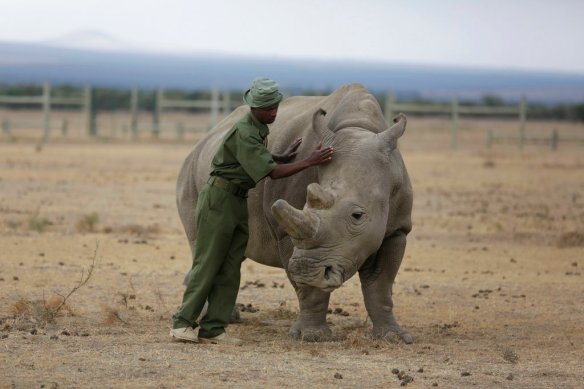
 FILE - In this Friday, March 2, 2018 file photo, keeper Zachariah Mutai attends to Fatu, one of only two female northern white rhinos left in the world, in the pen where she is kept for observation, at the Ol Pejeta Conservancy in Laikipia county in Kenya. According to four new United Nations scientific reports on biodiversity released on Friday, March 23, 2018, Earth is losing plants, animals and clean water at a dramatic rate. (AP Photo/Sunday Alamba)

 FILE – In this Friday, March 2, 2018 file photo, keeper Zachariah Mutai attends to Fatu, one of only two female northern white rhinos left in the world, in the pen where she is kept for observation, at the Ol Pejeta Conservancy in Laikipia county in Kenya. According to four new United Nations scientific reports on biodiversity released on Friday, March 23, 2018, Earth is losing plants, animals and clean water at a dramatic rate. (AP Photo/Sunday Alamba)

As a result of the Trump Administration recently announcing a decision to let trophy hunting imports into the United States on a case by case basis, many animal conservation organizations are suing to prevent this, arguing that the decision violates the Endangered Species Act. These conservation groups include the Humane Society International and the Center for Biological Diversity. By bringing these lawsuits against the decision, these groups are bringing more attention to the barbaric and cruel pastime known as trophy hunting. Thousands of animals are killed globally every year simply for sport or for “trophies,” such as ivory tusks from elephants. This practice is not only cruel and brutish but also cowardly and pathetic. America has been faced with popular news stories regarding trophy hunting over the past few years, one notable example being the killing of Cecil the lion in 2015, and another being the pictures of Eric Trump and Donald Trump Jr. with trophy-hunted carcasses.

These stories have rightly caused outrage over the terrible practice.

Trophy hunting is often part of a business, often peddled by the Safari Club International (SCI). This organization encourages wealthy hunters to kill animals for rewards and import them back to America. Animals often targeted include lions, elephants and rhinos . This is a despicable practice that has no place in a civilized society. Killing animals is not a sport, and it does not make you a more interesting person, merely a smaller one. If you feel the need to spend a vacation targeting and shooting beautiful animals just to bring back a trophy that serves as a reminder of the kill, then it demonstrates that you are a person of abhorrent character. Much of the time, it is not even a challenge to bring these animals down; professional guides may bait animals with food so that hunters can more easily find and kill them, or traps may be used to trap the animal until the hunter can shoot them. It is truly despicable to see how far one will go in order to feel the false thrill of being a “hunter,” as Donald Trump Jr. calls himself. With the recent news of the death of the last male northern white rhino, animal conservation is back in the news cycle. Many argue that, ironically, trophy hunting can aid animal conservation efforts because wealthy people pay great sums in order to have the chance to hunt exotic animals, and these funds can be applied to conservation programs. However, this is assuming that the funds will actually be used for this purpose; in many regions where trophy hunting is rampant, so is corruption ( https://www.vox.com/2018/3/7/17091000/ban-lifted-elephant-trophy-hunting). For instance, Cecil the lion was killed in Zimbabwe, where there is much political unrest, making conservation efforts not a priority. We cannot trust that trophy hunting will help conservation efforts, especially if more animals are being hunted anyway. Instead, countries should focus on raising money for conservation efforts from other tourist activities such as safaris where the animals are appreciated for their beauty, not killed in order to satisfy someone’s fragile ego.

It is a bit concerning that Trump has allowed some trophy animals to potentially be imported into the United States on a case-by-case basis. He has expressed disgust with the practice himself, calling trophy hunting a “horror show”; however, it is likely that he wants the case by case clause in order to satisfy his sons, who participate in trophy hunting. This is especially frustrating because this is not a complete condemnation of trophy hunting, which is what we need from the President of the United States. Trophy hunting is a vile activity, and Americans should not be encouraged to engage in it. The first step in finally changing the attitude towards it completely is banning the importation of carcasses into the United States; Trump should make a moral stand for once and make all cases illegal.

http://dailycampus.com/stories/2018/3/30/trophy-hunting-pathetic-and-twisted