Bowhunting for Wolves in Montana

Wolf puppies are legally arrowed to death in Montana: How arrows slowly kill

 http://www.examiner.com/article/wolf-puppies-to-be-legally-arrowed-to-death-montana-how-arrows-slowly-kill?cid=PROD-redesign-right-next

September 6, 2011

This season, hunters are allowed to kill 220 wolves — nearly triple the 2009 quota of 75.

Even if you agree with hunting, do you agree with the legal shooting of pups? This week in Montana, hunters are even allowed to shoot wolf puppies. Yes, puppies. And they can shoot them in the most agonizingly cruel way of all, using bow and arrow. And it’s all ‘legal’.

Worse, Mark Gamblin, spokesperson for Idaho Fish and Game, is already trying to justify bringing wolf-puppy season to his  own state next spring:

   “OK, I’ll try again. As I noted in my last post – in two (actually three – Lolo, Selway and Middlefork) wolf management zones, the 2011-2012 wolf hunting season extends until June 1 when new born pups will be technically legal to harvest/kill/take by wolf hunters. I think your point is: that is an example of how wolves are NOT managed like lions or bears. Without looking at all other hunting seasons I can’t say with certainty, but I can’t think of a routine hunting season that overlaps the birthing period of a wildlife species. With that said, if you or jon suggest that constitutes a violation of wildlife mangement or other priciples, please explain how. In those wolf management zones, the sesaon was extended to enhance the likelihood that the management prescription to reduce wolf numbers sufficiently to achieve elk population recovery objectives. That certainly is a high priority for the Lolo, Selway and Middlefork wolf management zones. Would a wolf hunter use a wolf tag on a new born pup, IF that hunter had the opportunity? What do you think? I’ll go first – Nope. Again, this is(drum roll)….. a red herring issue of very little consequence that gets some folks lathered up, but has little or no relevance to meaningful considerations for this wildlife management issue.

And finally, the old “what constitutes a meaningful trophy for the Idaho wolf hunter” discussion that you and I have engaged with since 2009.

You have a high level of certainty that you understand the desires, values and criteria for a “trophy” of thousands of Idaho hunters when it comes to ….. a wolf pelt. If you mean to say that hunters will not, cannot value the pelt of a 5 month or older wolf as a trophy or to use for other legitimate purposes – well I have to tell you that you are wrong. The legitimate value of a “trophy” to thousands of individual Idaho hunters cannot be described or catagorized by your personal values or preferences nor by mine of by any fixed set of criteria. It is enough that each hunter is given the choice to harvest/kill/take a wolf during the hunting season that runs from August 30 to March 1 in the majority of the state and until June 1 in the remaining 3 wolf management zones. The hunters who participate in this wolf hunting season will make their own decisions and if legal those decision will be entirely legitimate and ethical within the bounds established by the Idaho governmental electoral process. And yes, absolutely, one important objective of this hunting season is to significantly reduce the Idaho wolf population to achieve a broader balance of public wildlife and personal property benefits than can be achieved with the current Idaho wolf population. Hopefully, we will be able to report success after all of the data are collected and analyzed at the end of this hunting/trapping season. “

Whether you agree with arguments that support hunting for sport or so-called ‘management’ or not, most so-called ‘ethical’ hunters would agree a clean, fast kill is the goal – no matter what species is in the cross-hairs, and only in a ‘sportsmanlike way’ that gives the hunted animal a fair chance of escape.

While we won’t discuss the ethics of hunting per se, I do offer this video to consider – especially for those of strong Christian faith. Whatever your personal take on hunting, what is ‘sportsmanlike’ in arrowing puppies? Is it OK to kill babies using one of the slowest and most painful of hunting methods?

Dying from an archery wound can take – up to two WEEKS, according to Benke, and then only as a result of massive infection.

Does a puppy deserve to die this way? For that matter, does a deer, elk or any animal deserve to be sentenced to a long, agonizing death for the purposes of human ‘sport’?

Since the controversial politically-motivated delisting of endangered grey wolves resulted in open-season on wolves in several US states, including bow-hunting season beginning Sept. 3 in Montana, wolves have intentionally – and legally – been shot and killed  – Although the actual statistcs and the numbers reported keep changing.

Bowhunting season is considered legal and is permitted – although perhaps not for much longer now that this video has been released. And yes, unfortunately, certain backwards states are legalizing – even encouraging – the hunting of newborn wolf puppies as ‘trophies’. Even if you think it’s OK to hunt and kill truly helpless baby animals -puppies- for sport, is it OK to torture them first?

For some reason the general public seems to feel that bow-hunting is somehow more noble, more challenging, fair or more humane than hunting with firearms.

In this video a veteranarian describes the actual, prolonged and agonizing death these bow-shot animals actually experience.

Warning – This is graphic video. It was taken over the shoulder of a hunter – documenting his legal kill using a bow and arrow.

How many feel this kind of death is justifiable in the pursuit of ‘pleasure’? And what about for baby animals?

Should bow hunting remain legal?

For more information on open-season on wolves and the legal killing of puppies, click here.

For additional insights into why people seem to love to hunt, please see this recent study.

SPEAK OUT AGAINST DELISTING WOLVES

Action Alert from Project Coyote:

Wolves need our help! A war continues against endangered wolves across the United States, a war that will gain deadly momentum if the U.S. Fish and Wildlife Service’s (FWS) proposal to remove federal protection for gray wolves is approved.
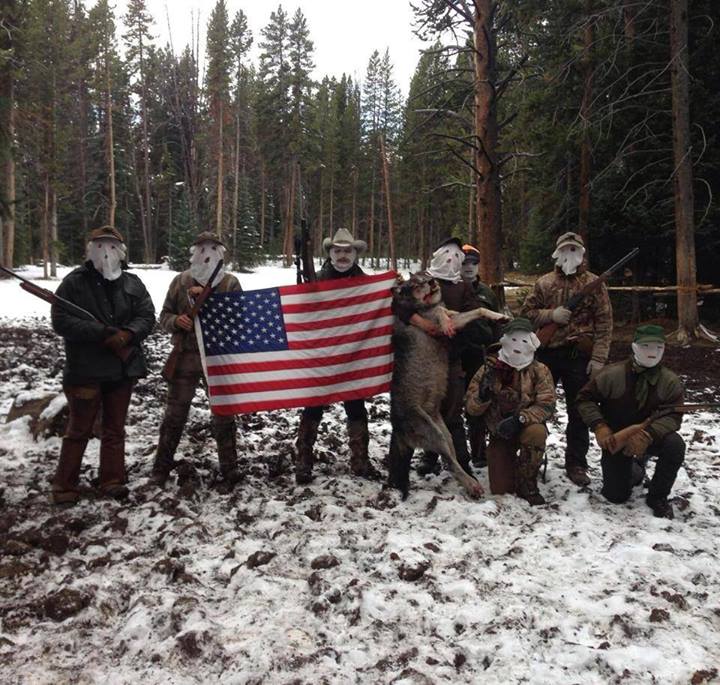
On October 23rd this depraved photograph was posted on the Facebook page of an anti-wolf group- Sportsmen Against Wolves.

 Wolf killers WY masked hunters

When I saw such brutal violence against our wildlife I had to speak out. I wrote this blog on Huffington Post The War Against Wolves and Wildlife: Time to Stop the Killing to expose this increasing anti-wolf and predator zealotry and to encourage people to speak out for wolves and against delisting. This photograph and the many comments posted supporting such cruel violence make it clear: safeguards for wolves must be maintained and enhanced.
The FWS’ proposal to remove federal protections for wolves has inadequately considered the continued threats posed by poachers and others openly hostile to wolves. Moreover, they have allowed excessive state-sanctioned killings including trophy hunting and fur trapping. Poaching and wolf killing at the behest of livestock interests also threaten to derail wolf recovery.
We must not let this proposal go unchallenged! The FWS’ proposal to remove Endangered Species Act (ESA) protections from the remaining gray wolves throughout the lower 48 states is premature and is not based in sound science. Please join me and Project Coyote in speaking out against the delisting proposal and against anti-wolf fanatics to ensure the full recovery of this keystone predator.
From Sacramento to Washington, D.C., Project Coyote representatives are working with allies against the delisting proposal. Read on for important information about upcoming public hearings, how to submit comments to the FWS, and talking points for your personalized letter:
What You Can Do:
The FWS is now accepting comments on the proposed delisting rule. Please write  the FWS today to let them know that you oppose the delisting of gray wolves from the ESA. Please submit your comments no later than December 17th.
The channels for submitting written comments during the proposed regulation public comment period are:

Public Comments Processing Attn: FWS-HW-ES-2013-0073 Division of Policy and Directives Management U.S. Fish and Wildlife Service 4401 N. Fairfax Drive, MS 2042-pdm Arlington, VA 22203

(Please also cc your letters to Secretary of the Interior Sally Jewell and urge her to ensure federal protections for wolves by keeping them listed under the ESA. Send emails to feedback@ios.doi.gov or phone 202-208-3100. Letters can be sent to: Department of the Interior, 1849 C Street, N.W., Washington DC 20240).<br>Please consider attending and testifying at these<strong> </strong>public meetings<em>; individuals will have from 1-3 min. to speak</em>:

  • November 19th, Denver, CO, from 6:00 pm to 8:30 pm, Paramount Theatre, 1621 Glenarm Place
  • November 20th, Albuquerque, NM, from 6:00 pm to 9:00 pm, Embassy Suites, Sandia Room, 1000 Woodward Place NE
  • November 22nd, Sacramento, CA, from 6:00 pm to 8:30 pm, Marriot Courtyard Sacramento Cal Expo, Golden State Ballroom, 1782 Tribute Road
​​Join Project Coyote and our allies for a pre-hearing rally in support of America’s wolves. Marriot Courtyard Sacramento Cal Expo, 1782 Tribute Road Rally will begin at 4:00 pm. (Please plan to arrive by 3:45 pm.)
  • December 3rd, Pinetop, AZ, from 6:00 pm to 8:30 pm, Hon-Dah Conference Center, 777 Highway 260 (A public information meeting will be held from 3:30 pm to 5:00 pm at the Hon-Dah Conference Center.)

Additional information on public hearings can be found here.
Suggested talking points (in addition to points above):

  • The proposal to remove the gray wolf from the list of threatened and endangered species comes at a time when gray wolf recovery is incomplete. Maintaining federal protections under the ESA is critical if gray wolves are to recover throughout their historic range. Their protection should not be abandoned as wolves have only begun to recover in many regions, occupying only a fraction of suitable habitat throughout the United States.
  • As a keystone apex predator, wolves are critical to maintaining the structure and integrity of healthy native ecosystems, providing ecological assets to hundreds of other species. The reintroduction of wolves to Yellowstone National Park has resulted in the regeneration of streamside vegetation following decades of over-browsing by elk, contributing to the return of beavers and many songbirds to the area.
  • The delisting proposal would leave gray wolf management to individual states. The FWS has expressed its confidence in the ability of state wildlife agencies to successfully manage wolf populations, yet state conservation and management plans have proven detrimental in maintaining wolf recovery efforts. Under the management of state wildlife officials who have authorized liberal wolf hunts, wolf numbers have declined significantly.
  • Wildlife policy decisions should be based on the best available, peer-reviewed science. Scientific evidence does not support the claim that federal protection for wolves is no longer necessary, but rather shows that populations have just begun to recover. Currently wolves occupy less than 10% of their historic range and only a third of their suitable habitat. Gray wolves are only beginning to return to suitable habitat in California, Utah, and Colorado.
  • The long-term recovery of wolves, a formerly widely distributed species in the western U.S., depends on wolves being able to successfully disperse between widely-separated populations.

It’s time to speak for wolves and to move from persecution toward a path of recovery and coexistence. Together we can make a difference; for the sake of wolves and for the health of our planet, we must speak.
Please share this Action Alert with others!
For the Wild,
Camilla H. Fox Executive Director
PS- Read this week’s Forbes article about Project Coyote’s work with ranchers to promote tolerance and acceptance of wolves on the landscape, Ranchers Insistence On Cheap Grazing Keeps Wolf Population in the Crosshairs

Ranchers Insistence On Cheap Grazing Keeps Wolf Population In The Crosshairs


One of the six Canadian timber wolves (Canis l...  credit: AFP/Getty Images via @daylife)

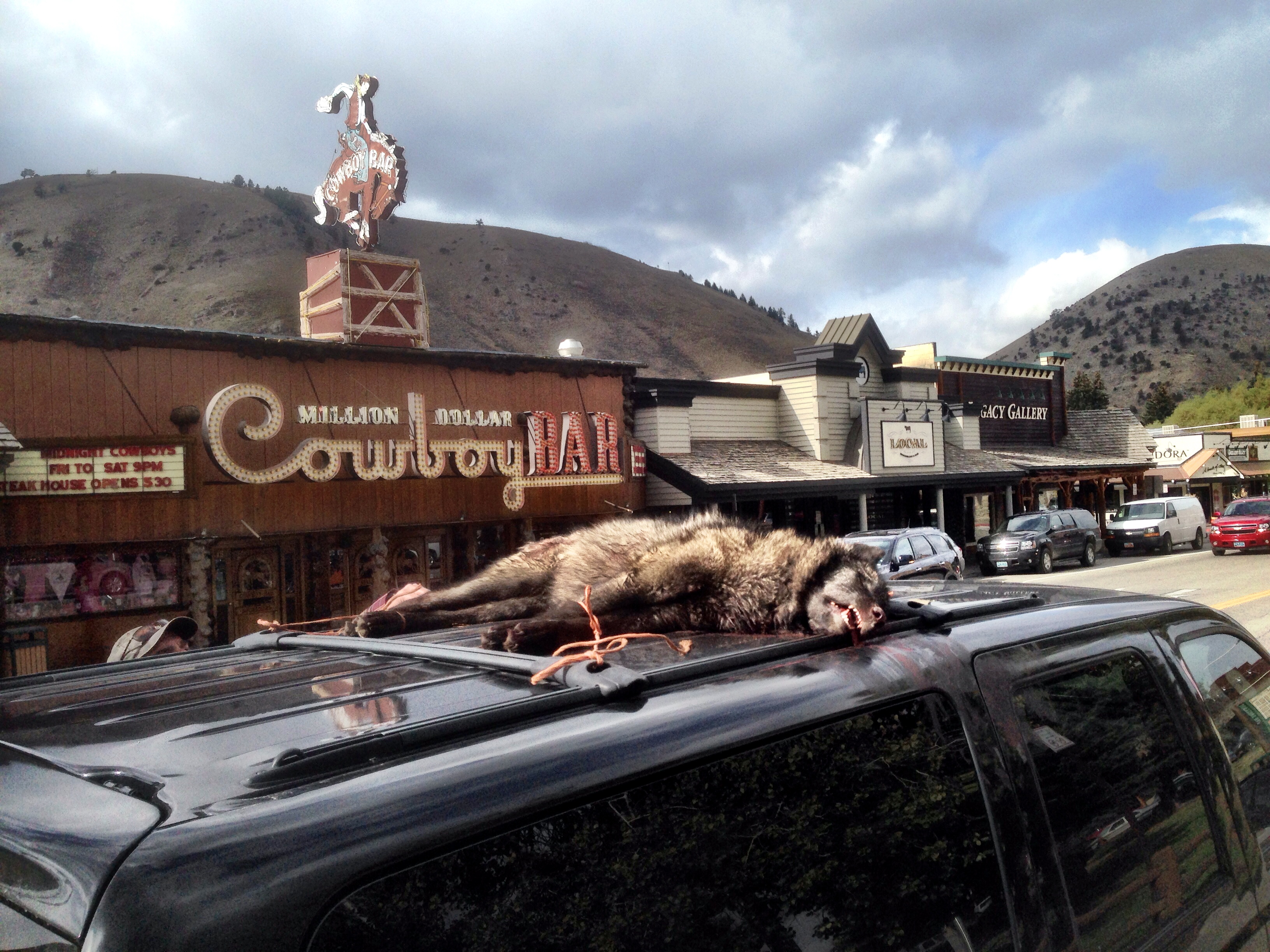
If the October headlines were any indication, the quickest way for a wolf to make the news is to get shot. The Jackson Hole News and Guide reported the story of a Wyoming hunter who bagged a wolf, strapped him atop his SUV, and paraded his trophy through Town Square. A Montana landowner shot what he thought was a wolf (it turned out to be a dog hybrid) amid concerns that the beast was harassing house cats. The Ecologist speculated that hunters were chasing wolves from Oregon, where hunting them is illegal, into Idaho, where it’s not, before delivering fatal doses of “lead poisoning.”

Predictably, these cases raise the hackles of animal right advocates and conservationists alike. Both groups typically view hunting wolves as a fundamental threat to a wolf population that, after a history of near extermination, is struggling to survive reintegration into the Northern Rockies. According to Michael Robinson, a conservation advocate with the Center for Biological Diversity, “Hunting is now taking a significant toll on wolf populations.”

More:

http://www.forbes.com/sites/jamesmcwilliams/2013/11/05/ranchers-insistence-on-cheap-grazing-keeps-wolf-population-in-the-crosshairs/

Michigan’s wolf hunt: How half truths, falsehoods and one farmer distorted “reasons” for hunt

By John Barnes | jbarnes1@mlive.com MLive.com
on November 03, 2013

It is a mythical animal. Inspiring. Feared. Intelligent. Reviled. [It sounds like they’re talking about bigfoot.]

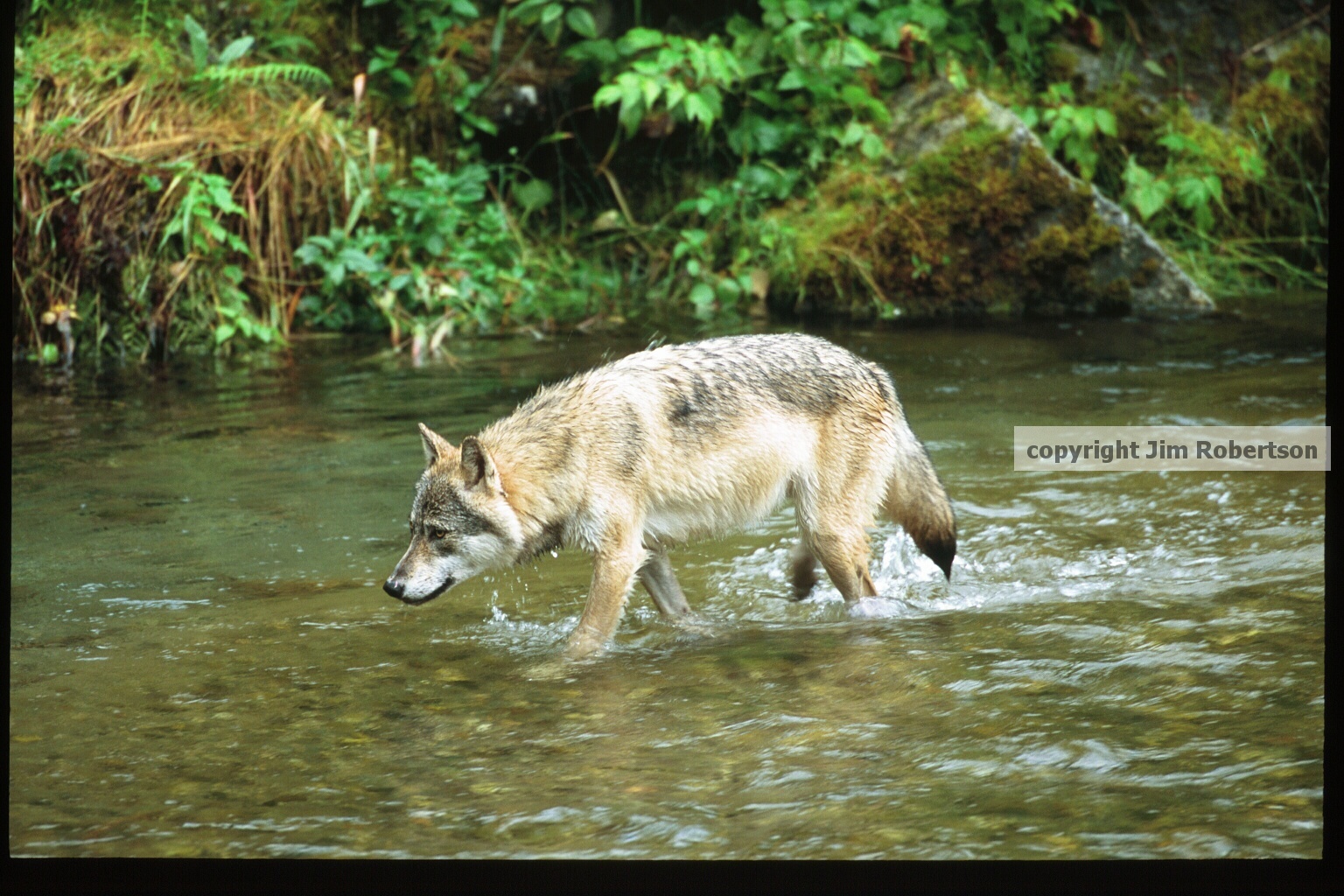
Once on the brink of extinction, the gray wolf’s comeback incopyrighted wolf in water Michigan is remarkable.

And now we will hunt them, a historic first in the state.

But an MLive Media Group investigation found that half-truths, falsehoods and a single farmer have distorted reasons for the hunt. Among them:

When state lawmakers asked Congress to remove wolf protections, they cited an incident in which three wolves were shot outside an Upper Peninsula daycare center where children had just been let out. That never happened, MLive found.

A leading state wolf specialist said there are cases where wolves have stared at humans through glass doors, ignoring pounding on windows meant to scare them. That never happened as well. The expert now admits he misspoke.

The Natural Resources Commission received more than 10,000 emails after seeking public comment, but there is no tally of how many were pro or con. The NRC chairman deleted several thousand, many of them identical, from all over the world. Most of the rest went unopened, a department spokesman said. They said anti-hunt groups launched an email blast so extensive the agency was overwhelmed.

And while attacks on livestock are cited as a reason to reduce wolf numbers, records show one farmer accounted for more cattle killed and injured than all other farmers in the years the DNR reviewed.

The farmer left dead cattle in the field for days, if not longer, a violation of the law and a smorgasbord that attracts wolves. He was given an electric fence by the state. The fence disappeared.  He was also given three “guard mules.”

Two died. The other had to be removed in January because it was in such poor condition. …

More here: http://www.mlive.com/news/index.ssf/2013/11/michigans_wolf_hunt_how_half_t.html

Petition: Save Swedish wolves from wolf baiting/dogs

Save Swedish wolves from wolf baiting by using so called hunting dogs.

This petition is awaiting approval by the Avaaz Community
Save Swedish wolves from wolf baiting by using so called hunting dogs.

https://secure.avaaz.org/en/petition/Repeal_Hunting_Ordinance_Section_28_with_immediate_effect_to_stop_current_wolf_baiting_by_using_so_called_hunting_dogs/?fbdm

Recently since mid year 2013 already nine wolves were killed with the persons in question claiming the right to kill in terms of the amended Hunting Ordinance Section 28.
This law enables the killing of wolves when pets are attacked or when people are being threatened by the presence of a wolf (self defense). However, this amended law opened the door to wolf baiting, using ‘hunting dogs’ as bait to lure wolves into attack, thus making it legal for the owner of the dog to kill the wolf in terms of this law. To amend this section 28 to make it impossible for dog owners to use. To establish wolf hot spots where dogs may not be unleashed and to police and investigate incidents thoroughly to determine whether a crime was committed by intentionally releasing dogs in known wolf territory to lure and kill wolves.

Sweden’s wolves are under siege from various different sources. Help us to help them.

Sign the Petition here: https://secure.avaaz.org/en/petition/Repeal_Hunting_Ordinance_Section_28_with_immediate_effect_to_stop_current_wolf_baiting_by_using_so_called_hunting_dogs/?fbdm

The War Against Wolves and Wildlife: Time to Stop the Killing

[Note: The identities of these wolf-hating villains behind the masks are said to be, from left to right: Former Secretary of the Interior, Ken Salazar, Int. Sec. Sally Jewell, Pres. Barack Obama, Former Pres. G.W. Bush, along with his squad of goons, and Dick Cheney, who tagged along hoping to chalk up another hunting accident.]

1384140_564330240283396_857016214_n

Article by Camilla Fox, Project Coyote

By the time this blog goes live this photo will probably have been pulled from Facebook. The photo, titled “Wyoming is FED up,” is posted on the FB page, Sportsmen Against Wolves.

As of October 26th the photo had 563 likes and 307 shares, after being posted for less than three days. The posted public comments are disturbing:

“Love this!!!!! I fully understand the masks, yer not idiots like those daring you to show yer faces!!!! Keep on killing guys”

“Smoke a pack a day”

“Kill everyone you see boys!”

What is perhaps most disquieting about the photograph is the vigilante feel that echoes a lynch mob — dehumanize, vilify, and murder. Wolves are now reviled and persecuted in a land where they once roamed wild and free prior to European colonization.

While the U.S. Fish and Wildlife Service proposes to remove federal protections for gray wolves through most of their historic range in the lower 48 States, blatant hostility toward wolves, coyotes, bears and other native carnivores has intensified. Like the photo above, the vilification of predators has taken on a new hue: one associated with righteous patriotism. But all true Americans should be concerned about this tenor of violence and hatred toward other living beings. What lessons are we teaching young people when we show such blatant disrespect and denigration of wildlife?…when “we” proudly post photos of men with their bloodied victims on Facebook and Twitter? (see this video posted on Facebook of a reported wolf being shot in Idaho — warning: graphic) and when our own federal government condones this violence and wanton animal abuse in its lethal predator control programs?

Anti-wolf hatred fueled a 2011 Congressional rider that removed federal protections for wolves in the Northern Rockies and Great Lakes thereby turning management over to the states in these regions. The result: In just seven days of this year’s wolf hunt in Wisconsin, 97 wolves were killed — about twice the pace at which wolves were killed last year, the state’s inaugural and very controversial wolf-hunt season. The Wisconsin Department of Natural Resources estimates the total state wolf population to be around 800 — and would like trappers and hunters to reduce the population to 350 — a number scientists say is not sustainable.

At least 1,321 wolves have been killed by trophy hunters and commercial and recreational trappers in Wyoming, Montana, and Idaho alone. Montana sold over 6,000 wolf-hunting licenses this season; each license — $19 for state residents — allows a person to kill up to five wolves. The current wolf population in Montana is estimated at 625. Wolf watching generates approximately $30 million annually to the towns around Yellowstone; the cost to reintroduce and recover wolves into the Northern Rockies was estimated to be more than $150 million. What is the value of a wolf alive — over the course of his or her lifetime — compared to one-shot dead for a $19 wolf-hunting license? Ethics of recreational killing of wolves aside, economics does not justify this insanity.

Members of Congress, predator friendly ranchers, respected scientists have spoken out publicly against the U.S. Fish and Wildlife Service’s proposal to remove federal protections for wolves arguing that delisting is premature and is not scientifically sound. The Service has extended the public comment period regarding their proposal to delist wolves from the ESA and has rescheduled public hearings. If you want to see wolves in the wild please click here, take action, and make your voice heard. Then share this blog post with others. The Service will accept comments through December 17th. Check out Project Coyote’s homepage and Facebook page for more updates.

Follow Camilla Fox on Twitter: http://www.twitter.com/projectcoyote

110 Wolves Have Been Killed After Day 8 Of Hunting Season

http://news.wpr.org/post/110-wolves-have-been-killed-after-day-8-hunting-season

By

The Department of Natural Resources says that as of Wednesday morning, 110 wolves have been killed in the wolf hunting and trapping season.

The season just started last week. Last year, 117 wolves were killed during the entire two month season. DNR official Tom Hauge says the faster pace of this year’s harvest remains a bit of a mystery.

“We really don’t have any good ideas as to why that is,” says Hauge. “But the trappers are out in large numbers this year and are having some good success.”

Most of the 110 wolves killed this year, were first caught in traps. Two people concerned about the possibility of using dogs to hunt wolves testified before the DNR Board today. Dogs are banned from the wolf hunt until December 2.

A wolf-hunting zone in far northeastern Wisconsin closed earlier this afternoon.

A-Hole Hunter Parks With Wolf on Roof in J-Hole

[One of the first wolves I ever saw in the lower 48 was in the Grant Tetons, near Jackson Hole, long before wolf hunting was allowed. Now, any ya-hoo a-hole who wants to can kill as many wolves as they want, any time they want—across 85% of Wyoming.

Note: Yellowstone and Grand Teton National Parks take up nearly 15% of the cowboy state.]

By Mike Koshmrl, Jackson Hole, Wyoming
Date: October 18, 2013

Bill Addeo swears he didn’t park an SUV with a dead wolf strapped to the roof on the Town Square just for the attention.

Addeo  sat on a bench next to his Ford Excursion across the street from the  Cowboy bar Thursday afternoon, eager to answer questions posed by folks  passing by.

“It’s a neck shot,” Addeo said. “The bottom of the  neck is blown apart and there’s blood everywhere, so I didn’t want to  put him in the back.”

The Hoback Junction resident killed the wolf, a black 85-pound female, that morning while elk hunting near Bondurant.

Addeo  said he toted the still-warm canine to Jackson to register it at the  Wyoming Game and Fish office on North Cache Street. He parked it on the  Town Square, he said, while his wife was shopping.

At the time Addeo shot the wolf, she and four packmates were sitting around “satiated” after having eaten an antelope, he said.

“We saw them from about one mile away,” Addeo said. “Then we crawled to 375 yards.”

His  guide, Sammy L. Coutts, had forgotten shooting sticks to rest a rifle  on for a shot, so the duo needed to improvise, Addeo said.

“He kneeled down and I put it right on his shoulder,” Addeo said. “It blew the hat right off his head.”

Coutts  called the Jackson Hole News&Guide on Thursday afternoon to alert  the newspaper to his client’s position on the Square.

The day before, Coutts had a shot at the wolves, Addeo said, but the hunting guide’s rifle didn’t prove steady enough.

“Yesterday, Sam saw the big one at about 250 yards,” Addeo said. “He gets on the hood of his truck and misses twice.”

Coutts stewed all night.

Back on the Square, almost everybody passing by stopped for a look. Most snapped photos.

Despite the interest, nobody gave Addeo flak for putting his wolf on display.

“There hasn’t been one person that’s said anything negative,” he said. “Everybody’s happy.”

Because  Addeo was hunting in Wyoming’s wolf predator zone, where there are  virtually no rules, a license was not necessary. The free-fire zone  encompasses about 85 percent of the state. The southern edge of the zone  starts in Wilson, just south of Highway 22, for about half the year.

Addeo could have shot all five wolves if he had the opportunity. The other four packmates, however, scampered off.

“After the shot went off,” Addeo said, “we ran the draw and never saw them again.”

Wolf_kill_on_vehicle_1

Wolf watchers want IDs of dead animals near park

http://www.jhnewsandguide.com/article.php?art_id=10393

State laws keeps data about legally killed wolves secret.

By Mike Koshmrl, Jackson Hole, Wyo.

October 16, 2013

Hunters have reported killing five wolves in a Wyoming hunt area that abuts Yellowstone National Park’s Lamar Valley, raising fears a park pack has been crippled.

Wolf watchers in the Lamar Valley — perhaps the most famous place on Earth to spot a Canis lupus in the wild — fear the worst: that the animals killed were members of the Lamar Canyon Pack. It had 11 members at the end of last year.

One wolf advocate says he sought the identity of the wolves killed in area two from the Wyoming Game and Fish Department but didn’t get any answers.

“They’re hiding behind their statute that says they can only release so much information, which is a bogus excuse,” said Marc Cooke, president of Wolves of the Rockies. “They might as well face the reality that there’s a good possibility that wolves killed were from Yellowstone.”

It’s impossible to say if one or more of the five wolves killed over a span of three days last week were Lamar Canyon Pack wolves, Wyoming Game and Fish Department officials said.

“There’s no way to know, we just don’t have that information,” Game and Fish spokesman Alan Dubberley said.

Because none of the animals killed wore radio collars, pinpointing their pack identity is impossible, Dubberley said. It’s also illegal to say precisely where the five wolves in hunt area two, located northeast of Cody, were killed, he said.

The wolves, all killed between Thursday and Sunday, included two males and three females, the spokesman said.

The weekend’s harvest pushed area two one over its 2013 hunt quota of four wolves. Last year, eight wolves were allowed to be killed in area two. Statewide the quota has also been slashed in half — from 52 to 26.

An estimated 277 wolves inhabited Wyoming, including Yellowstone and the Wind River Reservation, at the end of 2012. That’s nearly double the 150 wolves required by the U.S. Fish and Wildlife Service, which removed federal protections from the predators last year.

Dave Hallac, Yellowstone’s Center for Resources chief, said that he heard word of the wolf harvests near the park boundary from Game and Fish on Monday.

“They simply let us know there is a reasonable possibility those wolves could be from the Lamar Canyon Pack,” Hallac said. The Lamar Canyon Pack, which contains no radio collared animals, had been documented recently outside of the park, he said.

Game and Fish officials said they were unaware of the communication with Yellowstone.

In fall 2012 Wyoming’s Lamar Canyon Pack attracted international attention when wolf 832F, the pack’s world-famous alpha female, was killed by a hunter during Wyoming’s inaugural regulated hunt. That fall the pack fractured, with some animals returning to Yellowstone and some joining the Hoodoo Pack, which also roams Wyoming wolf hunt area two.

By the time hunting seasons closed, 12 Yellowstone National Park wolves had been legally killed in Wyoming, Idaho and Montana.

Natural deaths, run-ins with humans and hunting combined to cut Yellowstone’s wolf numbers by about a quarter.

Wildlife safari guide Howard Goldstein said his business took a hit this summer because the Lamar wolves were harder to find and more wary.

“We get a lot of people who come specifically to see wolves,” said Goldstein, who operates out of Jackson. “Those people are buying guides, buying binoculars, getting hotels.

“They’re generating a tremendous amount of income for communities around Yellowstone,” he said.

Goldstein, like Cooke, lamented not knowing the identities of the wolves killed over the weekend.

“We don’t know if it’s the Lamar Canyon Pack or the Hoodoo Pack, because the state won’t tell us anything,” Goldstein said.

Goldstein called for the state to be more open with the wolf watching community.

“I can understand not giving us the names, addresses and the phone numbers of the hunters who killed the wolves,” Goldstein said, “but to literally give us no information other than the number of wolves killed and the district they were killed in is not OK.”

Wyoming state law restricts what Game and Fish officials can say about any wolf that’s been legally killed.

Details such as age, coloration, breeding status and location are to be kept secret. This fall the state began sharing the sex of animals killed. The statute was established to protect the wolf hunters’ identities.

The law states: “Any information regarding the number or nature of wolves legally taken within the state of Wyoming shall only be released in its aggregate form and no information of a private or confidential nature shall be released without the written consent of the person to whom the information may refer. Information identifying any person legally taking a wolf within this state is solely for the use of the department or appropriate law enforcement offices and is not a public record.”

Game and Fish officials are forward about the restrictive nature of the statute in terms of information dissemination.

“We’re under pretty strict regulations about what we can and can’t say,” Game and Fish large carnivore manager Dan Thompson said.

Pack affiliation for the wolves recently killed in area two will be included in the 2013 gray wolf annual report. The 2012 annual report was released this April, three months after the hunt ended.

Cooke said he wasn’t pleased to have a lengthy wait ahead to find out whether or not the wolves were Lamar Canyon pack animals.

He called for Montana and Wyoming to cut back on already-reduced quotas in hunt areas near Yellowstone’s boundaries.

“Hunters have the whole state to operate in if they want to go kill wolves,” the Wolves of the Rockies president said.

“Wildlife watchers don’t have that luxury,” Cooke said. “We need to give them that luxury.”

copyrighted Hayden wolf walking