Exposing the Big Game

Forget Hunters' Feeble Rationalizations and Trust Your Gut Feelings: Making Sport of Killing Is Not Healthy Human Behavior

Exposing the Big Game

These Non-Lethal Methods Encouraged by Science Can Keep Wolves From Killing Livestock

Experts say old, repurposed techniques and new technologies may be better than bullets at curbing attacks by the predators

Gray Wolves in Montana
Gray wolves in Montana (Dennis Fast / VWPics/Universal Images Group via Getty Images)

By Max G. LevySMITHSONIANMAG.COM
DECEMBER 11, 2020

https://www.smithsonianmag.com/science-nature/these-non-lethal-methods-encouraged-science-can-keep-wolves-killing-livestock-180976505/?fbclid=IwAR1IVpFjdJPWPWxjL9lTd3tB2GxfVKjgL7OfeonF6Fra2EDlnx3UE3nxVwQ

Nestled amid butterscotch-scented Ponderosa pines in Idaho’s backcountry one sunny, summer day in 1991, Suzanne Stone scooped her hands around her chin and let out an “Ahwooooo.” Stone, now an expert in wolf restoration heading the International Wildlife Coexistence Network, was then an intern at the United States Fish and Wildlife Service (USFWS). After she sent two boisterous wolf howls rippling through nearby meadows, she listened curiously for a reply. Instead, a bullet from a distant rifle whistled just above her and her supervisor’s heads. Steve Fritts, a leading wolf scientist at USFWS, hurried Stone back to their car before reporting what happened. Hunting was legal in the area, but firing at federal employees—even unknowingly—was not. Federal investigators later traced the shot to a hunting outfitter hundreds of yards away.

“I knew then what wolves were facing in the backcountry,” she says. For nearly three decades, wolf populations in Idaho have been on the rise, pitting local communities and powerful interest groups against each other, a situation that plays out in many areas across the country where wolves exist. Hunters contend that wolves have fully recovered and now deplete elk and deer populations while some ranchers argue wolves need to be killed to keep livestock alive. Conservationists, on the other hand, say that the apex predators contribute vitally to a healthy ecosystem and are still functionally extinct in about 85 percent of their historic range.

In October, the Trump administration delisted gray wolves from the endangered species list, a move celebrated by the National Cattlemen’s Beef Association and Safari Club International, a hunter advocacy group, in a joint statement. The conservationist group Defenders of Wildlife, meanwhile, issued a statement of their own calling the delisting “premature and reckless.” They have joined other conservation groups to file a formal intent to sue the USFWS soon after the law takes effect in January.

With gray wolves set to lose their federal protection when delisting takes effect in January, individual states have resorted to patching together their own terms for management, making it easier for people to hunt them in some states. But hunting will likely stunt wolf recovery and destabilize ecosystems already hobbled by their scarcity. Wolves regulate coyote populations, preventing the latter group from hunting pronghorn antelope; wolves pick off weak, rather than healthy, prey, leading to stronger deer and elk herds; and they keep wild herbivores from overgrazing, rippling benefits down to the soil. For these reasons, biologists have been trying to convince ranchers and policymakers that nonlethal methods, both old and new, should be used to reduce livestock conflicts and keep wolf populations stable or growing.

Wolves were nearly wiped out from the lower 48 by 1960, but numbers rebounded after Congress passed the Endangered Species Act in 1973 and scientists reintroduced the predators to Yellowstone National Park and Idaho in 1995. Hunting ramped up between 2008 and 2012 when the USFWS delisted gray wolves in Idaho, Montana, and Wyoming, in part to protect livestock from attack. But that tactic may have been counterproductive. Research from the Carnivore Coexistence Lab at the University of Wisconsin Madison has shown that killing gray wolves actually leads to three times more livestock attacks, a finding supported by behavioral studies elsewhere. “The wolf pack is a family,” says Adrian Treves, who runs the lab. They cooperate to defend territory and raise pups. When one is killed, the destabilizing effect ripples through the pack. Reproductive age goes down, and naive juvenile attacks on livestock go up, according to Colleen St. Clair, a biologist at the University of Alberta.

Ranchers’ fears also run deeper than just slain cows. Even if livestock don’t die, wolves may chase or stress cattle enough that many lose weight, get trampled or injured. “I have major concerns about [wolves],” says Megan Brown, a cattle rancher in northern California who has encountered bears and wolves on her property. “I’ve noticed this happening slightly more now that the wolves are back.” (In 2011, California confirmed its first wild wolf sighting in 87 years.)

One newly proven tactic to discourage wolf-cattle conflicts is to keep an abundant population of the predators’ natural prey. Wolves prefer eating native wild animals, and depleted deer or elk populations nudge them toward abundant sheep and cattle. “Predators are always facing this cost benefit ratio,” St. Clair says. “When they choose to try to prey on livestock, it’s because they are in a situation where that’s their best option.” She suggests that planting deer or elk carcasses in wolf habitats or imposing stricter hunting limits could increase prey populations. Since doing so could also grow predator numbers, both approaches are contentious.

A tried-and-true change some ranchers have made is to keep their herds disease-free and haul dead livestock far from the rest. Wolves are exceptionally sensitive to weakened prey. “It’s like ringing the dinner bell and saying, ‘Come on in there’s a feast here’,” says Stone. Once the scent of a carcass lures them near a herd, healthy livestock become more vulnerable. Moving bone piles and carcasses far from the herd “may be the single best action” to prevent wolf predation on livestock from happening in the first place, according to the Oregon Department of Fish and Wildlife. This approach, while effective, adds costs to ranching and requires some to manage land differently than they have for generations.

It’s also not going to be a cure-all; ranchers can’t bury or haul thousand-pound carcasses from some remote pastures in the dead of winter, and healthy herds need protection too. Since wolves have evolved to be shy around unfamiliar things, a common strategy is to scare them away with devices called nonlethal deterrents. A centuries’ old example comes from Polish hunting practices: fladry is a perimeter of tightly spaced colorful flags. The configuration is not a physical barrier, but the narrow spacing between flags still throws wolves off. Hunters previously used fladry to funnel wolves into an ambush area, but scientists now champion the tool to spare them. In one instance, a biologist used fladry around a carcass visited by wolves. A hungry carnivore leapt over a nearby barbed wire fence “like it wasn’t even there,” but didn’t cross the fladry.

Since wolf reintroduction in 1995, scientists have gathered much evidence showing that random blasts of colorful light, noise or motion can also protect livestock enclosures by keeping wolves on edge. Stone recalls one wolf getting blasted with Van Halen. “It was one of our Wildlife Services guys’ favorite albums, and it was very hard rock,” she says. The frightened wolf fled further than any other in her experience. Ranchers also scare away wolves using strobe lights and starter pistols. Stone, who has used countless deterrents in her 30 years of experience, even reported success with inflatable tubemen—those giant grinning effigies that dance unpredictably, often around used car lots. She assembled a pair on an Oregon hobby farm in 2018 where wolves had eaten llamas, and wolves have still not returned, she says.

Nonlethal deterrent devices have limitations, though. Some require electricity and all only protect enclosed areas—two deal-breakers for herds grazing open pastures. Even in ideal scenarios, wolves eventually tease out empty threats. “Animals are incredibly smart,” says St. Clair. “Their lives depend on figuring out which of these dangers are real dangers.” Targeting multiple senses with a rotating library of deterrents staves off their pattern recognition, but habituation remains a major consideration.

Recent research suggests that tricking carnivores into thinking livestock is disgusting food, can condition, rather than scare them. The approach includes developing microcapsules with nauseating chemicals that ranchers would plant in carcasses as bait for curious carnivores. Making an animal vomit triggers an association with what they just ate, ironing a crease into a primitive subsection deep in the brain. So if a wolf eats a carcass laced with this flavorless capsule, it would start to steer clear of dead steer. This “conditioned disgust” aversion showed promising results in a 2009 study on captive wolves, but the method hasn’t been tested widely in wild wolves.

Recognizing animal cognition inevitably leads to appreciating individual differences between wolves. “We know that individuals vary in their ingenuity—their determination to get through our defenses, their tendency to repeat and cause multiple problems,” Treves says.

The environmental nonprofit Resolve and AI company CVEDIA recently announced WildEyes, a field camera that reportedly recognizes different individuals. “It’s a perfect example of how technology is catching up with the new paradigm of coexistence-type work,” says Stone. WildEyes can automatically alert ranchers of worrisome individuals in the area, or set off deterrents to scare the wolves away. The new technology has been tested on Tibetan wolves, but has not been used in the United States.

According to Stone, one rancher in Montana is testing a tool that monitors livestock heart rates to detect distress—a sort of Fitbit for ungulates. When the device senses stressed livestock, it alerts the rancher that a predator may be close. And other ranchers are also supercharging classic deterrents. Turbofladry combines fladry with electric fences, and works well for smaller enclosed herds.

While some ranchers try new methods, others have stuck with a couple of old standbys that scientists still encourage. Range riders, people paid to travel alongside free-grazing herds on horseback or ATV, can cover more area than electric fences usually surround. In addition to just supervising cattle, range riders encourage wolf-resistant behaviors: grazing as a dense cluster, keeping newborns with moms and moving injured cattle to safety. And guardian dogs, such as Great Pyrenees, can also travel with livestock beyond fence lines. A 2010 study from Central Michigan University proved their ability to dramatic reduce wolf activity, protecting sheep, goats and cattle. At several cattle farms randomly assigned guardian dogs, wolf visits dropped from about once per month to zero visits in three years. Brown says, however, that ranchers with many acres need many dogs—each costing thousands to feed and maintain.

“Every part of this is about having the right tool and using it the right way,” says Stone, pointing out that some ranches require multiple tactics at once. In 2017, Stone published findings from a seven-year case study comparing sheep killings in a lethally controlled area to one protected by range riders, turbofladry, guardian dogs and other nonlethal deterrents. The nonlethal controls led to 3.5 times fewer dead sheep—just .02 percent of the total population.

Switching from lethal to nonlethal measures widely, however, is tough without more buy-in from government and ranchers. More than half of ranchers surveyed in one study wanted to learn more about nonlethal techniques, but funding to foster that desire is lagging. Some states, such as Oregon, do provide grants to help cover costs for nonlethal controls though. When Colorado welcomes wolves back after passing a reintroduction bill in November, Stone hopes policymakers will learn from that evidence, and encourage the suite of nonlethal solutions for protecting livestock and wolves, rather than the lethal measures which endanger both.

For now, the best approach to deter gray wolves’ from attacking livestock is to combine multiple nonlethal methods, and encourage biologists and ranchers to keep innovating. “People often want a silver bullet: they buy this technique, they install it, it works forever,” says St. Clair. “It’ll never be like that. Animals will always be testing, especially animals as smart as wolves.”
Gray Wolves To Be Removed From Endangered Species List

October 29, 20204:42 PM ET

NATHAN ROTTTwitterInstagram

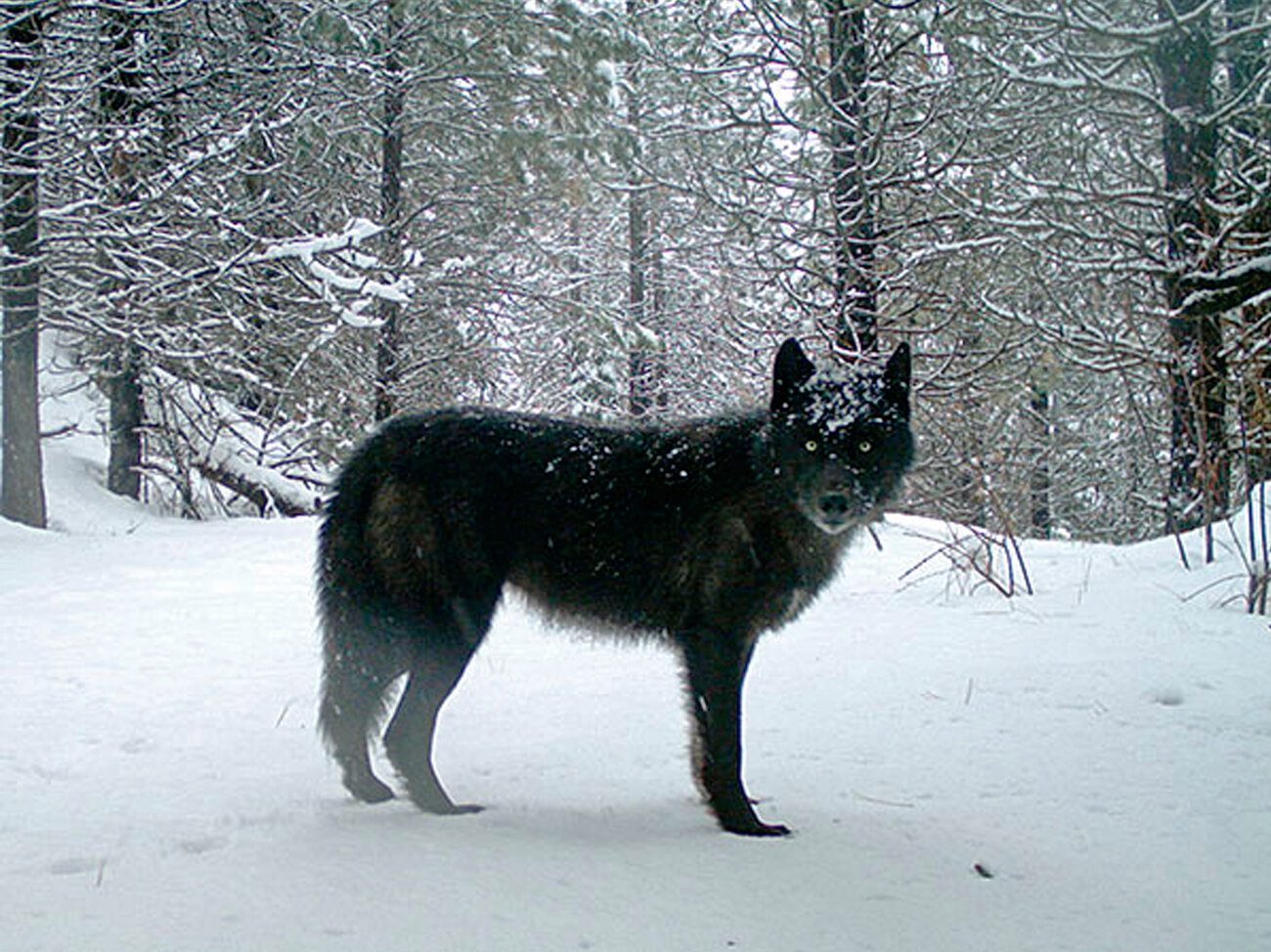
A gray wolf is captured by a remote camera on U.S. Forest Service land in Oregon in 2017.Oregon Department of Fish and Wildlife/AP

Gray wolves, a species that has long been vilified and admired, will no longer receive federal protections under the Endangered Species Act in the Lower 48 U.S. states, the Trump administration announced Thursday.

The long-anticipated move is drawing praise from those who want to see the iconic species managed by state and tribal governments, and harsh criticism from those who believe federal protections should remain in place until wolves inhabit more of their historical range. Gray wolves used to exist across most of North America.

“After more than 45 years as a listed species, the gray wolf has exceeded all conservation goals for recovery,” said Interior Secretary David Bernhardt, announcing the delisting, which will revert management of wolf populations to local wildlife agencies.

Federal wildlife officials are hailing the move as a success story, similar to endangered species recovery stories such as the bald eagle and American alligator.

After being nearly wiped clean from the contiguous U.S. by the mid-20th century, there are now more than 6,000 gray wolves in the Lower 48 states, largely clustered in the Northern Rocky Mountains and the Western Great Lakes region.Article continues after sponsor messagehttps://f5581fa88159aeabf2406214dd563910.safeframe.googlesyndication.com/safeframe/1-0-37/html/container.html

Critics are calling the move premature, though, and are already promising to sue.

“This is no ‘Mission Accomplished’ moment for wolf recovery,” said Kristen Boyles, an attorney for Earthjustice.”Wolves are only starting to get a toehold in places like Northern California and the Pacific Northwest, and wolves need federal protection to explore habitat in the Southern Rockies and the Northeast.”

Some critics are portraying the move as another environmental attack by the Trump administration, which has rolled back dozens of environmental regulations, including protections for endangered species and migratory birds. But wolves have a complicated history that doesn’t fit cleanly into the bipartisan rancor that now dominates U.S. environmental policies.

After being hunted, trapped, poisoned and harassed to the point of near extirpation in the contiguous U.S., all gray wolves south of Canada were given federal protections under the Endangered Species Act in 1978.

Under that protection, their numbers slowly recovered in the Great Lakes region, and in 1995 federal wildlife officials reintroduced gray wolves to central Idaho and Yellowstone National Park, where their population has since flourished.

In 2013, the Obama administration also proposed to delist gray wolves, saying that the species had rebounded to the point where they were no longer at risk of extinction and should be managed by state and tribal governments.

A couple of years earlier, wolf populations in Montana and Idaho were delisted by a congressional budget rider, authored by a Democrat and Republican senator in each of those states who were pressured by agricultural and sportsmen groups. Wolves are an apex predator that, at times, kill livestock. Subsequent lawsuits saw gray wolves get delisted, relisted and delisted again in Wyoming.

Today, state wildlife agencies manage wolf populations in Montana, Idaho and Wyoming, and hunting of the species is permitted.

Similar hunting seasons are expected in some Midwestern states if the national delisting survives the anticipated court challenges, and wildlife groups contend that hunting seasons will limit wolves’ ability to repopulate other parts of the country.

Randy Johnson, a large carnivore specialist for Wisconsin’s Department of Natural Resources, told Wisconsin Public Radio this month that if wolf management fell back to the state, it would use all of the tools available to find a balance “between a healthy and sustainable wolf population, but also addressing those social concerns and livestock concerns when and where needed.”

Idaho documents reveal weeks-old wolf pups among 570 maimed, slaughtered wolves

!!!!!!!!!!!!!!! An individual may now kill 30 wolves per year in Idaho !!!!!!!!!!!!!

DATE

September 11, 2020

CONTACT

Samantha Bruegger, WildEarth Guardians, (970) 363-4191, sbruegger@wildearthguardians.org

IN THIS RELEASE

Wildlife   Gray wolf
#DefendCarnivores, #EndTheWarOnWildlife, #EndangeredSpeciesAct, #StopExtinction

BOISE—As the U.S. Fish and Wildlife Service announced last week that the removal of wolves from Endangered Species Act protection nation-wide is “very imminent,” new data from Idaho show the ugly face of state wolf management there.

According to an analysis of records obtained by Western Watersheds Project, hunters, trappers, and state and federal agencies have killed 570 wolves in Idaho during a 12-month period from July 1, 2019 and June 30, 2020. Included in the mortality are at least 35 wolf pups, some weighing less than 16 pounds and likely only 4 to 6 weeks old. Some of the wolves shattered teeth trying to bite their way out of traps, others died of hyperthermia in traps set by the U.S.D.A. Wildlife Services, and more were gunned down in aerial control actions. The total mortality during this period represented nearly 60 percent of the 2019 year-end estimated Idaho wolf population.

“There is nothing scientific about the Idaho Department of Fish and Game’s management, which seems to be guided by anti-wolf hysteria among some members of the ranching and hunting communities, rather than any sort of conservation ethic,” said Talasi Brooks of Western Watersheds Project.  “It is cruel, morally and ethically reprehensible, and policy is set through a process which denies conservation interests any voice.”

About 400 wolves have been killed each year in Idaho for the past several years, and the 570 wolves killed in 2019-2020 is record-breaking, perhaps reflecting Idaho Department of Fish and Game’s (IDFG) incentivization of wolf killing. This level of population disruption leads to population-level effects among wolves, including population decline, a younger, destabilized population, and ultimately more livestock conflicts.

“It’s sickening to see how wolves have been slaughtered in Idaho once federal Endangered Species Act protections were lifted,” said Andrea Zaccardi, a senior attorney with the Center for Biological Diversity. “If wolves are delisted nationwide, this cruelty could extend to all wolves within our country’s borders. This treatment of our nation’s wildlife is unacceptable.”

“Idaho’s reckless, violent, massacre of wolves and their pups not only showcases the worst of state wildlife “management,” it shines a light on the darkest corners of humanity.  To maim, bludgeon and actively seek to destroy a native animal, that is familial and social by nature, is disgusting,” said Samantha Bruegger, Wildlife Coexistence Campaigner with WildEarth Guardians. “Tragically, the Idaho narrative clearly shows, to the rest of the country, what can happen to wolves if they are delisted from the Endangered Species Act.”

“Idaho is not ‘managing’ wolvesbut is attempting to reduce the state wolf population to the brink of federal relisting while jeopardizing region-wide recovery of a native carnivore. This inhumane mass killing of wolves abuses federal recovery objectives and is one of many reasons why Endangered Species Act protection is so important for gray wolves nationwide,” said Zoe Hanley of Defenders of Wildlife.

IDFG recently announced it had awarded approximately $21,000 in “challenge grants” to the north Idaho-based Foundation 4 Wildlife Management, which reimburses wolf trappers a bounty up to $1,000 per wolf killed. The Foundation also has received funding for wolf bounties from the Rocky Mountain Elk Foundation. A single individual may now kill up to 30 wolves under IDFG hunting and trapping rules—a new increase from the 20 wolves previously allowed.

“It is beyond tragic that Idaho has become the poster child for animal cruelty through their pathological destruction of wolves,” said Brooks Fahy, executive director of Predator Defense. “I find it hard to believe that most Idahoans would approve of this indefensible carnage being carried out on behalf of zealots in the ranching and hunting community. Time and again we see that removing Endangered Species Act protection and allowing states to manage wolves generally leads to mass slaughter.”

“Wolves are a native species and part of our iconic Western wildlife heritage,” said Derek Goldman, Northern Rockies Representative of the Endangered Species Coalition. “It’s deeply disappointing that Idaho Department of Fish and Game is abandoning science and ethics in its zeal to eradicate wolves, when many nonlethal, less-costly approaches to conflict prevention already exist.”

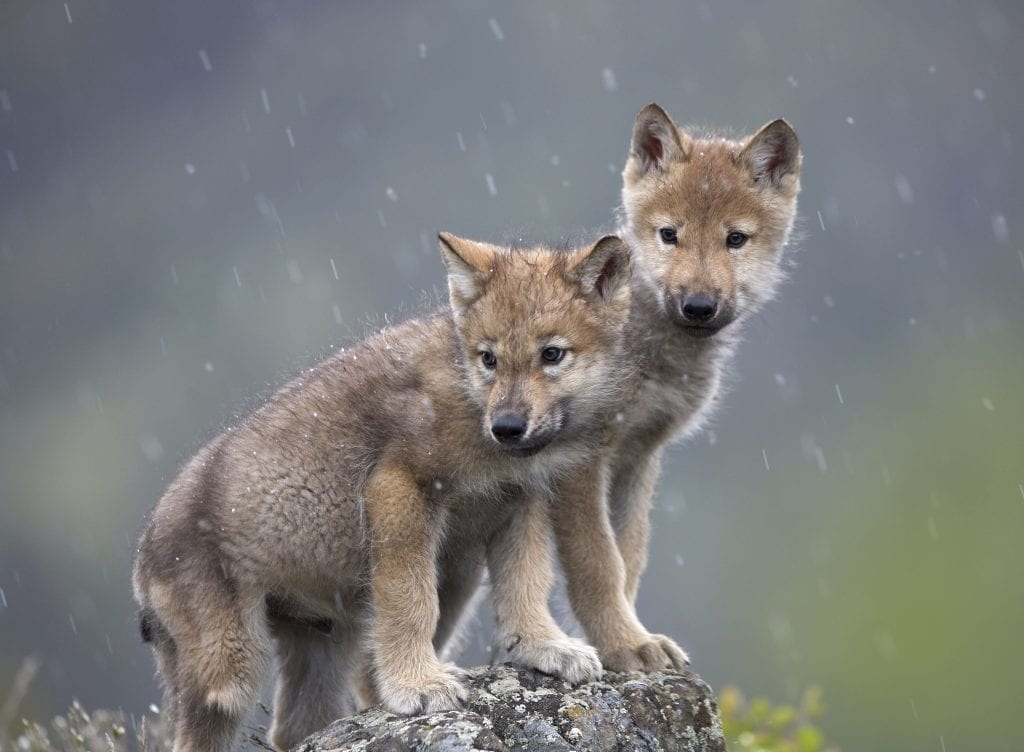
Gray Wolf pups. Photo by Tim Fitzharris.

Other Contact

Andrea Zaccardi, Center for Biological Diversity, (303) 854-7748; Zoe Hanley, Defenders of Wildlife, (509) 774-7357; Brooks Fahy, Predator Defense, (541) 937-4261; Talasi Brooks, Western Watersheds Project, (208) 336-9077; Derek Goldman, Endangered Species Coalition, (406) 370-6491

California Court Approves Ban on Federal Wildlife Poisoning, Trapping

Restrictions Aim to Protect Rare Tricolored Blackbirds, Beaver, Gray Wolves

SAN FRANCISCO— In response to a lawsuit filed by wildlife advocacy groups, a federal animal-killing program must restrict its use of bird-killing poisons in Northern California and stop setting strangulation snares and other traps in places like the Sacramento National Wildlife Refuge Complex.

The agreement, approved today by a San Francisco federal court, also directs the U.S. Department of Agriculture’s Wildlife Services to analyze the environmental impacts of its killing of coyotes, bobcats, mountain lions and other wildlife in California’s “Sacramento District.” This 10-county region covers Colusa, El Dorado, Lake, Marin, Napa, Placer, Sacramento, Solano, Sonoma and Yolo counties.

“This victory will save hundreds of animals that would have needlessly suffered and died in traps set by Wildlife Services over the next several years,” said Collette Adkins, a Center for Biological Diversity attorney representing the conservation groups involved in the lawsuit. “It’s another important win in our fight to shut down this agency’s destructive and indiscriminate war on bobcats, coyotes and other wildlife.”

Under the court order approved today, Wildlife Services must provide, by the end of 2023, an “environmental impact statement” that analyzes the effects and risks of its wildlife-killing program in the Sacramento District. It must also offer opportunities for public input.

Pending completion of that study, the court order imposes several measures to protect wildlife in the 10-county area. For example, it restricts use of the avicide DRC-1339 to prevent accidental poisoning of state-threatened tricolored blackbirds. It also bans any use of body-gripping traps, such as strangulation snares, in several areas.

The court order further ends most beaver-killing in waterways where endangered wildlife depends on beaver-created habitats. The order also spells out several measures to protect California’s endangered gray wolves from being accidentally killed in traps set for other carnivores.

“We are pleased that Wildlife Services has agreed to consider the environmental impacts of its wildlife-killing program,” said Cristina Stella, an attorney at the Animal Legal Defense Fund. “Wild animals in California deserve our protection, and this victory assures that they will be free from some of the cruelest killing practices until Wildlife Services complies with federal law.”

“This agreement will ensure greater transparency and accountability from a federal agency that has run roughshod over America’s wildlife for far too long,” said Camilla Fox, Project Coyote executive director. “Many cost effective, non-lethal solutions exist to address human-wildlife conflicts that are more humane, ecologically sound and ethically defensible. We are hopeful that this settlement will propel a shift in this direction statewide.”

Today’s victory is the result of a lawsuit filed in August 2019 by the Center for Biological Diversity, Animal Legal Defense Fund and Project Coyote.

Background

The U.S. Department of Agriculture’s Wildlife Services is a multimillion-dollar federal program that uses painful leghold traps, strangulation snares, poisons and aerial gunning to kill coyotes, cougars, birds and other wild animals. Most of the killing is in response to requests from the agriculture industry.

In 2018 Wildlife Services reported killing nearly 1.5 million native animals nationwide. That year, in California, the program reported killing 26,441 native animals, including 3,826 coyotes, 859 beavers, 170 foxes, 83 mountain lions and 105 black bears. The 5,675 birds killed in 2018 in California included blackbirds, ducks, egrets, hawks, owls and doves.

Today’s victory follows several other recent wins by wildlife advocates in their campaigns against Wildlife Services, including in California (2019 and 2017), Oregon (2018), Colorado (2017), Arizona (2017), Idaho (2019 and 2018) and Wyoming (2019).

# # #

Project Coyote is a national nonprofit organization and a North American coalition of wildlife educators, scientists, ranchers, and community leaders promoting coexistence between people and wildlife, and compassionate conservation through education, science, and advocacy. For more information, visit www.projectcoyote.org

The Center for Biological Diversity is a national, nonprofit conservation organization with more than 1.7 million members and online activists dedicated to the protection of endangered species and wild places.

The Animal Legal Defense Fund was founded in 1979 to protect the lives and advance the interests of animals through the legal system. To accomplish this mission, the Animal Legal Defense Fund files high-impact lawsuits to protect animals from harm; provides free legal assistance and training to prosecutors to assure that animal abusers are punished for their crimes; supports tough animal protection legislation and fights harmful legislation; and provides resources and opportunities to law students and professionals to advance the emerging field of animal law. For more information, please visit aldf.org.

Conservationists criticize Quebec plan to protect caribou by killing wolves

Morgan Lowrie , The Canadian Press
Published Wednesday, December 11, 2019 12:01PM EST
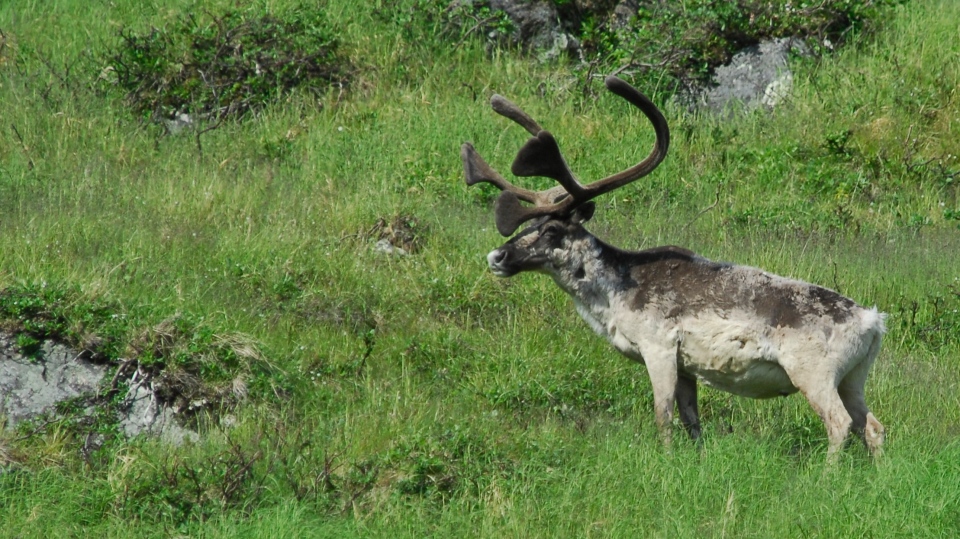
  • caribou A caribou grazes on Baffin Island in a 2008 file photo. THE CANADIAN PRESS/AP-Kike Calvo via AP Images

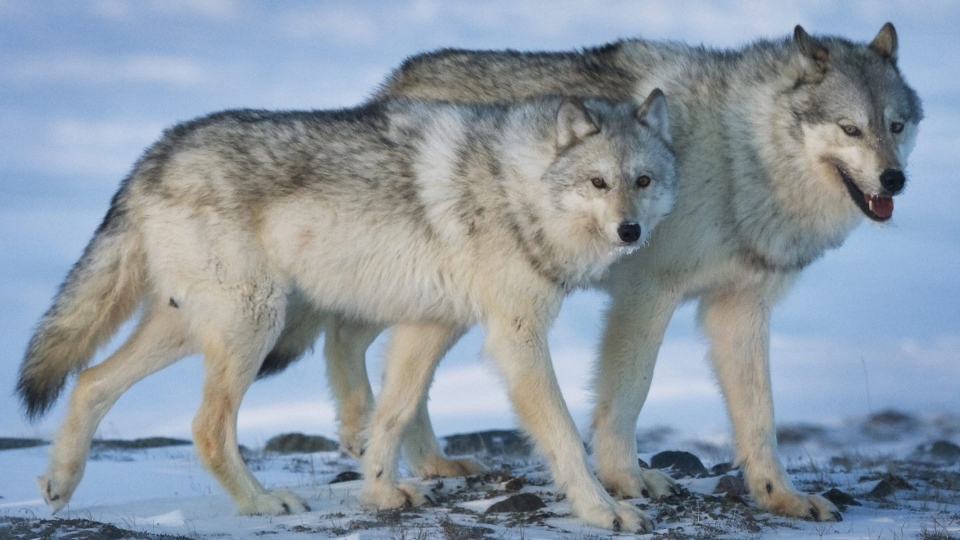
  • WolvesA female wolf, left, and male wolf roam the tundra near The Meadowbank Gold Mine located in the Nunavut Territory of Canada on Wednesday, March 25, 2009. THE CANADIAN PRESS/Nathan Denette

  • caribou A caribou grazes on Baffin Island in a 2008 file photo. THE CANADIAN PRESS/AP-Kike Calvo via AP Images

  • WolvesA female wolf, left, and male wolf roam the tundra near The Meadowbank Gold Mine located in the Nunavut Territory of Canada on Wednesday, March 25, 2009. THE CANADIAN PRESS/Nathan Denette

MONTREAL – A Quebec government plan to kill wolves that get too close to an endangered woodland caribou herd is raising concern among environmentalists, who accuse the government of sidestepping the true problem of habitat loss.

The plan by the Department of Forest, Wildlife and Parks involves placing tracking collars on both the caribou and members of local wolf packs to monitor distances between them.

If a wolf were to threaten the herd, trained shooters in helicopters could be sent in to kill the wolf in a “targeted intervention,” according to Francis Forcier, who is the general manager for strategic mandates at the department.

Forcier said the measures could be necessary in order to reverse the decline of the Charlevoix herd north of Quebec City, whoe numbers have fallen to an estimated 31 animals from 59 two years ago. He stressed that the plan remains hypothetical and is intended as a stopgap while the province addresses the greater problem of habitat restoration.

“What we’ve started to do, given this drastic fall of nearly 50 per cent in two years, is to look at measures that are stronger but temporary, because the principal element we have to do is restore the habitat,” he said in a phone interview.

Forcier said no wolves have yet been shot, and they will be left alone as long as they don’t threaten the herd. Overall, he believes no more than a dozen wolves will need to be killed.

The plan has drawn criticism from both environmentalists and members of the public. A petition denouncing the plan to shoot the wolves currently had amassed more than 9,000 signatures by Wednesday.

Rachel Plotkin, a caribou expert who works with the David Suzuki Foundation, says predator control is a popular management practice employed by provinces “that don’t have the political will to do the habitat restoration and protection that is needed to recover caribou populations.”

She said that while wolves are indeed killing caribou, that’s because of human activity that has destroyed the old-growth forests that protect them.

“Predator control is just a band-aid measure that further degrades ecosystems,” she said. “Predators and their prey have co-evolved for thousands of years, and they’re not the reason the caribou is declining.”

Plotkin notes that the federal government’s caribou management plan found that caribou herds need a minimum of 65 per cent of their range left undisturbed if they’re to have any reasonable chance of survival. The Charlevoix herd’s habitat has only 20 per cent.

Both environmentalists and the government agree that habitat preservation is crucial to the survival of the caribou, which are especially sensitive to human interference and depend on thick, old-growth forests to shield them from predators and provide the lichen they eat.

Those same old-growth forests are prized by the forestry industry, and Forcier acknowledged that finding a balance between economic growth and conservation is a challenge. But he said the government is limiting development on important lands and will take even stronger action in a caribou restoration plan to be unveiled in 2022.

Henri Jacob, the head of environmental advocacy group Action Boreale, feels the provincial government’s actions show it has no intention of helping caribou. He points out that the promised action plan will only be implemented at the end of the current government’s mandate.

“In other words, for their whole mandate they’ll do nothing to protect the caribou,” he said.

He also criticized the province’s decision, announced this week, to remove protection for some 460 square kilometres of woods in the Saguenay-Lac-St-Jean region, which had been previously designated protected caribou habitat.

Forcier said the decision was made mostly because no caribou had been seen in the area in several years, but Jacob doesn’t buy that. He says that it’s normal for caribou to leave an area for a few years after grazing there, to allow the lichen and moss to grow back.

Jacob is also critical of the government’s plan to kill wolves, noting they can actually help keep herds healthier by eliminating sicker, weaker animals.

He said that while predator management can sometimes be part of a temporary preservation strategy, it serves no purpose if it is not paired with serious effort to preserve habitat.

“When you want to make a cake, if you only put in flour, you won’t have a cake,” he said.

This report by The Canadian Press was first published Dec 11, 2019

People are reporting sightings of the Tasmanian tiger, thought to be extinct

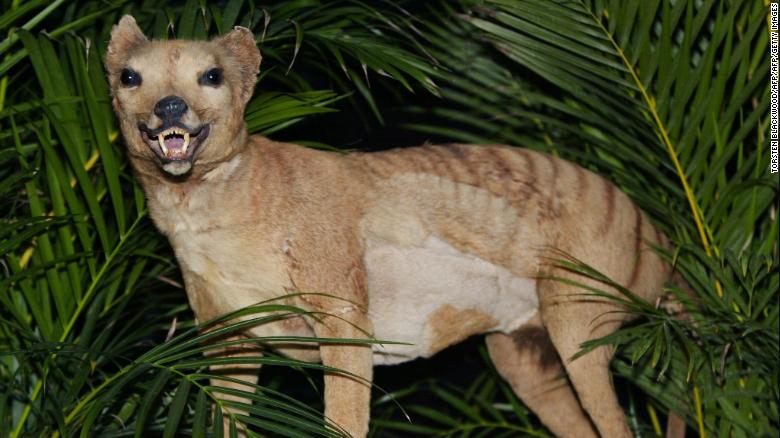
A Tasmanian tiger, which was declared extinct in 1936, displayed at the Australian Museum in 2002.

(CNN)The Tasmanian tiger, a large striped carnivore, is believed to have gone extinct over 80 years ago — but newly released Australian government documents show sightings have been reported as recently as two months ago.

Tasmania’s Department of Primary Industries, Parks, Water and Environment (DPIPWE) recently released a document detailing eight reported sightings of the Tasmanian tiger, or thylacine, in the last three years.
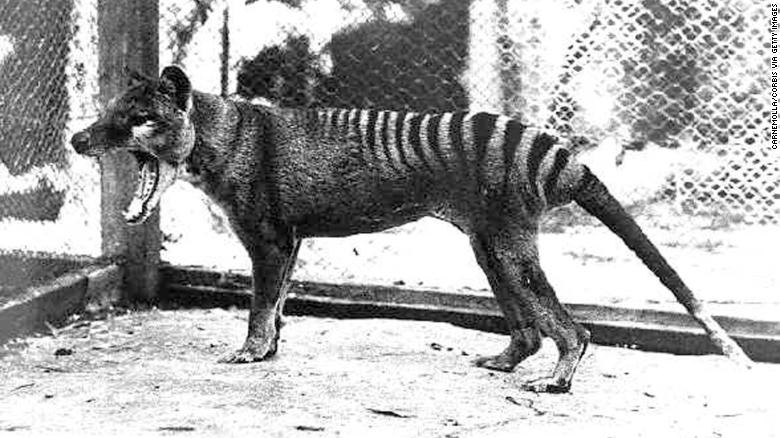
The thylacine, a marsupial that looked like a cross between a wolf, a fox, and a large cat, is believed to have gone extinct after the last known live animal died in captivity in 1936. It had yellowish brown fur, with powerful jaws and a pouch for its young, according to the Australian Museum.
While stories abound that some continue to live in the remote wilds of Tasmania, an island state off Australia’s south coast, there has been no hard evidence to support this — only claims of sightings, like the ones newly released.
One report last February said that two people, visiting Tasmania from Australia, were driving when an animal with a stiff tail and striped back walked onto the road.
The animal “turned and looked at the vehicle a couple of times” and “was in clear view for 12-15 seconds,” the report read. Both people in the car “are 100% certain that the animal they saw was a thylacine.”
Another report filed the same month described a striped “cat-like creature” moving through the mist in the distance.
“I am accustomed to coming across most animals working on rural farms … and I have never come across an animal anything close to what I saw in Tasmania that day,” the report read.
In 2017, another driver reported seeing a possible thylacine near the Deep Gully Forest Reserve in northwestern Tasmania. He didn’t see stripes, but he was about 150 meters (492 foot) away — likely too far to have seen that level of detail. He “seemed certain that if it was a cat it was a bloody big one,” the report said.
Most recently in July, a man in southern Tasmania, near the state capital of Hobart, reported seeing a footprint that seemed to match that of the Tasmanian tiger.
These reports reflect just how large the thylacine still looms in the collective imagination. Native to Tasmania and the Australian mainland, it was the only member of the Thylacinidae family to survive into modern times, according to the Australian Museum.

This thylacine was the last of its kind to be captured and died in Hobart Zoo on September 7th, 1936.

European colonists killed thousands of thylacines for attacking sheep.
Today, the thylacine still remains a major component of Tasmanian culture. It maintains almost Loch Ness Monster status, with regular claims of unsubstantiated sightings. In 2002, scientists at the Australian Museum even replicated thylacine DNA, opening the door to potentially bringing back the species with cloning technology.

Return of the wolves: How deer escape tactics help save their lives

February 27, 2019, University of Washington
Return of the wolves: How deer escape tactics help save their lives
Two white-tailed deer seen in 2015 on a wildlife camera in eastern Washington state. Credit: University of Washington

https://phys.org/news/2019-02-wolves-deer-tactics.html

As gray wolves continue to make a strong comeback in Washington state, their presence can’t help but impact other animals—particularly the ones these large carnivores target as prey.

White-tailed  and mule deer, two  common in Washington, are among ‘ favorite catch. Wolves will chase deer great distances—sometimes upwards of 6 miles (10 kilometers)—in search of a satisfying meal. How these two deer species respond to the threat of being pursued by wolves in the early years of this predator’s return could shed light on changes to their behavior and numbers.

To help answer this question, researchers from the University of Washington and other institutions monitored the behavior and activity of wolves and deer in Washington for three years. They found that mule deer exposed to wolves, in particular, are changing their behavior to spend more time away from roads, at  and in rockier landscapes.

“In any particular ecosystem, if you have a predator returning, prey are unlikely to all respond similarly,” said senior author Aaron Wirsing, an associate professor in the UW School of Environmental and Forest Sciences. “We show that wolves don’t have a uniform effect on different deer species.”

Their results were published Dec. 11 in the journal Oecologia.

Return of the wolves: How deer escape tactics help save their lives
An adult gray wolf is caught on a wildlife camera in eastern Washington in 2015. Credit: University of Washington

Wolves were completely wiped out from Washington early last century, but began returning to the state from Idaho, Montana and Canada about a decade ago. The latest estimates now show about 200 wolves in packs across eastern Washington.

Both white-tailed and mule deer are important food for . While they might look similar to an untrained eye, white-tailed deer and mule deer are very different animals: Mule deer are bigger, with large, dark ears and a black-tipped tail. White-tailed deer are smaller animals, boasting an unmistakably  with a white underside that stands straight up when alarmed.

Aside from their physical characteristics, the two species differ in how they escape from predators. When chased, mule deer “stot,” a quick bound with all four legs touching the ground at the same time. This bounding gait helps them negotiate all types of terrain and can give them an agility advantage over predators in rocky, uneven areas where it might be hard to run.

By contrast, white-tailed deer sprint away from predators and rely on spotting them early enough to try to outrun them.

Keeping these known escape tactics in mind, the research team focused on the “flight behavior” of deer living in areas where wolves have returned and in areas without wolves. The researchers chose four distinct study areas, all near the small town of Republic, Washington. All four areas are home to both species of deer, but only two were occupied by known wolf packs at the time of the investigation.

Return of the wolves: How deer escape tactics help save their lives
A pair of wolves run across the landscape in eastern Washington in 2016. Credit: University of Washington

In partnership with the Colville Tribes and the U.S. Forest Service, researchers set up wildlife cameras, captured and put collars on wolves and deer, and monitored the data from all of the collars over three years, from 2013 to 2016. This endeavor involved complex coordination and a dedicated team of UW students who were always ready to respond should an animal enter one of the traps.

“That part of eastern Washington is really special,” said lead author Justin Dellinger, who completed the work as a UW doctoral student and now works at the California Department of Fish and Wildlife. “There is huge diversity of large mammals, including all of the native prey populations like big horn sheep, moose and deer. And now we’re starting to see a full complement of native predators, like wolves, here as well.”

Overall, the researchers found that mule deer in gray wolf areas changed their behavior to avoid wolves altogether—mainly by moving to higher, steeper elevations, away from roads and toward brushy, rocky terrain. Alternately, white-tailed deer that favor sprinting and early detection as ways to escape from predators were more likely to stick to their normal behavior in wolf areas, sprinting across open, gently rolling terrain with good visibility—including along roads.

“Mule deer faced with the threat of wolves are really changing their home ranges, on a large scale,” Wirsing said. “They appear to have shifted kilometers away from where they had been prior to the return of wolves, generally going up higher where the terrain is less smooth and where wolves are less likely to hunt successfully.”

These larger shifts among mule deer could affect hunting opportunities. Indeed, some hunters in eastern Washington have already reported seeing mule deer higher on ridges where they are less accessible than in past years, Wirsing said. Hunting for white-tailed deer likely won’t change to the same degree with the presence of wolves, the results suggest.

Long term, changes among  in wolf areas could affect other parts of the ecosystem, and perhaps reduce the number of deer-vehicle collisions. These possible impacts are tantalizing fodder for future studies, Wirsing added.

 Explore further: White-tailed deer shape acoustic properties of their forest habitat

Indiscriminate Traps Harm Endangered Mexican Wolves

on February 15, 2019 – 9:47am

WEG News:

SANTA FE — As a bill to ban recreational and commercial trapping works its way through the New Mexico legislature, indiscriminate trapping is proving an enormous impediment for endangered Mexican gray wolves’ already uphill battle toward recovery.
The U.S. Fish & Wildlife Service reports that, since Nov. 2018, five lobos have fallen victim to traps in New Mexico. One of the wolves, female 1565 died in veterinary care. Another, male 1669 lost a leg. Male 1556 was treated and released but was later observed limping. Two other wolves were captured and released without injury.
New Mexico House Bill 366, called “Roxy’s Law” in honor of a dog who died in a trap on public lands in November, would prohibit traps across public lands in New Mexico with exemptions for human health and safety, ecosystem management, and New Mexico Department of Game and Fish depredation trapping. In an 8-4 vote the bill passed the House Energy, Environment, and Natural Resources Committee Saturday.
“Trapping take a tremendous toll on New Mexico—companion animals, native furbearers, and our most imperiled species pay the price for these indiscriminate killing devices,” said Chris Smith, southern Rockies wildlife advocate for WildEarth Guardians. “Public lands and our desert ecosystems cannot bear this burden any longer and it’s time for our elected officials to take action.”
“We are grateful for the state legislature’s thoughtful consideration of House Bill 366 to strike a better balance among diverse interests on New Mexico’s public lands—toward improved public safety, animal welfare, and ecosystem health—that would protect endangered species from dangerous, indiscriminate traps,” said Jessica Johnson, chief legislative officer for Animal Protection Voters.
“Trapping serves no viable wildlife management purpose and is ethically indefensible,” said Camilla Fox, executive director of Project Coyote. “Body-gripping traps, which are inherently indiscriminate, pose a danger not only to pets, but also to threatened and endangered species including Mexican wolves.”
“Banning leghold traps on public lands will save the lives of all types of animals, including endangered Mexican wolves,” said Michael Robinson, conservation advocate with the Center for Biological Diversity. “Traps are inhumane, sometimes fatal, and the smelly bait intended to attract coyotes is just as likely to draw curious wolves.”
“This is yet another chilling example of the grave threats lobos face, on top of an already dire genetic crisis,” said Kelly Nokes, shared Earth wildlife attorney at Western Environmental Law Center. “Mexican wolves are among our nation’s most critically imperiled species and they need proper protection if they are ever to recover as the law demands. Already threatened by an illegal management rule we’re challenging in court that banishes them from necessary habitat and caps their population at a number too low for recovery, lobos should not be further exposed to the lethal grip of indiscriminate traps strewn across New Mexico’s public lands –– the Mexican wolf population is simply too fragile as it is.”
The annual official count of wild Mexican wolves is ongoing currently. As of last February, there were 114 lobos in the wilds of New Mexico and Arizona. The past year has seen a large number of Mexican wolf mortalities. During the 2017-2018 trapping season, at least four lobos were caught in traps. Two subsequently died.
Domestic dogs are also caught in traps on public lands. Along with Roxy, Ranger died from trap wounds this year. Kekoa lost a leg to a trap in December.
BACKGROUND:
TRAPPING
Trapping on public lands is legal in New Mexico. No bag limits exist for furbearer species. The law does not require trap locations to be marked, signed, or for any warnings to be present. No gross receipts tax is levied on fur and pelts sold by trappers. No penalties exist for trappers who unintentionally trap non-target species including endangered species, protected species, domestic animals, pets, humans, or livestock.
No database or official record is kept by any public entity and no requirement exists that trappers report when they have captured a dog in their traps. The pattern these incidents follow are usually similar; dogs screaming and frantically biting at the person desperately trying to rescue them. Veterinary and even human medical treatment along with associated expenses can result, as can long-lasting psychological trauma. Neither New Mexico Game and Fish nor trappers are liable for the damages that are caused by traps.
The true toll that trapping takes on native wildlife is difficult to know. Reporting requirements exist for some species, but not for often-trapped so-called “unprotected furbearers” like coyotes and skunks. The accuracy of reporting is unverifiable, and numbers do not adequately articulate the suffering and carnage that traps wreak on bobcats, foxes, critically imperiled Mexican gray wolves, coyotes, and other animals.
The almost singular excuse for the above-mentioned incidents is that trapping is necessary to control carnivore populations, but scientific studies do not support this assertion. In fact, scientific studies show that trapping and lethally removing carnivore species, like coyotes, often exacerbate conflicts such as those with livestock (see Using Coyotes to Protect Livestock. Wait. What?, Randy Comeleo, Oregon Small Farm News, Vol. XIII No. 2, p. 2, (Spring 2018)).
The existence of trapping by a minuscule subset of the population using New Mexico’s public lands is in direct conflict with one of the state’s most valuable economic strengths: outdoor recreation. Highlighted by the recent New Mexico Outdoor Economics Conference in Las Cruces, the outdoor recreation economy in New Mexico is a current and future boon—diversifying and stabilizing the state’s economy while creating 99,000 direct jobs in the process. Outdoor recreation includes hiking, camping, wildlife viewing, photography, hunting, horseback riding, angling, trail running, and bicycling. This economy is not bolstered by piles of dead animals discarded by public roadways or by the thousands of wild animals taken from New Mexico’s diverse public landscapes for personal profit.
MEXICAN GRAY WOLVES
The lobo, or Mexican wolf, is the smallest, most genetically distinct, and one of the rarest subspecies of gray wolf. The species was listed under the Endangered Species Act in 1976, but recovery efforts have largely foundered because the Service has yet to implement scientifically recommended recovery actions.
Although lobos once widely roamed across the southwestern United States and Mexico, the Mexican wolf was purposefully eradicated from the U.S. on behalf of American livestock, hunting, and trapping interests. Recognizing the Mexican gray wolf’s extreme imperilment, the Service listed it on the federal endangered species list in 1976, but recovery efforts have largely foundered because the Service has yet to take the actions science shows is necessary to restore the species.
In 1998, after the few remaining wolves were put into captivity in an attempt to save the species, the Service released 11 Mexican wolves to a small area on the border of Arizona and New Mexico now known as the Blue Range Wolf Recovery Area. The program has limped along ever since, with illegal killings and sanctioned removals subverting recovery.
Mexican wolves are at tremendous risk due to their small population size, limited gene pool, threats from trapping, Wildlife Services’ activities, and illegal killings.

Jimmy Kimmel scoop: Donald Trump “hates baby bears”

Jimmy Kimmel scoop: Donald Trump “hates baby bears”

https://www.fastcompany.com/40577274/jimmy-kimmel-scoop-donald-trump-hates-baby-bears

While we know that Donald Trump hates sharks, at least according to Stormy Daniels. Turns out the president also hates baby bears, at least according to Jimmy Kimmel.

Kimmel’s realization came in the wake of news that the Interior Department is ending a ban on hunting hibernating bears and their cubs in their dens. The National Park Service, under Interior Secretary Ryan Zinke, apparently has a problem with some of the current protections for black bears, “including cubs and sows with cubs,” that prevent hunters from “harvest practices” that include using bait to lure bears out, using lights to find hibernating animals, and using dogs to kill bear cubs.

The National Park Service now wants to roll back those pesky rules that stop people from killing baby bears for fun, according to a proposal, which was published in the Federal Register on Tuesday. Under the proposed changes, hunters will now be able to hunt black bears with dogs, use motorboats to shoot swimming caribou, and kill wolves and pups in their dens. According to Kimmel, it’s all part of Trump’s plan to make America great again—and get rid of those evil baby bears.