Wolf-Murder by Numbers

Here are the totals of wolves murdered in the tri-state area, not including those who were victims of our taxpayer-funded assassins—the hit men from the federal “Wildlife Services” agency. (Note: all three of these states share a border with Yellowstone National Park)…

Latest Posted Idaho Wolf Hunt Kill total (current season): 169
Latest Posted Idaho Wolf Trapping Kill total (current season): 76
Final Posted Montana Wolf Hunt Kill Total (most recent season) 128
Final Posted Montana Wolf Trapping Kill total (most recent season): 97
Wyoming Wolf Kill Total (current season): 74 (Note: as of March 1st Wyoming’s season has been extended indefinitely)
Regional Total Reported Killed This Season: 544
Regional Total Reported Killed Since Delisting: 1,089

Meanwhile, a new National Park Service report for 2011 shows that the 3,394,326 visitors to Yellowstone spent $332,975,000 in communities surrounding the park. This spending supported 5,041 jobs in the local area.

(Michigan State University conducted this visitors’ spending analysis for the NPS. The report includes information for visitor spending at individual parks and by state. It can be downloaded at http://www.nature.nps.gov/socialscience/products.cfm#MGM click on Economic Benefits to Local Communities from National Park Visitation 2011.)

Needless to say, most people who visit national parks want to see the wildlife unmolested. They are not there to hunt; the money they spend reflects their strong interest in the quiet enjoyment of nature. Pro-hunting factions like to boast about the money their bloodsport brings to local communities. I don’t know if anyone has taken a survey on how much those kill-happy cowboys add to the communities around Yellowstone, but you can bet your boots it’s nowhere near $332,975,000.
One thing I know for sure is that the number of dollars spent by Yellowstone visitors is going to drop as the wildlife they went there to see continues to disappear.

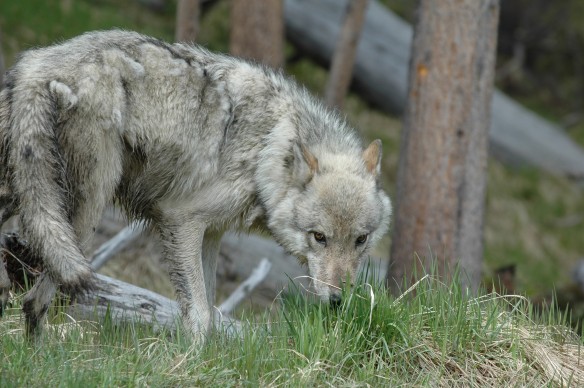
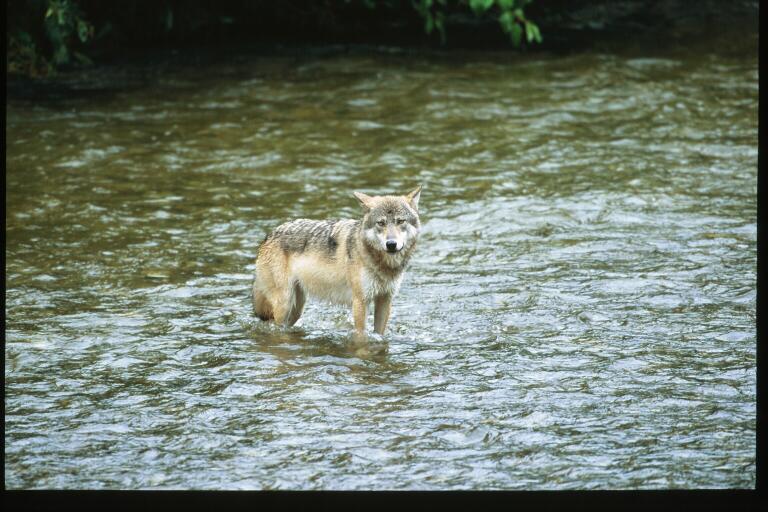
Yellowstone wolf photo ©Jim Robertson. All Rights Reserved

Yellowstone wolf photo ©Jim Robertson. All Rights Reserved

Wolves Are Getting it From the Left and the Right

Since 2011, when Congress stripped wolves of their Endangered Species status, an estimated 1,084 wolves have been killed in the Northern Rockies. Again, that’s ONE THOUSAND AND EIGHTY-FOUR living, breathing, social, intelligent wolves killed by scornful, fearful, vengeful and boastful humans, often in the most hideous ways imaginable.

Of course, that number might not seem so shocking if you consider that 5,450 wolves were killed in the Montana Territory in 1884, after a bounty on wolves was first instated there. Clearly, there were a lot more wolves in the country then as compared to now, but that didn’t stop the Obama Administration from declaring the species “recovered” in 2011 and handing them over to eagerly awaiting hostile, hateful anti-wolf states to “manage” as they see fit.

Now, under a plan supported by the federal government, the state of Wyoming is opening even more wolf habitat to unlimited killing. As of today, March 1st, until at least October, wolves can be slain there at will. How many will survive such an onslaught is anyone’s guess, but I can guarantee the number of “recovered” Wyoming wolves will be in the dozens or very low hundreds, not the thousands.

Doubtless, a few will survive…for a while. The famed “Custer wolf” eluded hunters and trappers for over ten years and over 2600 square miles along the Wyoming-South Dakota border, even though he had a $500.00 bounty on his head. The crafty fugitive was aided in out-witting the best hunters in the country by a pair of coyotes who flanked him on both sides, serving as sentinels. Finally a government hunter was assigned to track down the Custer wolf. He first shot the two coyotes, and six months later, in October 1920, he caught up with and killed the wolf, making him one of the last of his kind to live and die in the region for nearly a century.

Anyone (well, anyone with a conscience) should be ashamed to read about the gruesome war on wolves carried out in this country during the 1800s which resulted in the extinction of the species over most of the Lower 48. Common “extermination” practices used by “wolfers” included killing pups in their dens.

But where is the national outrage today as hunters and trappers in bloody red states like Wyoming, Idaho and Montana wipe out entire packs, including fathers, mothers and their pups?  Wyoming’s expanded wolf-killing season is all the more tragic given that spring is the time of year that wolves are denning.

From the group, Defenders of Wildlife: “This expanded hunt puts the most vulnerable population of wolves – pups and pregnant or nursing mothers – in greater danger of being shot on sight. This kill-at-will approach is exactly the kind of flawed policy we knew would happen if wolves prematurely lost their Endangered Species Act protection – this is why Defenders is suing the U.S. Department of Interior to restore Endangered Species Act (ESA) protection for wolves in Wyoming.”

It’s not like the administration didn’t know what might happen when the fate of the wolves was turned over to states with extreme anti-wolf plans already in place. In just two years over 1,000 wolves have been ruthlessly murdered by hunters and trappers eager to relive the gory glory days of the 1800s.

Obviously some people have a different reaction when they read their history books than those of us with a conscience.

Text and Wildlife Photography ©Jim Robertson, 2013. All Rights Reserved

Text and Wildlife Photography ©Jim Robertson, 2013. All Rights Reserved

More on Snaring–Eagles killed in Snare in Montana

Research eagle killed in Mont.

by Mike Koshmrl, Jackson Hole News and Guide

Date: February 1, 2013

A Jackson Hole biologist’s research took a hit this past week, when one of six golden eagles he tracks became tangled in a Montana snare and died. The adult female, GPS-tracked by Craighead Beringia South, was one of three Montana eagles recently caught in snares, said Becky Kean, director of the Montana Raptor Conservation Center. Two of the three, including Beringia South’s research subject, nicknamed “Elaine,” were killed. Beringia South, based in Kelly, had been following Elaine’s migrations with a GPS backpack since 2010, said biologist Bryan Bedrosian. The study, which tracked six goldens, was conducted in tandem with the Raptor View Research Center, out of Missoula, Mont. “It’s just unfortunate to lose a study bird that we’ve been tracking so long,” Bedrosian said. “There are a lot of longer-term questions she would have helped answer.” It’s unlikely that Elaine would have been caught in a snare, Bedrosian said, unless it was set over an animal carcass or some type of meat. That is illegal in Montana. “No trap or snare may be set within 30 feet of an exposed carcass or bait which is visible from above,” the state’s furbearer regulations read. Snares and foothold traps are used to catch a wide array of mammals, but birds of prey, pets and other animals can be caught by accident. Beringia South’s study was set up to help biologists better understand golden eagle migration corridors. Between 1991 and 2010, an Audubon Society research project found that the migratory golden eagle population de-clined by 40 to 50 percent. Reasons for the decline, Bedrosian said, include collisions with wind turbines and electrical lines, incidental trapping, energy development and overall habitat loss. “There’s a whole host of reasons, but I wouldn’t say there’s one smoking gun,” he said. The Teton Raptor Center has tried to rehabilitate just one raptor injured in a snare in recent years, said Meghan Warren, the center’s program associate. The raptor center’s snared bird, also a golden eagle, became entangled near Pinedale about a year ago. He died a week later after developing a fungal infection of the lungs. “It’s such a tragedy,” Warren said of the Beringia South golden eagle. “It’s terrible that another animal had to suffer, and it was obviously not the intended animal for trapping.” Kean, from the Montana Raptor Conservation Center, said the recent rash of snared eagles was very out of the ordinary. “It was kind of overwhelming — we had three in two days,” she said. “These are the first [birds] I’ve seen killed in snare traps and I’ve been here full-time for 6 years.” About three raptors a year are brought to the Montana rehabilitation center as a result of more common leghold traps, Kean said. The one snared golden that did survive underwent successful surgery Wed-nesday, Kean said. “She’s in the other room here eating right now,” she said over the phone from Montana. “She’s doing pretty good so far, but it’s just the start of the healing process,” Kean added.

Starting to Look Like Speciescide

It’s been another bad week for wolves in the Rocky Mountain States…

MFWP reports: On January 25th the Montana State wildlife officials canceled the Jan. 29 conference call to reconsider a recent court-challenged decision to close the wolf hunting and trapping seasons in two areas north of Yellowstone National Park. The areas were closed by the Montana Fish, Wildlife & Parks Commission on Dec. 10, in response to concern about the harvest of wolves with collars that supply scientific information to YNP researchers. The seasons, however, were reopened by the district court in Livingston in response to a lawsuit brought by several sporting groups and a state representative from Park County.

FWP officials said today that the best course of action is to fully follow the judge’s Jan. 18 order that prohibits FWP from enforcing the wolf hunting and trapping closure.


“The judge clearly stated that FWP would have to return to the court to apply for an order to dissolve the injunction and have proof that requisite public notice was given. We have simply run out of time,” said Ron Aasheim, FWP’s spokesman in Helena. Aasheim noted that wolf hunting and trapping season is set to end in 34 days, on Feb. 28, and that obtaining a hearing and court action prior to the end of the wolf hunting season would be unlikely.

Meanwhile, The Jackson Hole News and Guide ran an article stating:

Predator zone eliminates wolves

By Mike Koshmrl, Jackson Hole, Wyoming

Date: January 25, 2013

Wyoming officials wanted wolves removed from much of the state, and their hands-off management method has worked as designed.

Wolves can be killed in a “predator zone,” which covers 85 percent of the state, by almost any method, at any time, in any number and without a license. The anything-goes rules have had the desired effect: Wyoming Game and Fish Department harvest reports show that 31 of the canines have been killed in the predator zone since October. That’s more than the 20 to 30 animals department biologists estimated roamed the zone last year.

“It appears the predator zone is reducing wolf numbers there significantly,” said Mark Bruscino, Game and Fish’s large carnivore supervisor. “That’s what the management strategy was designed to do.”

Wyoming’s latest wolf management plan regulates wolf hunting in a trophy game area that encompasses about 15 percent of northwest Wyoming, including most of Jackson Hole. A portion of the trophy game area south of Highway 22 and Wilson is a flexible zone that rotates between being a free-fire zone and regulated hunting area.

Duane Smith, the wild species program director for the Biodiversity Conservation Alliance, said the state’s management plan outside the trophy hunt area is “essentially an eradication program.”

“If you cut off the ability of a species to disperse, you essentially fence them in,” Smith said.

The alliance has filed one of three lawsuits against the U.S. Fish and Wildlife Service to try to re-establish protections for wolves in Wyoming.

But Bruscino defended the predator zone approach.

“Minnesota, Idaho and Montana also have incredibly liberal hunting provisions in some areas,” he said. “They aren’t that dissimilar from the predator area.”

And in Colorado, the group Wild Earth Guardians asks:

Sharpshooters, but not Wolves, in Rocky Mountain National Park?

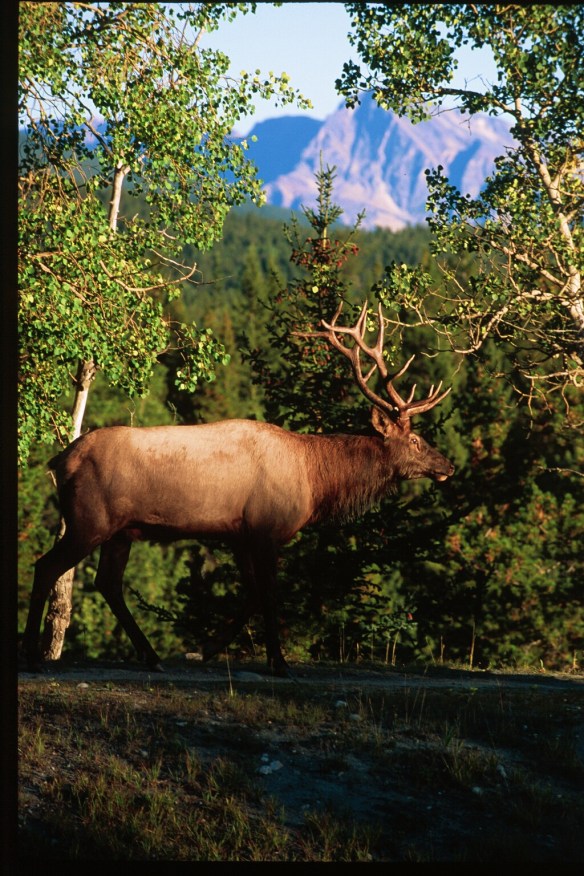
WildEarth Guardians was frustrated but not yet defeated in early January when, in a stunning blow, the 10th Circuit Court of Appeals ruled that it wasn’t feasible for Rocky Mountain National Park to consider a wild wolf restoration, in spite of the Park being overrun by elk. The court concluded that it made more sense for hunters rather than wolves to kill elk in a national park. We believe allowing hunting in a national park sets a dangerous policy precedent. More importantly, wolves would have done what hunters cannot: keep sedentary elk constantly on the move preventing overbrowsing and protecting fragile streamsides and aspen groves. Wolves easily detect and remove diseased and sick prey animals. Guardians is committed to having wolves roam free in Colorado.

Add it all up and it’s seriously starting to look like a policy of speciescide for wolves…

Wildlife Photography ©Jim Robertson, 2013. All Rights Reserved

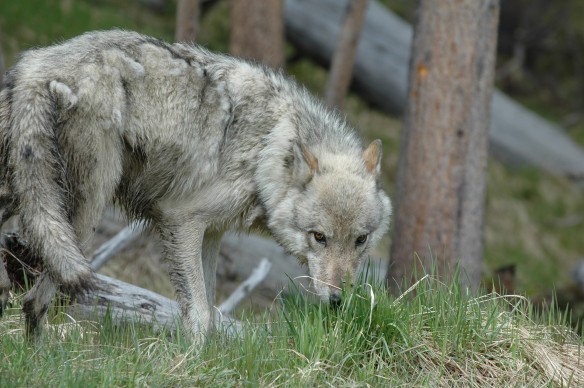
Wildlife Photography ©Jim Robertson, 2013. All Rights Reserved


Just Out for a Bit of Fun

“I think it’s cruel that they would take sport in stuff like that. Very cruel. It’s just sophomoric, juvenile.”

That quote could just as easily have been a humane person’s reaction to witnessing any legal goose, pheasant, elk or wolf hunt, but in this case it was in reference to a speeding driver running over 92 protected shorebirds on the Washington coast (on the same stretch of beach mentioned in this earlier post, Compassion for All, Not Just the Endangered).

Shorebirds, like the dunlins who were senselessly killed, huddle close together on the beaches this time of year, which makes the act of running over nearly eight dozen of them at one time no great challenge for anyone willing to stoop to such an act.

The driver was most likely just out for a bit of fun when they spotted the flock of migratory birds dead ahead. After plowing through the birds—who have an uncanny knack of flying off at the last minute to avoid any vehicle following the posted speed limit of 25mph, but who must not have been ready for someone going twice that speed—chances are the driver said to his passengers something like, “that was pretty neat.”

That same line was uttered by a Dubois taxidermist and outfitter, Joe Hargrave, who, on Oct. 5, just four days after their season opened, became one of Wyoming’s first hunters to legally kill a wolf since 1974.

“It was pretty neat to be able to hunt them because they’re a magnificent animal,” Hargrave said. “I like to see them in the wild just like elk, moose and everything else. It is nice to be able to have the opportunity to hunt them.” (The U.S. Fish and Wildlife Service removed wolves from the endangered species list in Wyoming on Sept. 30, kicking off the first hunting season since wolves were placed on the list in 1974. Conservation groups have filed three lawsuits seeking to re-list the wolves; they are expected to be decided sometime in 2013.)

People for the Ethical Treatment of Animals and the Wildlife Rehab Center of North Coast are offering a reward for information leading to the arrest of the person responsible for the illegal killing of the protected shorebirds. Meanwhile, thousands of unprotected migratory geese, deer, elk, cougars, coyotes and wolves are shot each year by people with the same motive as those thrill seeking, sophomoric, sociopathic beach drivers—they’re just out for a bit of fun.

Text and Wildlife Photography© Jim Robertson

Text and Wildlife Photography© Jim Robertson

Wolf Hunters Are Guilty of Hate Crimes

It occurs to me that the killing of wolves by those who detest them qualifies as a hate crime. By definition, a hate crime is: a crime, usually violent, motivated by prejudice or intolerance toward a member of a social group.

Well, you don’t get a much more social group than a wolf pack—and you don’t find any greater prejudice or intolerance than among wolf-haters and hunters.

In an effort to defend his wolf hunting, wildlife snuff-filmmaker Randy Newberg presented the following shocking testimony to the court of public opinion (via NPR News), “Having these hunting seasons [on wolves] has provided a level of tolerance again.”

The U.S. Fish and Wildlife Service, Montana, Idaho and Wyoming state game departments and, most shocking of all, Yellowstone wolf biologists, are all going along with this line of thinking. But allowing wolf haters to have their fun by giving them a season on the object of their disdain is akin to letting the Clan get away with murder once in a while, believing it will “provide a level of tolerance again.”

Text and Wildlife Photography ©Jim Robertson, 2012. All Rights Reserved

Text and Wildlife Photography ©Jim Robertson, 2012. All Rights Reserved

Killing Wolves Provides “a Level of Tolerance”?

Yep, you read it right, according to Randy Newberg, who hunts wolves and makes hunting television programs, many people who live in Wyoming, Montana and Idaho don’t like wolves and hate that the federal government forced their recovery on them, “Having these hunting seasons has provided a level of tolerance again.” Newberg told NPR News that wolf hunts are easing the animosity many local people feel toward the predator. And Yellowstone biologist, Doug Smith, adds, “To get support for wolves, you can’t have people angry about them all the time, and so hunting is going to be part of the future of wolves in the West. We’ve got to have it if we’re going to have wolves.”

So, let me get this straight, in order to placate and appease good ol’ boys and get them to put up with the presence of one of North America’s most historically embattled endangered species, we have to let them kill some of them once in a while? Wolf hunting and trapping are just a salve—a bit of revenge-killing for them–why not let them have their fun? By this logic, they should also be entitled to shoot an Indian every so often (like their forefathers who tried to wipe them out), to help promote tolerance and cultural acceptance.

Excuse me, but why should we care what wolf hunters think they need to get them to go along with the program—those people are sick, end of story. Just look at their evil, gloating grins and smug, satanic smirks plastered on their faces whenever they pose with their “trophy” wolf carcasses. But don’t bother telling them that they’re vacuous, malicious little goblins, apparently they enjoy being hated by wolf-lovers—otherwise they wouldn’t pose for the camera and spread their gruesome images around the internet whenever they make a kill.

In the spirit of promoting tolerance, it only seems fair that wolf advocates be allowed a season on them in return for all the losses they’ve endured. I don’t know if it would really engender a feeling tolerance, but it can always be justified as a way of “managing” or “controlling” them, and thinning their numbers.

Text and Wildlife Photography ©Jim Robertson, 2012. All Rights Reserved

Text and Wildlife Photography ©Jim Robertson, 2012. All Rights Reserved

Bye Bye Biodiversity

I’ve said it before and I’ll probably say it again, you can’t really be a wolf advocate or an elk advocate, or any kind of advocate for the environment, and continue to eat beef. That message was driven home by a new Montana Fish, Wildlife and Parks Department elk “management” proposal which includes reducing the numbers of not only elk, but also of wolves (who, logically, could have done some of the “management” for them) near Yellowstone National Park, all in the name of safeguarding cattle from the negligible threat of brucellosis—a disease which, in the past hundred years, has come full circle from livestock to wildlife and now back to livestock.

So far, it’s been the bison migrating out of Yellowstone during hard winters who have suffered the brunt of the rancher’s brucellosis paranoia. “Solutions” have included “hazing” bison back into the park and creating holding areas outside the park to warehouse bison before shipping them off to slaughterhouses—those nightmarish death camps where so many of their forcibly domesticated bovine cousins meet their ends. (In a country where some 60 million bison once roamed free, 97 million beef cattle are sent to slaughter each year.) Still other Yellowstone bison are murdered during newly imposed state “hunting” seasons—right outside the park.

Speaking of hunting, it’s interesting (to put it nicely) that hunters in Montana and Wyoming have claimed that elk populations in those states have declined as a result of the wolf reintroduction programs, yet the latest report suggests that elk numbers and density are “too high” (at least for rancher’s sensitivities) in parts of Montana.

Typical of state “game” department bureaucrats and their ideas of a “solution” to any perceived wildlife/livestock “conflict,” their preferred proposal is to reduce the number of wild animals—in this case, both elk and wolves!

It’s the kind of mentality that’s destroying the planet’s biodiversity at every turn: mile after mile of monoculture cornfields in Iowa (grown primarily to fatten cattle crammed onto feedlots)—places where, a century ago, 300 species of plants, 60 mammals, 300 birds and hundreds of insects would have lived—are now devoid of all other life forms other than cornstalks and an occasional tiny ant or a mushroom the size of an apple seed; cows grazing on pastures in Pennsylvania and Louisiana are dying from toxic fracking wastes that have made their way to the surface and meanwhile, arctic ice is melting faster than previously predicted, disrupting ocean currents and weather patterns life on Earth has come to depend on.

Call it “growth” or “progress” or just “our way of life,” but this locomotive is speeding towards a brick wall—yet we keep shoveling fuel into it like there’s no tomorrow…


Not that Montana FWP are likely to listen to anyone except fellow hunters and/or their cattle baron buddies, but the public comment period is now open, so feel free to let them know what you think about their elk “management” proposal here: http://fwp.mt.gov/hunting/publicComments/2012elkMgmtGuidelinesBrucellosisWG.html

You can view the working group’s recommendations by clicking on the “Interested Persons Letter” link on this webpage. That site also includes the opportunity to submit online comments about the recommendations. Written comments can be mailed to “FWP – Wildlife Bureau, Attn: Public Comment, P. O. Box 200701, Helena, MT 59620-0701. All comments must be received by 5:00 p.m. Mountain Standard Time on December 20, 2012

Text and Wildlife Photography ©Jim Robertson

Text and Wildlife Photography ©Jim Robertson

Wolf Hunters Prefer an Imbalance of Nature

First, a reminder to hunters who might happen upon this blog: please don’t bother commenting in support of your sport. Pro-hunting comments don’t get posted here. There are plenty of other forums for that sort of thing. Though your arguments may be “heartfelt” and well thought out, all pro-kill comments end up in the round file. Readers here have heard you sportsmen’s rationalizations ad nauseum and instinctively know the truth about hunting. Anyone wanting to hear hunter rationalizations can visit any number of sites dedicated to the disemination of hunter propaganda–this is not one of them.

__________________________________

Now back to today’s sermon:

In a recent discussion on wildlife issues with some longtime friends, I felt a little out of place to learn they were all against the reintroduction of wolves to places like Idaho, Montana and Wyoming. No, they weren’t a group of hunters selfishly seeking authority over nonhuman life; these good folks were understandably upset because the wolves are being killed in horrible ways, ever since their removal from the federal endangered species list left them at the mercy of state game department policy makers. While I share their outrage and the urge to end the suffering of wolves, I have to argue that at least the ones “that got away” will go on to fill a gap in biodiversity.

The point of recovering endangered species should be to bring back and/or protect enough diversity to allow nature to function apart from human intervention. The presence of predators like wolves can help to restore a sense of natural order and nullify the claims by hunters that their sport is necessary to keep ungulate populations in check.

Wolves in Yellowstone have been keeping elk on the move enough to allow willows to thrive once again in places like the Lamar Valley. Newly emerging willow thickets in turn provide food and shelter for an array of species, from beavers to songbirds. The loss of each thread of biodiversity brings us one step closer to a mass extinction spasm that would wreak more destruction and animal suffering than the Earth has seen in some 50 million years.

Hunters want their cake and eat it too. Out of one side of their mouth they declare that there are too many elk and that they do the animals a favor by killing them to prevent overgrazing. Yet when wolves spread out and successfully reclaim some of their former territories, hunters resent the competition and call for every brutal tactic imaginable to drive wolves back into the shadows, thereby restoring the imbalance that hunters depend on to justify their exploits.

Now more than ever we need to counter the hunter agenda at every turn, for the sake of a functioning planet. It’s high time to put an end to the notion that wildlife are “property” of the states, to be “managed” as they see fit. The animals of the Earth are autonomous, each having a necessary role in nature. Only human arrogance would suppose it any other way.