Support H.R. 3513: Refuge from Cruel Trapping Act

Action Alert from All-Creatures.org

FROM

Born Free USA December 2013

ACTION

Tell your Congressional Representative to SUPPORT H.R. 3513 that would ban all body-gripping traps — such as snare, Conibear, and steel-jaw leghold — from being used or possessed on national wildlife refuges (NWRs). The brutality of these traps is shocking; they can crush limbs and organs, and animals often remain trapped for days, in massive pain, before dying.

Find and contact your U.S. Representative http://www.house.gov/

trap trapping wildlife refuge

INFORMATION / TALKING POINTS

Purpose: This bill would amend the National Wildlife Refuge System Administration Act of 1966 to prohibit the use or possession of body-gripping traps in the National Wildlife Refuge System.

Status: Referred to the House Committee on Natural Resources on 11/15/13.

Action: Please contact your U.S. Representative and urge him/her to support H.R. 3513. Tell your Representative that wild animals should not be exploited on the only lands in the United States set aside specifically for their protection. When the majority of the public visits refuges, they expect to be safe and to have the opportunity to view animals in abundance, without the fear of stepping into a body-gripping trap, or having to witness the pain and suffering of a trapped animal.

Talking Points for your letter:

  • Theodore Roosevelt established Pelican Island as the first refuge in 1903 as an “inviolate sanctuary” for the protection of the brown pelican. The original intent and purpose of subsequent refuges were clear: the protection of wildlife from exploitation and deliberate harm. Most Americans still view wildlife refuges as places where wild animals are protected from human interference. That is in fact the common definition of the word “refuge.”
  • A staggering 54% of the refuges within the National Wildlife Refuge System (NWRS) allow trapping on refuge grounds. These traps often do not kill the animal right away, which can remain in the trap for several days, either starving or slowly strangling to death.
  • Because traps do not discriminate, they jeopardize threatened and endangered species, such as the bald eagle, which are frequently caught in these traps.
  • The majority of people who visit refuges do so to observe wildlife and enjoy nature. Hikers, birdwatchers, campers, and photographers should not have to witness the maiming of the very wildlife they have come to see.
  • Trappers already have access to millions of acres of private and public lands outside the refuges for their activities.
  • The NWR system should be managed to carry out its stated mission — to protect wildlife and wildlife habitat and to offer people an opportunity to enjoy nature. Trapping should be disallowed on all refuges as the practice runs contrary to these goals.

Read the full text here.


Thank you for everything you do for animals!


Return to Action Alerts

Other information you may find useful for your activism

Find area codes Find zip codes

You Nauseate me Mr. Fudd

The following is a marriage between the Looney Tunes’ cartoon character who best depicts the average hunter and Dr. Seuss’ lyrics that so perfectly describe them.

Dedicated to Elmers and Elmerttas everywhere …

imagesD5ZT7PC1

You’re a mean one, Mr. Fudd.
You really are a heel,
You’re as cuddly as a cactus, you’re as charming as an eel, Mr. Fudd.
You’re a bad banana with a greasy black peel!

You’re a monster, Mr. Fudd.
Your heart’s an empty hole.
Your brain is full of spiders, you have garlic in your soul, Mr. Fudd.
I wouldn’t touch you with a thirty-nine-and-a-half foot pole!

You’re a vile one, Mr. Fudd.
You have termites in your smile.
You have all the tender sweetness of a seasick crocodile,
Mr. Fudd.
Given the choice between the two of you,
I’d take the seasick crocodile.

You’re a foul one, Mr. Fudd.
You’re a nasty wasty skunk.
Your heart is full of unwashed socks;
Your soul is full of gunk,
Mr. Fudd.

The three words that best describe you
Are as follows, and I quote:
Stink!
Stank!
Stunk!

You’re a rotter, Mr. Fudd.
You’re the king of sinful sots.
Your heart’s a dead tomato squashed with moldy purple spots,
Mr. Fudd.

Your soul is an appalling dump heap
Overflowing with the most disgraceful
Assortment of deplorable rubbish imaginable,
Mangled up in tangled up knots.

You nauseate me, Mr. Fudd,
With a noxious super naus.
You’re a crooked jerky jockey and
You drive a crooked horse,
Mr Fudd!

imagesQB1DEJITYou’re a three-decker sauerkraut
And toadstool sandwich,
With arsenic sauce!

Resurgence of hunting is “welcome, overdue”

[Some people actually agreed with the Time article, if you can believe that!]

http://democratherald.com/news/opinion/editorial/editorial-resurgence-of-hunting-is-welcome-overdue/article_f19d2988-642f-11e3-bcee-0019bb2963f4.html

A recent cover story in Time magazine made the case that hunting is on the verge of making a comeback.

If true, that would be welcome.

Interest in both hunting and fishing in the United States (and even in Oregon, despite the state’s rich outdoors tradition) has been declining for years.

Now, as the article in Time argued, we’re starting to see one of the results: Our forests and wildlands are packed with unsustainable numbers of wild animals — and the critters, starving for habitat, are starting to move in on more urban areas.

States and cities have adopted what appear to be extraordinary measures to deal with the overflow. Consider these examples cited by Time:

— The City Council in Durham, N.C., recently authorized bow hunting for deer inside the city limits to help deal with an outbreak of Lyme disease and an increase in the number of deer-vs.-vehicle collisions.

— Officials in San Jose, Calif. — yes, in the heart of Silicon Valley — now allow the hunting of wild pigs within the city.

— Rock Island, Ill. recently approved bow hunting in town, as long as it occurs on the city’s green spaces — golf courses, parks, cemeteries — or on public land.

The long-running shift in attitudes toward hunting (it dates, in some ways, to the release of the movie “Bambi“) has had exactly the result you would expect: The number of animals in our forests in some cases has reached historic highs. Consider, for example, white-tailed deer — in 1930, hunted nearly to the point of extinction. Today, estimates suggest, 32 million deer are in the United States — and a couple of million of them recently have been in your back yard, eating everything they can.

We have dramatically underestimated the important role hunters play in maintaining a balanced ecosystem. In retrospect, the results should have been obvious.

But the price we are paying for that failure, in some ways, isn’t as obvious: Damage from the nation’s 5.5 million feral pigs, for example, is estimated at $1.5 billion every year. The U.S. Department of Agriculture is considering a plan to encourage wild pig hunting.

It is true that the actions of some thoughtless vandals have hurt the image of hunting. Consider the incident last month in Oregon State University’s McDonald-Dunn Research Forest, in which poachers dumped a bull elk, wasting more than 250 pounds of meat. The elk’s antlers had been cut from its skull with a saw.

The people responsible for despicable actions like these are not hunters. They are criminals — but their actions tarnish the reputation of the sport, and likely have played some role in the decline of hunting.

Now, however, the table might be set for true hunters to reclaim their position as critical players in maintaining the balance that allows both animals and humans to thrive. (mm)

Mike McInally is the editor of the Democrat-Herald. He can be reached at 541-812-6097

1459861_559462450790007_563882710_n

Pennsilvania Considering a Bounty on Coyotes

[Talk about backsliding…]

Hunters could cash in on coyotes

By Brad Pedersen

Published: Saturday, Dec. 14, 2013, 1:01 a.m.

Pending legislation could make controlling the coyote population lucrative for hunters across Pennsylvania.

The State House approved a bill on Wednesday in a 111-78 vote, which would allow the Pennsylvania Game Commission to place a $25 bounty on coyotes. The bill proposes to use $700,000 for coyote control, meaning the state could pay bounties for up to 28,000 coyotes per year.

The bill needs to be approved by the State Senate before it becomes a law. The senate reconvenes on Jan. 7.

If it gets approval from the Senate, the Pennsylvania Game Commission plans to conduct a study on the state’s coyote population and complaints, to determine if a bounty is necessary, according to game commission press secretary Travis Lau.

“Right now, the Game Commission’s stance is we need to wait and see what happens in the Senate,” Lau said.

The game commission does not keep estimates on the coyote population in Pennsylvania, but loosely bases the number of animals on game surveys and harvest reports, Lau said.

According to a report from the Game Commission, the number of coyotes harvested across Pennsylvania quadrupled from 10,160 in 2000 to 40,109 in 2012.

Cliff Chestnut, a local hunter and hunter safety course instructor from North Buffalo, said although coyotes have taken residence in Armstrong County, the region is not overrun with them.

Although he has never gone hunting for coyotes specifically, Chestnut said he has encountered the animals in the wild.

“Most hunters, especially archers, see them out around October,” Chestnut said. “In certain areas, there are a lot of coyotes, but I don’t think Armstrong County has a problem with them.

“Even with a bounty, I don’t think you’ll ever eradicate the coyotes here. They have a foothold.”

The Game Commission’s last bounty program was in the 1950s, in an attempt to control the state’s red fox population, Lau said.

“Historically, bounties were used in Pennsylvania for wolves, cougars, the red fox and predators,” Lau said. “The bounties are meant to thin the population of predators, hunters blamed for killing too many game animals or that generated a safety concern or general fear for the public.”

Hunters can harvest coyotes all year, as long as they have a general hunting license, Lau said.

The Game Commission limits coyote hunting during the rifle deer hunting season, Lau said. Although it permits hunters to hunt coyote, they must also have a deer-hunting license, he said.

“We do it as a way to keep people from deer hunting without a license,” Lau said.

Today (Saturday) marks the final day of rifle deer hunting season, he added.

The Game Commission regulates coyote trapping by setting a statewide trapping season from Oct. 27 to Feb. 23, Lau said. Trappers using a cable restraint trap can begin coyote trapping on Dec. 26, he added.

“The harvest is high, so people are going out there to find and hunt coyotes,” Lau said. “Coyotes can be elusive and a true challenge to find and hunt because they do a lot of their moving at night, when they’re harder to see.”

Chestnut said a $700,000 per year allotment for coyote bounties may be too steep. Instead, he said the game commission could explore other ways to spend the money.

In addition, coyote pelts sell for $75 to $100 each, depending upon the fur market, which is more than the bounty program could offer, Chestnut said.

“Wherever you see deer populations, you’ll probably find coyotes,” Chestnut said. “It’s a beautiful animal, but I think around here, we have them under control, and they’re not a problem.”

Brad Pedersen is a staff writer for Trib Total Media. He can be reached at 724-543-1303 , ext. 1337.

Read more: http://triblive.com/news/armstrong/5250458-74/coyotes-coyote-game#ixzz2nZsvdA8i
Follow us: @triblive on Twitter | triblive on Facebook

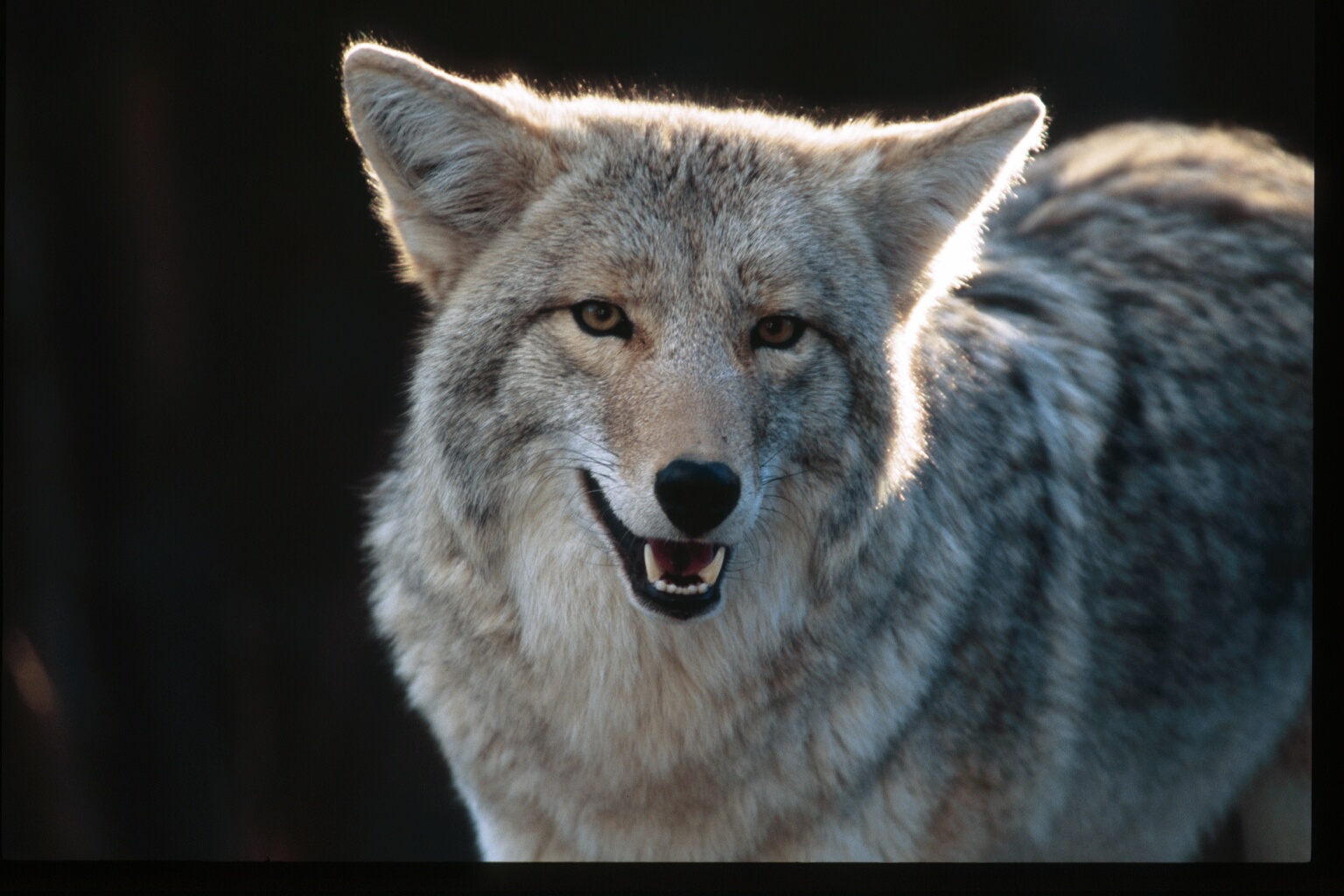
Coyote Photo Copyright Jim Robertson

Coyote Photo Copyright Jim Robertson

More Kids With Guns and Evil Intent…

At least 9 elk shot in 5 minutes near Sula; young hunters cited

SULA – In a five-minute span on the day before Thanksgiving, the French Basin near Sula sounded like a war zone.

Some elk had wandered out onto an open hillside and a group of young hunters opened fire.

“Nine elk that we could account for were shot in about five minutes,” said Montana Fish, Wildlife and Parks warden Lou Royce. “There were a few wounded ones that we never recovered.”

Royce wrote citations to the parents of the five young hunters who broke the law in one way or another.

“There was a lot of unethical behavior that happened that day,” he said.

People were shooting into herds of elk running across the hillside. Some were shooting right off the roadside. Others were shooting elk on private property without permission.

“We ended up finding a few dead elk that no one claimed,” Royce said. “A few of the wounded elk were killed in the next few days by other youth hunters.”

That episode and several others that occurred during the last week of hunting season in the Sula Basin has state officials, landowners and local sportsmen searching for ways to ensure that it doesn’t happen again.

Tony Jones of the Ravalli County Fish and Wildlife Association said the situation in the Sula Basin is unique in the Bitterroot Valley.

The open hillsides found there are used as winter range by elk that migrate annually out of the Big Hole Valley after the snow starts to pile up. Several landowners offer access through the block management program. And there are enough roads that allow people to drive fairly close to elk in the late part of the season.

For the most part, the only hunters allowed to shoot an antlerless elk in the area are youth between the ages of 12 and 15.

“Elk hunting has become more restrictive in the valley,” Jones aid. “Hunters figured out the most liberal part of the season, which turns out to be youth hunting.”

“It wasn’t necessarily youth doing bad things,” he said. “It was the adults with the youth who were putting the youth in bad situations.”

When situations like that occur, Jones said sportsmen worry that some landowners will close off access to their properties.

“With access getting tougher and tougher, we don’t want to lose prime acres of block management because of the actions of a few bad apples,” he said.

***

Last week, sportsmen and local landowners sat down with FWP officials to talk about what happened and to start talks on what should be done in the future.

“If done right, the youth hunting opportunities are a great thing,” Royce said. “Some of the things we were seeing were not good situations at all.”

For instance, Royce said he pulled up to one block management entry point and found a number of vehicles parked there and a large group of hunters milling about.

“There were fewer than 10 adults and somewhere around 30 to 40 kids standing there in the parking area,” he said.

It appeared that all of the 12- to 15-year-old hunters were armed.

“That’s not a good situation,” he said. “It’s a safety issue. It’s a resource issue. And it’s a legal issue, too. We don’t want to create a situation where people feel like it’s OK to break the law.”

Becky Doyle is a local landowner who is worried about the safety aspect. She said there are buildings in the Sula Basin that have bullet holes in them due to unsafe practices by hunters.

“What we saw happening up here this year isn’t what we teach kids in their hunter safety classes,” she said. “We see parents who race up a road in hopes of heading elk off and then getting out and having their kids shoot from the road. It’s unethical.”

“Unfortunately, this kind of stuff has been going on for years in the Sula Basin,” she said. “Now, instead of it being adults, it’s kids.”

Travis Goodsell of Conner spent most of the last week of the season in the area. He saw a good deal of illegal and unethical behavior as well.

At one point, he watched a father direct his son to shoot at some elk that were about 100 yards away from the edge of the road. He fired five times and didn’t hit anything.

Earlier, he saw a herd of elk that couldn’t get over a fence being pursued by about 10 people. One youngster was yelling as loud as he could in an attempt to spook them back to where a group of 16 or so young hunters were waiting.

“Half of them didn’t have parents with them,” Goodsell said. “I was up there four or five days and I probably saw 20 people leave with elk that were shot right off the road.”

***

Royce said that’s not the intention of the youth hunt.

“When a kid goes through hunter safety, they are taught the difference between what’s right and wrong,” he said. “They are supposed to have a good mentor with them as they learn how to hunt.”

When he was young, Royce said, he hunted with his father, uncle and grandfather.

“I didn’t get out of their sight until I was 16 or 17,” he said. “It was a controlled situation. My dad, uncle and grandpa were right there to make sure I did it right.”

The youth hunt is supposed to be just that.

“It can be a great thing if people do it right,” he said. “I don’t think anyone likes to see wounded or dead elk out there that no one gets to harvest. I hope we can come up with some changes that will at least cut down on some of the unethical things we saw this year.

“I think we can do better,” Royce said.

FWP regional wildlife manager Mike Thompson said it’s important that everyone realizes that same situation in the East Fork has repeated itself over the years.

Since the antlerless opportunities were now limited to youth, “we’ve kind of set them up to fail,” Thompson said. “People from all walks of life have fallen into that same trap when they see lots of elk on an open hillside.”

Thompson plans to broaden the conversation in the search of a solution.

“We want to look for a way that youth can learn in a more safe environment,” he said. “When I say safe, I mean not out on the highway shooting into a herd of elk, but instead, one on one with them in mountains, like it’s supposed to be.”

[Like it’s supposed to be? So by that logic, mass murder is bad, but serial killing is okay?]

Wildlife Photography ©Jim Robertson, 2013. All Rights Reserved

Wildlife Photography ©Jim Robertson, 2013. All Rights Reserved

MT Sentators Host “Sportsmen’s” Town Hall

Bitterroot Valley legislators to host sportsmen’s town hall on regulation changes

HAMILTON – Two Ravalli County state senators will host a sportsmen’s town hall meeting this week on proposed changes to hunting in the Bitterroot Valley.

The meeting will be held at the Bitterroot River Inn in Hamilton on Thursday, Dec. 19 at 6:30 p.m.

Sen. Fred Thomas, R-Stevensville, and Sen. Scott Boulanger, R-Darby, will host the event.

The purpose of the meeting is to allow sportsmen to offer ideas, comments and concerns about proposed changes to the local hunting regulations, including requiring all hunters to obtain an unlimited permit to hunt elk in three of the four districts in the valley.

Other topics will include the youth cow elk season, whitetail doe seasons, hunting district boundary changes, anti-trapping initiatives and wolves.

Guest speakers include Keith Kubista of the Montana Sportsmen for Fish and Wildlife, who will address the anti-trapping ballot initiative.

Safari Club Regional Representative Jon Wemple will talk about the loss of elk hunting opportunity under the

Photo Copyright Jim Robertson

Photo Copyright Jim Robertson

proposed valleywide permit system.

……Meanwhile in Oklahoma……

local OKC hunting news:

Oklahoma deer hunters have a final opportunity to take firearm into the woods
when the 10-day holiday antlerless gun season opens Saturday in most
of the state.
Deer taken during the antlerless season are not included in the hunter’s combined season limit.
Okla. state wildlife officials encourage a high doe harvest to reduce overpopulation and improve buck-doe ratio for a more healthy deer herd.

Archery deer season continues thru Jan. 15th statewide.

The Washita National Wildlife Refuge, which is located west of Butler, Okla., still has duck blinds available for three midweek hunts this season.
This refuge offers some of the best goose hunting in the state.
All the weekend dates have been filled. However, the midweek hunts are still available.

Images From the Blood Sport Capital of the United States

dvoight09's avatarWisconsin Wildlife Ethic-Vote Our Wildlife

Be proud Wisconsin. This is what is the result of legalized dog fighting/sadism in our woods. Of course the DNR claims that these wolves have “no injuries” from the dogs. You decide.

DNR large carnivore specialist Dave MacFarland says as far as he knows, hunters are following the law. “To our knowledge, there have not been injuries to the dogs or to the wolves from the dogs.”

MacFarland says the successful wolf hunters don’t have to register their kills with a warden until January 5. He says wardens could give hunters a ticket if dog bites or scratches help kill the wolf, but local law enforcement would take the lead if hunters let the dogs and wolves fight.

So hounders get a month to register their wolf kills? Strange. Why do deer hunters have to register right away? Hmmmm.

Images shown under the Fair Use Doctrine:

1467389_425590980902061_1780431499_n


Hounder slime


Welcome to…

View original post 18 more words

Just when we thought things could not get more despicable…

Defenders of Wildlife on wolf and coyote “derby” hunt:

We have just learned that a “hunters’ rights organization” has scheduled a wolf-killing competition for the week after Christmas. Prizes will be awarded for such hunting objectives as killing the largest wolf and the most female coyotes.

There’s even a “youth division” prize for children as young as 10 take part in the bloodshed.

Wolf slaughter is out of control. Already, 154 wolves have been killed in Idaho since hunting season began on August 30. This barbaric competitive slaughter promises to raise that number even higher.

Organizers of this so-called wolf derby admit that one purpose of the event is to show the world that no one can stop them from killing wolves – not you, not me, and especially not the federal government. It’s a horrific demonstration of what happens when wolves are prematurely stripped of Endangered Species Act protection.

And it’s a horrifying preview of more slaughters to come if the U.S. Fish and Wildlife Service (FWS) moves forward with theirRed Wolf proposal to delist nearly all gray wolves in the Lower 48.

Those Idaho hunters are outright wrong – America’s wolves belong to all of us. And to enlist children in the wholesale killing is beyond the pale.


Also, here’s a U-tube on the value of wolves: http://www.youtube.com/watch?v=uz6oXmIuHaw&feature=c4-overview&list=UUIEKCEI2lzLaWXSGKU_oobg+film