Wolves Getting Booted Back to the Brink

The comment period for the wolves ends on the 17th; Please feel free to use any of this in your statement as to why wolves should not be removed from the Endangered Species list. It would just open up full scale wolf killing in all states again.

Exposing the Big Game's avatarExposing the Big Game

When an activist friend asked me to write an overview of the wolf situation, my first thought was: “What a daunting and extremely depressing task that would be.” But having followed the wolves’ story since long before their reintroduction to Yellowstone and the Idaho wilderness, I suppose it’s only natural that I take this on. After all, I’ve covered the issue many times in articles, on my blog, and I devoted two chapters of my book, Exposing the Big Game: Living Targets of a Dying Sport, to the plight of wolves.

At the time I wrote the book’s chapter, “From the Brink of Oblivion and Back Again,” wolves were still federally protected and their removal from the Endangered Species List was just someone’s bad idea that had yet to see its dark day—I never quite realized just how apt that title would soon be. Until recently I remained hopeful that…

View original post 2,838 more words

Cancel the upcoming show “Amazing America with Sarah Palin”!

Cancel the upcoming show "Amazing America with Sarah Palin"

  • Petitioning Jeff Paro

This petition will be delivered to:

CEO, InterMedia Outdoors
Jeff Paro
President, InterMedia Outdoors
Willy Burkhardt


Regarding your upcoming show “Amazing America with Sarah Palin”—America has already been “amazed” by Sarah Palin and her lack of compassion, and her complete relish of the animals she kills with unabashed fevor!  

Palin has taken advantage of her half-governesship, by glamorizing the killing of iconic wolves from aircraft.  As half-governor she offed a bounty for every left, front wolf paw surrendered—the wolf is a necessary predator for a healthy ecosystem; she lobbied for years to get the endangered polar bear kicked off of the Endangered Species List — despite the impossible challenges facing the polar bear to even survive — loss of habitat, starvation, and drownings.  She failed at her attempts to doom the polar bear in the USA, so she continues to trophy hunt in Canada.  

Her last attempt at exploiting animals with a show on TLC, “Sarah Palin’s Alaska”, evoked criticism from many including distinquished writer Aaron Sorkin, who labeled her actions, “jaw-dropping mean”.   The show was not renewed after just one season — so why are you at InterMedia Outdoors, going to repeat history and subject the public to more of the offensive, cavalier disregard for animals and viewers, by allowing this callous woman air time?  

We the signed, will boycott all of the sponsors of “Amazing America with Sarah Palin”, and we will give them all written notification of our intent.

Please sign petition here: http://www.change.org/petitions/cancel-the-upcoming-show-amazing-america-with-sarah-palin?share_id=wQTGUAUBMD&utm_campaign=friend_inviter_chat&utm_medium=facebook&utm_source=share_petition&utm_term=permissions_dialog_false

Now The Weather Channel is Promoting Hunting!

When did the phrase “How’s the weather” become synonomous with “Have you killed anything today?” Ever since the Weather Channel got into the act of promoting hunting, along with Time Magazine, the History Channel, Discover, etc., etc. Where’s it all going to end?

When I lived beyond a snow covered road in the North Cascades, the U.S. Forest Service decided to put in a snowmobile snow park near my cabin. I objected, of course, and when a snowmobile enthusiast asked me why I told him because the area will soon become overwhelmed by snowmobiles. He said, “If it gets that busy with snowmobilers, I’ll sell quit sledding.”

That scenario parallels the ongoing promotion of hunting. How many hunters will become frustrated and disillusioned with hunting when it gets so popular no one can stand it anymore?

17 Animals You Didn’t Know People Could Hunt – weather.com

http://www.weather.com

Bored of hunting quail and deer? Try taking down an elephant or even a grizzly. Take a look at 25 exotic animals that can be hunted, at your own risk…
Time to Arm the Bears! http://www.armthebears.com/
Bear

A Blood Trail in the Snow

Walking the road along my property I discovered that my friend had been shot. Following the blood trail back to its origin, it was clear he was shot by my neighbor. The tracks and drops of blood—bright red against the stark white snow—led onto my land where at least he could die in peace.

I don’t usually say this about people, but I really loved this gentle soul; consequently, I hate whoever shot him.
I wish I could have warned him to always steer clear of that neighbor, whose thirst for blood is a well-known trademark among some of the other locals.

You’d think I would have called an ambulance for a wounded friend and a sheriff to put away the psychopathic neighbor. But medics and sheriff’s departments in this country don’t cotton to my friend’s kind.

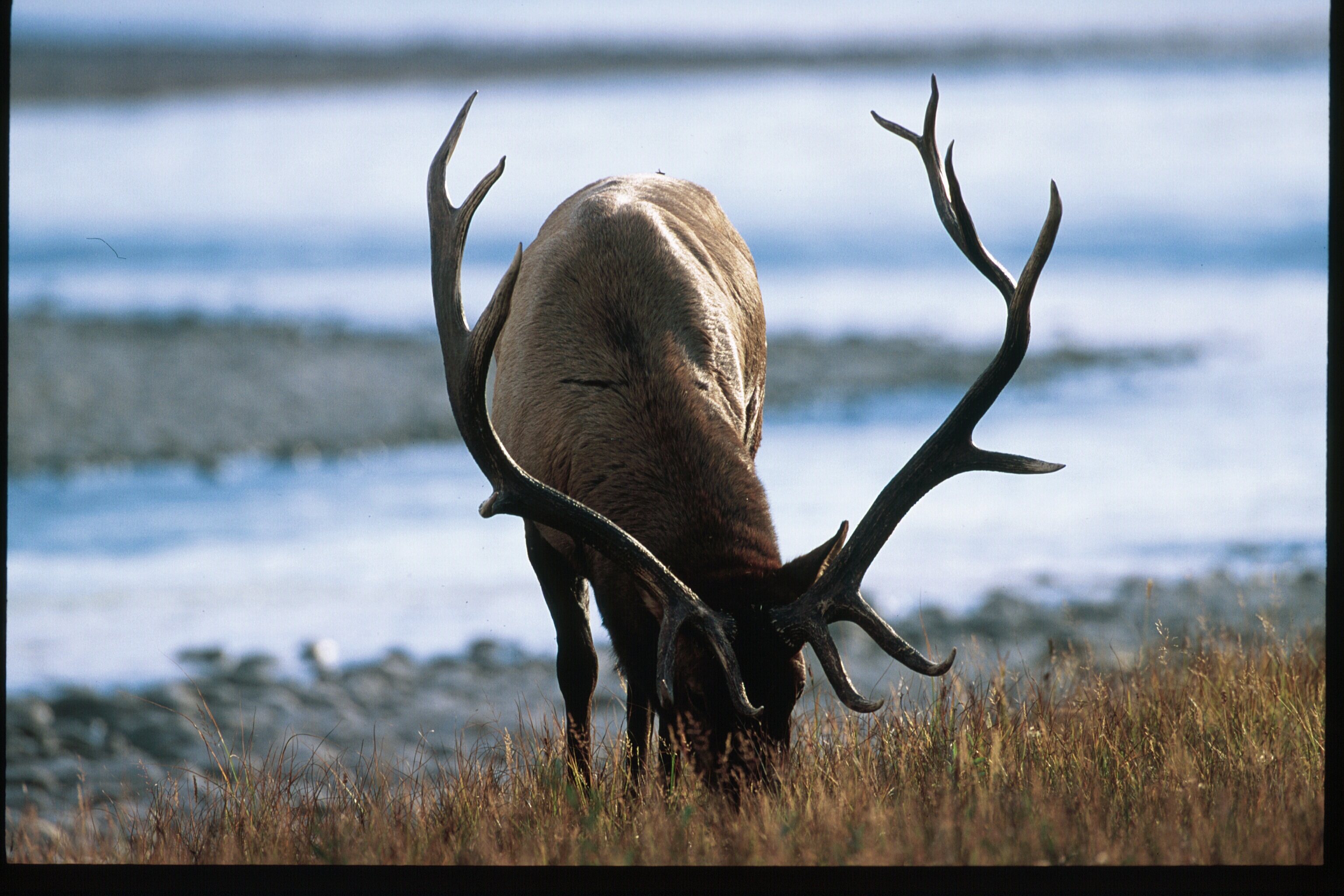
The thing is, he’s an elk; and according to the law (enacted by humans exclusively for humans), shooting a non-human—especially a “game” animal—is considered “harvesting” or “sport,” rather than what it undeniably is: murder.

Text and Wildlife Photography ©Jim Robertson, 2013. All Rights Reserved

Text and Wildlife Photography ©Jim Robertson, 2013. All Rights Reserved


Wolves of the Alexander Archipelago need protection

http://www.adn.com/2013/12/06/3216465/compass-wolves-of-the-alexander.html

Compass: Wolves of the Alexander Archipelago need protection

By REBECCA NOBLINDecember 6, 2013

For thousands of years the distinctive image of black wolves roaming the snow-covered islands of the Alexander Archipelago has been an iconic part of Southeast Alaska’s natural history.

But even in this remote stretch of more than 1,000 islands and glaciated peaks, the Alexander Archipelago wolf has been no match for industrial logging, road building and overharvest.

There are two well-understood reasons that Alexander Archipelago wolves cannot coexist indefinitely with clearcut logging:

• The wolf population is directly tied to the health of the black-tailed deer, which in turn is directly tied to the health of the old-growth forests that offer protection from deep snows and promote a variety of under-story plants.

• As road density increases, so do wolf kills, both legal and illegal. In the Tongass National Forest, logging roads provide access for wolf hunters and trappers. Road density on much of Prince of Wales Island is already beyond sustainable levels.

Yet, the U.S. Forest Service continues to plan big timber sales in key wolf habitats, including the Big Thorne timber sale. That decision, now under appeal, would allow the clear-cutting of more than 6,000 acres on Prince of Wales Island that would accelerate an already sharp decline of the wolf population there.

As we approach the 40th anniversary of the Endangered Species Act next month, the ongoing threat of logging and road-building to the ever-more fragile status of Alexander Archipelago wolves is a stark reminder of the irreplaceable role the Act has played in protecting our nation’s most imperiled plants and animals and the ecosystems we share with them.

The first page of the law leaves no doubt about why lawmakers felt it was necessary:

“The Congress finds and declares that … various species of fish, wildlife, and plants in the United States have been rendered extinct as a consequence of economic growth and development untempered by adequate concern and conservation.”

It’s clear the Archipelago Alexander wolf now needs the help only the Endangered Species Act can provide. That’s why the Center for Biological Diversity, where I work, joined with Greenpeace in filing a petition two years ago asking the Fish and Wildlife Service to award the Act’s protections to the wolf.

And it’s why earlier this month the two conservation groups reminded the agency that it is now a full two years late on initiating a status review of the wolf.

During those two years the health of the wolf population on Prince of Wales Island has dramatically worsened, mostly due to ongoing large-scale logging of old-growth trees in the Tongass National Forest that began six decades ago.

Earlier this year the Center, Greenpeace and three allied organizations asked the Forest Service to cancel the Big Thorne timber sale. The resulting decision to put the sale on hold came after preeminent Alexander Archipelago wolf biologist Dr. David Person concluded the Big Thorne timber sale would be the “final straw that will break the back of a sustainable wolf-deer predator-prey ecological community on Prince of Wales Island.”

By Person’s accounts, the estimated wolf population in the area of the Big Thorne sale declined by about 80 percent just last winter.

All the facts point to the same conclusion: to survive, Alexander Archipelago wolves need the protection of the Endangered Species Act, which has prevented the extinction of 99 percent of the plants and animals it protects.

And the unbridled destruction of that natural ecosystem from clear-cutting is clear evidence of why the Endangered Species Act is so important to making sure we get that balance right again once we’ve disrupted it.

Rebecca Noblin is an Anchorage-based staff attorney and Alaska Director for the Center for Biological Diversity, where her work focuses on protecting imperiled plants and animals.

Read more here: http://www.adn.com/2013/12/06/3216465/compass-wolves-of-the-alexander.html#storylink=cpy
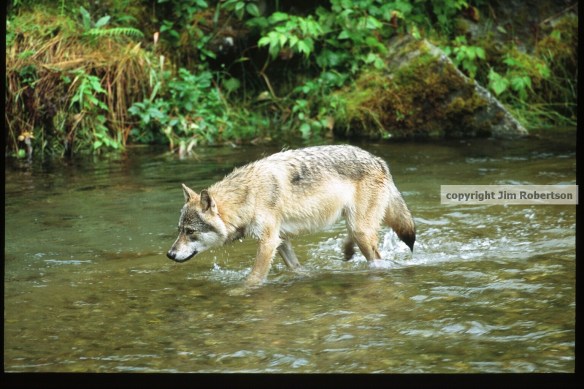
copyrighted wolf in water

Reward Offered For the Shooting of Oklahoma Deer Hunter

From the weekend OKC hunting news:

The Oklahoma Dept. of Wildlife Conservation is offering up to $500 for information in the shooting of a deer hunter in Cherokee County last weekend.

The agency is offering the reward thru its Operation Game Thief program and the Okla. Game Warden’s Association is also offering a $500 reward.

A Tulsa deer hunter was shot in the arm on Nov. 29th near Welling in Cherokee County. It was assumed by another deer hunter. The hunter was heading back to his truck after a day of deer hunting when he heard a shot. Before he could call to a shooter, a second shot hit him in his arm.
His father, who was hunting nearby, heard the shot and took his son to a hospital in Tahlequah, where he was airlifted to a Tulsa hospital. The injury will require six months of physical therapy to recover. The Cherokee County’s Sheriff’s Dept. said a red, four-door Dodge truck was seen in the area at the time of the shooting.

There have been at least two hunting-deaths this deer gun season from tree stand falls.
A deer hunter in Cherokee County died last weekend after falling from a tree stand and getting tangled in his harness.

Another hunter in Pottawatomie County died from a head injury after falling while installing a tree stand before deer gun season opened.                                                                                                                Over the last 20 years Okla, has averaged about two hunting-related fatalities each year a/w the Okla. Dept. of Wildlife.
The coordinator added “Some years we will have none. People are getting a lot better about not shooting each other, but tree stand injuries are increasing.”

[Those entering the woods during hunting season are advised to Watch for Falling Hunters!]

1460077_240252786133756_563284032_n

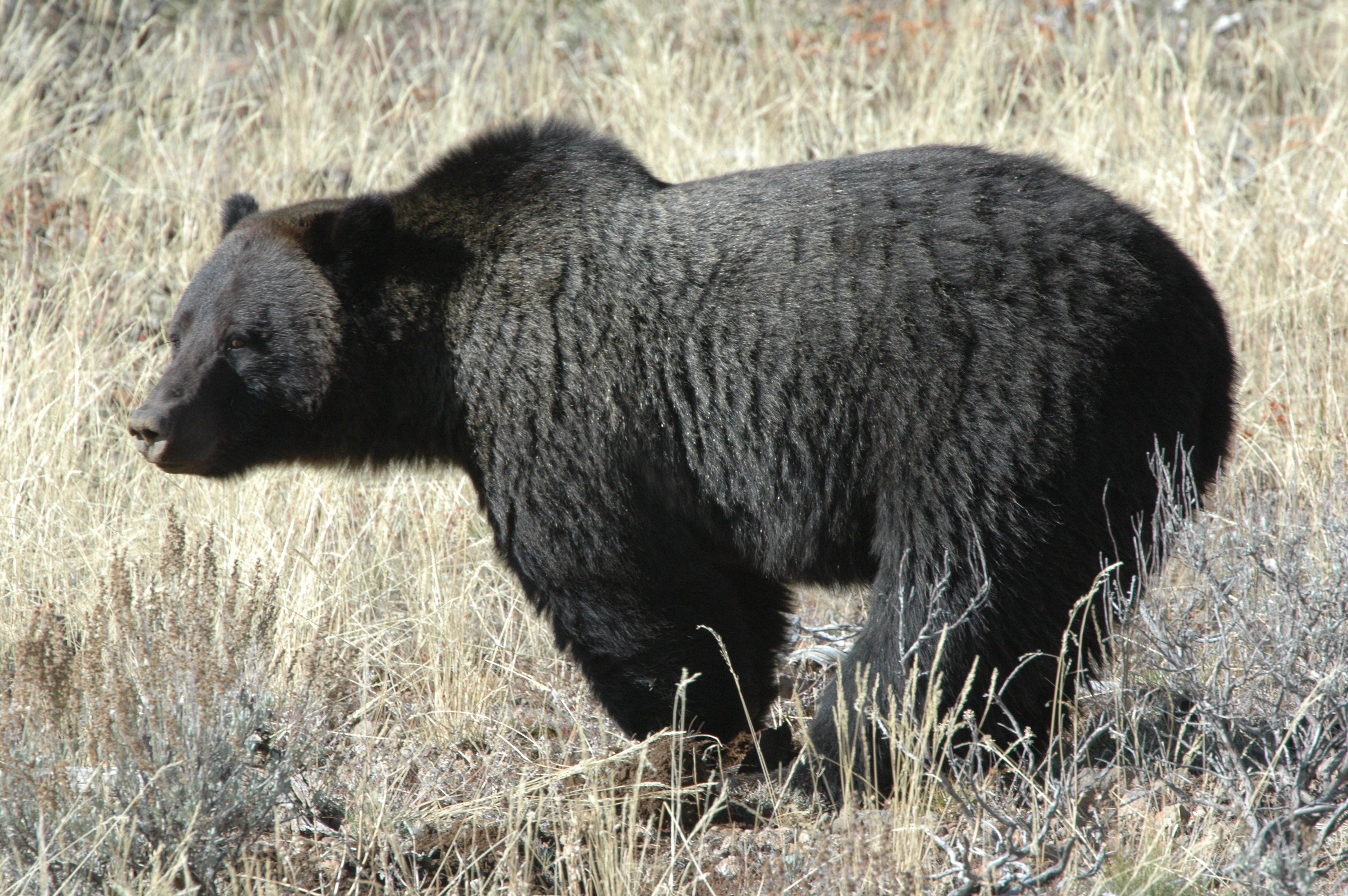
Biologists warn against proposal to expand grizzly bear hunt

by WENDY STUECK

VANCOUVER — The Globe and Mail

Published Friday, Dec. 06 2013

The B.C. government is proposing to open up grizzly hunting next season in two areas where it’s now banned, despite a recent study that concluded the government is underestimating the number of bears killed each year and recommended a more cautious approach.

Two proposals, posted on the Ministry of Forests website in November, suggest opening grizzly bear management units, or MUs, in the Kootenay and Cariboo regions for limited grizzly bear hunting next spring.

Read More: http://www.theglobeandmail.com/news/british-columbia/biologists-warn-against-proposal-to-expand-grizzly-hunt/article15798712/

Photo Copyright Jim Robertson

Photo Copyright Jim Robertson

Time to Reinvent the Species Again

by Jim Robertson

Love ‘em or hate ‘em, there’s one thing about Homo sapiens that can’t be denied: the species has come a long way from its primate origins—but that’s not necessarily a good thing. From a peaceful plant-eating past, hominids have clawed their way to the top of the food chain, and now the planet’s atmosphere, climate and web of life are all suffering for it.

We’ve evolved so far from the common ancestor we share with chimpanzees and gorillas, that now they’re just a curiosity—side show freaks—to be gawked at between bars or in tiny “habitats” at the neighborhood zoo.

They’re just animals, why should we respect them as our kin? Did they rise from their simple roots, eating from the bottom of the food chain, to become the most successful big-game hunter of all time? Do they carry out wars on a global scale that threaten the very existence of life on Earth? Have they changed the climate for the worse and caused the current extinction spasm? No, only humankind can claim all those achievements.

HumanWeapons_170And we owe it all to eating meat. The transformation from peaceful plant eater to weapon-wielding predator may have made us top dog, but, as they say, it’s lonely at the top. Not only is meat-eating hard on human health, but the carnivorous ways of such a rapidly growing population of conscious-less killers are taking the planet down with them.

We re-invented ourselves once as a species when we climbed down out of the trees and set out across the savannas, spear in hand, in search of “game.” Now it’s time to re-invent ourselves again, for the good of all. It’s not written in stone that humans have to destroy the Earth and all its inhabitants. Reinvention is aspota1 simple laying down our weapons and returning to a more sustainable place lower on the food chain. Trading in our collective ego trip and symbolically returning to the trees may go against human nature, but it’s preferable to self-imposed extinction.