Montana Supreme Court Affirms Bison Can Roam

Rejects unreasonable demand to return to widespread buffalo slaughter

Wildlife Photography © Jim Robertson

Wildlife Photography © Jim Robertson

March 12, 2014

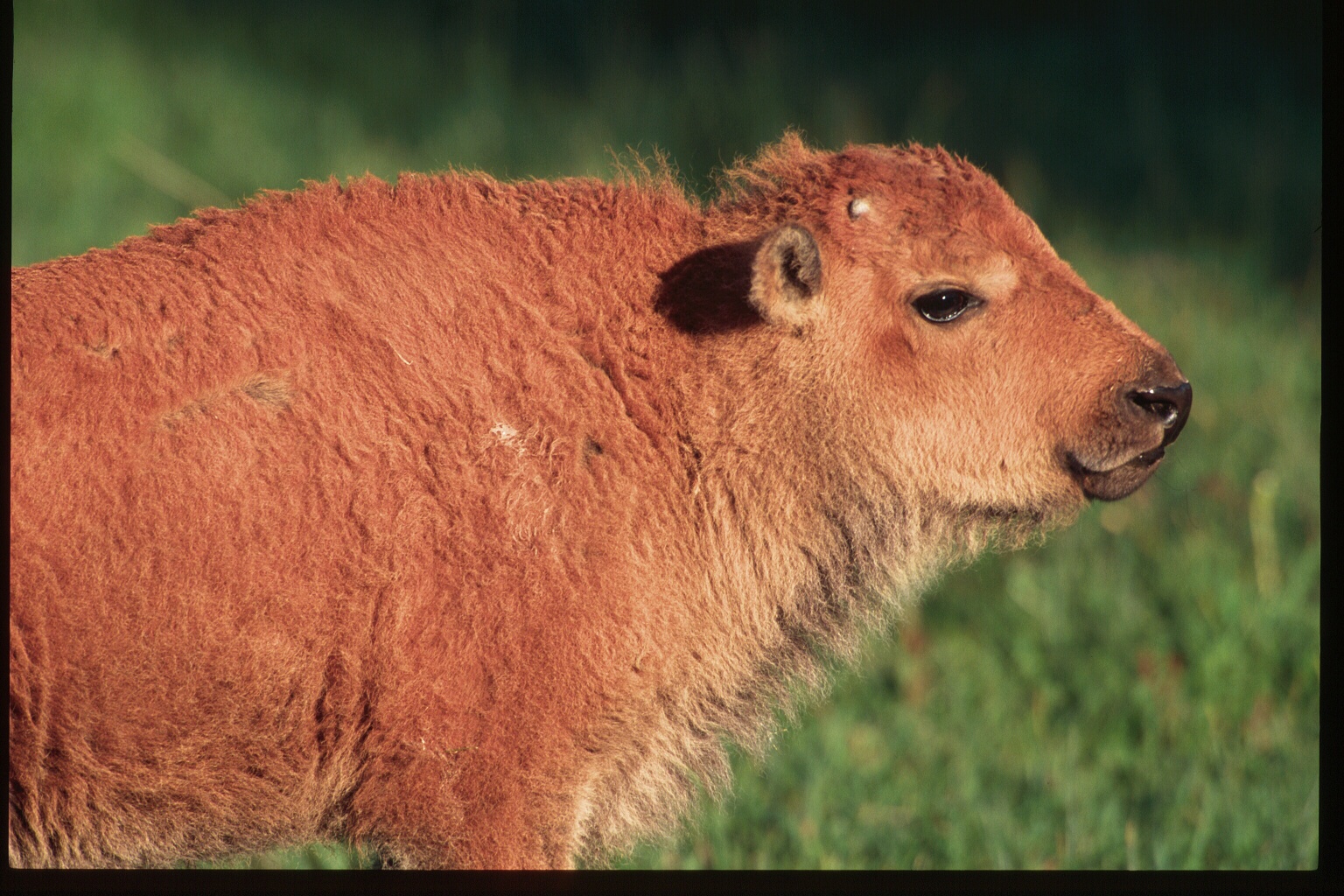
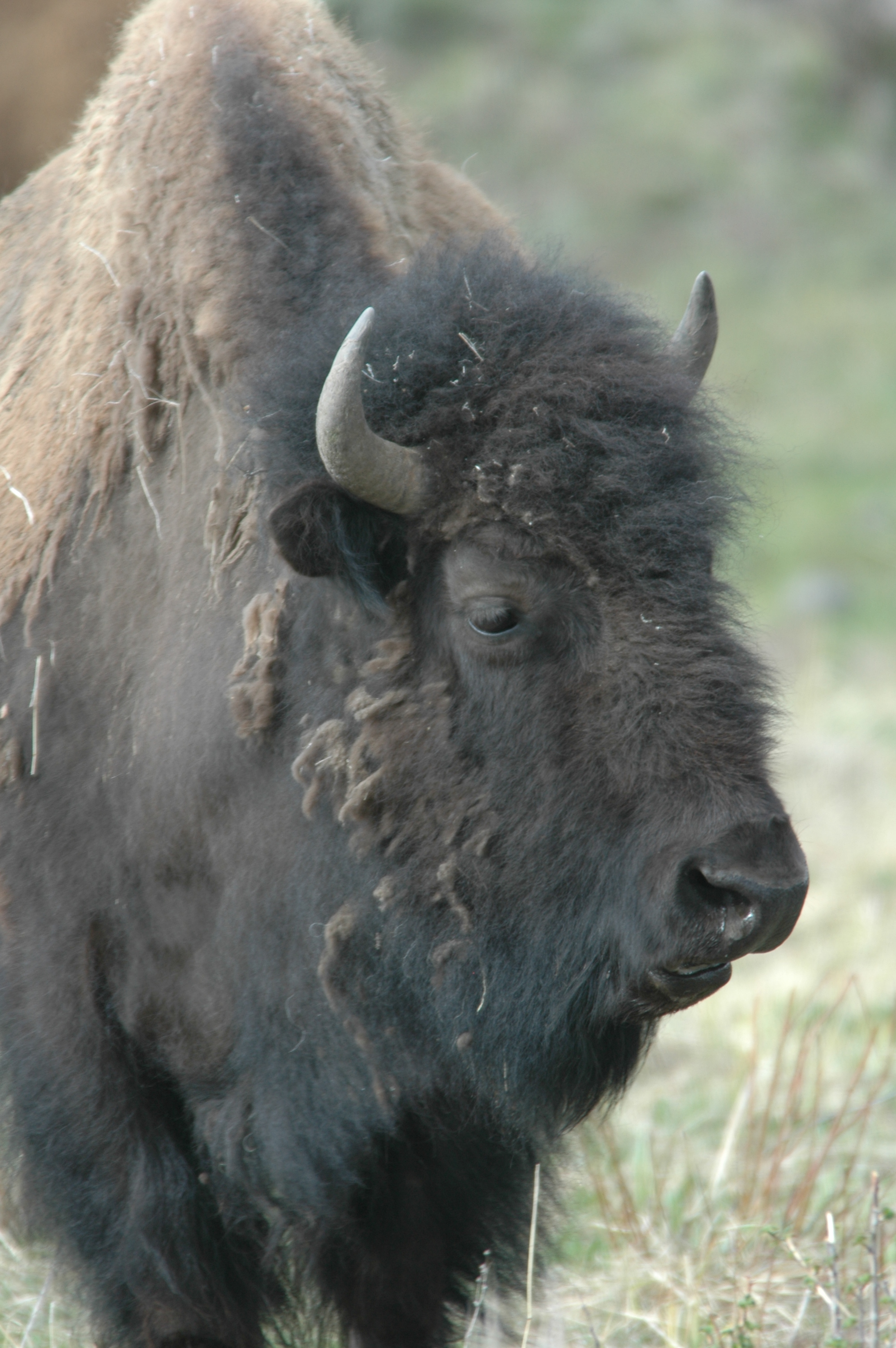
Helena, MT — The Montana Supreme Court affirmed the decision of a lower court today, allowing wild bison room to roam outside the northern boundary of Yellowstone National Park. The ruling upholds a February 2012 decision by state agencies to allow bison seasonal access to important winter and early spring habitat outside the north boundary of the park in the Gardiner Basin area until May 1 of each year.

The ruling rebuffs demands by some livestock producers and their allies to require aggressive hazing and slaughtering of bison that enter the Gardiner Basin area from Yellowstone National Park in the winter and early spring in search of the forage they need to survive.

“Today’s state Supreme Court ruling represents a victory for all those who want to see wild bison as a living part of the Montana landscape,” said Earthjustice attorney Tim Preso, who defended the bison policy in the case on behalf of the Bear Creek Council (BCC), Greater Yellowstone Coalition (GYC), and Natural Resources Defense Council (NRDC). “Now that the Court has rejected claims requiring bison to be slaughtered at the park’s boundaries, we can move forward to secure room for wild bison to roam outside of Yellowstone National Park over the long term.”

In two lawsuits filed in May 2011, the Park County Stockgrowers Association, Montana Farm Bureau Federation, and Park County, Montana, sought to block implementation of the new policy and require state officials to adhere to outdated plans for bison hazing and slaughter. Although the plaintiffs in the cases raised concerns about the potential for bison to infect cattle with brucellosis, the only two cattle ranchers operating year-round in the Gardiner Basin did not join the legal challenge.

Bison are the only native wildlife species still unnaturally confined to the political boundaries of Yellowstone National Park for any part of the year. As recently as 2008, more than 1,400 bison—about one-third of the current size of Yellowstone’s bison population—were captured and slaughtered by government agencies while leaving Yellowstone in search of food.

Contact:
Jenny Harbine, Earthjustice, (406) 586-9699 , ext. 1923
Kari Birdseye, Earthjustice, (415) 217-2098

Victory: Ducks Unlimited 2,000 Bird Pigeon Shoot Cancelled

We are pleased to announce that after receiving complaints about the event, and less than one day after we released this video about the issue, Ducks  Unlimited has cancelled the shoot! 
Here is the email we just received from Ducks Unlimited:
  Dale Hall forwarded me your email regarding the pigeon shoot and asked that I respond to you directly. Earlier  today, several Ducks Unlimited members contacted headquarters staff to make us aware that one of our committees was  planning to hold a pigeon shoot as part of a DU event. We have policies in place holding our staff and local  volunteers to high ethical and moral standards, and do not condone wanton waste of wildlife or other animals. To  avoid the potential for wanton waste, the event committee has decided to change the live pigeon event to a sporting  clays shoot.
  Sincerely,
Matt
Matt Coffey     Senior Communications Specialist     DUCKS UNLIMITED

  This is an astounding turn of events; for 20 years Ducks Unlimited has been holding these “phigeon  shoots,” where innocent pigeons have sharp pheasant tail feathers forced into their backs, and yet within one  day, and working together, we all were able to stop this vicious shoot.
This is the power of your activism at work – everyone who called and spoke out helped save not only 2,000 pigeons  whose horrific deaths were just two days away, but perhaps tens of thousands of pigeons in the years to come.

  We also want to thank Ducks Unlimited for recognizing that this was an important issue and taking quick action to  stop this atrocity from happening again.
If you’d like to thank them for stopping the pigeon shoot, please send a polite email to Dale Hall, CEO of Ducks Unlimited. DHall@ducks.org
In the following picture, you will see three birds that SHARK rescued at live pigeon shoots. We know, from having held these birds, and many more like them, that each of them is an individual living being who felt joy and suffering.
Thank you for helping us save 2,000 individual living beings just like these three.

pigeons

        Kindest Regards,                 Steve Hindi and Your SHARK Team    
    “Kindness and compassion towards all living beings is a mark of a civilized society. Racism, economic    deprival, dog fighting and cock fighting, bullfighting and rodeos are all cut from the same fabric:    violence. Only when we have become nonviolent towards all life will we have learned to live well    ourselves.” – Cesar Chavez, civil rights and labor leader, founder of the United Farm Workers

Visit SHARK: www.sharkonline.org

Killing wild animals spurs new debate

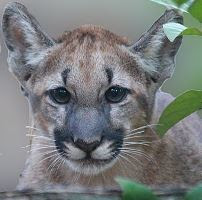
Slicing into a slab of chocolate cake on a picnic table at Hendricks     Park in south Eugene, Linda Gray said she wasn’t concerned about the possibility of a cougar roaming the area as she celebrated friend Betsy Priddle’s 71st birthday on Tuesday.

She was, however, upset about the fate of two cougars that were     trapped in the area and euthanized by the State Department of Fish and Wildlife, the first on March 11 and the second on Monday.

“If people go into areas where there are wildlife, they should expect to treat them with respect,” Gray asserted.

The cougars were euthanized largely because of a string of livestock     killings on a nearby property, where one man lost two goats and     three chickens over three consecutive nights. While landowners have     the right to kill animals on their property, state fish and wildlife     officials say they stepped in on behalf of people such as Gray and     Priddle who enjoy picnicking and hiking in the nearby park, some     with dogs or small children.

But Gray doesn’t see it that way, and on Tuesday offered alternative     solutions, beginning with preventing such attacks in the first     place.

“If you’re going to raise livestock in an area where there are     predators around, you need to protect your livestock,” she said.

A local wildlife advocate also questioned how the state has handled     the recent cougar incidents.

“I personally believe that this was a grave overreaction to set the     traps out to begin with,” said Brooks Fahy, executive director of     Predator Defense, a national wildlife advocacy group based in     Eugene. “There had been no complaints other than from this     individual” whose livestock was killed.

Fahy said the fish and wildlife department’s claims that it does not     relocate cougars due to potential territorial conflicts, spread of     disease and future livestock killings don’t necessitate killing an     animal. While relocation is difficult, he said cougars are not major     carriers of disease and that tales of repeated livestock killings     are purely “anecdotal.”

Fahy did agree, however, that adult cougars are typically unable to     adjust to captivity, as was the case with the second cougar, which     was trapped Friday and euthanized Monday after a state wildlife     veterinarian observed its behavior in captivity.

Fahy said he is concerned that even though Oregon lifted its bounty     on cougars in 1960 and has prohibited the use of packs of dogs for     hunting cougars and bears since 1994, the state’s annual cougar     killings continue to climb — citing fish and wildlife department     statistics, Fahy noted that 530 cougars were killed in Oregon last     year as a result of hunting and other causes, Fahy said.

“Cougars are being slaughtered in the state of Oregon on a historic     level,” he said.

The fish and wildlife department last year issued more than 55,000     hunting tags for cougars — up from 588 in 1994 — which accounted for     nearly 300 of last year’s cougar deaths, Fahy added. The department     says about 5,700 cougars currently reside in Oregon.

State officials say the increase in tags is directly linked to the     ban on hunting with hounds — since the dog packs had a higher     success rate than other hunting methods, the state says it can now     issue more tags with a relatively small increase in hunting     harvests.

But Fahy said the killing of large, dominant “trophy animals” could     be cause for even more conflict between cougars and humans.

“When you hammer a population, you end up with very young animals —     juveniles and sub-adults,” he said. “These are the animals that     stereotypically get into trouble, such as preying on livestock, or     even ending up in some of these (urban fringe) places, such as     Hendricks Park.”

Fahy acknowledged that the cougars’ close proximity to the park is     not ideal for either the animals or people, but said it’s not     uncommon for the transient animals to pass through the area.

“They’ve been there before,” he said. “Nothing’s happened.”

In the case of the recent cougar attacks, Fahy said, the man who     lost his chickens and goats could have taken more precautions to     protect his livestock, such as establishing an electric fence or     securing night housing — techniques of “basic husbandry,” he said.

He said he’s disappointed that what he sees as a lack of preparation     resulted in the death of two cougars — whose hides were offered back     to the livestock owner, John Schetzsle, per state law. Schetzsle has     said he plans to turn the hides into blankets.

“I find the whole thing grotesque,” Fahy said. “He’s going to     basically be rewarded for practicing poor husbandry.”

Schetzsle, who had secured his animals within a 5-foot-high fence     and constructed a small house for his goats last summer, had said he     believes the cougars got to his animals by scaling a nearby tree. He     could not be reached for further comment Tuesday.

But Schetzsle earlier this week said that he’s gathering friends     this weekend to build a stronger chicken coop, and that he plans to     add a door to his goathouse before bringing new goats to his small     farm in April. He’s using a boarded-up stable as a chicken coop in     the meantime.

Brian Wolfer, a state biologist for the department of fish and     wildlife, said Tuesday that his agency advises livestock owners to     take special precautions — such as locking animals up at night,     stationing a guard dog nearby and installing high fencing and a     motion light — but said the law doesn’t require such measures and     allows an owner to kill any predator that damages property.

Still, he added, eliminating one animal is only a temporary     solution.

“There are few situations where removing the cougar is going to be     the end of all problems,” Wolfer said. “When you remove that cougar,     another one will eventually take its place. If you don’t learn from     that experience and take some additional precautions, you’ll find     yourself in that same situation again.”

Indeed, a third cougar may still be in the area, having been caught     on a cougar cubtrail camera that was erected at Schetzsle’s residence by state     officials last week. Officials still have a trap on the premises in     hopes of capturing that animal, should it still be in the area — but     there was no word of the latest cougar being spotted or captured as     of Tuesday night.

Among Tuesday’s park users who said they hope the third cougar isn’t     captured and killed was 22-year-old Litisha Rollings of Springfield.

“These animals have souls. They’re intelligent beings,” she said.     “We put our habitat in their habitat — they’re going to mingle.”

Follow Kelsey on Twitter @kelseythalhofer. Email kelsey.thalhofer@registerguard.com.

Yellowstone Seeks Information on Illegal Bison Shootings

March 18, 2014

National Park Service
U.S. Department of the Interior

Yellowstone National Park
P.O. Box 168
Yellowstone National Park, WY 82190

FOR IMMEDIATE RELEASE
March 18, 2014 14-012

Al Nash or Dan Hottle
(307) 344-2015
YELL_Public_Affairs@nps.gov

——————————————————————
YELLOWSTONE NATIONAL PARK NEWS RELEASE
——————————————————————

Yellowstone Seeks Information on Illegal Bison Shootings

Yellowstone National Park is asking for the public’s help in identifying who was responsible for illegally shooting and killing three bison inside the park last week.

Park rangers determined the bison were likely shot between the evening of March 13 and morning of March15 alongside the road in the Blacktail Plateau area of northern Yellowstone.

A reward of up to $5,000 is offered for information leading to the arrest and conviction of the individual(s) responsible for the crime. Anyone with information is requested to call the Yellowstone National Park Tip Line at 307-344-2132 .

The Lacey Act and the Code of Federal Regulations strictly prohibit the killing or removal of any animal from inside Yellowstone. This includes animals shot legally outside the park that cross into and die within the park boundary. Taking and removing any animal parts, including shed antlers, is also prohibited.

Violators are investigated and aggressively prosecuted, and are subject to penalties including fines, restitution, and the forfeiture of vehicles, equipment and personal property associated with the violations.

http://www.nps.gov/yell

Photo Copyright Jim Robertson

Photo Copyright Jim Robertson

WDFW asks public’s help to generate leads

WDFW NEWS RELEASE
Washington Department of Fish and Wildlife
600 Capitol Way North, Olympia, WA 98501-1091
http://wdfw.wa.gov/

March 17, 2014 copyrighted wolf in river

Contact: Sgt. Pam Taylor, 509-892-1001
Wildlife Program, 360-902-2515

WDFW asks public’s help to generate leads
in shooting of radio-collared wolf

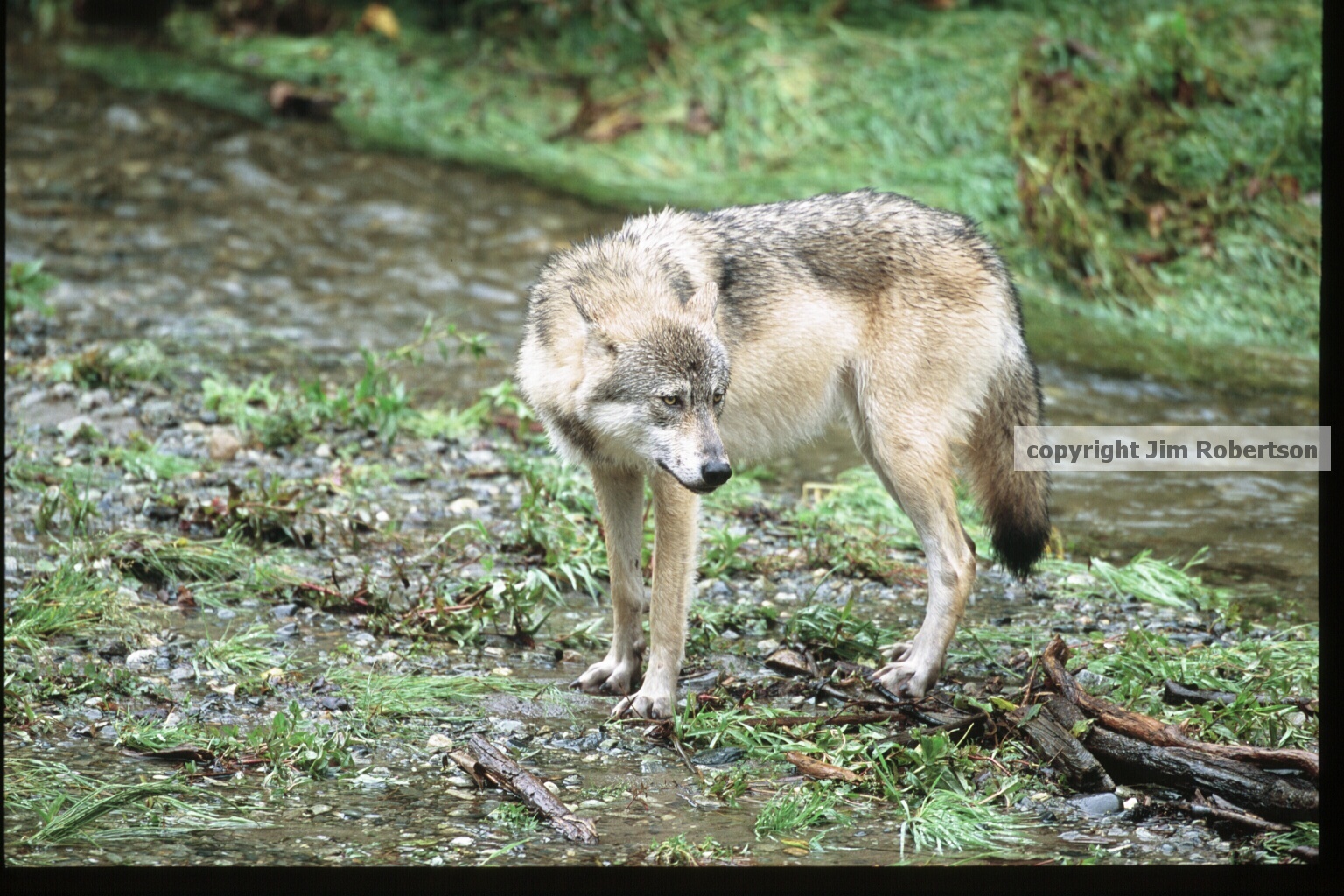
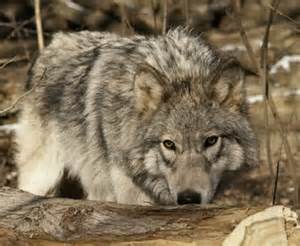
OLYMPIA – The Washington Department of Fish and Wildlife (WFDW) is seeking the public’s help to identify the person or persons responsible for shooting and killing a gray wolf last month in Stevens County.

A 2-year-old black female wolf from the Smackout Pack was found dead Feb. 9 near Cedar Lake in northeast Stevens County. The condition of the carcass indicated it had died between Feb. 5 and Feb. 7, and a veterinarian’s examination confirmed it had been shot.

Wildlife managers had captured the wolf about a year ago and fitted it with a radio collar so they could track its movements and those of her pack members.

WDFW, with the help of three non-profit organizations, is offering a reward of up to $22,500 for information leading to an arrest and conviction in the case. Conservation Northwest, the Center for Biological Diversity, and The Humane Society of the United States, have each pledged $7,500 to create the reward.

Gray wolves are protected throughout the state. WDFW is responsible for management of wolves and enforcement of laws to protect them. The illegal killing of a wolf or other endangered fish or wildlife species is a gross misdemeanor, punishable by up to one year in jail and a fine of up to $5,000.

Sergeant Pam Taylor of the WDFW Northeast Washington Region is leading the investigation. She urged people with knowledge of the crime to report it confidentially by calling WDFW’s poaching hotline, 877-933-9847 , or by texting a tip to 847411.

Wolf Who Fled Isle Royale Was Killed By A Pellet Gun…

Nabeki's avatarHowling For Justice

gray wolf wisconsin dnr wi.gov

Wolves are not safe anywhere. The poor female wolf, called Isabelle, who escaped her home on Isle Royale, was killed by a pellet gun, causing fatal injuries. The endless suffering wolves are enduring is beyond measure.

===

Pellet gun killed wolf that fled Isle Royale park

Posted: Monday, March 17, 2014 7:37 am

Associated Press |

TRAVERSE CITY (AP) — A gray wolf that fled Isle Royale National Park across a Lake Superior ice bridge and was found dead on the mainland had been shot with a pellet from an air gun, officials said Friday.

The 5-year-old female, nicknamed “Isabelle” by researchers who monitor wolves and moose on the island park, was described as a loner that had been bullied by other wolves.

She escaped this winter, seizing the rare opportunity to traverse at least 15 miles of ice separating Isle Royale from an area along the U.S.-Canadian border. Isabelle’s body was…

View original post 249 more words

Lead that’s left behind threatens local wildlife

http://www.santafenewmexican.com/news/local_news/lead-that-s-left-behind-threatens-local-wildlife/article_5b78a00f-3ba4-551f-b096-22e8a482d4ef.html

March 16, 2014 8:45 pm E95688ABF88792AE42A8914230F586_h316_w628_m5_cBUxDElwb
By Staci Matlock
The New Mexican

Two thin bald eagles brought to The Wildlife Center near Española in January died despite efforts by staff to save them.

The culprit was lead poisoning, according to blood tests and necropsies performed on both birds.

Lead ammunition is a deadly problem for animals and birds, even when they haven’t been shot with it, according to Katherine Eagleson, executive director of The Wildlife Center. In the case of the two eagles, they likely scavenged carcasses of animals that had been shot with lead bullets.

Lead ammunition in carcasses left behind by hunters is one source of lead that can poison wildlife. Lead shot and bullets used for target practice in rural areas like a stock pond on the Caja del Rio mesa is another source of lead poisoning. A third is lead sinkers anglers use to weigh down fishing line. Waterfowl accidentally consume abandoned line weighted with the sinkers or eat fish that have ingested the tiny lead sinkers.

Eagleson said there are plenty of other ammunition choices.

“We’re not saying don’t hunt. There are alternatives that work. Go buy them. It is a simple fix,” Eagleson said.

While steel shot is more expensive and some gun enthusiasts say it isn’t as accurate as lead bullets, Eagleson suggested hunters “get closer and hunt better.”

She said there are plenty of alternatives to lead sinkers that aren’t more expensive.

The link between lead and health problems in humans and animals is widely known. Lead accumulates in tissue over time. In people, it has been linked to anemia and neurological problems. Lead was federally banned from paint in 1977 and from pipes for drinking water in 1981.

The health impacts of lead shot on waterfowl and scavengers have been heavily studied in the past few decades, but impacts on other wildlife have been studied less. A 2011 study found high levels of lead toxicity in a free-roaming cougar in Oregon.

The federal government banned the use of lead shot for hunting waterfowl over water bodies in 1991 after it was estimated that 2,700 tons of shot was ending up in wetlands each year. More than 30 states, including New Mexico, have some restrictions on lead ammunition. New Mexico bans the use of lead ammunition when hunting common moorhens (marsh hens), soras (marsh birds), Virginia rails, snipes, doves, band-tailed pigeons, upland game or migratory game birds on all lands owned or managed by the state Game Commission.

New Mexico’s neighbors vary widely in restricting lead ammunition. Colorado bans lead shot only in the Alamosa/Monte Vista/Baca National Wildlife Refuge Complex.

But that still leaves plenty of land where lead shot can be used. It is particularly popular for people who shoot coyotes. Those carcasses are eaten by a variety of other wildlife that may eat the lead shot, Eagleson said.

Texas bans lead bullets for use on game birds in wildlife management areas and federal wildlife refuges. In 2013, California became the first state to ban all ammunition containing lead. The ban will be phased in completely by 2019.

Not everyone agrees with restricting or banning lead ammunition.

The National Shooting Sports Foundation trade group opposes any bans or restrictions on “traditional ammunition” containing lead cores unless “sound science” proves lead bullets adversely affect wildlife, human or environmental health. Hunters have used lead-based ammo for centuries without adverse health affects, according to a statement on the group’s website.

Studies of lead toxicity in wildlife and birds are available from The Journal of Wildlife Diseases, http://www.jwildlifedis.org.

Dead ducks left on Vic premier’s doorstep

 http://au.news.yahoo.com/thewest/national/a/22021637/dead-ducks-left-on-vic-premiers-doorstep/     

March 17, 2014, 1:02 pm

Animal rights activist have dumped dead ducks in front of the Victorian premier s office.      
AAP Animal rights activist have dumped dead ducks in front of the Victorian premier’s office.

Anti-duck hunting activists who dumped dead ducks outside the Victorian premier’s office say they are being barred from the state’s wetlands under new protest laws.

Coalition Against Duck Shooting activist Tony Murphy says the new move-on powers, which opponents say restrict the right to protest, have for the first time led to their rescuers being excluded from the wetlands.

“(Agriculture Minister) Peter Walsh’s strategy is to force us off the wetlands so that massacres of endangered waterbirds can continue in secret,” Mr Murphy said.

The activists dumped the carcasses of ducks collected over the weekend’s opening of the duck season outside Premier Denis Napthine’s Melbourne office on Monday, saying 33 were the endangered freckled duck species.