Patricia Randolph’s Madravenspeak: Doomsday climate scenario no longer far-fetched

dvoight09's avatarWisconsin Wildlife Ethic-Vote Our Wildlife

MADRAVENSPEAK

“Consider this. What if all life on earth could go extinct because of man-made climate change?” — “Last Hours” documentary

There is little, these days, that brings state power in line with the best interests of the public or the planet. Those in power devour Koch money for breakfast and deliver destruction of the planet all day long.  Concentrated corporate and special-interest power monetize what was sacred, and have taken over governments, including our own, cannibalizing the planet to exhaustion. This trajectory is accelerating such that this may be the last century of life on this planet. Each of the five former known extinctions eradicated more than half of life on earth. Several of them involved global warming.

Everyone should watch Thom Hartmann’s short “Last Hours, a preamble to a documentary in the works, covering the projections of how climate change will likely play out. Rather than a…

View original post 663 more words

Blog Follow-up

dvoight09's avatarWisconsin Wildlife Ethic-Vote Our Wildlife

Please watch Thom Hartmann’s short documentary linked in the just posted column and add to the conversation by emailing my editors at tctvoice@madison.com.

Over 100,000 bear killers apply each year to kill more bears ( 2/3 cubs) over packs of dogs and bait set since April and dogs run by anyone who wants to run them, tearing apart wildlife including cubs on the ground as they go.  We have less that 1500 signatures on the petition against using dogs on all wildlife in Wisconsin, the only state that kills wolves using packs of dogs – and that runs dogs on all wildlife under the excuse of killing coyotes without limit, statewide, year-round, night and day. They started running dogs on bears who have babies just a few months old, July 1 – and will continue whenever they want, through the bear kill into October. While killing, all the others who…

View original post 106 more words

Petition: Ban Endangered African Animal Trophy Imports From Namibia

10561765_878719728824643_7337415476807231151_n
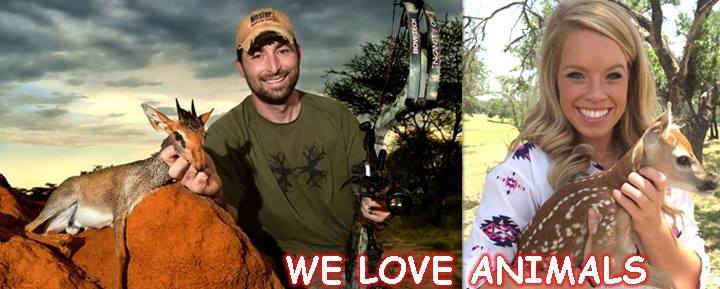
Corey Knowlton and Kendall Jones ‘Love Animals ‘
and they are massacring some of the most endangered wildlife on this planet into extinction for blood money , in other countries with no protection , for American TV Hunting Channels for entertainment .
Do you want to remove them from FB ? only , or do you want to remove thousands of people like them from a country > ???????? Namibia ? by blocking USA Animal Trophy Imports … this is with in your grasp but, we need your help to get this petition out there … Thank You
Please sign and share everywhere .. reach all the corners of the world and post it on pages and walls so that the world can judge these two death stars …………and lets block these vile people : https://secure.avaaz.org/en/petition/Director_Robert_G_Dreher_USFWS_Ban_Endangered_African_Animal_Trophy_Imports_From_Namibia/

Remembering Yellowstone’s Cottonwood Pack….

Nabeki's avatarHowling For Justice

yellowstones 527

Photo: Wolf 527, killed on Buffalo Plateau on Oct. 3. Credit: Dan Stahler / National Parks Service

July 21, 2014

There was great sadness over the killing of the 06 Female, one of the most famous wolves ever to grace Yellowstone National  Park. But long before her untimely death, another equally famous Yellowstone wolf met the same fate years earlier.  527f, the alpha female of Yellowstone’s Cottonwood Pack, was gunned down outside the park by a hunter’s bullet along with her equally famous daughter and mate. This happened mere months after the Obama administration removed ESA protections for wolves and handed them over to hostile state governments, in Montana and Idaho.
I want to pay tribute to these amazing wolves and others like them, as the tragedy of Obama’s failed policies continue to wreak havoc on wolves and other wildlife.
===
October 25, 2009

 Yellowstone’s famous Cottonwood pack Alpha female…

View original post 595 more words

Comment: Grizzly bears more useful alive than dead

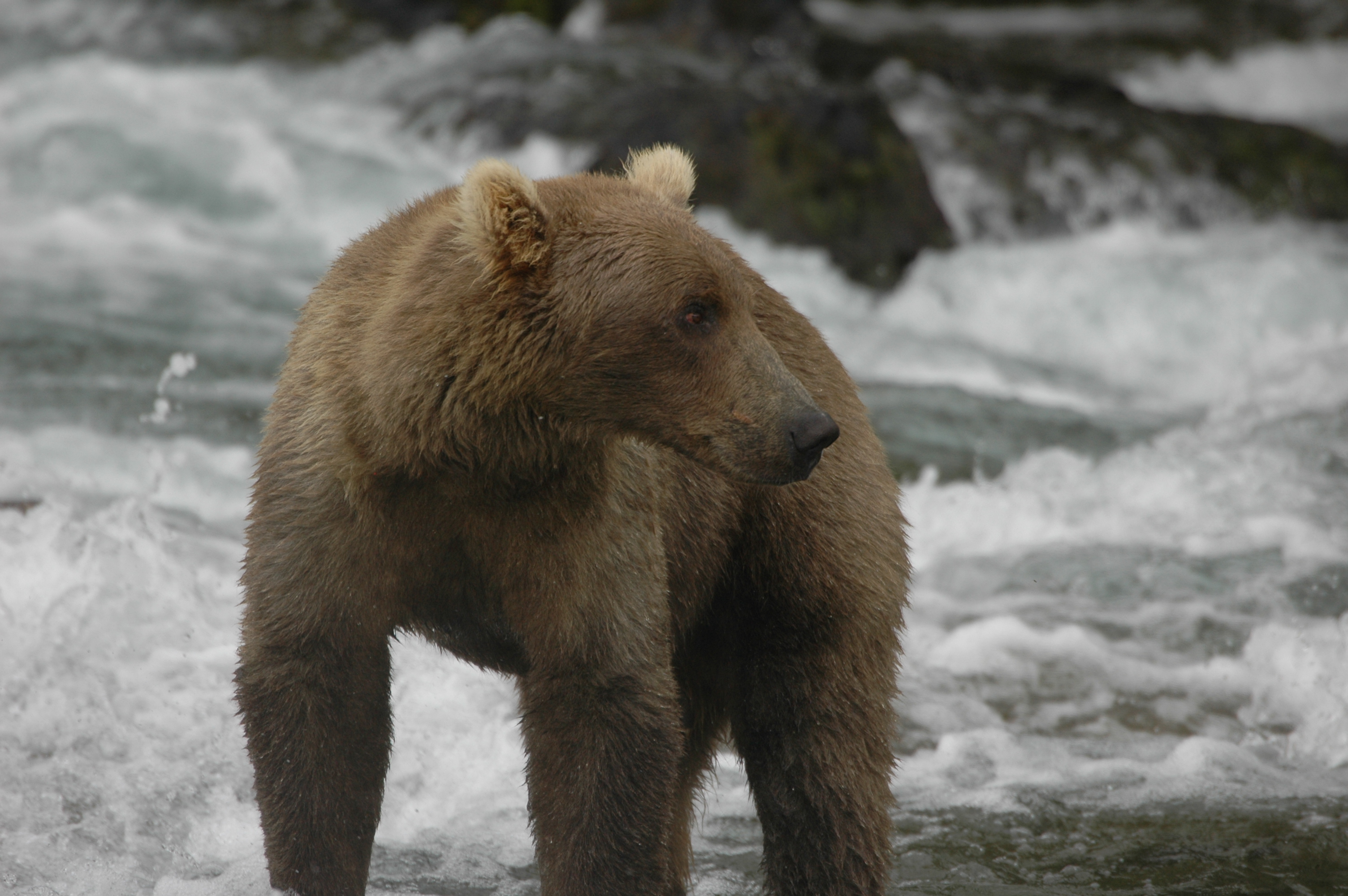
Grizzly photo Copyright Jim Robertson

Grizzly photo Copyright Jim Robertson

Chris Genovali / Times Colonist
July 17, 2014

One can only conclude that Naomi Yamamoto, provincial minister of tourism and small business, was poorly briefed with regard to the grizzly bear hunt after reading about her recent speech on Saltspring Island.

Having B.C.’s tourism minister put forth the notion that the proliferation of oilsands pipelines and oil tankers, along with the escalation of a host of other industrial-scale resource extraction activities, would somehow be compatible with a robust tourism industry based on the natural beauty of the province is dubious. But for Yamamoto to suggest that bear viewing is compatible with the trophy-killing of bears, and then disproportionately claim that the grizzly hunt is a chief economic driver for the province, is inexplicably out of touch.

Contrary to Yamamoto’s assertions, there is no ecological, ethical or economic justification for continuing to trophy-kill B.C.’s grizzly bears.

The ecological argument is clear — killing bears for “management” purposes is unnecessary and scientifically unsound. Although attempts are made to dress up B.C.’s motivations in the trappings of “sound science,” the province is clearly driven by an anachronistic ideology that is disconcertingly fixated on killing as a legitimate and necessary tool of wildlife management.

Paul Paquet, senior scientist at Raincoast Conservation Foundation, large carnivore expert and co-author of a 2013 published peer-reviewed paper on B.C. bear management, states: “We analyzed only some of the uncertainty associated with grizzly management and found it was likely contributing to widespread overkills. I’m not sure how the government defines sound science, but an approach that carelessly leads to widespread overkills is less than scientifically credible.”

The ethical argument is clear — gratuitous killing for recreation is unacceptable and immoral. Polling shows that nine out of 10 British Columbians agree, from rural residents (including many hunters) to city dwellers.

In their 2009 publication The Ethics of Hunting, Michael Nelson and Kelly Millenbah state that if wildlife managers began “to take philosophy and ethics more seriously, both as a realm of expertise that can be acquired and as a critical dimension of wildlife conservation, many elements of wildlife conservation and management would look different.”

During her Saltspring appearance, Yamamoto attempted to downplay widespread public concern about the grizzly hunt by stating: “it’s not like a bear gets killed every day.”

Given that an average of 300 grizzlies and 3,900 black bears (according to the B.C. Wildlife Federation) are killed for trophies in B.C. annually, the minister’s statement is not only flippant, but callous to the disturbing amount of carnage inflicted on bears in this province every year for the most trivial of reasons — recreational trophy hunting.

The economic argument is clear — recent research by the Centre for Responsible Travel at Stanford University says that bear-viewing supports 10 times more employment, tourist spending and government revenue than trophy hunting in B.C.’s vast Great Bear Rainforest.

Notably, the CREST Stanford study suggests the revenue generated by fees and licences affiliated with the trophy killing of grizzlies fails to cover the cost of the province’s management of the hunt. As a result, B.C. taxpayers, most of whom oppose the hunt according to poll after poll, are in essence being forced to subsidize the trophy killing of grizzlies.

For Yamamoto to suggest that banning the grizzly bear hunt would jeopardize the province’s ability to “generate the extra revenue to pay for health care, education and all those things that people are demanding” is astoundingly off-base.

The 2014 CREST Stanford study reaffirms what Coastal First Nations, the eco-tourism industry and conservation groups like Raincoast have been pointing out for years — keeping grizzly bears alive generates significantly greater economic benefits than killing them via trophy hunting.

In 2003, Raincoast and the Centre for Integral Economics released the report Crossroads: Economics, Policy, and the Future of Grizzly Bears in British Columbia, which compared revenues generated by grizzly viewing versus grizzly hunting.

Even more than a decade ago, when the bear-viewing sector of the ecotourism industry was in its nascent stage, viewing grizzlies was bringing in about twice the annual revenue as grizzly hunting.

Our analysis showed that in the long term, it makes more economic sense to shoot grizzly bears with cameras than to shoot them with guns. Over the course of a grizzly’s life, the bear can be viewed and photographed hundreds of times, generating tremendous economic wealth for B.C.

However, a grizzly bear can only be shot and killed once.

Chris Genovali is executive director of the Raincoast Conservation Foundation.

– See more at: http://www.timescolonist.com/opinion/op-ed/comment-grizzly-bears-more-useful-alive-than-dead-1.1209390#sthash.o2fie8k1.dpuf

Alaskan wolf pups rescued from fire heading to Minnesota Zoo

The zoo plans to ‘spay and neuter them because they are no longer and endangered species’ — WTF?

http://www.startribune.com/local/266956601.html

by: JIM ADAMS , Star Tribune

 July 14, 2014 – 11:22 AM

Rescued from wildfire, the pups will replace older wolves and are expected to draw visitors.

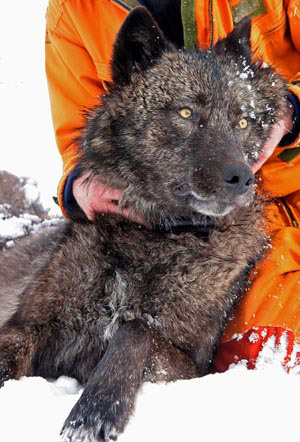
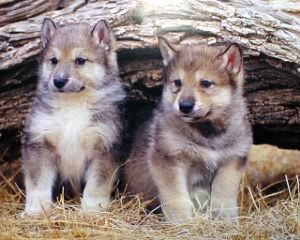
wolf pups

A revived and lively litter of wolves is expected Tuesday at the Minnesota Zoo, just weeks after being plucked from the smoldering aftermath of an Alaskan wildfire.

Officials at the Apple Valley zoo said the five gray wolf pups have rebounded nicely after being abandoned by their parents during the May fire and then losing a sibling to a porcupine attack.

Four firefighters discovered the 2-week-old pups in their den, dehydrated and stuck with quills. A porcupine apparently had wandered into the den to escape the smoke and flames of the massive Funny River wildfire in the Kenai Peninsula Wildlife Refuge.

Such a wildfire rescue of pups is rare, according to the Alaska Department of Fish and Game website. Officials believe the pups’ parents fled the den because of the fire and firefighter activity in the area.

The five survivors — three males and two females; three gray, two light-colored — were taken to the Alaska Zoo in Anchorage on May 27, where staff tended and bottle-fed them. One pup is named X-Ray, after the fire crew that saved them. The others were named after the four rescuers’ hometowns: Gannett, Hooper, Huslia and Stebbins, said Minnesota Zoo spokesman Josh Le.

Now eight weeks old, the pups have tripled in size and can be seen playing on video taken at the Alaska Zoo. Visitors were invited to view wolf feedings five times a day at the zoo, and as they grew, watched them romp and roll outside.

“So far they are really healthy and that is why they are coming Tuesday to the Minnesota Zoo,” Le said. “They are growing but still adorable.”

But don’t expect to see the Alaskan canines in person until mid-August. The pups will be in quarantine for a month while they are monitored and blood and fecal tests are done to ensure they carry no disease or parasites to the zoo, Le said.

The furry five will replace the zoo’s adult pair of gray wolves, Kaskapahtew and Wazi, who have never bred successfully, Le said. He said the pair will be sent to another accredited zoo in the U.S., and had no chance of being euthanized.

The five siblings likely will boost attendance by creating the wolf pack the zoo has long sought. They will have free run of the spacious wolf enclosure on the Medtronic Minnesota Trail. They will be spayed and neutered because they are not an endangered species and the zoo avoids inbreeding, Le said.

Le said the pups will be escorted by Alaska Zoo staff on a flight donated by Delta Air Lines. Two Minnesota Zoo managers will greet the Alaskans at the Minneapolis airport.

Dr. Steve Best on animal RIGHTS at AR2014‏

it’s 25 minutes long………..and well worth your time

Steve Best at AR2014
http://arzone.ning.com/video/dr-steven-best-at-ar2014

Dr. Steven Best gave this talk in the opening plenary panel at the US National Animal Rights Conference, on July 10, 2014. Dr. Best spoke on the meaning of animal rights, and he contrasted it to animal welfare, contextualized both in the setting of modern capitalism, and underscored the subversive and revolutionary nature of animal rights.

Please forward the link.cow-and-calf-love_w520

Dog Deaths Prompt Idaho to Consider Changing Trapping Rules

http://www.care2.com/causes/dog-deaths-prompt-idaho-to-consider-changing-trapping-rules.html

Dog Deaths Prompt Idaho to Consider Changing Trapping Rules

Trapping for wolves and a number of other furbearers is allowed throughout the state, but these traps aren’t just a cruel way to torture and kill the animals for which they’re intended–they are posing a serious threat to non-target animals and our pets.

According to the Department of Fish and Game, in 2012, 30 dogs and 24 house cats were among more than 800 non-target animals who were caught. Trapper reports also show the number of dogs who have become victims of traps has increased from two in 2002 to 32 in 2013.

To illustrate the seriousness of the problem, in two widely reported cases last year tragedy struck when dogs were killed in baited body-crushing traps.

According to the Spokesman-Review, the first incident occurred the day after Christmas when a family watched their two-year-old dog die in less than a minute. The second incident happened in January when a woman took her four-year-old black lab for a run, whereby it was caught in a trap that was legally placed on public endowment land. Her and her husband had to call for help because the trap closed so tightly they couldn’t get it open.

In response to the growing number of dogs being trapped and increasing concerns being voiced by pet owners, the Department of Fish and Game released an instructional video in March of this year, and it’s really helpful: you just need to bring a bucket full of supplies with you, channel MacGuyver, or be kind of person who can function calmly while you’re watching your beloved dog suffer, as you try to remember how to open one of the medieval-looking torture devices without doing even more damage. No problem, right?

As infuriating as it is to think you would have to deal with that just because you want to take your dog hiking, and as easy as it would be to say the obvious solution here is to ban traps, that won’t happen. Voters already enshrined trapping as a hunting right in the state’s constitution in 2012. At least now officials are considering restrictions that could help prevent more accidents.

Last week the Fish and Game Commission voted unanimously to start making new rules for certain types of traps, and is considering other steps that were recommended by a working group, including requiring a trapper education program, posting signs, restricting the use of body-crushing traps on public land, and increasing set-backs for traps placed near trails. Once approved by the commission, these proposals go to the legislature for approval.

That’s Where You Come In

You can send a message to the Fish and Game Commission asking it to implement every possible measure to protect the public and non-target animals from the dangers traps pose.

You can also sign and share our Care2 petition asking state officials to do something to prevent the trapping of endangered Canada Lynx.

Read more: http://www.care2.com/causes/dog-deaths-prompt-idaho-to-consider-changing-trapping-rules.html#ixzz37xk0flgd