
Fur Sales On The Rise
The News
There is a perception in the animal rights community that fur consumption is declining when, in fact, it is on the rise.
- From 1990 – 2015, fur sales in the U.S. grew by approximately 50%
- From 2013 to 2014, U.S. fur sales grew by 7.3%
- In 2014, fur sales in the U.K. increased by 20%
- From 2011 – 2013, global fur sales jumped by more than 50% – from $16 billion to $36 billion
According to the Fur Information Council of America (FICA), the largest U.S. fur association, the number of designers who use fur has dramatically increased, climbing from 42 in 1985 to approximately 500 today. FICA also asserts that 55% of the people who buy fur today are under 44, dispelling the myth that fur is primarily consumed by older people.
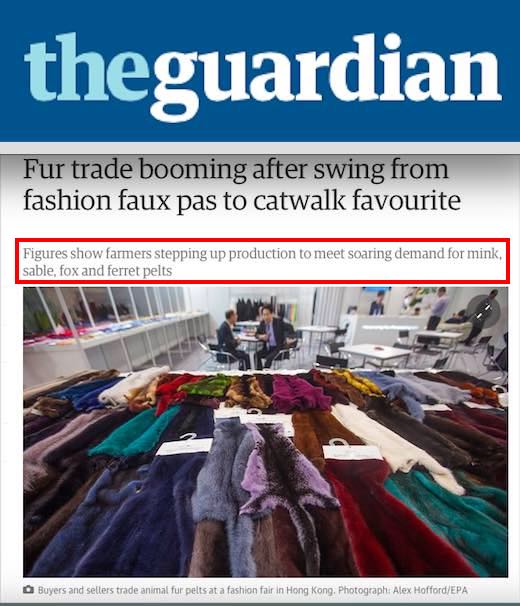
A 2015 article published in the Guardian documented the rise of the fur industry.
“The fur industry’s statistics reflect what we’re seeing in the streets — that fur consumption is on the rise,” said Edita Birnkrant, Campaigns Director for Friends of Animals, an international animal advocacy group. “For the sake of the animals, we have to organize and take a more aggressive approach on their behalf.”
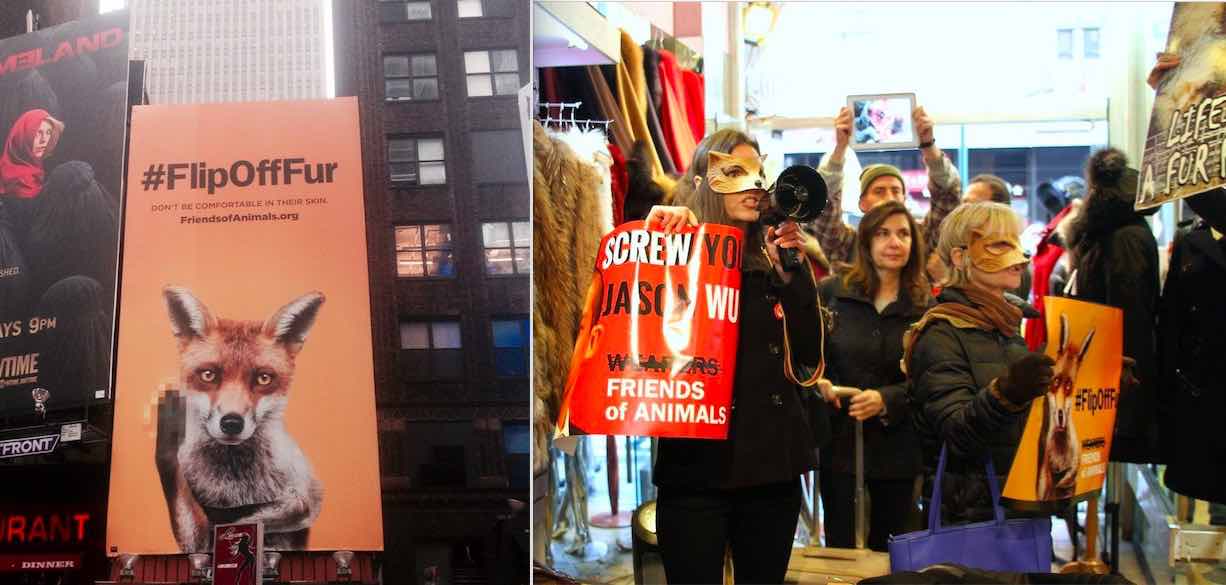
Friends of Animals holds in store protests and puts up anti-fur billboards.
The increase in fur sales can be attributed to many variables, including high demand from China; the use of technology to make fur suitable for warm climates; the growing use of fur trim; the increased use of fur in men’s clothing; the growing practice of dying fur; and the consumption of fur among celebrities with a large social media following. According to Mark Oaten, CEO of the International Fur Federation, “…with this increase in demand, farmers are deciding to invest more in fur farms and increase production.”
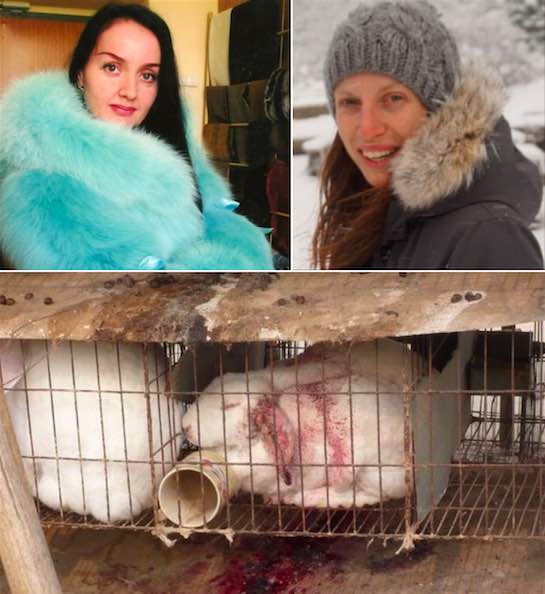
Dying fur and the growing use of fur trim have led to an increase in fur sales and, by extension, the number of fur farms.
While the animal rights community appears to be losing the war against the fur trade (despite occasional victories), some activists have responded to the increased prevalence of fur by engaging in more provocative anti-fur tactics…..



 Exposing the Big Game