Bipedal Bear’s Apparent Death Motivates Bear Hunt Opponents in New Jersey


New Jersey’s long-debated black bear hunts have stoked strong passions, blasted by animal rights activists as inhumane and supported by hunters and wildlife officials who say they help control the population and minimize run-ins with humans.

But the death of a bear presumed to be one that walked on two feet and became a social media darling has become a rallying cry for hunt opponents as they prepare to stage protests during the second segment of this year’s hunt, which starts Monday. It’s scheduled to run through Saturday, but officials said it could end early depending on how many bears are culled.

Pedals the bear first surfaced about two years ago in Jefferson Township. The bear walked with an unusual gait on his hind legs and was spotted ambling around neighborhoods. It also was caught on videos that were posted online and shown on national television.

Wildlife officials believe Pedals was killed during the expanded bear hunt staged in October. The Department of Environmental Protection released pictures showing the lifeless body of a black bear with injured paws, just like the ones Pedals had, but couldn’t confirm the identity because Pedals was never tagged.

Animal rights activists say the belief that Pedals is dead has motivated them and others to work even harder to end the hunt. Pedals was last seen on video in June.

“Our numbers have always been high, but the killing of Pedals has caused our support to increase,” said Janine Motta, programs director for the Bear Education And Resource program. The group has staged protests during previous hunts in New Jersey and plans similar events during the upcoming hunt.

“Here was one particular bear that people may have known, seen or just followed on Facebook. They felt a connection with Pedals,” Motta said. “When he was killed, it became personal for those who loved him, and that translated into a greater awareness of the hunt in general and the realization that all bears who are killed are important.”

New Jersey resumed state-regulated bear hunting in 2003 after a ban that lasted more than 30 years. Another hunt was held in 2005, and in 2010 the state instituted an annual hunt.

The expanded six-day hunting season took effect this year. Hunters were allowed to use only bows and arrows to during the first three days, and muzzle-loading guns were added during the second half.

This coming week’s hunt is for firearms only and runs concurrently with the six-day firearm season for deer. But wildlife officials anticipate the bear hunt will end early due to the harvest limit set in the state’s bear management policy.

Hunters harvested 562 bears during the expanded hunt, and 23.4 percent were previously tagged bears. This week’s hunt will be suspended once the cumulative harvest rate of tagged bears reaches 30 percent, officials said.

State wildlife officials have touted the annual hunt as an important part of controlling the bear population and minimizing run-ins with humans, particularly in the northern part of New Jersey known as bear country. They have estimated that 3,500 bears live in New Jersey north of Interstate 80, roughly the upper one-eighth of the state.

Critics have called the hunt brutal, cruel and ineffective. But James Doherty, a Toms River resident who has taken part in previous hunts, believes the critics are so focused on their cause that they don’t see why it’s needed.

“The stereotype of hunters is that we’re all gun nuts who like to kill things for the fun of it, but that’s not the case,” Doherty said. “Listen to the biologists, the experts- the hunt helps keep the bear population in control, and that’s very important. If the population gets too high, there’s not enough food for all of them, and it can lead to more bear-human interactions.”

Read more: http://www.nbcphiladelphia.com/news/local/Bipedal-Bears-Apparent-Death-Motivated-Bear-Hunt-Opponents-in-New-Jersey-404604286.html#ixzz4Rzv3aTQ6
Follow us: @nbcphiladelphia on Twitter | NBCPhiladelphia on Facebook

Wolves are coming; Regional meeting held in Quincy to alert ranchers

Patricia Randolph’s Madravenspeak: Trapping, hunting, mice and the Lyme disease epidemic

dvoight09's avatarWisconsin Wildlife Ethic-Vote Our Wildlife

image

COURTESY OF BING IMAGES

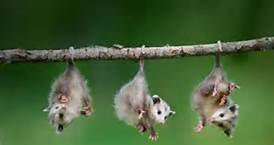
Possums, like these babies shown above, have been called the unsung heros in the Lyme disease epidemic

“In staggering numbers, opossums  up removing or eating as much as 96 percent of all ticks that land on them. … Possums are the unsung heroes in the Lyme disease epidemic.“ ~ Rick Ostfeld, Cary Institute

The Wisconsin Department of Natural Resources has invested great effort in recruiting and training thousands of new trappers and hunters with $5 license incentives. They’re destroying Wisconsin’s indigenous species like beavers, muskrat, foxes, bobcats, otters, coyotes, raccoons and opossums.

We never seem to learn from history. Market trapping and hunting back in the 1850s, when wildlife was abundant and humans much less so, almost destroyed wildlife even then.

Coyotes, wolves, foxes, bobcats and opossums are exactly the species that control rodents and buffer humans from zoonotic diseases. Diseases that are transmitted by animals…

View original post 707 more words

Deaths of Dogs – and Why It’s Not Cute

by Barry Kent MacKay
02 Dec 2016 12:26 PM PST

Polar Bear and Dog <http://www.bornfreeusa.org/images/blogs/canadianblog/polarbeardog_sm.jpg> © David de Meulles / YouTube

Finally, the same internet that has continually shown a video that has utterly charmed millions (but sickened me) has exposed the truth… although, I suspect that many will miss that and go on mindlessly grinning at the original images.

I’ll explain all of that in a moment. First, let me say that, as someone increasingly concerned about the fates of wild and domestic animals—working with dedicated professional colleagues sharing the value I put on all life, human and animal—I can never understand why people seem to think an animal’s “worth” is relative to how much he or she acts like humans, or unlike how the animal’s own nature dictates.

Polar bears are predatory. So, when videos emerged on the internet some time ago showing a bear seeming to play with a sled dog, I immediately wrote to a polar bear biologist. The expert told me that he knew all about it, including how many dogs have been killed by being left chained outside, helpless, in a region that is well-visited by polar bears.

“We’ve tried to tell that to people for years,” I was told.

The video does not show that part of the story.

The bear, overwhelmingly powerful, is in no hurry to make a kill. The animal first examines the unsuspecting dog, and that is the part the video shows: sniffing and petting only. It’s been viewed more than four million times. What the viewers don’t see is that the bear then chose another dog, possibly one of those on short leashes in the background, and killed and ate that one.

It’s intolerable enough to leave dogs tied up overnight without shelter as a roadside attraction at the Mile 5 Sanctuary near Churchill, Manitoba. But, feeding polar bears to attract them to the site makes it worse.

The owner of the property, Mike Ladoon, explained what happened by <http://www.cbc.ca/news/canada/manitoba/polar-bear-dog-video-churchill-manitoba-1.3855128> telling CBC news, “That was the only day we didn’t feed the [expletive] bears, the only night we didn’t put anything out.”

But, it’s not just the dogs. Churchill is a community full of men, women, and children trying to live within the range of the bears. By acclimatizing the bears to human activity and teaching them that humans provide food, the risk of an attack by a bear on a human increases—and so does the chance that the bear, having no fear, will be shot.

It’s a delicate balance between living with the huge predators, benefiting from the presence of the bears as a tourist attraction (as thousands of people go there to see them), and protecting life, limb, and property of the people.

Charges have been laid against Ladoon, both for interfering with the bears and for his treatment of the dogs. Let’s hope the word gets out to those still smiling at the misleading video, not understanding how wrong it all is.
10615414_311553309030149_2346944286901096966_n

Beyond the Point of No Return — Imminent Carbon Feedbacks Just Made the Stakes for Global Warming a Hell of a Lot Higher

robertscribbler's avatarrobertscribbler

“It’s fair to say we have passed the point of no return on global warming and we can’t reverse the effects, but certainly we can dampen them,”said biodiversity expert Dr. Thomas Crowther in The Independent today.

“I’m an optimist and still believe that it is not too late, but we urgently need to develop a global economy driven by sustainable energy sources and start using CO2, as a substrate, instead of a waste product.” — Prof Ivan Janssens, recognized as a godfather of the global ecology field, in The Independent.

“…we are at the most dangerous moment in the development of humanity. We now have the technology to destroy the planet on which we live, but have not yet developed the ability to escape it… we only have one planet, and we need to work together to protect it.” — Professor Stephen Hawking yesterday in The Guardian.

View original post 1,148 more words

Spike in Yellowstone grizzly deaths tied to conflicts with humans

By Laura Zuckerman | SALMON, IDAHO Dec. 1

U.S. wildlife managers at Yellowstone National Park are reporting an unusually high number of grizzly bear deaths, 55, linked to humans this year in a trend believed tied to a growing number of the bruins harming livestock or challenging hunters over freshly killed game.

The uptick in bear deaths comes as the Obama administration says the population of roughly 690 bears in and around Yellowstone has come back from the brink of extinction and should be stripped of U.S. Endangered Species Act protections.

The plan, proposed by the U.S. Fish and Wildlife Service earlier this year, opens the way for hunting in Wyoming, Montana and Idaho, the Northern Rocky Mountain states that border the park.

The measure is strongly opposed by conservationists and Native American tribes but supported by sportsmen and ranchers who claim the number of conflicts will diminish by targeting bears that bounce hunters off freshly shot game or which harm livestock.

The carcasses of at least 55 Yellowstone area bears have been found so far this year, with most dying from human-related activities, according to figures compiled by the U.S. Geological Survey. Nearly half the grizzlies were killed by government bear managers for preying on cattle, sheep and the like.

Wildlife advocates fear that the final tally for 2016 will exceed the 61 bears known or believed to have died in the Yellowstone area last year, a high in the decades since such moralities have been tracked.

That compares to 28 grizzlies known or likely dead in 2014 and 29 in 2013, according to government records.

Gregg Losinksi, member of a federal and state team that oversees Yellowstone grizzlies, said some bears running into conflicts are seeking to expand their range into areas already occupied by humans or other grizzlies.

“As far as we’re concerned, the population is maxed out based on the available habitat and we’re seeing more and more deaths because of this density,” he said.

Conservationists say they are alarmed by the number of Yellowstone area bears that have died in 2016, the third year the overall population has fallen.

“The mortalities keep escalating and the population keeps dropping. We don’t think now is the time to remove Endangered Species Act protections; we need more time to study these trends,” said the Sierra Club’s Bonnie Rice.

(Reporting by Laura Zuckerman; Editing by Dan Whitcomb and Sandra Maler)

431125_10150547334526188_1114807436_n

First ‘official’ wolf kill confirmed on Colville Reservation

First wolf kill on Colville Reservation

First wolf kill on Colville Reservation

November 21, 2016 9:21 am | Updated: 1:15 pm, Mon Nov 21, 2016.

NESPELEM—After three hunting seasons without harvesting a wolf, a Colville Tribal member has taken the first.

Duane Hall, 37 of Omak, brought a gray wolf into the Colville Tribal Fish & Wildlife office for sealing on Friday, CTFW confirmed Monday.

Just three of the estimated 18 to 20 wolves—spread out among at least three packs—are allowed to be taken, per CTFW’s predator hunting regulations.

“I didn’t really have a reaction,” CTFW director Randall Friedlander said.

Hunting group Rez Bucks, Bulls & Predators, operated by tribal member Sean Gorr, published the news on Nov. 17 at 12:45 p.m.

A share to Tribal Tribune’s Facebook was met with mixed reviews.

“Terrible,” tribal member Lorin Hutton said.

“Nice kill,” tribal member Ted Piccolo added.

“Wildlife management is a must,” Gorr stated in the conversation. “Predator control is a must. Regulated hunting seasons is a must. All that needs to happen to sustain enough big game to feed our families for generations.”

Wolf hunting season started Aug. 1 and ends Feb. 28. Three known packs exist on the Colville Reservation: The Strawberry, the Whitestone and the Nc’icn. A collared wolf was accidentally slain on the Colville Reservation during a recapturing effort by CTFW in January 2015.

Friedlander said the amount of wolves harvested—by way of rifle or trap hunting—are determined by the number of wolves.

“We try to manage for the total population,” he said, “and that’s why we allow three per year. That’s based on a percentage of the overall population (of wolves).”

He reiterated the right to hunt is an ancestral right.

“We try to create opportunities for tribal members to practice their traditional, cultural way of life,” Friedlander said. “That includes the harvesting of some predators for some tribal members. Not all tribal members harvest predators, but some do.”

In May, CTFW reduced the number of wolves that could be taken from 12 to three each season, but allowed traps to be used for the first time.

Last month, a Washington wolf from the Huckleberry Pack, which was thought to range from the Spokane Reservation north, was killed after a 700-mile trek from Washington to Idaho, Canada and then central Montana.

The Tribune has reached out to Hall for an interview.

http://www.tribaltribune.com/news/article_fc9452fc-b00e-11e6-9e94-3f2bece5e94b.html

‘Everything is Burning Around Us’ — You Just Can’t Normalize Gatlinburg’s Freakish Fall Firestorm

robertscribbler's avatarrobertscribbler

There’s nothing normal about what happened to Gatlinburg, Tennessee on Monday.

Sitting at the epicenter of a freakish fall warmth and drought, the scores of fires that raged throughout the southeast into late November had, until recently, spared this sleepy tourist town resting on the slopes of the Great Smoky Mountains. But as winds roared out of the south at up to 87 miles per hour ahead of an approaching cold front on the 28th, the little city’s luck ran out.

gatlinburg-fire

(Fire on the mountains near Gatlinburg captured in this photo by a local resident. Image source: Twitter.)

Somewhere, a spark lit. And the bone-dry hillsides filled with ready fuels combined with hurricane force gusts to do the rest. By early evening, the skies over Gatlinburg had been painted orange. Ash and embers were carried aloft by the winds. And all around the city, mountains caught fire and…

View original post 608 more words

MONTANA WOLF HUNT NUMBERS SHOW SLIGHT INCREASE

 Nov 29, 2016

MISSOULA –

Although big game hunting season has ended in Montana, the wolf hunting season continues.

Through the end of the general deer and elk season on Nov. 27, hunters in Northwest Montana FWP Region One have taken 34 wolves. The statewide total sits at 106 wolves taken, up slightly from last year at the end of the general deer and elk season.

The wolf hunting season continues until March 15. Hunters can still purchase a wolf hunting license, but there is a 24-hour waiting period before it is valid.  Wolf trapping begins on December 15. 

Montana Fish, Wildlife and Parks officials point out the wolf trappers must purchase a furbearer trapping license and have completed the wolf trapping certification course to trap wolves. 

The bag limit is five wolves per hunter/trapper in any combination of hunting or trapping. FWP reports that 210 wolves were taken in 2015.

Click here for more information about the wolf hunt in Montana.

 
(MTN News file photo)

Yellowstone park looks at large bison cull to trim herds

Associated Press 22 hrs ago

Yellowstone National Park biologists say more than 900 wild bison would need to be killed or removed this winter to begin reducing the size of herds that spill into neighboring Montana.

The park has an estimated 5,500 bison, the highest number since at least 2000.

Park officials will meet Thursday with state, tribal and U.S. Agriculture Department representatives to discuss options for managing the animals.

More:

 http://billingsgazette.com/news/state-and-regional/montana/yellowstone-park-looks-at-large-bison-cull-to-trim-herds/article_a88991a3-5376-5960-825e-6156a24e1960.html
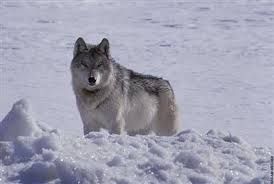
 Photo Copyright Jim Robertson