Exposing the Big Game

Forget Hunters' Feeble Rationalizations and Trust Your Gut Feelings: Making Sport of Killing Is Not Healthy Human Behavior

Exposing the Big Game

Alaska Pipeline Leaked Gas into Endangered Animals’ Habitat for Five Months

Exposing the Big Game's avatarThe Extinction Chronicles

The area has been subjected to a number of gas and oil leaks.

An underwater gas pipeline in Alaska that had been leaking gas for almost five months has finally been repaired.

RELATED: 
North Dakota Oil Spill 3 Times Larger Than Initially Thought

The 8-inch diameter pipeline, which supplies gas for power to four Hilcorp Alaska, LLC production platforms, was found leaking on Feb. 7 when a helicopter crew spotted gas bubbling near it.

An analysis of the flow found that the pipeline likely started to leak in mid-December. Hilcorp said floating ice and other weather conditions made it too dangerous for divers to reach the leak sooner.

Dive crews began working on repairing the leak on April 8 and finished Thursday night.

“Now that the leak has been stopped, over the next several days, as weather permits, further inspection and stabilization of both the oil and gas…

View original post 174 more words

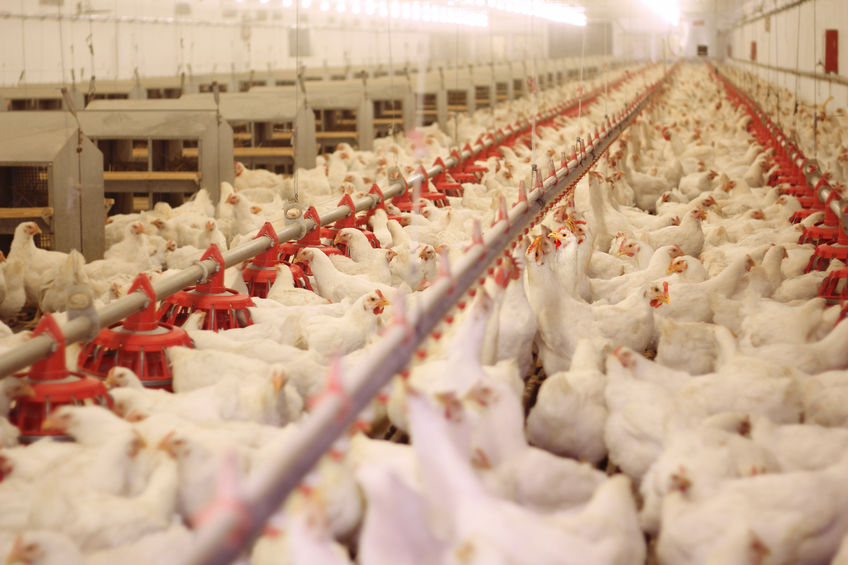
Bird Flu Pandemic Hasn’t Changed Atrocious Conditions at Poultry Farms

http://koreabizwire.com/bird-flu-pandemic-hasnt-changed-atrocious-conditions-at-poultry-farms/80831

The government’s recent move to encourage bigger cages in order to prevent another avian influenza from spreading on a massive scale like the one which transpired last November is being met with a lukewarm reception and skepticism among critics over the lax nature of the newly introduced rules. (Image: Kobiz Media)

The government’s recent move to encourage bigger cages in order to prevent another avian influenza from spreading on a massive scale like the one which transpired last November is being met with a lukewarm reception and skepticism among critics over the lax nature of the newly introduced rules. (Image: Kobiz Media)

SEOUL, April 17 (Korea Bizwire) – Despite new government measures that require farmers to make use of larger cages, the horrific conditions that poultry live under at typical factory farms in South Korea are unlikely to change soon, which have been identified as one of the major factors behind the recent influenza Type A pandemic that causes illness to people.

The government’s recent move to encourage bigger cages in order to prevent another avian influenza from spreading on a massive scale like the one which transpired last November is being met with a lukewarm reception and skepticism among critics over the lax nature of the newly introduced rules.

Existing poultry farms will have 10 years to update their old cages in accordance with the new standards, but critics say the grace period is too long, and that simply making cages slightly bigger won’t get to the root of the problem.

According to current laws regarding poultry farming, chickens are being raised in a space smaller the size of an A4 sheet of paper (0.05 square meters or 0.5 square feet), which means 1 square meter per 20 chickens. When the new rules take place, poultry farms will be required to have their cages built at least 0.075 square meters in size.

The EU already banned (in 2003) the construction of any more of the so-called battery cages, a term that refers to small wire cages in which hens spend their entire lives with little to no space to move around. Since a total ban on battery cages took place in 2012, an increasing number of farmers have adopted free-range farming.

South Korean poultry farms however, have been bucking the trend and engaging in activities that border on animal cruelty, such as keeping the lights on during the night to maximize egg production, exploiting a physiological phenomenon in which a drastic environmental change suddenly increases the egg production of hens.

Despite opposition from animal rights groups, little has been done to secure the wellbeing of farm animals in South Korea.

A representative from the Korea Association for Animal Protection (KAAP), Lee Won-bok, was critical of the government’s move to tackle avian influenza, calling it a ‘makeshift plan’ that will bring little to no change.

“AI pandemics occur almost every year due to the poor living conditions of farm animals, not because of the size of cages,” Lee said.

Hyunsu Yim (hyunsu@koreabizwire.com)

Unique 30 year battle to save magnificent endangered cranes from extinction

Exposing the Big Game's avatarThe Extinction Chronicles

http://siberiantimes.com/other/others/features/unique-30-year-battle-to-save-magnificent-endangered-cranes-from-extinction/

By The Siberian Times reporter
17 April 2017

Behind the scenes at a remarkable 30 year survival experiment in the Far East of Russia.

This is a key moment for the one year old chicks. Picture: Khingansky Nature Reserve

Five young cranes – Gar, Tulungin, Neya, Harga and Aldekson – are pictured here being  released in the wild close to Lake Kleshinskoye.

This is a key moment for the one year old chicks, hatched and bred in captivity in a scheme to save two types of this majestic bird – the red-crowned or Japanese crane and white-naped crane.

They need to get familiar with the wild, and find appropriate company to fly south for wintering.

The next summer they will return, find couples and have their own chicks.

Khingansky Nature Reserve in Amur region has been running this programme for three decades .

Eggs are delivered here from zoos all over…

View original post 694 more words

Bow Valley wolf pack down to 2 after male killed by hunters in B.C.

http://www.cbc.ca/news/canada/calgary/bow-valley-wolf-pack-male-killed-1.4071142

Wildlife specialist says he expects pack’s population near Banff will stabilize despite low numbers

CBC News Posted: Apr 14, 2017 10:40 AM MT Last Updated: Apr 14, 2017 10:40 AM MT

The Bow Valley wolf pack near the Banff townsite is down to two members after a two-year-old male was shot and killed by hunters in B.C. after leaving the park.

The Bow Valley wolf pack near the Banff townsite is down to two members after a two-year-old male was shot and killed by hunters in B.C. after leaving the park. (Parks Canada)

A wildlife specialist in Banff National Park has hopes the Bow Valley wolf pack will recover after one of its three members was shot and killed by a hunter in B.C. last month.

The two-year-old wolf, known as 1502, was equipped with a tracking collar when it left the park and headed west.

“It’s typical for a wolf around that age to go on a dispersal like that as they find a new territory for themselves and join another pack or form another pack on their own,” said Steve Michel, a Parks Canada human-wildlife conflict specialist.

Wolf 1502 travelled more than 500 linear kilometres until he reached the West Kootenay area where he was killed near Trout Lake, B.C., at the end of March.

There are now two wolves remaining in the Bow Valley pack — an alpha male and a two-year-old female, which would be the sibling to wolf 1502.

Last year, Parks Canada staff estimated the pack had at least nine wolves in the spring. A few months later, staff at the park were forced to put down an alpha female after it exhibited concerning behaviour.

Shortly after, four wolf pups were killed by trains in two separate incidents. Later in the summer, park staff shot a second wolf that had been acting boldly around people at campgrounds.

Wolf populations fluctuate

Michel said despite last year’s devastation of the pack, population numbers are constantly fluctuating and he expects the pack’s population will stabilize in some way in the future.

“Wolf populations are very dynamic,” he said. “The size of the pack is constantly changing, just as we talk about this wolf dispersing, there’s other wolves from other packs in other areas that are dispersing that might come and join in to the Bow Valley pack as well.”

Overall, Michel said, the wolf population in Banff National Park is healthy, but being so close to a busy developed area like the Banff townsite, the Bow Valley wolf pack is constantly under pressure.

“We’ve seen before, in this portion of the park and the Bow Valley, we’ve seen packs completely die out and then a short time later, new packs form and take over similar territorial boundaries. We’ve seen packs merge together, packs overtake other ones.”

“Wolf populations are very dynamic and they’re always in a state of flux.”

NASA just snapped the first photos of a mysterious crack in one of Greenland’s largest glaciers

Exposing the Big Game's avatarThe Extinction Chronicles

 https://www.washingtonpost.com/news/energy-environment/wp/2017/04/15/nasa-just-snapped-the-first-photos-of-a-new-crack-in-one-of-greenlands-largest-glaciers/?utm_term=.1c0e51df4726
April 15

This story has been updated. 

The first photographs of a new and ominous crack in Greenland’s enormous Petermann Glacier were captured by a NASA airborne mission Friday.

NASA’s Operation IceBridge, which has been flying over northwest Greenland for the past several days, took the photos after being provided coordinates by Stef Lhermitte, a professor at Delft University of Technology in the Netherlands, who had spotted the oddly located chasm by examining satellite images.

The NASA pictures make clear that a significant new rift has opened near the center of the glacier’s floating ice shelf — an unusual location that raises questions about how it formed. Moreover, this crack is not so distant from…

View original post 695 more words

Slaughter Of Yellowstone Bison At The Center Of Culture War

In the same year that Congress voted to make bison the national mammal, Yellowstone National Park had its second largest cull ever — reducing the heard by more than 1,200 animals.

RAY SUAREZ, HOST:

Americans have always liked the idea of bison, but living with them is another matter. In the same year Congress made bison the national mammal, more than 1,200 were culled from the Yellowstone National Park herd. Amy Martin reports on why the U.S. is killing so many of the animals it also idealizes.

AMY MARTIN, BYLINE: Thirty miles north of Yellowstone is a place called Paradise Valley. Picture snowy peaks, a winding river, big sweeping meadows…

(SOUNDBITE OF COWS MOOING)

MARTIN: …And cows. Drusca Kinkie runs a cattle ranch here.

DRUSCA KINKIE: I think the concept of free-roaming bison will harm agriculture immensely.

MARTIN: The annual bison cull in Yellowstone attracts controversy every year, and this winter was the second biggest ever. But Kinkie supports the reduction of the herd.

KINKIE: There’s a disease issue with bison. They’ve been exposed to brucellosis.

MARTIN: Brucellosis is a bacterial disease, which elk and bison in the Yellowstone area originally caught from livestock. Kinkie says the threat of transmission back to cattle looms large. And it’s that fear that drove the state of Montana to sue Yellowstone in 1995, forcing the park to ship more animals to slaughter. But there’s more going on here than just disease. Bison are caught in the culture wars. Kinkie says she feels misunderstood.

KINKIE: You have all these people out there fighting for free-roaming bison. And it’s a concept. It’s a vision that they have. And we’re fighting for our ability to survive here and make a living as we have for the last 60, almost 70 years. And they don’t have anything to lose in their vision. And we have everything to lose in ours.

ROBBIE MAGNAN: Buffalo has taken care of Native Americans since the beginning of time.

MARTIN: Robbie Magnan says there is a lot to lose on the other side. He’s the director of the Fish and Wildlife Department for the Fort Peck Tribes in northeastern Montana. For him, the culture wars started much further back when Europeans first arrived in North America and more than 50 million wild bison roamed the continent.

MAGNAN: The federal government massacred them because they figured out that was the only way to bring the Indians down to their knees – it was destroy their economy. And that’s why they were almost wiped out.

MARTIN: Now, only about 30,000 bison are protected in North America and, of those, less than half are living in anything close to wild conditions. As Magnan drives up into the hills of the reservation, he says wild bison are an important part of the country’s heritage. That’s why he helped to develop an alternative to slaughter.

MAGNAN: Instead of massacring these animals when they migrate out of the park in the wintertime when they’re hungry, OK, let’s get them out alive and start other cultural herds going.

MARTIN: To do that, the Fort Peck Tribes built a 320-acre brucellosis-quarantined pasture surrounded by extra high fences. Here, the Yellowstone bison can be held and tested and many eventually declared brucellosis free. Last year, the National Park Service said it supported using the facility, but then Magnan says…

MAGNAN: After they found out it works, they quit it. And why quit something when you know it works?

MARTIN: The person responsible for answering that question is Sue Masica, who oversees this region of the park service. But she declined requests for an interview.

Those guys are moving.

UNIDENTIFIED MAN: How many did you count? Yeah, they’re going.

RICK WALLEN: I’m guessing there’s 200-plus.

MARTIN: Rick Wallen is the team leader for the park’s bison management program. He’s watching a large bison herd move quickly down the valley of the Yellowstone River. It’s a cold day and their dark shapes stand out against the snow. Despite the beauty, the mood is intense. For most of the year, Wallen studies these animals. But every winter, he manages their slaughter.

WALLEN: There is a cost, and that cost is more emotional for some than others. I’ve even had people on days that we were supposed to go there and do the work call and say, you know, I can’t do this anymore. I have to resign my position. I’m sorry.

MARTIN: Wallen thinks a better solution would be quarantine. That would allow him to do what he says is his job.

WALLEN: Protect the wild in wild bison. Otherwise, they go extinct.

MARTIN: That extinction comes in the form of domestication. Bison are increasingly raised as livestock and bred with cattle to make them more docile. Wallen says Yellowstone is a bulwark against this trend, a place where bison still have to use their instincts to survive in the wild. For NPR News, I’m Amy Martin in Yellowstone National Park.

Copyright © 2017 NPR. All rights reserved. Visit our website terms of use and permissions pages at www.npr.org for further information.

NPR transcripts are created on a rush deadline by Verb8tm, Inc., an NPR contractor, and produced using a proprietary transcription process developed with NPR. This text may not be in its final form and may be updated or revised in the future. Accuracy and availability may vary. The authoritative record of NPR’s programming is the audio record.

North Korea’s Solid-Fuel Missiles Are Scarier Than Another Nuclear Test | War is Boring

Gallery

This gallery contains 12 photos.

Originally posted on The Fourth Revolutionary War:
https://www.youtube.com/watch?v=T2I66dHbSRA&feature=youtu.be ? https://warisboring.com/north-koreas-solid-fuel-missiles-are-scarier-than-another-nuclear-test/ North Korea’s Solid-Fuel Missiles Are Scarier Than Another Nuclear Test North Korea didn’t celebrate Kim Il-sung’s birthday with a nuclear test, although there was never much indication that it would…

Man charged in hunting accident that killed sister-in-law pleads guilty

http://www.thelcn.com/lcn01/man-charged-in-hunting-accident-that-killed-sister-in-law-pleads-guilty-20170406

Into the Tar Pit of Religion

Exposing the Big Game's avatarExposing the Big Game

Well, I touched the hot button of overpopulation without getting burned, so perhaps it’s safe to wade into the tar pit of religion without going too far under…

First, a fair warning to lurking hunter trolls:  your comments and feeble rationalizations (and we’ve heard them all before) will not be posted on this blog, but will get filed as such and may be used against you anytime they help prove a point. For example, here’s part of a comment I received from a hunter the other day: “I love animals, but fully understand that all living things have their place in God’s plan and on His Earth. He gave us domain over animals. Read Genisis [sic] and wake up!”

How convenient. But do people really still believe that kind of crap?

Sadly, the answer appears to be yes.

A staggering 46% of Americans believe that god created humans in their…

View original post 333 more words