Exposing the Big Game

Forget Hunters' Feeble Rationalizations and Trust Your Gut Feelings: Making Sport of Killing Is Not Healthy Human Behavior

Exposing the Big Game

Video shows sea lion drag girl into water near Vancouver, B.C.

http://komonews.com/news/local/video-shwos-sea-lion-drag-girl-into-water-near-vancouver-bc

(Screenshot of video Michael Fujiwara/CBC)

AA

RICHMOND, British Columbia (AP) — A college student has startling video of a sea lion snatching a girl off a dock and yanking her into the water on Canada’s West Coast.

It happened Saturday in Richmond, a Vancouver suburb. University student Michael Fujiwara tells CBC News that some people started feeding the animal breadcrumbs.

In Fujiwara’s video, the sea lion pops up toward the girl as bystanders laugh. Then she sits by the pier’s edge. In an instant, the massive mammal shoots up, grabs her dress and pulls her into the water as people scream.

The sea lion disappears as a man plunges into the water and helps the girl out. She doesn’t appear injured and walks away with adults.

Marine mammal expert Andrew Trites says the sea lion presumably thought the dress was food.

South African big game hunter crushed by elephant

https://www.usatoday.com/story/news/nation-now/2017/05/22/theunis-botha-south-african-big-game-hunter-crushed-elephant/335673001/

CLOSE
17511 18LINKEDIN 287COMMENTMORE

A South African big game hunter was crushed to death by an elephant on a Zimbabwe game reserve, according to South African outlet News 24. 

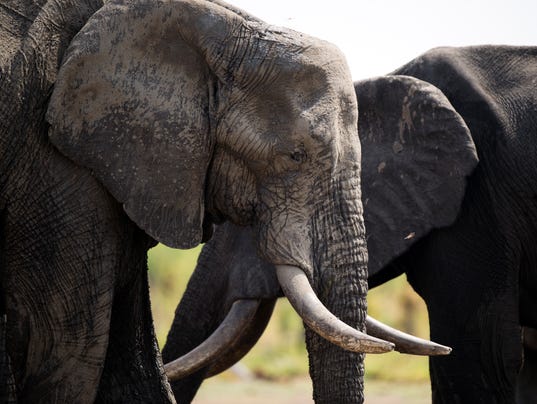
Theunis Botha, 51, was leading a hunt when his group stumbled upon a breeding group of elephants at a game reserve near Hwange National Park Several on Friday afternoon, Zimparks spokesman Simukai Nyasha told The Telegraph.  The group of elephants charged at the group and the hunters shot at them, News 24 reported.

News 24 reported that Botha was crushed after one of the members of the group shot an elephant after she lifted Botha with her trunk. The elephant collapsed and fell on top of Botha, crushing him.

Theunis had five children and ran Theunis Botha Big Game Safaris. According to the website, Theunis “perfected leopard and lion hunting safaris with hounds in Africa.” He also pioneered European-style “Monteira hunts” in South Africa.

“Monteira hunts” include the use of packs of hounds to herd deer, boar or or other animals towards hunters who then shoot the animals.

According to News 24, Theunis often traveled to the U.S. to build business with wealthy Americans who were interested in a big game hunt in South Africa.

The news outlet reported that Theunis’ wife, Carika, will travel to Zimbabwe to identify her husband’s body on Monday.

Young whale finds its way out of Southern California harbor

 https://www.washingtonpost.com/national/wayward-humpback-whale-stuck-in-california-harbor/2017/05/20/ce924696-3dc8-11e7-a59b-26e0451a96fd_story.html?utm_term=.419b5e375c0b
May 21 at 3:00 PM
VENTURA, Calif. — A humpback whale that made a big splash with boaters after wandering into a Southern California harbor was on the move again Sunday after finding its way back to the open ocean.

“We have great news,” an ecstatic Ventura Harbormaster John Higgins told The Associated Press. “The whale was able to find its way out.”

Authorities may have helped it on its way by playing a continuous loop of humpback whale feeding sounds overnight near the harbor’s entrance-exit point.

The idea was to draw the whale toward the open water under the belief there would be something good to eat.

The 40-foot-long creature had wowed boaters and passers-by on shore for hours Saturday after it arrived in the small fishing harbor north of Los Angeles.

People stood on small boats and docks watching it swim back and forth and occasionally surface.

Whale experts told Higgins it appeared to be a healthy juvenile, although he didn’t know its age.

The Coast Guard, National Parks Service, authorities and volunteers spent hours trying unsuccessfully to shepherd it back to the ocean.

After blocking its path with boats and banging on pipes failed to work, they tried the whale feeding sounds. The tactic finally succeeded after they cleared everyone out of the area and moved the underwater speakers closer to the ocean.

Authorities discovered the whale had left on its own when they returned in the morning, Higgins said.

As far as he knows, the young humpback was the first to pay a visit to Ventura Harbor.

“We’ve had California grey whales just peek into the harbor as they’re going up and down the coast,” he said. “But none have ever gone into the harbor.”

Approximately 40-50 Pilot Whales Slaughtered in the Danish Faroe Islands

#BREAKING:
After a chase lasting almost four hours approximately 40-50 pilot whales have been slaughtered on the killing beach at Bøur.
On May 8th 2017 Sea Shepherd Nederland officially submitted a request to the European Commission (EC) to start infringement proceedings against Denmark for facilitating the slaughter of pilot whales and other cetaceans in the Faroe Islands, with the formal support of 27

See More

Image may contain: one or more people, outdoor and nature
Image may contain: one or more people, outdoor and water
Image may contain: ocean, sky, mountain, twilight, outdoor, nature and water
Image may contain: one or more people and outdoor
Sea Shepherd Faroe Islands Campaign added 4 new photos.

#BreakingNews

The pilot whales have been driven up onto the beach, after an exhausting chase that lasted almost 4 stressful hours.

The pod has been estimated to be around 40 individuals who are now forced to endure a painful death in the blood of their relatives.

We will update more tomorrow. Please remember to share these posts, and sign our petition to hold Denmark accountable for slaughter of the pilot whales here: http://bit.ly/2rdZEM0

#OpBloodyFjords #OpGrindini #OpGrindStop #Grind #visitfaroeislands

Photos by Jn.fo

Big game hunter is crushed to death when an elephant he was hunting in Zimbabwe is shot and falls on top of him

  • Theunis Botha was crushed to death by one of the elephants he was hunting
  • He was hunting with a group in Zimbabwe when they came across animals
  • The group began to shoot, which spooked the elephants which began running
  • Botha was then reportedly picked up by one of the elephants he was shooting at
  • Another hunter then shot that elephant, which fell over on top of Botha  

Read more: http://www.dailymail.co.uk/news/article-4528048/Big-game-hunter-crushed-death-shot-elephant.html#ixzz4hmDBGGmr
Follow us: @MailOnline on Twitter | DailyMail on Facebook

A South African safari leader and big game hunter was crushed to death Friday afternoon when an elephant was shot and fell and on top of him.

Theunis Botha, 51, was hunting with a group in Gwai, Zimbabwe, when they came across a breeding herd of elephants.

They quickly began to shoot, according to News 24, spooking the animals and causing the elephants to charge at the hunters.

Theunis Botha (pictured right with his wife, Carika), 51, was hunting with a group in Gwai, Zimbabwe, when they came across a breeding herd of elephants

One of the elephants is then said to have picked up Botha with its trunk.

A member of his group shot the elephant, hoping it would put Botha down. Instead, the wounded and dying animal fell on top of him,  crushing him to death.

Kootenay conservation officers believe someone intentionally poisoning wolves

2 wolves dead of suspected poisoning; officers believe there may be more

By Matt Meuse, CBC News <http://www.cbc.ca/news/cbc-news-online-news-staff-list-1.1294364> Posted: May 18, 2017 1:55 PM PT Last Updated: May 18, 2017 1:55 PM PT

Conservation officers in B.C.’s East Kootenay region say someone appears to have left poison in a wolf travel corridor in order to kill wolves moving through the area. <https://i.cbc.ca/1.3961702.1485969914%21/fileImage/httpImage/image.jpg_gen/derivatives/16x9_620/lone-wolves.jpg>

Conservation officers in B.C.’s East Kootenay region say someone appears to have left poison in a wolf travel corridor in order to kill wolves moving through the area. (Shutterstock / Dennis W Donohue)

Conservation officers in B.C.’s East Kootenay are investigating after the discovery of two wolves they believe were intentionally poisoned.

Conservation officer Greg Kruger said poison was first discovered in early March in the Dutch Creek region, west of Canal Flats — an area known for its active wolf population.

“Where all these … poison containers have been found are all areas that we know are wolf travel corridors,” Kruger said. “So our investigation is looking at someone specifically targeting the wolf population.”

Discovered by dog owner

Kruger said a man contacted them in early March after his dog found and ate from something that looked like a white cupcake container in the area.

“Within a few minutes, that dog became ill [and] started having convulsions,” Kruger said.

The dog was treated by a vet and survived. Conservation officers investigated the area, and, over the course of a few weeks, found 17 different batches of poison along the same road within several kilometres of each other.

Kruger said a sample of the suspected poison tested positive for strychnine — a toxic chemical commonly used in rat poison.

Likely more dead wolves, poison traps

Then, in early April, two wolf carcasses were reported to conservation officers by members of the public.

Kruger said toxicology tests have not yet come back, but officers suspect poisoning, as there is no evidence of any other cause of death.

Kruger says it’s likely there are more dead wolves in less publicly accessible places that have yet to be discovered — and possibly more poison.

“[The containers we found] are all white, so we believe they were placed in the snow to blend in so they wouldn’t be detected,” Kruger said. “We’ve only found them since the snow has started to melt.”

Kruger asked anyone with information to contact the East Kootenay Conservation Officer Service.

He said under the Wildlife Act anyone found to be intentionally poisoning wolves could face a fine of up to $1 million and more than a year in jail.

http://www.cbc.ca/news/canada/british-columbia/kootenay-wolf-poisonings-1.4121946

Hunting accident pits father against son

http://blogs.mprnews.org/newscut/2017/05/hunting-accident-pits-father-against-son/

The Minnesota Court of Appeals today reinstated a hunter’s lawsuit against the owner of property on which he was hunting, whom he says is responsible for his falling from a tree while trying to climb into a deer stand in Pine County.

The hunter’s father owns the property.

A district court found for Corey Ouradnik’s father, Robert, of Forest Lake, who says he reinforced boards nailed into trees that were used to climb into deer stands. But he says he ran out of six-inch screws before getting to the board that gave way when his son was 16 feet off the ground.

The lower court said Robert was shielded from liability under Minnesota’srecreational-use statute, which limits a property owner’s liability for hunters who use the land with permission. It said Robert couldn’t have foreseen the incident.

Robert only let close family members use the land for hunting and the Court of Appeals needed to answer whether the state’s recreational-use statute shields owners of land that isn’t open to public hunting.

The goal of the statute is to encourage private landowners to allow the public to hunt, by absolving them of some liability.

But the Legislature never defined what “public” is.

“Based on the plain meaning of “public,” we conclude that the term is unambiguous and means community, which is more than a few family members,” Court of Appeals Judge Diane Bratvold wrote today on behalf of the three-judge panel.

So the Court of Appeals ruled (see ruling) that in order to receive protection from the statute, Robert Ouradnik would have had to open up his land to the public, not just his son and close family members.

The district court concluded that the legislature’s intent to promote use of private lands for recreational purposes will be undermined if a landowner must give permission to the general public before liability limitations apply. Similarly, Robert contends that a “prudent landowner will not hold land open to the general public without restrictions.”

Robert also argues that the policy behind the recreational-use statute is to “encourage landowners to allow others to use their lands for [] potentially risky activities” with the liability limitation as a “trade off” for the owner.

We reject these contentions for two reasons. First, the legislature identified its policy goal when it adopted section 604A.20, and that policy makes no mention of “risky activities.” In fact, the recreational uses identified in the statute include many activities that are not usually considered risky, such as picnicking, firewood gathering, and nature study.

Second, even if we assume that owners will not offer their lands to the public for recreational use, we cannot ignore the legislature’s express policy statement in interpreting the recreational-use statute, nor can we disregard the plain meaning of the word “public.” It is for the legislature to decide how well a statute achieves its stated objective, and, to modify it accordingly.

The Court of Appeals sent the case back to the district court for a new trial.

A surprise victory for environmentalists on methane

Exposing the Big Game's avatarThe Extinction Chronicles

 https://www.washingtonpost.com/opinions/a-surprise-victory-for-environmentalists-on-methane/2017/05/19/1a304468-3c07-11e7-8854-21f359183e8c_story.html?utm_term=.3ef81a1fd3f5
May 19 at 7:58 PM

THE SENATE last week delivered a surprise victory for environmentalists. Three Republicans joined with several energy-state Democrats to slow the Trump era’s wave of deregulation, preventing Congress from killing one of the Obama administration’s most rational global warming rules. Now the action turns to the Interior Department, which is reviewing the same regulation that just survived Congress’s scrutiny. Interior Secretary Ryan Zinke, who insists he shares Teddy Roosevelt’s commitment to stewardship, should show similar restraint.

The Methane and Waste Prevention Rule concerns methane emissions from oil and gas drilling on federal land. As the primary component in natural gas, methane is a valuable commodity. When drillers allow it to waft uselessly into the air, national resources are wasted and the government loses…

View original post 501 more words

Endangered vaquita marina porpoise could be extinct by 2018: WWF

Exposing the Big Game's avatarThe Extinction Chronicles

The vaquita marina, a tiny porpoise native to Mexico, could be extinct by next year if urgent action including a ban on gillnets is not taken, the World Wildlife Fund for Nature warned.

Fewer than 30 of the rare mammals (Phocoena sinus) still live in the wild, all in the upper Gulf of California, the WWF said in a report Monday.

The vaquita population has plummeted 90 percent in less than six years, down from 250 in 2011.

“If we don’t do something today, the vaquita could be extinct by 2018,” said Maria Jose Villanueva, director of strategy and science for WWF Mexico. “Losing it would be like losing a piece of Mexico.”

Villanueva told reporters that the only known threat to the survival of the vaquita—”little cow” in Spanish—are gillnets, long walls of netting hung vertically that trap fish by the gills when they swim through.

The nets are…

View original post 410 more words