NEW BILL COULD MAKE WOLF HUNTING YEAR-ROUND IN IDAHO
Reply

Animal welfare put at risk on old and ‘inferior’ converted car carriers and cargo ships that are not built to transport livestock
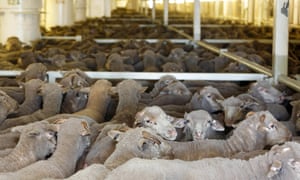
The live export trade carrying millions of sheep and cattle across the seas each year is plagued by “old” and “inferior” ships that are a threat to animal welfare, claims a leading shipping company.
Livestock carriers are a key part of the multibillion dollar live export industry, dominated by Australia, South America and Europe. In 2017, almost 2 billion animals were exported in a trade worth $21bn (£15bn), with a significant proportion travelling by sea.
But most of the ships are old car carriers or other former cargo ships, rather than purpose-built vessels that can meet higher standards of animal welfare, said Wellard, one of the world’s largest livestock exporters, based in Australia.
A spokesperson for the company, which shipped nearly 400,000 cattle in 2019, said: “The old converted vessels bring the standard of the whole industry down. If you’re using a ship that was originally built for another purpose, you’re compromising on your animal services when you convert it to a livestock vessel.
“The biggest threat to the global live export industry is old ships. They have inferior standards and livestock services and they are more prone to accidents and breakdowns. Those ships give a bad name to a legitimate industry.”
More than half of the 129 livestock carriers listed as active with a working automated tracking system on at least one marine website were built before the 1980s. “The livestock carrier fleet is one of the oldest sectors in the globally trading fleet with an average vessel age of 38 years old,” said Adam Kent, managing director of market analysts Maritime Strategies International (MSI). In comparison, the average age of a container ship is 13.
“Only the Laker fleet, trading on the freshwater Great Lakes, has an older average age,” he said.
“Given that around 80% of all livestock carriers are converted vessels, which were originally designed for another cargo, the relative investment in the sector is significantly below other ship types,” he added. Most ships were converted from general cargo or “roll on roll off” (RoRo) vessels, meaning ships that have been designed to carry wheeled cargo.
The Dutch company Vroon, which owns the subsidiary Livestock Express, is known as the “world’s biggest independent seaborne livestock carrier”, with a fleet of 13 purpose-built vessels. Around half its ships have a gross tonnage of 10,241 and can carry more than 4,600 heads of cattle.
Livestock Express managing director Paul Pistorius warned that converting old vessels into livestock carriers means making “compromises”.
“When converting a vessel, you must live with the original hull and machinery and furthermore you always need to make compromises during the conversion phase. History has shown that these compromises may lead to poor animal welfare outcomes.
“There are indeed a lot of old conversions and also recent conversions of old hulls. Unfortunately, many of these vessels don’t always meet the standards to which we believe livestock carriers should adhere,” he said.
If you or someone you know has expertise in this field, we would like to hear from you. You can get in touch by filling in the form below, anonymously if you wish. Only the Guardian can see your contributions and one of our journalists may contact you to discuss further.
The practice of transporting thousands of live animals (some ships carry more than 10,000 animals) across the sea for weeks at a time means attention must be paid to the welfare of animals. Older ships were not built for this purpose, which raises concerns.
The most common health risks for animals on ships are fatigue, heat stress, overcrowding and related injuries, and the spread of disease. Lynn Simpson, a former veterinarian on livestock export ships, has been a vocal critic of the long-distance ship trade. She’s witnessed cattle forced to stand on hard floors for weeks on end, sick, injured animals left to die, and sheep literally cooking from the inside with their “fat melted and like a translucent jelly”.
“Some animals are held on decks for as long as 40 days, living on hard decking of concrete and metal. They [the animals] are not built to cope with these environments,” said Simpson. She points out that the long time spent at sea makes it even more critical for ships to be well-adapted for animals to protect their health and welfare. “A truck is transporting from A to B, but a ship is really a floating feedlot. They are at sea for up to six weeks so it’s not just a small period of time. They [the animals] have to eat, sleep, drink and recover.”
“The live animal trade is not one where great fortunes are made. The unsuitability of the ships has created a lot of issues for the welfare of the animals. There has been a lot of concern about converted ships, which have a checkered history of inspection failings,” said Andrew Linington, former editor for the maritime trade union, Nautilus International.
In November the Queen Hind, a 40-year-old vessel owned by Romanian company MGM Marine, was carrying more than 14,000 sheep when it capsized en route from Romania. The 22 crew members were rescued but just 180 sheep survived.
Campaign groups said at the time that a major problem was that often vessels were not built for the journey. “They are old vessels that are converted to transport animals,” Francesca Porta from Eurogroup for Animals in Brussels told the New York Times.
That incident prompted Nautilus International to call for an investigation into converted livestock carriers, saying the industry must “learn safety lessons for keeping seafarers safe and improving animal welfare”.
“There’s a risk that in these long-distance transport there are major problems with animals overheating in highly humid, dirty conditions … where a vessel has been converted it will be less able to control bad conditions,” said a spokesperson from Compassion in World Farming.
Mortality figures in the export of livestock are largely unavailable as the majority of countries, aside from Australia and New Zealand, do not require them to be publicly reported. The International Maritime Organization only requires an investigation of casualties at sea if they led to the death or serious injury of a person, or serious damage to the ship or the marine environment. In Australia the government reports on any shipments where the mortality rate exceeds 1%. In August 2017, around 2,400 sheep died from heat stress on a ship sent from Australia to the Middle East.
For Europe, the only available mortality figures are from media reports on major incidents. In 2015, Jordan rejected a shipment of 13,000 sheep from Romania because 40% of the animals were dead. A veterinary inspection at port found that it was not disease that caused the high mortality rate, but a failure to provide adequate food or water on the eight-day trip.
Simpson said the mortality rates were likely to be higher in other regions not reporting figures. “The ships I was on 10 years ago carried 10,000 cattle for 20-day voyages and if you lost 15 animals I would say that was average. When they were travelling out of South America, the crew told me the same ships would have 14,000 cattle and would lose 300–500 animals in a voyage.
“They don’t care about animal welfare. It is just about numbers, which would be fine if we were talking about cans of soup.”
A large number of livestock-carrying ships are also sailing under flags of convenience with poor reputations for ship safety. Out of the 129 ships listed as active, 52 are flying flags from countries currently blacklisted by the port inspection body the Paris MOU, which conducts more than 17,000 inspections on ships every year in ports around the world.
In addition, 10 of the companies that own or manage converted vessels built before 1975 are listed as “low or very low-performing” by the European Maritime Shipping Agency.

International media has reported that according to scientists have said that China’s animal trade can bring in more viral outbreaks. Talking about the illegal animal trade, researchers said that the recent outbreak of Coronavirus epidemic indicates that the practice remains widespread and is a growing risk to human health.
According to international media reports, the deadly Coronavirus which has killed 56 people and infected nearly 2,000 people has originated from animals trafficked for food. The final findings are yet to be announced but the Chinese health officials believe that coronavirus originated from wildlife sold illegally at the meat market in Wuhan.
Read: Virus Death Toll In China Rises To 56 With About 2,000 Cases
The central animal market in Wuhan offers everything from rats to wolf puppies and giant salamanders. The scientists have claimed that more than 60 per cent of viruses reach human via animals. Previously, it was discovered that SARS-like Ebola traced its origins from bats while HIV has been traced back to African primates.
Peter Daszak, president of EcoHeakth Alliance, a global NGO focussed on infectious disease prevention said that the new normal is that the pandemics are going to happen more frequently. He added that humans are increasingly somehow engaging in contact with the animal that carry these viruses.
Read: Afghan Official Says Taliban Killed Intel Officer In Helmand
Scientists have warned that even familiar menu items like poultry and cattle whose pathogens humans have adapted over millennia sometime hit hard with diseases like bird flu or mad cow disease. Diana Bell, wildlife disease and conservation biologist said that at least for the sake of these wild species’ future and for human health, humans need to reduce consumption of these wild animals.
As the death toll has risen to 56, China has started taking drastic measures to contain the spread of the disease. Earlier today, China announced a temporary ban on the trade of all wild animals. In a joint directive from three agencies including the Ministry of Agriculture, authorities ordered that raising, transporting, or selling all wild animal species has been banned with immediate effect until the national epidemic situation is over.
DISTRESSING videos have emerged showing medical staff breaking down screaming and crying after trying to battle the killer coronavirus without sleep.
The footage was reportedly filmed inside a hospital in Wuhan, the epicentre of the virus that been under quarantine since last Thursday.


In one video a woman in a white medical…
View original post 497 more words

Investors worldwide have been spooked by the rapid spread of the Chinese coronavirus, with stock markets around the globe sharply lower on Monday.
The death toll rose to 81 as of early Monday, according to Chinese officials, with more than…
View original post 556 more words
Dr. Mehmet Oz said Monday on “Fox & Friends” that thousands of additional coronavirus cases will soon be confirmed in China and expressed alarm about the incubation period being specified by Chinese officials.
China on Monday expanded sweeping efforts to contain a viral disease by extending the Lunar New Year holiday to keep the public at home and avoid spreading infection as the death toll rose to 80.
Hong Kong announced it would bar entry to visitors from Wuhan, the mainland province at the center of the outbreak, following a warning the virus’ ability to spread was increasing. Travel agencies were ordered to cancel group tours nationwide, adding to the rising economic cost.
CORONAVIRUS: 56 DEAD AND 1,975 INFECTED AS CANADA REPORTS 1ST CASE
Increasingly drastic anti-disease efforts began with…
View original post 217 more words

U.S. health officials are currently monitoring 110 people across 26 states for the coronavirus, including the five patients who contracted the deadly infection in China and brought it back to America.
The disease, which has killed at least 81 people in China and sickened more than 2,800 worldwide, isn’t spreading within the community in the U.S. and the risk to the public right now is still considered low, Dr. Nancy Messonnier, director of the National Center for Immunization and Respiratory Diseases, told reporters on a conference call Monday.
“We understand that many people in the United States are worried about this virus and how it will affect Americans,” Messonnier said. “Every day we learn more, every day we assess to see if our guidance or our response can be improved.”
The number of “patients under investigation” in the U.S. has almost doubled from the 63 the Centers for Disease Control and Prevention said were under surveillance on Thursday. The CDC says 32 people have tested negative for the virus.
“While that number is 110, we are certainly prioritizing based on [patients under investigation] that might be at higher risk,” Messonnier said.
The CDC confirmed Sunday a fifth U.S. case of the virus — a patient in Maricopa County, Arizona, who recently traveled to Wuhan, China, the epicenter of the disease’s outbreak and where the majority of cases have been reported.
Messonnier said the CDC has screened roughly 2,400 people flying from Wuhan to five major U.S. airports and is considering expanding its screening. The agency increased its travel warning for all of China, asking people traveling to practice “enhanced precautions.”
“This outbreak is unfolding rapidly and we are rapidly looking at how that impacts our posture at the border. We’re certainly considering broadening of that screening,” she said.
Coronaviruses are a large family of viruses that usually infect animals but can sometimes evolve and spread to humans. Symptoms in humans include fever, coughing and shortness of breath, which can progress to pneumonia. Physicians have compared it to the 2003 outbreak of SARS, which had a short incubation period of two to seven days.
China’s National Health Commission minister, Ma Xiaowei, said on Sunday that the incubation period could range from one to 14 days, and the virus was infectious during incubation, unlike the outbreak of severe acute respiratory syndrome, Reuters reported.
On Monday, the CDC said it hasn’t seen “any evidence of patients being” infected “before onset.”
Messonnier said the incubation period for the new virus is somewhere between two and 14 days. There’s been some debate over how contagious the disease is and she said it may not be known for a while.
“This outbreak is really unrolling in front of our eyes,” she said.
The so-called R naught, a mathematical equation that shows how many people will get an illness from each infected person, is somewhere around 1.5 to 3, she said. Measles, which is one of the most contagious infections in the world, has an R naught of around 12 to 18, by comparison, she said.
The CDC is trying to speed up testing and to get the tests in the hands of state health officials. It currently takes the CDC about four to six hours to make a diagnosis once a sample makes it to its lab.
U.S. health officials have warned that the flu or other respiratory illnesses could complicate identifying more cases. They recommend that people call a health-care provider before seeking treatment so the appropriate measures can be put in place.
In China, some 50 million people are now under travel restrictions. Shanghai Disney is closing until further notice at a time when the theme park would normally be packed with tourists during the Lunar New Year holiday. Starbucks and McDonald’s also closed stores in Hubei province where Wuhan is located.
The WHO’s director-general, Dr. Tedros Adhanom Ghebreyesus, is traveling to Beijing to meet with government and health officials. According to the organization, more data needs to be collected before the virus, which can spread through human-to-human contact, is declared a global health emergency. The WHO declined at two emergency meetings last week to say it was a worldwide emergency.
CNN)There are at least five confirmed cases of the Wuhan coronavirus in the US, a number the Centers for Disease Control and Prevention predicts will continue to climb.
View original post 2,365 more words
Two more Americans have contracted the new coronavirus that has killed more than 50 people in China, raising the U.S. total to five, authorities confirmed Sunday.
The virus has been reported in several countries, but all the deaths have been in China. Most have been in and around Wuhan, a central city of 11 million people that has been the epicenter of the outbreak.
The Los Angeles County Health Department said the infected person was receiving medical treatment.
“There is no immediate threat to the general public, no special precautions are required, and people should not be excluded from activities based on their race, country of origin, or recent travel if they do not have symptoms of respiratory illness,” the department said.
The department said that residents, students, workers and visitors should continue to engage in their regular activities – and practice good public health hygiene “as this…
View original post 630 more words
Beijing faces uncomfortable questions over its failure to clean up wildlife trade and public calls for a permanent ban on wild meat
Police on Jan. 9 examined items seized from a store suspected of trafficking wildlife in Guangde in central China’s Anhui province.
PHOTO: ASSOCIATED PRESS
By Jeremy Page
Updated Jan. 26, 2020 7:52 pm ET
BEIJING—It didn’t take long to identify the suspected source of a deadly coronavirus outbreak in the Chinese city of Wuhan: a cluster of vendors in a downtown market offering carcasses and live specimens of dozens of wild animals—from bamboo rats to ostriches, baby crocodiles and hedgehogs.
The Huanan food market, a scruffy complex of 1,000 stalls spread over an area the size of nine football fields, is the largest of its kind in central China, mostly supplying seafood to Wuhan’s residents and restaurants. It is typical of the wet markets where most people in…
View original post 1,665 more words



 Exposing the Big Game