American trapped at the epicenter of the coronavirus outbreak says she’s angry and scared

Exposing the Big Game's avatarThe Extinction Chronicles

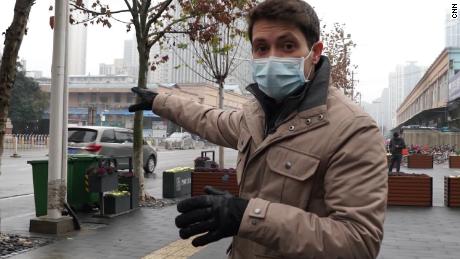
Beijing (CNN)A US citizen trapped at the epicenter of the coronavirus outbreak in China described her fear of living in a city that’s cut off from the rest of the country by transport restrictions.

Teacher Diana Adama has been living in Wuhan city for three months of her 15 years in China. Wuhan is the ground zero for a new deadly strain of coronavirus — with about 1,000 Americans living in the city.
People wear protective masks during decorations marking  the Chinese New Year.
More than 50 people are dead — all in China — as the Wuhan coronavirus continues to spread throughout Asia and the rest of the world. Nearly 2,000 cases have been confirmed in mainland China.
Chinese authorities have imposed indefinite restrictions on public transport and travel in Hubei province in…

View original post 323 more words

Rant: Greta Thunberg, climate crisis, personal comfort zones, and the can-do attitude

Exposing the Big Game's avatarThe Extinction Chronicles

From: https://mountainjournal.org/why-rising-temps-mean-the-end-of-the-world-as-we-know-it

It would be an immeasurable help if Greta Thunberg upped her game, specifically by telling her age mates what she knows about the breadth, depth, and severity of the climate crisis. 

She calmly told Daily Show host Trevor Howard that young people are responding because they recognize a “direct threat,” and they know that the world is getting warmer, ice is melting, and that “it will get worse,” but she went on to say that, in her experience, “the awareness is not as it should be” and that people still “don’t understand how severe this crisis actually is.”

She hasn’t yet made the severity explicit, sharing what she almost certainly knows about it. 

She’s approached it, referring to feedback loops leading to an irreversible threat beyond human control, with implications for the future of civilization. She’s approached it in saying that people are already dying at…

View original post 422 more words

Rooster Slices and Kills Owner on Their Way to a Cockfight in India: Report

Exposing the Big Game's avatarCommittee to Abolish Sport Hunting Blog

Rooster Slices and Kills Owner on Their Way to a Cockfight in India: Report
More

A 50-year-old man in India was killed when he was sliced in the neck by his own rooster while on the way to a cockfight, according to CNN.

Saripalli Chanavenkateshwaram Rao — a father of three — died of a stroke after being transported to a hospital when he suffered the cut from a razor tied to the animal’s claw on Jan. 15, officer Kranti Kumar said in a statement CNN. The fatal injury occurred when the rooster tried to escape, Kumar added.

Rao was from a village in Andhra Pradesh, a state located in south-eastern India, and frequently attended cockfights in the area.

A centuries-old practice, cockfighting involves placing roosters in an enclosed pit and having them fight to the death, according to the Humane Society

View original post 277 more words

The outbreaks of both the Wuhan coronavirus and SARS started in Chinese wet markets. Photos show what the markets look like.

Exposing the Big Game's avatarExposing the Big Game

china wet marketchina wet market
Customers in a Chinese wet market on January 22, 2016. 
Edward Wong/South China Morning Post/Getty

The coronavirus spreading in China and the SARS outbreak of 2003 have two things in common: Both are from the coronavirus family, and both started in wet markets.

At such markets, outdoor stalls are squeezed together to form narrow lanes, where locals and visitors shop for cuts…

View original post 1,296 more words

The outbreaks of both the Wuhan coronavirus and SARS started in Chinese wet markets. Photos show what the markets look like.

china wet marketchina wet market
Customers in a Chinese wet market on January 22, 2016. 
Edward Wong/South China Morning Post/Getty

The coronavirus spreading in China and the SARS outbreak of 2003 have two things in common: Both are from the coronavirus family, and both started in wet markets.

At such markets, outdoor stalls are squeezed together to form narrow lanes, where locals and visitors shop for cuts of meat and ripe produce. A stall selling hundreds of caged chickens may abut a butcher counter, where uncooked meat is chopped as nearby dogs watch hungrily. Vendors hock skinned hares, while seafood stalls display glistening fish and shrimp.

Wet markets put people and live and dead animals — dogs, chickens, pigs, snakes, civets, and more — in constant close contact. That makes it easy for a virus to jump from animal to human.

On Wednesday, authorities in Wuhan, China — where the current outbreak started — banned the trade of live animals at wet markets. The specific market where the outbreak is believed to have begun, the Huanan Seafood Market, was shuttered on January 1. The coronavirus that emerged there has so far killed 26 people and infected more than 900.

“Poorly regulated, live animal markets mixed with illegal wildlife trade offer a unique opportunity for viruses to spillover from wildlife hosts into the human population,” the Wildlife Conservation Society said in a statement.

Coronaviruses are zoonotic diseases, meaning they spread to people from animals. In the case of SARS, and likely this Wuhan coronavirus outbreak as well, bats were the original hosts. The bats then infected other animals, which transmitted the virus to humans.

Here’s what Chinese wet markets look like.

The Huanan Seafood Market in Wuhan closed on January 1 after it was found to be the most likely starting point for the outbreak of this coronavirus, also called 2019-nCov.

wuhan wet market
Huanan Seafood Market in Wuhan, China, on January 12, 2020. 
NOEL CELIS/AFP via Getty Images

A 61-year-old man was the first person to die from the virus. According to Bloomberg, he was a regular shopper at the Huanan wet market, which sold more than seafood.

Reports indicated that before the Huanan market closed, vendors there sold processed meats and live animals, including chickens, donkeys, sheep, pigs, foxes, badgers, bamboo rats, hedgehogs, and snakes.

wet market fish
A wet market in Beijing on July 3, 2007. 
Teh Eng Koon/AFP via Getty

Wet markets like Huanan are common around China. They’re called wet markets because vendors often slaughter animals in front of customers.

“That means there’s a lot of skinning of dead animals in front of shoppers and, as a result, aerosolizing of all sorts of things,” according to Emily Langdon, an infectious disease specialist at University of Chicago Medicine.

On Wednesday, Wuhan authorities banned the trade of live animals at wet markets.

china wet market
A wet market in Guilin, China, on June 19, 2014. 
David Wong/South China Morning Post/Getty

Police in Wuhan began conducting checks to enforce the rule among the city’s 11 million residents, the BBC reported, citing state media reports.

This type of intervention could help stop the spread of zoonotic viruses like the Wuhan coronavirus.

wet market china chicken
A wet market in Beijing on July 3, 2007. 
Teh Eng Koon/AFP/Getty

“Governments must recognize the global public health threats of zoonotic diseases,” Christian Walzer, executive director of the Wildlife Conservation Society’s health program, said in a statement. “It is time to close live animal markets that trade in wildlife, strengthen efforts to combat trafficking of wild animals, and work to change dangerous wildlife consumption behaviours, especially in cities.”

The close proximity of shoppers to stall vendors and live and dead animals in wet markets make them prime breeding grounds for zoonotic diseases.

china wet market
A Chinese wet market. 
Felix Wong/South China Morning Post/Getty

Between 2002 and 2003, SARS killed 774 people across 29 countries. It originated in wet markets in the province of Guangdong.

civet
An Asian palm civet. 
Oleksandr Rupeta/NurPhoto/Getty

But the civets weren’t the original hosts of the disease.


Researchers figured out that SARS originally came from a population of bats in China’s Yunnan province.

horseshoe bat
A greater horseshoe bat, a relative of the Rhinolophis sinicus species from China that was the source of the SARS virus. 
De Agostini/Getty

“Coronaviruses like SARS circulate in bats, and every so often they get introduced into the human population,” Vincent Munster, a virologist at the Rocky Mountain Laboratories, told Business Insider.

Bats can pass along viruses in their poop: If they drop feces onto a piece of fruit that a civet then eats, the civet can become a disease carrier.

Experts haven’t yet confirmed the animal species that enabled the Wuhan coronavirus to spread to people.

pig wet market
A worker with a slaughtered pig at a wet market in Manila, Philippines. 
Romeo Ranoco/Reuters

“There’s an indication that it’s a bat virus, spread in association with wet markets,” Munster said.

But according to a group of scientists who edit the Journal of Medical Virology, the culprit in this case could be the Chinese cobra.

chinese cobra
A Chinese cobra. 
Thomas Brown

Scientists in China have figured out the genetic code of the Wuhan coronavirus. When researchers compared it with other coronaviruses, they found it to be most similar to two bat coronavirus samples from China.

But further analysis showed that the genetic building blocks of the Wuhan coronavirus more closely resembled that of snakes. According to the researchers, the only way to be sure of where the virus came from is to take DNA samples from animals sold at the Huanan market and from wild snakes and bats in the area.

The H7N9 and H5N9 bird flus — also zoonotic viruses — were likely transmitted to humans in wet markets, too.

wet market ducks china
Ducks on top of chickens at a wet market in Shanghai. 
In Pictures Ltd./Corbis/Getty

According to the World Health Organization, people caught those bird flus via direct contact with infected poultry in China. The diseases killed 1,000 people globally.

Bats and birds are considered reservoir species for viruses with pandemic potential, according to Bart Haagmans, a virologist at the Erasmus Medical Center in Rotterdam, Netherlands.

wet market china chicken
A chicken vendor on top of chicken cages at a wet market in Kowloon City, China. 
Dickson Lee/South China Morning Post/Getty

“Because these viruses have not been circulating in humans before, specific immunity to these viruses is absent in humans,” Haagmans told Business Insider.

“There have been plenty of eminent epidemiologists predicting ‘pandemic X’ for a number of years now,” Adrian Hyzler, the chief medical officer at Healix International, told Business Insider.

wet market china chicken
Live chickens in a wet market in Guangzhou, China. 
K. Y. Cheng/South China Morning Post/Getty

These pandemics “are more likely to originate in the Far East because of the close contact with live animals [and] the density of the population,” Hyzler added. His firm offers risk-management solutions for global travelers.

The Wuhan coronavirus outbreak isn’t considered a pandemic, however.

wet market china
A seafood stall in a wet market in Hong Kong. 
Isaac Lawrence/AFP/Getty

Since December 31, more than 900 cases of the Wuhan coronavirus have been reported across 10 countries, including the US. Symptoms include sore throats, headaches, and fevers, as well as pneumonialike breathing difficulties.

Haagmans said one of the challenges in containing this outbreak was that a substantial portion of infected people show only mild symptoms.

These people “may go unnoticed in tracing the virus and fuel the outbreak,” he said. “It seems that this actually may be the case now.”

Aria Bendix contributed reporting to this story.


A FRIEND OF THE BEARS: STAN PABST

Exposing the Big Game's avatarCommittee to Abolish Sport Hunting Blog

Original article written by Dawn Trent, VP Friends of the Bears;

Photos courtesy of Friends of the Bears

An older article posted on abolishsporthunting.org

Stan has lived with black bears for more than 20 years. He has fed and sheltered them, protected the orphans and nursed the injured. In return for his kindness he has received death threats, had property stolen, been shot at more times than he can count, interrupted two attempts to burn down his house, and on several occasions he discovered a rattlesnake in his van. All this at the hands of hunters and poachers, and more often than not, abetted by government employees.

Stan’s crusade on behalf of the much maligned black bear began in 1980, when he discovered a small cub clinging precariously to a tree branch. Stan observed the cub for 24 hours and when no female bear appeared, he concluded that it was…

View original post 975 more words

Third US case of coronavirus confirmed as China warns people can spread the virus before realizing they’re ill

Image

Exposing the Big Game's avatarThe Extinction Chronicles

(CNN)Coronavirus has been confirmed in Southern California — making it the third case in the United States — as a top Chinese health official delivered some worrisome news about efforts to contain the fast-moving virus.

The Centers for Disease Control and Prevention notified Orange County health officials Saturday that a potential case of coronavirus tested positive.
The person who tested positive traveled from Wuhan, China — the epicenter of the outbreak — and is in isolation and in “good condition” at a local hospital, the Orange County Health Care Agency said in a statement.
CNN goes to ground zero of Wuhan coronavirus outbreak in China

Play Video

CNN goes to ground zero of Wuhan coronavirus outbreak in China 02:45
State and federal officials are following up with anyone who may have had close contact with the…

View original post 528 more words

China’s coronavirus outbreak is unfolding in a new age of information—and surveillance

Exposing the Big Game's avatarThe Extinction Chronicles

2003 VS. 2020

FROM OUR OBSESSION

Even small changes in China have global effects.

When the SARS outbreak hit China in 2003, only 6% of the population had access to the internet. Seventeen years later, that number has increased tenfold: more than 61% of the Chinese population are now online, according to the latest government figures.

The daily lives of Chinese citizens today are shaped, to a large extent, by something that didn’t even exist in 2003: WeChat. Launched in 2011, the all-encompassing app is, for many in China, the internet itself. It’s where citizens read, chat, shop, socialize, and pay for everything from taxi rides to groceries. It’s also a platform where the state surveils its people.

This is the backdrop against which China’s coronavirus outbreak, which has sickened some 2,000 people (link in Chinese) and killed nearly…

View original post 1,644 more words

Wuhan virus outbreak exposes perils of exotic wildlife trade

Exposing the Big Game's avatarThe Extinction Chronicles

ASEAN+

Thursday, 23 Jan 2020
4:40 PM MYT

SHANGHAI/BEIJING (Xinhua): A new coronavirus spreading from the city of Wuhan has put a spotlight on China’s poorly regulated wild animal trade
– driven by relentless demand for exotic delicacies and ingredients for traditional medicine.

China’s markets, where wild and often poached animals are packed together, have been described as a breeding ground for disease and an incubator for a multitude of viruses to evolve and jump the species barrier to humans.

More than 500 people have been infected by the new flu-like virus that authorities say emerged from illegally traded wildlife in a seafood market in the central Chinese city, with the death toll at 17 and expected to rise.

“The origin of the new coronavirus is the wildlife sold illegally in a Wuhan seafood market,” Gao Fu, director of China Center for Disease Control and Prevention, told a briefing.

Preliminary…

View original post 518 more words

Human Ancestors Caused Animal Extinctions Millions of Years Before We Even Arrived

Exposing the Big Game's avatarCommittee to Abolish Sport Hunting Blog

MICHELLE STARR
26 JAN 2020

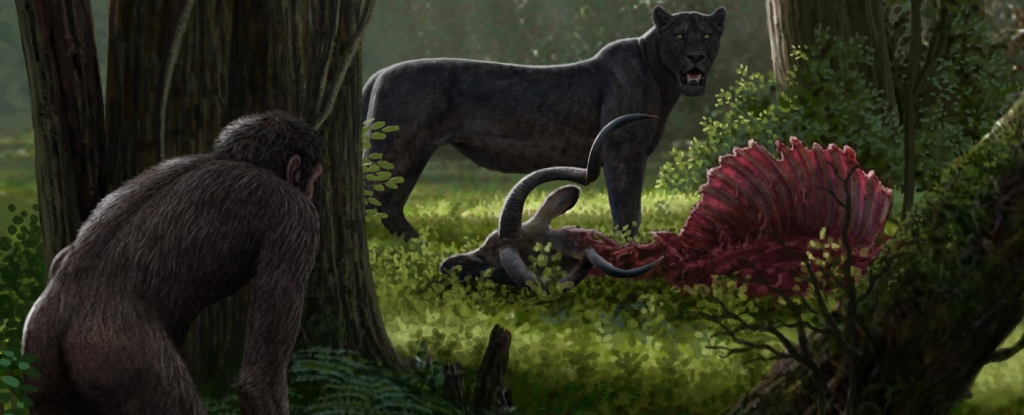
The apple doesn’t fall far from the tree, as the saying goes. And it seems that could be true of Homo sapiens as a whole. Just as our activities today drive other animals to extinction, so too, new research suggests, did those of human ancestors millions of years ago.

By examining the fossil record in East Africa, biologists have been able to trace a decline in carnivores that correlates with an increase in hominin brain size and vegetation changes – but not with climate or weather changes, as is commonly found.

This, the researchers say, can be interpreted as a connection between hominin activity and carnivore extinctions.

hunting(Mauricio Antón)

“Our analyses show that the best explanation for the extinction of carnivores in East Africa is … that they are caused by direct competition for food with our extinct ancestors,” said computational biologist Daniele…

View original post 447 more words