Exposing the Big Game

Forget Hunters' Feeble Rationalizations and Trust Your Gut Feelings: Making Sport of Killing Is Not Healthy Human Behavior

Exposing the Big Game

What it will take to stop the Wuhan coronavirus

Laurie Garrett is a Pulitzer Prize-winning writer and policy analyst, and the author of “The Coming Plague: Newly Emerging Diseases in a World Out of Balance.” The views expressed in this commentary belong to the author. View more opinions at CNN.

(CNN)On this date 17 years ago, I was covering the severe acute respiratory syndrome (SARS) virus for several months as it spread across Asia, eventually reaching 37 countries, sickening 8,098 people and killing 774 of them.

So, as I read the first reports of a cluster of animal-market related illnesses, with the first patient exhibiting symptoms of pneumonia as early as December 12, 2019, I had a chilling sense of déjà vu. By New Year’s Eve, it was obvious something akin to SARS — as it turns out, the Wuhan coronavirus is in the same family of viruses as SARS and MERS (Middle East respiratory syndrome) — was unfolding in China.
The mysterious pneumonia virus that emerged from a live animal market in China’s central city of Wuhan last month has now infected far too many people, over far too vast a geographic area, to be easily controlled.
The Wuhan coronavirus — part of a family of viruses that are common among animals and can cause fever as well as respiratory symptoms when transmitted to humans — has been found in cities all over China, and travelers have since spread the virus to several countries, including Singapore, Japan, Vietnam, Taiwan and South Korea as well as Hong Kong and Macau.
The first American case — involving a man in his 30s who recently traveled to Wuhan — was confirmed outside Seattle on January 21, before the Centers for Disease Control and Prevention announced on Friday a second case in Chicago. As of Friday, at least 41 people have died from the illness.
close dialog
Smart takes from sharp minds
I warned that China appeared to be taking more aggressive steps shutting down social media posts, arresting people accused of spreading “rumors” and capping the flow of information about the outbreak than it was halting the transmission of the virus. For more than a week, the reported number of cases barely changed after local authorities shut down the Huanan Wholesale Seafood Market, the putative source of the virus. And authorities insisted the cause was neither SARS, nor similar viruses like the flu, avian flu, or MERS.
They also repeatedly stated that there was no evidence of human-to-human spread of the disease (which turned out to be false), leading the World Health Organization and outside world to believe that closing the live animal market effectively brought the outbreak to a halt.
As recently as January 18, the Chinese Center for Disease Control and Prevention posted stern warnings against paying heed to “rumors” and insisted there were no cases of the disease in hospitals outside of Wuhan, adding that the outbreak was “preventable and controllable.”
But we now know that was far from true.
Officially, there are more than 1,000 cases of the Wuhan coronavirus. Unofficially, however, the toll is likely to be far higher, and more than 20 Chinese cities have reported cases of the coronavirus.
Separate studies from London’s Imperial College and Hong Kong University Medical School estimated that some 1,300 to 1,700 people were infected during the first week of January, when Chinese officials reported just a handful of cases and downplayed the epidemic’s severity. This week, the Imperial College team estimated that there were a total of 4,000 cases (with the possibility of up to 9,700 cases in the worst-case scenario) by January 18, when the official tally was still at 62 cases.
Using a different statistical method, scientists at Northeastern University in Boston reckon that 5,900 were infected by January 23.
Despite the wide disparity in the figures, this new epidemic seems poised to eclipse the scale of the 2003 SARS epidemic, and is already well outside of the reach of simple control measures.
Hong Kong University virologist Guan Yi, who was part of the team that discovered the SARS virus, tells the Washington Post that the epidemic is so out of control now that “a bigger outbreak is certain.” He said that even with a conservative estimate, the outbreak could be 10 times bigger than the SARS epidemic — with a reach of more than 80,000 cases.
Speaking on background, other SARS veterans tell me there may already be “many thousands” of infected individuals in China.
Because authorities initially downplayed the seriousness of the outbreak instead of implementing swift control measures, people have traveled to and from Wuhan — a major transportation hub with a population of 11 million people — and unwittingly carried the virus with them.
Chinese authorities have shut down flights, ferries, highways, and trains leaving Wuhan, as well as public transportation within the city. Twelve other cities in China have issued travel restrictions in an unprecedented move to contain the virus just days before the Lunar New Year on January 25, which usually ushers the largest human migration on earth, with hundreds of millions of people traveling to see relatives.
Following my January 8 claim that the Chinese government was covering up a significant epidemic, pressure mounted from United Nations agencies, Ministries of Health worldwide and the scientific community. Finally, Wuhan provincial communist party chief Jiang Chaoliang, and his counterparts in neighboring districts, came under veiled criticism from President Xi Jinping who ordered Party leaders to “put people’s safety and health as the top priority and take effective measures to curb the spread of the virus.”
On January 20, China’s National Health Commission designated the new disease a Class B infection, although it was treating the virus as a Class A infection — meaning mandatory quarantines and community lockdowns may be used to stop its spread.
And the following day, the Central Political and Legal Affairs Commission posted on social media that, “Anyone who puts the face of politicians before the interests of the people will be the sinner of a millennium to the party and the people.” The commentary also warned that “anyone who deliberately delays and hides the reporting of cases out of his or her own self-interest will be nailed on the pillar of shame for eternity” and stressed that transparency was the best defense against rumors and widespread fear.
Not surprisingly, reported numbers of cases from all over China jumped dramatically after Xi’s speech and subsequent pressure from Beijing. This has confused matters considerably, making it impossible to tell how much of the soaring epidemic toll is due to a surge in actual new infections, versus release of case numbers that local authorities had been covering up.
Worse, despite calls for openness, SARS hero Dr. Zhong Nanshan, who was celebrated for his 2003 efforts, gave a televised interview on January 20 in which he warned that 14 healthcare workers were infected in Wuhan, the risk to medical personnel is acute, and severity of threat will rise if the virus mutates. Zhong, who had initially made several appearances on Chinese television, has not been featured on broadcasts in recent days, with some speculating that the government is now silencing him.
But Zhong’s warning represented sound science. As the leading Chinese virology team wrote, after comparing the genetics and proteins of the new virus and SARS, “the Wuhan nCoV poses a significant public health risk for human transmission,” because it — like SARS — has the ability to bind to a protein found on the surface of most human lung cells. “People also need to be reminded that risk and dynamic of cross-species or human-to-human transmission of coronaviruses are also affected by many other factors,” like the host’s immune response, the speed with which the viruses can multiply inside human lungs, and the potential mutations that might make the virus more virulent or transmissible.

In 2003, a fresh food market continues to trade despite the threat of the SARS virus in Guangzhou, the capital of Guangdong province, China.

Regardless of how transparent Beijing may now become, what I witnessed tracking SARS across Hong Kong and China, and subsequent investigations of sites hit by the disease in Hanoi, Bangkok, Singapore, Toronto and Hong Kong augurs poorly for this new viral epidemic and China’s ability to bring it to a rapid resolution.
While 17 years has brought significant improvements in virology, diagnostics development, international health regulations and the WHO, and we know more today about the nCoV2019 virus (as the Wuhan coronavirus is awkwardly dubbed) than we did one month into the SARS epidemic, there is no magic wand that can wave this highly dispersed, airborne-spread, human-to-human transmitting microbe away.
After the initial coverup, Beijing is now executing the playbook that ultimately stopped SARS. The city of Wuhan is now on lockdown and fever checkpoints are operating in most major transit hubs across the country while Lunar New Year celebrations have been canceled. Instant contagious quarantine 1,000-bed facilities are under construction, with one due to open next week outside Wuhan. One key step — closing all live animal markets nationwide — has not yet been implemented.
I discovered in 2003 that wildlife dealers and animal breeders sell their living creatures all over the country, so that an infected animal in one city’s market may well have a counterpart from the same dealer, on sale in another market hundreds of miles away. It is not yet known what beast was the source of nCoV2019, though one study suggests, based on genetic analysis of the virus, that it came from a snake. The SARS virus was transmitted to restaurant workers who bought and slaughtered live civets — raccoon-like animals in a Guangzhou live animal market, which I investigated before authorities shut it down.
Like the Guangzhou market, Wuhan’s Huanan Wholesale Seafood Market sells a vast range of animals, including civets as well as other exotic wild animals. All live animal markets throughout China and neighboring Asian countries should be shut down immediately, and not reopen until the source of the nCoV2019 epidemic is identified. Until then, it should be assumed that any live animals sold in markets from Hanoi, Vietnam, to Ulan Bator, Mongolia, might be dangerous to hold, slaughter or consume.
To stop the SARS epidemic in 2003, governments, hospitals and public health authorities resorted to measures that mirrored infection control in the early 20th century, focusing on taking temperatures to find individuals with fevers, and then placing those people — regardless of the causes of their febrile states — in mandatory quarantine. Eventually, with the feverish souls separated from the rest of humanity, the virus stopped spreading. By June 2003 the Chinese government was able to declare victory over SARS, eight months after the virus first emerged.
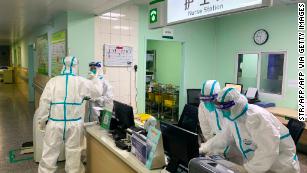
This photo taken on January 22, 2020 shows medical staff members wearing protective suits at the Zhongnan hospital in Wuhan in China's central Hubei province.

Here is what it will take, then, to stop the Wuhan virus.
First, the flow of people who are infected has to stop and transportation across the entirety of China must be monitored or restricted. The Wuhan animal market from which nCoV2019 arose is located less than 0.5 miles from one of the city’s train stations, where several high-speed rails stop. It must be assumed that people, and their live animals, walked that short distance earlier this month to take the trains — possibly carrying the virus with them to cities across China.
A post from Wuhan Railway that has since been deleted said 300,000 people traveled out of Wuhan by train on Wednesday. It is imperative that the tough lockdown measures unfolding this week presage nationwide travel restrictions.
During the SARS epidemic, a brave military physician leaked medical documents to Time magazine, providing proof that SARS patients were secretly being treated in People’s Liberation Army facilities in Beijing. Once word was out, I watched as tens of thousands of Beijing residents climbed onto trains, fleeing the city — and taking SARS to every corner of the country.
After the exodus from Beijing in 2003, authorities erected fever check stations in every air, bus and train terminal in China, and placed policed health stations along the nation’s highways. Fever-check stations were so abundant that I was typically tested 10 to 12 times a day in Beijing, and every 10 to 20 miles while driving on major highways.
The Chinese government has started erecting a network of fever stations in transit hubs, and I expect this will ramp up considerably over the coming week. Social media posts already show several photos and videos of officials erecting roadblocks, barricades, and traffic diversions to police-manned fever stations and similar measures reminiscent of what I witnessed in 2003.
Currently, family members of known nCoV2019 patients are tested for infection and placed under surveillance. Chinese authorities are already tracking hundreds of close contacts of known patients, and this will escalate radically over coming days. Apartment complexes and hotels that are known to have housed a nCoV2019-infected person will also be scoured.

Medical staff wearing protective gear go about their duties in the Alice Ho Miu Ling Nethersole Hospital in Tai Po where seven hospital workers have gone down with flu-like symptoms on August 27, 2003.

There must also be a safe place to quarantine people who are running temperatures. In 2003 I watched in frank astonishment as teams of Chinese workers erected entire hospitals — complete with air filters, special sewage systems and electricity — in just days, province-by-province. A similar effort is now underway in Wuhan.
By far the most important measures to stop the Wuhan coronavirus will be those related to hospitals and how well medical teams can contain the virus. Both MERS and SARS spread like wildfire through unprepared medical facilities, regardless of the comparative wealth and sophistication of the hospitals. Most of the SARS cases in Hong Kong went to two hospitals: one had just a single healthcare worker infected, while the other suffered terrible losses in both health workers and patients who were being treated for other medical ailments.
The key difference? The teams in the better hospital had years of infection control training, which taught staff to work in teams and make sure that any contaminated protective gear was safely removed without contact with the skin, face, eyes or hands.
Over the last few days, many Chinese social media users have posted dramatic videos and photos of over-crowded hospital emergency room facilities, in which frantic patients and family members are crammed together and healthcare workers are hard-pressed to control the influx, as the infectious spread of the virus is surely occurring. In the SARS epidemic, hospitals eventually realized the need to set up fever check stations outside the facilities, screening would-be patients, and ushering febrile individuals into an entry separate from other hospital admissions.
In Toronto and Singapore, which have remarkably good healthcare systems and state-of-the-art facilities, hospital workers struggled mightily to stop spread of SARS, and healthcare workers who were infected died. In some of my discussions with physicians and nurses that went through the SARS nightmares, I have learned that the wealthier facilities were, perhaps, at greater risk because they had more equipment and procedures to apply to patients, including intubation and lavage, which was used to remove fluids from the lungs that built up in response to infection.
Get our free weekly newsletter

Sign up for CNN Opinion’s new newsletter.

Join us on Twitter and Facebook

When SARS hit Hanoi, patients were originally taken to the prestigious French Hospital, where modern interventions were used, but the virus readily spread, taking the lives of doctors and nurses. When patients were moved to the far less sophisticated Bach Mai Hospital, which lacked some of the more advanced equipment, windows were open due to a lack of air conditioning.
According to some of the doctors, this slowed the spread of the virus by preventing it from adhering to surfaces and people in the hospital.
China is likely to take a serious economic hit as a result of the nCoV2019 virus. The SARS epidemic cost the global economy $54 billion, according to a World Bank estimate, and the Wuhan coronavirus is likely to affect Chinese tourism and trade. Seventeen years after SARS, China — now the second largest economy in the world — is likely to experience a higher scale of costs and burdens to execute nationwide containment strategy. But Beijing has no choice. The virus is already everywhere.

SARS wiped $40 billion off world markets; what will coronavirus do?

Exposing the Big Game's avatarThe Extinction Chronicles

SARS wiped $40 billion off world markets; what will coronavirus do?

“Markets might start to react more if you start to see the coronavirus spread, particularly to the U.S.,” said one analyst.
Image: China's Wuhan Coronavirus Spreads To Japan During The Lunar New Year

A group of Chinese tourists walks outside the arrival lobby at Narita airport on Jan. 24, 2020 in Narita, Japan.Tomohiro Ohsumi / Getty Images

By Martha C. White

A big question on the minds of investors this week was if — or when — the new Wuhan coronavirus, which has sickened more than 900 people and proven fatal to 26, could become contagious enough to infect markets.

“It just depends on the severity and the disruption that it causes,” said Rick Kahler, president of Kahler Financial Group. “The local markets, especially in China, are going to be first responders.”

As of Friday, the Chinese government had expanded its travel ban, with a total of some 35…

View original post 602 more words

Trump’s Presidency Brings Us Closer to Midnight on the Doomsday Clock


The legendary Bulletin of the Atomic Scientists (BAS), which tracks issues related to technology and global security, has issued a terrifying warning: We are less than two minutes to midnight on the Doomsday clock. It’s very bad news, representing “the most dangerous situation that humanity has ever faced.”

What makes this moment so perilous? The scientists’ statement includes warnings over the cyber-weaponization of information, the spread of artificial intelligence (AI) in making military decisions, the destruction of treaties meant to limit the spread of nuclear weapons, the abandonment of global agreements to limit climate chaos, the spread of genetic engineering and synthetic biology technologies, and more. It does not account for the escalated likelihood of atomic reactor disasters, but based on at least one BAS publication, it should.

Since 1947, this prestigious band of elite scientists and global thinkers has been putting out a “clock” meant to time the peril of a global apocalypse. First issued at the dawn of the Cold War, it has mostly focused on the dangers of atomic warfare. Its countdown to Armageddon has been set as far away as 17 minutes from midnight, a hypothetical time of human extinction. That relatively optimistic assessment came in 1991, with the fall of the Soviet Union and the definitive end of the Cold War.

In 2018, the BAS set it at two minutes, the closest to catastrophe it had ever been. They repeated that estimate in 2019. But this year’s announcement has taken us inside the two-minute warning with a hair-raising litany of likely lethal catastrophes set to occur within 100 theoretical seconds.

Donald Trump is mentioned only once by name, in conjunction with his decision to trash the Paris Accords on climate change and greenhouse gas emissions. The scientists urge “whoever wins the 2020 election” to reinstate the U.S. commitment limiting carbon and other climate-destroying emissions. The BAS also cites Brazilian dictator Jair Bolsonaro for his decision to allow the destruction of the Amazon, with huge impacts on climate.

The BAS strives to maintain a non-partisan image. But Trump’s presence in the White House clearly hangs over any assessment of humankind’s survivability. The specter of his finger on the nuclear, ecological and financial buttons for the next four years hangs over humankind like a pall but goes otherwise unmentioned in this Doomsday assessment.

Also unmentioned is the question of more than 450 atomic power reactors worldwide. A small but vocal outlier coterie has argued that nuclear energy combats global warming by emitting less carbon that coal burners. But the Bulletin recently enshrined a major assessment by the esteemed Dr. Robert Jay Lifton, warning that commercial reactors pose a serious threat to human survival on this planet.

Published in August 2019, “The false promise of nuclear power in an age of climate change” argues that the 450 atomic reactors now deteriorating worldwide pose an existential threat to our survival. Writing with Professor Naomi Oreskes, Lifton warns that atomic energy “is expensive and poses grave dangers to our physical and psychological well-being.” Citing costs of nuclear juice at $100 per megawatt-hour versus $50 for solar and $30-40 for onshore wind, the authors say that the industry suffers from a “negative learning curve,” driving nuke costs constantly higher while those for renewables head consistently down.

Citing the unsolved problem of radioactive waste management, the BAS article warns of the ongoing impacts of major disasters like Fukushima and Chernobyl (and potentially more to come), whose fallout kills humans and does untold damage to the global ecology. Lipton and Oreskes say we need to free ourselves “from the false hope that a technology designed for ultimate destruction” can lead to our salvation. They favor making “renewable energies integral to the American way of life.”

In addition to nuclear and climate issues, the 2020 Doomsday assessment emphasizes some relatively new concerns. “In the last year,” it says, “many governments used cyber-enabled disinformation campaigns to sow distrust in institutions and among nations, undermining domestic and international efforts to foster peace and protect the planet.”

By attacking both science and the fabric of international peace accords, some global leaders have created “a situation that will, if unaddressed, lead to catastrophe, sooner rather than later.”

That situation includes AI and hypersonic warfare, both escalating “at a frenzied pace.” Now used in ultra-fast attacks, AI is dangerously vulnerable to “hacking and manipulation” while making “kill decisions without human supervision.” In nuclear command and control systems, the BAS warns, research and experience have demonstrated the vulnerability of these systems to “hacking and manipulation.”

This is an absolutely terrifying brew. The spread of disinformation, the contempt for science and expert opinion, the undermining of global agreements on arms control, and climate change are all deadly. Add in the new world of AI and hyper-sonic warfare, then pile on autocrats like Trump and Bolsonaro, and finish with the certainty of more disasters from 450 crumbling, obsolete atomic reactors.

All in all, it’s small wonder the Bulletin has taken us past the two-minute warning. It will clearly take every ounce of our activist strength to save our species from the final


whistle.


Groups applaud return of spring bear hunt

Exposing the Big Game's avatarCommittee to Abolish Sport Hunting Blog

Public consultation on proposal open until Feb. 18

Published on: January 22, 2020 | Last Updated: January 22, 2020 11:02 AM EST

The prospect of the return of the spring bear hunt is ‘music to the ears’ of
the president of the Northern Ontario Bear Management Association.
“This is the announcement our organization has been hoping for and working
toward for the past several years and its awesome to see the (Doug) Ford
government take such positive action,” Mickey Major said in a release.
Major said he has been strongly advocating for reforms to better manage
bears in Ontario, changes he said will ensure a healthy bear population and
provide stability to bear outfitters throughout the province.
“The timing of this announcement couldn’t be better and it’s a tremendous
relief for our members to see the government resolve some of the
association’s biggest issues. Announcing the permanent return of the…

View original post 581 more words

China-19 Academics and Scholars call for eradication of illegal consumption and trading of wild animals

Original article in Chinese

https://mp.weixin.qq.com/s/T81AxgAkHIvRwdslPQ574g

Nineteen academicians and scholars jointly called for the eradication of illegal consumption and trading of wild animals and the control of a major public health crisis Original Shanshui Nature Conservation Center fighting with you Yesterday

There were 639 confirmed diagnoses nationwide, 422 suspected and 17 deaths. We don’t know how much these numbers will turn into when we wake up, but apart from anxiety and fear, how much we want to do something.

Following the initiative 1.0 proposed by Professor Lu Zhi the day before yesterday (→ Lu Zhi | Raising the wildlife trade to public safety for management), Professor Lu Zhi took the lead in one day to complete and improve, and recruited nineteen national universities, Academicians and scholars of scientific research institutes jointly sign the initiative.
Again, we look forward to your support as you read this initiative. In addition, the “Specific Suggestions on Managing Wildlife Utilization from the Source” drafted by Professor Lu Zhi has also been completed.
You can read the QR code at the end of the article or check out the two articles of Shanshui Company today.

Here is the full text of the initiative

👇

The epidemic of the new coronavirus pneumonia that originated in Wuhan is a new round of public health crisis after SARS in 2003. Preliminary information from national disease control agencies and professional researchers have shown that the source of the new coronavirus this time points to the wildlife trade market just like SARS.

In fact, scientific research shows that new infectious diseases such as Hendra, Nipah virus, H7N9 avian influenza, Ebola, Middle East respiratory syndrome and so on, which have appeared in recent years all over the world, are related to animals. Statistics show that more than 70% of new infectious diseases originate from animals. These viruses originally exist in nature, and wildlife hosts do not necessarily cause disease and death. However, because humans eat wild animals or erode wildlife habitats, the contact surface between these viruses and humans has greatly increased, giving viruses from wild animals to humans.
Transmission creates conditions that endanger public health. Coupled with the convenience of transportation and the movement of population, the probability of an epidemic outbreak has greatly increased.

It can be seen that controlling or even eliminating wild animal food and related trade is not only necessary for ecological protection, but also of great significance for public health risk control. In view of this, we call on wildlife supervisors and law enforcement departments, as well as market supervision departments, to play a greater role in a timely manner, manage the illegal wildlife trade from the source, and completely eliminate illegal wildlife consumption.

Our recommendations are as follows:

1. As soon as possible across the country, the local wildlife authorities, market supervision departments and disease quarantine departments shall jointly enforce law, strictly inspect the status of wild animals and their products currently traded on the market, and ban and severely crack down on illegal wildlife markets and trade. As well as the illegal operation of restaurants and public release of relevant information, creating public and social pressure.

2. In the long run, it is necessary to consider and manage the risks posed by wildlife trade and consumption as public safety issues. The People’s Congress and the competent government departments should establish more comprehensive regulations and management mechanisms.
Consumers are educated on health, safety and ecological protection.
details as follows:

a) Establish a long-term mechanism for reviewing and supervising the operation of wild animal domestication, breeding, and production and operation license units by the competent wildlife department. Any illegal acts shall be banned, especially those named domestication and reproduction, which are illegal acquisitions and hunting. Anyone who catches wild animals for trade must be punished severely. This incident should be used as an opportunity to rectify the chaos in the wildlife domestication, breeding, production and operation industries, comprehensively clean up irregular and illegal production and operation activities, and strictly prohibit the use of the state’s key protection of wild animals and rare and endangered animals. The contents of the legal business license approved by the competent authority shall be made public and subject to public supervision at any time.

b) The National People’s Congress urgently revised the “Chinese Wildlife Protection Law” to include public health and safety content into the provisions on the use of wild animals. According to China’s “Wildlife Protection Law” and “Regulations on the Implementation of Terrestrial Wildlife Protection”, there are no direct regulations on the prohibition and restriction of eating wild animals. At present, there are loopholes in the procedures and management of the approval and approval of domestication and breeding of wild animals by the forestry department.
Often there are cases of protection, domestication or breeding, which are illegal purchases, sales and consumption of wild animals, and lay the ground for the trade and consumption of wild animals. Hidden danger.
The relevant legislation should be revised and improved as soon as possible, and the consumption of wild animals should be banned, the law enforcement department and its duties of market supervision related to wildlife management should be clarified, and the punishment for illegal use of wild animals should be increased, and illegal consumption should also be included in the scope of management and punishment.

c) Advocate to change the narrow concept of “Wildlife Protection Is For Utilization” in the whole society, strengthen publicity efforts to protect wild animals and their habitats, explain the relationship between human survival and ecosystem service functions, and protect nature protection The association with public safety risks and everyone makes the bad habits of wild animals that have become a luxury rather than a necessity gradually fade out of people’s living habits, makes wildlife protection deeply rooted in the hearts of the people, becomes the mainstream of society, and implements the concept of ecological civilization to everyone In action.

d) Value 2020 When the 15th Conference of the Parties to Biodiversity is convened in Kunming, the media should emphasize the protection of native wildlife populations and habitats, and the government strongly supports research in the wild.

We solemnly call for an end to the illegal trade and consumption of wild animals and control of major public health risks from the source. It is hoped that the competent government departments, academics and the general public will work together to transform the crisis into actions to protect ecology and public safety in a timely and effective manner!

Tracking the Virus

Exposing the Big Game's avatarThe Extinction Chronicles

The total number of coronavirus cases grew as of Friday, with at least 41 people dead and more than 1300 people around the world sickened. The vast majority of cases are in mainland China.

The previously unknown, flu-like coronavirus strain is believed to have emerged from an animal market in central Wuhan city. A group of scientists said earlier this week that snakes, particularly the Chinese krait and the Chinese cobra, may be the original source of the virus. But officials from the World Health Organization cast doubt on that theory Thursday, saying there is “no conclusive evidence” at the moment.

The virus originated in the city of Wuhan, in the central Chinese province of Hubei, late last year. It has since spread to Chinese cities including Beijing and Shanghal. A small number of isolated cases have been confirmed elsewhere in Asia. Two cases have been reported in…

View original post 122 more words

‘The worst has yet to come,’ analyst says of China coronavirus outbreak

Exposing the Big Game's avatarThe Extinction Chronicles

KEY POINTS
  • “The bad news is that the worst has yet to come, as the number of new infections is still on the rise,” warned Larry Hu, economist at Macquarie Capital.
  • The festive Lunar New Year holiday is set to kick off this Saturday. Hundreds of millions of Chinese will travel domestically and overseas — heightening the risk of more transmissions.
  • “The answer is wait till after Chinese New Year … we will know the degree, the speed and the breadth of infections by this virus, and get a much clearer idea on mortality,” said another analyst, David Roche of Independent Strategy.
Here’s how the coronavirus outbreak could affect the economy

The severity of the rapidly spreading coronavirus outbreak in China that’s claimed more than a dozen lives is still unknown, and the extent of its spread will only be clearer after the Lunar New Year…

View original post 627 more words

Hong Kong leader declares citywide virus emergency over coronavirus, first cases appear in Australia

Exposing the Big Game's avatarThe Extinction Chronicles

KEY POINTS
  • Hong Kong leader Carrie Lam on Saturday declared a virus emergency in the city of 7.3 million, extending school cancellations until February 17 and canceling all official visits to mainland China.
  • China has quarantined three cities in an effort to contain the spread ⁠of the coronavirus — encompassing a total population of some 35 million people.
  • Australia confirmed its first four cases on Saturday. The virus has also been identified in Japan, South Korea, Taiwan, Thailand, Vietnam, Singapore, Nepal, France, and the United States.
VIDEO01:21
Coronavirus deaths now total 41

Hong Kong leader Carrie Lam on Saturday declared a virus emergency in the city of 7.3 million, extending school cancellations until Feb. 17 and canceling all official visits to mainland China.

Lam announced a package of measures aimed at limiting the Asian financial hub’s connections to mainland China. Flights and high speed train…

View original post 808 more words

Idaho man fined $20K, banned from hunting in Alaska after illegally guiding hunts

Exposing the Big Game's avatarCommittee to Abolish Sport Hunting Blog

U.S. District Court Judge Sharon Gleason on Wednesday also ordered Paul Silvis, 52, of Nampa, to serve six months of home confinement, to be followed by five years of supervised release, federal prosecutors announced Wednesday.

Silvis in October pleaded guilty to two felony violations of the Lacey Act, the law that bans illegal wildlife trafficking, U.S. Attorney Bryan Schroder said in the announcement.

Silvis from 2009 to 2016 repeatedly violated state and federal law by providing guided hunts in the Noatak National Preserve in northwest Alaska, prosecutors said. The preserve covers 10,265 square miles and protects the nation’s largest unaltered river basin and watershed.

Silvis was motivated by financial gain, Schroder said. Silvis received about $121,500 by illegally selling and providing guide services. Hunts he guided…

View original post 98 more words

Police Boss Caught Red Handed Hunting Rhino With Poaching Gang

Exposing the Big Game's avatarCommittee to Abolish Sport Hunting Blog

https://iharare.com/police-boss-caught-red-handed/

By Sharon
Chirisa, Jan 23, 2020

Police Boss Caught Red Handed With Rhino Poaching Gang

A top Bulawayo police officer was arrested by Zimbabwe Parks and Wildlife
Management after he was caught red handed hunting rhino in Bubye Valley
Conservancy at Mazunga area in Beitbridge.

The disgraced high ranking officer , Nhlanhla Nkomo (43), who is an
Assistant Inspector stationed at Pumula Police Station was caught in the act
with two accomplices; Stanley Katandika (50), a Zambian national and Owen
Nyoni (35), a former ZimParks ranger.

The three who appeared in court are facing charges of violating a section of
the Parks and Wildlife Act (poaching) and possession of a firearm or
ammunition without a license.

They were remanded in custody to February 3.

The poaching gang was apprehended last week by Zimbabwe Parks and Wildlife
Management Authority (ZimParks) rangers following a tip off.

According to the state, the…

View original post 119 more words