“Someone who kills another sentient being, cuts out their heart, and boasts about it fits the definition of a sociopath.”
A trophy hunter has sparked outrage for killing arare black bull giraffe which she revealed was on her bucket list for five years,the Mirror reported.
Merelize Van Der Merwe paid almost £1,500 to shoot the giraffe in South Africa and has faced intense criticism after she posted pictures of her hunt on social media.
The 32-year-old trophy hunter, who killed the animal on February 14 also posed with its heart describing it as her “perfect” Valentine’s gift.
Posting the pictures onFacebook, she asked her 96.6K followers: “Ever wondered how big a giraffe’s heart is? I’m absolutely over the moon with my BIG valentines present!!!”
Van Der Merwe has killed over 500 animals including lions, leopards, and elephants. She added…
There’s no place like home—unless you’re Elon Musk. A prototype of SpaceX’s Starship, which may someday send humans to Mars, is, according to Musk, likely to launch soon, possibly within the coming days. But what motivates Musk? Why bother with Mars? A video clip from an interview Musk gave in 2019 seems to sum up Musk’s vision—and everything that’s wrong with it.
Your guide to life on a warming planet
Discover Atlantic Planet, a new section devoted to climate change and the ways it will reshape our worldExplore
In the video, Musk is seen reading a passage from Carl Sagan’s book Pale Blue Dot. The book, published in 1994, was Sagan’s response to the famous image of Earth as a tiny speck of light floating in a sunbeam—a shot he’d begged NASA to have the Voyager 1 spacecraft take in 1990 as it sailed into space, 3.7 billion miles from Earth. Sagan believed that if we had a photo of ourselves from this distance, it would forever alter our perspective of our place in the cosmos.
Musk reads from Sagan’s book: “Our planet is a lonely speck in the great enveloping cosmic dark. In our obscurity, in all this vastness, there is no hint that help will come from elsewhere to save us from ourselves. The Earth is the only world known so far to harbor life. There is nowhere else, at least in the near future, to which our species could migrate.”https://8d566d959acc9a6fb67e31045d65b633.safeframe.googlesyndication.com/safeframe/1-0-37/html/container.html
But there Musk cuts himself off and begins to laugh. He says with incredulity, “This is not true. This is false––Mars.”
He couldn’t be more wrong. Mars? Mars is a hellhole. The central thing about Mars is that it is not Earth, not even close. In fact, the only things our planet and Mars really have in common is that both are rocky planets with some water ice and both have robots (and Mars doesn’t even have that many).
Mars has a very thin atmosphere; it has no magnetic field to help protect its surface from radiation from the sun or galactic cosmic rays; it has no breathable air and the average surface temperature is a deadly 80 degrees below zero. Musk thinks that Mars is like Earth? For humans to live there in any capacity they would need to build tunnels and live underground, and what is not enticing about living in a tunnel lined with SAD lamps and trying to grow lettuce with UV lights? So long to deep breaths outside and walks without the security of a bulky spacesuit, knowing that if you’re out on an extravehicular activity and something happens, you’ve got an excruciatingly painful 60-second death waiting for you. Granted, walking around on Mars would be a life-changing, amazing, profound experience. But visiting as a proof of technology or to expand the frontier of human possibility is very different from living there. It is not in the realm of hospitable to humans. Mars will kill you.
Musk is not from Mars, but he and Sagan do seem to come from different worlds. Like Sagan, Musk exhibits a religious-like devotion to space, a fervent desire to go there, but their purposes are entirely divergent. Sagan inspired generations of writers, scientists, and engineers who felt compelled to chase the awe that he dug up from the depths of their heart. Everyone who references Sagan as a reason they are in their field connects to the wonder of being human, and marvels at the luck of having grown up and evolved on such a beautiful, rare planet.
The influence Musk is having on a generation of people could not be more different. Musk has used the medium of dreaming and exploration to wrap up a package of entitlement, greed, and ego. He has no longing for scientific discovery, no desire to understand what makes Earth so different from Mars, how we all fit together and relate. Musk is no explorer; he is a flag planter. He seems to have missed one of the other lines from Pale Blue Dot: “There is perhaps no better demonstration of the folly of human conceits than this distant image of our tiny world.”
Sagan did believe in sending humans to Mars to first explore and eventually live there, to ensure humanity’s very long-term survival, but he also said this: “What shall we do with Mars? There are so many examples of human misuse of the Earth that even phrasing the question chills me. If there is life on Mars, I believe we should do nothing with Mars. Mars then belongs to the Martians, even if [they] are only microbes.”https://8d566d959acc9a6fb67e31045d65b633.safeframe.googlesyndication.com/safeframe/1-0-37/html/container.htmlhttps://8d566d959acc9a6fb67e31045d65b633.safeframe.googlesyndication.com/safeframe/1-0-37/html/container.html
Musk, by contrast, is encouraging a feeling of entitlement to the cosmos—that we can and must colonize space, regardless of who or what might be there, all for a long-shot chance at security.
Legitimate reasons exist to feel concerned for long-term human survival, and, yes, having the ability to travel more efficiently throughout the solar system would be good. But I question anyone among the richest people in the world who sells a story of caring so much for human survival that he must send rockets into space. Someone in his position could do so many things on our little blue dot itself to help those in need.
To laugh at Sagan’s words is to miss the point entirely: There really is only one true home for us—and we’re already here.SHANNON STIRONE is a freelance science writer based in the Bay Area.
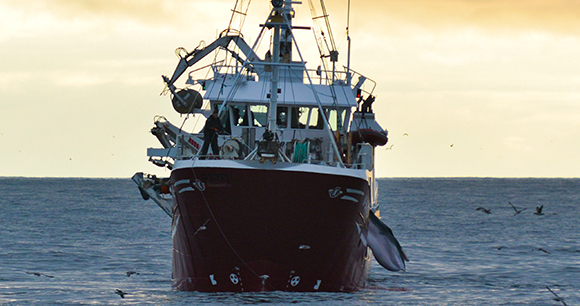
Washington, DC—In defiance of a global moratorium on commercial whaling, Norway has again issued an annual kill quota of 1,278 minke whales for the 2021 whaling season.
On Friday, Odd Emil Ingebrigtsen, Norway’s Minister of Fisheries and Seafood, announced the quota, which remains unchanged from last year. Ingebrigtsen said he hopes the “upward trend in demand for whale meat will continue.”
Echoing Ingebrigtsen’s sentiment, the whaling industry claims that demand for whale meat has improved, especially during the COVID-19 pandemic. Yet, Norway has seen a continuous drop in domestic sales of whale meat in recent years. A survey commissioned by the Animal Welfare Institute (AWI) and others found that only 4 percent of Norwegians polled admitted to eating whale meat “often,” while two-thirds either have never eaten it or only did so “a long time ago.”
Norway’s 2020 whaling season ran from April 1 to September 30. Slightly more than 500 whales were killed, compared to 429 in 2019. This is the highest total since 2016, when nearly 600 whales were killed. Sixteen whaling vessels requested a permit to hunt whales last year, but only 13 participated.
Three whaling vessels were responsible for nearly two-thirds of the whales killed in 2020: the Kato (138 whales), the Reinebuen (102), and the Fiskebank1 (77). As in recent years, the vast majority of the minkes were killed in the Barents Sea (242) and off the coasts of Troms and Finnmark (176).
Last spring, the Norwegian Fisheries Directorate relaxed a number of whaling regulations to encourage additional vessels to engage in whaling. AWI joined with a number of other organizations in contesting the agency’s proposal — to no avail. The government also permitted whalers to forego qualifying tests for rifle shooting.
“Allowing whalers to skip these necessary tests is unacceptable, and could have serious repercussions for animal welfare,” said Kate O’Connell, AWI’s marine animal consultant. “Each year, dozens of whales who are shot by grenade-tipped harpoons do not die instantly; they must be shot by rifles to end their suffering.”
The International Whaling Commission (IWC) imposed a global moratorium on commercial whaling in 1982, yet Norway formally objected and resumed commercial whaling 11 years later. Since that time, the country has killed more than 14,000 minke whales.
In December, the Vestvågøy Fishing Association requested that the Norwegian government support the whaling industry in order to “make it more attractive to catch whales,” including offering whalers an increased cod quota.Media Contact
Militia groups involved in the 6 January insurrection want to stage another attack around Joe Biden’s upcoming address to Congress, aiming to “blow up” the complex and kill lawmakers, the acting chief of the US Capitol police has warned.
In alarming testimony to a House subcommittee, Yogananda Pittman said that threats were circulating that directly targeted the president’s first formal speech to a joint session of Congress. A date for the event has not yet been announced.
“We know that members of the militia groups that were present on January 6 have stated their desires that they want to blow up the Capitol and kill…
Pentagon airstrikes againstIran-backed militias in Syriaarenot only the first military action takenby President Joe Biden. Theyare a test ofhisbroadpledge to pursue a foreign policy that is more cooperative and mindful of international partners than his predecessor’s but stilleschews the U.S.role as the world’s policetofocuson makinglife better for Americans, some experts and lawmakers say.
Biden on Thursday night orderedthe airstrikeson multiple facilitiesata Syrian-Iraqiborder control point in southeastern Syria in retaliation for rocket attacks on U.S. targets in neighboring Iraq. The Pentagon identified the targets as a “number of Iranian-backed militant groupsincluding Kataib Hezbollah and Kataib Sayyid al-Shuhada.” It called the airstrikes “proportionate” and “defensive” and said the airstrikes weretaken after consultation with coalition partners and unspecified “diplomatic measures.”https://efffecc04009a2b8084b2afa6299730a.safeframe.googlesyndication.com/safeframe/1-0-37/html/container.htmlhttps://www.usatodaynetworkservice.com/tangstatic/html/usat/sf-q1a2z3be0d353f.min.html
The Atlantic Meridional Overturning Circulation (AMOC) sea currents are vital in transporting heat from the tropics to the Northern Hemisphere, but new research suggestsclimate changemight knock the AMOC out of action much sooner than we anticipated.
That could have profound, large-scale impacts on the planet in terms of weather patterns, upending agricultural practices, biodiversity, and economic stability across the vast areas of the world that the AMOC influences.
The problem is the rate at which Earth is warming up and melting the ice in the Arctic: according to the researchers’ new models, this speed of temperature increase means the risk of hitting the tipping point for the AMOC going dormant is now an urgent concern.
Just as United Poultry Concerns was the first farmed animal advocacy organization to focus on chickens, Fish Feel was the first organization to focus on fishes. In Episode 21 we have a special interview with Mary Finelli, founder and president of Fish Feel. Hope and Mary discuss how fishes are caught and killed in the ocean by the trillions every year and how the fishing industry is also notorious for human slavery.
Mary talks about aquaculture and the cruelties to the fish in this industry as well as the ecological damage caused by fish farms. She shares her insights into the killing and eating of other marine life such as lobsters, crabs, oysters, and clams and also educates us on the fish oil supplement industry, the caviar industry, and the exciting new trend in advocacy of fish rescue. Listen in for a breadth of knowledge about our underwater relatives and share this episode with those who need to hear it.
Veterinary techs distribute food every morning to more than 5,000 monkeys at the Tulane University National Primate Research Center outside New Orleans.
Future Vaccines Depend on Test Subjects in Short Supply: Monkeys
Veterinary techs distribute food every morning to more than 5,000 monkeys at the Tulane University National Primate Research Center outside New Orleans.Credit…
Mark Lewis was desperate to find monkeys. Millions of human lives, all over the world, were at stake.
Mr. Lewis, the chief executive of Bioqual, was responsible for providing lab monkeys to pharmaceutical companies like Moderna and Johnson & Johnson, which needed the animals to develop their Covid-19 vaccines. But as the coronavirus swept across the United States last year, there were few of the specially bred monkeys to be found anywhere in the world.
Unable to furnish scientists with monkeys, which can cost more than $10,000 each, about a dozen companies were left scrambling for research animals at the height of the pandemic.
“We lost work because we couldn’t supply the animals in the time frame,” Mr. Lewis said.
The world needs monkeys, whose DNA closely resembles that of humans, to develop Covid-19 vaccines. But a global shortage, resulting from the unexpected demand caused by the pandemic, has been exacerbated by a recent ban on the sale of wildlife from China, the leading supplier of the lab animals.
The latest shortage has revived talk about creating a strategic monkey reserve in the United States, an emergency stockpile similar to those maintained by the government for oil and grain.
The United States has as many 25,000 lab monkeys at its seven primate centers. The majority are pink-faced rhesus macaques, like these at Tulane. The monkeys may work for peanuts, but they are invaluable as test subjects for coronavirus vaccines.
As new variants of the coronavirus threaten to make the current batch of vaccines obsolete, scientists are racing to find new sources of monkeys, and the United States is reassessing its reliance on China, a rival with its own biotech ambitions.
The pandemic has underscored how much China controls the supply of lifesaving goods, including masks and drugs, that the United States needs in a crisis.
American scientists have searched private and government-funded facilities in Southeast Asia as well as Mauritius, a tiny island nation off southeast Africa, for stocks of their preferred test subjects, rhesus macaques and cynomolgus macaques, also known as long-tailed macaques.YOUR CORONAVIRUS TRACKER: We’ll send you the latest data for places you care about each day.Sign Up
But no country can make up for what China previously supplied. Before the pandemic, China provided over 60 percent of the 33,818 primates, mostly cynomolgus macaques, imported into the United States in 2019, according to analyst estimates based on data from the Centers for Disease Control and Prevention.
The United States has as many 25,000 lab monkeys — predominantly pink-faced rhesus macaques — at its seven primate centers. About 600 to 800 of those animals have been subject to coronavirus research since the pandemic began.
Scientists say monkeys are the ideal specimens for researching coronavirus vaccines before they are tested on humans. The primates share more than 90 percent of our DNA, and their similar biology means they can be tested with nasal swabs and have their lungs scanned. Scientists say it is almost impossible to find a substitute to test Covid-19 vaccines in, although drugs such as dexamethasone, the steroid that was used to treat President Donald J. Trump, have been tested in hamsters.
The United States once relied on India to supply rhesus macaques. But in 1978, India halted its exports after the Indian press reported that the monkeys were being used in military testing in the United States. Pharmaceutical companies searched for an alternative.
The pandemic upset what had been a decades-long relationship between American scientists and Chinese suppliers.
The Tulane lab is one of seven national primate research centers. When not undergoing research, the monkeys live in colonies with access to the outdoors and enrichment activities.The United States once relied on India to supply rhesus macaques, but India halted its exports in 1978.
“When the China market closed down, that just forced everyone to go to a smaller number of available animals,” said Mr. Lewis.


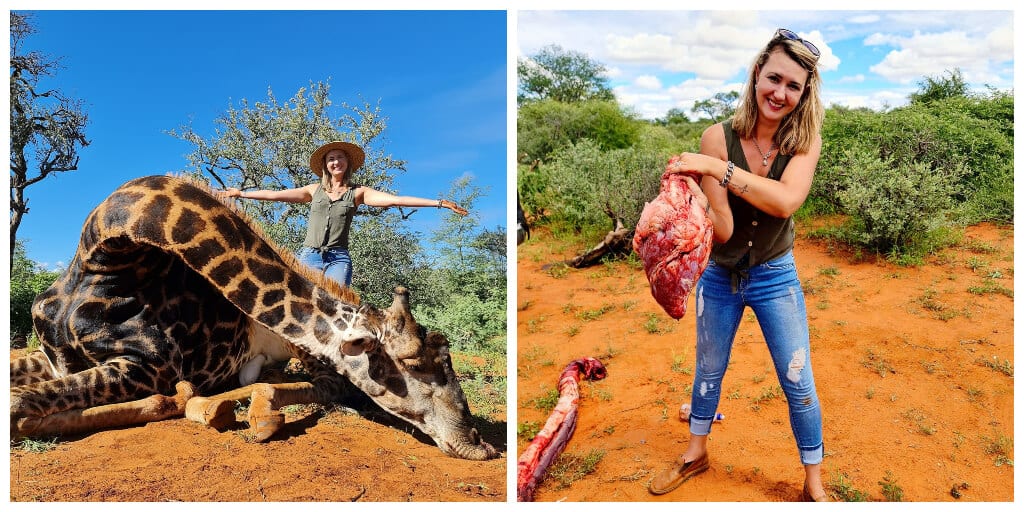 Image: @Merelizevdm/Facebook


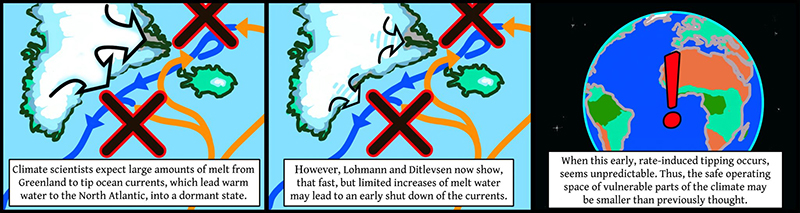 (University of Copenhagen)


 Exposing the Big Game