“The computers never saw it coming”

http://inlandnorthwestweather.blogspot.com/2021/06/weve-never-seen-drought-like-this.html

Inland Northwest Weather Blog

A discussion of weather and climate of the Inland Northwest.

Wednesday, June 2, 2021

We’ve never seen a drought like this

 We’ve never seen a drought like this

It’s well known that weather in the western US is drier than in the eastern US.  As such, droughts are more common in the West.  Most of the West is designed to accommodate this drier climate.  The mountains get heavy snow in the winter, which slowly melts off in the spring and summer.  There are numerous dams throughout the West which catch much of the snow melt, using it to irrigate our farmland (as well as generate electricity).  This enables western farmers to grow crops in some rather arid locations.  
Still, there are some areas in the West that, similar to their eastern counterparts, rely solely on the rain and snow to irrigate their croplands.  In the West we call this “dryland farming”.  The biggest example of this is typically wheat and barley, but also includes a lot of hay.  The Inland Northwest is known as one of the largest producers of wheat in the US.  

These dryland crops require moisture through the spring and into the early summer.  Grains such as wheat and barley will ripen during the hot summer months and so they don’t really require much if any rain at that point until they are harvested in late summer.  This matches the usual rainfall patterns we see here in the Inland Northwest.  But not this year.
Rainfall this spring hasn’t just been light, it’s been nearly non-existent.  We haven’t seen anything like this before.  Spokane just finished it’s driest February through May ever.  EVER.  Records for Spokane go back to 1881.  That means this was the driest spring in 140 years!  And it wasn’t just Spokane.  The dark red area in the image below shows all of the areas that have had their driest February-May on record.
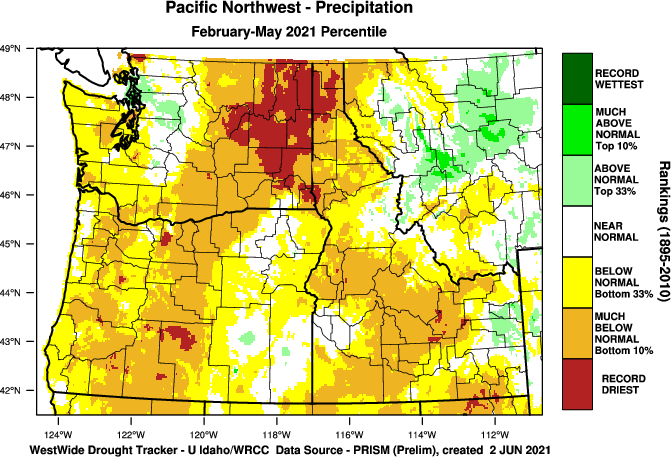
As you can see, it’s been dry over much of the Northwest this spring, but the Inland Northwest has been the epicenter of this dryness.  The three month period of March through May was the driest for many other locations in the Northwest.

So the natural question is “what caused this drought?”.  The answer isn’t straightforward and probably incomplete given our current understanding of weather and climate.  One contributor that we are aware of is La Nina.  To which you may be saying “I thought La Nina meant wetter than normal conditions for our area”, and you would be correct.  Here’s a diagram showing the basic jet stream pattern for a typical La Nina that you may have seen before:

The purple and orange lines are meant to represent the variable jet stream patterns we normally see during a La Nina winter/spring.  The purple line shows a colder phase of the jet stream, diverting up into Alaska and then bringing colder but drier air into the Northwest US.  But then the jet stream will also at times follow the orange line, bringing Pacific moisture into the Northwest.  The problem is that for the spring of 2021, we’ve seen a LOT more of the purple jet stream, and not so much of the orange jet stream. 
Note in the image above the big H and the blocking High Pressure in the Gulf of Alaska.  Here’s the air pressure anomaly at about 18,000 feet in the atmosphere from the Feb-May period this spring.

What this shows is that the air pressure in the Gulf of Alaska has been higher than normal this spring.  This compares very well with the idealized La Nina image previously shown with the Blocking High in the Gulf of Alaska.  So this looks like what we would expect for a La Nina winter/spring.
But now here’s the jet stream anomaly for this past spring:

Do you see that ribbon of bright colors along the Canadian west coast?  That shows that the jet stream this year has been coming from the northwest a lot more and a lot stronger than usual.  Note that those bright colors extend all the way back to Alaska, across the north Pacifc and Kamchatka Peninsula.  In other words, the “purple” jet stream has been doing its thing during a La Nina winter like it should.
But then look at the other area of bright colors in the image above, out in the eastern Pacific.  Those show that the jet stream across the Pacific has been much weaker  and infrequent than normal.  So the “orange” jet stream that is supposed to bring the moisture, hasn’t been doing its job this spring.  
The result is that we’ve been getting a lot more of the “purple” jet stream from the northwest (which is a dry weather pattern), and not nearly enough of the “orange” jet stream from the Pacific (which is a wet weather pattern).
Is there any hope of this pattern changing?  Officially, the Climate Prediction Center declared the 2020/21 La Nina over.  That’s not to say that our weather pattern will necessarily change, especially since we are heading into the typical hot dry summer season.
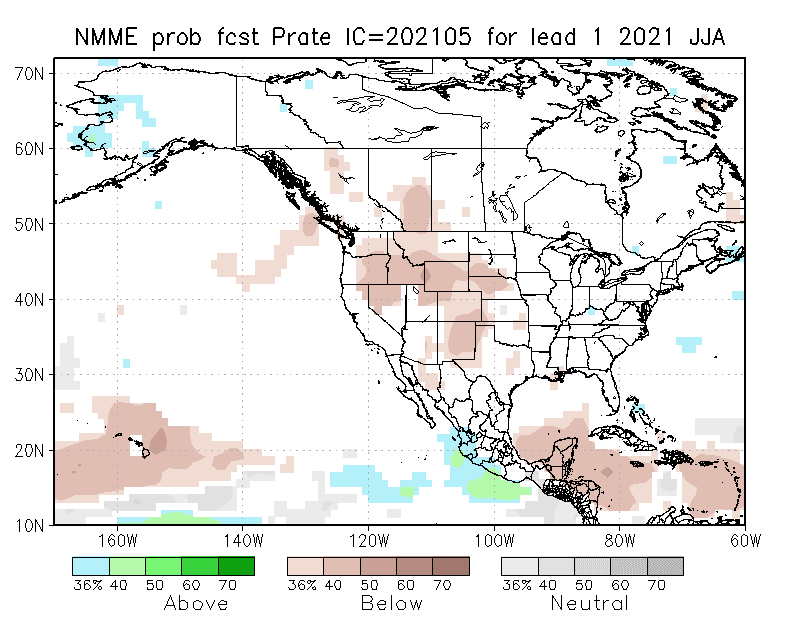
Here’s the computer forecast for the June-July-August season for temperature and precipitation.  They call for a warmer and drier than normal summer overall all of the western US.  
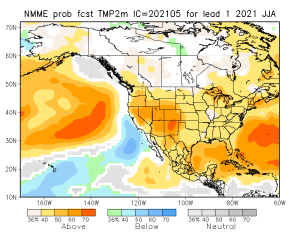
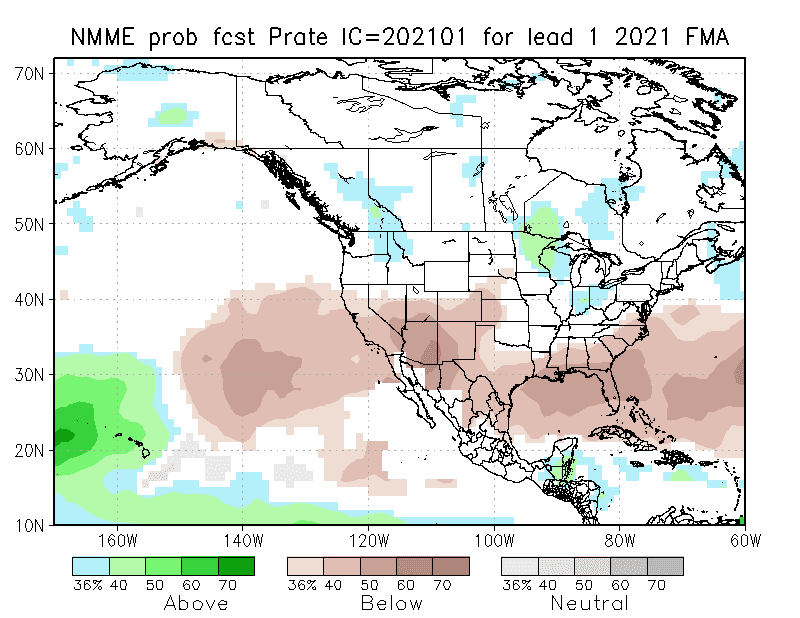
But this of course is a computer forecast.  And you may be wondering if the computer forecasts correctly predicted our record dry spring.  That’s a good question, and the answer is no, the computers never saw it coming.  Here’s the forecast made back in February 2021 for the Feb-Mar-Apr timeframe.  That area of light blue in the Inland Northwest shows that the computer actually expected that we would see normal or possibly wetter than normal conditions for our area, which agreed with the usual La Nina pattern.
The U.S. tried to win World War II with a bat bomb

https://www.msn.com/en-us/news/world/the-u-s-tried-to-win-world-war-ii-with-a-bat-bomb/ar-AAKKvY8?ocid=msedgdhp

Mike Vago  16 hrs agoLike|19


How a WWII Japanese sub commander helped exonerate a U.S. Navy…Turkey’s president vows to ‘save’ the country from the largest outbreak of ‘sea…

This week’s entry: Bat bomba person posing for the camera© Photo: Mondadori Portfolio (Getty Images)

What it’s about: Holy ordinance, Batman! During World War II, American scientists raced to develop crucial technology that would win the war: The B-29 bomber. Radar. The atomic bomb. And, a somewhat less crucial technology, the bat bomb: a bomb canister that contained live bats, each of which would carry an incendiary device and (in theory) start devastating fires across Japanese cities.https://www.dianomi.com/smartads.epl?id=3533

Biggest controversy: The part where we tried to defeat Imperial Japan with an army of bats. The idea came from a dental surgeon named Lytle S. Adams. An acquaintance of Eleanor Roosevelt, he wrote to the White House a month after Pearl Harbor suggesting the idea, which came to him during a trip to Carlsbad Caverns. Adams was “intrigued by the strength of bats” and believed they could carry an incendiary device, which could do serious damage to Japan’s largely wooden architecture.

With FDR’s approval, Adams led up an Air Force project to develop a bat bomb. His team for some wonderful reason consisted of a movie star (more on that later), an unnamed former gangster, an also unnamed former hotel manager, and chemist Louis Fieser, who developed the first synthetic vitamin K and cortisone, and more relevant to the war effort, napalm.

Their eventual prototype was a bomb-shaped metal canister with separate compartments for 1,040 Mexican free-tailed bats. The bomb would be dropped and then at 4,000 feet deploy a parachute, then open to release the bats. The bats would naturally roost in the eaves of buildings, but each one had a 15- to 18-gram payload of napalm (slightly heavier than the weight of the bat itself) on a timer. After several unsuccessful attempts at strapping the bombs to the bats, Adams’ team ended up gluing the devices directly to the bats.

Strangest fact: The only target destroyed by bat bombs was an American air base. Adams’ team made several tests of their bat bomb, but at Carlsbad Army Airfield Auxiliary Air Base in New Mexico, napalm-armed bats were accidentally released, roosted under a fuel tank, and set the base on fire. The project was then passed to the Navy and then the Marines and was renamed Project X-Ray.

Thing we were happiest to learn: America didn’t end up incinerating thousands of bats for the war effort. The Marines were surprisingly enthused about the bat bomb, believing the countless small fires the bats would start would be harder to fight and would spread more quickly than a smaller number of large fires caused by conventional bombing. But by mid-1944, with $2 million already spent on the project and at least another year until the bats would be combat-ready, the project was canceled. As for Fieser’s invention, the U.S. dropped napalm on Berlin and Tokyo without any animal intermediaries.

LTE: No hunting on Sundays

Exposing the Big Game's avatarCommittee to Abolish Sport Hunting Blog

https://www.theintell.com/story/opinion/2021/06/04/lte-no-hunting-sundays/7547122002/

By Deborah George

There are many of us who enjoy the outdoors with neither a gun nor a compound bow. Like hunters,most of that population works and looks forward to enjoying a Sunday without fear of being hit by a stray bullet.

Consider those of us with horses who enjoy riding or driving through woods and fields on crisp autumn days. According to Penn State Extension—which keeps track of the horse industry in Pennsylvaniaalong with the Pennsylvania Equine Council — that industry pumps $3.3 billion into the state economy$329 million of that comes from the recreational horse people who would be directly affected by Sunday hunting.

There are roughly 225,000 horses in Pennsylvania,with nearly 31% of households containing horse enthusiasts. That is about 1.6 million. Roughly half of those involved are young people. There are also 61,000 people employed in the horse industry in our state.https://2971038fb1f147b65a81fbea0ead6e98.safeframe.googlesyndication.com/safeframe/1-0-38/html/container.html

Obviously,we horse owners…

View original post 69 more words

How the pandemic ends

Exposing the Big Game's avatarThe Extinction Chronicles

https://theweek.com/science/health/1001136/how-the-pandemic-ends

New cases, hospitalizations, and deaths are plummeting. What will it take to declare victory over COVID-19?

Manhattan.

Spencer Platt/Getty ImagesTHE WEEK STAFFJUNE 6, 2021Share on FacebookShare on TwitterShare via Email

New cases, hospitalizations, and deaths are plummeting. What will it take to declare victory over COVID-19? Here’s everything you need to know:

Is the end near?Virologists are cautiously optimistic that by late summer, COVID-19 cases and deaths in the U.S. will fall so dramatically that life will return to near normal. Today, 135million ­Americans — more than half of all ­adults — have been fully vaccinated, and in 10 states, 70percent have received at least one dose. The Centers for Disease Control estimates that 100million Americans gained some immunity by surviving coronavirus infections (including asymptomatic ones). As a result, the pandemic is already exhibiting “exponential decay.” That’s a rapid plunge in transmission that occurs when the…

View original post 961 more words

COVID-19: When can we resume our lives without masks?

A slowing current system in the Atlantic Ocean spells trouble for Earth

The potential disruption of an Atlantic current system marks a “big gamble at planetary scale”

By MATTHEW ROZSA
PUBLISHED JUNE 5, 2021 2:00PM (EDT)

https://www.salon.com/2021/06/05/atlantic-meridional-overturning-circulation-slowing-global-warming/

main article imageOcean Current (Getty Images)Facebook1.4KTwitterReddit185Email6save

It was a seamless synthesis of science and art, expanding the frontiers of human knowledge while being eerily beautiful at the same time. That was the response when, in the 1960s, professor Henry Stommel, a pioneering oceanographer, introduced a model to his colleagues that explained the motions of ocean waters. Decades later, Dr. Michael E. Mann, a distinguished professor of atmospheric science at Penn State University, still marvels at what he describes as the “elegant” nature of Stommel’s model.

“It consisted of two boxes, a cold fresh box at high latitudes and a warm salty box at low latitudes, to represent the North Atlantic ocean,” Mann told Salon by email. “He showed that this simple model predicted an overturning ‘thermohaline’ circulation — a circulation driven by contrasts in ocean water density due to both temperature and salinity, each of which influence water density.”Advertisement:https://41ec6cc7d108e5e26a65e7bc9cd265db.safeframe.googlesyndication.com/safeframe/1-0-38/html/container.html

Thus, armed with a model so simple that it can be solved with algebra, scientists now understood the ocean currents in the Atlantic.

This is how scientists figured out what is called the Atlantic meridional overturning circulation, or “AMOC” for short. When it comes to the motion of the ocean, AMOC is essentially a complex system of conveyor belts. The first belt contains warm water that flows north, where it cools, evaporates and increases the salinity of the ocean water. That water then cools, sinks and flows south, creating a second major belt. These currents are connected to each other by regions in the Nordic Sea, Labrador Sea and Southern Ocean, keeping sea levels down on the United States’ eastern seaboard and warming up the weather in Europe.

This current system connects many different pieces of life on Earth: tides, hurricanes, sea levels, ocean life, salinity, fisheries, water pollution, temperatures, weather — all are affected by this current system. A sudden shift in how the Atlantic current system works would drastically change life on Earth.Advertisement:

https://imasdk.googleapis.com/js/core/bridge3.463.0_en.html#goog_469823062How Rainn Wilson moved beyond comedy00:14 / 01:12Go To Video Page

Yet the more we learn about ocean currents, the more we have cause for alarm. A February study published in the journal Nature Geoscience reconstructed the history of the current going back 1,600 years and found that circulation is weaker now than at any other point in that span. They identified the most likely culprit as global warming. With the Greenland Ice Sheet and Arctic ice melting as the planet heats up, and rain and snow levels increasing, the water flowing north loses much of its salinity and density. This causes the water to flow south more slowly and weakens AMOC overall.

More recently, another study in the journal Nature Geoscience that identified the important role played by winds in causing changes in ocean circulation. As lead author Dr. Yavor Kostov of the University of Exeter said in a press release, scientists have struggled to understand the variability in AMOC because there are so many variables that have an effect on it. He noted that after learning that winds influenced circulation in both sub-tropical and sub-polar locations, scientists concluded that “as the climate continues to change, more efforts should be concentrated on monitoring those winds — especially in key regions on continental boundaries and the eastern coast of Greenland — and understanding what drives changes in them.”Advertisement:https://41ec6cc7d108e5e26a65e7bc9cd265db.safeframe.googlesyndication.com/safeframe/1-0-38/html/container.html

The obvious question, then, is: what will happen if climate change continues to weaken AMOC?

“This won’t lead to another ice age (like ‘The Day After Tomorrow,’ which is a caricature of the science), but it may well threaten fish populations and lead to accelerated sea level rise along the U.S. east coast,” Mann told Salon. “This is furthermore a reminder that there are surprises in the greenhouse, and often they are unwelcome ones. If we want to avoid more and more of these unwelcome surprises, we need to bring carbon emissions down dramatically in the years ahead.”

Kevin Trenberth, a distinguished senior scientist at the University Corporation for Atmospheric Research, told Salon by email that if AMOC stopped moving heat northwards, the topical Atlantic would get much warmer. That in turn would lead to more frequent and devastating hurricanes, even as Iceland and parts of Europe cool immensely.Advertisement:https://41ec6cc7d108e5e26a65e7bc9cd265db.safeframe.googlesyndication.com/safeframe/1-0-38/html/container.html

“AMOC acts as a relief valve for the Atlantic heat buildup in the tropics,” Trenberth explained. “In the Pacific there is no equivalent and the relief valve is ENSO,” which stands for “El Niño and the Southern Oscillation.”

Ken Caldeira, an atmospheric scientist at the Carnegie Institution for Science’s Department of Global Ecology, said that it is ultimately impossible to predict with certainty what will happen if AMOC slows down — but that it is very unlikely to be good.

“For me, it is not so much about the direct impacts of this particular change, which I think are highly uncertain, but rather if we are impacting major parts of planetary-scale processes and knocking them out of the range that they operated in (and we adapted to) over the entirety of human history, it is a pretty safe bet that we can anticipate some fairly nasty unknown unknowns,” Caldeira wrote to Salon. “That may be just indefensible bias that cannot be

More: https://www.salon.com/2021/06/05/atlantic-meridional-overturning-circulation-slowing-global-warming/

Frozen in time: 5 prehistoric creatures found trapped in ice

https://www.livescience.com/5-prehistoric-frozen-creatures.html

By Amy GrisdaleHow It Works magazine 2 days ago

Here are 5 of the most famous prehistoric creatures found preserved in the frozen depths of Siberia.

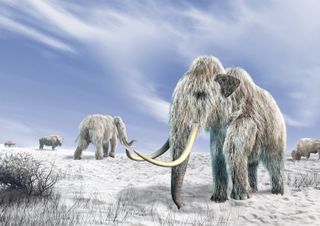
Artist's depiction of woolly mammoths and ancient bison roaming a frozen plain.

Woolly mammoths and prehistoric bison are among the prehistoric creatures found trapped in frozen time capsule of Siberia. (Image credit: Getty Images/Science Photo Library – LEONELLO CALVETTI)

These frozen prehistoric animals are superbly well-preserved and now famous around the world.

1.  Woolly rhino baby named Sasha 

Preserved body of Sasha the woolly rhino. (Image credit: Yakutian Academy of Sciences)

This woolly rhino baby, affectionately named Sasha by the man who found it, was the first young member of its species ever found. It’s unclear if it is male or female, but the horn size suggests it had been weaned by the time it died. It roamed the mammoth steppe, a dry, cold region from Spain to Siberia. 

Related: See photos of the extinct wooly rhino baby 

2. Lion or lynx

The mysterious mummy kitten lying on its back.  (Image credit: Courtesy of Anastasia Koryakina)

Scientists unearthed s squashed, mummified cat in eastern Siberia in 2017. It could either be a lynx kitten or a cave lion cub. Its coat is in beautiful condition, but we can’t be sure of the species as we don’t really know what a cave lion looked like.RECOMMENDED VIDEOS FOR YOU…Ancient Coronavirus InfectionHumans have been battling dangerous viruses since the beginning of time. An ancient coronavirus may have infected the ancestors of people living in modern-day East Asia starting 25,000 years ago and for millennia afterward, according to a new study.https://imasdk.googleapis.com/js/core/bridge3.463.0_en.html#goog_1699852498Volume 0% PLAY SOUND

Related: See photos of the mysterious ice age cat mummy 

3. Mammoth calves

Lyuba, one of the perfectly preserved frozen baby mammoths.  (Image credit: University of Michigan Museum of Paleontology)

Explorers unearthed two mammoth calves dating to about 40,000 years ago in two different areas of Siberia. Researchers took a closer look at the specimens using CT scans and discovered that both baby mammoths had choked on mud. The little mammoths appeared otherwise plump and healthy when they met their demise.

Related: See inside the skin and bones of preserved mammoth calves

 4. Ancient bison

The almost perfectly preserved bison mummy was found on the shore of a lake in northern Siberia. (Image credit: Dr. Gennady Boeskorov)

The most complete steppe bison specimen ever found is 9,000 years old. It has a complete heart, brain and digestive system, along with near-perfect blood vessels. Some organs have shrunk over time but are remarkable, nonetheless. 

Related: See photos of the 9,000-year-old bison mummy found in Siberia 

5. Frozen foal 

Frozen in ice for millennia, this Siberian mummy is the best-preserved ancient horse ever found. (Image credit: Michil Yakovlev/SVFU/The Siberian Times)

two-month-old horse that died between 30,000 and 40,000 years ago made its way approximately 100 meters (328 feet) below the surface, deep in a Siberian crater. In life, the young horse stood almost 1 m (3 feet) tall, and its hooves are still intact, along with tiny hairs that are still visible inside the foal’s nostrils. Advertisement

Related: See photos of the perfectly preserved ice age foal 

Veganism and conscience

There's an Elephant in the Room's avatarThere's an Elephant in the Room blog

Image by We Animals Media is of a snake rescued from research in a university

I recently did a post on social media where I mentioned a number of subjects which I have observed over the years to be less popular with page followers than others. I can’t remember having posted that type of observation before but many engaged with the post and the responses were interesting and helpful. Some also made it clear that The Elephant will likely lose followers as a result of this blog but so be it. I am nothing if not sincere and I’m not doing this to be popular.

I found myself reflecting on the fact that my writing centres mainly on these areas of exploitation that affect the majority of us, namely consumption, clothing, testing and entertainment and decided that this was a conscious choice on my part. Not only are these areas…

View original post 1,198 more words

Biden administration moves to bring back endangered species protections undone under Trump

Exposing the Big Game's avatarThe Extinction Chronicles

Biden administration moves to reverse Trump-era changes to Endangered Species Act – The Washington Post

The plan would undo much of the Trump administration’s work that altered the ways habitats of plants and animals on the verge of extinction are kept from total collapse.

Image without a caption
A critically endangered North Atlantic right whale takes a dive for plankton in Cape Cod Bay off the coast of Provincetown, Mass. (Jamie Cotten for The Washington Post)

ByDino GrandoniandDarryl FearsJune 4, 2021 at 1:32 p.m. PDT133

The Biden administration announced plans on Friday to reverse policies implemented under President Donald Trump that weakened the Endangered Species Act, a half-century-old law credited with the recovery of the bald eagle, humpback whale, grizzly bear and dozens of other species.

The U.S. Fish and Wildlife Service and the National Marine Fisheries Service under President Biden aremoving to undomuch of the Trump administration’s…

View original post 957 more words

Florida manatees are dying at alarming rates: ‘We’ve never seen anything like this before’

Florida manatees are dying at alarming rates: ‘We’ve never seen anything like this before’ (msn.com)

Derek Hawkins  19 hrs agoLike|30


How a WWII Japanese sub commander helped exonerate a U.S. Navy…US helps Ukraine fend off Russia in Black Sea after most of fleet was captured…

Wildlife researchers first spotted the trend as the winter weather set in late last year. Florida manatees — the peaceful, lumbering marine mammals iconic to the Sunshine State — were dying in alarmingly high numbers. Many washed up emaciated, indicating they’d starved to death.A group of manatees swim in a canal in Fort Lauderdale, Fla.© Lynne Sladky/AP A group of manatees swim in a canal in Fort Lauderdale, Fla.

It didn’t take long to identify a likely cause. Florida’s community of manatee conservationists has warned for years that water pollution chokes off the sea grass that makes up the bulk of the manatee diet. The problem was now so bad that the underwater pastures in one manatee hot spot were almost completely wiped out.https://www.dianomi.com/smartads.epl?id=3533

An update last week from state wildlife officials captured the full magnitude of the devastation: At least 761 Florida manatees — more than 10 percent of the estimated manatee population — have perished so far this year, already surpassing the total manatee deaths recorded in 2020. The current manatee die-off could top 1,000 by year’s end, experts say, exceeding the recent high of 824 deaths in 2018 and threatening to upend the fragile recovery the species has made.

“We’ve never seen anything like this before,” said Jaclyn Lopez, Florida director at the nonprofit Center for Biological Diversity, which works to protect endangered species. “I think it’s fair to call it a crisis. It’s not hyperbole when you see hundreds of manatees dying like this.”

Officials declared the deaths an “unusual mortality event,” which the federal government defines as a significant die-off of any marine mammal that “demands immediate response.” Scientists say pandemic-related reductions on monitoring activity may have prevented researchers from picking up on the problem sooner.

State wildlife commissioners and private groups are considering a suite of potential solutions that range from replanting vegetation to rounding up sickly creatures en masse and rehabilitating them. But the gradual destruction of the manatees’ habitat, combined with the long-term menace of climate change, means there’s no panacea.

Left unchecked, the fallout is all but certain to stretch beyond the manatee population, experts say. Manatees are often referred to as a “sentinel species,” meaning their health serves as an indicator for the welfare of other flora and fauna in the state. Manatee grazing makes sea grass beds more productive, which in turn attracts a greater diversity of organisms to their habitats. If their numbers decline, other plant and animal populations will suffer, too.

“They’re kind of like the gardeners of the aquatic ecosystem,” said Patrick Rose, a biologist and executive director of Florida’s Save the Manatee Club. “And they’re just so defenseless.”

Until recently, the West Indian manatee found on the East Coast represented a ecological success story. They faced extinction in the 1970s, when only a few hundred remained. But decades of intensive conservation efforts have helped them rebound to more than 7,000.

Citing the improving numbers, the Trump administration in 2017 downgraded the species from “endangered” to “threatened” under the Endangered Species Act. The move was decried by conservationists and some Florida officials, who said the Interior Department ignored ongoing threats such as habitat loss and rising injuries from boats. They say this year’s die-off all but confirms their fears that the reclassification was premature.

Water quality degradation emerged as a top concern long before manatee deaths reached their current levels.

Runoff from farming, pesticide sprays, sewage treatment, leaky septic systems and other human sources causes an excess of micronutrients such as nitrogen and phosphorus to build up in the water. Massive algae blooms form. Eventually, they grow so large that they deplete the water of oxygen and block out the sunlight sea grass needs to thrive. What’s left are murky wastelands with little for the manatees to eat.

Year after year has brought dire warnings, but no protective measures have managed to reverse the recent upward trend in manatee deaths.

Experts said there wasn’t an easy explanation for why manatee mortality spiked so dramatically this year. Rather, they said, it appears to be an accumulation of environmental ills, with the diminishing supply of sea grass playing a major role, in addition to such other factors as boat strikes and cold stress.

“I think this is a point on a long, linear trajectory,” said Lopez, of the Center for Biological Diversity.

The situation is particularly dire in the Indian River Lagoon, a 150-mile waterway along Florida’s Atlantic Coast that ranks among the most biodiverse estuaries in the country. Researchers estimate that more than a quarter of the manatee population flocks there during cold months, many drawn in by warm water discharge from a power plant in Titusville, Fla.

Manatees won’t tolerate water that’s lower than 68 degrees, so once they arrive, they tend to stay until the ocean warms again — even if food is in short supply. In previous years, the region was blanketed in tens of thousands of acres of sea grass, making it an ideal place to spend the winter, said Rose, of the Save the Manatee Club. Vast tracts of that vegetation have disappeared since 2011, when protracted algal blooms began to smother the estuary, according to state water regulators.

“Before, they could forage and stay warm in the water from the power plant,” Rose said. “But they kept losing more and more sea grass.”

Central Florida also experienced an unusually cold winter this year. That plus the lack of food created awful conditions for the animals, Rose said. “They came into this winter already malnourished,” he said. “They didn’t have the resources to go out and feed on those warmer days. That resulted in this more massive starvation.”

Researchers might have noticed the advanced state of manatee malnutrition earlier had conservation work not been hampered by the coronavirus pandemic, according to Rose. Wildlife officials and conservation groups spent less time monitoring and tagging the animals, he said.

“A lot of that work didn’t happen,” Rose said. “The fact that it had gotten that bad was not detected.”

But the work is picking back up. The Manatee Rescue and Rehabilitation Partnership — a cooperative that includes Save the Manatee Club, state zoos and wildlife regulators — has helped nurse numerous manatees back to health this year. In May, a male who came in more than 200 pounds underweight was released in central Florida’s Salt Springs.

The Florida Fish and Wildlife Conservation Commission says it has rescued 90 manatees so far this year, nearly topping the number rescued in each of the two previous years. The agency, which conducts the majority of manatee health assessments along with private groups, says it’s working with federal officials to determine what caused the “unusual mortality event” and is exploring possible responses such as habitat rebuilding.

“Environmental conditions in portions of the Indian River Lagoon remain a concern. Preliminary information indicates that a reduction in food availability, sea grass, is the primary factor in this event,” the agency said in a statement late last month. “We will continue with a comprehensive investigation and share information as it becomes available.”

Conservationists are also working out ways to stave off another cold-weather catastrophe in the coming months. Replanting and nutrient filtration projects are underway. Rose and other advocates say they’re also calling on the U.S. Army Corps of Engineers to temporarily stop using sprays to remove plant buildup that restricts boater access so that manatees may have an alternative food source.

Another possibility involves finding a safe facility for large numbers of sick or injured manatees to convalesce. A manatee rescue committee is meeting in the coming weeks to weigh whether an old fish hatchery or other sites could do the trick, housing 100 or more manatees through the winter.

Rounding up the gentle giants would be a major undertaking — trapping them and transporting them poses dangers to both manatees and humans. But all options need to be on the table, Rose said.

“Next winter really has to be quite different. We have to be on top of this,” Rose said. “They’re dependent on us.”

Read more:

An enormous missing contribution to global warming may have been right under our feet

Biologists reeled in a 240-pound fish from the Detroit River that probably hatched a century ago

Biden administration moves to bring back endangered species protections undone under Trump