A bull moose stands in Nunavaugaluk Lake, October of 1997. The moose population in the nearby Togiak National Wildlife Refuge has boomed over the past three decades. (Photo by Andy Aderman/U.S. Fish and Wildlife Service)
In southwestern Alaska, where there is a mix of tundra, mountains, forests and river-crossed terrain, there has been a rapid transformation in the wildlife.
In the Togiak National Wildlife Refuge specifically, the moose population has increased a whopping 400-fold since the early 1990s, from just a handful a few decades ago to about 2,000 animals now.
The reason appears clear: climate change. Milder winters and the proliferation of vegetation correlate directly with the moose population boom, according toongoing researchby SebastianZavoico, a graduate student at the University of Alaska Fairbanks.
The strongest part of the trend seems to be in river-crossed areas on…
This year’s hunting season in Botswana kicked off with giant killing acts: the shooting of two of the biggest elephant bulls, triggering both anger and jubilation from the extreme ends of the wildlife conservation camps.
In April, at the opening of Botswana’s controversial six-monthtrophy huntingseason, two large-tusked African savannah elephant bulls were killed. The two massive bulls, killed in northern Botswana, had tusks that weighed more than 100 pounds (48 kg) and 90 pounds (40 kg) each, respectively – marking them among Africa’s largest elephants.
While some local Batswana communities that directly benefit from these hunts celebrated the killings, not everyone was impressed.
ANGER AND CONDEMNATION
“This was one of the largest, if not the largest, tusker in the country,”
TAMPA, Fla. (WFLA) — Two Tampa men are facing charges for allegedly hunting a deer in a residential area in East Lake, authorities said.
The alleged incident occurred around 10:50 p.m. Saturday in the area of Ridgemoor Boulevard and Glenridge Drive, according to an affidavit. In Zone C, where it happened, general deer gun season runs from Nov. 5 through Jan. 22, the report said.
Deputies said they became aware of the situation after a man called 911 and reported hearing what sounded like metal shrapnel hit his fence. He said he saw a deer lying on the road, which he presumed was deceased, and a vehicle circling the area.
“I’m surprised I didn’t hear the gunshots. But yeah, it’s unbelievable. Really unbelievable,” said Bernard Osborne, neighbor.
A boy tries out the interactive T. rex during the media preview March 5, 2019 of “T. Rex: The Ultimate Predator” an at the American Museum of Natural History in New York City.(Image credit: Photo by TIMOTHY A. CLARY/AFP via Getty Images)
Prehistoric giants used to populate theEarth. These behemoths included mighty dinosaurs, airplane-sizepterosaurs, massive crocodiles and snakes, and even armadillos the size of cars. But today, there are just a few big animals on our planet.
What happened? Why aren’t there many giants left anymore?
First of all, there’s plenty of fossil evidence that the ancient past really did have larger animals — beasts that were humongous…
The birds, mostly northern gannets, come from a Magdalen Islands colony that is widely infected with H5N1
CBC News·Posted: Jun 06, 2022 5:21 PM AT | Last Updated: 11 hours ago
More than 300 northern gannets infected with H5N1 — known as avian influenza or bird flu — have been found dead or dying along Nova Scotia’s Cape Breton shoreline.(Jacques Boissinot/The Canadian Press)
1
comments
Ocean-going birds infected with avian influenza are washing up dead on Nova Scotia shores and provincial officials are worried the highly contagious disease will now spread among local bird populations.
Officials are working to contain bird flu in Washington State. the Department of Agriculture says the disease has now been identified in Snohomish County, its ninth county, with infected birds turning up in a backyard flock in Monroe.
MONROE, Wash.-The battle to contain the devastating bird flu in Washington continues. The Department of Agriculture (WSDA)says the disease has now been identified inSnohomish County, with infected birds turning up in a backyard flock nearMonroe.
That’s theninth countyto be identified as having a case or cases of Avian Influenza.
Warning! What follows is not easy to digest, let alone to accept. If you think that this is all crap, or the very thought of a potential end to this way of life freaks you out, I recommend not to read any longer and close this post. Forget about this topic and live a happy life!
After a longer than usual intro — telling the story of my personal journey — let me show you the reasons why I came to believe that our civilization is approaching its final descent. As you will see, it is a familiar pattern, one that has been experienced by many civilizations before, and I’m sure will be experienced by many following this one — for all too common reasons. Although the “end of times” were forecast many times before, remember that the “end” did come eventually for the Romans, Mayans, and all the others before. What is different this time, is that now we have developed a scientific understanding why those previous civilizations collapsed. Unlike vague prophecies in prior times, we now have solid proofs for trends clearly pointing in the wrong direction (if upholding this way of life were the goal). I’ve collected some of these in this article and added my observations linking them into one more-or-less coherent picture.
I will be adding useful links, scientific research, book recommendations etc. to these topics and keep this post on the top of my page, so it can serve you as a useful guide in understanding what is really going on behind the scenes of this great unraveling. In the meantime, while you are waiting for all the links to appear, feel free to research any of these topics. (Just highlight a phrase and hit ‘define’ or ‘search’ depending on the platform you use.)
While doing so, you might be lured into thinking that many of these issues can be ‘tackled’ (oh God, how I hate this word… sorry). Keep in mind however, that a number of these things have ended civilizations almost single-handedly before… and now they’ve got company. Quite a big one, for that matter. If you still think that this civilization can survive the coming storm after reading (and processing) the list below, then I you might want to read the list again…
This time without the pink glasses though.
What’s important to note here is that these topics are the net results of many positive and negative trends. None of them are news-bites about single events, which we could dismiss as pessimistic then move on by reading some good news. Biodiversity loss is a good example: I read dire warnings almost every week, and while there were huge steps made in protecting a few fragile habitats or endangered species, the overall picture still remains a strong downward trend, with no signs of turning.
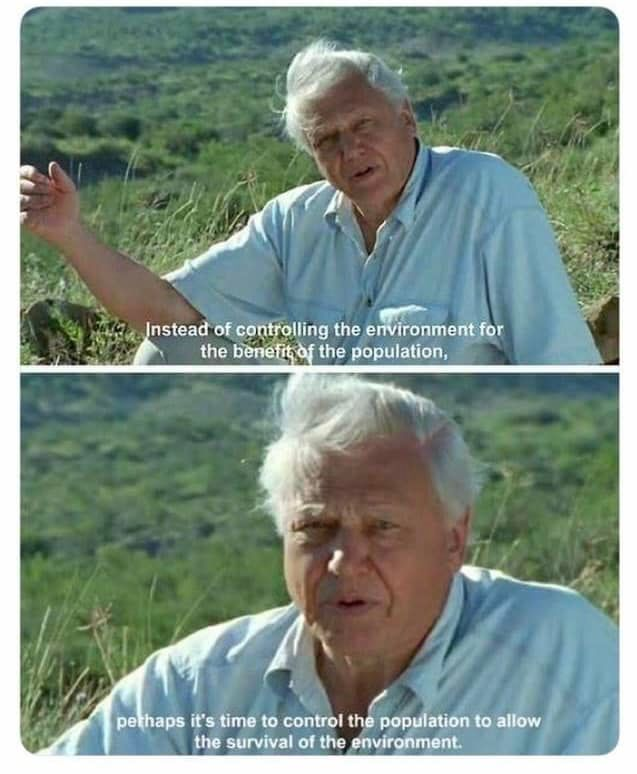
The problem is, that we are not addressing the root cause to these issues. We are just fiddling around the edges, achieving quick wins here and there, while business as usual (aka overshoot) continues to roar full speed ahead…
Some topics are recurring, affecting most civilizations before, some are unique to ours. Some are overarching our species entire history. So, while you are reading the list, do not miss to observe the interconnection between them, and notice how they will not disappear even after our current civilization stops worsening them.
Resource depletion: attempting infinite growth on a finite planet is not a winning strategy. Yet every civilization gives it a shot, using finite resources (be it renewable or non-renewable) at an ever increasing and ever more unsustainable rate. A forest has a certain area, and a certain number of trees which can be harvested. Topsoil in a given country has a certain thickness and a certain amount of plant nutrients to it. Mines have a certain amount of metals that can be “produced”. Eventually every civilization uses up all of its cheap, easy to extract resources available to them, then perishes. Some natural resources replenish over time allowing multiple successive waves of civilizations, while some get permanently destroyed or depleted. This is a prime reason behind the limited shelf-life of every civilization and explains why all of them who are using non-renewable resources are destined to disappear. (1)(2)(3)
Overshoot: advancement in technology never saved any civilization from its demise before, and will certainly won’t save this one either. Technology keeps pushing out the boundaries — but only up to a certain point (see below). Population size and consumption are (and always were) oblivious to this trend and kept increasing well beyond the limits set by resources (both natural and mineral) available to them. This is overshoot. Once reached, there is no safe return: civilizations have to keep doing what they are doing to avoid collapse, but by doing so they’re just hastening their demise. (4)
Diminishing returns: Each technological advancement in acquiring resources requires ever greater investments in energy, complexity and material use, while providing ever smaller returns (see: enhanced oil recovery). Eventually all technologies end up hitting an economic limitation well before coming close to physical resource limits. Increasing complexity thus eventually reaches a point (beyond diminishing returns (1)) where further advancements come at higher costs than benefits (the two are usually realized elsewhere). This not only causes more harm than good, but also starts to inflate an unserviceable debt bubble… And not only in financial terms.
Peak technology: Due to diminishing returns in acquiring new technologies, advancement in science and technology in a given field slows down to a point where progress is barely noticeable. The next step requires so much more energy, material resources and time what is simply not available to the given civilization… (Which, in the meantime, often finds itself fighting battles at all fronts.) It may not be obvious today, but mining in space or hydrogen fusion will remain a pie in the sky for the same reason: these technologies would require more energy, resource and time to scale than we can spare. Why? Read on…
Fragility: in its frenzy to fight off increasing costs of complexity civilizations (and this one especially) remove(s) all buffers: safety stocks, excess capacities not producing profits etc. This, combined with depletion, inevitably translates into supply chain disruptions, transportation delays and shortages, making a return to “normal” ever harder to achieve.
Climate change makes agriculture and life on Earth harder and harder to maintain. It has a profound effect on biodiversity and crop yields (here and here) as well as causing damages to, and loss of, infrastructure due to intensified rainstorms, hurricanes, sea level rise, wildfires etc. Climate change alone has ended civilizations before, and at its current rate it has a pretty good chance against our current society as well. At the worst case: it can wipe us out.
Peak soil fertility / productivity: we have most probably passed the first, resulting in a falling micro-nutrient content of food, and without artificial fertilizers (made from non-renewable mineral resources), we would have already experienced a permanent drop in agricultural production too. Resource depletion will put an end this holiday from reality however… We will soon be reaching peak phosphorus and slowly run out of cheap natural gas too (both being key ingredients to fertilizers) in the decades ahead. Expect food prices to rise and stay elevated — out-pricing the poor from the market and leading to mass starvation.
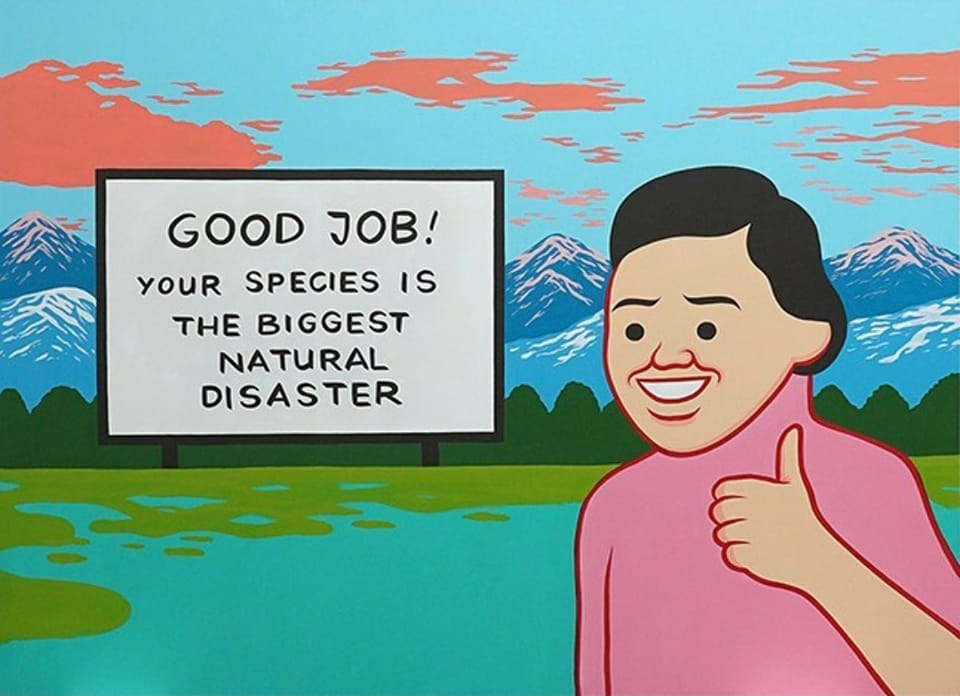
Ecological collapse, mass extinction: as a consequence of the above processes, species are disappearing a hundred times faster than anytime before during human history, or the past 65 million years for that matter. Fisheries are collapsing one after another. Bees and insects are disappearing together with forest dwelling creatures. Coral reefs are bleaching. Oceans are becoming anoxic and acidic, developing wast dead zones. If this isn’t the time of the Great Dying, then nothing is. If you think any civilization can survive on a dead planet with rapidly depleting natural resources… think again. Obviously there is a point where society breaks, and finally gives way to Nature regenerating herself, on her on terms.
Water scarcity: corporations (in mining, beverages and others) are increasingly getting into conflict with local people and agriculture over freshwater supplies. Not only because of an increasing frequency of droughts (due to climate change), but also because they are all using underground aquifers at an unsustainable rate. Another sign of overshoot.
Mass migration: rising sea levels, droughts, heat waves, hurricanes etc. will make more and more lands uninhabitable (yes, there are already once inhabited regions under water, or have become otherwise uninhabitable). This will force millions (if not billions) to leave their homes and look for shelter in another country… Add resource/water-wars, political instability, economic hardships due to resource depletion and you can pretty safely bet that the 21st century will see the biggest migration in human history. Sudden inflows of people were already causing civilizations to fall in the past, so this unprecedented migration will surely cause many states to fail in the future.
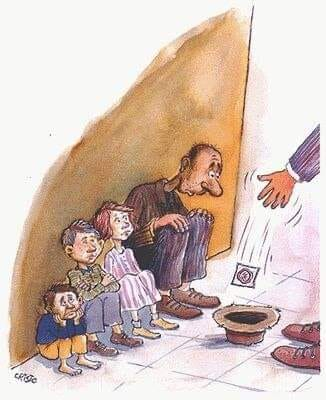
Inequality and greedy elites: again, this one alone has caused the fall of many civilizations before. As all of the wealth gets siphoned out of the lower classes they first loose their incentive to work (this is exactly where we are at today in the US, a.k.a. the great resignation), then starve… or choose to overthrow the existing elite class (often with the help of competing power groups — see below).
Overproduction of elites: as wealth gets ever more concentrated at the top, while the middle-class slowly slides down the social ladder, ever more people want to become part of the elite, increasing competition, political infighting, and creating entrenched factions ready to go to war with each other.
We can’t agree on anything: just go and watch “Don’t look up”, or go on social media and try to uphold a belief that a pivotal change is possible. We see people at each others throat even in such a low-risk, low-effort, simple issues as having oneself vaccinated. Just imagine how would people react if they were told to reduce their consumption to third world levels in order to save the planet. Humans have developed an astonishing level of diversity in thinking, cultures and personality types. Genetically we might be 99.9% the same, but cultural programming wise we are the most diverse species on the planet. Thus chances of humanity uniting in the face of troubles ahead is getting closer to zero each passing day.
Declining social cohesion: as a result of the previous points above, members of societies lose faith in a common goal and a uniting power. Societies within countries will continue to fracture into ever smaller factions, gradually becoming incapable to cooperate in any matter.
Blindness to our predicament, combined with a massive tendency towards denial. If you believe that we don’t have to give up this luxurious lifestyle in order to save the planet for future generations then you are in deep denial. Just take a look at the first 8 elements on this list: none of them could be mitigated without giving up this level of consumption — an action almost equal to experiencing the otherwise inevitable collapse of society. No wonder people choose denial and apply magical thinking instead.
Capitalism self-terminating itself: turning finite resources into wealth starting with the cheapest, easiest to extract ones then moving on to ever more complex and costlier alternatives is a self-terminating process. There is a natural as well as an economic limit to wealth extraction too. Once it is reached the system starts to live up its future and stops investing in expansion, as well as cutting corners in maintaining current production levels. The reason: ever larger amounts of debt would be needed to finance ever more costlier approaches to wealth creation, while returns are not at all guaranteed due to wildly fluctuating prices. hence the rush into the casino: where people are gambling with bonds, stocks and crypto. Governments are trying to postpone failure by keeping interest rates artificially low and printing money — but this approach has a limited shelf-life too. Re-adjusting our financial expectations to a rapidly deteriorating reality however has now become inevitable.
Civilizations are growth machines: they need to expand into new territories, occupying other lands for their cheap resources (the takeover method (4)). Once growth stops however maintenance costs quickly overwhelm dwindling incomes and the system topples over. In a globalized economy on a finite planet reaching this point was only a question of time. There is no stable equilibrium for complex civilizations predicated on growth — only bio-regional and truly sustainable cultures have a chance on the long run.
Exponentially failing infrastructure: an exponential boom in infrastructure building (roads, bridges, dams, transmission lines, pipelines etc.) in the 20th century has brought about an exponential need in maintenance / replacement in the 21st as equipment ages. Expansion at this scale was Ponzi scheme: with ever-increasing rates of growth necessary to sustain long-term liabilities. Combined with disasters caused by climate change, we are facing a hyper-exponential increase in infrastructure repair costs in the decades ahead, tying up ever larger amounts of our dwindling resources.
Disappearing net energy (or the EROEI double whammy): it follows from the nature of resource depletion that more and more energy is needed to extract the same amount of resources (be it oil, or metals for renewables). Combined with an ever increasing need to repair infrastructure elements (most of it being essential to deliver energy, like pipelines, roads and transmission lines) we will face very though decisions in a few decades: should we allow a factory to continue to operate, or new housing to be built? Or should we spend the resources on repairing the bridge and the roads washed away by the latest atmospheric river instead?
Humanity is acting like a mindless complex adaptive system — and unable to give up an iota of its energy use. In fact we are just simple cells of a giant superorganism, responding to the threats and opportunities around us, motivated by dopamine hits and automated by decades of cultural conditioning. Everyone wants to be rich and successful in life — saving the planet comes only thereafter. Should the 1% give up their consumption, the remaining 99% would happily jump on the bandwagon and use up the newly freed up resources.
Unsustainable behavior trumps sustainability. Humans, along with every other creature, act unsustainably in an abundant world. Once left to its own devices (i.e. without proper checks and balances from predators) humans follow the ancient genetic programming and multiply into oblivion without giving a single thought whether this is sustainable or not. Evolution does not skip steps or plans ahead: it selects for the most successful features on the short term. So guess what happens if you have 10 sustainable (sort of) cultures on a continent, then suddenly an unsustainable one appears among them? Which one survives…? Well, none of them. The later, in its frenzy for resources, kills or outcompetes all other cultures then drives itself extinct. It doesn’t matter if this culture happens to be a bacteria, a new strain of a virus or white colonists with huge beards.
Inadequate governance: short term thinking (focusing only on winning the next election), combined with greed and a lust for power. Corporations are having a firm grip on decision makers. But let’s face it: no single person is in control. There is no secret organization controlling the minds of people. It is just plain old human nature “blessed” with an illusion of a separate self, a false sense of agency and free will. We are all in this together, without anyone holding the steering wheel.
Technological lock-in: our technologies have co-evolved with one another. Evolution of technologies are very slow in real life, and even with planned obsolescence it takes many generation of products to get better in a certain respect. When viewed from way above, these technologies form a complex web, a suite of technologies, which is very hard to change: think oil wells, refineries, pipelines, petrol stations, asphalt roads, plastics… What matters the most though, is the huge financial incentive to use the existing system as long as possible. Since these systems wasn’t built in a year, but in decades and centuries it would take a similar timeframe to replace them with something else. A timeframe we simply doesn’t have.
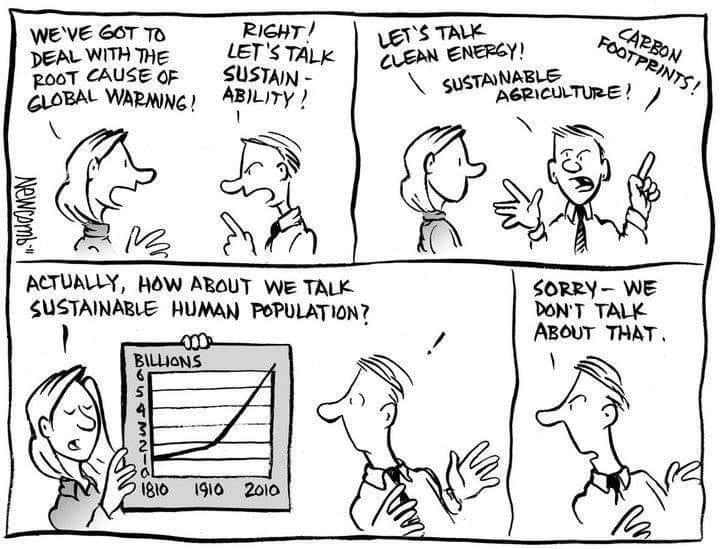
False solutions, or not seeing the forest for the trees. Our biggest problem to “solve” is not climate change. It is overshoot: the consumption of Nature together with its finite resources, and polluting beyond any acceptable means. Renewables and electrification simply replace the consumption of one finite resource and its related pollution (fossil fuels and CO2) with another set of finite resources and their related pollution (metals and ecological destruction caused by mining, plus the CO2 released during the process). The same goes for carbon sequestration, geoengineering, the hydrogen economy, bio-fuels, fusion, mining in space, colonizing other planets and all the rest — as none of these address excess consumption, just prolongs it shelf-life.
Placing all our eggs in one basket. That basket is: fossil fuels. We are still getting 86% of our energy from these dirty resources — just like fifty years ago. The reasons are complex, but the main takeaway is simple: complex high tech civilizations require dense, portable and cheap fuels. Like oil, the master resource, the key to all other resources. So far, we have failed to find a scalable replacement, thus chances are that with the long slow demise of oil production our entire civilization will see its final sunset. This is Leibig’s law of the minimum in effect. If all other problems would disappear overnight, this single “issue” (of slowly disappearing oil extraction) alone would end our current way of life within the next two to five of decades.
Not addressing overshoot (population/consumption) — coming from all of the above: denying the root cause of the problem and pretending that we can play along just fine is a sure recipe for civilizational failure… and an ideal breeding ground for fascism and civil war.
+1:But it’s different this time!!! No. It’s not. Overshoot is overshoot. Once your civilization starts to consume more than what naturally gets regenerated, in its folly to pursue infinite growth on a finite planet, collapse is only a matter of time. It usually happens shortly after the resource base (fisheries, forests, topsoil, or in our case oil) supporting the said civilization starts its permanent decline due to over-consumption, pollution and a loss of a livable habitat.
Knowing what I know today, I became comfortable with the thought of collapse. I’ve also made peace with the fact, that the main issue of overshoot won’t be addressed — and no one is to blame. Humanity had a long history spanning tens of thousands of years, all leading up this point in an immensely complex web of causes and effects. Thus the rise and fall of this fossil fuel based civilization was and is as inevitable as the rise and fall of many older civilizations.
This is a perfectly normal, natural cycle of boom and bust. No leader, be it a dictator or an elected official can turn this around. This is too much to handle to any person: there are too many things set into motion all at once. I’m sure that there will be fascists and communists rising to power insisting the opposite — but remember what happened, when these two parties got what they wanted the last time…
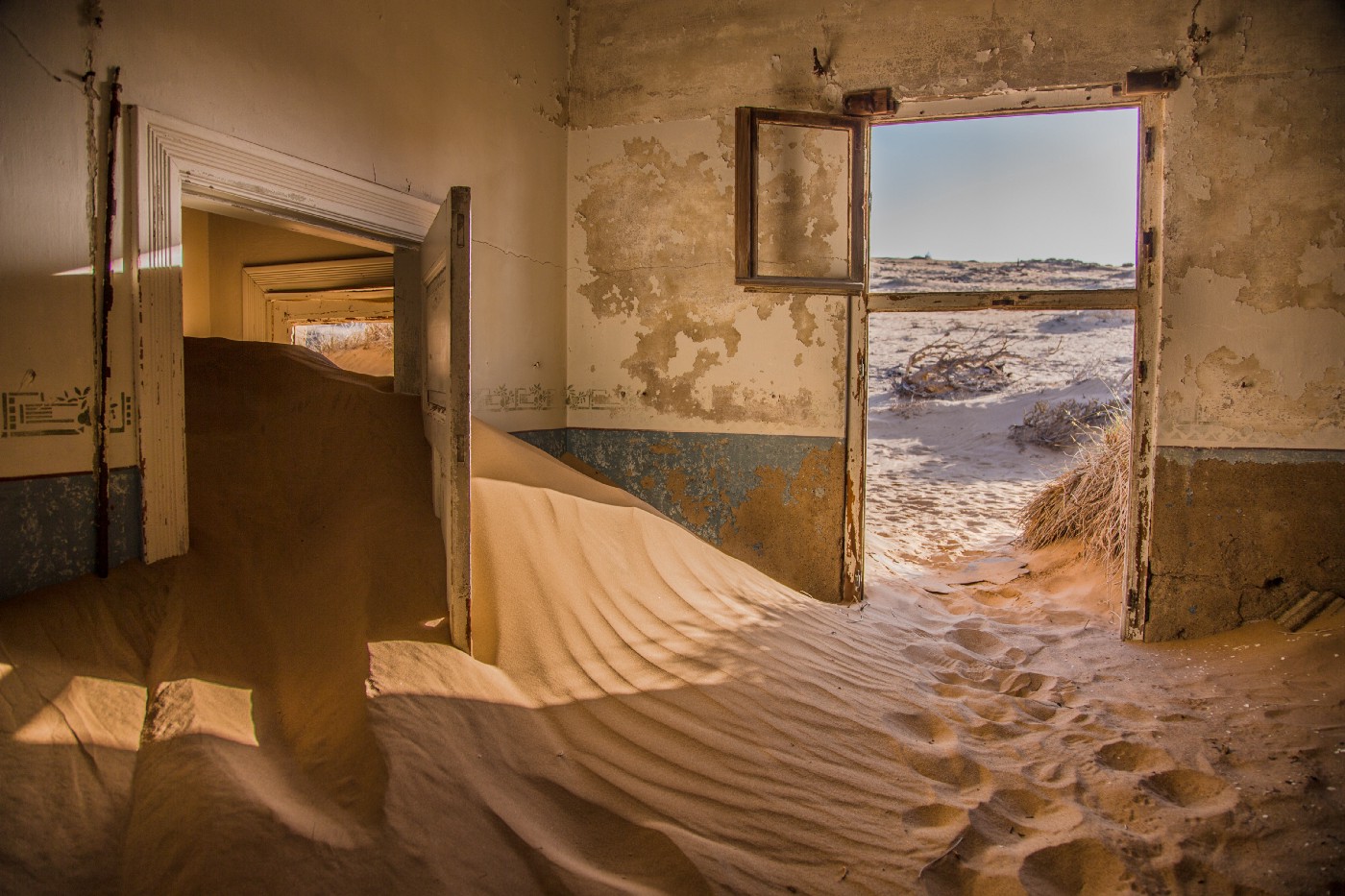
Knowing how much of Earth we have consumed in the past 150 years, how far we have depleted every resource from forests to fisheries, from coal mines to sand during our rapacious growth mania, it is not hard to imagine what comes next. Not Star Trek, for sure. Not even a return to “normal”.
In theory it would be quite possible to devise a sustainable culture — once this one is gone for good — lasting many millennia to come. Using permaculture practices, living in earth berm homes made from locally available, truly renewable materials, like wood, stones, clay, hemp etc. we could build a civilization lasting many millennia, albeit a rather primitive one measured with today’s standards. However, all it takes to drive this experiment to the ground is one spoiled generation, or one unsustainable culture, not giving a rat’s hind leg to sustainability — heck, you only live once! — and there goes your utopia. It has happened many times in the past, and there is absolutely no guarantee that it won’t happen again.
Such is life. Birth, growth, maturing then death. The same cycle repeats itself at all scales: from bacteria, to human societies, solar systems and galaxies. This is the world we live in. Temporal. Ever changing.
Never the same, yet always the same.
Be grateful. You have seen the peak of human civilization. You have made it! It’s time to make peace with how it ends and start imagining what comes after. A quote from Antonio Gramsci sums this up neatly:
“The crisis consists precisely in the fact that the old is dying and the new cannot be born; in this interregnum a great variety of monsters are born.”
FILE – The Department of Homeland Security logo is seen during a news conference in Washington, Feb. 25, 2015. DHS says a looming Supreme Court decision on abortion, an increase of migrants at the U.S.-Mexico border and the midterm elections are potential triggers for extremist violence over the next six months. DHS said June 7, 2022, in the National Terrorism Advisory System bulletin the U.S. was in a “heightened threat environment” already and these factors may worsen the situation. (AP Photo/Pablo Martinez Monsivais, File)
The U.S. was in a “heightened threat environment” already, and these factors may worsen the situation, DHS said in the latest National Terrorism Advisory System bulletin.
“In the coming months, we expect the threat environment to become more dynamic as several high-profile events could be exploited to justify acts of violence against a range of possible targets,” DHS said.
It’s the latest attempt by Homeland Security to draw attention to the threat posed by domestic violent extremism, a shift from alerts about international terrorism that were a hallmark of the agency following its creation after the wake of the Sept. 11, 2001, attacks.
ADVERTISEMENT
Indeed, the threats from overseas rate only passing mentions in this bulletin. It notes that al-Qaida supporters celebrated the January standoff at a synagogue in Colleyville, Texas. And it mentions that the Islamic State group called on supporters to carry out attacks in the United States to avenge the killings of the group’s leader and spokesman.
DHS also warns that China, Russia, Iran and other nations seek to foment divisions within the U.S. to weaken the country and its standing in the world. In part, they do this by amplifying conspiracy theories and false reports that proliferate in American society.
Domestic violent extremists, however, present the most pressing and potentially violent threat, the agency said, citing, for example, the racist attack in which a white gunman killed 10 Black people at a Buffalo, New York, supermarket in May.
The bulletin, which is scheduled to expire Nov. 30, said calls for violence by domestic extremists directed at democratic institutions, candidates and election workers will likely increase through the fall. It said that people in online forums have praised the mass shooting at the elementary school in Uvalde, Texas, and encouraged copycat attacks.
“The alert highlights the fact that society is becoming more violent every single day,” said Brian Harrell, a former assistant secretary at DHS. “Would-be criminals and domestic terrorists will always use the path of least resistance, and often times soft targets and crowded places are picked for this violence.”
A senior DHS official, speaking to reporters ahead of the release of the bulletin, said it describes the situation as “dynamic” because authorities are seeing a wider variety of people motivated by a broader range of grievances and incidents than in the past.
The upcoming decision from the Supreme Court, which could overturn Roe v. Wade, could lead to violence from either extremist supporters or opponents of abortion rights depending on the outcome, said the official, speaking on the condition of anonymity to discuss some factors that went into the preparation of the bulletin.
ADVERTISEMENT
Racial extremists may be motivated by immigration enforcement or whether the government continues to rely on Title 42, the public health order that has been used since the start of the coronavirus pandemic to prevent people from seeking asylum at the southwest border, DHS said.
The agency and the FBI are working with state and local law enforcement to raise awareness of the threat, and DHS has increased grant funding to local governments and religious organizations to improve security, Homeland Security Secretary Alejandro N. Mayorkas said in a statement released with the bulletin.










 Exposing the Big Game
