Ukraine President Issues Grave Warning After Putin Threatens to Establish Buffer Zone — ‘We Need Help Now’
Reply

USA TODAY
https://www.usatoday.com/story/news/weather/2024/05/20/doomsday-glacier-melting-more/73769960007/
AD
0:07
https://imasdk.googleapis.com/js/core/bridge3.641.0_en.html#goog_1555569475
More unsettling news from the bottom of the world.
Scientists have uncovered evidence of “vigorous melting” at Antarctica’s Thwaites Glacier, according to a new study published Monday. And for the first time, there is visible evidence that shows warm seawater pumping underneath the glacier.
The Thwaites Glacier, part of the vast West Antarctic Ice Sheet, is one of the world’s fastest-changing and most unstable glaciers. It’s called the Doomsday Glacier because of its potential to dramatically raise sea levels in places such as Florida, and it has been studied for years as an indicator of human-caused climate change.
Study results also suggest the Antarctic Ice Sheet is more vulnerable to a warming ocean than previously thought, and, worryingly, may “require a reassessment of sea-level rise projections.”
“Thwaites is the most unstable place in the Antarctic and contains the equivalent of 60 centimeters (two feet) of sea-level rise,” said study co-author Christine Dow of the University of Waterloo in Ontario. “The worry is that we are underestimating the speed that the glacier is changing, which would be devastating for coastal communities around the world.”
To conduct the study, scientists used high-resolution satellite radar data to find evidence of the intrusion of warm, high-pressure seawater many miles beneath the grounded ice of Thwaites glacier.
Study lead author Eric Rignot of the University of California−Irvine told USA TODAY that there’s much more seawater flowing into the glacier than had been previously thought. These “intrusions make the glacier more sensitive to ocean warming, and more likely to fall apart as the ocean gets warmer.”
Future projections of global sea-level rise will have to include this new data, Rignot said. “The projections will go up,” he said.

As it melts, Thwaites could cause ocean levels to rise as much as 2 feet, researchers say. But the glacier is also a natural dam to other ice in West Antarctica. If that ice is released into the oceans, levels could rise 10 feet, researchers estimate.
https://cm.usatoday.com/article-body/inline-desktop_051424_MemorialDay
Such a rise would put many of the world’s coastal cities underwater. According to the new study, it “will gravely impact populations in many low-lying areas like Vancouver, Florida, Bangladesh and low-lying Pacific islands, such as Tuvalu and the Marshall Islands.”
https://nj1015.com/risks-increased-bird-trapped-glue/
Deminski & DoyleDeminski & Doyle
Search The SiteStop! People in NJ are horrifically killing birds in trying to stop a pest
Jen UrsilloPublished: May 20, 2024Canva
https://nj1015.com/risks-increased-bird-trapped-glue/
546K
Top 10 Hidden Secrets in Ghost of Tsushima
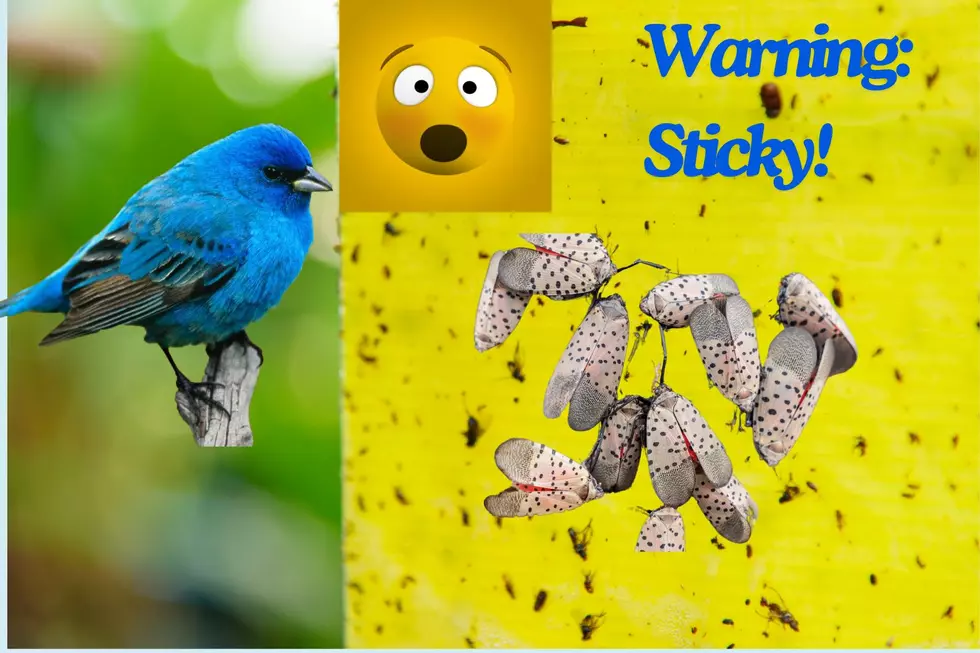
There has been a substantial uptick in birds in New Jersey getting stuck and seriously injured in glue traps that people often attach to tree trunks to try and kill invasive insects like spotted lanternflies.
Late spring through summer and fall is when the experts at The Raptor Trust in Long Hill Township, Morris County usually see these bird injuries, many of them fatal, said Executive Director, Christopher Soucy.
More importantly, this is avoidable, he said. Birds do not have to prematurely die at the hands of these glue traps.
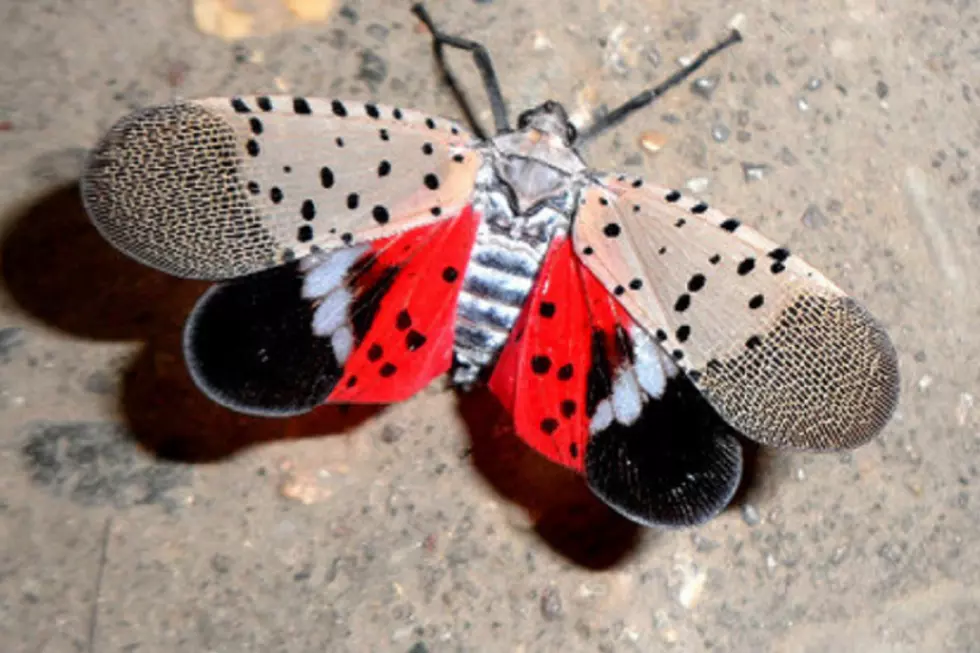
Spotted lanternfly (NJ DEP)
“For many years, we’ve seen a few birds a year caught in glue traps but since the invasion of spotted lanternflies, we’ve seen our numbers really go up. For instance, we were going from 8 to 10 birds a year that we might see in these glue traps to 32 in 2021, and then up to 83 in 2022,” Soucy said.
The Raptor Trust has taken in nearly 200 birds in the last four years that have been caught in these sticky traps, he said. It is simply a horrific scene.
People typically put out these rolls of sticky glue tape on trees to catch lanternflies, and other invasive bugs, Soucy said. Sure, the bugs do get caught, but he said the glue traps are indiscriminate, low-quality pest management.
Every year, birds are attracted to the struggling bugs on the glue traps either out of curiosity or they’re looking for food, Soucy said. Unfortunately, the birds that are attracted to the bugs on the glue traps become stuck themselves.
The birds get their feathers caught in the sticky glue and as they struggle, they get more feathers caught.
https://nj1015.com/risks-increased-bird-trapped-glue/
“Sometimes we’ve seen birds with all of their tail feathers, all of their primary wing feathers on both wings completely stuck. We’ve seen birds that have broken their own bones trying to free themselves,” Soucy said.
When The Raptor Trust gets these bird victims in, it’s a traumatic scene. Some of them die just from the stress. The survival rate on them is barely above 50 percent, Soucy said.
So what’s Soucy’s advice about catching those pesky, invasive, tree-damaging spotted lanternflies?
Simple. Don’t put out glue traps. He said they don’t really solve the problem anyway, and there are more humane traps that can be installed that will help catch the bugs, but not harm the birds and other small mammals like chipmunks, and bats.
One idea is to construct a funnel trap. It has a small entrance that’s perfect for catching bugs, but it’s not big enough for a small mammal or a bird to fit through, he said.

It’s easy to find information about funnel and circle traps. Soucy said when spotted lanternflies first started to become rampant in the northeast, researchers from The University of Pennsylvania did a series of instructional videos on these humane funnel and circle traps.
Also, keep in mind that any native wild bird in North America is protected by state and federal law. It’s a crime to intentionally injure them. So, if people are putting out glue traps, guess what? Birds will get stuck in them, and possibly die, Soucy said.
Four birds have been found caught in glue traps so far this year and brought to The Raptor Trust for treatment. But Soucy said those glue traps do not appear to be spotted lanternfly-related.

The 2022 Raptor Trust report provides details as to how the staff attempts to treat these feathery victims.
Soucy said they use a veterinary-grade solvent that helps dissolve the glue and free the bird from the trap. Then, they try to stabilize the bird from the stress. Then, gently over time, more solvent is used to get any remaining glue off of their feathers.
He said if a bird loses feathers, it’s a long recovery. Birds can and do replace all their feathers every year during a complete molt. But Soucy said the molt usually happens through the spring and summer. Birds need their feathers to stay warm during the winter so the molting process does not happen during the winter months.

So, if a bird comes to The Raptor Trust in late summer that’s already molted and loses more feathers due to a glue trap, it’s with the organization for an entire year. The bird has to wait out the entire season until it molts new feathers.
“We don’t really want to do that. Any day in captivity for a wild animal is a bad day full of danger. They don’t know that they’re in good care. They don’t know that we’re trying to help them,” Soucy said.
Birds can be injured in captivity despite their best efforts, Soucy said. The goal is to get them back into the wild as soon as possible.
But, if they lose so many feathers that they can’t fly, it can be a long stay in captivity, which is potentially dangerous to their well-being, he said.
Read More: Stop! Glue traps are killing NJ birds, one wildlife expert says | https://nj1015.com/risks-increased-bird-trapped-glue/?utm_source=tsmclip&utm_medium=referral
by Enock Wanderema | 20 May 2024 | Africa, Environment
https://news-decoder.com/making-sense-of-wild-creatures-with-photography/
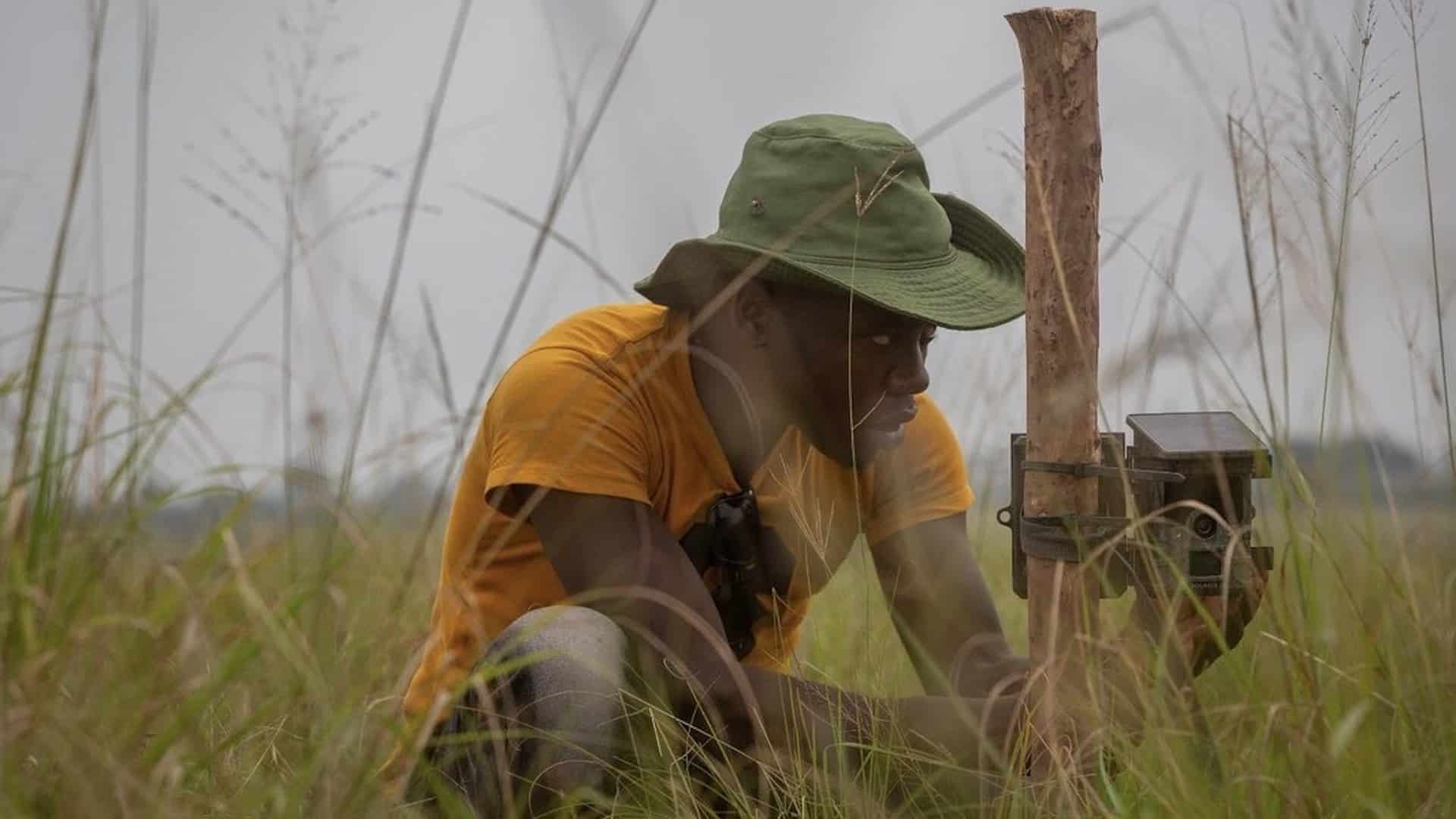
A man sets up a camera trap in Uganda. (Credit: Volcanoes Safaris)
In 2023, a study made headlines of how wild animals fear human voices more than the roar of wild predators. The researchers found that wild animals are twice as likely to run away if they hear the sound of people talking.
But understanding these animals is vital for research in conservation and biodiversity. So how do we gather important data without disturbing their peace?
Uganda has embraced technology to confront this question and at the forefront lies a powerful ally: camera traps.
These cameras, which are triggered by nearby motion, trace their roots back to 1906 when the National Geographic Magazine featured George Shiras’ captivating night wildlife photographs. These images, known for their candid animal behavior, marked a significant milestone in wildlife photography and laid the groundwork for modern conservation efforts.
Shiras, born in Pennsylvania in 1859, would become an advocate for camera hunting, with a passion for photographing wildlife and a commitment to protecting the wild.
According to National Geographic, he “mimicked a hunting technique he learned from the Ojibwa tribe called jacklighting, when fire is placed in a pan at the front of a canoe and the hunter sits in the bow of the boat.”
This technique allowed Shiras to photograph the animal standing still, as their attention was caught by the flames.
The evolution of wildlife night photography comes not only with improved technology but also with an expanded purpose. While still used for capturing the beauty of the unknown, today, wildlife researchers globally are also using camera trapping to monitor populations.
Bosco Atukwatse, Field Coordinator at Volcanoes Safaris Partnership Trust (VSPT) in Uganda, said that camera trapping is “particularly focusing on animals with unique identifiable features.”
Consider leopards, hyenas, zebras and giraffes. The patterns and stripes of these creatures have a unique arrangement on each animal within a species, akin to a human’s fingerprint.
According to Atukwatse, the camera traps first capture the images of the different animals and then formulas are used by researchers to analyze the animals’ unique features.
“We analyze these data sets in a Bayesian model, where we come up with parameters of operation, such as operation densities. We then detect the movements of animals, determine their home range and finally narrow it down to numbers,” Atukwatse said.
The idea started off Dr. Alexander Braczkowski and Uganda Wildlife Authority’s nationwide carnivore census across the country’s parks in 2018, to bolster the monitoring of carnivores in Queen Elizabeth National Park and across the country.
The results could be explained this way:
“One, the lion numbers were not so bad. But we saw an unhealthy population — a healthy population is where you have a good number of females of a certain species compared to the number of males,” said Atukwatse.
“So for lions, we have a sex ratio of 2.9 males to one female. That is a skewed sex ratio, meaning it is two, or let’s say two and a half males per female. It is supposed to be the vice versa.”
The camera traps helped Atukwatse’s team to discover that there is a chance people are seeing the same lions on a daily basis.
“After spotting a lion while driving in a truck, you may return the next day and observe another lion in the same location. However, you are unsure if it’s the same lion or a different one,” he said.
Thanks to the lions’ unique whisker spots, now the team is looking at capturing this data to identify the king of the jungle’s home range.
The same goes for leopards. The findings in Queen Elizabeth National Park have revealed there are only two leopards per 100 square kilometers, indicating a potentially unhealthy population density.
According to Atukwatse, the leopards were monitored “by determining how many individual leopards were captured on camera traps and how frequent an individual leopard was captured.”
“Additionally, we track how many times the same leopard appears on different camera traps and calculate the distance covered, which helps us understand the leopard’s moving ability.”
A couple of factors can explain the numbers above, Atukwatse said.
“There’s a notable movement of male lions crossing between Congo and Uganda. The frequent movement of lions across borders poses risks as the porous borders become vulnerable points for poachers who set snares, leading to lions getting trapped,” he said.
“These regions not only attract poachers but also witness cows grazing within the park boundaries. Lions, known for their opportunistic hunting behavior, are naturally drawn to easy prey like cows. This often leads to conflicts when farmers discover their livestock has been attacked. In retaliation, they set traps or poison the carcasses.”
And when these lions return for more, it is poison they are consuming.
Despite these challenges and others such as the tragic incident in 2021 where six lions, over 40 vultures and an unreported number of hyenas were poisoned and mutilated in Queen Elizabeth National Park, conservationists remain committed to implementing mitigation strategies.
Other technology is used to track lions, including an online system that receives signals from radio collars attached to them. Although this system provides valuable data on their movements, it’s crucial to supplement this with physical checks to ensure the lions’ wellbeing.
“Recently, we encountered a lion entangled in a poacher’s rope,” Atukwatse said. “And if we had delayed a bit, that leg would be chopped off — actually, we have a couple of casualties in the park which are missing a leg.”
To deter retaliatory killings of wildlife, a compensation program is being implemented through a partnership with Uganda Carnivore Program, another NGO operating in the northern region of Queen Elizabeth.
“Additionally, Uganda Wildlife Authority has allocated 20% of park entrance collections to fund this scheme,” Atukwatse said.
This means that when an animal injures or kills livestock belonging to community members, they receive compensation. This approach helps deter retaliatory killings and promotes coexistence between humans and wildlife. Though Atukwatse, to some extent, thinks this compensation idea seems “theoretical”.
On site, the veterinary department will ensure that carcasses are promptly removed from the point of attack, to avoid tempting lions with more food, but also denying the locals a chance at using the carcasses as bait in retaliation.
Atukwatse said they have some photos and videos of poachers running with fish, water and dogs in the parks.
“So they expose everything, because one thing is these cameras are quite camouflaged. You can actually place them somewhere in a thicket, someone will just pass without noticing,” Atukwatse said.
When poachers are captured on video, footage is shared with authorities and an ambush is laid.
“Of course these camera traps won’t segregate on what to capture. They will always capture whatever passes there. So that is also important in a way that there’s a likelihood of even finding what other people haven’t ever seen. I mean a new species or a very rare species or a critically endangered species,” Atukwatse said.
In fact, these same camera traps have recently captured the first-ever recorded pangolin in the park. Pangolins are classified as critically endangered by the International Union for Conservation of Nature (IUCN).
“You see, now it adds value to the conservation status for pangolins in the country. We tried to reach out to specialists in pangolin conservation and they gave us ideas on how we should run this if we could actually set more camera traps, so that we could try and see if we could capture some of them with babies or spot one in danger for rescue, because they’re also not excluded from being trapped by wire snares,” Atukwatse said.
The team anticipates capturing previously unseen nocturnal wildlife — thanks to the thermo and motion sensors on the cameras — unveiling hidden treasures yet to be witnessed by human eyes.
“You know, there are a lot of moments that happen at night in the wild field, as compared to those that we are able to see with our eyes,” Atukwatse said.
“So these camera traps, which are motion sensors, will always capture, as we are there to see and share with the world.”
Esme Stewart, Project Assistant at Volcanoes Safaris, said the pangolin was an amazing discovery.
“It’s a very rare sighting by the camera traps. But also on a regular basis, we see the chimpanzees in the gorge. We see videos of them. We see monkeys and different other primate species. Even hippopotamus have been sighted on it. So it’s not just showing kind of amazing first sightings, but also what’s happening on a daily basis,” Stewart said.
To this, we joked: “The man behind the camera traps suffers from breathtaking views!”
But while he enjoys the view, does the anticipation of capturing unseen wildlife through camera trapping pose a risk to human privacy, considering the presence of nearby villages, grazing activities and local communities engaging in daily tasks like gathering firewood or cutting grass for thatching their houses within Queen Elizabeth National Park?
Last year, Mongabay published a similar story: When wildlife surveillance tech ‘watches’ people. It reported that in 2017, a camera near Corbett Tiger Reserve in northern India captured an unintended image of a woman. Positioned to monitor passing tigers and elephants, the camera overlooked an area used by villagers lacking toilets. Unaware of the camera, the woman’s private moment became public when the person behind the cameras prided in sharing her pictures on local social media groups.
Ugandan conservationists may be updated on the professional use of camera footage from camera traps, but somehow the locals just need assurance, especially when the same technology is used in areas inhabited by people.
But Atukwatse questions why there should be human privacy in a protected area.
“There shouldn’t be any privacy in the protected area, especially when they are not accompanied by rangers or if they are not authorized,” he said.
Augustine Mudukoi, Project Coordinator at Volcano Safaris agreed.
“We initially had challenges with some movements within the park. People would sneak in from the communities, do their business and march out unchecked. When we started laying camera traps on most of the trails we alerted most of them and, by being aware of what cameras might capture, suspicious movements were reduced,” Mudukoi said.
Andrew Kato, a Volcano Safaris guide, appreciates the role of cameras in his work.
“It has enabled us to capture images and videos of animals that are active during the night or in our absence, such as leopards, pangolins, hyenas, hippos and even shy chimpanzees. These visuals not only inform our guiding experiences but are also utilized by our marketing department to showcase the diverse wildlife found within the park,” he said.
And it doesn’t look as if the technology will be affecting employment in the park.
“These cameras cannot place themselves in locations. They need monitoring, changing of battery and SD cards,” Mudukoi said.
“One challenge we face is losing cameras to elephants, as they sometimes knock them off trees or drag them through thickets and water bodies, resulting in lost footage,” he said.
Additionally, a recent incident involved the disappearance of SD cards, leading to speculation that certain cameras may have captured images of staff members’ relatives. Consequently, a keeper’s brother had to get rid of such sensitive information.
Ultimately, when used responsibly and with positive intentions, camera traps hold tremendous potential. As the camouflaged tools can be used for research, tourism and marketing purposes without alarming the way of the wildlife.
FeaturedNeuroscienceOpen Neuroscience Articles
·May 18, 2024
https://neurosciencenews.com/bird-episodic-memory-26134/
Summary: A new study finds that Eurasian jays exhibit episodic-like memory, a type of memory previously thought to be unique to humans. The birds were able to remember incidental details of past events, such as the visual characteristics of cups used in a food-hiding experiment.
This finding suggests that episodic memory may not be exclusive to humans and could aid jays in finding stored food.
Key Facts:
Source: PLOS
Eurasian jays can remember incidental details of past events, which is characteristic of episodic memory in humans, according to a study published May 15, 2024, in the open-access journal PLOS ONE by James Davies of the University of Cambridge, UK and colleagues.
When remembering events, humans have the ability of “mental time travel,” consciously reimagining past experiences and potentially recalling details that seemed unimportant at the time. Some researchers have suggested that this “episodic memory” is unique to humans.
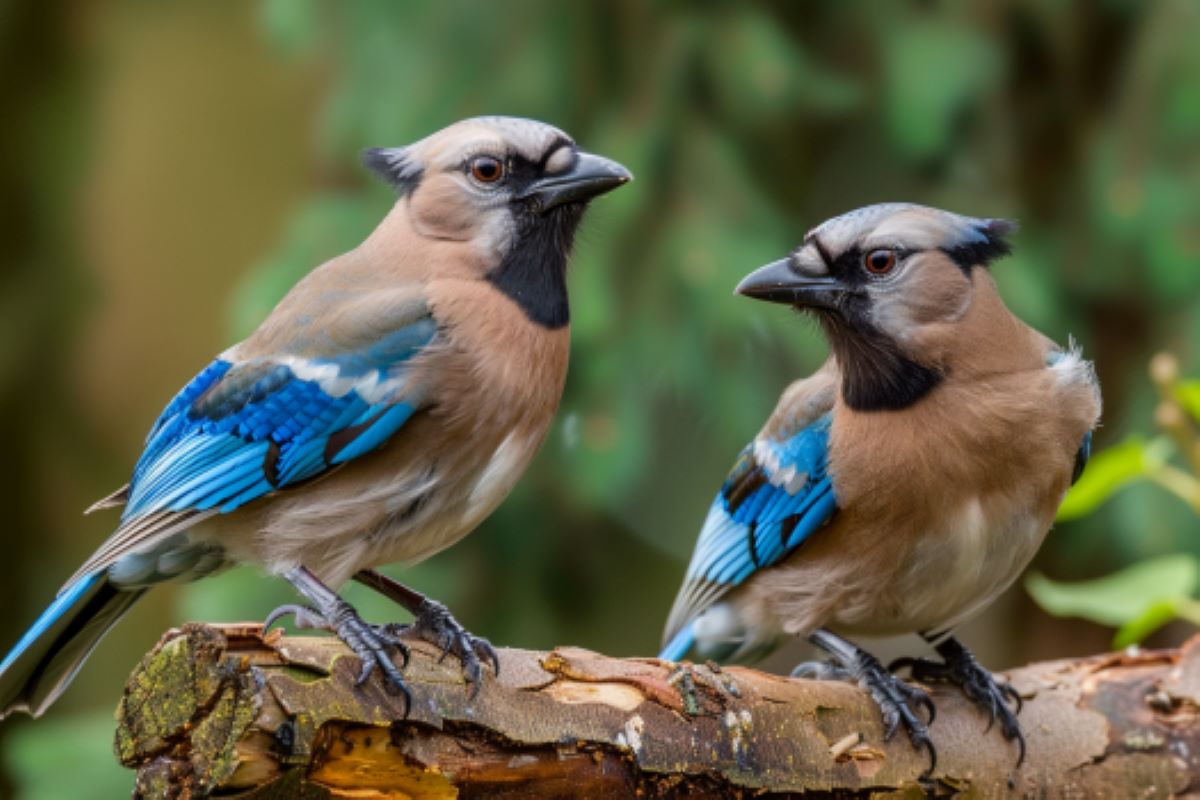
In this study, Davies and colleagues ran a memory experiment to test for episodic-like memory in seven Eurasian jays, birds that excel at remembering the location of stored food.
In the experiment, the birds watched food get placed beneath one cup in a line of four identical cups and were then rewarded for correctly selecting the baited cup.
Over several trials, the birds were trained to identify the correct cup by remembering its position in line. Then, at test, the jays were given an unexpected memory assessment: they watched food get placed beneath one of the cups, which now all had unique visual characteristics, but they were then separated from the cups for 10 minutes while the cups were relocated and rearranged.
Despite the changed positions of the cups and the added time delay, the birds still correctly identified the baited cup according to their visual characteristics 70% of the time.
These results suggest that even though visual differences between the cups were unimportant during training, the birds were able to notice those differences at test and recall them later, similar to episodic memory in humans.
This study indicates that episodic-like memory might aid jays in finding food stores, and the researchers suggest that future studies might investigate whether the birds can perform similar feats of memory in other non-food-related scenarios.
The authors add: “As the jays were able to remember details that held no specific value or relevance at the time that the memory was created, this suggests that they are able to record, recall, and access incidental information within a remembered event. This is an ability that characterises the type of human memory through which we mentally ‘relive’ past events (or episodes), known as ‘episodic’ memory.”
 Exposing the Big Game