Customs officers examine the suspected rhino horns detected from a shipment delivered from South Africa to Da Nang City, Vietnam, on July 17, 2021. Photo: Son Nguyen / Tuoi Tre
Customs officers at the Da Nang port in central Vietnam have discovered a shipment of over 100 kilograms of suspected rhino horns and more than three metric tons of alleged wildlife bones imported from South Africa with a fraudulent customs declaration.
The discovery was made when customs inspectors, in conjunction with other relevant units, examined a suspicious shipping container of goods shipped to the port of Da Nang City on Saturday.
The inspectors found 138kg of suspected rhino horn and about 3.1 metric tons of animal bones probably from rare and precious wildlife species, which were all packed in cartons placed in the container.
The shipment owner had falsely declared the imported goods…
(CNN)Yakutsk in Russian Siberia isknown as the world’s coldest city. In a place where even an exposed nose during the winter months can cause biting pain, people are accustomed to taking precautions against freezing temperatures, including spending extra time in the morning to dress in many layers.But now the city is blanketed in hazeas nearby wildfires tear through foreststhat have been parched by weeks of heatwaves. The fires are so big, and the winds strong, smoke is traveling as far away as Alaska.In the US, the Bootleg wildfire in Oregon has grown into a monstrous complexwith its own weather, sending the dense smoke some 3,000 miles across one end of the continent to the other.New York City on Wednesdaywoke up to an…
Updated 8:32 AM ET, Thu July 22, 2021Chimps and gorillas in Loango National Park were watched as part of the study.
(CNN)Chimpanzees‘ lethal attacks on gorillas in the wild have been observed for the first time, a team of researchers has said.Experts observing dozens of chimps at Loango National Park in Gabon had expected them to be relaxed around gorillas.But while the two species were usually playful, the researchers were surprised to witness occasional vicious attacks.
“At first, we only noticed screams of chimpanzees and thought we were observing a typical encounter between individuals of neighboring chimpanzee communities,” said Lara M. Southern, the study’s lead author, in a press release.
“But then, we heard chest beats, a display characteristic for gorillas, and realized that the chimpanzees had encountered a group of five gorillas,” she added, referencing the first attack the team saw, in 2019.
The group, from Osnabrück University and the Max Planck Institute for Evolutionary Anthropology in Germany, published the findings on Monday in the journal Nature.The two encounters they recorded, which lasted 52 and 79 minutes, saw the chimpanzees form coalitions and launch attacks on the gorillas.
Two encounters were seen by researchers, both lasting around an hour.The silverback and adult females gorillas defended themselves and their offspring. Both silverbacks and several adult females escaped, but two gorilla infants were separated from their mothers and killed, the authors wrote.”Our observations provide the first evidence that the presence of chimpanzees can have a lethal impact on gorillas. We now want to investigate the factors triggering these surprisingly aggressive interactions,” said Tobias Deschner, a primatologist at the Max Planck Institute for Evolutionary Anthropology.The attacks were particularly surprising given the way the two groups of animals had behaved beforehand. “Interactions between chimpanzees and gorillas have so far been considered as relatively relaxed,” said Simone Pika, a cognitive biologist at Osnabrück University.
Mysterious chimpanzee behavior may be evidence of ‘sacred’ rituals“We have regularly observed both species interacting peacefully in foraging trees. Our colleagues from Congo even witnessed playful interactions between the two great ape species,” Pika said.Around 45 chimps were being observed for the study, which intended to analyze their relationships, use of tools, communication and hunting skills, among other characteristics.The authors suggested that pooling food with other species could have caused the flare-ups. “It could be that sharing of food resources by chimpanzees, gorillas and forest elephants in the Loango National Park result in increased competition and sometimes even in lethal interactions between the two great ape species,” Deschner said.Loango National Park is a sprawling protected area on Gabon’s coast in western sub-Saharan Africa. It is home to elephants, buffalo and a number of other species.
The region is home to the western lowland gorilla, which is a critically endangered species.Chimpanzees are an endangered species, according to the International Union for Conservation of Nature.
Published at9:03 am, July 21, 2021|Updated at9:04 am, July 21, 2021
SHARE THIS
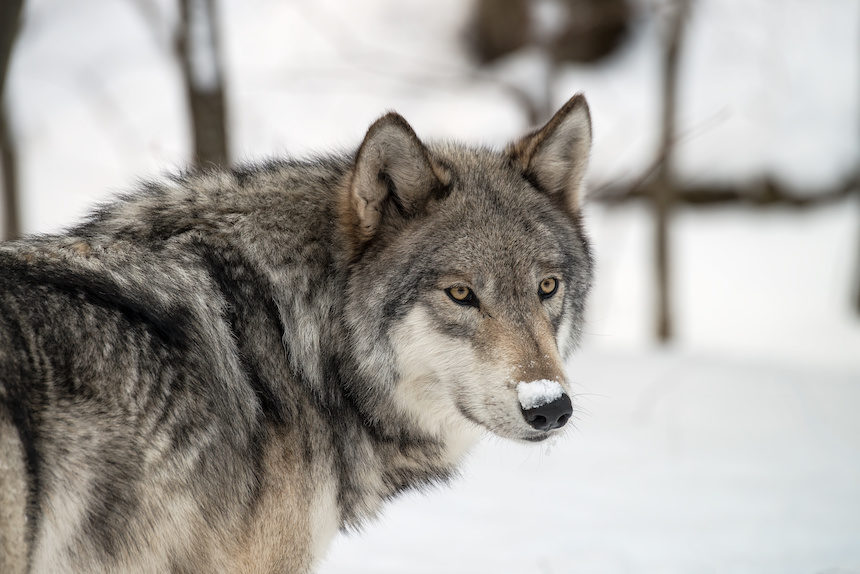
BOISE (Idaho Statesman) — Several conservation groups announced Monday that they intend to sue Idaho over the state’s controversial wolf law passed earlier this year, which the groups say could put other endangered species at risk.
A news release from the Center for Biological Diversity said it would join nine other groups in suing Idaho if it does not repeal a law passed in May that expands wolf hunting and trapping opportunities. The other organizations listed in the notice of intent are Footloose Montana, Friends of the Clearwater, International Wildlife Coexistence Network, Nimiipuu Protecting the Environment, Sierra Club, Trap Free Montana Public Lands, Western Watersheds Project, Wilderness Watch and Wolves of the Rockies.
Over 100,00 people have been evacuated and 12 people have died so far from flooding in Zhengzhou, China.
Dramatic rescues have been taking place across parts of central China this week after record-setting rainfall turned streets and subways into raging rivers, and AccuWeather meteorologists warn that rain and thunderstorms will continue in the coming days.
As of Wednesday night, local time, at least 25 people deaths were being blamed on the flooding, which occurred after days of heavy rainfall swamped cities across the Henan province in east-central China, The Associated Press reported.
Rain that first arrived across this portion of central China on Sunday continued at times through Tuesday, dumping record-breaking rainfall over the province.
A traffic police officer guides residents to cross a flooded road with a rope during heavy rainfall in Zhengzhou, Henan province, China, July 20, 2021. Picture taken July 20, 2021. China Daily via REUTERS
Soldiers were deployed to divert rivers and pump floodwaters after flood prevention systems were overwhelmed across Zhengzhou, the capital city of Henan, situated along the Yellow River, and neighboring cities, the BBC reported.
According to the World Meteorological Organization, the rainfall over a period of four days in Zhengzhou was more than what typically falls throughout the entire year. Not only that, according to Reuters, the Zhengzhou weather bureau said rainfall totals over the three days were an occurrence that happens only “once in a thousand years.”
Streets were turned into rivers, easily pulling cars downstream and catching some people in the swift rapids. Floodwaters also poured into the region’s tunnels and subway systems.
Videos emerging on social media showed commuters trapped in subway cars as water levels rose. Eventually, as the water level increased, the commuters struggled to keep their heads above water. According to the BBC, more than 500 people were rescued from the tunnels.
According to CGTN, 150 children and teachers had to be rescued after a nursery filled with floodwaters. Firefighters used plastic bins to float the kids out of the building and to higher ground.
The BBC reported that 200,000 evacuations have taken place due to rising water levels and power outages.
Some of the evacuations included the First Affiliated Hospital of Zhengzhou Hospital, which has been coined “the largest hospital in the world” after the building lost power for a period of time.
People try to commute through floodwater caused by a rainstorm in Zhengzhou City, central China’s Henan province, 21 July 2021. (Local media via Reuters)
According to a local reporter, families of patients gathered outside as 600 critically ill patients were transferred to another facility. One resident told the BBC that they had no water, electricity or power.
Farther north in Luoyang, officials announced that a 65-foot (20 m) crack had developed in the dam following heavy rainfall, and warned that the dam could “collapse at any time,” the BBC reported.
Residents in the town of Sishui were stranded on rooftops as floodwaters rose.
On Wednesday night, local time, severe flooding was also reported in Xinxiang and Hebi, all located in the Henan province.
AccuWeather Lead International Meteorologist Jason Nicholls said that an area of low pressure that formed along a stationary front over central China is to blame for the flooding rainfall across Henan province.
“The strong area of high pressure over the Sea of Japan just east of the Korean Peninsula has helped to bottleneck the pattern in eastern China,” Nicholls added.
This slowing down of the storm helped to create the phenomena known as training thunderstorms.
“Training describes when thunderstorms repeatedly build back over the same locations that have already been impacted by storms. It’s akin to multiple cars of a freight train passing over the same section of track, one after the other,” said AccuWeather Meteorologist Mary Gilbert.
Rainfall totals quickly skyrocketed for locations trapped under training thunderstorms.
In Zhengzhou, around 24.6 inches (624 mm) of rainfall was reported in just 24 hours on Tuesday, according to China’s meteorological authority. One-third of that rainfall fell during the 4 p.m. hour, local time, which “smashed historical records,” the BBC reported.
Serious flooding has been an ongoing concern across the country. Heavy rainfall caused severe flooding in multiple areas of China last week, including in the southwestern province of Sichuan where more than 120,000 were affected. Dramatic video captured several vessels being tossed over a raging waterfall on a swollen river near the city of Bazhong.
People try to commute through floodwater caused by continuous rainstorm in Zhengzhou City, central China’s Henan province, 21 July 2021. (Local media via Reuters)
Rounds of showers and heavy thunderstorms are expected to linger over east-central China on Thursday and Friday as the stationary front remains draped over the region.
A break in this weather pattern is expected to arrive as Typhoon In-fa makes landfall over the eastern coast of China by this weekend.
As the typhoon approaches land, showers and thunderstorms farther inland will be stunted as high pressure develops to balance out the low pressure at the coast.
Diana Six’s love of the outdoors began before she could form words, run, or collect the bugs and fungi that were precious to her as a child. A tough home life eventually led her to drop out of school and live on the streets. But biology classes in community college helped Six discover her calling in studying various forms of life. “They took me right back to how I was as a kid,” she says.
Now an entomologist at the University of Montana, she has spent the last 30years researching how bark beetles are decimating…
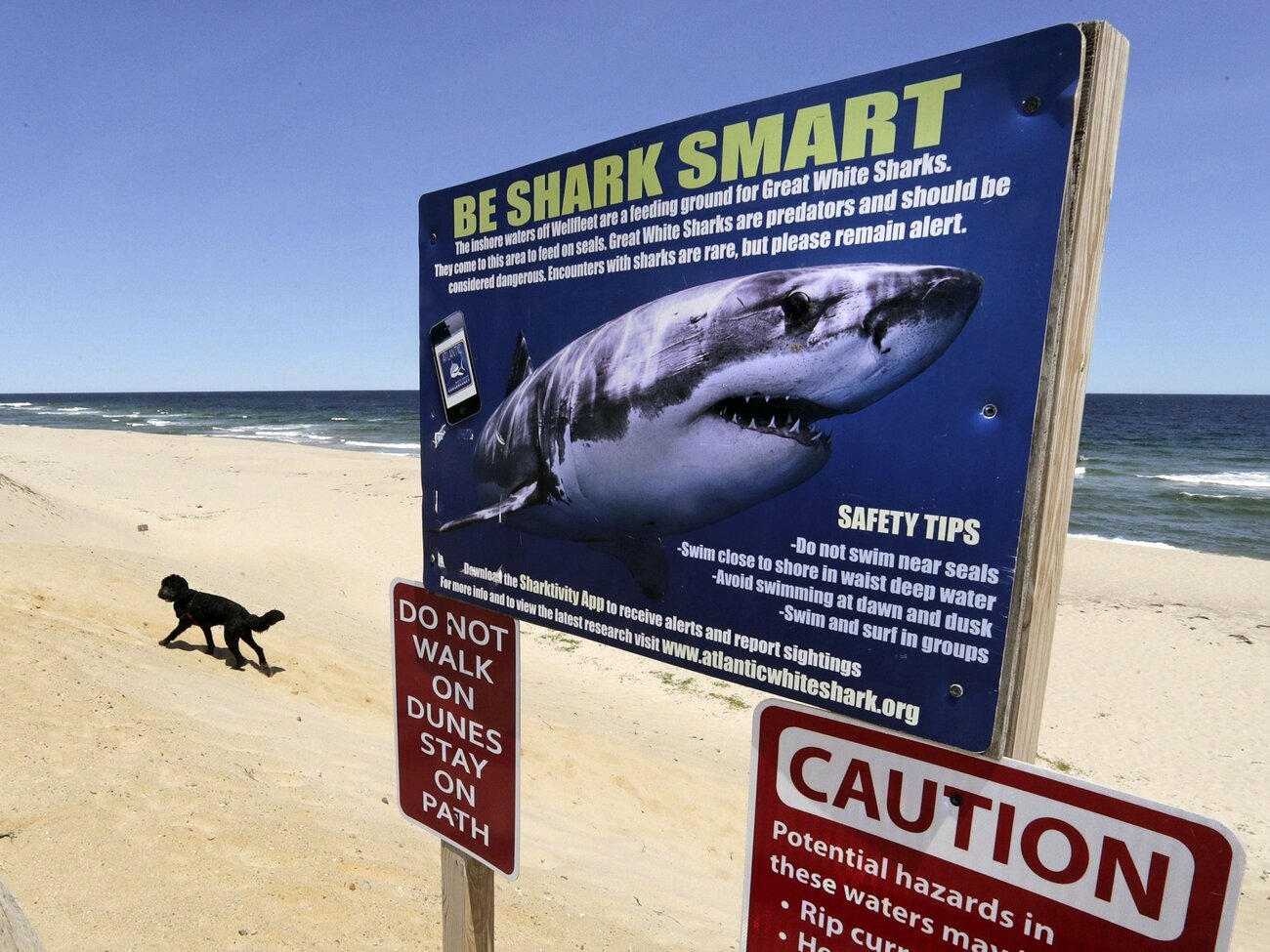
A sign at Newcomb Hollow Beach in Wellfleet, Mass., warns of sharks in 2019. Beachgoers on the other side of the world will be happy to learn they will not be attacked by sharks … just bitten.Charles Krupa/AP
Shark Week may never be the same again: Two Australian states — Queensland and New South Wales — have softened their tone when it comes to the language of reporting shark attacks, opting for a little more nuance.
From now on, sharks will “bite,” not “attack,” and when humans have a less-than-ideal meeting with them, it will be referred to as an “encounter” or an “incident.”
In case you’re wondering whether this is yet another example of government bowing to political correctness, it turns out that the states are simply falling in line with scientific thinking on the subject.
“[It] helps dispel inherent assumptions that sharks are ravenous, mindless man-eating monsters,” Leonardo Guida, a shark researcher at the Australian Marine Conservation Society, told the Sydney Morning Herald recently.
The change comes in two states where “attacks” are most common
Queensland and New South Wales have had the highest number of reported shark attacks in Australia since 1700, according to data compiled by the Florida Museum’s International Shark Attack File.
At a shark symposium in May, a senior Queensland official said the state government prefers to use “bites” over “attacks.” The state’s Department of Agriculture and Fisheries was quoted by the Herald as saying that while it has “no formal direction” for how to describe such situations, “some people may just have a personal preference for the language they use.”Article continues after sponsor message
In New South Wales, the department of public information says it’s “respectful that each incident is best described by the individual involved,” a spokeswoman said, according to the newspaper.
Researchers say language can make it harder to protect threatened species
Christopher Pepin-Neff, a senior lecturer at the University of Sydney who studied the language used around shark encounters, notes that before the 1930s in Australia, they were described as “shark accidents.”
In a 2011 article in Slate, Pepin-Neff said he thought it was time to retire the “shark attack” phrase.
“Such language creates a one-dimensional perception of these events and makes protecting threatened shark species more difficult. After all, why care about an animal that wants to eat us?” he wrote.
Shark Trust, an organization based in the United Kingdom and dedicated to “safeguarding the future of sharks through positive change,” contends that media reports of shark bite incidents “use highly emotive, often misleading language.”
“[S]uch language can also ‘criminalise’ sharks in the mind of the public, with terms such as ‘man-eater’ or ‘rogue shark’ incorrectly implying an intent to target or harm humans.”
The suggested change in language has garnered some pushback: One individual whose profile says they are based in the Australian city of Darwin tweeted: “They say sharks that bite humans do so by mistake thinking your some type of seal or fish. Sadly too many people in Australia and around the world have lost their lives due to shark mistakes. Meanwhile getting your arm bitten by a shark will still feel like an ‘attack’ to me.”
No matter what you call it, “bites” are exceedingly rare
The vast majority of human-shark encounters have a much happier ending — at least for the human — scientists say. And the lifetime risk of death by shark is far lower than dying from just about anything else you can imagine (including, yes, far lower than being killed by lightning).
In any case, of the more than 500 shark species, only about 30 are “reported to ever attack a human,” according to the Florida Museum.
“We humans tend to think the world revolves around us,” Micah Sklut, the owner of Surf Captain, a national surf forecasting site and a surfer himself, tells NPR.
“Sharks are just being sharks, and generally couldn’t care less about ‘attacking’ humans,” he says. Even so, “If you live in Florida or other sharky waters, as a surfer, you certainly have to be more aware of the marine environment you are choosing to enter.”
2021 marked the third year of the Gov. Noem-led programWritten By:Marcus Traxler|4:58 pm, Jul. 20, 2021
South Dakota State Parks.
PIERRE – Gov. Kristi Noem and the South Dakota Department of Game, Fish and Parks announced the results of the 2021 Nest Predator Bounty Program on Tuesday, July 20.
A total of 53,642 nest predator tails were turned in by 2,773 participants when the program was open from April 1 to July 1.
The goal of the program is to reduce local nest predator populations as a way to enhance pheasant and duck nest success. The program, created as a outdoors-focused priority by Noem, is targeted at removing predators, such as raccoons, striped skunks, opossums, red fox and badgers.
“South Dakota is one of the only states that hunts our state bird. The nest predator bounty program began in 2019 as a key component of my Second…
(CNN)As the first North American insect to go extinct due to humans, a blue butterfly has become an icon for insect conservation — and what happens when humans destroy habitats without thought for the creatures living in them.The last of the Xerces blue butterflies fluttered through the air in San Francisco in the early 1940s. Now, they can only be seen in glass displays at museums.These periwinkle pearly-winged insects lived in the coastal sand dunes along San Francisco and were first characterized by scientists in 1852. When urban development swept through this part of California, the sandy soils were…
A high-altitude balloon mission would investigate a controversial way to reduce global temperatures.
One idea to keep the planet from heating up is to seed an upper layer of the atmosphere with aerosols that would reflect a portion of the sun’s energy back into space.(Image credit: Image Source via Getty Images)ALL ABOUT SPACE
All About Spacemagazine takes you on an awe-inspiring journey through our solar system and beyond, from the amazing technology and spacecraft that enables humanity to venture into orbit, to the complexities of space science.
In 2021, Earth reached a bleak milestone: The concentration ofcarbondioxide (CO2) in the atmosphere hit 150% of its value in preindustrial times, according to the U.K.Met Office. To prevent the worst…


 Chimps and gorillas in Loango National Park were watched as part of the study.
 Two encounters were seen by researchers, both lasting around an hour.The silverback and adult females gorillas defended themselves and their offspring. Both silverbacks and several adult females escaped, but two gorilla infants were separated from their mothers and killed, the authors wrote.”Our observations provide the first evidence that the presence of chimpanzees can have a lethal impact on gorillas. We now want to investigate the factors triggering these surprisingly aggressive interactions,” said Tobias Deschner, a primatologist at the Max Planck Institute for Evolutionary Anthropology.The attacks were particularly surprising given the way the two groups of animals had behaved beforehand. “Interactions between chimpanzees and gorillas have so far been considered as relatively relaxed,” said Simone Pika, a cognitive biologist at Osnabrück University.

 Nicole Blanchard, Idaho Statesman