Idaho Risks Losing $18 Million in Annual Federal Funds
BOISE,Idaho— In response to legislation recently approved by Idaho lawmakers that could lead to the slaughter of up to 90% of the state’s wolves, the Center for Biological Diversity todayaskedthe U.S. Department of the Interior and U.S. Fish and Wildlife Service to disqualify Idaho from receiving federal funding under the Pittman-Robertson Act.
“We won’t stand idly by while federal taxpayers are forced to fund Idaho’s wolf-slaughter program,” said Andrea Zaccardi, a senior attorney at the Center. “Idaho is entrusted with protecting its wildlife for all Americans, and its failure to do so should be met with serious repercussions, including the loss of federal funding.”
Under the Pittman-Robertson Act, a state may receive federal funding to support critical conservation and outdoor recreation projects but may be deemed ineligible if it passes legislation contrary to the Act…
At the end of the session, the Legislature passed a bill that had language inserted at the last minute that basically guarantees hunting outfitters more nonresident hunting clients. Other bills carrying the same language died in committee.
On Thursday, House Bill 637 was on its way to the governor’s desk after the House and Senate voted to pass subsequent amendments on mostly party-line votes on the last day of the session.
Sportsmen’s groups including the Backcountry Hunters and Anglers and the Montana Wildlife Federation are telling their members to ask Gov. Greg Gianforte to veto the bill, partly due language added Tuesday that is a handout to hunting outfitters.
It would give thousands of big game licenses – elk and deer – to nonresidents who agree to hunt with an outfitter, thus exceeding the limit of 17,000 nonresidents allowed to hunt in Montana. It also gives extra preference points for future license drawings to any nonresident who hunts with an outfitter.
Both actions encourage nonresidents to hunt preferentially with outfitters.
These are similar to changes that sportsmen opposed in Senate Bill 143 and House Bill 505. Dozens of sportsmen spoke in opposition to both bills and both were eventually tabled in committee.
On Wednesday, the Montana Wildlife Federation issued a statement saying, “Public hunters made it clear this session that everybody should have an equal opportunity to hunt in Montana, and this provision is just another attempt to put outfitted clients at the front of the line.”
In mid-march, HB 637, sponsored by Seth Berlee, R-Joliet, started as a “clean-up” bill clarifying several definitions and requirements of Fish, Wildlife & Parks regulations, such as who needed nonresident bear and mountain lion licenses, when boats could be used in hunting and reclassifying wolves as furbearers.
Many sportsmen had issues with the bill to begin with, because it did little to preserve Montana’s wildlife resources. For instance, it increased the number of nonresident mountain lion licenses while allowing nonresident large landowners or their guests to hunt lions without a license to use dogs.
Still, the bill flew through the House even though a fiscal note estimated FWP would lose a half-million dollars a year due to fewer nonresidents being required to buy licenses.
The bill was amended in the Senate, adding a section that would increase payments to landowners participating in FWP’s Block Management program.
By the time the Senate sent the amended bill back to the House on April 26, it was getting late in the game. Legislators were already talking about making “Sine die” motions to end the session as the budget got closer to being finished.
After the House voted against the bill as amended, House Speaker Rep. Wylie Galt, R-Martinsdale, sent the bill into a special conference on Monday. When the conference committee returned the bill to the House on Tuesday, the outfitter big game licenses were suddenly part of the bill.
Sen. Pat Flowers, D-Bozeman, tried to call attention to the change.
“This is being introduced on maybe the 2nd to last day of the legislature… Senate Bill 143 got tremendous interest,” Flowers said Tuesday on the Senate Floor. “To add this on as a simple amendment to what was a quote ‘agency clean up bill’ is disingenuous and does a disservice to sportsmen and women who don’t know this is happening.”
The Backcountry Hunters and Anglers had already opposed HB 637 because it allowed hunters to pursue black bears and mountain lions on the same day they purchase their tags, setting up an opportunity for less reputable hunters to shoot first and tag later.
Because wildlife is part of the public trust that FWP should manage for future generations, BHA opposed allowing nonresident landowners to hunt lions and bears on their property without a license.
But the outfitter license giveaway was the last straw for sportsmen, according to a BHA website post.
“Both chambers, in record time, passed 2nd and 3rd readings last night- all within the same day as the bill taking an entirely new form, and all without public comment or a public hearing with public testimony. The NO votes deserve our thanks; the YES votes have some explaining to do,” the post said.
Russia is mass producing the world’s first coronavirus vaccines for animals. /VETANDLIFE.RU/Reuters
Russia has started mass producing the world’s first COVID-19 vaccines for animals, with its first batch of 17,000 doses soon set for local distribution.
The country’s agricultural watchdog, Rosselkhoznadzor, announced the achievement on Friday, saying that while the jabs would initially be used at home, foreign firms had also shown interest in them.
According to the regulator: “About 20 organizations are ready to negotiate registration and supply of the vaccine to their countries. The file for registration abroad, in particular in the European Union, is under preparation.”
Russia, the first country to come up with the animal jab, registered the Carnivac-Cov vaccine in March 2021, after tests showed it generated antibodies against the coronavirus in dogs, cats, foxes and mink.
The county’s regulator said the inoculation would protect vulnerable species and thwart viral mutations.
It added that companies from Germany, Greece, Poland, Austria, Kazakhstan, Tajikistan, Malaysia, Thailand, South Korea, Lebanon, Iran and Argentina had inquired about purchasing the vaccine.
According to local media, production capacity is at around 3 million doses per month and is expected to increase to 5 million.
The race to find such a jab became urgent following multiple reports of animals contracting the virus early on in the pandemic, with the World Health Organization expressing serious concern over the risk of transmission with other species.
Companion animals such as cats and dogs have tested positive for COVID-19, but there have also been cases in big cats in sanctuaries, gorillas in zoos, and several other mammals.
Last November, Denmark was forced to cull its population of up to 17 million mink after a mutated strain was discovered in sick animals in the country’s fur farms.
With other countries reporting similar infection spikes among the species, concerns over the virus’s impact on the livestock industry have grown.
However, the impact of the novel coronavirus has not been as deadly for animals as diseases such as Highly Pathogenic Avian Influenza (HPAI), better known as bird flu, or African Swine Fever (ASF), the latter of which led to the deaths of around 8 million pigs. Source(s): Reuters18
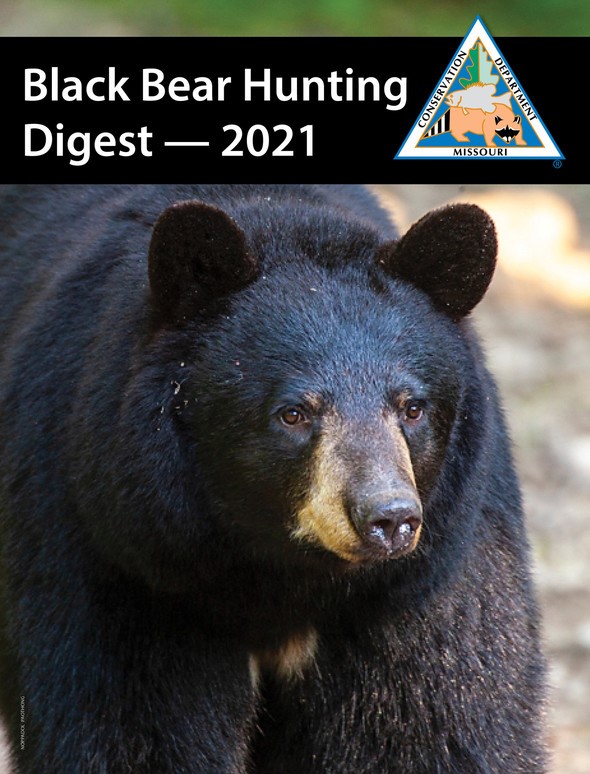
Learn more about bear hunting in Missouri with MDC’s new online Black Bear Hunting Digest at huntfish.mdc.mo.gov/hunting-trapping/regulations/black-bear-hunting-digest.
JEFFERSON CITY, Mo. –The Missouri Department of Conservation (MDC) reminds Missourians interested in hunting black bears in the state to apply during May for one of 400 permits being offered by MDC for the state’s first black-bear hunting season this coming fall, Oct. 18–27. The maximum total harvest for the season will be 40 bears.Advertisement
Bear hunting in Missouri is limited to Missouri residents and restricts bear hunting to three designated areas of southern Missouri called Bear Management Zones (BMZ). Hunters must apply for a specific Black Bear Management Zone. Permit and harvest quotas for the upcoming Oct. 18-27 bear season…
New bill would allow for 90 percent of wolves in the state to be killed
PHOTO BY JACOB W. FRANK/NATIONAL PARK SERVICE VIA APBY LINDSEY BOTTS | MAY 3 2021
For the Idaho legislature, it seems, the only good wolf is a dead wolf.
In late April, the Idaho legislature passed a bill that would allow hunters to kill up to 90 percent of Idaho’s wolf population. The legislation is now awaiting Governor Brad Little’s signature. If it’s signed into law, hunters and trappers will be able to kill as many wolves as they’d like, without restrictions.
The Idaho legislature’s savagery does not stop at doing away with hunting limits. The law would permit hunters to run down wolves with motorized vehicles and hunt in the dark using night-vision equipment (nearly all states restrict hunting to daylight hours). It would also extend the trapping season on private property to year-round, even during the breeding season, and allow hunters to trap or shoot as many animals as they want on a single tag. The law would also allow the state’s Wolf Predation Control Board to hire private contract killers to take out wolves, and it would increase the board’s annual budget from $110,000 to $300,000.
The proposal, which was fast-tracked through the state legislature in less than a week, represents the latest development in a chilling trend of Republican state lawmakers trying to eradicate wolves. From Wisconsin, where hunters pushed the state into allowing the slaughter of 20 percent of the population, to Montana, where trapping associations successfully lobbied lawmakers to bring back bounties, wolves face a level of persecution not seen since the turn of the 20th century.
Suzanne Stone, director at the International Wildlife Coexistence Network, says passage of Idaho’s SB 1211 could “absolutely” warrant federal officials reviewing whether it’s time to return wolves in the Rockies to the endangered species list. As a part of the federal rule that removed wolves in the northern Rocky Mountains from the endangered species list over a decade ago, Idaho agreed to maintain a population of at least 15 breeding pairs and 150 wolves. But this is a floor, not a ceiling. Idaho Fish and Games estimates there are currently about 1,500 wolves in the state. The race to kill most of those animals could and should trigger federal oversight, says Stone, who has worked in wolf conservation for over 30 years.
“It’s like [lawmakers] don’t have any fear that the federal government is going to step back in and take over management if they betray their agreement,” Stone says. “There will definitely be people who pursue this not only from litigation but from new legislation as well.”
According to thedelisting agreement, there are four scenarios that could warrant wolves being returned to Endangered Species Act protection: if wolf populations drop below 10 breeding pairs or 100 individuals; if the population falls below 15 breeding pairs and 150 individuals for three consecutive years; if increased human pressures “significantly threaten” the wolf population; and last (specific to Wyoming wolf management), if the wolf population outside Yellowstone National Park falls below seven breeding pairs for three consecutive years. Stone says the new law would make it easy for Idaho to meet the first three of those criteria.
Violating the agreement with the federal government isn’t the only thing that could jeopardize the current state management of wolves. If the bill becomes law, Idaho could be in danger of violating its commitment to manage wolves as a game species, said Jonathan Oppenheimer, external relations director at the Idaho Conservation League, when he testified against the bill.
LIKE WHAT YOU READ? SIGN UP FOR DAILY UPDATES FROM SIERRA MAGAZINE.SIGN UP
As a source population for wolves in other western states, Idaho’s wolves are vital to the success of overall wolf recovery in the West. In fact, the most recent federal delisting for wolves outside of the northern Rocky Mountains relies on thriving populations there to justify removing federal protections in other regions such as the Great Lakes. If wolves in the Northern Rockies become scarce, that could undermine the argument for further delisting, Stone says.
“The federal delisting is already being litigated. So it’s very possible that Idaho and Montana will now fall under that review because of major changes in the regulatory mechanisms that were in place to help guarantee that the wolf populations here would be stable,” Stone told Sierra.
Even though the wolf-killing bill passed the legislature in a lopsided 58–11 vote, opposition to the proposal has come from many directions—including some surprising ones. Conservation groups including the Idaho Conservation League and the Idaho Sportsmen issued statements rebuking SB 1211 for its disregard of ethical hunting principles. Last week, almost 30 former state, federal, and tribal wildlife biologists sent a letter to the governor urging him to veto the bill over similar concerns. And during the Senate committee hearing, Senator Michelle Stennett, a Democrat from Ketchum, raised concerns over the law’s risk to state management and called out the lack of federal inclusion.
“I’m a little disturbed,” said Senator Stennett in her closing remarks. “US Fish and Wildlife wasn’t consulted. . . . I understand those that are interested parties putting this together, but in the end, we do still have to work with the Feds in order to keep this agreement together.”
For his part, bill sponsor Senator Van Burtenshaw, a Republican from eastern Idaho, has been clear about the groups he’s hoping to please. “We had the sheep men, the cattlemen . . . we had [the] Farm Bureau, we had outfitters and guides, as well as trappers at the table,” said Burtenshaw. “They put together a piece of legislation that was sponsored by the industry and agreed upon by the industry. And that’s how this came about.”
Not coincidentally, these interest groups are extensions of the same constituencies that exterminated wolves in the United States a century ago. The rush to oblige them now means lawmakers prioritize killing and eradication over non-lethal measures.
Yet research tells us that not only are lethal measures ineffective but also that the fears they’re based on are overblown. A 2019 report from the US Humane Society found that wolves account for less than 1 percent of cattle and sheep deaths in Idaho. “They have demonized the wolf to the point where they’re trying to legislate controlling the demon that is simply in their imagination,” Stone told Sierra.
Meanwhile, hunters argue that wolves are gorging on elk and deer, leaving them with fewer opportunities to hunt. Idaho Fish and Game employees, however, have referred to the recent spate of successful elk harvests as the “golden age of elk hunting.” Elk reports show that the state is meeting its harvest quotas in 16 of the 22 hunting zones, and the current population stands at approximately 120,000—just 5,000 animals below the all-time highest count.
For Andrea Zaccardi, senior attorney for the Center for Biological Diversity in Idaho, the Idaho legislation is a prime example of what happens to wolves when they lose federal protections. The state already has a very permissive hunting season that allows the killing of wolf puppies, allows year-round hunting in some areas, and permits a single person to kill up to 15 wolves, including via the use of chokehold snares.
“I think Idaho is setting the exact bad example that everyone has been afraid of in terms of what state management of wolves may look like,” Zaccadi told Sierra. “This is the first step in terms of Idaho just usurping authority from state management, making political decisions that are not scientifically based, and just goes to show the state is not responsible enough to manage wolves.”
While millions of Americans are spending more time outside enjoying nature and wildlife, most don’t know that the fate of thenation’s wildlifeis largely controlled by small unelected groups of people more invested in protecting the interests oftrophy huntersthan in protecting animals.
In every U.S. state, regulations governing how wildlife should be treated and managed—for example, how manytrophy huntingortrapping licensesshould be sold forwolves,bears,cougars, orbobcats, or what methods can be used to kill them—are created and administered by two entities.Advertisementhttps://player.hb.selectmedia.asia/prebid/iframe.html?adid=2699fc7c0d17a6433&ref=https%3A%2F%2Fwww.onegreenplanet.org
No evidence of rare blood clot after woman’s death, officials say
Annie VanGeest(WDIV)
The Centers For Disease Control and Prevention is currentlyreviewing the death of a Michigan womanwho received theJohnson & Johnsonvaccine, though there is currently no evidence that her death and the vaccine are linked, officials said.
On April 12, 6.8 million doses of the Johnson & Johnson vaccine had been administered across the country, and six cases of the blood clot had been identified.
In other words, only 0.00008% of Johnson & Johnson recipients were affected, according to experts.
Officials said a type of blood clot called cerebral venous…
BOISE, Idaho — A conservation group is asking the U.S. government to cut off millions of dollars to Idaho that is used to improve wildlife habitat and outdoor recreation opportunities because of legislation that could lead to 90% of the state’s wolves being killed.
The Center for Biological Diversity sent a letter Monday to Interior Secretary Deb Haaland, saying states may be deemed ineligible to receive federal wildlife restoration money if states approve legislation contrary to that goal.
Idaho received about $18 million last year in that funding, which comes from a tax on sporting firearms and ammunition. States can use it to pay 75% of the cost for projects including acquiring habitat, wildlife research and hunter education programs.
The conservation group’s request is a reflection of the long-simmering tension between ranchers and those seeking to protect wolves in the American West. About 1,500 wolves are in Idaho, with disagreement over whether that is too many or not enough because the predators are known to attack cattle, sheep and wildlife. Ranchers say they lose hundreds of thousands of dollars a year to those attacks.
The Idaho legislation, backed by the agriculture industry, allows the state to hire private contractors to kill wolves and opens up ways the predators can be hunted.
Those methods include hunting, trapping and snaring an unlimited number of wolves on a single hunting tag and allowing hunters to chase down wolves on snowmobiles and ATVs. The measure also allows the killing of newborn pups and nursing mothers on private land.
“We won’t stand idly by while federal taxpayers are forced to fund Idaho’s wolf-slaughter program,” said Andrea Zaccardi, a senior attorney at the Center for Biological Diversity. “Idaho is entrusted with protecting its wildlife for all Americans, and its failure to do so should be met with serious repercussions, including the loss of federal funding.”
Idaho lawmakers have approved the legislation. Republican Gov. Brad Little, whose family has a long history with sheep ranching in Idaho, hasn’t said whether he’ll sign the measure.
Last week, nearly 30 former state, federal and tribal wildlife managers sent a letter to Little asking him to veto it, saying the methods for killing wolves would violate longstanding wildlife management practices and sportsmen ethics.
The Idaho Fish and Game Commission also opposes the bill because it removes wildlife management decisions from the commission and its experts and gives them to politicians.
Supporters say the changes could help reduce the wolf population from about 1,500 to 150, alleviating attacks on cattle and sheep. The Idaho Cattle Association said it supports the measure because it allows the free-market system to play a role in killing wolves.
The Idaho Department of Fish and Game, using remote cameras and other methods, reported in February that the wolf population has been holding at about 1,500 the past two years.
About 500 wolves have been killed in the state in each of the last two years by hunters, trappers and wolf-control measures carried out by state and federal authorities.
Idaho’s wolf conservation and management plan calls for at least 150 wolves and 15 packs. Supporters of the measure say the state can increase the killing of wolves to reach that level.
According to the plan, if Idaho’s wolf population fell to 100, there is a possibility the U.S. Fish and Wildlife Service could resume management of the predators in the state.
Published May. 4, 2021 9:20 AM PDT|Updated May. 4, 2021 11:43 AM PDTCopiedhttps://imasdk.googleapis.com/js/core/bridge3.453.0_en.html#goog_1278558154Volume 0%New climate data resets average daily temperatures
A new report from NOAA updates what’s considered the daily “average” or normal temperatures.
New data on the “normal” temperature and climate variables in the United States has revealed that much of the country is getting warmer and wetter each decade — and some experts say the warming trends are on par with what would be expected from greenhouse gas-induced climate change.
“Normals,” as they referred to by meteorologists, are determined based on weather factors such as temperature and precipitation that have been tabulated by researchers over the past 30 years. Those numbers are then calculated into averages for the 30-year period.
Every 10 years, the U.S. normals are reviewed and updated by scientists from The National Oceanic and Atmospheric Administration’s (NOAA) National…


 18