No, Biden’s Not Banning Burgers — But Meat Is a Real Climate Problem

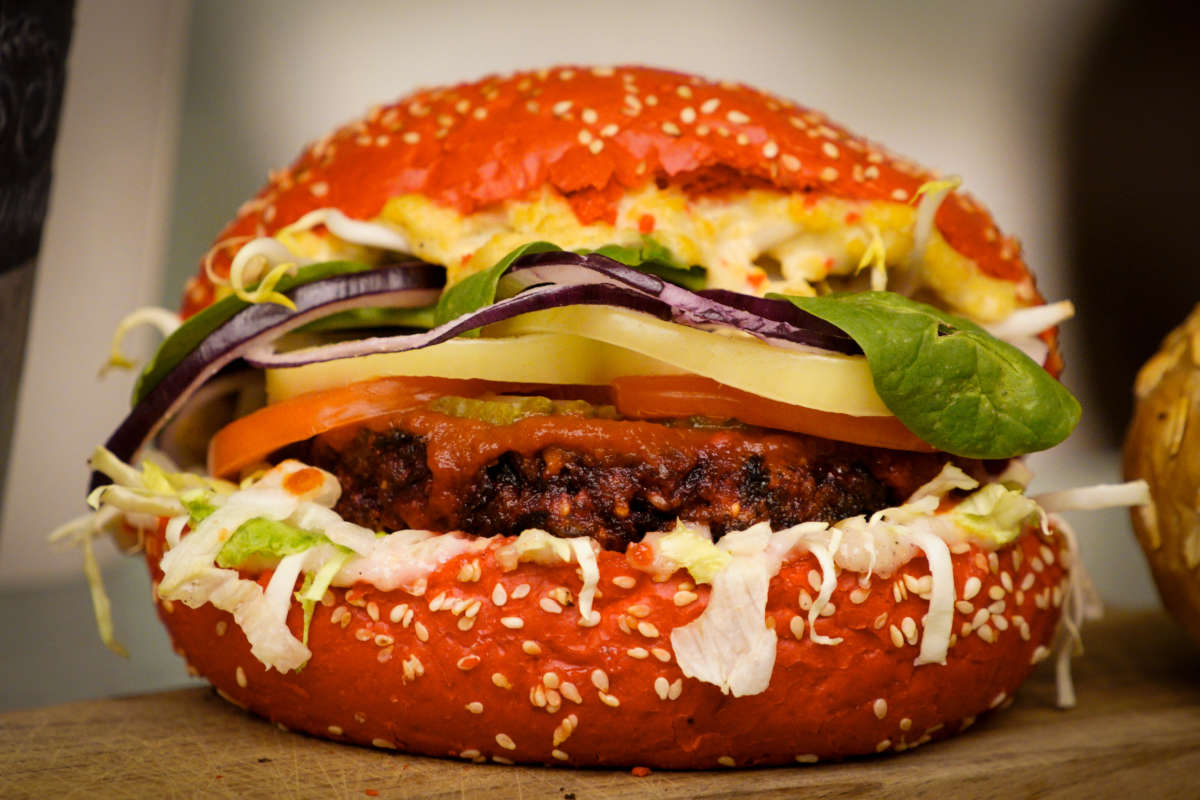
A meatless hamburger is seen on display at the Vegan Food Festival in Warsaw, Poland on October 6, 2019.
A meatless hamburger is seen on display at the Vegan Food Festival in Warsaw, Poland, on October 6, 2019.

BYMike Ludwig, TruthoutPUBLISHEDApril 27, 2021SHAREShare via FacebookShare via TwitterShare via Email

A white lower-case t on a black background

READING LISTPOLITICS & ELECTIONSTrump-Disrupted Census Hurts Marginalized Communities and Hands New Power to GOPENVIRONMENT & HEALTHNo, Biden’s Not Banning Burgers — But Meat Is a Real Climate ProblemENVIRONMENT & HEALTHThe More Biden Expands ACA, the Harder It Will Be for the Right to Cut ItPOLITICS & ELECTIONSOver 80 House Democrats Urge Biden to Lower Medicare Eligibility AgeECONOMY & LABORBiden to Sign Executive Order Raising Federal Workers’ Wages to $15 an HourWAR & PEACEBiden Is Reviewing US Policy in North Korea. The Brutal Sanctions Must End.

Fact-checkers are slamming Republicans and the right-wing media for repeating false claims that President Joe Biden’s climate plan would require Americans to drastically reduce consumption of red meat. While the rumors about Biden have been thoroughly debunked, these claims were sparked by a real, thought-provoking University of Michigan study that models how a shift toward plant-based diets would reduce greenhouse gas emissions that are driving the climate crisis.

The right-wing claims originated from baseless speculation by The Daily Mail, a conservative British tabloid that thrives on viral posts, which was then taken out of context by right-wing politicians and personalities who jumped at the chance to throw red meat (excuse the pun) to the Trumpian base.

“Speaking of stupid, there’s a study coming out of the University of Michigan which says that to meet the Biden Green New Deal targets, America has to, get this, America has to stop eating meat, stop eating poultry and fish, seafood, eggs, dairy, and animal-based fats,” Fox News host Larry Kudlow said over the weekend. “Ok, got that? No burger on July 4. No steaks on the barbecue.”

Don’t miss a beat

Get the latest news and thought-provoking analysis from Truthout.

  • Email

Of course, there are considerable gaps between Biden’s climate vision and the latest Green New Deal proposals put forth by progressives like Sen. Bernie Sanders and Rep. Alexandria Ocasio-Cortez. The University of Michigan study is not part of the Green New Deal, but Kudlow baselessly threatened “middle America” with somehow being forced to grill “Brussels sprouts”instead of beef on the Fourth of July.

Multiple far right Republicans and commentators ran with it, sending out viral tweets and media stories falsely suggesting that Biden wants to control what people eat and would even limit Americans to “one burger a month.” (Donald Trump Jr., forever riding his father’s presidential coattails, bragged on Twitter about eating four pounds of red meat in a single day. Warning: Eating that much red meat at once can cause constipation and other health problems.)

These right-wing claims are ridiculous on their face, but the University of Michigan study that Kudlow and others took out of context is real climate science. After all, scientists say the global food supply chain is responsible for 26 percent of climate-warming emissions. While not connected White House climate policy, the study adds to a large body of research showing that reducing meat consumption — and, perhaps more importantly, reducing factory farming and mass beef production that destroys lush ecosystems in places like the Amazon — is essential for addressing the climate emergency. The study also models how a shift toward plant-based diets would drastically reduce climate-warming emissions in the United States.

According to federal data cited by in the study, the average person in the U.S. consumed about 133 pounds of red meat and poultry in 2016. If the average hamburger contains between one-third and half a pound of beef, that’s roughly equivalent to 300-plus burgers. While red meat (beef, pork and lamb) provides only 9 percent of calories in the average American diet, red meat produces about 47 percent of the food system’s greenhouse gas emissions. Consumption of all animal products combined, including eggs, dairy and fish, represents 82 percent of the nation’s dietary carbon footprint.Red meat produces about 47 percent of the food system’s greenhouse gas emissions.

Using this data as a baseline, the study considers four dietary scenarios in the U.S over the next decade. In the first scenario, the average amount of animal-based food products remains unchanged by 2030. In the second scenario, consumption increases slightly based on federal projections. In the third scenario, animal product consumption is reduced by 50 percent and replaced with plant-based foods. The fourth (and incredibly optimistic) scenario is the same as the third, except beef consumption is further reduced by 90 percent, a completely theoretical figure that conservatives took out of context.

If diets in the U.S. remain unchanged under the first scenario, the food supply would generate greenhouse gas emissions equivalent to about 646 million metric tons of carbon dioxide in 2030. However, if animal product consumption dropped by 50 percent and was replaced by plant-based foods, the food supply would produce 224 million metric tons less — the equivalent of taking 47.5 million gas and diesel vehicles off the road. That represents about a quarter of the emission reductions necessary to meet U.S. climate goals, although the Biden administration is now pushing for even greater reductions.

Cumulative emissions would drop by 1.6 billion metric tons from 2016 levels by 2030 if the U.S. reduced animal product consumption by 50 percent. Under the fourth scenario, where the U.S. hits the 50 percent reduction target while also reducing beef consumption by 90 percent, the projected reduction in emissions would be equivalent to about 2.4 billion metric tons of carbon dioxide.

Again, these scenarios are completely theoretical; they are models of what the future could look like if we eat less meat and animal products. Of course, what the actual future will look like is completely dependent on the decisions that we humans make. To achieve a 50 percent reduction in animal product consumption, or to replace 90 percent of the beef we currently consume with plant-based alternatives such as soy protein and vegan meat alternatives, would require substantial changes to agriculture and the food delivery system.

Since there is clearly no government plan to mandate Impossible Burgers, changing the food system will require changes in consumer demand. In short, a large chunk of the population would have to choose to eat less meat.

Hints of this shift are already happening. Americans are eating more meatless meat and plant-based dairy alternatives than ever before, but nowhere near the scale modeled in the University of Michigan study.

After looking at the climate data, grilling Brussels sprouts or asparagus instead of ground beef and hotdogs might sound pretty tasty. You’ll need some protein as well, and while there’s plenty of meatless burgers to choose from nowadays, there’s nothing quite like marinating some old-fashioned grilled barbecue tofu. Who knows, your insides and the Earth might thank you.

Idaho’s Wolves Need Your Help NOW!

Project Coyote


Today the Idaho Legislature passed SB 1211—a heinous bill that would allow the slaughter of 90 percent of Idaho’s 1,500 wolves by any means: traps, snares, aerial shooting, running over with snowmobiles—and even wildlife killing contests. There will be no bag or tag purchase limits or seasonal respite from trapping. The bill seizes wildlife management authority from the Idaho Fish and Game Commission and supports the hiring of contract killers with an additional $190,000 from the Idaho Wolf Control Fund, which already receives $400,000 to kill wolves. Read this Guardian article to see international coverage of the issue.Our last chance to stop this all-out war against wolves in Idaho is to urge Governor Brad Little to veto this bill. Even if you don’t live in Idaho, you can still speak up. Idaho needs to know the world is watching! Urge Governor Little to veto SB 1211 TODAY!Here’s how you can help:Call Governor Little at 208-334-2100 now and follow up with an email to governor@gov.idaho.gov urging him to veto SB 1211, using the talking points below.Share this action alert and infographic with friends and family and on social media! Talking points to craft your message (please personalize):If you are from or currently live in Idaho, state your town. If you don’t have connections to Idaho, explain why you will not spend your tourism dollars in a state like Idaho that wantonly slaughters wildlife.Over 76% of Idahoans believe wildlife belongs to all citizens and that management decisions should be made without political influence by the Idaho Fish and Game Commission – whose members oppose this bill 5-2.Taking authority away from the Commission and the agency biologists that inform them is not science-based management and sets a dangerous precedent for the management of other wildlife.Wolves cause less than 1% of cattle deaths and any depredation can be properly managed without this bill.Killing wolves at this rate will only support decisions to relist them with Endangered Species Act protections.Wolves alive and thriving bring value to Idaho in many forms, including ecosystem services and tourism dollars.The majority of Idahoans and Americans support wolf recovery at levels where wolves can fulfill their ecological functions. Almost no one supports wasting tax dollars to recover wolves, just to exterminate them again.

How a false claim about beef and Biden’s climate plan spread

https://news.yahoo.com/how-a-false-claim-about-beef-and-bidens-climate-plan-spread-155102973.html

Yahoo News

Christopher Wilson·Senior WriterMon, April 26, 2021, 8:51 AM·5 min read

  • More content below
  • More content below

On Sunday afternoon, Texas Gov. Greg Abbott tweeted out a Fox News graphic about President Biden proposing a reduction in red meat consumption. “Not gonna happen in Texas!” proclaimed the Republican, who serves nearly 30 million constituents.https://platform.twitter.com/embed/Tweet.html?creatorScreenName=realchriswilson&dnt=true&embedId=twitter-widget-0&features=eyJ0ZndfZXhwZXJpbWVudHNfY29va2llX2V4cGlyYXRpb24iOnsiYnVja2V0IjoxMjA5NjAwLCJ2ZXJzaW9uIjpudWxsfSwidGZ3X2hvcml6b25fdHdlZXRfZW1iZWRfOTU1NSI6eyJidWNrZXQiOiJodGUiLCJ2ZXJzaW9uIjpudWxsfX0%3D&frame=false&hideCard=false&hideThread=false&id=1386433630747070468&lang=en&origin=https%3A%2F%2Fnews.yahoo.com%2Fhow-a-false-claim-about-beef-and-bidens-climate-plan-spread-155102973.html&sessionId=7f247ad66814665724d5898bfff6d51b9e287866&siteScreenName=YahooNews&theme=light&widgetsVersion=ff2e7cf%3A1618526400629&width=550px

Abbott was retweeted by fellow Republican Gov. Brad Little, who said, “Idahoans also have beef with this agenda and for dinner!” The two governors followed in a line of conservative politicians, pundits and news outlets who spent days proudly stating their opposition to a provision of Biden’s climate plan that doesn’t exist.

The false narrative stems from coverage of Biden announcing his new climate goals last week in honor of Earth Day, including cutting U.S. carbon emissions by at least 50 percent by 2030 over 2005 levels. The plan drew immediate Republican condemnation, but the beef-specific narrative stems from a Thursday article in the Daily Mail, a conservative British tabloid. The lengthy headline reads, “How Biden’s climate plan could limit you to eat just one burger a MONTH, cost $3.5K a year per person in taxes, force you to spend $55K on an electric car and ‘crush’ American jobs.”

The piece cites a University of Michigan study that analyzes what different changes in the U.S. diet could mean for greenhouse gas emissions. This was translated into the Fox News graphic shared by Abbott and others, which stated that the Biden proposal would cut 90 percent of red meat from Americans’ diet, allowing them a maximum of 4 pounds per year and one burger a month.

A primary issue in using the paper to condemn the Biden climate plan is that it was published in January 2020, when Biden was involved in a tight Democratic primary and a year away from being sworn in as president. His climate plan does not have any provisions regulating citizens’ ability to consume meat.

US President Joe Biden speaks during climate change virtual summit from the East Room of the White House campus April 22, 2021, in Washington, DC. (Brendan Smialowski/AFP via Getty Images)
President Biden during the virtual summit on climate change on April 22. (Brendan Smialowski/AFP via Getty Images)

Gregory A. Keoleian and Martin Heller, two of the study’s authors, told Yahoo News that “to our knowledge, there is no connection between our study and Joe Biden’s Climate plan.”

“This appears to be an association made erroneously by the Daily Mail that has been picked up widely,” they continued. “Our study merely identifies opportunities for emissions reductions that are possible from changes in our diet. By no means does it suggest that these changes in diet would be required to meet climate goals.”

The Daily Mail’s detachment from reality did not stop the false narrative from spreading. On Friday, former Trump adviser Larry Kudlow elevated the claims on his Fox Business show.

“Speaking of stupid, there’s a study coming out of the University of Michigan which says that to meet the Biden Green New Deal targets, America has to, get this, America has to stop eating meat, stop eating poultry and fish, seafood, eggs, dairy and animal-based fats,” Kudlow said, “OK, got that? No burger on July 4. No steaks on the barbecue. I’m sure Middle America is just going to love that.”

“Can you grill those brussels sprouts? So get ready. You can throw back a plant-based beer with your grilled brussels sprouts and wave your American flag,” Kudlow continued, seemingly unclear about the fact that beer already comes from plants. Senate Majority Leader Chuck Schumer took a shot at the narrative Sunday evening, tweeting, “Excited to be watching the Oscars with an ice cold plant-based beer. Thanks Joe Biden.”

It was full steam ahead at that point. Rep. Lauren Boebert, R-Colo., tweeted Friday morning, “Joe Biden’s climate plan includes cutting 90% of red meat from our diets by 2030. They want to limit us to about four pounds a year. Why doesn’t Joe stay out of my kitchen?”

On Saturday, Donald Trump. Jr., the oldest son of the former president, retweeted the Fox News graphic and said, “I’m pretty sure I ate 4 pounds of red meat yesterday. That’s going to be a hard NO from me.”

Rep. Marjorie Taylor Greene, the Georgia congresswoman who has promoted conspiracies and has repeatedly used racist and xenophobic language, attempted to knock Biden by referring to him as the McDonald’s character the Hamburglar and tweeting an image of him eating a burger with the caption “No burgers for thee, but just for me.”

Rep. Marjorie Taylor Greene, R-Ga., is seen on the House steps during the vote on the $1.9 trillion covid-19 relief package, the American Rescue Plan Act, on Wednesday, March 10, 2021. (Tom Williams/CQ Roll Call via Getty Images)
Rep. Marjorie Taylor Greene, R-Ga. (Tom Williams/CQ Roll Call via Getty Images)

This is not the first time that conservatives have ginned up a false narrative about meat consumption to negatively portray Democratic climate policies. In 2019, after Rep. Alexandria Ocasio-Cortez, D-N.Y., rolled out her Green New Deal proposal, she was accused of wanting to take away Americans’ burgers. At a press conference opposing the Green New Deal, Republican legislators ate burgers and drank milkshakes.

Sebastian Gorka, a former Trump White House official, addressed the concern at that year’s Conservative Political Action Conference, saying, “They want to rebuild your home, they want to take away your hamburgers. This is what Stalin dreamt about but never achieved.”

Cover thumbnail photo illustration: Yahoo News; photos: AP, Image Bank/Getty Images

Three fatalities during the 2020-21 hunting season

Exposing the Big Game's avatarCommittee to Abolish Sport Hunting Blog

https://www.uticaod.com/story/sports/2021/04/25/focus-increased-safety-after-3-fatalities-during-hunting-season/7354899002/

John PitarresiSpecial to the Observer-DispatchView Comments1:011:00https://imasdk.googleapis.com/js/core/bridge3.453.0_en.html#goog_1560544033

There was a big increase in New York’s hunting population last season, with 67,270 new hunters certified.

That number is close to three times the usual total. As a result, hunting license sales increased by 11 percent over 2019, bow hunting privilege sales increased by 14 percent, muzzle loading privileges by 16 percent, and junior hunters increased by 26 percent. That added up to more than 600,000 hunters, which maybe is why it isn’t surprising that hunting-related incidents (injuries and worse) were up a bit, as well.

There were 22 incidents last season after a record low of 12 in 2019. There were three fatalities, up from one the year before. And there was another fatality involving a tree stand.

Most of the incidents involved veteran hunters, although there were several in which young hunters were injured. In a couple of…

View original post 659 more words

Hunting, fishing and trapping referendum falls short in Montana Legislature

Exposing the Big Game's avatarCommittee to Abolish Sport Hunting Blog

Hunting, fishing and trapping referendum falls short in Montana Legislature | 406 Politics | missoulian.com

Montana gains second U.S. House seat

Unlimited digital access only $1/mo.!

Aproposed referendum asking Montana voters to enshrine hunting, fishing and trappingin the Montana Constitution came three votes shy of passing the Legislature on Friday.

House Bill 367, brought by Rep. Paul Fielder, R-Thompson Falls, would have asked voters to amend the “Harvest Heritage” clause of the Montana Constitution.

The clause states the opportunity to harvest wild fish and game animals is preserved to individual citizens of the state.

HB 367 proposed spelling out methods of harvest as hunting, fishing and trapping and stating that those are the preferred but not only methods of wildlife management. Fielder noted that several other states had made similar amendments to their constitutions.

In pushing…

View original post 286 more words

Trump Jr pushes fake burger claims

https://news.yahoo.com/biden-news-live-president-may-093927157.html

Donald Trump Jr has been mocked along with a number of other MAGA supporters after racing to defend his right to eat red meat in response to a viral story wrongly suggesting Mr Biden’s new climate plan “could limit” Americans’ burger consumption.

After the Daily Mail suggested that cutting back on red meat could be a way for the US to push towards the president’s goal of slashing greenhouse gas emissions, the story was quickly misinterpreted to suggest that Mr Biden would be enforcing such a plan.

Mr Trump Jr responded quickly to the perceived, but non-existent threat, tweeting: “I’m pretty sure I ate 4 pounds of red meat yesterday. That’s going to be a hard NO from me.”

Climate Change Has Now Invisibly Shifted Earth’s Axis, New Data Reveal

https://www.sciencealert.com/earth-s-axis-has-already-been-shifted-by-climate-change-scientists-say

(den-belitsky/Getty Images)ENVIRONMENT

PETER DOCKRILL26 APRIL 2021

Humanity’s impacts on our planet’s climate are so profound, we have for decades been unwittingly shifting the very axis upon which Earth spins around, scientists say.

In a new study, researchers examined the phenomenon of polar wandering, in which Earth’s magnetic north and south poles drift around the surface of the planet, restlessly roaming from the anchored positions of their geographic counterparts.

This mysterious phenomenon is thought to be driven by many factors, including the existence of vast anomalies of molten iron under Earth’s surface. But other elements also contribute, scientists say – including, amazingly enough, the effects of anthropogenic (human-caused) climate change.

“Faster ice melting under global warming was the most likely cause of the directional change of the polar drift in the 1990s,” explains lead researcher Shanshan Deng from the Institute of Geographic Sciences and Natural Resources Research in China.

In the new study, Deng and fellow researchers examined the extent to which changes in terrestrial water storage (TWS) in recent decades contributed to the amount of magnetic polar wander recorded in the same timeframe.

Basically, TWS includes changes in water levels on Earth resulting from glaciers melting as the world gets warmer, in addition to changes also produced by the pumping of groundwater from underground reservoirs.

The reason these changes are important is because they affect the distribution of mass on Earth, and when you’re dealing with a spinning object – whether a spinning top, a yo-yo, or an entire planet revolving in space – the way its mass is distributed in turn affects the way it spins.https://1e0f390c5e99aa9b210823e4926c72d3.safeframe.googlesyndication.com/safeframe/1-0-38/html/container.html

“It brings an interesting piece of evidence to this question,” explains climate scientist Vincent Humphrey from the University of Zurich in Switzerland, who wasn’t involved with the study.

“It tells you how strong this mass change is – it’s so big that it can change the axis of the Earth.”

While polar drift is a natural phenomenon that has been observed by scientists for over a century, the wandering has rapidly picked up speed in more recent times, along with a directional change from westwards to eastwards in the magnetic north pole first seen in the 1990s.

Over time, the drifting adds up, with the poles traveling hundreds of kilometers, meaning adjustments have to be made to the World Magnetic Model, which underpins navigation systems such as GPS.

According to the team’s calculations – based on satellite data from NASA’s Gravity Recovery and Climate Experiment (GRACE) mission and estimates of glacier loss and groundwater pumping going back to the 1980s – the primary driver of polar drift change seen in the 1990s was ice melt due to climate change.

“The faster ice melting under global warming was the most likely cause of the directional change of the polar drift in the 1990s,” the researchers explain in their study.

“The other possible causes are TWS change in non‐glacial regions due to climate change and unsustainable consumption of groundwater for irrigation and other anthropogenic activities.”

While the degree of axis shift experienced so far is estimated to be so slight that humans wouldn’t be able to perceive it in daily life, the results nonetheless suggest another alarming side effect of humanity’s unsustainable usage of Earth’s resources: planetary-scale mass rearrangements significant enough to measurably affect the revolutions of the world we live upon.

Another question is how much ongoing, locked-in ice melting – and continued plundering of groundwater resources – might impact future axis shifting, and what ramifications could result from that. We’ll have to wait and see.

The findings are reported in Geophysical Research Letters.

2 Montana men cited over helicopter poaching of wolves

Exposing the Big Game's avatarCommittee to Abolish Sport Hunting Blog

https://www.kulr8.com/regional/2-montana-men-cited-over-helicopter-poaching-of-wolves/article_f1a51e3f-b8ce-5915-a856-388fa9072dc5.html

  • Apr 25, 2021Updated48 min ago
  • Comments
State will kill members of wolf pack to protect cattle

  • BILLINGS, Mont. (AP) — Two Montana men have been cited over illegally poaching two wolves from a helicopter in the Big Hole Valley.

The Billings Gazette reports that Dalton Thomas Tamcke, 30, and Justin Samuel Peterson, 22, told wildlife authorities they were hunting coyotes for predatory control action on March 3 and mistakenly took the wolves for coyotes. The men later recovered the carcasses by snowmobile.

Tamcke paid a $425 fine and Peterson paid a $435 fine, according to records from the Beaverhead County Justice Court. Neither man had licenses to hunt wolves, and wolf hunting from helicopters is illegal.

Kerry Wahl, a game warden with Montana Fish Wildlife & Parks, said authorities didn’t pursue charges against the helicopter pilot that was flying the two men or the company, saying it was the shooters’ responsibility for what happened.

The wolves…

View original post 267 more words

Going vegan: can switching to a plant-based diet really save the planet?

https://www.theguardian.com/lifeandstyle/2021/apr/25/going-vegan-can-switching-to-a-plant-based-diet-really-save-the-planet

If politicians are serious about change, they need to incentivise it, say scientists and writers

Cows in Normandy, France
Research in 2018 showed that without meat and dairy consumption, global farmland use could be reduced by more than 75% – an area equivalent to the US, China, the EU and Australia combined – and still feed the world. Photograph: DBPITT/Getty Images/iStockphoto

Sarah Marsh@sloumarshSun 25 Apr 2021 04.30 EDT

438

The UK business secretary, Kwasi Kwarteng, is considering a “full vegan diet” to help tackle climate change, saying people will need to make lifestyle changes if the government is to meet its new emissions target of a 78% reduction on 1990 levels by 2035.

But how much difference would it make if everyone turned to a plant-based diet? Experts say changing the way we eat is necessary for the future of the planet but that government policy is needed alongside this. If politicians are serious about wanting dietary changes, they also need to incentivise it, scientists and writers add.

The literature on the impact of going vegan varies. Some studies show that choosing vegetarian options would only reduce greenhouse gas emissions per person by 3%. Others show a reduction in emissions per person of 20-30%.AdvertisementPaths less trodden are best kept secret  | Brief lettersTalking to yourself: a good antidote to loneliness – or the sign of a real problem?Readers reply: why can’t people tickle themselves?How will my three-year-old cope with family weddings?Our baby is a year old. And what a strange 12 months it’s beenPaths less trodden are best kept secret |Brief lettershttps://imasdk.googleapis.com/js/core/bridge3.453.0_en.html#goog_1775637949https://imasdk.googleapis.com/js/core/bridge3.453.0_en.html#goog_232372636https://imasdk.googleapis.com/js/core/bridge3.453.0_en.html#goog_1214206122SKIP ADPaths less trodden are best kept secret  | Brief letters

“Probably the most important thing to point out is that emissions are often viewed as the only metric of sustainability: they are not. Impacts of farming systems on carbon sequestration, soil acidification, water quality, and broader ecosystem services also need to be well considered,” said Matthew Harrison, systems modelling team leader at the Tasmanian Institute of Agriculture.

“There is also a need to account for farming systems that may replace livestock,” he said.

The writer and environmental campaigner George Monbiot says the numbers on the impact of going vegan are different because of what scientists measure. “There are two completely different ways look at the carbon impact of diet: one is carbon released by producing this or that food – that is ‘carbon current account’. But another one is ‘carbon capital account’, which is the carbon opportunity cost of producing this food rather than another one,” he said.

“If you are producing meat, for example, what might land be used for if you took meat away? If you are growing forests there instead or peat bog there.”

Monbiot says what we eat is a “huge issue”, alongside our transport habits. “Most of what you can do at an individual level is weak by comparison to what governments need to do … but changing diet does not. That has a major impact,” he said.

“It is easier done if the government acts to change the food system but in the absence of that, we should still try and change our diets.”

In 2018, scientists behind the most comprehensive analysis to date of the damage of farming to the planet found avoiding meat and dairy products was the single biggest way to reduce your environmental impact on the planet. The research show0ed that without meat and dairy consumption, global farmland use could be reduced by more than 75% – an area equivalent to the US, China, European Union and Australia combined – and still feed the world.

“There are lots of different sectors that have an impact on emissions and the food system is surely one of the most important ones as it is globally responsible for about a third of all greenhouse gas emissions,” said Dr Marco Springmann, senior researcher on environmental sustainability and public health at the University of Oxford.

He added that the overwhelming majority of emissions were due to foods such as beef and dairy, which “means that without changing emissions associated with those products it is hard to make progress”. He said there were no good technical solutions for the fact that “cows emit methane emissions”.

“You can change feed composition but that does not change the animal and the need to feed the animal a lot of feed product,” he said. He believes the government needs to offer price incentives for sustainable products, making beef and dairy more expensive.

Frank Mitloehner, professor and air quality extension specialist at the University of California and Davis, said putting the onus on the individual was a distraction from policy changes that are needed. He said literature suggests “going vegan for two years has the same saving impact as one flight Europe to the US would generate.”

“If we really want to make a difference in carbon emissions we need to change policy. We need to have a cost for carbon that is appropriate. We need to incentivise those who can reduce greenhouse gas emissions to do so,” he said.

He believes the most important individual choice someone can make is to “go and vote … That is number one.”

Martin Heller, a research specialist at the University of Michigan, said: “There are no silver bullets for climate change. Nothing in isolation will be ‘enough’.”

He added that studies showed that even with gracious assumptions in improvements in agricultural production, feeding an anticipated population at anticipated growing demand for animal-based foods by 2050 would occupy “all of the allowable emissions if we are to stay below a 2C temperature rise”.

“We have to change the way we eat,” he said. “That certainly isn’t saying that diet change – or even becoming vegan – will ‘save the planet’. It’s more of a necessary but not sufficient kind of thing.” He added that “these diet shifts need to come with government, corporate and every other kind of action”.

“It’s also probably naive to assume that people will just change these behaviours because it’s good for the planet. It will require directed policy, changes in the restaurant and foodservice industries,” he said.