As Russia prepares to celebrate a dangerous new phase of the war, Western officials are resupplying Ukraine with weapons and leveling new sanctions on Moscow.
A Ukrainian national guard soldier walks into an underground bunker near a frontline position on May 07, 2022 in Zelenodolsk, Ukraine. | John Moore/Getty Images
President Joe Biden authorized another tranche of military aid to Ukraine and leveled new sanctions on Moscow this week, as the West braces for a possible escalation of the conflict from Russia’s unpredictable leader on Monday.
The U.S. president’s latest show of military support came just days ahead of Russia’s May 9 anniversary of the defeat of the Nazis in World War II. It is a milestone Russian President Vladimir Putin plans to mark with an extravagant military parade through the streets of Moscow — and potentially a formal declaration of war…
France has seen outbreaks of bird flu before but this time, the impact is much greater than before
Foie Gras, considered one of the crown jewels of French culinary tradition is finding it hard to retain its position on hotel menus. France and Europe are in the clutches of worst outbreak of bird flu in years. The impact of the epidemic is so severe that even Michelin-starred restaurants are facing the heat.
“It’s been a month since we started to have less foie gras, and then this week we got none,” says Pascal Lombard the chef and owner of Le 1862, a one Michelin-star fine dining venue in southwestern France. He was quoted by CNN.
The government is in a mode to take action to contain bird flu.
As per France’s agricultural ministry, 16 million chickens, ducks and other poultry have been culled since November. The country has seen many outbreaks of bird flu since 2015 but they were largely confined to southwestern region.
But this winter, for the first time, wild birds migrating back from the south contaminated farmed poultry, sparking a second wave of infections only now coming to an end.
Nearly 1,400 sites have reported cases, including at least 850 in the Vendee, considered strategic by the ministry because it is home to many farms that raise chickens and other birds exclusively for breeding.
However the outbreak peaked at the end of March and the disease’s spread is slowing, the ministry said earlier this week.
Foie Gras is delicious as it is controversial. It is made from liver of ducks and geese. But the birds have to be force fed while alive to get the meat. Animal rights activists are thus against the dis
No charges have been filed after a9-year-old was shot in the head on Saturday following a hunting accident.
According to reports from Fox8, the child sustained gunshot related injuries following a hunting trip with their grandfather on Saturday. The shooting happened near the High Pine Church Road area.
The child sustained injures as the pair were packing away their hunting gear. The child is believed to be receiving treatment after being airlifted to the Research Triangle Park area.View Comments
Columbia County, Pa. —An investigation into a man being shot in the neck led officers with the Pennsylvania Game Commission to the discover the illegal killing of a deer and a robbery.
The incident also led to criminal charges being pursued against Michael Matthew Walnock on May 3 after investigators said he lied about the incident that took place on Jan. 14 of 2021. The 47-year-old Ashland resident told investigators the man was shot by a third person who was not identified.
When officers spoke with the accuser, who recovered after having a bullet fragment removed from their neck, they were allegedly told Walnock was the shooter. According to the affidavit, Walnock shot the accuser and took $100 from his wallet along with a baggie of methamphetamine.
State Game Warden Jared Turner said when he arrived…
The first human case of avian flu was confirmed in China last week. But over the past three months, millions of birds have died. The ongoing bird flu global outbreak has resulted in the culling of tens of millions of birds all over the world.
The highly contagious virus was detected in the U.S. in January this year, and since then over 36 million captive and wild birds across 32 states and 279 flocks have been exposed to the virus as part of the ongoing outbreak, according to the U.S. Department of Agriculture’s (USDA) Animal and Plant Health Inspection Service. Now, entire flocks are being culled for fear they might spread the disease to others.
Last update: Thursday, May 5; next update: Monday, May 9
The terms ‘culling’ or ‘depopulation’ are often used by the agriculture industry to refer to the intentional killing of farmed animals. It is often the immediate, knee-jerk answer to contain a disease outbreak that impacts non-human animals. But advocates say the practice often causes “extreme suffering” for the animals involved.
“They cooked those birds alive,” one of the workers that helped cull 5.3 million chickens at an Iowa egg farm in April told the Guardian.
Unlike the shorter bird flu outbreak of 2015, which saw over 50 million birds culled in the U.S. within a six-month timeframe, the World Organization for Animal Health (OIE) records indicate that the most recent outbreak of bird flu began in late 2019 in Africa and Asia, and since then recurrent outbreaks have resulted in multiple countries culling tens of millions of captive and wild birds periodically over the past two years.
To stop the spread of infection, an aggressive approach towards culling is undertaken and pre-emptive culling—when animals are culled before they are infected—is often used as a cautionary measure. But despite the large-scale culling of infected and uninfected birds, the current outbreak continues.
Sentient Media has been tracking the outbreak of avian flu for over a year. In early January 2021, Claire Hamlett reported that while wild migratory birds have been blamed for the current outbreak, official reports on bird flu paint an incomplete picture when they fail to identify intensive agricultural practices and the live transport of poultry bred for meat and dairy that contribute to the spread of bird flu.
Given the inability of mass cullings to contain outbreaks for more than a few months at a time, the poultry industry’s plan to cull its way out of the current crisis and return to business as usual is in question.
What is avian flu?
Avian flu, or pathogenic avian influenza, also known as bird flu, is caused by a family of viruses carried by wild water birds such as ducks, geese, and swans. Historically, wild birds have been more resilient to the infections from the virus, while the virus has been lethal for captive birds, such as farmed chickens, hens, and turkeys.
The virus spreads from bird to bird via contact with bird droppings, feathers, mucus, and saliva. The packed and stressful living conditions of birds in factory farms make chickens and turkeys more susceptible to the virus and infected birds suffer from diarrhea, lethargy, and a lack of appetite, along with the swelling of their eyelids and head before they eventually die, often within 48 hours of contracting the virus.
Each year over 10 billion chickens, 300 million egg-laying hens, 24 million ducks, and a quarter billion turkeys are bred in cramped, filthy industrial farms, which are hotbeds for zoonotic diseases like avian flu. The ongoing outbreak that began in late 2019 is fueled by a highly pathogenic avian influenza virus that experts believe originated in wild geese, although they have yet to determine its specific originated or how it spread through the food system. The current outbreak has led to the culling of wild swans, geese, herons, and even bald eagles in the U.S.
This is not the first time avian flu has reached pandemic levels. Research shows that it was a potent combination of genetic material from both human and bird flu viruses that combined to create the highly contagious Spanish flu virus of 1917. While the current outbreak’s threat to humans remains low, the mass culling of millions of birds on an industrial scale has continued unabated in an effort to contain the spread of the virus and prevent it from evolving into a more lethal variant that could infect humans.
Why are birds culled?
Even in the absence of a pandemic, culling is a part of the day-to-day operations on farms where pigs, cows, and birds are raised for meat and dairy products. For example, in any chicken farming operation, male chicks are considered “non-productive” as they cannot lay eggs and are not considered good meat producers. As a result, approximately seven billion male chicks are killed every year.
Additionally, poultry operations routinely remove the “obviously undersized, underdeveloped, weak, crippled, or diseased birds” that don’t add to the productivity of the farm. Culling “non-productive” birds who become diseased, crippled, or blind while living in cramped conditions on factory farms happens routinely.
Gassing, suffocation, electrocution, and maceration are some of the different industrial-scale culling operations that farms put in place to protect their bottom line. For backyard farms or small agricultural operations, cervical dislocation, in which the neck of the bird is snapped, and decapacitation, where the head of the bird is removed via a blade, are among the more “humane” methods of culling.
However, when millions of birds need to be killed in a cost-efficient and timely manner- such as during supply chain disruptions or an outbreak of bird flu, the more humane culling methods are often overlooked.
Following the 2015 bird flu outbreak, a study sponsored by the U.S. Poultry and Egg Associations had researchers at the North Carolina State University experiment with a particularly distressing and painful method of culling that shuts down the ventilation to animal enclosures. The shutdown results in a lethal rise in temperature, causing the animals to slowly die from extreme heatstroke. Termed “ventilation shutdown” or VSD, variations of this method include piping in additional steam or gasses to the sealed enclosures that house the animals (VSD+) to hasten death.
While the USDA claims that ventilation VSD+ is “at times the only method available” to depopulate the birds in the given timeframe, undercover video footage shows it is not a fool-proof culling method. After a depopulation at Rembrandt Enterprises in Iowa, the Intercept reports activists documented numerous hens who were “still alive and left behind inside the battery cage facility.”
Editor’s note: We chose to focus on the U.S. because it is the only country that makes avian flu data available to the general public on a regular basis. However, we will continue to share updates on culls happening in other countries on our social media channels, so please check there for the latest updates.
When David Hyink checks on his barns each day, he does so with a sense of trepidation.
The central Alberta chicken farmer is on the lookout for lethargy, lack of appetite, or just a general appearance of ‘droopiness’ in his birds — all of which could be signs of the highly pathogenic strain of H5N1 avian influenza currently circulating in both wild and domestic flocks across North America.
If the disease were to turn up on his property, Hyink knows it would mean the loss of his entire flock. Avian influenza has a high mortality rate, and those birds at outbreak sites that don’t die from the disease are humanely euthanized to prevent the spread of the virus.
“While we haven’t had it on our farm, and I hope we don’t, it just appears it could be anybody,” Hyink said. “It could be us next, the farm next to us — you just don’t know.”
It’s that kind of uncertainty that is driving high levels of fear and stress on Canadian farms where — according to the Canadian Food Inspection Agency — poultry and egg producers have lost more than 1.7 million birds to avian influenza since late 2021. (The tally includes both birds that have died of the virus and birds that have been euthanized).
Alberta is the hardest hit province, with 900,000 birds dead and 23 farms affected. Ontario is the second hardest hit, with 23 affected farms and 425,000 birds dead.
But outbreaks of the virus have turned up now in every province except Prince Edward Island. Across the country, farmers are being encouraged to keep birds indoors, restrict visitors and ramp up biosecurity measures to help halt the spread. The virus can be spread between birds through direct contact, but it also spreads easily from wild bird droppings and can be carried into commercial flocks on the feet of workers or on equipment.
While avian influenza was first detected in Canada in 2004, this year’s strain — which has also been wreaking havoc in Europe and Asia — is “unprecedented” in terms of its global impact, according to the CFIA.
The new strain is highly transmissible and appears to be sustaining itself within wild bird populations. While there’s some hope that case counts might decline when the spring bird migration ends in June, for now, farmers are left wondering where and when the next outbreak will happen.
“You just don’t know, and you do the best you can,” Hyink said. “I guess you have to have a real attitude of acceptance, in terms of dealing with whatever happens.”
While farmers who lose flocks to avian influenza are eligible for government compensation, the disease has still caused significant disruption for industry, said Jean-Michel Laurin, chief executive of the Canadian Poultry and Egg Processors Council. Some producers who have tested negative for the virus on their properties but who are physically located close to outbreak sites have had their barns quarantined, and are unable to ship product.
Still, Laurin said consumers have not been affected by any shortages, as the Canadian supply chain as a whole for eggs and poultry is holding up well. Part of the reason for that, he said, is that unlike in the U.S. — where massive industrial scale barns are much more common, meaning an outbreak at one property can take out an enormous amount of supply — Canadian chicken barns tend to be smaller, family run operations.
“We have a more resilient supply chain, in that sense,” Laurin said. “Based on the evidence so far on the impact to the consumer, we’ve been able to weather the storm.”
That supply chain resilience has also protected against the type of sticker shock at grocery stores that consumers of eggs and poultry have seen south of the border. In fact, Laurin said where Canadian consumers have noticed cost increases for things like chicken and eggs, it has more to do with the rising cost of feed grain and overall inflation than it does with avian flu.
Researchers want to know what will happen to the surrounding ocean salt water if the glaciers melt, particularly what happens to the ecosystems that live in it — or under it. Credit: Lars BoehmeLars BoehmeCNN —
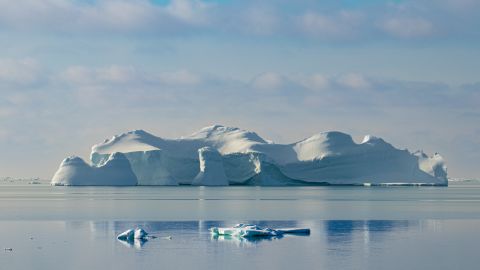
Icebergs surrounded a team of researchers in January as they cruised toward Antarctica. The team had been studying a thriving underwater ecosystem near the continent for years, but thanks to new modeling and powerful instrumentation they were able to navigate through a crumbling landscape of ice to their destination.
“We saw a lot of icebergs and they were impressive – the size of buildings,” Patricia Yager, a professor at the Department of Marine Sciences at the University of Georgia, told CNN. “Some are as tall as the Statue of Liberty, up to 300 feet above the waterline.”
“There’s a lot of melting going on,” Yager said. “Lots more than I expected. There was more meltwater and more heat in that ocean than I imagined.”
Large Antarctic iceberg with wavy contoured surface. Credit: Lars BoehmeLars Boehme
The Thwaites Glacier in Antarctica, roughly the size of Florida, is melting at a rapid rate. In fact, most of the ice in western Antarctica is melting. But the Thwaites Glacier – also known as Doomsday Glacier – is one of the most unstable in Antarctica. This is very worrisome because of the sea level rise it could cause.
But it’s more than that.
“What we realized as biologists and chemists and ecosystems scientists was, our ecosystem was also being impacted,” Yager said.
Scientists believe this ecosystem is pivotal to climate research, and years of extraordinary warming has allowed them to finally see it with their own eyes. Everything in this ecosystem – from the small phytoplankton to the larger seals and penguins – is being impacted.
Yager and her fellow researchers want to know what will happen to the surrounding ocean salt water if the glaciers melt, particularly what happens to the ecosystems that live in it – or under it.
Nathaniel B. Palmer ship among icebergs. Credit: Dr. Patricia YagerDr. Patricia Yager
The entire food chain is being impacted
While Yager and her team were in Antarctica, they found an elephant seal in the polynya – an oasis of open water where sea ice would normally exist – that they were studying.
“Nobody’s reported seeing an elephant seal there before,” she said. “What we see is if there’s a shift in the ecosystem, the animals respond. The problem is they’re not just responding to the food. They’re also responding to change in habitat and ocean currents.”
Enter your email to sign up for CNN’s “Meanwhile in China” Newsletter.
But how did that elephant seal get there? Well, that is where these important microorganisms called phytoplankton come in.
A seal resting on a piece of sea ice with the Nathaniel B. Palmer ship in the background. Credit: Ms. Li Ling PhD student at KTH Royal Institute of TechnologyMs. Li Ling PhD student at KTH Royal Institute of Technology
Phytoplankton are vital to the Antarctic food chain. Krill eat the phytoplankton, and animals like seals, fish, and penguins eat the krill.
“The Amundsen Sea Polynya is about half the size of the state of Georgia,” Yager said. “So it’s a big feature. On a per meter squared basis, it is more productive [than other polynyas] for reasons we think that are related to this melting glacier.”
It was discovered about a decade ago that this meltwater was providing iron-rich water to the polynya. So much iron that it was providing beneficial fertilizer to the local ecosystem.
However, high amounts of iron are not usually found in the coastal Antarctic because there is so little exposed rock there.
“The Southern Ocean is famously known for being a high-nutrient, low-chlorophyll zone,” Yager said. “We figured out that this ocean, for the most part, has plenty of nitrogen but it is missing another important fertilizer, which is iron.”
Where there’s iron, there are phytoplankton blooms.
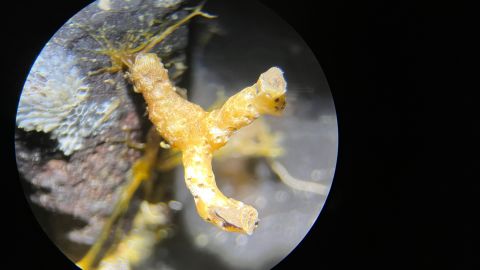
A branched sessile invertebrate, seen through a dissecting microscope, was found in a sediment core. The branched structure is approximately 1 cm in size. Credit: Dr. Lisa C. Herbert, Postdoctoral Fellow at Rutgers UniversityLisa C. Herbert
This ecosystem may have adapted to climate change in some ways, but it will need to change in many more ways to survive rising temperatures.
“We knew from the satellites that there was a big phytoplankton bloom in this area. It’s why we went to first explore this region back in 2007. Rob Sherrell, a trace metal geochemist from Rutgers University, pointed out that if there are algae blooming, then there must be iron. The question was, where was the iron coming from?”
What the researchers didn’t understand was why meltwater was coming out from where it was, and why it was so rich in iron, Yager said.
“So we went down there thinking, okay, well, the glacier has iron in it, and the melting glacier is dribbling iron into the ocean, which is a perfectly reasonable hypothesis. That’s what’s happening in parts of Greenland,” Yager said. “However, turns out, that’s not what’s happening. It’s more interesting than that.”
Back home, the science team set out to build a computer model to explore how the iron delivery worked.
“That’s what we went down to test this year,” Yager said. “The model suggested that the iron is actually coming mostly from the deep ocean water responsible for melting the glacier, but the delivery of iron to the surface is because of the added buoyancy from the melt.”
That upwelling of iron is fueling thriving ecosystem communities with species of algae, icefish, seals and jellyfish.
A small Antarctic jellyfish. Credit: Daisy Pickup, PhD Student at University of East AngliaDaisy Pickup, PhD Student at University of East Anglia
It may seem hard to believe that organisms could thrive in such cold environments, but there is life down there. And when you change that environment, it can have dire consequences.
“That life loves being down there,” Yager said. “If you take them away from that cold environment, they don’t survive. If you take the bacteria or the organisms that live down there and you put them in warm water, they often die.”
So while on the surface it may seem like a good thing that parts of these ecosystems are thriving – such as the phytoplankton, zooplankton – other aspects of the ecosystem can’t adapt as easily.
“For example, the Adelie penguins really depend on sea ice, and as the sea ice has disappeared from the peninsula in western Antarctica, the Adelies have declined dramatically because their habitat is gone,” Yager said. “What we’re seeing is an ecosystem shift. Adelie penguins are moving to new areas where there is more sea ice, and other penguins that don’t need the sea ice are moving in.”
Colony of penguins near Bear Peninsula in Antarctica. Credit: Ms. Li Ling PhD student at KTH Royal Institute of TechnologyMs. Li Ling PhD student at KTH Royal Institute of Technology
But when the ecosystem shifts, so too does the food web.
If the varieties of phytoplankton and krill shift, for example, then the fish, seals and penguins must shift, too, out of necessity.
“There’s going to be winners and losers with climate change,” Yager said. “Life will find a way and somebody will come in and take advantage of whatever food is available. It just might not be the thing that used to live there.”
Why this location is so unique
Yager has been traveling to Antarctica for research since 2007, but thanks to a very high-resolution model created by Pierre St-Laurent, a research scientist at the Virginia Institute of Marine Science, the crew think they found the ideal spot.
“It’s an interesting experience to be quietly sitting at your desk in the US and suddenly receive an email request from a colleague in Antarctica who is on the field and who would need guidance,” St-Laurent told CNN.
He worked out codes to predict the ocean currents using basic ingredients like water temperature, salinity, winds, the depth of the ocean and sea ice arrangements along coastlines of the Amundsen Sea. These predictions help the team – funded by the National Science Foundation and the UK Natural Environment Research Council – understand what’s going on below the surface.
The science and logistics team for the NBP22-02 Expedition. Back row (l-r): Mark Symons, Philip Leadbitter, Billy Platt, Davide Fenucci, Callum Rollo, Tiago Segabinazzi Dotto, Anders Sjovall, Anna Wåhlin. 2nd row (l-r): Li Ling, Patricia Yager, Robert Hall, Robert Sherrell, Sharon Stammerjohn, Gareth Lee. 3rd row (l-r): Rick Petersen, Julia Wellner, Lisa Herbert, Asmara Lehrmann, Michael Comas, Guilherme Bortolotto De Oliviera, Amy Chiuchiolo, Lars Boehme, Ashley Morris. Front row (l-r) Paul Provost, Scott Walker, Yixi Zheng, Hilde Oliver, Rachel Clark, Giovanna Azarias Utsumi, Daisy Pickup, Hannah Wyles, Patricia Medeiros, Janelle Steffen. Kneeling (l-r): Robert Templeton, Laura Glastra. Credit: Lars BoehmeLars Boehme
The problem was getting there.
“This year, unusually strong winds blew the sea ice into a big pile that blocked us from getting to the Thwaites,” Yager said. “We tried to go around, but all the icebergs also made it tricky to navigate through.”
Those icebergs falling from the Thwaites glacier had now drifted farther apart to essentially clear a path, albeit a windy one, for their crew to investigate the Eastern Notch area between the Thwaites and Dotson. The researchers wanted to verify what the models had predicted for a coastal current delivering meltwater and iron from the Thwaites.
“So this part of Antarctica, according to satellites, is one of the most productive in terms of biology,” Yager said. “It’s the greenest place in Antarctica and has the densest chlorophyll per meter squared. But it’s very hard to get there as you might notice. It’s pretty far away from everywhere.”
Large crack in iceberg from Dotson outflow site. Credit: Dr. Patricia YagerDr. Patricia Yager
Whether you travel from New Zealand or the southern tip of Chile, it’s a two-week trip by ship – about as far away from anywhere as you can get.
“We know that the sea ice is integral to the ecosystem in this area – they’re called marginal ice zones,” Yager said. “In the wintertime, the sea ice in these zones covers up the ecosystem. But then in the spring and summer, when it melts to make a polynya, it provides some layering of the ocean, and tend to be quite productive.”
The ocean has three primary layers – the surface layer (sometimes referred to as the mixed layer), the thermocline layer and the deep ocean.
The surface layer is the top layer of the water, and is well stirred from the wind and other forces. This top ocean layer also tends to be the warmest layer due to heating from the sun. And the phytoplankton also live in the surface layer.
“Because it’s not just the iron – it’s the iron and light together that the phytoplankton need,” Yager said.
She collaborated with a group called TARSAN, a ship-based project studying how atmospheric and oceanic processes are influencing the behavior of the Thwaites and Dotson Ice Shelves. Their research helps identify how variations in atmospheric or oceanic conditions may influence the behavior and stability of ice shelves in the region in the future.
High-tech Autosub Long Range vehicle “Boaty McBoatface” is used to examine ice shelf conditions. This autonomous underwater vehicle is operated by the National Oceanography Centre. Credit: Ms. Hannah Wyles, PhD student at University of St. AndrewsMs. Hannah Wyles, PhD student at University of St. Andrews
“If you bring iron up from below, disappearing sea ice and stronger winds could take away some of the stratification of the ocean, and now you’ve got less light for the phytoplankton,” Yager said.
This is why having multiple teams working together is so important, because each group can see something from a different angle.
If we catch it early, can we fix it?
The concern is that eventually, when the sea ice goes away and the polynyas disappear, this ecosystem will be destroyed.
“That has actually happened off the northeast coast of Greenland, there is no longer a polynya there, it’s gone completely,” Yager said.
“There’s two things happening in Antarctica,” she said. “The sea ice melts seasonally to make a polynya and the glaciers are melting and adding iron. So in this immediate time period, it’s all working together pretty well. We have this wonderful bloom.”
But too much of a good thing can be a bad thing in the long term.
Landscape view from Eastern Notch region of Antarctica. Credit: Dr. Patricia YagerDr. Patricia Yager
Yager says it’s just like the food pyramid – it’s all about balance. As humans we need protein, grains, vegetables and fruit. If you eat a diet focused highly on fruits, your balance is off.
If this area becomes too high in iron, the balance will eventually tip.
“If we keep pushing in the same direction, and the sea ice goes away, the whole setup may collapse. And then we’re just pumping high carbon and high iron deep water into the surface of the Southern Ocean, and we don’t really know what the effect of that is going to be,” Yager said.
“That’s why we’re testing and improving this model to help us predict forward,” she said. “It’s giving us a clue of what might happen in the future, before it actually happens.”
Iceberg seen from above and below the water line. Credit: Dr. Patricia YagerDr. Patricia Yager
St-Laurent also had a chance to travel to Antarctica, though in a different region called the Ross Sea.
“The remoteness of Antarctica is what struck me the most; in many ways the research expedition felt like taking a trip to the moon,” St-Laurent said.
“And yet, we know that this remote part of Earth has the potential to impact all coastal communities greatly as the Antarctic ice sheet continues to lose mass over the next decades and contributes to global sea level rise. Despite the scale of the planet, we’re in many ways interconnected, for better or for worse.”
PACIFIC COUNTY, Wash. — A highly contagious and deadly strain of avian influenza, also known as the bird flu, was detected this week in a backyard flock in Pacific County, according to the Washington State Department of Agriculture (WSDA).
WSDA and the U.S. Department of Agriculture’s Animal Plant Health Inspection Service (USDA APHIS) confirmed the detection of highly pathogenic avian influenza (HPAI) on May 5.
According to the Centers for Disease Control and Prevention, HPAI infections have a 90-100% mortality rate in chickens, affecting multiple internal organs and causing death within 48 hours.
In the case detected in Pacific County, the non-commercial flock’s owner reported sick birds and an increased rate of mortality, according to WSDA. The owner contacted WSDA and samples were taken on May 4 to test for H5N1.
“The long and the short of that was that the producer noticed that one day a crow flew in with some of his chickens,” said Dr. Dana Dobbs with WSDA. “I think it was the next day he literally described they were dropping like flies.”
The Washington state veterinarian quarantined the premises and the birds on the property will be euthanized to prevent the spread of the disease, according to WSDA.
This is the first detected case of H5N1 in Washington state this year.
As of late April, the U.S. Department of Agriculture’s Animal and Plant Health Inspection Service has recorded animal infections in more than two dozen states.
WSDA said they have not detected H5N1 in commercial flocks in Washington state and that there is no immediate public health concern.
“We have not diagnosed the virus anywhere else in our domestic poultry population,” said Dr. Amber Itle, state veterinarian.” One step owners should take is preventing contact between their birds and wild birds.”
Abortion rights supporters rally Thursday in front of the U.S. Supreme Court in Washington after the leak of a draft memo on Roe v. Wade.Anna Moneymaker / Getty Images
The Supreme Court draft opinion overturning Roe v. Wade sent shock waves throughout our country when it was leaked this week. If the ruling stands, abortion access would be decimated in huge swaths of the country, and the rights of Americans everywhere will depend on whether they happen to live in a blue state or in a red state. Beyond being a violation of the human rights of pregnant people, limiting access to abortion is an imposition of governmental Christianity on us all.
And it infringes on the religious liberty of every American Jew.
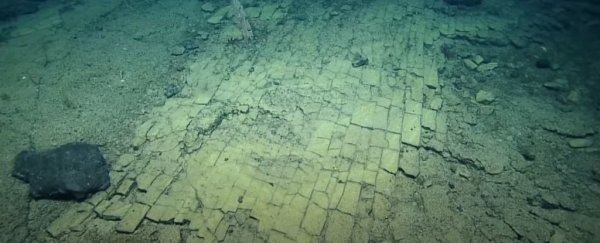
An expedition to a deep-sea ridge, just north of the Hawaiian Islands, has revealed an ancient dried-out lake bed paved with what looks like a yellow brick road.
The eerie scene was chanced upon by the exploration vessel Nautilus, which is currently surveying the Liliʻuokalani ridge withinPapahānaumokuākea Marine National Monument(PMNM).
PMNM is one of the largest marine conservation areas in the world, larger than all the national parks in the United States combined, and we’ve only exploredabout 3 percent of its seafloor.
Researchers at the Ocean Exploration Trust are pushing the frontiers of this wilderness, which lies more than 3,000 meters below the waves, and the best part is, anyone can watch the exploration.