Trap Free Montana/Wolves of the Rockies vs Montana Fish Wildlife & Parks/Commission  

Friend,

View this email in your browser

BREAKING NEWS: Trap Free Montana/Wolves of the Rockies vs Montana Fish Wildlife & Parks/Commission  

On February 10, 2022, a preliminary injunction hearing occurred on behalf of Trap Free Montana and Wolves of the Rockies concerning Montana 2021 wolf regulations. 


Trap Free Montana and Wolves of the Rockies filed a lawsuit in December and asked a judge to eliminate the use of infrared and other night hunting aids and to prevent the Department of Fish, Wildlife and Parks from allowing aerial spotting and hunting of wolves. 

The complaint contends changes were made to the Montana 2021 wolf regulations without public comment. The request for a temporary restraining order was denied on January 28, 2021. 

“Wolves of the Rockies and Trap Free Montana want to thank Rob Farris Olson of Morrison, Sherwood, Wilson & Deola law  firm for a solid and defendable argument before Lewis and Clark County District Court Judge Michael McMahon,” said Marc Cooke, president of Wolves of the Rockies.

“Montana Fish Wildlife and Parks and Commission have a responsibility under the Public Trust doctrine to manage wildlife responsibly to ensure their sustainability for present and future generations of Montanans,” said Marc Cooke.

“Since Montana’s 2002 wolf management plan and the 2009 wolf delisting, wolves in Montana have been classified as a ‘species in need of management’. Rather than reclassify wolves as ‘game’ or ‘furbearers’, wolves are now being treated as ‘predators’. Altering the 2021 wolf regulations, the killing of wolves is further eased with the added use of night vision, thermal, and infrared imagery, and to the arsenal, the spotting and shooting of wolves from aircraft. This arbitrary species classification is somehow being used to try to justify the exclusion of the public in the due process of these additives,” said KC York, president and founder of Trap Free Montana/TFMPL.

Research shows from the states that allow night hunting, 3 prohibit artificial light and 10 prohibit night vision. It is basically unheard of to allow the night hunting of game animals. In 2019, Montana FWP came out formally in opposition to Rep. Bob Brown’s HB551, Allowing for wolf hunting at night on private lands. The bill failed to pass in the House 44:56.

During the February 10th, 2022 hearing, Attorney Farris-Olsen stated, “The department does not have the authority to change regulations.” He went on to say, per Montana statute, “The Commission shall establish the hunting, fishing, trapping rules of the department. The Department doesn’t get to just simply change regulations or adopt some implied interpretation of those regulations simply because it wants to. It needs to follow the process, and that process wasn’t followed here.”

Montana FWP received ~ 25,000 public comments and consistent with the 2021 legislative bills the far majority were in opposition to the aggressive measures proposed and killing more wolves.

“Transparency in the department is waning, too. It all diminishes public faith in Montana Fish Wildlife and Parks and the Commission. This is taking a tremendous toll, emotionally and financially, on all those who care about wolves. But we are here today, and we will be here tomorrow to right wrongs we feel conducted by the Montana Fish Wildlife and Parks and Commission,” said Marc Cooke.

“Montana’s wildlife management system is broken. The public has been ignored, denied public comment, kept in the dark, and violated in our constitutional right to participate. The wolves, however, are paying the ultimate price with their lives,” said KC York. 

Judge McMahon plans his decision after March 1st.

Contacts:                                                                                                                                                                                              
KC York
President/Founder.                
Trap Free Montana                                                           
info@trapfreemt.org
www.trapfreemt.org 
406-218-1170                                                                            

Marc Cooke
President
Wolves of the Rockies
info@wolvesoftherockies.org
www.wolvesoftherockies.org
406-493-5945

Media articles
FWP aerial hunting of wolves legal in Montana.
FWP wolf hunting regulations adopted in August were not subject to public participation laws.


As wolves in Montana, Idaho, and Wyoming remain under intense fire, wolves elsewhere will now be spared. Other than our three states and portions of the other Northern Rocky Mountain states….on February 10, 2022,

ELSEWHERE, Judge Orders Federal Protections for Gray Wolves Be Restored! 

In 44 of the 48 lower states the gray wolves are relisted!

Our Western states’ gray wolves were delisted over a decade ago. Carried by Montana Senator Jon Tester, the means by which it was done through Congress, the wolves cannot be relisted through the courts. However, given the 2021 aggressive wolf management plans, they are being reviewed for relisting by the US Fish and Wildlife Agency (USFWS).

Please continue to be the voice for wolves in the Northern Rocky mountain region. Urge the USFWS to relist the gray wolf. Submit your public comment. With what is happening in these states, there is plenty of ammo to provide in your comment to fight for the wolves and their rightful respectful place in the ecosystem. Always in public comment use your own words.

The USFWS are reviewing the comments now. They encouraged getting comments in by the end of January, but the comment period has NOT closed. 


Interior Secretary Deb Haaland addressed the killing of wolves, finally! Although it is beautiful and eloquently stated, wolves in our states need far more than words, they need help! They will never be able “to flourish” or possibly survive under the current management regimes.

Continue to respectfully contact-her and urge protections for our wolves!
Phone 1-202-208-3100


We want to extend our thanks to Rick Lamplugh for his help in our request for witnesses, i.e. Yellowstone business owners and especially those who did not get to give public comment on January 28, although registered to do so, like many of us. We appreciate all who came forward to help and to Jeff Reed for being one who was able to testify.

Over 30% of Yellowstone wolves are allegedly missing and the wolf hunting and trapping season does not close in the state until March 15. Region 3 which abuts Yellowstone National Park is reporting 80 wolves shot, trapped, or snared. The threshold for closing that region is a reported 82 wolves killed. The latest reported toll for the 2021 Montana wolf season, effective February 11, 2022:


To all of our supporters, thank you!  Stay tuned!

We could not do this without you!

Ukraine tensions: Russia invasion could begin any day, US warns

Exposing the Big Game's avatarThe Extinction Chronicles

Published35 minutes agoShare

Related Topics

https://emp.bbc.com/emp/SMPj/2.44.11/iframe.htmlMedia caption,

Russia is in a position to “mount a major military action” says US National Security Adviser Jake Sullivan

Russia has the troops in place to invade Ukraine “at any time” and American citizens should leave within the next 48 hours, the US has warned.

An invasion could start with aerial bombing that would make departures difficult and endanger civilians, the White House said on Friday.

A host of other countries have also urged their nationals to leave Ukraine.

Russia has repeatedly denied any plans to invade Ukraine despite massing more than 100,000 troops near the border.

US National Security Adviser Jake Sullivan said Russian forces were now “in a position to be able to mount a major military action” and urged American citizens in Ukraine to “leave as soon as possible” in remarks seen as a clear escalation in the…

View original post 584 more words

Trucker protests: Ontario calls state of emergency

Exposing the Big Game's avatarThe Extinction Chronicles

Published1 hour agoShare

https://www.bbc.com/news/world-us-canada-60352980

Protestors and supporters attend a blockade at the foot of the Ambassador Bridge, sealing off the flow of commercial traffic over the bridge into Canada from Detroit

Ontario has declared a state of emergency in response to two weeks of protests against Covid restrictions.

The order came as demonstrations continue to shut down parts of Ottawa and the Ambassador Bridge, a vital US-Canada trade link.

Blocking crucial infrastructure would be made “illegal” under the order, said Premier Doug Ford.

Protesters could face up to a year in jail and C$100,000 ($79,000; £58,000) in fines.

Mr Ford said the order would apply to anyone impeding the movement of goods, people and services along international border crossings, airports, ports and major highways.

The Canadian province will also provide additional authority so that the personal and commercial licences of protesters who do not comply may be cancelled.

https://buy.tinypass.com/checkout/template/cacheableShow?aid=tYOkq7qlAI&templateId=OTBYI8Q89QWC&templateVariantId=OTV0YFYSXVQWV&offerId=fakeOfferId&experienceId=EXAWX60BX4NU&iframeId=offer_0e763acc7b457c03340a-0&displayMode=inline&widget=template&url=https%3A%2F%2Fwww.bbc.com

“There will be consequences, and they will be severe,” Mr Ford said on Friday morning.

“To those who have attempted to disrupt our way of life by targeting…

View original post 401 more words

US expects Russia to invade Ukraine next week: report

Exposing the Big Game's avatarThe Extinction Chronicles

By

Samuel Chamberlain

February 11, 20222:02pm

Updated

https://imasdk.googleapis.com/js/core/bridge3.498.1_en.html#goog_18312740

This is a modal window. This modal can be closed by pressing the Escape key or activating the close button.

Share: US expects Russia to invade Ukraine next week: report

FacebookLinkedInPinterestTumblrTwitterDirect LinkEmbed CodeClose Modal Dialog

US officials believe Russian President Vladimir Putin has decided toinvade Ukraineand an attack could take place as soon as next week,as National Security Adviser Jake Sullivan told Americans still in the Eastern European nation to get out within “24 to 48 hours.”

PBS foreign affairs correspondent Nick Schifrin tweeted that US officials believe Putin has communicated an invasion orderto the Russian militaryand that Washington expects a “horrific, bloody” campaign.

According to the report, a Russian attack would be preceded by two days of aerial bombardment and electronic warfare, followed by a ground assault with the potential goal of overthrowing…

View original post 556 more words

Nova Scotia bird flu outbreak prompts some poultry trade restrictions

Exposing the Big Game's avatarThe Extinction Chronicles

By The Canadian Press | News, Politics | February 10th 2022

https://www.nationalobserver.com/2022/02/10/news/nova-scotia-bird-flu-outbreak-poultry-trade-restrictions

Chicken is pictured at a market on Granville Island is on Vancouver, Friday, Jan. 23, 2015. File photo by The Canadian Press/Jonathan HaywardListen to article

Canada’s food safety watchdog says the discovery ofavian influenzain a commercial poultry flock in Nova Scotia has resulted in international trade restrictions on some Canadian poultry products.

TheCanadian Food Inspection Agencysays the outbreak of high pathogenic H5N1 was reported last week to the World Organization for Animal Health.

The agency says in a news release on Wednesday that the detection has resulted in Canada’s animal health status being changed to say it is not free from avian influenza.

GET TOP STORIES IN YOUR INBOX.

Email*

South Korea and the Philippines have imposed restrictions on poultry products from all of Canada including live poultry, poultry meat and edible eggs.

The…

View original post 157 more words

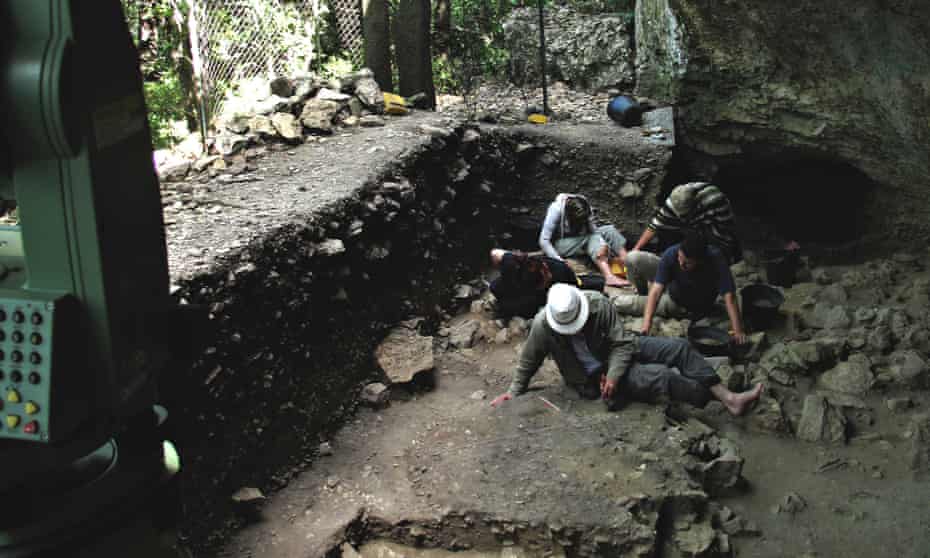
‘Neanderthal Pompeii’: dig places humans in Europe earlier than thought

Exposing the Big Game's avatarThe Extinction Chronicles

Researchers find Homo sapiens moved into Madrin cave in France one year after Neanderthals abandoned it

https://www.theguardian.com/science/2022/feb/09/neanderthal-pompeii-dig-places-humans-in-europe-earlier-than-thought

The fossil of a child's tooth is the earliest known evidence of modern humans in western Europe. Researchers say the area also documents the first clear  alternating occupation of a site by Neanderthals and early modern humans.
The fossil of a child’s tooth is the earliest known evidence of modern humans in western Europe. Researchers say the area also documents the first clear alternating occupation of a site by Neanderthals and early modern humans.Photograph: The Natural History Museum/PA

Staffandagencies

Wed 9 Feb 2022 16.09 EST

Homo sapiens ventured into Neanderthal territory inEuropemuch earlier than previously thought, according to a new archaeological study.

Up to now, archaeological discoveries had indicated that Neanderthals disappeared from the European continent about 40,000 years ago, shortly after the arrival of their “cousin” Homo sapiens, barely 5,000 years earlier and there was no evidence of an encounter between these two groups.

The new discovery, by a team of archaeologists and paleoanthropologists led by Ludovic Slimak of Toulouse University, pushes back the arrival of Homo…

View original post 540 more words

Our roads are killing wildlife. The new infrastructure law aims to help

Exposing the Big Game's avatarCommittee to Abolish Sport Hunting Blog

February 10, 20225:00 AM ET

NATHAN ROTTTwitterInstagram

https://www.npr.org/2022/02/10/1078901880/our-roads-are-killing-wildlife-the-new-infrastructure-law-aims-to-help

RYAN KELLMAN

A mountain lion photographed with a motion sensor camera in the Verdugo Mountains overlooking the city lights of Los Angeles. New money for wildlife crossings will help animals whose habitat has been cut by roadways.

National Park Service

Just outside of Los Angeles, in one of the most human-modified parts of the planet, a rare coastal ecosystem is being pinched against the Pacific Coast. The mountain range is home to one of thehighest concentrationsof threatened and endangered species in the country.

And some are suffocating.

CLIMATE

To get by in a changing climate, plants need animal poop to carry them to safety

For the better part of the last century, the Santa Monica Mountains have been effectively cut off from the larger world, hemmed in by seawater and sprawl. Highway 101, carved across the range’s northern…

View original post 1,474 more words

Hunter killed by stray bullet during hunt in central France

Exposing the Big Game's avatarCommittee to Abolish Sport Hunting Blog

Investigators believe the man, 66, may have been hit by a ricocheting bullet shot by a fellow hunter who was aiming for a fox

EmailFacebookPrintTwitterWhatsAppMore

9 February 2022 12:58

A hunter with a weapon in nature

A man has been killed in the latest hunting accident reported in FrancePic:franz12 / ShutterstockByHannah Thompson

A 66-year-old man has died after being shot during a hunt. It is believed he was accidentally hit by a fellow hunter’s bullet which was intended for a fox.

The hunt, which involved around 20 people, took place on February 7 in the commune of Vallières-les-Grandes (Loir-et-Cher).

A 59-year-old man taking part in the hunt is suspected of having fired the fatal bullet but investigations are ongoing.

Sign up to continue reading this article: https://www.connexionfrance.com/French-news/Hunter-killed-by-stray-bullet-during-hunt-in-central-France

View original post

Humans are the main source of COVID-19, but what happens now that we’ve spread it to animals?

Social Sharing

Feeding and handling wildlife could provide the coronavirus with an opportunity to jump species

Jaela Bernstien · CBC News · Posted: Feb 10, 2022 4:00 AM ET | Last Updated: 11 hours ago

White-tailed deer, like this one pictured at a park in Longueil, Que., can catch SARS-CoV-2 from humans and spread it to other deer. It’s not yet known whether deer can spread it back to humans. (Dave St-Amant/CBC)

If there’s one thing social media loves, it’s a Disney-like moment with a wild animal. There’s the much-loved video with the golden retriever who’s best friends with a deer, or the one where a woman hand-feeds deer on her porch. But those seemingly innocent interactions between humans and wildlife could be costly during a pandemic.

Humans are currently the main source of transmission for the virus that causes COVID-19, SARS-CoV-2. Globally, the virus has been found in 19 different species, mostly animals that are domestic or living in captivity.

https://platform.twitter.com/embed/Tweet.html?dnt=false&embedId=twitter-widget-0&features=eyJ0ZndfZXhwZXJpbWVudHNfY29va2llX2V4cGlyYXRpb24iOnsiYnVja2V0IjoxMjA5NjAwLCJ2ZXJzaW9uIjpudWxsfSwidGZ3X2hvcml6b25fdHdlZXRfZW1iZWRfOTU1NSI6eyJidWNrZXQiOiJodGUiLCJ2ZXJzaW9uIjpudWxsfSwidGZ3X3NwYWNlX2NhcmQiOnsiYnVja2V0Ijoib2ZmIiwidmVyc2lvbiI6bnVsbH19&frame=false&hideCard=false&hideThread=false&id=1466866897970995207&lang=en&origin=https%3A%2F%2Fwww.cbc.ca%2Fnews%2Fscience%2Fsarscov2-wildlife-surveillance-1.6345673&sessionId=7fb9007fc661aa3ad2bda6ccb56eab8c7fa1898d&siteScreenName=cbc&theme=light&widgetsVersion=0a8eea3%3A1643743420422&width=550px

What concerns scientists is the potential for another species to become a reservoir. If SARS-CoV-2 circulates widely enough in another species, there’s a risk that animal could become a potential source for new variants and transmission back to humans.

While so far there’s no evidence of that happening in the wild, the cycle of transmission seen on mink farms in Denmark, where mink infected by workers spread a new variant back to workers, is exactly the type of situation infectious disease experts want to avoid.

So far, the only known cases of SARS-CoV-2 in the wild were found in mink and deer. Most of the mink that have been infected were on fur farms, but a wild mink did test positive in Utah, in an area where there were outbreaks on local farms.

One big ecosystem

Until recently, most conversations about animals and COVID-19 had to do with its origins, said Scott Weese, an infectious disease veterinarian and a professor at the University of Guelph’s Ontario Veterinary College.

He’s one of many experts saying that kind of thinking to change to more of a holistic approach, one that considers how all species are interlinked. 

“We had to really kind of drag people kicking and screaming to pay attention to animals,” Weese said. 

“We don’t have people and everything else. We’re all in this big ecosystem.” 

People should be aware of the risk of animal transmission, but not worried, he said. At this stage of the pandemic, the average person poses a greater risk to other animals than animals pose to people, and people are far more likely to be exposed to the virus from another person than an animal. 

Guelph, Ont., infectious disease veterinarian Scott Weese advises people infected with COVID-19 to limit their contact with animals, the same way they would with humans. (Dave MacIntosh/CBC)

But the last thing we want to do is gain control of the virus in humans only to discover another species has become a reservoir, he said.

“The risk of variants emerging in the human population will get lower as we vaccinate everyone, if we vaccinate the world. So if we do that, the biggest pool of susceptible individuals and the biggest pool for circulating virus may be wildlife,” he said. 

Need for long-term wildlife surveillance 

At Toronto’s Sunnybrook Health Science Centre, infectious disease physician and virologist Dr. Samira Mubareka has been working with her team to analyze samples taken from white-tailed deer killed by hunters.

Together with the Canadian Food Inspection Agency’s National Centre for Foreign Animal Disease, they analyzed the entire genome sequence of the virus found in Quebec deer and identified the Delta variant.

Jonathon Kotwa, left, and Dr. Samira Mubareka, right, pictured in their lab at the Sunnybrook Health Sciences Centre in Toronto. They’re part of team of scientists across Canada analyzing samples taken from wildlife to monitor the spread of COVID-19. (Doug Nicholson/Sunnybrook Research Institute)

“Delta started surging over the course of 2021, especially in the fall. So most likely, that’s when those deer got infected, when it happened to also be circulating in humans,” Mubareka said.

So far the virus has been found in wild white-tailed deer in the northeastern United States, as well as in Quebec, Ontario and Saskatchewan. It’s not clear exactly how humans are transmitting the virus to deer, but it could be through contaminated drinking water, direct contact, food or farming. 

Despite humans introducing the virus to deer, there’s no evidence of it spilling back into humans. Infected deer haven’t displayed symptoms, and the virus doesn’t appear to be significantly mutating as it spreads within their population.

But that could change.

It’s why Mubareka and her colleagues say it’s important to keep up surveillance long-term, to find out what happens next. 

“What we don’t know is, what is [the virus] doing now?” Mubareka said.

“For example, if Omicron spilled over into deer, would there be a difference?”

Hunters advised to mask up

Since humans are still the main source of SARS-CoV-2, the best way to prevent animals from getting it is for humans to take precautions.

The Public Health Agency of Canada is advising to avoid close contact with pets and animals as much as possible if you have COVID-19. That includes feeding wildlife.

It’s not known exactly how people are transmitting the coronavirus to deer, but it could be through wastewater, direct contact, or food. (Dave St-Amant/CBC)

There are no reports of people catching COVID-19 from preparing or eating meat, but hunters should be cautious while handling carcasses. Public Health also recommends hunters wear a mask when exposed to any respiratory tissues and fluids, and to wear gloves and eye protection while handling and dressing a carcass. 

‘The more we can stay away, the better’

Weese, who has been testing the pets of Canadians who have COVID-19, said that so far the virus doesn’t seem to have much of an effect on dogs, and domestic cats usually only show minor symptoms.

His advice is to, “treat your animals like you would anyone else. If you’re staying away from people, limit your contact with animals.”

“If your cat is your support mechanism, know the risk to the cat is fairly low, so you don’t lock the cat in the bathroom because you’ve got COVID. But the more we can stay away, the better,” he said.

There have also been reports that other pets, such as ferrets, are susceptible to the virus and show symptoms. 

Rodents are another animal of concern. A pre-print case study based on an outbreak linked to a Hong Kong pet shop suggests there may be evidence of transmission from hamsters to humans. That paper has not yet been peer-reviewed and the latest information available on the Public Health Agency of Canada’s website lists hamsters only as a source of transmission to other hamsters.

Part of our lives

Zoos have also taken extra precautions to make sure their animals stay safe. 

While American zoos have experienced outbreaks, no animals at Canadian accredited zoos have tested positive so far. That’s partly thank to the safety precautions in place. 

Take the Toronto Zoo, for instance. It had been closed to the public since Jan. 5, but staff were still wearing protective gear when they were around gorillas and other susceptible animals, like big cats. Visitors, when they can return, are asked to wear masks.

A sign at the Toronto Zoo asks visitors to mask up for the safety of animals. About 10 per cent of the species at the Toronto Zoo are at high risk of being infected with with the virus, including big cats and gorillas. (Amy Naylor/Toronto Zoo)

Gabriela Mastromonaco, the director of conservation science at the Toronto Zoo, said the pandemic has really highlighted how humans are inextricably linked with the other species around us.

“They’re part of our lives every day whether we know it or not. It really is up to us to protect them or not because whatever happens to them is going to come back to us. It is a circle.”

She said people tend to forget all the ways our lives interact with other animals through agriculture, food, pets and companion animals, zoo animals and wildlife. 

“COVID heightened our sense of relationships, whether it’s with each other or with the animal world.”

Deer in New York Test Positive for Omicron, Researchers Warn of Future ‘Spillback to Humans’

Many wild deer in Staten Island have been infected by the coronavirus, and some have even recently caught Omicron.

By

Ed Cara

Yesterday 11:52AM

https://gizmodo.com/deer-in-new-york-test-positive-for-omicron-researchers-1848499225

Alerts

The Omicron variant of the coronavirus has found its way into white-tailed deer living in New York, new research released this week has found. The results are the latest to show that deer in the U.S. have become frequent carriers of SARS-CoV-2—a phenomenon that could have important implications for the future of the virus and our vulnerability to new variants.

Numerous studies have found that deer can readily contract the coronavirus. Last November, for instance, researchers from Penn State University and elsewhere reported that up to a third of free-living and captive deer in Iowa carried traces of the virus from late 2020 to early 2021. Some of these same researchers from Penn State and others, including those with the New York City Department of Parks & Recreation, have released their latest findings this week on the preprint website bioRxiv.

The team tested blood and nasal samples from wild deer living on Staten Island that were temporarily captured as part of a sterilization program to keep the population in check. The samples were collected between December 2021 and January 2022, and the scientists performed antibody and RNA tests on them.

Overall, 14.5% of 131 deer that had their blood taken tested positive for antibodies to the coronavirus, indicating a prior infection. About 10% of the 68 deer that had nasal swabs taken tested positive for an acute infection. And when the researchers sequenced the genetics of these positive samples, they found that some had caught the Omicron variant, the most transmissible version of the coronavirus to emerge yet.

Scientists Deliberately Infected People With Covid-19: Here’s What Happened to Them

Hospitals Complain Nurses Making Too Much Money During Covid-19 Pandemic

A Highly Virulent Variant of HIV Has Been Discovered in the Netherlands

The Omicron found in these deer bore a close genetic resemblance to Omicron strains found in human residents of the city, all but confirming that humans had somehow been the source of the deer infections. It’s unclear how this is happening, but direct contact via hand-feeding or through exposure to contaminated wastewater or trash are possibilities. Interestingly, at least one infected deer had both an active infection and very high antibody levels, possibly indicating that it had been reinfected.

The Book of Boba Fett Can’t Stop Treating Boba Like a Chump

Pennsylvania May Have a Big Tick Problem on Its Hands

Webb Space Telescope Successfully Sees Its First Glimmer of Light

Scientists Deliberately Infected People With Covid-19: Here’s What Happened to Them

Ad 

Unmute

Sponsored Video From Our Partners

This work, the researchers say in their paper, clearly shows that Omicron “can infect white-tailed deer and highlights an urgent need for comprehensive surveillance of susceptible animal species to identify ecological transmission networks and better assess the potential risks of spillback to humans.”

Deer, at least in the lab with older strains of the virus, don’t appear to experience much if any illness from their infections, unlike other animals such as minks. But the widespread transmission of the virus seen in these animals doesn’t bode well for several reasons. The virus could mutate to become a serious health problem for deer in the U.S., which would only add to the list of infectious diseases circulating in these animals. The virus could also mutate in unpredictable ways or recombine with other coronaviruses in deer that would allow it to become more immune-evading or virulent once it’s transmitted back to humans.

None of this is certain, of course, and there’s plenty of coronavirus already circulating and mutating in humans. But one reason why diseases like influenza are considered a pandemic threat is that flu viruses are constantly being spread back and forth between different species. Every once in a while, the genetic shuffling that this process produces can spit out a version of the flu that’s both highly contagious in humans and much more deadly than the typical seasonal flu. So if the same thing can happen with SARS-CoV-2, it’s a risk that we have to keep an eye on as much as possible, the researchers say.

Subscribe to our newsletter!

Give us your email address or the robot gets it.Enter your emailSign Me Up

By subscribing you agree to our Terms of Use and Privacy Policy.

“The circulation of the virus in deer provides opportunities for it to adapt and evolve,” study author Vivek Kapur, a veterinary microbiologist at Penn State University, told the New York Times. “And it’s likely to come back and haunt us in the future.”