Oct. 17—A massive male cougar that was captured and tagged by biologists in 2018 was legally killed by a hunter on Sept. 9 in Eastern Washington.
In 2018, the tom cougar weighed 197 pounds, its head was 56 centimeters in circumference and it was 9 years old, according to Bart George, a wildlife biologist for the Kalispel Tribe who captured the cougar in 2018. The cougar was so large that biologists had to dart him twice. He was so muscular that one of the darts popped out when the animal flexed his thigh muscle. On average, tom cougars weight between 150 and 155 pounds.
At that time, the animal was captured and collared as part of Washington’s ongoing predator-prey project, which is attempting to better understand the relationship between wolves and ungulates. A secondary consideration, however, is how wolves and cougars interact.- ADVERTISEMENT -https://s.yimg.com/rq/darla/4-6-0/html/r-sf-flx.html
In 2018, the cougar was the largest captured cougar in Washington.
“Congratulations to the hunter, that’s a big mature animal that has very likely sired lots of offspring in the region,” George said in a text. “The removal of the big cat will make room for another mature male to fill his niche.”
On Sept. 9, Brandon Reed was fishing and camping with his girlfriend and two children on Carl’s Lake. That morning, they went for a hike around the lake, and he scrambled up to a rocky outcropping for scout for elk. Reed started searching a nearby drainage with his binoculars when he saw the tom cat lying under a tree.
“I’m glassing and laying clear across this drainage was a cat and a big cat,” he said. “It struck me as huge. Laying there like your normal house cat.”
Reed, who had his Tikka .300 mag rifle with him, went to the ground and sighted in on the tom. He estimated the shot was between 300 and 350 yards.
Reed figured that with a target so small, he would either hit the cat or completely miss.
“I’m either going to be high, low or I’m going to hit it,” he said.
He fired, the recoil knocking him off the scope.
When he got the scope back on the cat, he saw it do two flips down the drainage before it disappeared into the tree line.
Reed hiked back to his truck and family, grabbed a shotgun and then went to retrieve the cat. He found the tom wrapped around a tree downhill from where he’d been lying. He also brought a rangefinder and found that he’d shot at 366 yards. He also found the collar and tag placed on the animal in 2018 and he notified state and tribal biologists.
Over the next several hours, Reed skinned the cat and packed out between 50 and 60 pounds of meat in addition to its hide and skull. He’s waiting for the skull to be processed at the taxidermist and will submit it to check for a world record.
The largest cougar shot, according to the Boone and Crockett Club’s record, was killed in 1979 by Douglas E. Schuk in British Columbia. The skull scored 16 4/16 points. The Boone and Crockett Club’s runner-up cougar was killed in Idaho’s Selway-Bitterroot Wilderness by Gene R. Alford of Kamiah, Idaho, in 1988.
“Truth of the matter is I want it to be a record,” Reed said.
As someone who used to love the spectacle and the theatre of firework displays, the whizzing, whooping, whistling, screams, pops, and thunderous bangs, the sparkling, light-blazing skies and the gunpowder smoke hanging heavy in the crisp frosty air, the past few years have been a journey of discovery leading to a 180 degree turnaround in my perspective. As with so many things in my life, getting used to saying, ‘I was wrong, I’ve changed my mind’ has been very humbling and necessary – I can thoroughly recommend it and it gets easier with practice. Now I hold the view that this archaic practice should be completely banned with immediate effect.
I suppose my mind started to change on Hogmanay (Scottish New Year’s Eve) a few years back, on a night when my thoughts moved beyond my erstwhile childish delight in things that sparkle and go bang. Afterwards I wrote,
San Francisco (CNN Business)Pork, much like everything else these days, has gotten more expensive due in part to the supply chain issues and inflationary pressures spurred by the pandemic.And now comes anotherwildcard: The pork industry’s ability — and desire — to adapt to a new animal welfare law in California, its largest US market.The voter-approved measure taking effect on January 1 requires pork products sold within the state to adhere to standards that mother pigs are given at least 24 square feet of space each and kept out of gestation crates — 7-by-2-foot stalls where their movements are severely restricted.Pork producers are already warning that the new law brings added costs throughout the supply chain that will ultimately leave Californians and other shoppers in the US with fewer and more expensive options.
By and large, there are going to be long-term impacts from this, no matter what.”
TREY MALONE, AN ASSISTANT PROFESSOR AT MICHIGAN STATE UNIVERSITY
The bacon battle brewing in California has some believing the Golden State’s pork supply chain is teetering on the edge ofprecarious to outright calamitous: “The Great California Bacon Crisis,” could “mean the end of bacon,” bring about the “bacon apocalypse,” or make the breakfast staple “disappear” from Californians’ tables.Those extremes might likely be hogwash — some economists predict California consumers could end up paying about $8 more for their annual pork purchases — but the law isn’t inconsequential.Enter your email to receive CNN’s nightcap newsletter.close dialog
We read all day so you don’t have to.Get our nightly newsletter for all the top business stories you need to know.Sign Me UpBy subscribing you agree to ourprivacy policy.It’s the latest in a line of animal welfare-focused moves that could change how pork is raised and sold in the US.”By and large, there are going to be long-term impacts from this, no matter what,” said Trey Malone, an assistant professor at Michigan State University’s Department of Agricultural, Food and Resource Economics. “This is something that the entire agricultural industry is paying close attention to.”
They ‘won’t let mother pigs turn around’
The issue had gained some momentum before but it really heated up in 2018, when California voters approved Proposition 12, which prohibits confining egg-laying hens, veal calves and breeding pigs in a “cruel manner,” establishes criteria for proper living conditions and bars the sale of eggs and meat products from animals that weren’t raised by such standards.Some of the minimum housing space requirements for hens and calves went into effect January 1, 2020, with the second batch of regulations — notably calling for cage-free hens and crate-free hogs — slated for the first of next year.When it comes to hogs, California’s Proposition 12 requires that at least 24 square feet of space be given for each breeding pig and calls for the elimination of gestation stalls for pregnant pigs.7-by-2-foot gestation stalls like these are used to house pregnant female pigs at farms across the US.The gestation stalls — metal enclosures where the pig stands atop slatted, concrete floors — are typically 7 by 2 feet in size. Depending on how many times they’re bred, a female pig can spend the majority of her life in these small enclosures, animal welfare groups argue.In these stalls, a 400-pound pregnant pig can feed, stand, sit and lie down, but she does not have the space to walk, move about freely, socialize or turn around.”Some pork producers just won’t let mother pigs turn around,” said Josh Balk, vice president of farm animal protection for the Humane Society of the United States, which has been behind many of the ballot measures. “That’s it. Everything comes back to that point; and frankly, ordinary Americans think that’s a barbaric way to treat them.”Still, the practice has become an industry standard, with more than 75% of pregnant sows being housed in these individual stalls, according to the US Department of Agriculture.Pork farmers and producers say the stalls allow them to monitor the health, food intake and well-being of individual pigs during the pregnancy process. They argue that there are also increased risks — such as aggression, competition for food, and disease — when pigs, especially pregnant sows, are in group environments with others.
Pork producers are not ready
What’s unique in California (as well as Massachusetts, where a similar law was passedin 2016, but recent legislative efforts hope to delay its implementation to January 1, 2023) is that the Prop. 12 regulations apply to both local and out-of-state producers who want to sell within the state.Egg producers are prepared to meet California’s January 1 deadline for cage-free eggs; however, the same can’t be said for the broader pork industry, according to analysts from Rabobank, an agribusiness-focused financial institution. Christine McCracken, a senior analyst focusing on the animal protein industryat Rabobank, pinned the pork industry’s preparedness at no more than 5%.Part of the problem: Since voters approved Prop. 12, the California Department of Food and Agriculture has been slowly progressing through its standard operating procedures. It’s been gathering stakeholder input, hosting workshops, studying the economic impact, publishing draft regulations, and holding more public hearings.”The initial regulations were supposed to be completed by September 1, 2019, but that timeframe was too short to meet all of the steps legally required,” Steve Lyle, a CDFA spokesperson said in an emailed statement.Because the regulations have yet to be finalized, businesses throughout the pork supply chain have been reluctant to make infrastructure investments or lock in long-term deals, McCracken said. And once they decide to comply with Prop. 12, it could take some time for farms and plants — especially ones that struggled during the pandemic — to make the upgrades, she said.”High construction costs, labor constraints and a lack of visibility around the final rules have all played a role in the delayed industry response,” McCracken wrote in an email. “Many in the industry speculate that, like Massachusetts, there will be a last-minute effort to delay the rollout of the regulation.”
Low-income shoppers will be hit hardest
California’s regulations apply to whole pork meat — bacon, ribs, shoulder, chop, shank, etc. — sold at retail. There are carve-outs, though: certain products, such as lunch meats, sausages, hot dogs, cured ham and salami, and pizza toppings are excluded from the provisions.Within California, the law could lead to a decline in the number of options, result in fewer niche offerings, and could make certain pork products too expensive for lower-income people, further limiting their access to proper nutrition, said Michigan State University agricultural economist Trey Malone.”What’s really happening is we’re basically trying to restrict the lower-cost choices,” Malone said. “It’s the poor people who are most likely going to be affected by these policies.”Pork products are displayed on a shelf at a Safeway in San Francisco. The price for meat has surged over the past year due to supply chain issues, inflation and Covid.As to how this could play out, Malone sees a corollary in California’s 2015 implementation of a law that required hens to have more room in their enclosures.Rabobank researchers found that, in the months following the new law, egg prices more than doubled in California and nearly did the same elsewhere in the US before settling back down to normal in the following year, according to a research note on Prop. 12 published earlier this year.”If states decide to follow suit with California, we could actually see an increase in the price of pork across the board,” Malone said.
The cost of bringing home the (crate-free) bacon
The pork companies have taken their plight to the courts, alleging the law violates the Dormant Commerce Clause, which prevents a state from passing legislation that restricts interstate commerce. The legal challenges haven’t been successful thus far. Still, industry players are persisting: Earlier this month, the National Pork Producers Council and the American Farm Bureau Federation petitioned for the US Supreme Court to hear their case against Prop. 12.In that petition, they argued that the proposition in California, a state that consumes 13% of the nation’s pork but produces only a small fraction of it, will drive up costs for the entire industry by about $13 per pig. The burden, they argue, will land on out-of-state producers.As a result, they say the supply-demand disruptions will raise prices for consumers both inside and outside of California.In Iowa, the nation’s largest supplier of pork, producers and senators have been in vocal opposition of the new law.Economic impact reports backed by some of the pork industry’s leading trade groups have projected renovations could run about $3,500 per sow, cut supplies in half and cause price hikes in the range of 50% to 60% in California.But other studies by outside groups and the state of California indicate that a lot of the cost concerns from the industry may be largely overblown.A pig and piglets walk in a pen at a ranch in California.The California Department of Food and Agriculture projects Prop. 12 to result in higher costs for some consumers, producers, schools, prisons, and the state itself. However, those increases are expected to be marginal.California’s economic impact projections found that Prop. 12’s provisions are likely to increase an individual resident’s food cost by $50 annually, with the lion’s share ($40) being attributed to the new cage-free egg standards. The pork and veal changes are expected to cost consumers about $10 more per year, according to the report.A trio of economists at the University of California Davis College of Agricultural and Environmental Sciences estimate the annual costs to consumers in California will be about $320 million annually, or about $8 more per person. They also project consumers in the state will buy about 6.3% less pork.Outside of California, the economists say the effects will be negligible.”There may be a brief period of disruption [when the regulations start Jan. 1], but nothing like the apocalyptic predictions of significant long-term shortages or drastically higher prices,” Richard J. Sexton, report co-author and distinguished professor of agricultural and resource economics at UC Davis, told CNN Business.Just as Prop. 12’s potential negative impacts appear to be overstated, the same could be true for the positives, Sexton said.The producers that are the likeliest to supply to California are those that already have pigs in group housing, where pigs can roam more freely among other pigs, he said. The adjustments would be less costly for them versus a large-scale conversion of facilities outfitted with stalls.”We’re really not doing much of anything to give more space or improve the lives of hogs, because the converters are the people that already have group housing,” Sexton said.
The future of pork
California and Massachusetts’ regulations aren’t happening in a vacuum. The European Union, Australia, Canada, New Zealand, and nearly a dozen states have passed laws to ban gestation crates for mother pigs, and some big-name food businesses — McDonald’s, Whole Foods and Chipotle, to name three — have made similar pledges, according to UC Davis.In addition, some pork companies, like the Perdue-owned Niman Ranch and Coleman Natural Meats already comply with the regulations and others expect to — including some producers for Tyson.Pasture-raised pork is displayed at Avedano’s Holly Park Market, a San Francisco-based butcher shop.When addressing an analyst question on Prop. 12 during the company’s most-recent earnings call, Tyson CEO Donnie King said the measure is “not something we were excited about, but we can align suppliers, and we can certainly provide the raw material to service our customers in that way.”At Avedano’s Holly Park Market in San Francisco, the pork that’s sold at the butcher shop is pasture-raised, said owner Angela Wilson. So, the shop won’t see much of an effect from Prop. 12.
People in the United States aren’t used to paying the true cost of food, pork being one of them.”
ANGELA WILSON, OWNER OF AVEDANO’S HOLLY PARK MARKET
But Wilson’s shop has experienced higher costs (to the tune of about 10%) due to heightened inflation. She’s done what she can to absorb the added expenses; however, that mostly involves operating in the red.Wilson is a butcher who ultimately wants people to eat less meat. It seems counterintuitive, but she has her reasons: namely labor costs, climate change, and food waste.
“People in the United States aren’t used to paying the true cost of food, pork being one of them,” she said. “Trying to do what’s right and put the true dollar amount on work and workers and labor is really difficult in our economy.”
See Shatner’s emotional remarks after landing02:26A version of this story appeared in CNN’s Wonder Theory newsletter. To get it in your inbox, sign up for freehere. Tell us what you’d like to see more of in the newsletter atsciencenewsletter@cnn.com.
(CNN)Space truly is the final frontier.Fifty-five years after the world met Capt. James T. Kirk and his crew on the USS Enterprise,William Shatner was able to boldly go there.
The “Star Trek” actor became theoldest person to ever travel to space. The trip was a blisteringly brief 10 minutes aboard Blue Origin’s New Shepard spacecraft, but Shatner was incredibly moved by the “profound experience” of seeing the “life and nurturing” of Earth.
Although scientists have been investigating the evidence of biological evolution for over a century, some parts of the fossil record remain maddeningly enigmatic, and finding evidence of Earth’s earliest animals has been particularly challenging.
Unbiased. Nonpartisan. Factual.
Our daily newsletter
Hidden evolution
Information about evolutionary events hundreds of millions of years ago is mainly gleaned from fossils. Familiar fossils are shells, exoskeletons and bones that organisms make while alive. These so-called “hard parts” first appear in rocks deposited during the “Cambrian explosion,” slightly less than 540 million years ago.
The seemingly sudden appearance of diverse, complex animals, many with hard parts, implies that there was a preceding interval during which early soft-bodied animals with no hard parts evolved from simpler animals. Unfortunately, until now, possible evidence of fossil animals in the interval of “hidden” evolution has been very rare and difficult to understand, leaving the timing and nature of evolutionary events unclear.
There is indirect evidence regarding how and when animals may have appeared. Animals by definition ingest pre-existing organic matter, and their metabolisms require a certain level of ambient oxygen. It has been assumed that animals could not appear, or at least not diversify, until after a major oxygen increase in the Neoproterozoic Era, sometime between 815 and 540 million years ago, resulting from accumulation of oxygen produced by photosynthesizing cyanobacteria, also known as blue-green algae.
It is widely accepted that sponges are the most basic animal in the animal evolutionary tree and therefore probably were first to appear. Yes, sponges are animals: they use oxygen and feed by sucking water containing organic matter through their bodies. The earliest animals were probably sponge-related (the “sponge-first” hypothesis), and may have emerged hundreds of millions of years prior to the Cambrian, as suggested by a genetic method called molecular phylogeny, which analyzes genetic differences.
Based on these reasonable assumptions, sponges may have existed as much as 900 million years ago. So, why have we not found fossil evidence of sponges in rocks from those hundreds of millions of intervening years?
Under the right conditions, soft sponge tissue made from spongin fibres can create a distinctive fossil. (Elizabeth C. Turner), Author provided
Work on modern and fossil sponges has shown that these sponges can be preserved in the rock record when their soft tissue is calcified during decay. If the calcified mass hardens around spongin fibres before they too decay, a distinctive microscopic meshwork of complexly branching tubes results appears in the rock. The branching configuration is unlike that of algae, bacteria or fungi, and is well known from limestones younger than 540 million years.
This may be an 890 million year old sponge fossil. (Elizabeth C. Turner), Author provided
Although my proposal may initially seem outrageous, it is consistent with predictions and assumptions that are common in the paleontological community: the new material seems to validate an extrapolated timeline and a predicted identity for early animals that are already widely accepted.
If these are indeed sponge fossils, animal evolution can be pushed back by several hundred million years.
The early possible sponges that I describe lived with localised cyanobacterial communities that produced oxygen oases in an otherwise low-oxygen world, prior to the Neoproterozoic oxygenation event. These early sponges may have continued living in similar environments, possibly unchanged and unchallenged by evolutionary pressure, for up to several hundred million years, before more diverse animals emerged.
The existence of 890-million-year-old animals would also indicate that biological evolution was not substantially affected by the controversial Cryogenian glacial episodes — so-called “snowball Earth” — that began around 720 million years ago.
My unusual fossil material may provide a new perspective on Darwin’s dilemma. However, radical new ideas are generally not fully accepted by the scientific community without vigorous discussion; I expect lively controversy to ensue. At some point, probably years in the future, a consensus may develop based on further work. Until then, enjoy the debate!
Police believe the victim died from a traumatic injury after the bottom portion of the tree stand fell out from underneath him during the initial ascent.
Credit: FOX43Author: Bianca Garcia (FOX43)Published: 10:39 AM EDT October 17, 2021Updated: 10:39 AM EDT October 17, 2021
LEBANON COUNTY, Pa. — A 90-year-old Lebanon County man died on Friday in a tree stand accident in Swatara Township, police said.
On Friday morning around 7 a.m., the victim left his home to go hunting. Four hours later his son found him in his tree stand safety harness with his crossbow still on the ground.
Police believe the victim died from a traumatic injury after the bottom portion of the tree stand fell out from underneath him during the initial ascent.
Non-stun slaughter is used to kill animals for some halal and kosher meat. Photograph: Wayne Hutchinson/Alamy
Rowena Mason Deputy political editorTue 12 Oct 2021 15.47 EDT
Ministers are considering backing a Tory MP’s bid to cut the number of animals slaughtered without being stunned, while protecting religious rights to halal and kosher meat.
Chris Loder, an animal welfare advocate, is planning to lay an amendment to the new kept animals bill, which would be aimed at reducing the number of animals killed for meat without being stunned first.
His bid to change the law is being considered by ministers, with environment minister Victoria Prentis saying there are ways of cutting down non-stun slaughter without jeopardising religious rights.Quick Guide
Asked about non-stun slaughter during an event at the Tory party conference, Prentis raised the backbench amendment.
She said: “On stunning … when we go back to parliament, I am doing something called the kept animals bill … I have also been told there is likely to be an amendment that will deal with stunning … We have to go very sensitively on this. We will go very sensitively on this. It is not the government’s policy. It will be a backbencher amendment.
“We will have to make sure the rights of different religions to eat the meat they want to eat is still available. But there are ways of doing that so you slaughter to order. You don’t slaughter unnecessarily large amounts of animals without stunning. So we are determined if the bill is amended in the way that it might be to have this discussion in a sensitive and grown-up way.”
Non-stun slaughter is used to kill animals for some halal and kosher meat, although there is disagreement in the Muslim community about whether the practice is necessary for meat to be halal. Food Standards Agency estimates suggest that 88% of animals in the UK killed by halal methods were stunned beforehand in a way that many Muslims find religiously acceptable, but some believe non-stun slaughter is necessary for meat to be truly halal.
The Jewish method for kosher meat – shechita – requires a non-stun slaughter method. Under the practice, the animal is not stunned before its throat is cut and the blood is drained from the carcass. Religious groups in favour of the method argue it is humane.
Animal rights campaigners have long campaigned for an outright ban on animal welfare grounds, but the government did not include changes to non-stun slaughter in recent animal welfare bills.
Loder, who previously had a private member’s bill on animal cruelty penalties adopted by the government, said he was planning to propose an amendment to the kept animals bill that would include a need to “prove there is a religious requirement” for meat to be slaughtered by a non-stun method.
“If I can pull off this on non-stun slaughter that would be the third major step forward when it comes to animal welfare,” he said. “From what I can see, the government is seriously considering it but they haven’t said yes.”
He said there was an “active dialogue” with the government about addressing non-stun slaughter but he would not put forward any amendment that was watered down to the point it beomes meaningless. “This is about dignity for animals at the end of their life,” he said.
Asked whether the government would support a backbench amendment on non-stun slaughter, a Defra spokesperson said: “The government would prefer all animals to be stunned before slaughter but we respect the rights of Jewish and Muslim people to eat meat prepared in accordance with their beliefs.
“As outlined in our action plan for animal welfare, we are looking at a wide range of welfare at slaughter improvements that could be made – and we will be working closely with stakeholders on these proposals over the coming months.”
In May, another environment minister, Lord Goldsmith, indicated the government wanted to take action to cut the number of slaughterhouse animals killed without stunning. “There is a range of measures we are going to be taking,” he told the Independent. “We want to be respectful towards different religions and religious practices but we also want to tackle what is clearly an animal welfare issue.”
Shimon Cohen, campaign director of Shechita UK, said the group had “repeatedly received reassurances from the government that shechita will be protected in the United Kingdom and are confident that the government will consult fully with religious communities before any new measures are announced.”
Emma Slawinski, director of advocacy and policy at the RSPCA, said the charity was “opposed to non-stun slaughter and we’re calling for an end to the practice as it seriously compromises animal welfare”.
“Our concern does not relate to the expression of religious belief but the welfare of animals,” she said. “Until there is a change in the law to end non-stun slaughter, there are several measures the UK government could introduce to reduce the number of animals involved in this practice. These include ensuring trade deals with other countries do not include non-stun meat or live animals for non-stun slaughter and clear labelling of meat products so consumers can make informed choices about the meat they buy and how it was slaughtered.”
A polar bear (Ursus maritimus) stands on melting sea ice near Harbour Islands, Canada. (Image credit: Getty Images)
Arctic sea ice has been steadily decreasing since the beginning of satellite records in 1979, but a new study comes with a chilling (or perhaps, warming) prediction: By the end of this century, Arctic sea ice may disappear during the summer, which could drive polar bears and other ice-dependent species to extinction.
The “Last Ice Area” is a region containing the oldest, thickest Arctic ice. It spans an area of more than 380,000 square miles (1 million square kilometers) from the western coast of the Canadian Arctic Archipelago to Greenland’s northern coast. When scientists named the 13-foot-thick (4 meters) ice region, they thought it would last for decades.
But now, under both the most optimistic and pessimistic scenarios for warming linked to climate change, the sea ice will dramatically thin by 2050. The most optimistic scenario, in which carbon emissions are immediately and drastically curbed to prevent the worst warming, could result in a limited portion of the ice surviving in the region. In the most pessimistic scenario, in which emissions continue at their current rate of increase, the summer ice — and the polar bears and seals that live on it — could disappear by 2100, researchers reported in a new study.
“Unfortunately, this is a massive experiment we’re doing,” study co-author Robert Newton, a senior research scientist at Columbia University’s Lamont-Doherty Earth Observatory, said in a statement. “If the year-round ice goes away, entire ice-dependent ecosystems will collapse, and something new will begin.”
Arctic sea-ice cover grows and shrinks each year, reaching its minimum extent at the end of the summer melt season in September before rebounding in the fall and winter to reach its maximum extent in March. But as carbon dioxide and other greenhouse gases increasingly contribute to the warming of the atmosphere, the span of the sea ice has yo-yoed between ever shrinking bounds — with the past 15 years bringing the lowest 15 sea-ice extents in the satellite record, according to the National Snow and Ice Data Center (NSIDC).
Sea ice north of the Canadian Arctic Archipelago. The photo was taken just outside of the projected last ice area, which is too thick for ship ice-breakers to push through. (Image credit: Robert Newton/Lamont-Doherty Earth Observatory)
Worse still, the NSIDC reports that the amount of older, thicker Arctic ice that has survived at least one melt season is at a record low, around a quarter of the total recorded by the first satellite surveys 40 years ago.
A more dramatic decrease in ice coverage could have a crippling effect on the lives of the animals that dwell on, or under, the shifting ice network, including photosynthetic algae, tiny crustaceans, fish, seals, narwhals, bowhead whales and polar bears.
“Ringed seals and polar bears, for example, have relied on their dens in the ridged and corrugated sea-ice surface to stay approximately in one place,” the researchers wrote. Greenland’s Extreme Melt Since 2019https://imasdk.googleapis.com/js/core/bridge3.485.1_en.html#goog_1061996220 seconds of 3 minutes, 38 secondsVolume 0% PLAY SOUND
Because they are specialized predators, polar bears (Ursus maritimus) would be especially vulnerable to extinction if the ice were to disappear. Adapted to lurk atop sea ice, the Arctic bears hunt by snatching unfortunate seals that come to the surface to breathe. Polar bears have jaws adapted for consuming soft blubber and meat; and though the bears have been seen shifting their diet to seabird eggs and caribou while on land, a 2015 study published in the journal Frontiers in Ecology and the Environment found that the calories they gain from these sources do not balance out those the bears burn from foraging for these animals, Live Science previously reported.
This rapid habitat shift could cause polar bears to become extinct or lead to more extensive interbreeding with grizzly bears (Ursus arctos horribilis), whose ranges are expanding northward as the climate warms, Live Science previously reported. This process could eventually replace polar bears with hybrid “pizzly” bears. Nonetheless, in the more pessimistic, increasing-emission scenario, the researchers expect the summer ice and the ice-dependent ecosystem to disappear.RELATED CONTENT
“This is not to say it will be a barren, lifeless environment,” Newton said. “New things will emerge, but it may take some time for new creatures to invade.” The researchers suggested that fish and photosynthetic algae may make their way northward from the North Atlantic, although they are uncertain if the new habitat would be stable enough to support those organisms year-round, especially during the long, sunless Arctic winter.
Even a partially melted Arctic could also create a positive feedback loop: The water’s surface is darker and more efficient at absorbing sunlight, meaning the melt would accelerate the overall rate of warming, in a vicious cycle.
On Aug. 9, a landmark report from the U.N.’s Intergovernmental Panel on Climate Change (IPCC) issued a stark warning that Earth is expected to reach a critical threshold: a global temperature increase of 1.5 degrees Celsius (2.7 degrees Fahrenheit) due to climate change within the next 20 years. A draft third section of the IPCC report leaked to the Spanish publication CTXT warned that global greenhouse gas emissions must peak in the next four years if global heating is to remain within 1.5 C.
The researchers published their findings Sept. 2 in the journal Earth’s Future.
Madison, WI. — Today lawyers for Animal Wellness Action, the Center for a Humane Economy, Friends of the Wisconsin Wolf and Wildlife, Project Coyote and Wisconsin resident Pat Clark filed new motions with the Dane County Circuit Court in their ongoing challenge to Wisconsin’s disastrous approach to wolves. In August, the groups filed a lawsuit alleging that the political appointees on the Wisconsin Natural Resources Board (Board) – including a hold-over member from the Scott Walker Administration who has refused to cede control of his expired seat – disregarded the recommendations from professional staff at the Wisconsin Department of Natural Resources (DNR) and chose to set an arbitrary and unsustainable kill quota of 300 wolves for the fall hunt. The groups assert that NRB’s actions were taken without regard for the health and well-being of the wolf population or sustainable ecosystems in which the wolves play an integral role.
Plaintiffs filed a motion seeking an immediate end to the planned November trophy hunt. The temporary injunction filing in pursuit of rapid relief was necessary given the state’s rush to irresponsibly implement a second trophy hunting season in 2021, with some NRB members taking advantage of a lapse in federal protections for wolves to sanction the indiscriminate slaughter of several hundred wolves across the state. With at least 218 wolves killed in just over 60 hours in February, the additional fall quota means that by Thanksgiving Wisconsin will likely lose over half of its pre-federal delisting wolf population.
During the DNR comment process and NRB public hearing setting the November hunt quota, the overwhelming number of public participants vehemently opposed the killing of more wolves in Wisconsin.
“What is seemingly lost on NRB is that wolves don’t exist for the sole benefit of people who like to hunt them down with snare traps and dogs and engage in torture and thrill killing,” stated Melissa Smith, of Friends of the WI Wolf & Wildlife. “Wolves are an important keystone species that deserves protection; the majority of citizens don’t want to see protections for them gutted so that a handful of people can satisfy their cruel bloodlust.”
While the overwhelming majority of comments at the August NRB hearing to set the November quota were from citizens offering in-depth, science and conservation-based arguments in favor of maintaining a vibrant and healthy Wisconsin wolf population, the very few anti-wolf participants made arguments that were openly divorced from reality, including that dramatic wolf population control was necessary to curb the incidents of livestock predation. The U.S. Department of Agriculture, which expends taxpayer dollars to compensate livestock producers who lose animals to predation, reports that in 2018 only 33 animals out of a population of 3.45 million cattle were lost to wolves in the state.
The second motion filed with Dane County Court opposes an attempt by a Kansas-based hunting group, Hunter Nation, to intervene in the ongoing litigation.
“Since we’ve filed our suit, we’ve also heard wolf killing proponents, like Hunter Nation, make the senseless claim that these trophy hunters make the best conservationists,” said Michelle Lute, PhD in wolf management and National Carnivore Conservation Manager for Project Coyote. “A quick scan of the many social media posts from the February slaughter—where hunters bragged about ‘gut shooting’ wolves to inflict pain and suffering and not reporting kills to purposefully exceed the quota—readily reveals that those who want to kill wolves aren’t thinking about conserving anything.”
Hunter Nation has come under fire recently for its reported failure to properly register with the state Department of Financial Institutions for its fundraising activities in Wisconsin. There have also been questions raised related to its federal nonprofit status and its relationship with a number of affiliated groups. The spokesperson for Hunter Nation, 70’s guitarist Ted Nugent, has long advocated for the killing of wolves because “[p]redators don’t buy groceries, food, lodging, gas, supplies, ice, land, buildings, dogs, bait, sporting goods, guides, outfitters, permits, fees, licenses or hire butchers or taxidermists.”
The head of Hunter Nation, Luke Hilgemann, has reportedly also had troubles in the past related to another nonprofit hunting organization. According to press reports, in 2013 a $500,000 grant provided by Scott Walker’s Department of Natural Resources to a Hilgemann-affiliated group named United Sportsmen of Wisconsin was rescinded after an investigation discovered that the group had misrepresented its nonprofit status to authorities.
One of the arguments made in opposition to Hunter Nation’s attempt to intervene is that their interests are already adequately represented by existing defendants in the case. For example, documents uncovered through a recent open records request to the NRB reveal that Prehn and a lobbyist for the group, Scott Meyer, coordinated efforts to keep defendant Prehn on the NRB so he could continue to serve Hunter Nation’s interests by sanctioning the continued killing of wolves in the state. In one email, Meyer threatened to “throat punch” a journalist who published a story critical of Prehn’s refusal to vacate his Board seat when his term expired in May 2021.
With the filing of the injunction motion, the plaintiffs will be seeking a hearing to argue that the November trophy hunt should be immediately suspended pending the resolution of the lawsuit. With the upcoming trophy hunt scheduled to take place before the earliest date upon which federal protections can be restored, the current action is the last chance to save the state’s wolf population from being devastated to extremely precarious levels.
“Wisconsin’s reckless response to delisting proves that some states were simply not suited to handle the responsibility of protecting a rare species,” said Paul Collins of Animal Wellness Action. “Wisconsin and other equally hostile states executed a scorched earth policy, featuring hunting during the mating season, use of snares and leghold traps, hound hunting, and inordinately high and politically driven quotas.”
The groups are represented by lawyers with Animal & Earth Advocates, Greenfire Law, and the Wisconsin-based Laffey, Leitner & Goode.
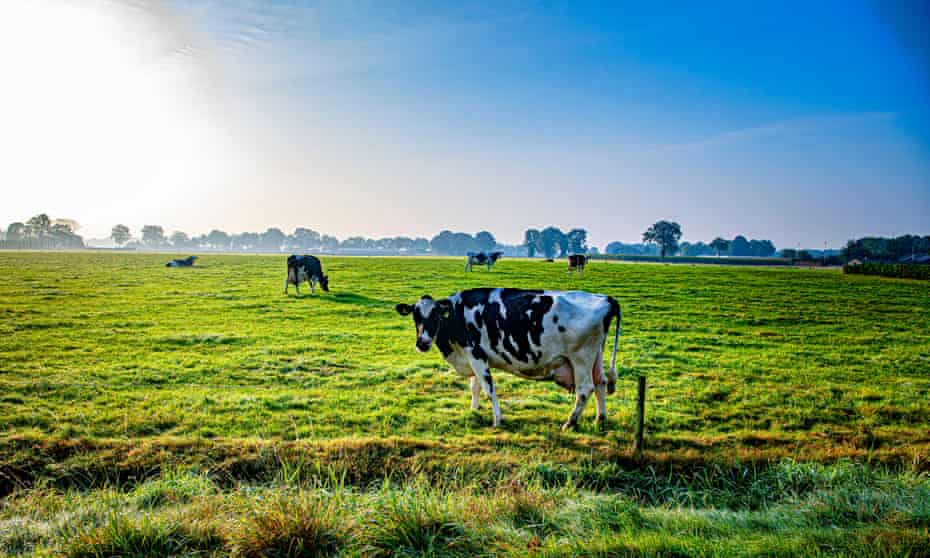
Cows are one of the biggest producers of methane, but also have huge economic and cultural value in many countries.Photograph: Robin Utrecht/Rex/Shutterstock
Sat 16 Oct 2021 03.00 EDT
While global climate efforts have tended to focus on the fight against carbon dioxide, many other threats that attract less attention are just as dangerous to our planet.
Negotiations over these more granular issues take place away from the limelight. But the policies and agreements that emerge are some of the most vital steps in the fight against climate change.
Over the past few weeks, one of these issues our team has focused on has been methane reduction.Methane, one of the most prevalent greenhouse gases, has accounted for nearly a third of global heating since…


 As someone who used to love the spectacle and the theatre of firework displays, the whizzing, whooping, whistling, screams, pops, and thunderous bangs, the sparkling, light-blazing skies and the gunpowder smoke hanging heavy in the crisp frosty air, the past few years have been a journey of discovery leading to a 180 degree turnaround in my perspective. As with so many things in my life, getting used to saying, ‘I was wrong, I’ve changed my mind’ has been very humbling and necessary – I can thoroughly recommend it and it gets easier with practice. Now I hold the view that this archaic practice should be completely banned with immediate effect.

 7-by-2-foot gestation stalls like these are used to house pregnant female pigs at farms across the US.The gestation stalls — metal enclosures where the pig stands atop slatted, concrete floors — are typically 7 by 2 feet in size. Depending on how many times they’re bred, a female pig can spend the majority of her life in these small enclosures,
 Pork products are displayed on a shelf at a Safeway in San Francisco. The price for meat has surged over the past year due to supply chain issues, inflation and Covid.As to how this could play out, Malone sees a corollary in California’s 2015 implementation of a law that required hens to have more room in their enclosures.Rabobank researchers found that, in the months following the new law, egg prices more than doubled in California and nearly did the same elsewhere in the US before settling back down to normal in the following year, according to a research note on Prop. 12 published earlier this year.”If states decide to follow suit with California, we could actually see an increase in the price of pork across the board,” Malone said.
 A pig and piglets walk in a pen at a ranch in California.The California Department of Food and Agriculture
 Pasture-raised pork is displayed at Avedano’s Holly Park Market, a San Francisco-based butcher shop.When addressing an analyst question on Prop. 12





 We believe in the free flow of information