Friends of Animals claims the new rule imposes a person to express the message that they approve hunting and fishing in order to use the land, among other things.
Credit: CPW
COLORADO, USA — A group is suing Colorado Parks and Wildlife (CPW) over its requirement of a valid hunting or fishing license to access any State Wildlife Area or State Trust Land.
Friends of Animals (FoA) is a nonprofit international advocacy organization – with nearly 200,000 members and an office in Centennial – that advocates for the rights of animals and values compassionate conservationism, wildlife and habitat protection, court documents say.
Elanco Closes Bayer Animal Health Deal, Balancing Pets and Farm
FEATURED BY
“(FOA) members oppose associating with or conveying messages in support of consumptive wildlife use, such as hunting…
James Raffan is a geographer, international speaker and the author of numerous books, including the forthcoming Ice Walker: A Polar Bear’s Journey Through the Fragile Arctic. He is an international fellow of the Explorers Club, a past chair of the Arctic Institute of North America, and a fellow and past governor of the Royal Canadian Geographical Society, service for which he was awarded the Queen’s Diamond Jubilee Medal.
In 2020, a massive controversy today is often a blip tomorrow. But in 2006, 27 seconds of animation in Saint Al of Gore’s Oscar-winning film about climate change, An Inconvenient Truth, was enough to be an enduring fit of pique.
It showed a polar bear swimming around in a warming ocean, struggling to get to an ever-shrinking ice floe. That clip spawned its own cottage industry of…
Explorer’s before-and-after photos show glaciers melting02:46
Call to Earth is a CNN initiative in partnership with Rolex. Cristian Donoso is a Rolex Associate Laureate.
(CNN)Chilean explorer and photographer, Cristian Donoso, has spent over two decades traversing the wilds of Patagonia, Antarctica and the Arctic to capture images showing the impacts of climate change.
Donoso’s exploration career began in 1996 in the rugged mountains, towering glaciers and windswept fjords of Patagonia, where the challenge to survive gave him a profound love of the landscape.
“When you are on an expedition you must connect strongly with nature, open your senses to the fullest, because your survival depends on it,” he says. “And in that survival…
Chinese Ambassador to the U.S. Cui Tiankai delivers a speech during the 40th anniversary of China-U.S. student exchange in Washington on Nov. 21, 2019.Xinhua / Liu Jie via Getty Images file
By Dan De Luce
WASHINGTON — Beijing does not want to see a Cold War break out between China and the U.S. and both countries need to work to repair relations that are under “unprecedented” strain, Beijing’s envoy to Washington said on Tuesday.
“I don’t think a new Cold War would serve anybody’s interest,” said Cui Tiankai, a veteran diplomat who serves as China’s ambassador to the U.S., at the Aspen Security Forum.
“I don’t know why people like the term Cold War so much,” Cui told Andrea Mitchell of…
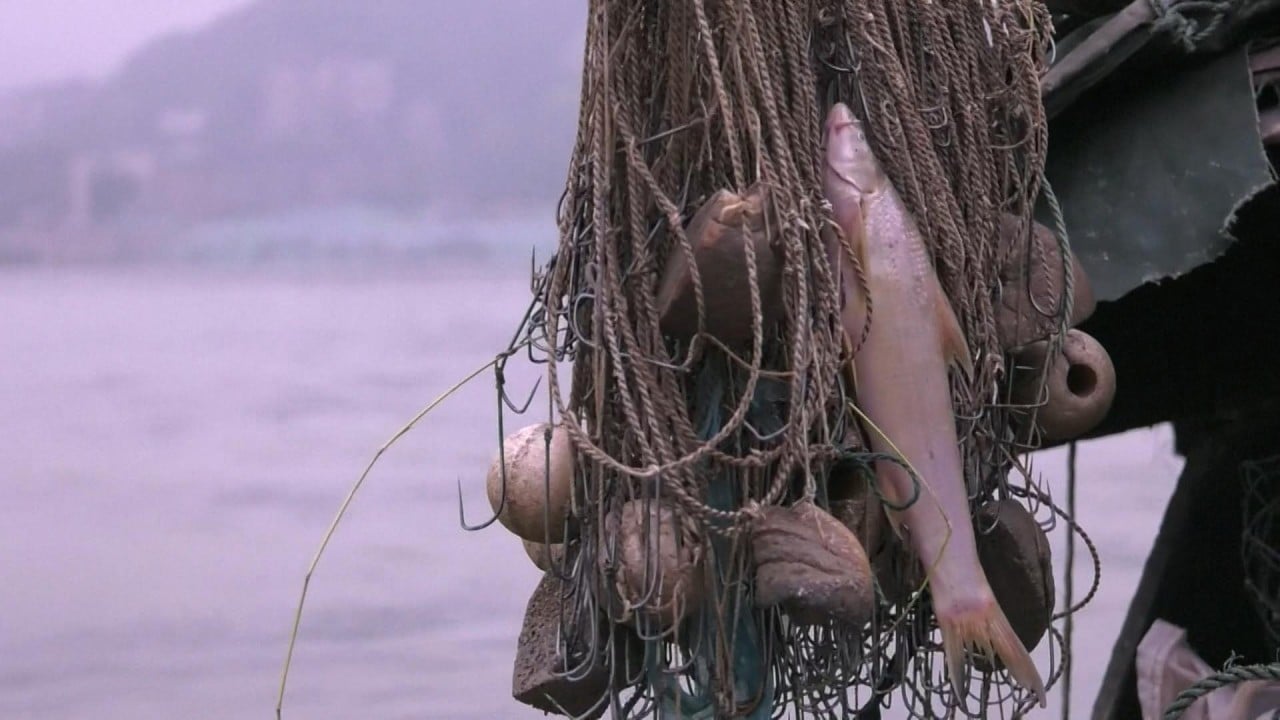
Chinese fishing vessels have been involved in several confrontations in other countries’ waters. Photo: XinhuaChina has said its fishing fleet, the world’s biggest, has been banned from catching squid in parts of the Atlantic and Pacific oceans for three months to help populations recover. It comes as environmental groups and some nations say the country’s fleet is threatening to wipe out some fish populations.
The moratorium, effective from July, bans all Chinese fishing boats from operating in the designated areas, which are spawning grounds for squid – the main catch of the country’s vessels in international waters, according to the Ministry of Agriculture and Rural Affairs.
“The first fishing ban in international waters … shows that China is willingly and proactively collaborating with relevant coastal countries and international organisations in setting up recommendations and measures to protect the marine resources in international seas,” said Liu Yadan, the deputy secretary of the China Agricultural Association for International Exchange.
The ban comes as China faces a backlash over its fishing fleets, most recently for hundreds of vessels that converged around marine sanctuaries off Ecuador and the Galapagos Islands. Ecuador said it registered a complaint about the fleet and informed China’s authorities that Ecuador would defend its maritime rights.
China’s bans on fishing in waters off South America. Map: SCMP
On Sunday, US Secretary of State Mike Pompeo issued a statement that noted the vessels near the Galapagos, and criticised Chinese fishing fleets for violating sovereign rights of coastal states and damaging ecosystems.
“Given this unfortunate record of illegal, unreported and unregulated fishing, rule-breaking and wilful environmental degradation, it is more important than ever that the international community stands together for the rule of law and insists on better environmental stewardship from Beijing,” Pompeo said in the statement.SCMP GLOBAL IMPACT NEWSLETTERUncover the most important stories from China that affect the worldSIGN UPBy registering, you agree to our T&C and Privacy Policy
China reels in as much as 70 per cent of the global squid catch. The country has over 600 squid vessels, which hauled in more than 520,000 tonnes in 2018, according to statistics from China’s Academy of Ocean.
01:41
Argentine coast guard opens fire on Chinese fishing boat
Argentine coast guard opens fire on Chinese fishing boatAreas covered by the moratorium are the two most important international squid fishing grounds for China’s fleet. The one in the South Atlantic near Argentina has almost 200 Chinese vessels operating there, while the banned zone in the Pacific is near Ecuador, according to a report by China Newsweek magazine.
The agricultural ministry said all Chinese vessels had now left the South Atlantic area where the ban has been imposed. The majority shifted to the Pacific or other international waters, according to the report.
Body of Indonesian fisherman dumped overboard amid allegations of abuse on Chinese shipChina has also been trying to rein in illegal fishing. In its 13th five-year plan covering 2016 to 2020, language about illegal, unreported and unregulated (IUU) fishing was added to its new distant water fishing regulations for the first time.
The fisheries law that came into effect in March increased monitoring, control and surveillance, and stricter penalties for violations, including the creation of an IUU blacklist.
Tabitha Mallory, an affiliate professor with the University of Washington, said these could be seen as “positive first steps”.
“The Chinese government does not want to see its fishing fleet engage in activities that are harmful to other countries or to the environment. China cares about its reputation on this front, which is what is motivating the steps toward better management,” said Mallory, who researches China and global ocean governance.
01:52
Historic fishing community in Ghana demolished for new harbour project funded by China
Historic fishing community in Ghana demolished for new harbour project funded by China
In addition to criticism from Ecuador, Chinese vessels have also been in clashes with Argentine authorities.
The Chinese trawler Lu Yan Yuan Yu 010 was sunk by Argentine coastguards in 2016, but disputes involving Chinese vessels have continued in the region. Earlier this year, the Argentine navy reported two Chinese vessels for illegal fishing in the country’s exclusive economic zone after pursuing the ships, according to digital magazine Dialogo.
Pan Wenjing, forest and oceans manager for Greenpeace East Asia, said incidents in Argentina’s waters could be one of the reasons that Beijing pushed for a voluntary ban on squid fishing.
“The southwest Atlantic is a major fishing ground for squid and thousand of boats operate in that area every year, including some of the large trawlers from China, which from time to time would cross maritime borders and cause conflicts in the region,” Pan said.
“That is also one of the reasons why China announced regulations on squid fishing in the high seas.”
Although the fishing ban is a good step, more is needed to promote marine conservation, said Wang Songlin, the founder of Qingdao Marine Conservation Society.
“The fishing ban is not a cure-all,” Wang said. “If after the ban, operation resumes and the amount fished is greater than the capacity of the ecosystem, then the conservation effects from the several months of the fishing moratorium would be cancelled out by the overfishing.”
Other measures were needed, he said, such as reducing the total number of fishing vessels, banning trawler nets that scoop up all surrounding marine life instead of just target species, and setting up marine protection zones.
01:57
China imposes a 10-year fishing ban for Yangtze River to protect marine biodiversity
China imposes a 10-year fishing ban for Yangtze River to protect marine biodiversity
There are also humanitarian concerns relating to China’s fishing industry.
Conservation group Global Fishing Watch found that North Korean fishers have been displaced, as Chinese vessels operating in North Korean waters have hauled in massive amounts of squid, which was North Korea’s third largest export until it was blocked by US sanctions, imposed because of Pyongyang’s nuclear weapons programme.
A report by the group published in July, using analysis of tracking data and satellite imagery, estimated more than 900 China fishing vessels trawled for squid in the sea between North Korea and Russia in 2017, and over 700 in 2018.
These ships, which can include legally operated ships and illegal ones, were estimated to have hauled in 101,300 tonnes of squid worth US$275 million in 2017 and 62,800 tonnes of squid worth US$171 million in 2018. This was roughly equal to what Japan and South Korea combined would catch from all their surrounding seas, the report said.
Nothing like this had been seen before, according to Jaeyoon Park, senior data scientist at Global Fishing Watch. “It’s a really enormous group of vessels,” Park said.
“The presence of this foreign fleet also has severe consequences for North Korean small-scale fishermen, who can’t compete,” the report said. Those smaller vessels often went further out to sea and met tragedy, as seen in a phenomenon known as “ghost boats”.
Between 2014 and 2018, 505 North Korean “ghost boats” washed ashore on Japanese coasts, some of them containing human remains of fishers who had died from starvation as they were driven further afield to find fish, using boats not equipped for deepwater travel, according to the report.
“It’s not simply about conservation and protection of the environment,” Park said. “It represents a serious humanitarian problem.”Purchase the 120+ page China Internet Report 2020 Pro Edition, brought to you by SCMP Research, and enjoy a 30% discount (original price US$400). The report includes deep-dive analysis, trends, and case studies on the 10 most important internet sectors. Now in its 3rd year, this go-to source for understanding China tech also comes with exclusive access to 6+ webinars with C-level executives, including Charles Li, CEO of HKEX, James Peng, CEO/founder of Pony.ai, and senior executives from Alibaba, Huawei, Kuaishou, Pinduoduo, and more. Offer valid until 31 August 2020. To purchase, please click here.
This week, the Assembly Committee on Water, Parks, and Wildlife is due to have a hearing over a bill that would effectively end wildlife trafficking into California.
A trophy hunt, wild animal importation ban
Senate Bill 1175, authored by Senator Henry Stern (D-Canoga Park), would require the California Department of Fish and Wildlife (DFW) to create a list of wild animals that would not be permitted to be imported or transported within the the state. The DFW would also be able to stop transportation of any animal that could be carrying a disease or illness to protect Californian citizens, wildlife, and agriculture and would only allow transport to continue after rigorous testing.
Strangers are just friends you haven’t met yet – and nobody embodies this philosophy better than a dog. Our pets are incredibly amiable, and they mix well with others. You can put a dog into any situation, and they will come out with a new BFF.
The staff working for the Colorado Parks and Wildlife are often subject to nature scenes playing out all around them. But there was one in particular that really touched their hearts as it has been going on for several years. Every year, there is a herd of elk that passes through. One of the park’s officer’s dog, Trygge, has become friends with one of the elk.
It has turned into a friendship that results in a friendly game of tag every year that they see one another. The staff have been quite taken by the way that the German Shepherd and the giant bull elk interact with one another. They’ve never shown aggression towards one another, just a mutual respect and a joy at seeing one another.
Zimbabwe loaded 32 baby elephants onto a China-bound plane in October 2019. It had sold off the young animals, who it had separated from their wild families a year earlier, to an unnatural and torturous life in zoos. Zimbabwe authorities went ahead with the baby elephants’ export in the face of legal action. It also did so just before the global wildlife watchdog, the Convention on International Trade in Endangered Species of Wild Fauna and Flora (CITES), implemented a landmark rule change that would have made the export impossible.
Zimbabwe, however, isn’t guaranteed to get off scot-free with its much criticised move. A recent CITES report accuses the country of not only contravening the “will” of CITES members, but the “good faith” and “spirit” of the Convention overall. It also asserts that, regardless of the landmark rule change that was about to come into force, Zimbabwe contravened prior provisions of CITES.
The report’s authors call on CITES’ Animals Committee to take “appropriate steps” after considering its findings. Such a step would be removing the elephants from the distressing situation they now find themselves in, and giving them the chance to live out the rest of their lives in relative comfort.
Rule change
Zimbabwe and a number of other nations that African elephants call home have been easily able to sell them on to non-African countries for display in zoos until very recently. But parties to CITES – which are nation states – voted to change the rules at the 2019 conference. The definition of what constitutes an ‘appropriate and acceptable destination’ for export of elephants was limited to “in situ” conservation programmes. Simply put, the change means that African elephants should stay in Africa.
The rule change came into force on 26 November 2019, 90 days after the vote. This grace period between parties approving resolutions and them coming into force is to allow countries time to adjust their national laws and policies to fit the incoming CITES’ requirements.
But Zimbabwe used the time to export the young elephants it had captured in 2018 to China. At the time, elephant biologist and wildlife director at Humane Society International/Africa, Audrey Delsink, said:
We are left feeling outraged and heartbroken at this news today that the Zimbabwe authorities have shipped these poor baby elephants out of the country. Zimbabwe is showing total disregard for the spirit of the CITES ruling as well as ignoring local and global criticism. Condemning these elephants to a life of captivity in Chinese zoos is a tragedy.
Inhumane
Now two parties to CITES, Burkina Faso and Niger, have submitted a report to the authority’s Animals Committee. The report looks at exports of live elephants from African nations since 2010 in the context of CITES’ various rules, such as countries having to find ‘appropriate and acceptable destinations’ for them.
Zimbabwe has outstrippped all others in sheer numbers of exports. The report found it has exported 144 young elephants, mostly to China, since 2010. Namibia came second, with 24 elephants. The report spotlights Zimbabwe’s 2019 export in great detail. The report states that, at the time of writing in May, the elephants were in Longemont Animal Park close to Hangzhou. It continues:
Undercover video footage shows the elephants separated from each other in barren, indoor cells. Many appear to be very young (2-3 years). Recent photographic evidence from China indicates that the elephants have undergone inhumane training by mahouts, presumably to prepare them for entertainment use. There are unconfirmed reports that some of the elephants are going to Yongyuan Biotech Company. The reason remains unknown.
Against the rules, by any measure
The report further assesses whether the export complied with CITES provisions. It notes that Zimbabwe can only export an elephant to ‘appropriate and acceptable destinations’ that are “suitably equipped to house and care for it”, due to a resolution that came into force in 2000. Parties have added further provisions over time. As a result, the scientific authorities for both the importing and exporting country also have to be “satisfied” that the export ‘promotes in situ conservation’, i.e. conservation in the place the elephant comes from. Furthermore, the 2019 landmark rule change, as already mentioned, limits what constitutes an ‘appropriate and acceptable destination’ to those that are ‘in situ’.
Burkina Faso and Niger argue, however, that, by any measure, Zimbabwe’s hurried export of the young elephants didn’t abide by CITES’ provisions. The report says:
there is no publicly available evidence suggesting that the safari park in Shanghai which received the 32 young elephants from Zimbabwe in October 2019 –or any of the likely further destinations –can be considered as “suitably equipped to house and care for” live elephants, and thus meet the recommendations in the non-binding guidance, or that this particular import would promote in situ conservation. …
By any reasonable metric, the conditions of the transfer and housing are demonstrably inhumane.
Highlighting the 2019 rule change and the fact that, as part of that change, parties explicitly recognised elephants are “highly social animals” and removing them from their social groups has “detrimental effects” on their “physical and social well-being”, the report said the export:
not only contravened the will of the CITES Parties, it undermined the good faith and the spirit of the Convention.
Mighty and toothless
In short, the CITES report by two of its member countries is scathing about Zimbabwe’s actions. It asserts that, no matter how you look at it, or what resolution you test it by, the country’s choice to fly out the young elephants was flawed.
The parties recommend that the Animals Committee considers the report’s findings on the Zimbabwe 2019 export, in relation to the ‘appropriate and acceptable destinations’ condition, and takes “appropriate steps”. The report doesn’t clarify what those steps should be.
CITES essentially plays god as an authority. It’s immensely powerful, deciding the fate of countless earthly beings, by controlling the trade in them – alive and dead. But it’s fairly ineffective when it comes to cracking down on wildlife trade offenders. The illegal trade in wildlife, for example, is booming (as is the legal trade). And what action CITES is empowered to take against Zimbabwe, and indeed China, for their apparent transgressions is unclear. South African journalist Adam Cruise told The Canary:
The appropriate steps would be haul Zimbabwe over the coals but just how CITES does that is the question. They are pretty toothless in that regard as they cannot really ‘do’ anything after the fact but simply an acknowledgement that Zimbabwe and by extension CITES were wrong and this sort of export will never happen again may be enough. Sadly, the elephants cant go back in the wild, that’s for sure.
Amid a global pandemic likely to have been caused by the wildlife trade, and a biodiversity crisis, the global wildlife watchdog increasingly appears unfit for purpose. A functional authority would reverse this trade and force the return of these young elephants to Africa, for rehabilitation and care in a wildlife sanctuary. If CITES is unable, or unwilling, to do that then really, what is the point of it?