Seattle’s Chief of Police called on Seattle’s City Council to stand up against “mob rule” after “aggressive” activists reportedly targeted her home over the weekend, which scared her neighbors.
“I wanted to update you on recent events, particularly those that occurred late last night,” Best wrote in a letter addressed to City Council President Lorena González and Public Safety Chair Lisa Herbold. “A residence of mine in Snohomish County was targeted by a large group of aggressive protestors late last night. My neighbors were concerned by such a large group, but they were successful in ensuring the crowd was not able to trespass or engage in other illegal behavior in the area, despite repeated attempts to do so. Currently, the local sheriff (not SPD resources) is monitoring the situation.”
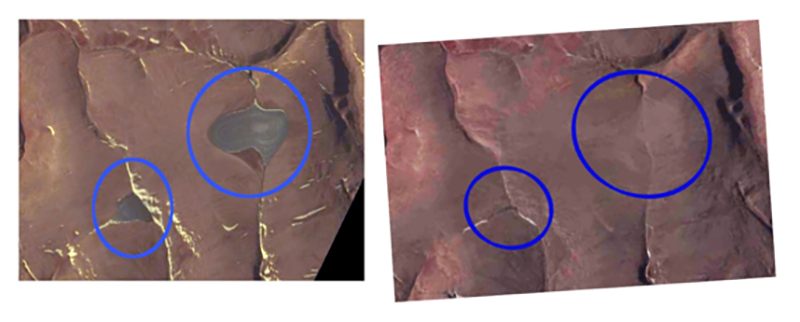
Scientists don’t always like being right: take the team that warned in a paper published in 2017 that the St. Patrick Bay ice caps in Canada would soon disappear, for example. The latest NASA satellite imagery shows that their prediction has sadly come true, and even faster than they expected.
Scientists from the National Snow and Ice Data Centre (NSIDC) at the University of Colorado Boulder initially predicted the disappearance of the St. Patrick Bay ice caps would take place over five years, but it’s actually only taken three.
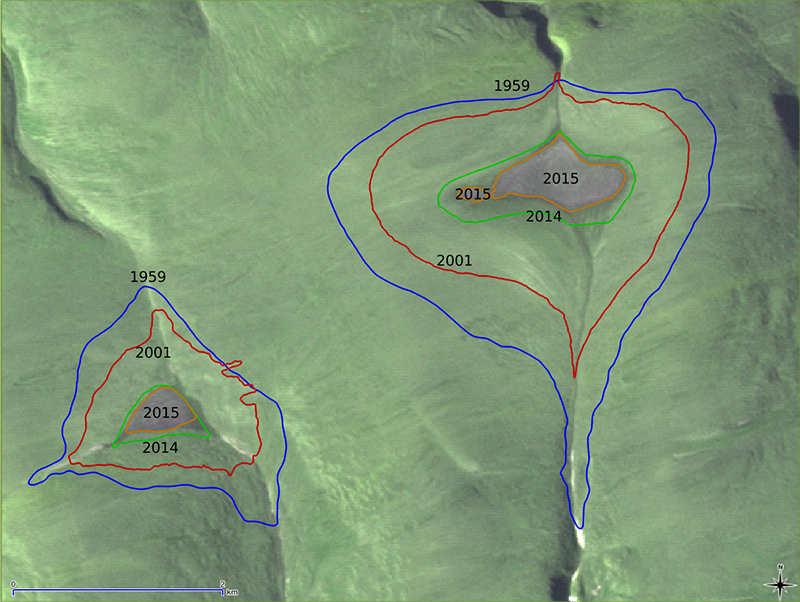
The frozen sheets, probably in place for several centuries, measured more than 10 square kilometres (3.86 square miles) combined at the end of the 1950s, and have now shrunk down to nothing. It’s a sign of the climate change that’s gaining momentum all around the world, and showing no signs of stopping.
“When I first visited those ice caps, they seemed like such a permanent fixture of the landscape,” says geographer and NSIDC director Mark Serreze. “To watch them die in less than 40 years just blows me away.”
Ice cover in 2015 (left) and 2020 (right). (Bruce Raup/NSIDC)
Serreze was a young graduate student when he first set foot on the ice caps in 1982, and he was the lead author of the 2017 paper alerting the world to their drastic demise. By 2015, the ice caps were only five percent the size of what they were in 1959.
The two ice caps that have vanished are part of a group on the Hazen Plateau, in the north of Ellesmere Island in Nunavut, way up in the Arctic Archipelago – one of the most northerly points of Canada.
Two ice caps often linked with the St. Patrick Bay pair, the Murray and Simmons ice caps, are faring better due to their higher elevation – in 2015 their ice cover was at 39 percent and 25 percent respectively, compared with the 1959 figure. However, scientists think they too could soon be gone.
When Serreze and his colleagues first started surveying the Hazen Plateau ice at the start of the 1980s, scientific consensus on global warming was still forming, and some researchers had suggested the planet was actually in a period of global cooling. The studies started back then were partly an attempt to find out one way or the other.
Ice cover tracked over time. (NSIDC)
Now there’s no doubt what’s happening. While the St. Patrick Bay ice caps may not be two of the most famous or significant points of geological interest in the world, they represent a small microcosm that reflects what’s happening to our planet as a whole.
They’re also a reminder that while scientists aren’t infallible, they very often do know what they’re talking about – and that when we get warnings about what’s coming our way in the future, we’d do well to take heed and to take action.
“We’ve long known that as climate change takes hold, the effects would be especially pronounced in the Arctic,” says Serreze.
“But the death of those two little caps that I once knew so well has made climate change very personal. All that’s left are some photographs and a lot of memories.”
The original 2017 research was first published in The Cryosphere.
A new report published by TRAFFIC found that the illegal pangolin trade in the Philippines increased nine-fold in the last two years, with the authorities confiscating an estimated 6,894 pangolins between 2018 and 2019. Data included seizures of pangolin scales and retrievals of live pangolins that escaped from wildlife traffickers. TRAFFIC researchers also conducted ad hoc surveys around Manila to discover pangolin meat being served at restaurants and shops selling pills made from pangolin derivatives. It’s estimated that Philippine pangolins, a critically endangered species of the pangolin, have declined up to 95% in the last 40 years.
A single, wild pangolin wandered across a golf course in the Philippine’s Cavite province in March 2018. When the golf club staff spotted the scaly anteater, which was hundreds of miles from its natural habitat on the island of Palawan, they contacted the authorities to come retrieve it. The pangolin was eventually put into a rehabilitation program in an attempt to release it back into the wild; in the end, however, it didn’t make it.
While it’s not entirely clear how this Philippine pangolin (Manis culionensis) wound up on a golf course, the most likely explanation is that it had escaped from the wildlife trade. In the Philippines, pangolins are a protected species, and anyone caught trading them faces hefty fines and prison sentences of up to 12 years. But this hasn’t stopped traders from stealing pangolins from the Palawan region and transporting them to various towns and cities to sell them for meat consumption or medicinal use. A Philippine pangolin. Image by TRAFFIC.
According to a new report released today by TRAFFIC, an NGO that monitors the international trade of wild animals and plants, an estimated 740 Philippine pangolins were seized between 2000 and 2017. But in the next two years, the trade increased nine-fold — between 2018 and 2019, authorities intercepted an estimated 6,894 pangolins, representing 90% of all pangolins caught up in the illegal trade in the Philippines over the last two decades.
But these estimates are probably quite conservative, according to Richard Thomas, global communications coordinator at TRAFFIC.
“[C]ertainly the detected seizures are just the tip of the iceberg,” Thomas told Mongabay. “How many more seizures are ‘under water’ is anyone’s guess but I suspect the true figure would be jaw-dropping.”
The figures include a record-breaking bust in September 2019. Following a raid in Puerto Princesa City, Palawan, authorities confiscated 1154 kilograms (2,545 pounds) of pangolin scales and other wildlife parts from a two-story home there. A Chinese national, who was already known to Palawan authorities for a previous attempt to smuggle wildlife, was implicated in the seizure. He may have been preparing to export the pangolin scales to China, according to TRAFFIC. Confiscated pangolin scales in Cagayan de Oro City in 2017, reportedly heading to Guangdong, China. Image by TRAFFIC.
In the last two years, there were also 18 “retrieval incidents” of live pangolins found roaming the streets of towns near Manila or nearby provinces, including the pangolin spotted on the golf course, the report states.
TRAFFIC researchers also conducted ad hoc surveys in the Manila metropolitan area in 2018 and 2019, and discovered pangolin meat being served in at least five restaurants, although it was not advertised on the menu and only available on a pre-order basis. They also found three shops in Manila selling pills that were manufactured in China using pangolin derivatives.
“While the rise in pangolin seizures speaks to successful enforcement action, it is also deeply alarming news for this rare animal,” Elizabeth John, senior communications officer at TRAFFIC in Southeast Asia, said in a statement. Imported “Armadillo antipyretic pills” reportedly containing pangolin derivatives. Image by TRAFFIC.
The Philippine pangolin is one of the most heavily poached and trafficked of the eight pangolin species, and is currently listed as critically endangered on the IUCN Red List. Due to the shy, elusive nature of the pangolin, its population status is difficult to assess, but it’s believed that the subspecies has declined up to 95% over the past 40 years.
While comprehensive data isn’t yet available for 2020, the trade doesn’t appear to be slowing down. In January, authorities seized 20 Philippine pangolins from a local wildlife trafficker in El Nido, Palawan, and released them back into the wild. There have also been three more retrieval incidents of smuggled pangolins since the start of the year.
Historically, law enforcement officials haven’t penalized convicted traffickers to the full extent of the law, and this may be one element that’s exacerbating the illegal trade, according to TRAFFIC. Poached pangolins in a trafficker’s facility in El Nido, Palawan. Image by TRAFFIC
“I think you’d have to say sentences simply haven’t been in the realm of acting as a sufficient deterrent,” Thomas said. “Take the example of the first successful conviction of traffickers outside Palawan — on paper they received a three month prison sentence and USD1,970 fine for illegally transporting 10 live pangolins but all three were released from custody after paying the fine and being granted probation.”
The Department of Environment and Natural Resources (DENR) in the Philippines recently acknowledged that the current penalties were not helping put a stop to wildlife crime in the Philippines, and officials have suggested that any convicted traffickers be given a mandatory minimum jail term of six years, and not be eligible for probation.
“With pressure continuing to mount, the only hope for the Philippine Pangolin is by stamping out the illegal trade through thorough investigations into poaching and trafficking cases, more prosecutions and solid convictions of traffickers,” John said.
Despite widespread public opposition, the Utah Division of Wildlife Resources (DWR) has proposed annual increases to the number of cougars that trophy hunters can kill in that state. Now, DWR is looking not merely to increase hunting quotas, but to open up the majority of Utah’s hunting units to unlimited trophy hunting of cougars and to double the number of cougars each trophy hunter can kill. Photo by Alamy
For the better part of a decade, the Utah Division of Wildlife Resources (DWR) has proposed annual increases to the number of cougars that trophy hunters can kill in that state, despite widespread public opposition. Now, DWR is looking not merely to increase hunting quotas, but to open up the majority of Utah’s hunting units to unlimited trophy hunting of cougars (with a year-round season in most cases) and to double…
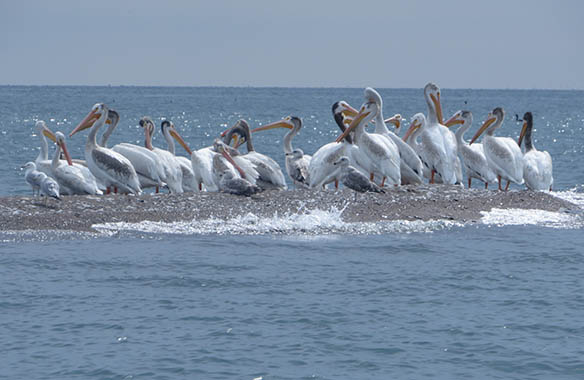
The American white pelican is so called to distinguish it from the distinctively different Eurasian white pelican, but it nests in Canada’s three prairie provinces and the westernmost part of Ontario.
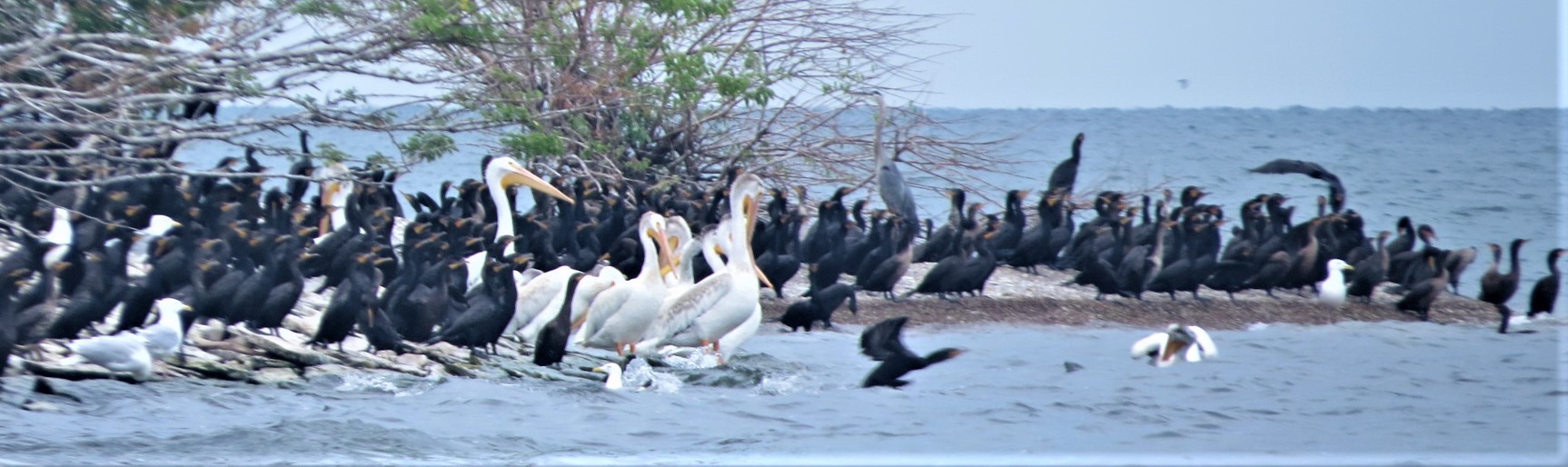
You may recall from prior blogs that we have been trying to prevent the shooting of thousands of nesting double-crested cormorants on Middle Island by Parks Canada, a federal agency. Middle Island is the southernmost land belonging to Canada, a little over 100 yards from the U.S. border in the middle of the southwest end of Lake Erie. It is 46 acres, uninhabited, and part of Point Pelee National Park, the main part of which is on the mainland, over 20 miles away. The island is closed to visitors all spring and summer, ostensibly to protect the colonially nesting birds there – double-crested cormorants, great blue herons, black-crowned night-herons, and great egrets, plus herring and ring-billed gulls and Canada geese.
Each spring since 2008, except for this year, when boating was halted to reduce infection by COVID-19, thousands of these birds have been shot by Parks Canada staff (and more recently, shooters from First Nations) based on claims that the killing must take place in order to protect “at risk” vegetation on the ground. Even though the plant species of are common in the U.S., which starts about 100 yards to the south of the island, Ontario lists the plants as “threatened” under the provincial Endangered Species Act.
The cormorants change the vegetation dynamics mainly by accumulation of their excrement. Vegetation that can withstand the high nitrogen load from the guano survives while other vegetation does not. As our colleague James Kamstra points out in his evaluation of the Middle Island vegetation, island climates are mercurial due to harsher conditions and plant species thrive and then disappear with the changing conditions.
I have gone with my Canadian colleagues each spring to monitor the cull, and I have been saddened to see the huge degradation of the colony, with ever fewer of various species, not just cormorants. There is a ghost forest emptied of birds where once there was so much life, vibrancy, and activity.
In these last few years, we have also seen Parks Canada activity prevent American white pelicans from using the island. That the pelicans were there at all was a surprise as they were previously designated as a “rare vagrant” in the region, with their nearest nesting site in the northwest corner of the province, roughly 700 miles away. Yet, there they were, in the nesting season.
Because Parks Canada has not allowed them on Middle Island (ironically called a bird sanctuary), the pelicans have tried other islands nearby, first on a low-lying island where high waters washed the nests away, but lately with success on Big Chicken Island, really just a small, treeless sandbar, and Middle Sister Island, about nine acres, privately owned by Americans, uninhabited, and, most importantly, treed. The latter nesting proved that the pelicans, which typically nest in the company of cormorants on treeless islands, can nest on habitat similar to Middle Island, but for Parks Canada’s gunmen.
Because of the pandemic and a ban on boating during the time of the cull, Parks Canada’s annual cormorant slaughter did not happen. This spring, the cormorants, pelicans, and all wildlife on the island, were, for the first time in a dozen years, left in peace. The island is still out of bounds to Canadian taxpayers, until September, but we decided to investigate the status of the colony offshore from Middle Island and, on July 23, Liz White, Vicki Van Linden, and I travelled more than 20 miles across the water to see if we could find young pelicans on Middle Island.
Yes! We were pleasantly surprised and elated. We saw lots of them, both adults and fully grown youngsters, in company with cormorants on the shore and on a nearby exposed sandbar. It was not proof that they nested on the island itself, but indicative. We also travelled to two other islands in the area, Hen and East Sister. As we neared Hen Island, we observed white pelicans on the dock. Hen Island is owned by Americans, who use it as the base for the Quinnebog Fishing Club, complete with a hotel like central building, lawn, retro-decorated club house, and docks and has been unused due to the pandemic. On East Sister Island, we saw flocks reaching 50 birds in number. Again, because of the pandemic, the island had been undisturbed.
Why do we care? Because the pelican, no less than the plants, is a threatened species under provincial legislation, making it illegal to disturb their nesting sites. They and cormorants habitually nest together. Parks Canada can’t cull cormorants without disturbing the nesting pelicans. Aside from the gun shots, which cause massive number of birds to flee the island, their very presence would negatively impact the pelicans. Parks Canada cannot have it both ways. They cannot argue to necessity of protecting “at risk” vegetation while not protecting “at risk” pelicans.
Drawing by Barry Kent MacKay.
Less than a week later, the Ontario government did something no other government on the continent has done, and turned the virtually inedible cormorant into a “game bird” whose meat can be wasted. An open season starts this September 15, with a bag limit of 15 birds per day. Originally Ontario wanted the killing season to go most of the year, so we’ve won a major concession, as I will discuss in a future blog.
Keep Wildlife in the Wild, Barry
Barry Kent MacKay Director of Canadian and Special Programs
Animal campaigners say the coronavirus pandemic is a “wake-up call” about how wild animals are treated across the world.
It’s thought the virus, known as Covid-19, might have originally come from animals at a wildlife market in Wuhan, China.
The pandemic has highlighted some of the problems around the way people treat wild animals and the impact that this can then have on humans.
So how does a disease pass from animals to humans, and what can be done to help stop it happening again?
What is a zoonotic disease?
Covid-19 is what scientists call a zoonotic disease – that means it starts off in animals and then humans catch it.
Diseases like this have been around forever – you may have heard of others like Swine Flu, Bird Flu, Ebola and Malaria.
Because of how quickly Covid-19 has spread around the world, we’ve heard much more about it and the problems it can cause for people.https://emp.bbc.co.uk/emp/SMPj/2.32.16/iframe.htmlWATCH: World Animal Protection’s Sonul Badiani-Hamment explains what the global wildlife trade isHow does a disease pass from animals to humans?
Animals can carry bacteria and viruses that cause disease, and these may be passed on to – or even jump to – other animal species, including humans. The other species’ body tries to fight the bacteria and virus but, if it can’t, it can become ill.
When wild animals are in unnatural conditions, they can become stressed or weak which makes it more likely that they will pass on the bacteria or viruses they have.
It also makes the wild animal more likely to catch them from others.
If a place isn’t clean enough for the animal, or if they’re near species that they wouldn’t normally meet in the wild, disease is more likely to spread as well.Why does a disease pass from wild animals to humans?
It can happen when wild animals come into contact with humans.
This occurs more often when their habitat is reduced, for example through deforestation and the impacts of climate change.
It means wild animals don’t always have the most suitable or right types of places to live, and some might come into cities instead to find food. This then means they can have much closer contact with humans than they naturally would.GETTY IMAGESIf tropical forests like this get smaller then animals, like these birds, won’t have a place to live
Most wild animals live in the wild where they can find their own food, make their own home and live in the conditions that their bodies were designed for.
However around the world, millions of wild animals such as parrots, iguanas, lizards, tortoises, pangolins and chimpanzees are taken from the wild.
They’re then bought and sold for lots of different reasons, for example to be kept as pets, to be eaten, to provide entertainment, to be used in traditional medicines, or parts of their body, like their scales or nails, might be used for ornaments.https://emp.bbc.co.uk/emp/SMPj/2.32.16/iframe.htmlWATCH: Pangolins are often caught and sold for their scales
Can tech help protect global wildlife?What’s being done about it?GETTY IMAGESConservationists around the world work to get animals, like this chimpanzee, back to living in the wild
Conservationists around the world work really hard to make sure wild animals, and the places where they live, are protected – so that the animals can live their life as naturally as possible.
Following the first outbreak of Covid-19 the city of Wuhan, in China is banning the farming and eating of live wildlife. Thousands of wildlife farms raising animals such as porcupines, civets and turtles have been shut down.
But it’s a worldwide problem. Professor Cunningham from the Zoological Society of London (ZSL) told the BBC: “It’s easy to finger point, but it’s not just happening in China, it’s happening in many other countries and even in the western world. We like to have exotic pets and many of those are wild caught and we ought to be putting our own house in order too.”
But tackling the problem is tricky as there are many poor people in parts of the world who depend on the wildlife trade for their jobs.
Professor Cunningham added: “The people who are providing them, whether that’s farmed wild animals or animals from the wild, that’s an important source of income for them.”
Arkansas hunters who didn’t draw a public land permit for alligator hunting this year will have another chance to tag a gator through the new quota-hunt system on private land.by Lori Dunn Aug. 2 2020 @ 7:56pm
An alligator takes a break in the sun at Jungle Gardens on Avery Island, Louisiana. (Photo by Kate Stow)
Arkansas hunters who didn’t draw a public land permit for alligator hunting this year will have another chance to tag a gator through the new quota-hunt system on private land.
The drawing for Arkansas’ 2020-21 public land alligator season permits was held recently and 38 hunters have been notified of drawing their permit.
However, as a result of the new quota-hunt system, anyone with access to private land in the southern half of the state has an opportunity to go on an alligator hunt.
Daily Email Newsletters
Stay Connected And Informed With
The U.S. Fish and Wildlife Service has modified some of its plans to expand hunting and fishing on five federal refuges in Rhode Island after considering more than 1,600 comments and two petitions.
At Sachuest Point, in Middletown, the agency has dropped plans for any gun hunting and the size of a proposed hunting area — to be used now for only supervised archery hunts three to five days a year — has been reduced to exclude all areas near the town beaches, campground and the salt marsh.
“After hearing many comments, we thought we would pull back from 227 acres to 150 acres,” Karrie Schwaab, a spokeswoman for the service, said Monday.
Schwaab said it was never the service’s intention to open the Sachuest Point refuge up to general hunting but rather to offer supervised…
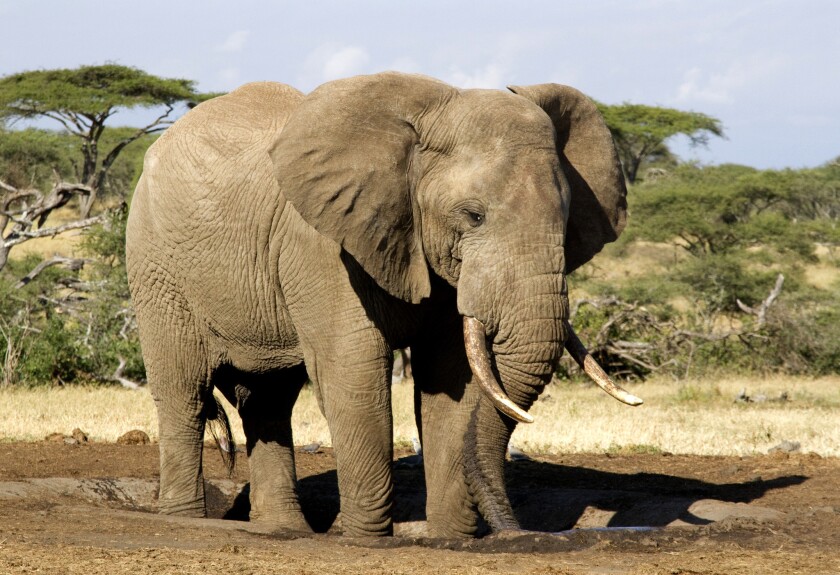
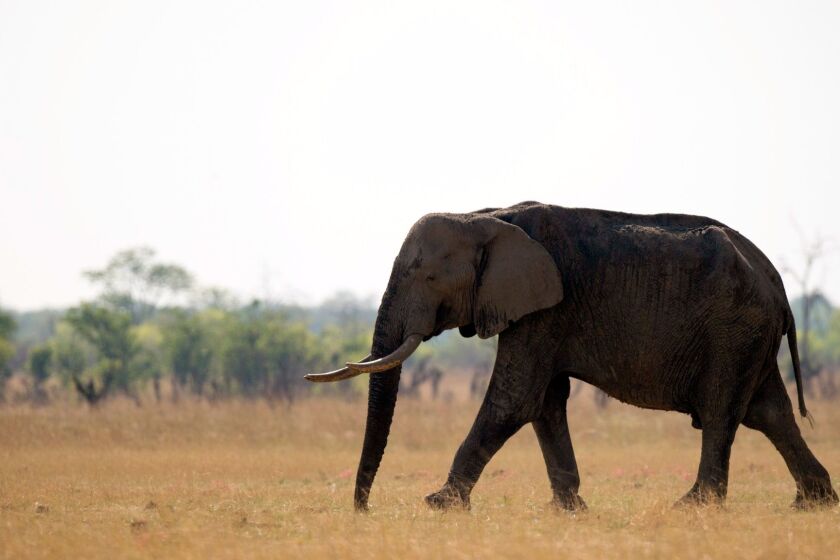
In mid-December, Aaron Raby shot and killed an elephant. Hours later, he had a piece of it for dinner, with a side of sliced tomato and avocado.
A self-described “blue-collar” Los Angeles crane operator, Raby paid more than $30,000 for the once-in-a-lifetime experience — traveling more than 10,000 miles to South Africa to shoot and kill the tusked pachyderm. He then paid roughly $10,000 to have its head preserved as a souvenir of his adventure.
Yet Raby may never receive his trophy — which is still in South Africa being prepared by a taxidermist — if California enacts new legislation, Senate Bill 1175.
The legislation, which has passed the state Senate and is expected to pass the Assembly on Tuesday, would prohibit the importation and possession of animal parts from a list of endangered and threatened African species, including elephants, lions and rhinos.
“It’s time to wake up and realize that we’re in the middle of a mass extinction event,” said Sen. Henry Stern (D-Canoga Park), who wrote and shepherded the bill through the Senate.
Similar legislation passed both the Assembly and Senate two years ago but was ultimately vetoed by then-Gov. Jerry Brown, who called the trophy ban “unenforceable.” Stern said circumstances have since changed, and is confident the current governor, Gavin Newsom, will sign this year’s bill.
For Raby, the consequences of his latest kill are just starting to unfold. After the hunt, he posted images of his trophy on Facebook, YouTube and AfricaHunting.com, a website for hunters.
People for the Ethical Treatment of Animals, an animal rights activist organization, independently obtained video of the elephant shooting, which it released Monday and plans to use in a late-session campaign to ensure passage of Stern’s legislation.
Raby said he has faced threats and online harassment before, such as when he posted an image of himself with a lion he had killed. But the PETA campaign is sure to bring him a new notoriety, and deepen the debate about trophy hunting.
“I don’t understand why this is anybody’s business but my own,” Raby said. “What I did is legal. I didn’t break a law. They’re going to place a ban because a bunch of … crybabies that don’t like hunting.”
California has become a focus of the trophy fight partly because the federal government has vacillated on banning such imports. This year, the Trump administration approved the import of a lion trophy from Tanzania, the first since lions began receiving protections in January 2016 as a threatened species.
Fearing the administration may approve more trophy imports, wildlife advocates are hoping California will provide a line of defense.
Some experts argue the practice provides funding for local communities, raises money for wildlife management and gives people who live near dangerous or destructive animals — such as lions and elephants — an incentive to conserve them instead of kill them.
Others say there is no evidence that trophy hunting provides these benefits, and, even if it did, they question whether killing and dismembering such creatures justifies those ends.
The scope of the imports is vast. In 2017 alone, more than 650,000 wildlife trophies were imported to the United States, including species considered internationally rare or threatened, according to a report from the Congressional Research Service.
Last winter, after years of diligently saving, Raby embarked on a two-week hunting expedition in South Africa, led by a pair of experienced safari guides.
A video of the hunt, which PETA shared with The Times, shows a startled elephant facing the hunter and his phalanx of guides and trackers. As the young male pachyderm looks on — his ears widening — the guides set up a tripod upon which Raby places his rifle.
Raby shoots, and the bullet hits the elephant in its head. The elephant crumbles to his knees. Over the next 2½ minutes, Raby shoots the elephant four more times — three more hitting the animal’s head. The footage shows the elephant breathing heavily, groaning, bleeding and struggling to get up.
Raby’s guides continue to encourage him to get a cleaner shot. They never offer or attempt to intercede to quickly end the animal’s suffering.
The video cuts off before the elephant dies, although later footage — which Raby posted on YouTube and his Facebook page — shows crews skinning and deboning the elephant.
Raby has killed hundreds of animals across North America, as well as in Europe, Africa and Russia. Photos of his forays can be viewed on his public Instagram page, including one that shows a dead wolverine and another in which he is hugging a dead leopard.
The elephant was the culmination of Raby’s African “Big Five” quest. He’d already killed a lion, rhinoceros, Cape buffalo and leopard.
Raby said he hunts not for the kill, but for the experience and adventure of the hunt — living outdoors, cooking around a campfire, tracking an animal and immersing himself in the wild.
He also notes that lions regularly kill agricultural and pastoral animals — and occasionally people — while elephants can destroy homes and crops.
“We pay a lot of money to hunt these animals,” Raby said. “If we didn’t hunt, that land would be converted into cattle ranches and there’d be poaching. They don’t want lions killing their cattle or elephants destroying their crops.”
Mike Axelrad, a trophy hunter from Texas, said hunting provides financial incentives that prevent poaching. He said animals are often poisoned if considered a nuisance — a painful and often prolonged death.
Craig Packer, a biology professor and director of the University of Minnesota’s lion research center, said there are examples of successful trophy-hunting conservation preserves in countries such as Namibia and Zimbabwe — in which the proceeds from international hunting expeditions have provided funding to conserve wildlife habitat and employ people from local communities.
Unfortunately, he said, in most places, these reserves don’t translate into the desired outcomes because the money spent by hunters — a lion hunt can range from $20,000 to $70,000 — doesn’t come close to the kind of money needed to conserve biodiversity and manage habitat. Or employ enough people to have a meaningful effect on a community.
In addition, corruption in many countries and regions often makes it impossible to know where the money is going, to whom, and how the hunts are regulated.
“Many of these hunting preserves are fly-by-night operations. Business owners swoop in, sell big takes, and leave. They aren’t in it for the long term,” he said.
Others dispute Packer’s examples of hunting’s benefits.
“The emperor has no clothes,” said Adrian Treves, a conservation biologist at the University of Wisconsin and director of the Carnivore Coexistence Laboratory.
Treves says there are no concrete data supporting the idea that hunting promotes biodiversity, habitat conservation or local employment and engagement. Proponents tend to repeatedly cite the few studies that bolster the argument for hunting, creating a body of research that boils down to “self-citation,” he said.
An even bigger issue, said Chelsea Batavia, a conservation biologist at Oregon State University, is ethics.
“We know these animal are intelligent, they have emotional capacity and they have complicated social lives,” she said. Even if proponents could demonstrate that trophy hunting benefits conservation, she added, “do the ends justify the means?”
The debate, she said, needs to be seen in the context of colonialism, in which European traditions were and still are imposed upon Africans. What is needed, she said, are alternative conservation measures that aren’t issued from the top or from outside, but supported and embraced by local communities.
PETA is requesting that officials from South Africa investigate Raby’s hunt and, in particular, the prolonged death of the elephant.Newsletter
Toward a more sustainable California
Get Boiling Point, our newsletter exploring climate change, energy and the environment, and become part of the conversation — and the solution.Enter Email AddressSIGN ME UP
You may occasionally receive promotional content from the Los Angeles Times.
In a letter to officials at the Balule preserve, Jared Goodman, PETA’s vice president and deputy general counsel, said the kill violated the preserve’s requirement that animals are provided with “ethical and humane” treatment and that its guides comply “with the highest moral and ethical standards in recognition of a reverence for life and good sportsmanship.”
As for Raby, he said he’d leave California if Stern’s legislation becomes law.
“We’re not all bloodthirsty, psycho machines that people make us out to be,” he said. “I promise you, I can read an animal better than someone who is against hunting. They say they like animals, but they don’t know anything about them.”
Other changes made in final hunting and fishing plan following public comments
Following vocal concern over plans to allow hunting at Sachuest Point National Wildlife Refuge, the Fish and Wildlife Service has announced a change to the plan for the Middletown refuge.
In releasing its final hunting and fishing plan for the National Wildlife Refuges in Rhode Island, Fish and Wildlife officials said the plan at Sachuest has been adapted so that no firearms will be allowed and there will be no general hunting season open to the public.
Under the current plan a short — three to five day — special mentored deer hunt, permitting only archery will be allowed. In addition, the hunting area has been reduced to exclude all areas near the town beaches, campground and the saltmarsh.
According to the Fish and Wildlife Service, the mentored hunt will not occur every year.


 Ice cover in 2015 (left) and 2020 (right). (Bruce Raup/NSIDC)
 Ice cover tracked over time. (NSIDC)

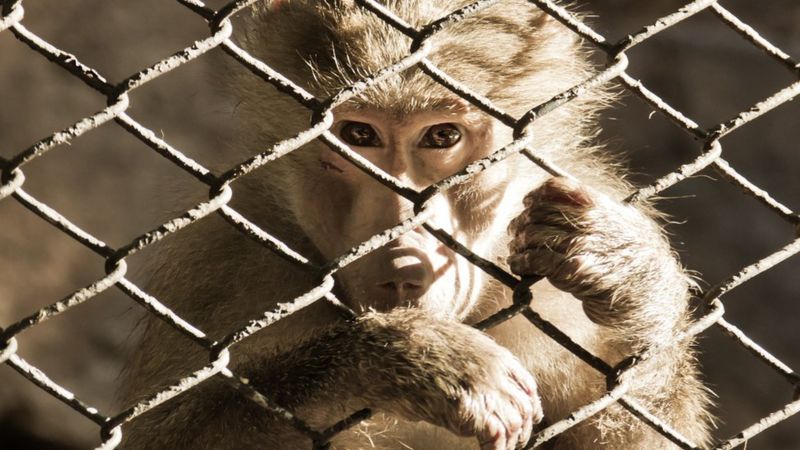 GETTY IMAGESAnimals like this baboon are caught in the wild and then sold
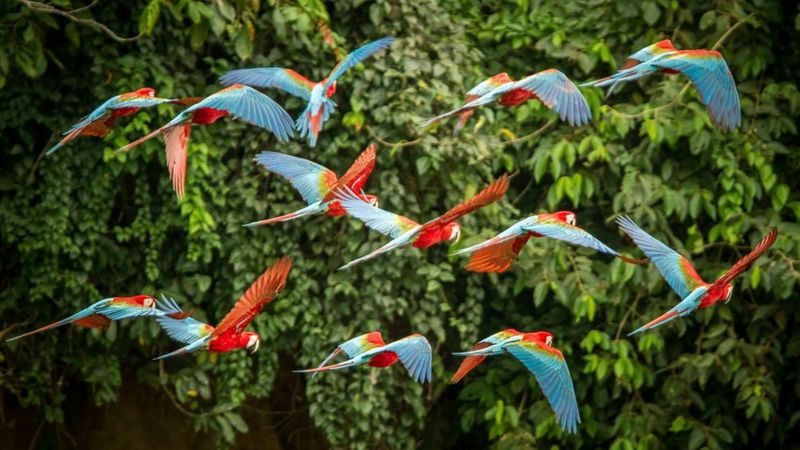 GETTY IMAGESIf tropical forests like this get smaller then animals, like these birds, won’t have a place to live
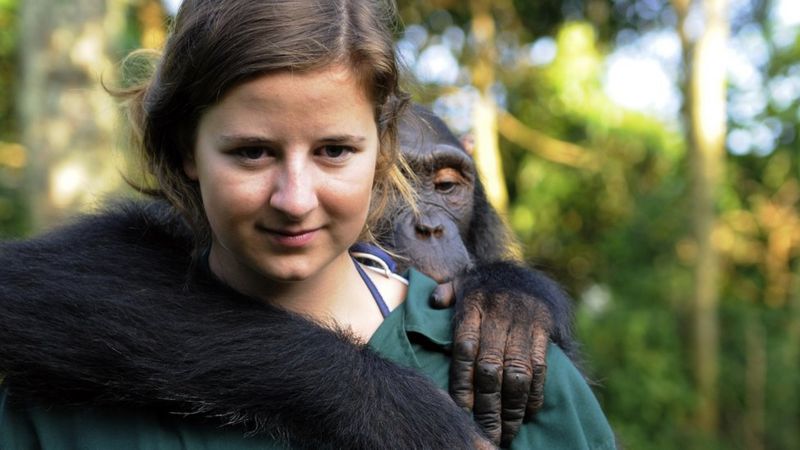 GETTY IMAGESConservationists around the world work to get animals, like this chimpanzee, back to living in the wild