Exposing the Big Game

Forget Hunters' Feeble Rationalizations and Trust Your Gut Feelings: Making Sport of Killing Is Not Healthy Human Behavior

Exposing the Big Game

Local hunting guide shares story of adapting to disability

Image

Exposing the Big Game's avatarCommittee to Abolish Sport Hunting Blog

Gabe Jerome, Jr.
The cover of Gabe Jerome, Jr.’s book Leaving the Edge.

May 1, 1998 would go down as a life-changing date for Dryden hunting guide Gabe Jerome, Jr. While accompanying a client on the first day of turkey hunting season, Jerome, Jr. was accidentally shot in the face with a shotgun by another hunter in close proximity, which ultimately resulted in him becoming permanently blind. Twenty-two years later, Jerome Jr., with the help of journalist Steve Lawrence, is ready to share his journey from that fateful day to how he acclimated to life thereafter in his book Leaving the Edge. Jerome, Jr. sat down with the Finger Lakes Community Newspapers to discuss his upcoming book.

Finger Lakes Community Newspapers: Why did you decide to write this book?

Gave Jerome, Jr.: Over the years, people have told me that I should probably write a book…

View original post 364 more words

High Temperatures Set Off Major Greenland Ice Melt—Again

Exposing the Big Game's avatarThe Extinction Chronicles

An Arctic heat wave ushered in the start of the melt season two weeks earlier than average

High Temperatures Set Off Major Greenland Ice Melt--Again
In this aerial view melting ice forms a lake on free-floating ice jammed into the Ilulissat Icefjord during unseasonably warm weather on July 30, 2019 near Ilulissat, Greenland. Credit: Sean Gallup Getty Images

A significant melt event is unfolding in Greenland this week.

With temperatures nearly 20 degrees Fahrenheit higher than usual in some areas, the southern part of the ice sheet is melting at its highest rate this season. Forecasts suggest that the melting on Greenland’s South Dome—one of the highest elevations on the ice sheet—may be the strongest for early June since 1950.

It worries experts that Greenland could be priming for another big melt season.

Early melting this spring, low snowpack in some areas and the potential for strong high-pressure weather systems…

View original post 706 more words

Trump’s Military Response to Protests Highlights His Authoritarianism

Exposing the Big Game's avatarThe Extinction Chronicles

The words “authoritarian regime” or “dictatorship” perhaps call to mind Adolf Hitler’s “Final Solution” or George Orwell’s fictional 1984. Yet some Americans may still have trouble seeing the authoritarian tactics on display today from President Donald Trump.

As the country erupts in anti-police-brutality protests, Trump’s response has been to double down on the use of state-sanctioned violence. On May 29, Twitter — concerned that one of the president’s tweets about shooting looters could incite violence — took the unprecedented step of hiding a tweet from the official White House account. By Saturday, Trump was threatening to use “the unlimited power of our Military and many arrests” to…

View original post 1,478 more words

Latest climate models show more intense droughts to come

Exposing the Big Game's avatarThe Extinction Chronicles

Latest climate models show more intense droughts to come
The Maranoa River south of Mitchell, Queensland, during the 2017 drought. Credit: Chris Fithall (Flickr Creative Commons CC BY 2.0)

An analysis of new climate model projections by Australian researchers from the ARC Centre of Excellence for Climate Extremes shows southwestern Australia and parts of southern Australia will see longer and more intense droughts due to a lack of rainfall caused by climate change.

But Australia is not alone. Across the globe several important agricultural and forested regions in the Amazon, Mediterranean and southern Africa can expect more frequent and intense rainfall droughts. While some regions like central Europe and the boreal forest zone are projected to get wetter and suffer fewer droughts, those droughts they do get are projected to be more intense when they occur.

The research published in Geophysical Research Letters examined rainfall-based drought…

View original post 418 more words

Rethinking meat — from farm to table

https://www.adirondackdailyenterprise.com/opinion/columns/field-and-forest-by-richard-gast/2020/06/rethinking-meat-from-farm-to-table/?fbclid=IwAR06tYGCKzST3OCU2s2nfzZ3mVFhJof3oPGUzDYGxu0fGOcY82ZOIYyWn74

Kate Mountain Farm is one of many Adirondack Harvest-associated local farms offering CSA meats and vegetables. Find local producers at adirondackharvest.com/browse. (Photo provided)

The food supply chain system is vulnerable. America’s meatpacking plants endure some of the highest rates of workplace injury of any U.S. job sector, and COVID-19 has introduced yet another occupational hazard. These crowded facilities have become frighteningly successful vectors for COVID-19 contagion.

On Sunday April 26, a news release entitled, “A Delicate Balance: Feeding the Nation and Keeping Our Employees Healthy” appeared as a full-page ad in The New York Times, The Washington Post and the Arkansas Democrat-Gazette. It was also widely posted on Facebook, Twitter, etc.

Written by John H. Tyson, chairman of the Board of Tyson Foods, the statement declared, “In small communities around the country, where we employ over 100,000 hard-working men and women, we’re being forced to shutter our doors. This means one thing — the food supply chain is vulnerable. As pork, beef, and chicken plants are being forced to close, even for short periods of time, millions of pounds of meat will disappear from the supply chain. … Farmers across the nation simply will not have anywhere to sell their livestock to be processed, when they could have fed the nation. Millions of animals — chickens, pigs and cattle — will be depopulated because of the closure of our processing facilities. The food supply chain is breaking.”

And with that, Southern and Midwestern farmers began euthanizing livestock.

Two days after the publication of Tyson’s letter, President Trump declared that meatpacking plants were “critical infrastructure” under the Defense Production Act of 1950 and prohibited their closure.

While this was happening, vegetable farmers were forced to let their crops rot in the fields or plow otherwise harvestable food into the ground. Dairy farmers, already grappling with low prices, found themselves dumping more than 3.5 million gallons of milk every day (estimate from Dairy Farmers of America). And everywhere, food pantries, facing unprecedented demand, were running out of food. This clearly reveals just how vulnerable, and how unjust, our food supply system can be. It also emphasizes the need to fix it.

–

Zoonosis: diseases transmitted to humans from animals

Lots of diseases, including most pandemics (e.g. H1N1 [swine flu], H5N1 [bird flu], Ebola, Lyme disease, malaria, rabies, ringworm, West Nile virus, severe acute respiratory syndrome [SARS], HIV/AIDS), originated in animals.

The Spanish flu pandemic of 1918, which infected roughly one-third of the world’s population of 500 million people, killing an estimated 50 million including 675,000 Americans, is believed to have originated on a pig farm. That was long before CAFO factory farms existed.

–

CAFOs: confined animal feeding operations

CAFO farms can generate a myriad of environmental and public health problems. CAFO manure contains potential contaminants including plant nutrients (e.g. nitrogen, phosphorus) and pathogens (e.g., E. coli, growth hormones, antibiotics, animal blood, silage leachate). The volume of waste produced depends on the type and number of animals farmed. A feeding operation with 800,000 pigs can produce over 1.6 million tons of waste a year. That amount is one-and-a-half times more than the annual sanitary waste produced by the city of Philadelphia, Pennsylvania (GAO, 2008).

The Environmental Protection Agency’s 2000 National Water Quality Inventory found that 29 states specifically identified animal feeding operations (AFOs), not just CAFOs, as contributing to water quality impairment (Congressional Research Service, 2008).

In order to protect their livestock from diseases that might kill entire populations, resulting in huge profit losses, CAFO farmers commonly treat their animals with antibiotics. And poultry fed antibiotic feed show significantly higher weight gain than those fed non-antibiotic feed (Settle et al. 2014). Animals growing at a greater rate than they would otherwise reduces operating costs and increases profit.

But use of antibiotic feed is threatening human health. Every year 2 million people experience serious illness due to untreatable bacterial infection and 23,000 die because the bacteria that made them sick is antibiotic-resistant (Young 2013). When antibiotic-resistant bacteria spreads to a large group of people and cannot be treated, we have what is known as a superbug. And many scientists believe that superbugs are the inevitable consequence we will face if CAFOs continue to use antibiotics indiscriminately in the feed of the nation’s largest source of meats.

Then there’s the animal cruelty issue, which I won’t get into here, other than to say that 9 billion animals, including 8.8 billion chickens, are raised and killed on large, overcrowded U.S. CAFO farms every year (source: Humane Society of the United States).


–

Locally sourced meat: a better alternative

There’s a better way to keep your freezer full: meat CSAs. Community-supported agriculture (CSA) farm programs directly connect farmers to consumers. You know right where your food is coming from. You’re supporting local farming families that raise top-quality pastured and grass-fed livestock — working with nature rather than against it. Pasture-based farming improves animal health, maximizes cost-efficiency and minimizes farm pollution. You reap the rewards by purchasing affordable, quality meats (and eggs) produced using sustainable farming practices.

You buy a share, and you pick it up when it’s ready. It’s that simple. And most farms offer share sizes to fit everyone’s needs. You can receive meat on a regularly scheduled timetable or one time only.

To learn more or find pretty much every type of locally grown and/or prepared food imaginable (and more), visit adirondackharvest.com/browse or contact your local Cornell Cooperative Extension office.

Number of hunters in Michigan, nation are declining

Exposing the Big Game's avatarCommittee to Abolish Sport Hunting Blog

ALPENA — Hunting keeps Alpena County resident Allen Shaw connected to family, as well as the great outdoors.

Shaw has been hunting for the last 16 years and remembers hunting with his father and grandfather.

Throughout the years, Shaw has hunted deer, bear, turkey, and small game. But, Shaw said, for him, a successful hunt isn’t necessarily one where an animal has been harvested. It’s more about time spent with his family.

“My favorite part about hunting is family time,” Shaw told The Alpena News. “Before I was old enough to actually hunt, I remember hanging out with my grandfather and sitting with him all day long when I was 8 years old. With the heater we had, we actually cooked soup on top of that for lunch.”

Shaw is one of 13,140 sportsmen who pulled permits to…

View original post 483 more words

Court gives Joe Exotic’s zoo to Carole Baskin of Big Cat Rescue; but no reprieve for the animals

Exposing the Big Game's avatarCommittee to Abolish Sport Hunting Blog

By Kitty Block and Sara Amundson
Calendar Icon June 03, 2020

In yet another twist in the continuing saga of Joe Exotic, a court has awarded his roadside zoo in Wynnewood, Oklahoma, to the leader of a big cat sanctuary whom he once hired a hitman to kill.

A federal judge on Monday gave the GW Exotics zoo—the site where Joe Exotic abused and exploited big cats and other animals for decades and the subject of an HSUS undercover investigation—to Carole Baskin’s Big Cat Rescue. The ruling ended a seven-year legal battle over trademark infringement that played out in public, on the internet and most recently in a Netflix series, “Tiger…

View original post 777 more words

Humans and Neanderthals: Less different than polar and brown bears

https://phys.org/news/2020-06-humans-neanderthals-polar-brown.html

Humans and Neanderthals: less different than polar and brown bears
Credit: Kennis & Kennis Reconstructions

Ancient humans, Neanderthals and Denisovans were genetically closer than polar bears and brown bears, and so, like the bears, were able to easily produce healthy, fertile hybrids according to a study, led by the University of Oxford’s School of Archaeology.

The study, published 3 June in the journal Proceedings of the Royal Society B, shows that the genetic distance values between humans and our ancient relatives were smaller than the distance between pairs of species which are known to easily hybridize and have fertile young.

Professor Greger Larson, Director of the Palaeogenomics & Bio-Archaeology Research Network (PalaeoBARN) at Oxford and senior author of the study says, “Our desire to categorize the world into discrete boxes has led us to think of species as completely separate units. Biology does not care about these rigid definitions, and lots of species, even those that are far apart evolutionarily, swap genes all the time. Our predictive metric allows for a quick and easy determination of how likely it is for any two species to produce fertile  offspring. This comparative measure suggests that humans and Neanderthals and Denisovans were able to produce live fertile young with ease.”

The long history of matings between Neanderthals, humans, and Denisovans has only recently been demonstrated through the analysis of ancient genomes. The ability of mammalian species, including , to produce fertile hybrid offspring has been hard to predict, and the relative fertility of the hybrids remains an open question. Some geneticists have even said that Neanderthals and humans were at the “edge of biological compatibility.”

So the team developed a metric using genetic distances to predict the relative fertility of the first generation of hybrids between any two mammalian species. They did this by analyzing genetic sequence data from different species that had previously been shown to produce hybrid offspring. By correlating the genetic distance with the relative fertility of the hybrid offspring, it was possible to show that the greater the evolutionary distance between any two species, the less likely it is that the  between them would be fertile. In addition, the team used the distance values to determine a threshold of fertility.

When the distance values between humans, Neanderthals and Denisovans were calculated, they were even smaller than the values between several pairs of species which are known readily and easily to hybridize—including  and , and coyotes and wolves. This suggests we could have predicted the existence of Neanderthals and Denisovans in our genomes as soon as the first genetic sequences were generated.

This proxy can also be used to predict the likelihood that any two mammal species can give birth to live hybrids, a useful tool that can be used in decisions about whether to place animals together in zoos.

Richard Benjamin Allen, joint first author of the study says, “Many decisions in  have been made on the basis that related organisms that produce hybrids in captivity should be prevented from doing so. Such an approach has not considered the significant role that hybridisation has played in evolution in the wild, especially in populations under the threat of extinction. Our study can be used to inform future conservation efforts of related  where hybridization or surrogacy programs could be viable alternatives.”


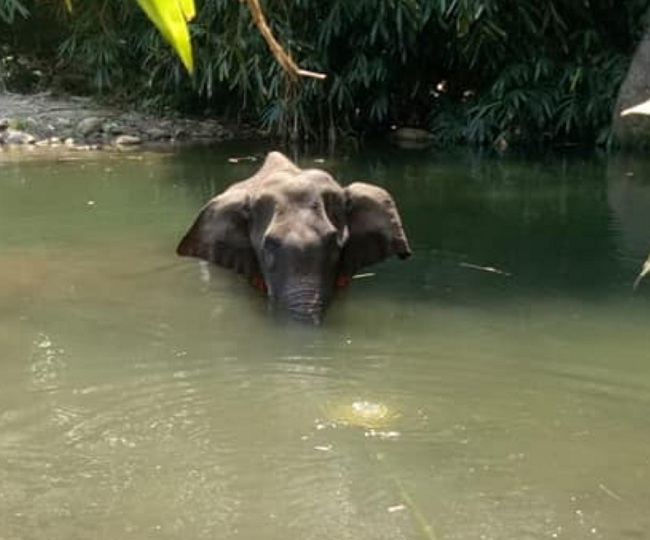
Fed with firecracker-filled pineapples, pregnant elephant dies in river in Kerala

Publish Date: Wed, 03 Jun 2020 10:36 AM IST
Fed with firecracker-filled pineapples, pregnant elephant dies in river in Kerala
Between 2014 and 2019, 510 elephants died all over India as a result of electrocution, train accidents, poaching and poisoning.

New Delhi | Jagran News Desk: A pregnant Elephant was fed with pineapples and firecrackers in Kerala’s Palakkad district’s Silent Valley, which exploded right in her mouth leading to fatal injuries and immediate death right after. A senior forest officer in Attappadi Reserve Forest told media about the incident on Tuesday.

“Her jaw was broken and she was unable to eat after she chewed the pineapple and it exploded in her mouth. It is certain that she was offered the pineapple filled with crackers to eliminate her,” Principal Chief Conservator of Forests (Wildlife) and Chief Wildlife Warden of Attappadi Reserve Forest, Surendra Kumar, was quoted as saying by the news agency PTI.

The incident was reported from the left wing fringe areas of the Silent Valley in Attappadi in Palakkad district. However, Surendrakumar told media that the Elephant died at Velliyar river in Malappuram district on May 27. Later on, the post mortem revealed that the female jumbo was pregnant.

Also Read

8 things your disaster emergency kit must have to better deal a crisis

“I have directed the forest officials to nab the culprit. We will punish him for ‘hunting’ the elephant,” Surendrakumar said.

The incident came to light when Mohan Krishnan, a forest officer wrote a heartbreaking note on his Facebook wall, explaining the events which led to Elephant’s death in Northern Kerala.

Krishnan was the part of initial response team to help the injured creature He said on later that she didn’t trample homes as she ran through the village in excruciating agony.

Coronavirus News: Uttarakhand reports 60 new COVID-19 cases, state tally..

‘This is why I said, she is full of goodness,’ Krishnan said.

Officials brought two other elephants to the river in an attempt to entice her from the water but, according to Krishnan, she had come to the river to die.

“I think she had a sixth sense. She didn’t let us do anything,” Krishnan wrote on his Facebook wall.

Elaborating upon the moment when Elephant died, Krishnan wrote that to give her the farewell which she deserved, he and his colleagues took her inside the Reserve Forest in a lorry.

“She lay there on firewood, in the land she played and grew up. The doctor who did her post-mortem told me that she was not alone. I could sense his sadness though the expression on his face was not visible due to his mask. We cremated her in a pyre there. We bowed before her and paid our last respects,” the forest officer added.

According to an Indian Express report, between 2014 and 2019, 510 elephants died all over India as a result of electrocution, train accidents, poaching and poisoning.

It’s time to shut down industrial animal farming

It's time to shut down industrial animal farming
© Getty Images

While governments act aggressively to save lives, stop any further spread of COVID-19, and reopen their economies, let’s not wait to prevent the next virus. More will come. Pandemics are picking up their pace. Thankfully, prevention is entirely possible — especially now that behavior change is on the table.

All it takes is a willingness to reconsider how we consume, trade, and treat animals. Big ask? Maybe. But everything should be on the table when hundreds of thousands of lives are at stake.

Here’s the opportunity: If we stop packing animals into crowded, confined areas — to be slaughtered for protein or parts — and if we stop cutting down and endangering their habitat, we can avoid infectious, animal-borne diseases like COVID-19, SARS, the swine flu, and more. (For these reasons, and more, Goldman Sachs now says livestock commodities are looking as ‘precarious as oil’ and U.S. Senators Elizabeth Warren and Cory Booker are calling for a ban on factory farms.)

That’s right. No more lockdowns. No more makeshift morgues. No more market crashes.

It’s that simple. If we want to save human lives and prevent mass casualties from COVID-like catastrophes, all we have to do is rethink and reconfigure our relationship with the animal world.

Now that social distancing is a common practice among most populations, to prevent the transmission of the virus, that’s now what animals need to be able to do, too. But in nature. We’ve already altered 75 percent of their land habitat and two-thirds of their marine habitat. That has to stop, now.

A failure to do so — or worse, by locking them up in factory farms in Waco, Texas, and wet markets in Wuhan, China — makes it all the more likely that another deadly pathogen, which should’ve stayed in nature, gets passed to humans.

While presidents and governors will prefer to emphasize that the next deadly virus is controllable primarily through better detection, monitoring and quick response — which is, of course, essential, too — the only real way to truly safeguard society is to stop the industrial and factory farming of animals.

Here’s how bad it’s become: globally, concentrated animal feeding operations — or CAFOs — account for 72 percent of the poultry we consume, 42 percent of eggs, and 55 percent of pork production. In the United States, over 50,000 facilities classify as CAFOs, with another 250,000 industrial-scale facilities just below that classification.

How many animals are confined in these crowded and virus-friendly conditions? In the U.S., that’s 9 billion chickens, 250 million turkeys, 113 million pigs, and 33 million cows — annually.

That’s almost 10 billion ways to start a virus — in just one year in the U.S. alone. And we know that America’s pigs, as just one example, here — most of which are farmed in industrial facilities without fresh air or sunlight — can kill thousands of Americans with a simple swine-flu virus. Over 12,000 Americans died from H1N1 in 2009 — and remember that was from factory farms in the United States.

Seemingly, no federal guidelines are governing how these animals are used and abused. And many U.S. states are trying to punish those who speak out against these cruel factory farms, which is why Animal Legal Defense Fund, and others, are providing these animals fair representation in court. It’s good someone is. A failure to protect these animals results in a failure to protect our health.

Compounding these health concerns, of course, is industrial animal farming’s heavy use of antibiotics, which ends up leaving humans — who consumed antibiotic-laden animal products — all the more vulnerable to bacteria during a pandemic. The result of all of this? People are more susceptible to attack from a diseased, factory-farmed animal.

And if health reasons weren’t sufficient to win the hearts and minds, perhaps economics will. Industrial animal farming is the least efficient and most expensive way to provide protein to humans. It’s two-three times as valuable as plant-based proteins and incredibly inefficient use of cropland, grains, and water for animal consumption (akin to have multiple middle-managers in a supply chain). Turn those crops into direct plant-protein providers for humans — a much more efficient plant-to-mouth supply chain — and we could easily, and nutritiously feed our growing population — as many as 10 billion by 2050.

That’s the opportunity here. And sure, we could also talk about all of the environmental problems associated with industrial animal farming, which include toxic waste, dangerous and deadly pesticide use, and excessive and exorbitant greenhouse gas emissions that come from animal products. Beef protein’s carbon footprint, for example, is 150 times as high as the same amount of plant protein. But if that hasn’t yet motivated people to switch off their factory-farmed animal food, perhaps the prospect of another pandemic will.

All of this seems way too risky to continue. And until we leave this practice behind, putting animals in unhealthy, crowded and immune-compromised positions — as we are doing globally with our factory farms, wet markets, and more — will continue to put us in similarly immune-compromised positions and kill tens of thousands, perhaps even hundreds of thousands of people, each time these pandemics pop up. It’s time to do better. It’s time to save human lives. It’s time to shut down industrial animal farming.

Michael Honda is a former Member of Congress Honda now serves on the board of local Silicon Valley startups and is working on the legislative campaign to repeal the Alien Enemy Act of 1798. Michael Shank is a former congressional staffer and adjunct faculty at New York University’s Center for Global Affairs.