
This is Hera…
I had to take over mom’s blog to protest!
Look what she made us wear for Christmas!

I mean… seriously mom!
…and my friend doesn’t look like he’s enjoying it either!

I just hope she doesn’t have other ideas for tomorrow…
…paws crossed!


A common message in use to convey the seriousness of climate change to the public is: “Carbon dioxide levels are higher today than they have been for the past one million years!” This new study by Brian Schubert (University of Louisiana at Lafayette) and coauthors Ying Cui and A. Hope Jahren used a novel method to conclude that today’s carbon dioxide (CO2) levels are actually higher than they have been for the past 23 million years.
The team used the fossilized remains of ancient plant tissues to produce a new record of atmospheric CO2 that spans 23 million years of uninterrupted Earth history. They have shown elsewhere that as plants grow, the relative amount of the two stable isotopes of carbon, carbon-12 and carbon-13 changes in response to the amount of CO2 in the atmosphere. This research, published this week in Geology, is a next-level study measuring the relative amount of these carbon isotopes in fossil plant materials and calculating the CO2 concentration of the atmosphere under which the ancient plants grew.
Furthermore, Schubert and colleagues’ new CO2 “timeline” revealed no evidence for any fluctuations in CO2 that might be comparable to the dramatic CO2 increase of the present day, which suggests today’s abrupt greenhouse disruption is unique across recent geologic history.
Another point, important to geological readers, is that because major evolutionary changes over the past 23 million years were not accompanied by large changes in CO2, perhaps ecosystems and temperature might be more sensitive to smaller changes in CO2 than previously thought. As an example: The substantial global warmth of the middle Pliocene (5 to 3 million years ago) and middle Miocene (17 to 15 million years ago), which are sometimes studied as a comparison for current global warming, were associated with only modest increases in CO2.
Story Source:
Materials provided by Geological Society of America. Note: Content may be edited for style and length.


Slmon fillets
BELLINGHAM, Wash. (AP) — A fishing trawler in Washington state has 86 crew members who tested positive for the coronavirus, officials said.
Ship operator American Seafoods said the American Dynasty trawler first docked in Bellingham May 26, The Bellingham Herald reported Sunday.
The Seattle-based crew are not showing symptoms and remained on the ship while it was in Bellingham, the company said.
The results of nine tests are still outstanding.
The American Dynasty returned to the Port of Seattle and is under quarantine, American Seafoods said in a statement.
“The crew has access to any required medical care, and we are thrilled with the support that the agencies we are working with have provided,” American Seafoods CEO Mikel Durham said.
“We have also put in place preparedness procedures in the event of a virus outbreak,” Durham said.
The…
View original post 147 more words
John Scanlon was Secretary-General of the UN-affiliated Convention on International Trade in Endangered Species from 2010 until 2018
Louise Boyle
New York
10 hours ago
Illegal trade in pangolins is at a record high Illegal trade in pangolins is at a record high ( AP )
The former head of the global convention on international wildlife trade says that current rules surrounding legitimate enterprise “don’t cut it”
to prevent future pandemics and that wildlife crime should be confronted with the same international legal force that tackles human trafficking and terrorism.
John Scanlon served as Secretary-General of the Secretariat overseeing the Convention on International Trade in Endangered Species of Wild Fauna and Flora (CITES) from 2010 until 2018.
CITES is affiliated with the United Nations Environment Programme and was established as a legally binding agreement to prevent the cross-border legal trade in wild animals and plants from threatening species survival.
The…
View original post 1,513 more words
Many national park sites are at least partially open to visitors as the country rebounds from coronavirus closures. But not all facilities and services are available.
“In accordance with this guidance and in coordination with governors across the country, the Department of the Interior and the National Park Service are working to reopen the American people’s national parks as rapidly as possible,” Interior Secretary David Bernhardt said in a statement.
But before you go, check each park’s website for the latest information on what’s open and what’s not. In each case, it depends on where states are in their reopening plans.
Here are some other considerations, from the National Park Service:
Many states still require out-of-state visitors to quarantine for 14 days, which may make visiting parks in some states more challenging. The National Governors Association offers an up-to-date interactive map that shows what states have a quarantine order.
Postpone challenging hikes. Having to rescue and treat stranded hikers could divert first responders and medical professionals from the pandemic response.
Trash collection and restroom facilities may not be available. Campgrounds are generally closed.
Stay in groups from your own household and maintain social distance from other groups. Prepare to cover your nose and mouth when other people are around.
Here’s what’s going on at the 10 most-visited national parks:

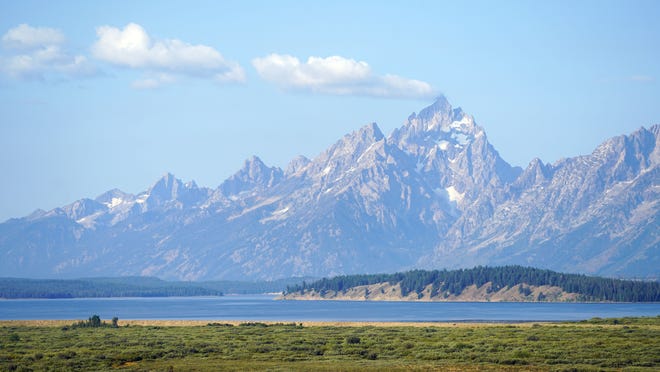
The park is the nation’s most visited, with 12.5 million visitors annually. Roads, trails, picnic areas and restrooms are open. Visitors centers, campgrounds and concessions remain closed. Some roads are closed to vehicles but open to hiking and biking.
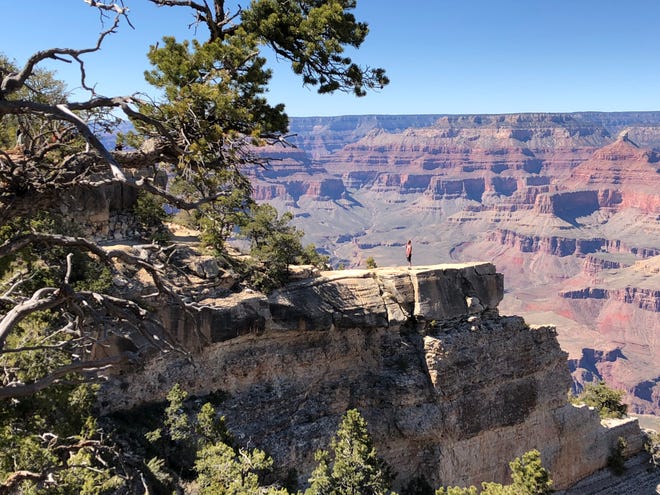
The Grand Canyon is America’s second-most visited national park, with 5.97 million annual visitors. The South Rim opened to limited access on May 15. On June 5, the South Rim will be open 24 hours, and the Mather Campground will be open for existing reservations. The North Rim will open for day use on June 5, with the campground closed for construction until July 1. The Colorado River will reopen to recreational use with existing permits beginning June 14. North and South Rim lodging will reopen in phases throughout June.

Starting June 4, the park will implement a timed, reserved entry system that will last through the summer. Visitors will reserve and pay the entrance fee in advance at recreation.gov and enter the park within a two-hour window between 6 a.m. and 5 p.m. In this phase, 60% of the park’s capacity, or 4,800 vehicles and 13,500 visitors a day.
“This system will more safely manage the pace and flow of visitor use, reduce crowding, and provide an improved visitor experience in alignment with the park’s safe operational capacity,” said park superintendent Darla Sidles.
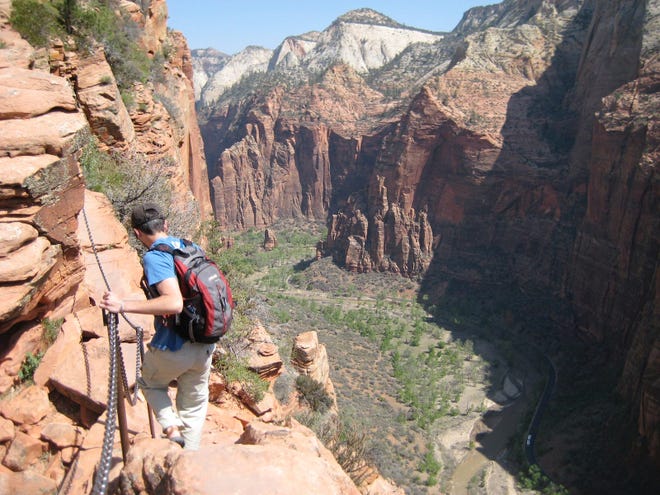
The park has been open during daylight hours since May 13. The Zion Canyon Scenic Drive is open to private vehicles until parking capacity is reached, and the last entry is at 6 p.m. The 6-mile road has about 400 parking spots. The park’s shuttle operation is suspended. Trails are open to day hiking but not to overnight backpacking. The Zion Lodge is open with limited rooms and amenities.

The park, which gets 4.4 million visitors annually, remains closed to visitors.

The park’s Montana entrances opened Monday, as the state lifted its 14-day quarantine requirement. The Wyoming and Idaho entrances are also open. The park is day-use only, with campgrounds, visitors centers and other facilities closed. Limited overnight accommodations will start later in June. The Grand Loop Road is open, except for a segment from Canyon to Tower that’s under construction.

The park partially reopened Monday, though Maine visitors are under a 14-day quarantine order. The Park Loop Road is now open, along with most nearby restrooms. Hiking trails are open, and trash collection has resumed. The Carriage Roads will open June 5 for pedestrians, but they will remain closed to bicycle and equestrian riders. The Hulls Cove Visitors Center is open with limited outdoor information services from 8:30 a.m. to 4:30 p.m. Campgrounds remain closed and will reopen no earlier than July 1.

The park reopened May 18 for limited recreational use. Primary roads are open, as are hiking trails for day access. Riverbank and lakeshore fishing is permitted, as are limited biking and wildlife tours. Campgrounds, overnight lodging, visitors centers, marinas and food service remain closed. Boating on lakes and rivers is prohibited.

The park is partially open to day use recreation. All coastal areas, however, remain closed. That includes beaches, parking areas, trails and facilities. No areas of the park are open to camping. Visitors’ centers and ranger stations remain closed. Limited lodging and take-out dining are open.

The park is closed, but a phased reopening is set to begin this month. The first phase will reopen roads, restrooms and some trails. In the second phase, campgrounds, retail, lodging and dining will reopen on a limited basis. Personal boating will be allowed and backcountry permits will be issued. The parks will relax those limits in the third phase as conditions allow.
A Vietnamese orchid, turtles on an Indonesian island and a gecko discovered in China are some of the species that have been targeted after sightings were detailed online
Louise Boyle
New York
3 days ago
Scientific research that heralds the discovery of new species can have an unintended but potentially devastating consequence: providing a roadmap for wildlife traffickers.
A new study from a group of international academics has found that as research becomes more publicly available online, poachers have pounced on the information to boost their trade.
The impacts have already been felt. A newly-discovered orchid in Vietnam had its population decimated less than a year after a photo of the species appeared on social media. It was dubbed “extinction at the speed of the internet”, by a letter-writer in the journal Science.
Research work that described a new turtle on a remote island in Indonesia, and a gecko in…
View original post 347 more words


A tie vote led to the Tennessee Fish and Wildlife Commission (TFWC) rejecting a proposal to allow nighttime hunting for coyotes in Tennessee. The most recent TFWC meeting set hunting seasons and regulations for the next two years.
There are 13 members of the TFWC, however Commissioner Jim Stroud was absent from the meeting, leading to a six-to-six tie vote on the measure. A majority vote is required so the measure failed by a mere one vote margin. It is unclear how Commissioner Stroud may have voted had he been present.
Avid coyote hunters had high hopes the measure would pass. The proposal presented…
View original post 681 more words

In early April this year, a video was being circulated amongst animal rights activists in Karnataka: A mahout stating that since the lockdown, his 55-year-old captive elephant has not had anything to eat.
The elephant belonged to a temple in Mudhol district, and for the past 40 years, had been living off offerings of jaggery, sugarcane, fruits and grains provided by the people visiting the temple. Since the lockdown, the mahout had not been able to step out and the temple was running out of fodder. The video ends with the mahout appealing for help.
Ever since the lockdown, there have been several such stories that have been doing the rounds on social media, seeking donations to provide food for starving captive elephants.
Joseph Barretto, owner of Jungle Book Resort in Goa, has five elephants in captivity, which are typically used for rides and “showers” for tourists. He released a video seeking donations for “his starving elephants”.
The elephant owners of Amer Fort in Jaipur, Rajasthan, known for using at least a hundred elephants for tourist rides, also complained about the lack of income that disabled them from getting fodder for their elephants. Similarly, elephants held captive by individual owners in Kerala and religious institutions in Karnataka have been seeking help.
“It takes one pandemic to throw things out of gear,” said Suparna Ganguly of Wildlife Rescue and Rehabilitation Centre, an animal rights non-profit based in Bangalore, Karnataka. “It just goes on to show how precarious their situation is when they are in private custody.”
There are 2,675 captive elephants in India, according to the information received by Tamil Nadu-based animal welfare activist Antony Clement Rubin via a Right to Information response from the Ministry of Environment, Forest and Climate Change in November 2019 and available to Mongabay-India.
Of these, 1,821 are in private custody and the rest are under the care of the forest department of various states. Among the elephants in private custody, some are owned by individuals and others by institutions like temples and circuses.
The Indian Elephant is protected under Schedule one of the Wildlife Protection Act, 1972, which affords maximal protection. It is listed as “Endangered” in the Red List of Threatened Species of the International Union for Conservation of Nature.
Under Section 1(5) of the Wildlife Protection Act, a captive animal is “captured, or kept or bred in captivity”. Section 40 of the Act gives special status regarding possession, inheritance, or acquisition of the animal. “This exception was originally created for the elephants that were already in captivity at the time, to regularise their possession. But it is being used to capture more elephants and issue new ownership certificates,” said Alok Hisarwala, a Goa-based lawyer who manages the Elephant Rights Campaign for Federation of Indian Animal Protection Organisations.
Explaining it further, he said, “It’s like this. If I step into the forest and see a wild elephant and if I get caught trying to capture it, I have committed an offence. But if the next morning, I happen to walk to the Chief Wildlife Warden’s office, telling him that I have an elephant in my backyard and that he/she is listening to all my commands, I will get the ownership certificate. They won’t ask me how I acquired the elephant.”

Currently, there are 1,251 captive elephants with ownership certificates and 723 elephants whose ownership certificates are still under process. “These captive elephants are brought as baby calves from the Northeast to Rajasthan and trained for tourist rides,” said Abhishek Singh, an animal welfare activist based in Jaipur. “A [memorandum of understanding] was passed between the Forest Department and some of the non-profits in the area, about four to five years back that no more new elephants will be brought to the state,” he said. “But the rules continue to be flouted.”
Moreover, elephants are used for commercial purposes. Under the Performing Animals Registration Rules, 2001 – part of Prevention of Cruelty to Animals Act 1960 – using captive elephants for commercial purposes such as tourism is strictly prohibited unless specific permission is obtained by the Animal Welfare Board of India. There are several state-specific laws, as well.
In 2017, members of the Animal Welfare Board of India attempted to conduct health checks on the elephants in Jaipur. Out of the 102 elephants tested, at least ten showed symptoms of tuberculosis, a zoonotic disease. The report also revealed that elephants were suffering from blindness, had their tusks removed, and were under extreme psychological stress. However, no action was taken at the time.
“We tried to organise a health camp earlier this year, but that was also cancelled at the last minute,” said Singh. In fact, earlier in March, PETA wrote a letter to the chief minister of Rajasthan, urging him to stop the elephant rides because of the potential risk to tourists of contracting tuberculosis.
“The elephants are constantly abused, they are made to stay in concrete stalls, they have foot diseases, ankush [a sharp instrument used by mahouts] is used to control them, and they are constantly under stress,” said Singh.
In August 2019, a study assessing physiological stress in captive Asian elephants was published by scientists at CSIR- Centre for Cellular and Molecular Biology, Hyderabad. The study checked the amount of stress hormones called glucocorticoids in 870 dung samples from 37 captive elephants. The samples were collected from elephants that were engaged in different activities – from Mysore zoo, Mysore Dussehra temporary elephant camp, Mudumalai Tiger reserve elephant camp, and Bandhavgarh Tiger reserve elephant camp.
The elephants from the Mysore Dussehra camp, which were made to perform at religious ceremonies had a higher amount of stress hormones than others. The study explained that heightened levels of stress can cause infertility, hyperglycemia, suppression of immune response, imperfect wound healing, and neuronal cell death.
“Elephants are social animals, they need other elephants around them, and when they are kept isolated environments such as temples, it automatically elevates their stress hormones,” said Sreedhar Vijayakrishnan, a researcher on elephant behavior at National Institute of Advanced Studies, Bangalore.
“In females, this disrupts their reproductive cycle,” he said. Male elephants go into musth at around 20-21 years of age. Their testosterone level goes up and their raging behavior increases. “This means they travel a larger distance than normal, in search of a mate. When you keep them in captivity in one place, it automatically increases their stress level,” he said.
“Some of the manifestations of stress include stereotypic behaviour – rocking, swaying, head-bobbing, and other repetitive movements,” said Dr Shantanu Kalambi, wildlife veterinarian and consultant at Wildlife Rescue and Rehabilitation Centre, based in Bangalore. “This sometimes causes them to walk in an awkward manner, leading to arthritis and spondylosis.”
Further explaining the physiological problems captive elephants go through, feet are the “biggest issue” for them, he said. “Thanks to constantly standing or walking on unsuitable hard surfaces, they have bad feet, abscess in the foot and hips, broken nails, and develop arthritis over time,” he added.
Other issues they face include blindness and cataract, “since they are out in the sun all the time.” If they had their own will, they would find shade, he said.
Elephants in captivity are often not allowed to have mud baths. “Mud acts like sunscreen for them, and keeps away ectoparasites,” said Kalambi. As a result, they develop skin problems.
“Increasing cases of conflict in captivity, manifested in the form of property damages and human casualties, is another issue in captive conditions,” said Vijayakrishnan. Several times a year, local papers report headlines such as “Elephant runs amok during temple festival in Kerala” or “Elephant crushes mahout to death”. “This is an area that is often overlooked, and is also a result of stress and inadequate rest for the elephant,” he said.

Conservationists and activists say that an average middle-aged healthy elephant needs 100-150 kg of food per day, consisting of grass, foliage, hay, banana stock, ragi, rice, gingelly oil, vegetables, pulses and fruits, along with 5,000 gallons of water. Captive elephants are heavily dependent on human intervention for their well-being, especially their mahouts, who play an active role in their positive reinforcement. The ones that are medically unfit require regular veterinary assistance. On average, the bare minimum cost for providing nutrition, medical needs and logistic support for one captive elephant amounts to approximately Rs one lakh per month.
In response to the current Covid-19 crisis, Singh explained that each elephant handler in Jaipur was given Rs 600 per day for the food and upkeep of the elephant, by the Rajasthan forest department. “This is too less an amount,” said Singh. “One needs at least Rs 2,000-Rs 3,000 per day for an elephant.”
In Kerala, the state government released Rs five crore for animal welfare, which includes the 479 privately-owned captive elephants in the state. In Karnataka, the high court passed an order on April 9, asking the state’s forest department to ensure the upkeep of the state’s privately-owned elephants.
In Tamil Nadu, activist Antony Rubin sent a letter to the forest department, requesting them to allocate appropriate funds, food and veterinary attention to the state’s captive elephants, as well as to the mahouts. The confidential letter is available with Mongabay-India.
While a long term policy change is the need of the hour, experts offer a variety of views for handling the gentle giants in captivity. The CSIR-Centre for Cellular and Molecular Biology study on captive elephant stress recommends “minimising participation in religious activities, processions” and creating opportunities “for elephants to interact with other elephants in the facility.”
“We need an urgent policy change to completely ban the ownership of elephants in private hands,” said Ganguly. “Whether it is owned by an individual or an institution, this needs to be stopped by law.”
She further added, “There are many captive elephants that are currently in good condition, and many in a bad condition. There needs to be formed a neutral committee, that consists of experts in the field, that can make a detailed report on the kind of housing and facility these elephants need.


