Expanded Sunday hunting days added: PA Game Commission
Reply

The teenager, who was previously healthy, had no farm exposure but had been exposed to dogs, cats and reptiles.
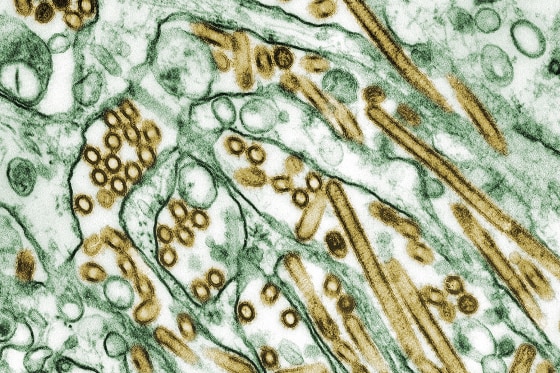
Health officials in British Columbia are still identifying the exact strain, but assume the case is H5N1.Smith Collection / Gado / Getty Images
Nov. 13, 2024, 6:14 AM PST / Source: Reuters
By Reuters
A teenager is in critical condition in a British Columbia children’s hospital, sick with Canada’s first presumptive human case of avian influenza.
“This was a healthy teenager prior to this, so no underlying conditions,” said provincial health officer Bonnie Henry in a news conference on Tuesday.
“It just reminds us that in young people this is a virus that can progress and cause quite severe illness and the deterioration that I mentioned was quite rapid.”
British Columbia health officials said on Saturday the province had detected Canada’s first human case of H5 bird flu in a teenager.
Henry said the province is still identifying the exact strain, but assumes the case is H5N1.
The World Health Organization says H5N1’s risk to humans is low because there is no evidence of human transmission, but the virus has been found in an increasing number of animals including cattle in the United States.
Henry would not disclose the teen’s gender or age but said they had first developed symptoms on Nov. 2 and were tested on Nov. 8, when they were admitted to hospital. Symptoms included conjunctivitis, fever and coughing.
As of Tuesday they were hospitalized with acute respiratory distress syndrome, she said.


The teen had no farm exposure but had been exposed to dogs, cats and reptiles, Henry said. No infection source had been identified. “That is absolutely an ongoing investigation.”
Bird flu has infected nearly 450 dairy farms in 15 U.S. states since March, and the CDC has identified 46 human cases of bird flu since April.
In Canada, British Columbia has identified at least 26 affected premises across the province, Henry said Tuesday, and numerous wild birds have tested positive.
Canada has had no cases reported in dairy cattle and no evidence of bird flu in samples of milk.
“H5N1 has historically been able to cause critical and fatal illness,” although cases involving this subtype have tended to be mild, Dr. Amesh Adalja, an infectious disease expert at the Johns Hopkins Center for Health Security, wrote in an email, adding that it will be necessary to confirm it is indeed H5N1 and what subtype.
Indianapolis Star
1:01
1:01
The state’s natural resource managers will hold a public hearing Thursday in southern Indiana on the upcoming bobcat trapping set to start next year despite concerns from many Hoosiers.
The Natural Resources Commission will meet Thursday in Butlerville to discuss rules for the proposed new season and hear from Hoosiers about the plans to allow bobcat trapping next year.
Advocates for the trapping season say bobcats need to be controlled so they don’t kill pets and livestock. Senator Scott Baldwin, R-Noblesville, who brought forward the legislation earlier this year that established a bobcat trapping season, said in January the growing population of the state’s only wild cat is a detriment to smaller wildlife species. Baldwin did not immediately respond to IndyStar for this article.
Following the passing of the legislation, which was signed into law by Gov. Eric Holcomb, Indiana’s DNR has proposed opening bobcat trapping to 40 counties in the southern portion of the state and set a statewide harvest cap at 250 cats.
The proposed season rules would allow licensed Hoosier trappers to take one bobcat per season and sell the hide.
If the Natural Resources Commission approves the proposed rules, the new season will begin in the fall of 2025.
Samantha Chapman, Indiana state director for the Humane Society of the United States, is rallying support against the bobcat season.
“We’ve said from the very beginning that we just don’t know how many bobcats are in the state,” Chapman said. “It’s really important to have that information before determining a quota.”
The state used a population model developed by Purdue University “that incorporates the basic aspects of bobcat life history and simulates bobcat population dynamics in Indiana,” DNR spokesperson Marty Benson wrote in an email to IndyStar.
Get the Daily Briefing newsletter in your inbox.
Start your day with the morning’s top news
Delivery: DailyYour Email
“We are progressing with the rule following statutory requirements,” Benson wrote. “No separate study is required by the NRC or statute.”
Indiana also relies on bobcat reports Hoosier hunters send through the yearly Archer’s Index. This volunteer reporting relies on bow hunters reporting how long they spent hunting and what wildlife they saw in the field.
Chapman said she believes an increase in bobcat sightings across Indiana can be chalked up to the growing number of cameras set up along game trails.
Bobcats, once nearly gone from the state, have been recovering since first placed on Indiana’s endangered species list in 1969. The state removed them from the list in 2005 after reported roadkill and other mortalities increased in the early 2000s, according to a former furbearer biologist for DNR.
Indiana has about 4,000 Hoosiers holding trapping licenses, and state officials estimate half of them would apply for a bobcat permit.

A state analysis of the proposed rules says a bobcat season would provide furbearers with more pelts to sell, allow taxidermists to take on more work and give trapping equipment vendors additional revenue. Bobcat pelts typically sell for around $100, according to the analysis.
While trappers have been supportive of the rule, Chapman said Hoosiers largely disagree.
“This is different than hunting a deer,” Chapman said. “You’re really leaving an animal stuck and suffering in a really uncomfortable position for up to a day which is incredibly inhumane. Then it is just being sold, usually in foreign markets outside of the state of Indiana.”
The Natural Resources Commission is holding its public meeting Thursday at 5 p.m. at the Purdue Southeast Agricultural Center in Butlerville.
Hoosiers can attend the meeting in person to provide comments, or join the meeting online at in.gov/nrc/rules/rulemaking-docket.

HuffPost UKFollow
75.9K Followers
Story by Kate Nicholson
• 12h • 3 min read
sorbetto via Getty Images© Provided by HuffPost UK
The United Nations warned last month that the Earth is on track to heat up between 2.6C and 3.1C by the end of the century unless we act.
That’s an increase on the UN’s concerns from last year, when the organisation predicted global temperatures could increase by anything between 2.5C and 2.9C, when compared to the climate we experienced in the pre-industrial era.
The world is already 1.4C hotter than it was before the Industrial Revolution – and gas emissions are only rising.
The 2024 annual Emissions Gap Report, released ahead of the annual UN climate summit COP29, said urgent intervention is needed from global governments.
The UN environment chief, Inger Andersen said: “If nations do not implement current commitments then show a massive increase in ambition in the new pledges, followed by rapid delivery, the Paris Agreement target of holding global warming to 1.5C will be dead within a few years and 2C will take its place in the intensive care unit.”
Similarly, the UN secretary-general Antonio Guterres said last year: “Present trends are racing our planet down a dead-end 3C temperature rise. The emissions gap is more like an emissions canyon.”
The 2015 Paris Agreement saw countries around the world agree to try and limit global warming to 1.5C by cutting carbon emissions.Related video: Could Global Warming Start A New Ice Age? 🧊 (Atlas Pro)
about:blank
This summer I’ll be heading to Europe for about a
Loaded: 2.31%Play

Current Time 0:01
/
Duration 12:58Quality SettingsCaptionsFullscreen

Could Global Warming Start A New Ice Age? 🧊Unmute
0
However, the UN has now warned there is just a 14% chance we will be able to stay below the 1.5C threshold, as global greenhouse gas emissions continue to rise year-on-year.
And at 3C, the world will have passed several key catastrophic points – and the change will be irreversible.
So, what would life look like?
According to carbon accounting firm Greenly, just 3% of the world’s water is drinkable or can be used for crops right now – and global warming would put pressure on that food supply.
This would not only damage the way we live, but will seriously impact local wildlife if they don’t have enough water to survive on.
The world already saw a staggering number of natural disasters in 2023 and 2024 – including floods, earthquakes, hurricane, tornadoes and wildfires – but this will only get worse as global warming ramps up.
That will cause mass, sudden displacement too, as communities in areas vulnerable to extreme weather become inhabitable.
Areas already known for high temperatures will struggle as heatwaves last longer and get more intense – posing yet a serious risk to health.
Greenly claims nearly 12% of the entire global population will be impacted by rising sea levels, because there are so many people who live in coastal areas. It warned some cities could even be entirely under water by the end of the 21st Century.
It may worsen natural disasters too, by triggering further hurricanes and typhoons, while also potentially contaminating our water supply by interfering with irrigation systems.
Travel OregonTravel Oregon This Fall
As the countryside becomes more uninhabitable, cities are likely to become more built up – even though they usually worsen the climate crisis because of industrialisation. That will affect indigenous communities around the world, and worsen overpopulated areas.
The global south is already disproportionately impacted by the climate crisis, particularly any developing countries which do not necessarily have the finances to combat the impact of the climate crisis.

