Exposing the Big Game

Forget Hunters' Feeble Rationalizations and Trust Your Gut Feelings: Making Sport of Killing Is Not Healthy Human Behavior

Exposing the Big Game

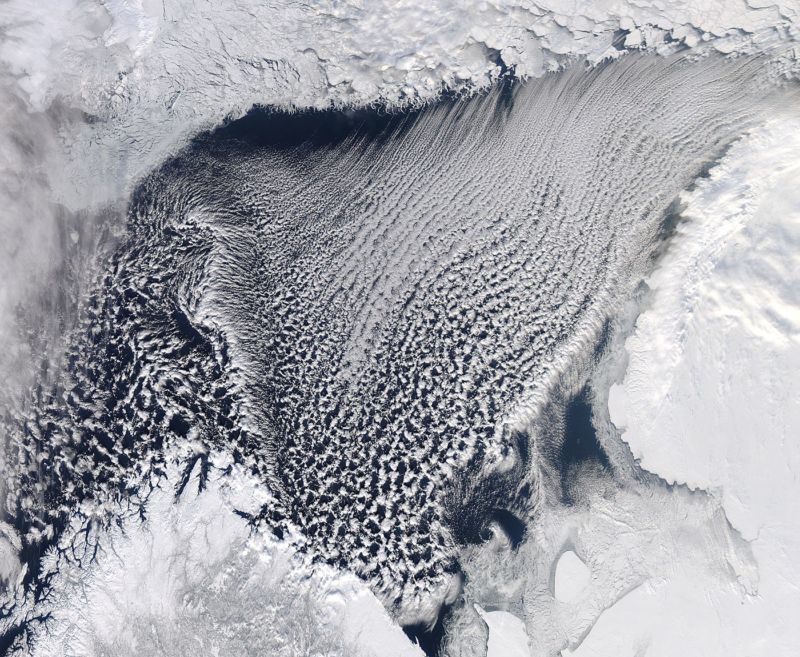
Barents Sea seems to have crossed a climate tipping point

This is probably what a climate tipping point looks like—and we’re past it.

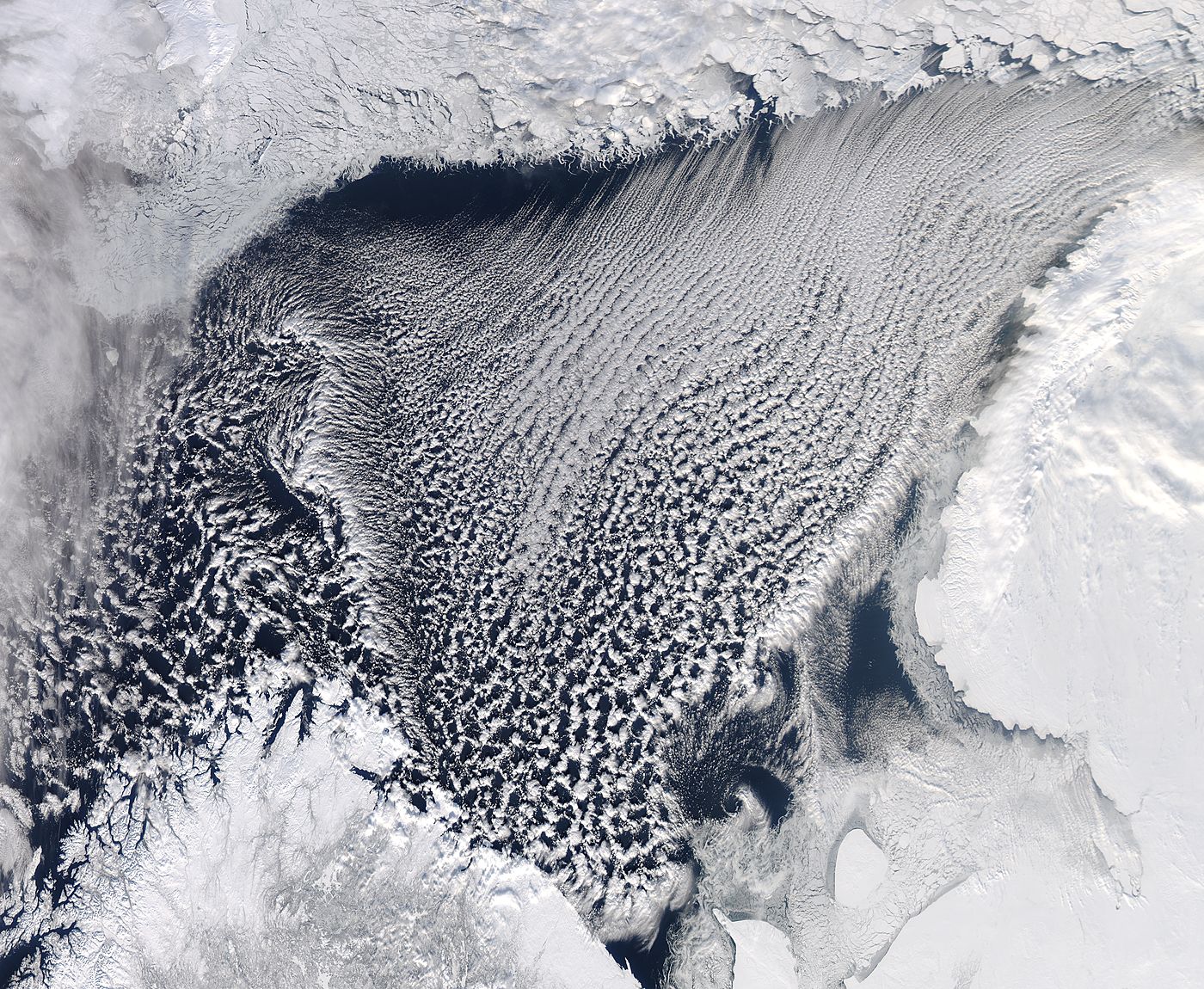
Enlarge / A cloud-covered Barents Sea, showing sea ice encroaching from the Arctic Ocean to the north.

Many of the threats we know are associated with climate change are slow moving. Gradually rising seas, a steady uptick in extreme weather events, and more all mean that change will come gradually to much of the globe. But we also recognize that there can be tipping points, where certain aspects of our climate system shift suddenly to new behaviors.

The challenge with tipping points is that they’re often easiest to identify in retrospect. We have some indications that our climate has experienced them in the past, but reconstructing how quickly a system tipped over or the forces that drove the change can be difficult. Now, a team of Norwegian scientists is suggesting it has watched the climate reach a tipping point: the loss of Arctic sea ice has flipped the Barents Sea from acting as a buffer between the Atlantic and Arctic oceans to something closer to an arm of the Atlantic.

Decades of data

The Norwegian work doesn’t rely on any new breakthrough in technology. Instead, it’s built on the longterm collection of data. The Barents Sea has been monitored for things like temperature, ice cover, and salinity, in some cases extending back over 50 years. This provides a good baseline to pick up longterm changes. And, in the case of the Barents Sea in particular, it’s meant we’ve happened to have been watching as a major change took place.

The Barents Sea lies north of Norway and Russia, bounded by Arctic islands like Svalbard and Franz Josef Land. To its west is the North Atlantic, and the Arctic Ocean is to its north. And data from prior to the year 2000 indicates that the Barents acted as a buffer between the two oceans.

To the north, the Arctic Ocean has been dominated by sea ice, which spreads into the Barents during the winter. The ice acts as a barrier to exchanging heat with the atmosphere and blocks sunlight from reaching the ocean water, helping keep the Arctic colder in the summer. As it melts, the Barents also creates a layer of fresh water that doesn’t mix well with the salt water below it, and it is light enough to remain at the surface. The water of the Atlantic is warmer but saltier and better mixed across its depths.

In between, in the Barents, the two influences create a layer of intermediate water. The Arctic surface water and sea ice helps keep the Barents fresher and cool. And while the Barents is warmed from below by the dense, salty Atlantic water, it’s not enough to allow the two layers to mix thoroughly. This helps keep the Barents Sea’s surface water cold and fresh, encouraging it to freeze over during the winter.

The researchers behind the new work say that this layered structure was “remarkably stable” from 1970 all the way through 2011. But change started coming to the area even as the layers persisted. The atmosphere over the Arctic has warmed faster than any other region on the planet. In part because of that, the amount of ice covering the Arctic Ocean began to decline dramatically. It reached what were then record lows in 2007 and 2008. As a result, the Barents Sea was relatively ice-free in the Arctic summer, decreasing the fresh water present in the surface layer.

Sea-ice drift into the Barents sea dropped enough so that the 2010-2015 average was 40 percent lower than the 1979-2009 mean. The researchers checked precipitation at some islands on the edge of the Barents Sea, and they confirmed that the loss of fresh water at the surface was due to the loss of ice rather than a change in weather patterns.

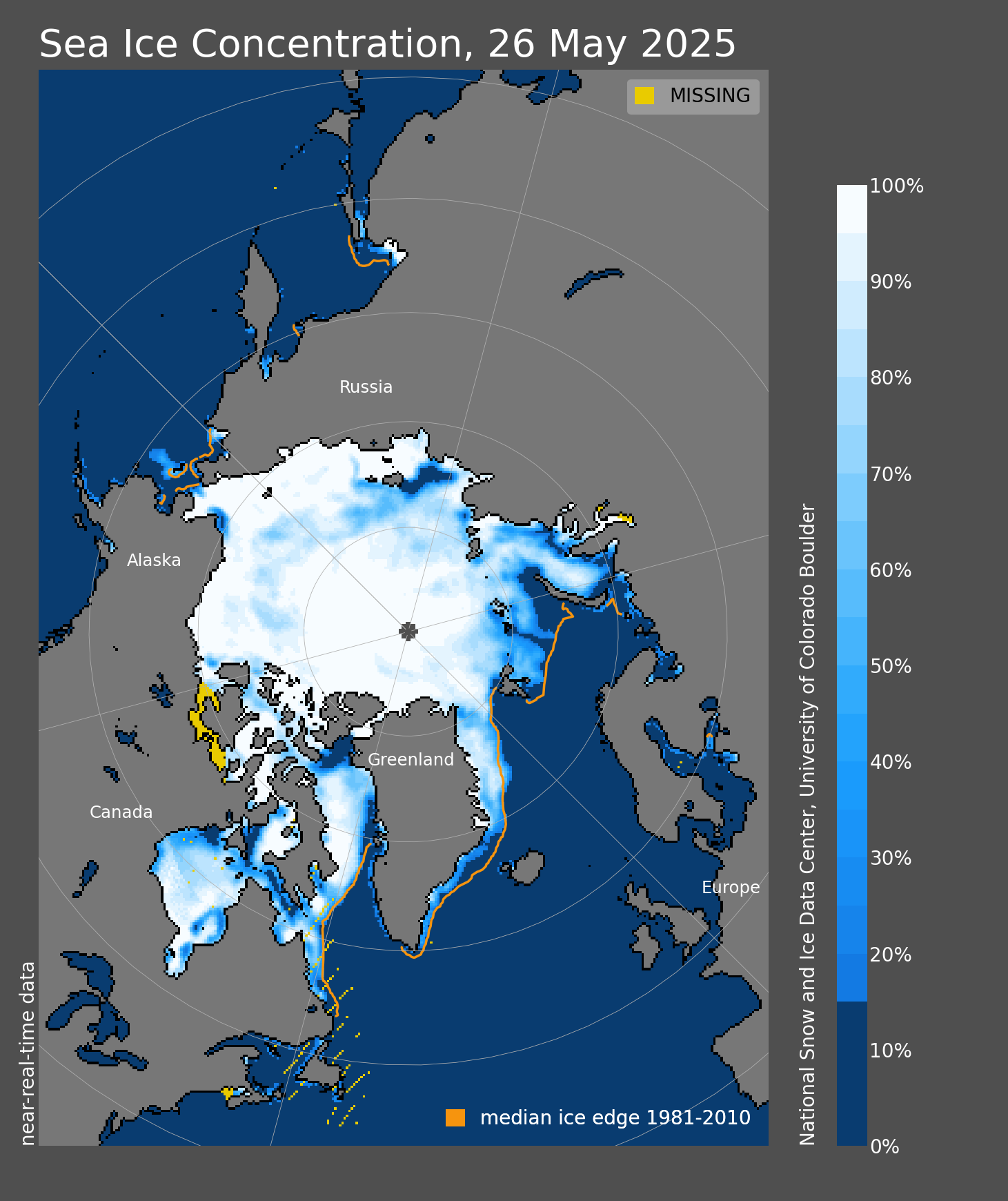
(For context, the Barents Sea is essentially ice-free at the moment, even though the melt season typically extends through September.)

Triple threat

The loss of ice also means that the surface water in this area is exchanging heat with the atmosphere and absorbing more sunlight during the long Arctic summer days. These two have combined to heat the top 100m of water dramatically. If the mean of its temperature from 1970-1999 is taken as a baseline, the temperatures from 2010-2016 are nearly four standard deviations higher. 2016—the most recent year we have validated data for—was 6.3 standard deviations higher.

This has the effect of heating the intermediate water from above. Meanwhile, the warm Atlantic water will heat it from below. As a result, the cold intermediate water has essentially vanished from the Barents Sea, turning the area into a basin dominated by Atlantic water. The entire water column, from surface to the sea floor, has both warmed and gotten saltier, all starting in the late-2000s.

While dramatic, that in and of itself doesn’t make for a tipping point. But the authors argue that the present conditions make it extremely difficult for the sea ice to re-establish itself during the winter: “Increased Atlantic Water inflow has recently enlarged the area where sea ice cannot form, causing reductions in the sea-ice extent.” The water both starts out warmer and has increased salt content, making freezing more difficult.

In essence, the authors argue that the entire Barents Sea has started to behave as an arm of the Atlantic. Unless some external factor re-establishes the layer of fresh water on the surface, “the entire region could soon have a warm and well-mixed water-column structure and be part of the Atlantic domain.”

Tip of the ice

From a strictly human-centric position, the changes aren’t necessarily a terrible thing. In terms of ecosystems, the authors describe the Barents as “divided into two regions with distinct climate regimes—the north having a cold and harsh Arctic climate and ice-associated ecosystem, while the south has a favorable Atlantic climate with a rich ecosystem and lucrative fisheries.” The expansion of these fisheries, while coming at the cost of the native ecosystem, could prove a boon for the countries bordering the region.

But the general gist of the study is considerably more ominous: not only have we discovered a climate tipping point, but we’ve spotted it after the system has probably already flipped into a new regime. It also provides some sense of what to expect from the future. Rather than seeing the entire planet experience a few dramatic changes, we’re likely to see lots of regional tipping points that have more of a local effect. The future will be the sum of these events and their interactions, making it a bit harder to predict which changes we should be planning for.

Marine Heat Waves, Changing Ocean Currents and Capitalism’s Threat to Life

It would have been unthinkable not many years ago to imagine the impending death of the Great Barrier Reef. The world’s largest living structure and a world heritage site unsurpassed for its tremendous beauty, the Great Barrier Reef has been one of the planet’s most important ecosystems. Now, after consecutive years of prolonged, extreme marine heat waves in 2016 and 2017, one-half of the reef is dead.

Yet the reef, which has gone through immense challenges over millions of years of changing climates, is not entirely gone yet. Leading coral reef scientist Terry Hughes recently told the Guardian that, “The Great Barrier Reef is certainly threatened by climate change, but it is not doomed if we deal very quickly with greenhouse gas emissions. Our study shows that coral reefs are already shifting radically in response to unprecedented heatwaves.”

Further work from other research teams documented in April that globally, marine heat waves have increased in frequency and are of longer duration. Scientists from the Australian Research Council’s Centre of Excellence for Climate Extremes and the Institute of Marine and Antarctic Studies published a study finding that between 1925 and 2016, marine heat waves occurred 34 percent more often, and lasted 17 percent longer. The result has been a 54 percent increase in the number of marine heat wave days happening each year globally.

The study brought together a range of ocean temperature data over the time period studied. Controlling for climate variability, the authors were able to determine that the increase in marine heat waves was related to an increase in sea surface temperature. “With more than 90 percent of the heat from human-caused global warming going into our oceans, it is likely marine heat waves will continue to increase,” said study co-author Neil Holbrook from the University of Tasmania.

The paper cites the impact of recent marine heat waves in a number of the world’s oceans, concluding that, “These events resulted in substantial ecological and economic impacts, including sustained loss of kelp forests, coral bleaching, reduced surface chlorophyll levels due to increased surface layer stratification, mass mortality of marine invertebrates due to heat stress, rapid long-distance species’ range shifts and associated reshaping of community structure, fishery closures or quota changes, and even intensified economic tensions between nations.”

The news of increasing ocean heat waves and their devastating impact is truly alarming, especially in connection with the many other signs of accelerating climate change and general ecological crisis, including in just the past several months.

Arctic, Antarctic Melt and the Ocean Conveyor Belt

After another abnormally warm year in large parts of the Arctic region, including mid-winter temperatures that went above freezing at the North pole, the National Snow and Ice Data Center reported April 2018 essentially tied for the lowest Arctic sea ice extent on record with April 2016. More worrying, not only was the sea ice coverage at a historic April low, but the amount of thicker, multi-year ice cover “has declined from 61 percent in 1984 to 34 percent in 2018. In addition, only 2 percent of the ice age cover is categorized as five-plus years, the least amount recorded during the winter period,” according to the Center.

With the Arctic warming at twice the global average, less ice is forming and more is melting in summer so less of the ice lasts through the warmer months to become multi-year ice. New ice forms in fall and winter, but this ice is now increasingly new, younger ice, instead of building on the thicker and more stable multi-year ice. As ice melts and ice coverage is increasingly younger, less thick and less stable, sea ice is being lost, and the Arctic Ocean is becoming more open in summer. The increasingly ice-free open ocean absorbs the sun’s energy much more readily than the ice-covered ocean, accelerating warming. This dangerous positive feedback loop underway in the Arctic is already impacting climate worldwide.

For the Arctic itself, the disappearing ice threatens to devastate the species and ecosystems that have evolved in connection with it. The decline of Arctic ice and ecosystems, forced by greenhouse gas emissions from the predominant capitalist economies of the planet, also threatens genocide for the culture and way of life of Indigenous peoples throughout the region who have lived for millennia in an ice-covered world.

Another recently published study has shown that melting glaciers in East and West Antarctica are freshening the surrounding ocean and slowing the formation of ocean “bottom water.” Normally, Antarctic bottom water is formed by the sinking of cold, salty water that results as sea ice forms and pushes out salt into surrounding waters. This cold, dense water sinks, mixes with and cools warmer salty water brought by deep ocean currents to Antarctica. But this process is now slowing because of increased glacial freshwater melt. The warm water is stratified, trapped at the bottom, where it is further speeding the melt of Antarctic glaciers from below in these regions. It’s another feedback loop that will likely accelerate sea level rise.

In the Southern Ocean around Antarctica, as well as in the Arctic regions off Norway and Greenland, the process of very dense, cold, salty water sinking is a major factor in causing overturning circulation in the world’s oceans. This is called thermohaline circulation, the process whereby deep-ocean currents are generated by differences in the water’s density, which is controlled by temperature (thermo) and salinity (haline). This is also known as the “ocean conveyor belt.” Ocean currents are very complex and dynamic processes with many factors involved. Essentially though, the ocean conveyor belt drives deep ocean currents that course powerfully around the globe, overturning and mixing enormous quantities of water. In certain regions, this creates upwelling — bringing nutrient-rich water from the ocean’s bottom back to the surface, fueling life. The conveyor belt currents are also a central factor in distributing heat around the planet and stabilizing the Earth’s climate.

Melting sea ice and glaciers are now pouring more fresh water into the ocean, making the waters where this occurs less salty and dense, so less likely to sink. The effects of freshening waters on thermohaline circulation and ocean currents in the Southern Ocean are not yet known, but studies on the North Atlantic this year found that increasing fresh water melt in the Arctic has caused a slowdown in the Atlantic Meridional Overturning Current (AMOC). One of the studies suggested the slowdown has been around 15 percent since 1950. Climatologist Michael Mann said the AMOC slowdown is “happening about a century ahead of schedule relative to what the models predict” and, “I think we’re close to a tipping point.”

What acceleration of ice melt and changing ocean currents will mean for sea level rise that threatens the world coastlines, islands and huge swaths of humanity; for the impact on world climate; and for ocean life and ecosystems that humans also rely on to eat and breathe, is difficult to exactly predict. Nonetheless, it’s clear the climate crisis is already extreme and accelerating. Much depends on whether human society acts quickly to dramatically cut greenhouse gas emissions currently warming the planet, and takes other urgent steps to prevent ecological disaster.

Instead of being reduced, however, carbon emissions continue to grow, recently measured at 410 parts per million, a level not seen in millions of years. In May, the National Oceanic and Atmospheric Administration reported that April 2018 was the 400th straight month that global temperatures were warmer than average.

The Problems of Trump and Capitalism

Faced with this situation of potential ecological catastrophe, Trump and his allies who wield power in the US, lie that global warming is a fabrication, a hoax, or impossible to confirm. They deny the overwhelming evidence and cover over clearly demonstrated science. But this isn’t just a denial of reality, as bad as that is. This is, as The New York Times journalist Justin Gillis said of Scott Pruitt’s denial of climate change, a “civilization-threatening lie.” This is a conscious act that sows confusion, denies people knowledge and prevents them from being able to respond to the existential danger climate change represents. Trump, the Environmental Protection Agency (EPA), the Interior Department and other agencies are moving as fully and as quickly as they can to overturn or eliminate every rule, regulation and barrier that stands in the way of fossil fuel development and use. Their goal is to protect the “freedom” of giant corporations to plunder the natural world to maximize their profitability, and to enhance US “energy dominance,” no matter the destruction it brings.

At the end of May, the EPA announced its official proposal to rollback Obama-era regulations requiring automakers to make cars with higher fuel efficiency standards. If adopted, the likely result is a large increase of greenhouse emissions by the US, already by far the leading contributor to global warming historically. In January, Interior Department head Ryan Zinke announced plans to open up 90 percent of the country’s offshore coastal regions to oil drilling.

Companies have already applied for permits to begin work to develop new oil and gas projects in the Arctic National Wildlife Refuge (ANWR) in Alaska, the largest and most pristine wildlife refuge in the country. Moreover, according to a piece in the Hill, “drilling into the refuge is just the tip of the iceberg. Trump is aggressively pushing Arctic drilling projects on water and land, selling off vast tracts of public lands and oceans, and rolling back drilling safety regulations meant to prevent catastrophic oil spills.”

In May, the White House canceled the vital NASA Carbon Monitoring System that uses satellite and aircraft instruments to track carbon and methane emissions and monitors country’s commitments to greenhouse gas cuts.

Bigger Than Trump

What the Trump regime is doing environmentally (and otherwise) is a threat to planetary life that must be stopped. This crisis, however, didn’t begin with Trump. The operation of the entire world capitalist system has raised greenhouse gases to the level they are and brought us to this juncture. Trump is just the latest and most destructive manifestation of an omnicidal system. The problem we face is that power rests in the hands of a capitalist class that is incapable of confronting our current ecological unraveling as the emergency it is.

The result is a crisis that is inexorably accelerating, with essentially nothing on the level actually needed being done to stop it. Instead of being able to respond from the need to protect life on Earth and world humanity, the capitalist rulers are constrained by the interests and needs of their system for profitability to contend with and beat out rivals.

Karl Marx said presciently of capitalist economic relations, “Modern bourgeois society with its relations of production, of exchange, and of property, a society that has conjured up such gigantic means of production and of exchange, is like the sorcerer who is no longer able to control the powers of the nether world whom he has called up by his spells.”

The capitalist competitive drive for accumulation is why, despite moves by Obama to limit drilling in some places and make modest cuts to greenhouse emissions, fracking and oil and gas production skyrocketed under his administration. It’s also why Canadian Prime Minister Justin Trudeau, who campaigned as a climate change fighter and protector of First Nations rights, has now promised to sink billions of Canadian government dollars into buying the Trans Mountain pipeline that investors were just about to pull out of. Trudeau said of the huge reserves of tar sands oil, the production of which is poisoning Indigenous people and lands in Alberta and the full burning of which would mean climate catastrophe, “No country would find 173 billion barrels of oil in the ground and leave them there.”

Exactly. No capitalist country would. That’s exactly why capitalism cannot be allowed to continue to rule and destroy our planet. Winning a better world, is up to us. What better day to begin, than World Ocean’s Day.

An Extreme Climate Forces Extreme Measures as Worst-Case Predictions Are Realized

Dahr Jamail, Truthout | Report

Mt. Rainier. (Photo: George Artwood; Edited: LW / TO)Mt. Rainier. (Photo: George Artwood; Edited: LW / TO)

“One of the penalties of an ecological education is that one lives alone in a world of wounds. Much of the damage inflicted on land is quite invisible to laymen. An ecologist must either harden his shell and make believe that the consequences of science are none of his business, or he must be the doctor who sees the marks of death in a community that believes itself well and does not want to be told otherwise.” — Aldo Leopold

Mountaineering, which has become more of a balm and solace for me than ever before, is an increasingly bittersweet experience. While the internal freedoms experienced continue to match the external while up in the high country, being on and amongst glaciers today entails being on one of the most dramatic front lines of anthropogenic climate disruption (ACD).

A small team of us worked our way across icy slopes of Mount Rainier in Washington State en route to a satellite peak recently, weaving our way through and around crevasses, only to find our route ultimately made impassible. According to route photos and information from just a few years ago, the third glacier we were to traverse had melted and broken up dramatically, leaving us with no choice but to turn around and plan another route, for another day.

Despite Mount Rainier being the most glaciated peak in the contiguous 48 US states, it is losing its ice rapidly now. Like most glaciers around the world, we are watching them vanish before our very eyes. At current rates of planetary warming, we will almost assuredly be hard pressed to find an active glacier in the 48 US states by 2100.

But it becomes obvious that these dramatic changes should be expected when we look at the bigger picture of ACD today.

Earth’s worst-case warming scenarios are probably the most likely now. Ice and glaciers around the world are melting far more quickly than believed possible even just a short while ago — the Greenland Ice Sheet is threatening to collapse, and is already slowing ocean currents, which could collapse far faster than expected as well.

We are losing potentially dozens of species every day.

Sea levels are rising at an increasingly rapid pace, and projections have already doubled for this century alone, not even to speak of what the next century will bring. The seas are warming as well, with each of the last five years having set a new record for the warmest they have ever been since humans have been on the planet. Widespread death of marine life is at a record pace, and we are likely already on the edge of an anoxic event as oceans are depleted of oxygen. Half of all the marine life on the planet has already been lost since just 1970.

Already in the Sixth Mass Extinction Event Earth has known, this one triggered by humans, we are losing potentially dozens of species every day already.

The Great Barrier Reef, the single largest reef system on Earth, has been changed “forever,” according to scientists, who have described the bleaching events that are wiping out the reef as “unprecedented” and “catastrophic.”

Freshwater from melting glaciers is likely already shifting the circulation of the oceans, causing scientists to warn that one of the worst-case predictions about ACD could already be happening. This circulation shift will ultimately lead to faster-rising seas and superstorms, along with shifting of entire climates for vast swaths of the planet.

Bizarre phenomena are already happening to what ice is left in the Arctic, and the sea ice of the Bering Sea never melted out so quickly or early in the season as it did this year.

Esteemed 86-year-old social scientist Mayer Hillman recently told the Guardian, humans are “doomed” due to what we have done to the planet. “The outcome is death, and it’s the end of most life on the planet because we’re so dependent on the burning of fossil fuels. There are no means of reversing the process which is melting the polar ice caps. And very few appear to be prepared to say so.”

While people like Hillman and dispatches like this continue to show us how very far along we already are regarding ACD, the time to savor our relationship to the planet — and each other — has never been more pressing than it is right now.

We must take this information in if we are to have an accurate map of reality, so as to better navigate the time we have left on Earth.

Earth

While it’s long been known that nations emitting the least carbon around the world are those most damaged by ACD, a recent study showed another layer to this effect: “tropical inequality,” is how the study puts their finding, which shows that the countries emitting the least carbon are also typically those which experience the greatest temperature swings from ACD, along with their respective impacts like droughts, floods, wildfires and extreme weather events.

While the UN has projected, conservatively, 200 million ACD refugees by 2050, even within the US, thousands of people are already facing displacement, and the number is sure to grow.

Marine salvage experts are hoping to use ships to tug icebergs from the Antarctic to Cape Town in order to help create a temporary solution to that city’s ongoing drought.

Yet another study has shown how ACD is shifting the times nature is able to eat, this time focusing in on 88 specific species that are being impacted. The study showed that these species’ biological feeding times are moving out of sync an average of six days every decade. For example, nearby where I live, Lake Washington’s plant plankton are blooming 34 days earlier than the zooplankton that eat them, which means the entire base of that ecosystem’s food chain is being deleteriously impacted.

Another report showed that as the planet continues to warm apace, energy demand for air conditioners and refrigeration are projected to jump 90 percent over 2017 levels. This also, of course, brings about a corresponding increase in CO2 emissions from the increased use of such devices.

Lastly in this section, as glacier melting around the planet continues to increase, the melting is destabilizing mountain slopes and literally causing mountainsides to collapse, sometimes falling into the sea.

Water

Rising sea levels are now threatening to burst a more than $1 trillion real estate bubble, as a recent study has shown a “pricing signal from climate change.” The study revealed how in Miami, housing values of homes located at lower elevations have not kept apace with rates of appreciation of homes located at higher elevations along the coastal areas. Another even broader study, “Disaster on the Horizon: The Price Effect of Sea Level Rise,” showed that homes which are exposed to sea level rise are already being priced 7 percent lower than homes the same distance from the coast but which are less exposed to flooding.

Given that most people’s savings are tied up in their home, when the home loses all of its value from sea level rise causing an economic bubble to burst, one can imagine the myriad problems this will generate across South Florida.

Large portions of the Western US are expected to have “above-average” potential for “significant” wildfire activity this year.

Almost needless to say, Florida’s Everglades National Park is under threat not just from sea level rise (the highest point in the park is four feet), but from the fact that the mangroves there are facing death also from the rising seas, according to a recent study.

The mangroves are literally being drowned by rising seas, and consequently, the land they hold steady from the sea is being washed away, allowing the seas to encroach upon more land even faster. “They are done,” Randall Parkinson, affiliated with the study, told the Guardian of the mangroves. “The sea will continue to rise and the question now is whether they will be replaced by open water. I think they will. The outlook is pretty grim. What’s mind boggling is that we are facing the inundation of south Florida this century.”

Up the coast from Florida in North Carolina, “sunny day flooding” (caused by sea level rise) is happening decades sooner than previously predicted, according to a recent report. “Sunny day flooding” is tidal flooding, which is a (for now) temporary inundation of low-lying areas during high tides.

Another recent study showed how Galveston, Texas, is under increasing threat from sea level rise, as this will make the island that much more vulnerable to more extreme hurricanes in the future. The study showed how hurricanes of the future will cause 65 percent more people there to become displaced, and five times as many buildings to be damaged. The study also showed how, already, more than 60 percent of the Gulf Coast and most of the bay shorelines are already retreating in those areas where 25 percent of the entire population of Texas lives.

The NOAA recently confirmed a sharp rise in methane — a greenhouse gas 100 times more potent than CO2 — in the atmosphere over a 10-year time frame.

Meanwhile, the US military paid for a study on sea level rise, and the results are sobering. The study showed that thousands of these low-lying tropical islands’ populations will become rootless; and their water supplies are already threatened “in the very near future” — an issue that will, of course, bring security concerns of its own.

The other side of the coin of ACD’s impacts in the watery realms is drought.

recent report showed that droughts across the Southwestern US will continue and prolong the threat of wildfires in that region. With mountain snowpacks already low in many of those states, such as Colorado and New Mexico, this summer will likely prove to be yet another exceptional wildfire season.

Another recent study showed how farmers along the arid-humid boundary that runs along the 100th meridian in the US will most likely be hit by dramatic ACD impacts like drought. The arid-humid boundary has shifted 100 miles eastward, bringing arid conditions further into what was formerly farmland.

Ongoing drought across Kansas has set the stage for what could be that state’s smallest wheat crop since 1989, likely a harbinger of things to come as that region continues to dry further.

In California, another study has underscored what we’ve known for years now, which is that extreme droughts and floods there are set to worsen as ACD progresses. The frequency of what the study refers to as “precipitation whiplash events” of shifting from droughts to floods will worsen across the state, but in Southern California, will double by 2100.

Over in Afghanistan, the lowest snowfall and rain in years over this last winter has led to the onset of a major drought that is already sounding alarms across that US-occupied war-torn country. Twenty of the 34 provinces of that country are already “suffering badly,” according to a report.

Climate Disruption Dispatches

An overheated atmosphere is able to hold more moisture, hence the ongoing increase of dramatic rainfall events like the recent one in India, where a rainstorm killed at least 91 people, and injured more than 160 as houses collapsed and trees were toppled.

Meanwhile, up in Alaska, this winter saw a record low in sea ice coverage. Winter sea ice cover across the Bering Sea was literally half that of the previous record low. “There’s never ever been anything remotely like this for sea ice,” Rick Thoman, an Alaska-based climatologist with the National Oceanic and Atmospheric Administration (NOAA), told Scientific American about the new record-low.

Signs of the times of extremity we are living in abound, like in South Africa, where marine salvage experts are hoping to realize a plan to use ships to tug icebergs from the Antarctic all the way to Cape Town in order to help create a temporary solution to that city’s ongoing drought and water crisis.

Oslo, Norway, has moved forward with banning all cars from the city by 2019.

Lastly in this section, scientists recently discovered yet another ACD-related feedback loop: This one is a result of warming temperatures around the globe contributing to increasing growth in freshwater plants within the world’s lakes in recent decades, which will cause the amount of methane emitted from lakes to double.

Fire

The National Interagency Fire Center with the USDA Forest Service has predicted that this year will be a “challenging” wildfire year across the country. Large portions of the Western US are expected to have “above-average” potential for “significant” wildfire activity this year, including Arizona, California, Colorado, Idaho, Kansas, Montana, Nevada, New Mexico, Oregon, Texas, Utah and Washington.

Not included in that list of states was Florida, where by early May, wildfires in Big Cypress National Park had burned more than 38,000 acres, and a fire in the Texas panhandle had burned more than 30,000 acres.

Air

In Pakistan, recent temperatures are reported to have cracked 50.2 degrees Celsius (122.3 degrees Fahrenheit) in Nawabshah, located about 127 miles northeast of Karachi. A regional newspaper there reported that the heat was so intense it caused people to pass out and that “business activities came to a halt” in a district of 1.1 million people. That area saw a record of 45.5° C (113.9° F) in March, setting an all-time March record for the entire country.

Warmer than normal temperatures in the US are afflicting places like Miami, where it is now warmer and wetter for far more of the year than it used to be. This sets the stage for that region to become more friendly to mosquitoes, hence increasing the likelihood that the Zika virus could return to Miami. Meanwhile, tick-borne diseases like Lyme disease are rapidly spreading across the US, with some fearing that Lyme disease could already be the first epidemic related to ACD.

The NOAA recently confirmed a sharp rise in methane — a greenhouse gas 100 times more potent than CO2 — in the atmosphere over a 10-year time frame. The atmosphere already has two and a half times more methane than it did before the industrial revolution began, and now scientists are working to understand how in just the past decade, methane levels have increased as rapidly as they have.

Atmospheric CO2 concentrations have, for the first time ever recorded, surpassed 410 parts per million (ppm), and sustained that increase for more than a month.

Another interesting unintended consequence of ACD is how it is likely to cut down on the amount of dust being blown into the atmosphere from the Sahara Desert by up to 100 million tons every year. This would act to starve the Amazon rainforest of much-needed nutrients, in addition to causing temperatures to rise across the North Atlantic. The amount of dust will decrease because warmer temperatures mean less wind, and hence less dust. The lack of dust means the rainforest will not get as much iron and phosphorous in the dust for its plants and marine life.

Denial and Reality

In April, the US Senate confirmed ACD-denying Republican Rep. Jim Bridenstine from Oklahoma as the head of NASA. Bridenstine has no scientific credentials and does not believe humans are to blame for ACD.

Wasting no time, by early May, the agency, under Bridenstine, had ended NASA’s Carbon Monitoring System, which had been, at least up until then, a $10 million annual effort to fund programs intended to improve the monitoring of carbon emissions around the world.

While this is just the latest in ACD-denial antics from the Trump administration that are having catastrophic impacts on the environment and climate, the denialism is thankfully grossly outweighed by reality.

The city of Oslo, Norway, has moved forward with banning all cars from the city by 2019.

Pakistan is attempting to plant 1 billion trees, and the World Bank has announced it will no longer fund oil and gas exploration.

Meanwhile, deeply troubling signs of how far along the planet is regarding ACD continue apace.

Atmospheric CO2 concentrations have, for the first time ever recorded, surpassed 410 parts per million (ppm), and sustained that increase for more than a month.

It is worth noting that human beings did not exist on the planet the last time there was this much CO2 in the air. CO2 is now over 100 ppm higher than any of the direct measurements that have been taken from Antarctic ice cores over the last 800,000 years, and most likely substantially higher than anything Earth has experienced for at least 15 million years, including eras when the planet was mostly ice-free.

Copyright, Truthout. May not be reprinted without permission.

Human disturbance hits narwhals where it hurts — the heart

 https://www.washingtonpost.com/news/speaking-of-science/wp/2017/12/07/human-disturbance-hits-narwhals-where-it-hurts-the-heart/?utm_term=.9650fdf68f38
 December 7 at 2:00 PM

Narwhals in Greenland. (Mads Peter Heide-Jørgensen)

Imagine you are a narwhal. You are cruising through chilly Arctic water when you sense a threat. Most animals, when alarmed, either lash out at their attacker or flee. You, narwhal — the unicorn of the sea — aren’t most animals.

You won’t fight. Yes, you have a long tusk growing out of your face. Your tusk, a canine tooth that stretches into a spiral five feet or longer, isn’t much of a weapon. Narwhal tusks are sensory organs filled with nerves, not dull spears for jabbing at predators or fending off rivals. If an orca swam nearby, you’d slink into deeper water or twist beneath ice floes where the larger whales cannot follow.

This threat is unusual. It’s noisy and unfamiliar. Instead of the usual flight response, your body reacts oddly.

You dive, flipping your flippers as fast as they can go. Meanwhile, your heart rate plummets. It’s as if your heart wants you to freeze in place, similar to the way young rabbits and deer play possum. (Biologists, borrowing from Greek, call this acting-dead defense “thanatosis.”) Yet the rest of you wants to escape. This conflict cannot be good for your cardiovascular health.

The researcher who discovered this reaction almost ignored it. Biologist Terrie Williams of the University of California at Santa Cruz, who studies the physiology of large mammals, spent two summers collecting heart-rate and flipper-activity data from wild narwhals in Greenland.

Researchers are studying narwhals to understand how the whales react to human disturbance.

The whales were stranded or caught in nets. Before cutting the whales loose, scientists outfitted the animals with a monitoring device. Immediately the narwhal bodies showed this conflicting response.

“My first inclination was to throw out the first couple of hours,” Williams said. “The animals were doing something weird. It was clear it wasn’t a normal dive response.” Only later did she realize the weirdness was in the whales’ reaction to humans.

Williams had developed the device, a combination EKG monitor, accelerometer and depth meter, to study marine mammals; she first tested it on retired dolphins that had been trained to work with the Navy. The machine was adapted for narwhals, made more rugged for colder and deeper water. Collaborating with Greenland’s Institute for Natural Resources, Williams and her colleagues stuck the monitor to wild whales with suction cups.

A few days later, the monitor fell off and floated to the surface, where Williams and her teammates located it via VHF and satellite signals. They repeated the process for a total of nine whales.

This was the first time anyone had measured heartbeats in narwhals, Williams said. As the scientists report in a paper published Thursday in Science, the whales’ heart rates plummeted from a resting rate of 60 to about three or four beats per minute.

Meanwhile, despite their sluggish hearts, the narwhals moved their flippers as fast as they could go. Williams likened the conflicting signals to narwhal hearts to the taxing experience of human triathletes: “Stress plus cold water in the face plus exercise.” (Triathletes are twice as likely to die during a race as marathoners, at a rate of about 1.5 deaths per 100,000 triathlon participants.)

Williams said it was unclear, at this stage, whether this depressed blood flow plus increased exercise was dangerous to narwhals. She hypothesized that the response probably restricts oxygen to the whales’ brains; this might, for instance, explain the disorientation rescuers observe when they try to return beached whales to the sea. The animals are also in danger of overheating, Williams said, if the slow circulatory systems fail to redistribute heat equally around their bodies.

The paper “provides a new angle on the vulnerability of narwhals to anthropogenic disturbance, which is linked to the sweeping environmental changes we are observing across the Arctic,” said Kristin Laidre, an ecologist at University of Washington who studies whales and bears in Greenland.

Earth is home to about 123,000 adult narwhals, according to the International Union for Conservation of Nature. Historical threats include killer whales and subsistence hunting by Arctic communities.

Human intrusion and depleted sea ice are looming. “With climate change, we are on a trajectory for a very different Arctic in the coming decades,” said Laidre, who was not involved with the Science paper. “This will mean a new reality for narwhals. A better understanding of human impacts is essential for conservation of this species given what the future looks like.”

Until recently, sea ice blocked the Arctic from heavy boat traffic and offshore oil and gas development. That’s changing.

Narwhals do not move quickly, but they evolved to escape dangers that came from a single source. In a more crowded ocean, polluted by ship noise, “you have novel kinds of threats out there that may not be a point source,” Williams said. “Maybe in time evolution will catch up, but it’s not there now.”

Read more:

Long-forgotten secrets of whale sex revealed

Endangered whales are dying off in Alaska, and scientists are racing to discover why

Animal rights activists and Inuit clash over Canada’s Indigenous food traditions

https://www.theguardian.com/inequality/2017/nov/01/animal-rights-activists-inuit-clash-canada-indigenous-food-traditions

newly opened restaurant in Toronto sparked heated online debaterecently by revealing that two dishes on its menu would contain seal meat. Kū-kŭm Kitchen, an Indigenous-owned and operated restaurant, was targeted by an online petition which gained more than 6,300 signatures. The petition called for the restaurant to remove seal from its menu, stating that seal hunting is “violent, horrific, traumatizing and unnecessary”.

The controversy again highlighted the often uncomfortable relationship between animal rights and environmental groups and Indigenous communities who are struggling with profound issues of poverty and deprivation.

The work of such activist organisations is crucial in educating the general public through events such as today’s World Vegan Day, and in encouraging government policies that promote a more sustainable future for the planet. But with change comes responsibility, something that Greenpeace recognised in 2014 when it openly apologised to the Inuit people of North America and Greenland for its role in causing them 40 years of grief, hardship and frustration.

This period has been dubbed “The Great Depression” by the Inuit, referring to the seal hunting ban in Europe and, more significantly, the associated drop in public approval of seal products.

While Greenpeace has now halted its anti-sealing campaigns, organisations including People for the Ethical Treatment of Animals (Peta), the International Fund for Animal Welfare (Ifaw) and Sea Shepherd Conservation Society are still running campaigns that Inuit communities say threaten their very existence.

In Toronto, the protest against Kū-kŭm Kitchen’s seal-based dishes prompted a counter-petition by local artist Aylan Couchie, who claims the original petition was ill-informed and that seal products hold historical and cultural significance for Indigenous communities. Couchie contends that targeting a small Indigenous business when hundreds of other restaurants in Toronto use meat from inhumane sources is anti-Indigenous.

The crux of this latest controversy, however, is the meat’s source: SeaDNA, which provides the restaurant with its seal meat, is a company that takes part in the commercial seal hunt every year in Canada.

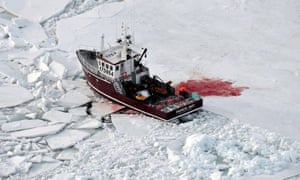
A vessel loaded with seal pelts during the 2009 commercial seal hunt in the Gulf of St Lawrence, Canada.
Pinterest
A vessel loaded with seal pelts during the 2009 commercial seal hunt in the Gulf of St Lawrence, Canada. Photograph: Stewart Cook/Ifaw/EPA

According to Joseph Shawana, head chef and owner of Kū-Kŭm Kitchen: “We did our due diligence when sourcing our meat. All hunters [at SeaDNA] go through rigorous training to ensure they hunt the seals as humanely as possible. And they only harvest what they need – that is something intrinsic in our Indigenous culture. Only take what you need, not what you want.”

Shawana says he is happy to discuss the issue with the protesters, telling them: “Come visit me at the restaurant: I’d love to answer any questions.” In his view, the controversy stems from misinformation. “The Inuit have never harvested white seal pups – that is very frowned upon. Also, Canada has a huge, federally regulated seal industry. The seal hunt is not what it was like before, when the seal population was less than a million – now it’s over seven million.

The commercial seal hunt has been a contentious subject between animal rights activists and Indigenous groups for decades. In the 1970s, Ifaw began to mobilise public opinion against the annual hunt of baby harp seals (known as “whitecoats”) off Canada’s east coast. The organisations used photographs of helpless baby seals being clubbed to death by fishermen to create protest campaigns.

After immense public support, in 1983 the European Economic Community (ECC) banned the importing of seal skin and furs for two years. Public opinion against the seal hunt was so strong that demand for seal pelts and furs dropped dramatically all over the world.

As animal rights organisations celebrated the collapse of Canada’s east-coast whitecoat sealing industry, the Inuit in northern Canada – who do not hunt seal pups, only adult harp seals – suffered from the collapse of the market for seal pelts. Despite a written exemption for Indigenous Inuit hunters, markets across the Arctic (both large-scale commercial and sustainable-use) crashed.

In 1983-85, when the ban went into effect, the average income of an Inuit seal hunter in Resolute Bay fell from Can$54,000 to $1,000. The government of the Northwest Territories estimated that nearly 18 out of 20 Inuit villages lost almost 60% of their communities’ income.

And life in these areas has not got any better since. The region is plagued with the highest unemployment rate in Canada, and the highest suicide rates in the world. A second seal ban, enforced by the European Union in 2010, only exacerbated these issues.

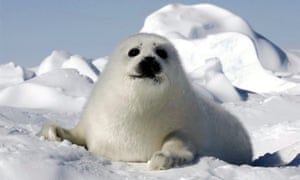
A harp seal pup or ‘whitecoat’ on an ice floe.
Pinterest
A harp seal pup or ‘whitecoat’ on an ice floe. Photograph: Stewart Cook/Ifaw/EPA

Irena Knezevic, a professor at Carleton University in Ottawa specialising in communication around food and health, believes that historically, campaigns by organisations such as Peta and Ifaw have gravely impacted Inuit communities:

“I want to be really cautious by first saying this is not true of all vegan and environmental organisations,” she says. “But I do think organisations like Peta, Ifaw and Sea Shepherd have greatly profited from the shocking and spectacular images of seals being clubbed to death.”

According to Knezevic: “It is disingenuous to say the commercial hunt does not affect or impact the Indigenous hunt. It does, and if you look at it, less than 100,000 seals are killed in Canada each year – while at the same time, two million minks are farmed and killed in Canada every year: 20 times as many, but we don’t see much promotional material with minks by these organisations.”

Ashley Byrne, campaign specialist at Peta, says the organisation’s stance has always been against the commercial seal hunt, not that of the Inuit:

“We have always been very clear about the fact that our campaign is focused entirely on ending the commercial field slaughter only. [This] accounts for about 97% of seals killed in Canada, and has nothing whatsoever to do with the Inuit subsistence hunt. The Canadian government has to hide behind the Inuit people in a dishonest attempt to justify the commercial slaughter, but there’s two different things and our campaign is against the commercial hunt,” says Byrne.

Advertisement

When asked what Peta’s response is to the Inuit community impacted by the campaigns, Byrne suggests public support for cruel products will fall and that alternatives should be explored by the Inuit and the Canadian government.

“We have seen a lot of products fall out of favour as a result [of our campaigns], and you know that is progress. It wouldn’t be right to drag this ethical progression back. With many of these other products that fall out favour, we’ve always advocated for job retraining, for people to be able to use their skills in industries that aren’t dying; [industries] that aren’t being propped up by tax dollar [subsidies].”

According to the Inuit, however, moving into another industry is not only impossible, but offensive: for them, seal hunting holds great cultural significance.

Inuit vs activists: a decades-old conflict

Angry Inuk, a documentary made by filmmaker Alethea Arnaquq-Baril, depicts the decades-old conflict between animal rights and environmental groups and the Inuit. Aaju Peter, an Inuit lawyer from Nunavut, is one of the activists featured in the documentary; she witnessed first-hand the devastation the seal bans caused her people.

“We are trying to feed our communities. When our hunters catch seal they share it – it is the most nutritious food our children and communities can eat. But because the hunter can no longer afford fuel and ammunition due to the collapse of the seal market, it’s really making it hard,” Peter says. “We are the most food insecure region in any developed country. Something needs to change.”

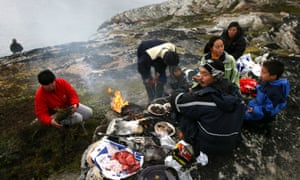
An Inuit fisherman and his family have a seal meat barbeque.
Pinterest
An Inuit fisherman and his family have a seal meat barbeque. Photograph: Uriel Sinai/Getty Images

A report by the Conference Board of Canada found that Nunavut, a territory in northern Canada, was the country’s most food insecure region, with more than half of the Inuit population reporting moderate-to-severe food insecurity. According to the nonprofit organisation Feeding Nunavut, seven in every 10 preschoolers in the area live in food-insecure households, often going to sleep hungry and missing out on essential nutrition.

Although the Canadian government has tried to strengthen the sealing industry by giving tax subsidies to fishermen and enforcing strict quotas on the number of seals allowed to be harvested in a season, vegan and animal rights organisations are not backing down on their fight against the seal hunt.

Tanya Tagaq is an Inuit throat singer from northern Canada. In 2014, she received death threats from animal rights activists after she posted a picture of her infant daughter next to a dead seal for the Sealfie campaign. The same year, after she received the prestigious Polaris Music Prize, she shouted “Fuck Peta” during her acceptance speech in a show of support for the seal hunt. Peta responded with a statement saying she was ill-informed and should “read more”.

“I was born and raised [in Nunavut] and I know how the system works, how people harvest meat and how they process it,” Tagaq says. “The world is burning up for a reason, because people have totally forgotten how to respect the earth, the land, ourselves and each other. The idea some people can’t comprehend is that we [Inuit] might have the key to how to respect animals and how to respect the land. We’re all on the same side here.”

Tagaq says she feels compassion for animal rights activists, because most of them are not aware about the truth behind the seal hunt and other Indigenous practices. “They need to know we have the right to live off of our natural resources, without someone telling us what we are allowed to sell. Seals are our cows, they are our beef and leather, yet cattle markets haven’t crashed due to public opinion and animal rights opposition.”

She adds: “We have the right to hunt. We have the right to use renewable resources to feed our families. We have the right to survive.”

As for Kū-Kŭm Kitchen, its owner Shawana has no plans to change his restaurant’s menu: “I am paying homage to our northern brothers and sisters,” he says. “I will continue to sell seal meat.”

  • If you have experiences relating to this article that you’d like to share, please email us at inequality.project@theguardian.com
  • Follow the Guardian’s Inequality Project on Twitter here

A dirt berm is maintained along the coast of Utqiaġvik, the northernmost city in Alaska, in an effort to slow seawater intrusion from increasingly severe Arctic storms. (Photo: Dahr Jamail)A dirt berm is maintained along the coast of Utqiaġvik, the northernmost city in Alaska, in an effort to slow seawater intrusion from increasingly severe Arctic storms. (Photo: Dahr Jamail)

As the summer Arctic sea ice melts and continues to recede further, the fragile coastline resting atop thawing permafrost is made more vulnerable to the warming waters of the Arctic Ocean, and the waves are given room to grow larger by the vanishing ice.

This past August, every time I walked to the shore in Utqiaġvik, the northernmost point in the US and only 1,300 miles from the North Pole, a large bulldozer was busy maintaining a large dirt barrier that perilously separated the northern edges of the village against the steadily encroaching, increasingly turbulent seas. It is a full-time job, because, as I would soon learn from the president of the Ukpeaġvik Iñupiat Corporation that owns and runs a large portion of the village, the berm requires rebuilding from storms past, ongoing maintenance, and then building back up in preparation for coming storms.

One evening I walked to the coast as large sets of waves, sent from a windstorm out at sea, rolled onto and up the beach. Many of them were large enough to crash against the flanks of the 25-foot berm. As they did, the water jetted up into the air, colored dark brown from the fresh soil that had just been dumped onto the berm. As the waves pulled back into the ocean, they carried with them large clumps of fresh dirt that rolled down the beach into the shallow waters of the Chuchki Sea.

To see more stories like this, visit “Planet or Profit?”

Only rows of the very top portions of older canvas bags filled with soil remained atop portions of the beach, remnants of previous attempts to stop the sea’s relentless march towards the village. Soil from the newest iteration, the large berm, actively covered and rendered impotent the old barrier. In another place on the beach were the top corners of large metal tanks, rusting as they lay side by side in a row, protruding above the sand … for now.

Where I stood, the sea was already washing directly against the manmade barrier. The first row of houses in the village was barely 15 meters from the back of the berm. Not far behind them stood government buildings, the police station, tribal offices. One hundred meters south of me along the coast, larger homes stood atop a bluff that was about five meters tall. A dirt road separated the homes from the edge of the bluff. Waves were already splashing against the bottom of the bluff, as they rolled over the tops of mostly buried sandbags.

The motor of the front-loader rumbled as it scooped up shovelfuls of dark soil from a large pile that had been carried from a gravel pit a half a kilometer inland. Black exhaust smoke billowed from the top of the front-loader as it quickly carried another load of soil to the berm where it slowed and allowed its blade to tip down. Out tumbled another load of future seabed. Underneath it, unseen, methane was already bubbling up to further heat the atmosphere and render these efforts laughable.

More: http://www.truth-out.org/news/item/42413-scientists-warn-of-ecological-armageddon-amid-waves-of-heat-and-climate-refugees

Take action to protect the Arctic Refuge!

Take Action!

Arctic wildlife are already in a race against time living at ground zero for climate change but now their troubles could intensify.

As if the Trump administration’s demands to open the Arctic National Wildlife Refuge to oil and gas development weren’t enough, now Congress is threatening to desecrate these incredible lands and waters by trying to sneak drilling authorization into the budget bills of both houses of Congress.

Tell Congress to stop all attempts to ransack the Arctic Refuge!

The president has made no secret about where his loyalties lie in his unrelenting drive to open the Arctic Refuge to Big Oil – he has even tried to use secret and illegal tactics to speed his agenda.

The one barrier to the Trump administration’s greedy push to put profit above wildlife and habitat in the Arctic Refuge is that it still takes an act of Congress to allow drilling in the coastal plain. But now, anti-wildlife members of Congress are using the budget process to clear that roadblock.

The House budget resolution already includes a provision paving the way for Arctic drilling, and now the Senate Budget Committee is also trying to bury it in its own budget resolution.

Take Action: Don’t let Congress put a price on the wildlife we love.

The Arctic Refuge is a place of unparalleled beauty that supports a vast array of unique and imperiled wildlife – from polar bears and brown bears to musk oxen and arctic foxes. It is also the principal calving grounds for the Porcupine Caribou herd, one of North America’s largest caribou herds.

Contact your members of Congress today and demand they protect the Arctic Refuge for its treasured beauty and for the wildlife that depend on it.

The decision to open one of the world’s largest intact ecosystems, a place of breathtaking beauty and vast, rugged wilderness, to oil and gas development should not be treated as a mere footnote in an unrelated budget process.

The Arctic Refuge deserves better. Wildlife deserves better. And the American people who overwhelmingly support keeping the Arctic Refuge free from destructive drilling deserve better.

Justices deny review of case challenging polar bear habitat

The Supreme Court on Monday refused to hear a challenge to the U.S. Fish and Wildlife Service’s decision to designate 187,000 square miles of Alaska’s coast and waters a critical habitat for the threatened polar bear.

Oil and gas trade associations, several Alaska Native corporations and villages, and the state of Alaska claimed the habitat designation was unjustifiably large. They also claimed the designation would do nothing to help conserve the polar bear.

The Supreme Court’s refusal to hear the case leaves in place a 9th Circuit Court of Appeals ruling upholding the designation.

The court gave no explanation for its decision not to hear the cases.

Nightmare before Christmas: Siberia plans to cull 250,000 reindeer amid anthrax fears

One third of world’s largest reindeer herd could be killed in an effort to prevent the spread of the ‘zombie’ disease in the Russian tundra

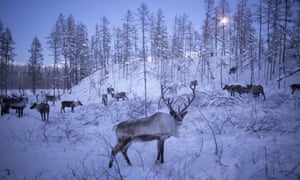
Reindeer culls are traditionally held in November and December, but the number of animals to be killed this year is expected to be much higher because of the threat of an anthrax breakout.
Reindeer culls are traditionally held in November and December, but the number of animals to be killed this year is expected to be much higher because of the threat of an anthrax breakout. Photograph: Amos Chapple/REX

A cull of a quarter of a million reindeer by Christmas has been proposed in northern Siberia in a bid to reduce the risk of an anthrax outbreak.

There are thought to be more than 700,000 animals in the Yamalo-Nenets region, in the arctic zone of the West Siberian plain – the largest herd in the world.

About 300,000 of those are on the Yamal peninsula, prompting concerns of overgrazing and dense herds that could facilitate the spread of disease, the Siberian Times reported.

Dmitry Kobylkin, the governor of Yamalo-Nenets, has called for a proposal for how to reduce the population by 250,000 animals to be finalised by the end of September.

Culls are traditionally held in November and December, but the number of animals to be killed this year is expected to be significantly increased, following outbreaks of anthrax in recent months.

The so-called “zombie” disease is thought to have been resurrected when unusually warm temperatures thawed the carcass of a reindeer that died from anthrax several decades ago, releasing the bacteria.

A state of emergency was imposed in July. A 12-year-old boy from the Yamalo-Nenets region later died after consuming the venison of an infected reindeer.

Some 2,350 reindeer also perished in the outbreaks, reported the Siberian Times, as well as at least four dogs.

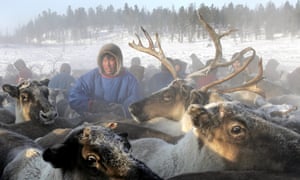
A Nenets herdsman gathers his reindeer as they prepare to leave a site outside the town of Nadym in Siberia. The Nenets people live in snow and freezing temperatures some 260 days of the year and are mainly nomadic reindeer herdsmen.
A Nenets herdsman gathers his reindeer as they prepare to leave a site outside the town of Nadym in Siberia. The Nenets people live in snow and freezing temperatures some 260 days of the year and are mainly nomadic reindeer herdsmen. Photograph: Tatyana Makeyeva/AFP/Getty Images

Officials are now calling for the reindeer population to be reduced, warning that infection can spread rapidly through large herds.

Nikolai Vlasov, the deputy head of Russia’s federal veterinary and phytosanitary surveillance service, told the Siberian Times the more dense an animal population is, the greater the risk of disease transfer.

“Density of livestock, especially in the tundra areas that are very fragile, should be regulated. … It is impossible to breed reindeers without limits.”

More: https://www.theguardian.com/world/2016/sep/30/nightmare-before-christmas-siberia-plans-to-cull-250000-reindeer-amid-anthrax-fears

Climate Change Is Starving North Pole Reindeer

Scientists say while there are more reindeer, they are much smaller in size

The Guardian reports the reindeer are losing access to plants because warmer winter temps mean less snowfall. Without snow, the precipitation that falls is often rain which eventually freezes the ground; the ice sheets serve as a barrier between the reindeer and their food. The changes in temperature also mean reindeer have more food in the warmer months, a change that has led to a population boom. So while the reindeer are smaller, there are more of them.

323 Reindeer Killed by Bolt of Lightning in Norway
A single lightning strike is believed to have killed more than 300 reindeer in Norway.

“Warmer summers are great for reindeer but winters are getting increasingly tough,” the Guardian reports Professor Steve Albon, an who led the reindeer study in conjunction with Norwegian researchers, said. “So far we have more but smaller reindeer.”

The Christian Science Monitor reports the past decade has been hard on the reindeer population. In 2006 and 2013, the Monitor says, over 80,000 reindeer died of starvation linked to warm winters.

[Guardian] full story: http://time.com/4597865/climate-change-is-starving-north-pole-reindeer/?utm_source=feedburner&utm_medium=feed&utm_campaign=Feed%3A+time%2Ftopstories+%28TIME%3A+Top+Stories%29