Army Corps to begin killing birds at Columbia River dam

The plan has critics.

Kierán Suckling, executive director of the Center for Biological Diversity, said there are better ways to protect the fish, such as removing the dams. “The birds are fundamentally not being killed to save the salmon,” he said. “They are being killed to keep the dams in place that are endangering the salmon.”

CLARKSTON, Wash. (AP) – The Army Corps of Engineers this spring

Photo Copyright Jim Robertson

Photo Copyright Jim Robertson

will begin killing birds at some Snake and Columbia river dams to help protect juvenile salmon and steelhead.

The agency unveiled a plan Thursday that will allow as many as 1,200 California gulls, 650 ring-billed gulls and 150 double-crested cormorants to be killed. The birds gather at the dams and feast on the migrating salmon and steelhead which bunch up there.

The Lewiston Tribune said the action will occur at McNary Dam on the Columbia River and Ice Harbor, Lower Monumental, Little Goose and Lower Granite dams on the Snake River.

The corps said birds are typically the single largest cause of juvenile salmon and steelhead mortality. A 2009 study estimated that between 4 percent and 21 percent of smolts passing through the dams were eaten by birds.

The corps has long used non-lethal methods to scare away birds.

The plan has critics.

Kierán Suckling, executive director of the Center for Biological Diversity, said there are better ways to protect the fish, such as removing the dams.

“The birds are fundamentally not being killed to save the salmon,” he said. “They are being killed to keep the dams in place that are endangering the salmon.”

Bruce Henrickson of the Army Corps in Walla Walla said the agency has been encouraged by the National Marine Fisheries Service to consider killing problem birds. He said hazing with water cannons, fire crackers and wires strung above the river that disrupt flight paths will continue to be used.

The corps contracts with the federal Wildlife Services Agency to implement the non-lethal hazing practices. The same agency will use shotguns to kill what Henrickson called problem birds or small groups of birds.

“They observe specific individual or small group behaviors, and if those birds don’t retreat from non-lethal hazing, then lethal take is considered as an option,” he said.

None of the bird species targeted for removal at the dams is listed under the Endangered Species Act but they are protected by the Migratory Bird Treaty Act. An environmental assessment found that 2,500 California gulls, 3,400 ring-billed gulls and 705 cormorants could be killed in Washington without affecting their distribution, abundance or population trends.

http://www.komonews.com/news/local/Army-Corps-to-begin-killing-birds-at-Columbia-River-dam-252917861.html

The Hummingbird Is Getting to be a Pest

DSC_0272Humans aren’t all bad—not all the time, anyway. We may be the most parasitic plague and destructive mutants ever to evolve on Earth, but occasionally our actions can actually help certain other animals.

Sometimes it’s unintentional, such as when people are driving the sandy beaches here030 on the Pacific coast. Vehicles on the soft, upland sand can disrupt or damage endangered snowy plover nests, and when people drive too fast right along the surf they’ve been known to run over migratory shorebirds feeding there. But on exceptionally windy days, while driving the beach in search of pelagic birds, like murres or grebes, washed up after brutal storms and now in need of rehabilitation, I’ve noticed that the shorebirds take refuge in deep tire tracks, hunkering down in the only cover they can find (especially if beachcombers have trucked off all the driftwood logs).

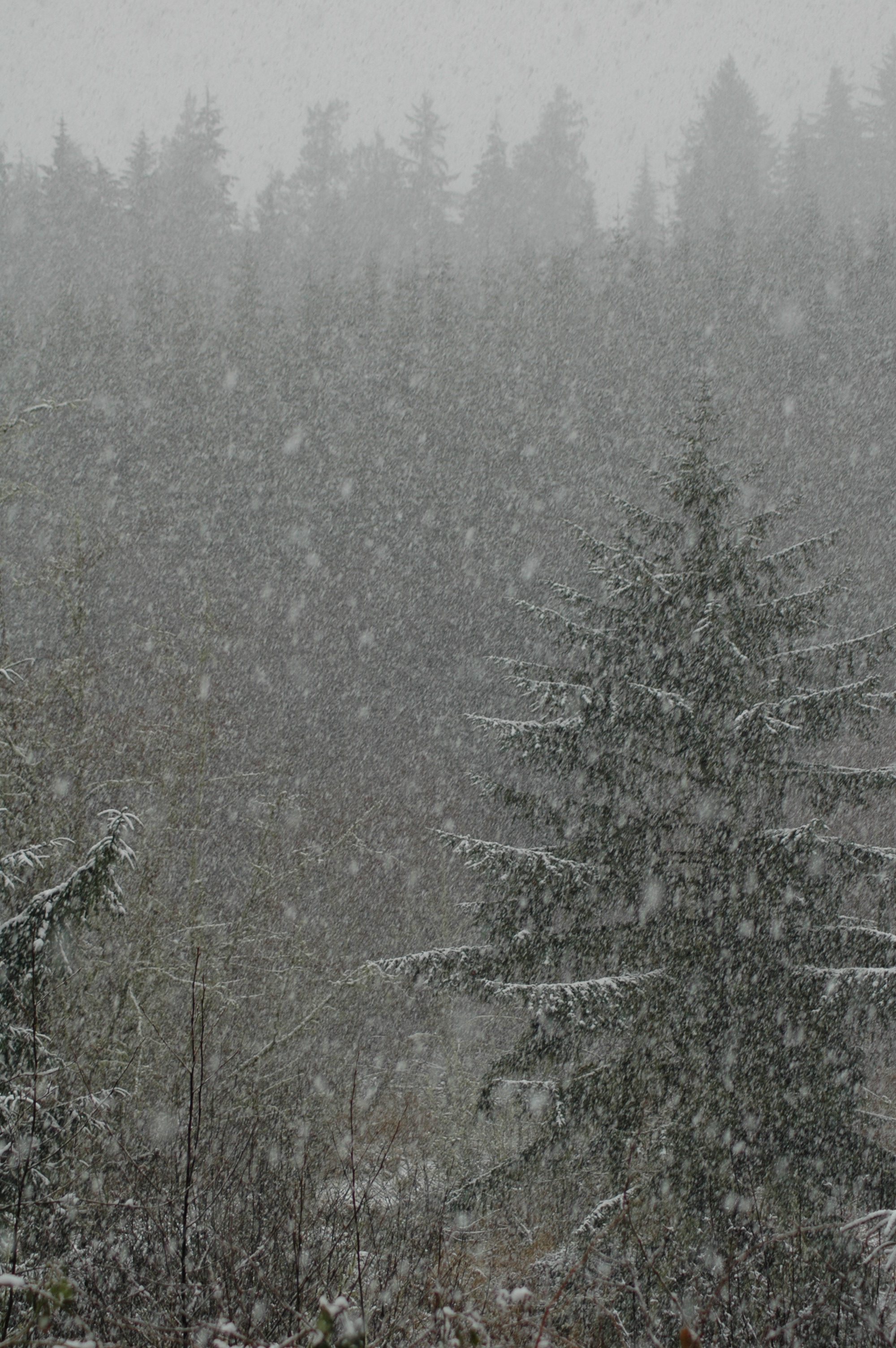
While leaving deep tire tracks in the sand can’t really be considered a direct, intentional act of kindness for an animal, keeping fresh, thawed sugar-water out for the straggler humming bird we’ve had here all winter surely can. The poor bird must have stuck around this normally mild, coastal region, rather than migrating further south, because of the late-blooming honeysuckle and early blossoming salmonberry shrubs. But now an arctic air mass has encroached for a week, bringing with it temperatures in the teens and wind-chills in the single digits. Frozen ponds and snow coating on the Sitka spruces and western hemlock complete this late Christmas-card scene, but I can imagine, to a high strung hummingbird, it must feel like the ice age is back to stay.

Photo Thanks to Linda Delano

Photo Thanks to Linda Delano

My wife has been the one diligently keeping watch over the feeder, being sure to exchange it for a thawed one every other hour on these iciest of days. But at first light this morning, while the coffee was brewing, I went out in my bathrobe before filling the other birds’ feeders and replaced his liquid refreshment. As it was, the hummingbird didn’t show up at until after 8:00.a.m. It must have been hard to leave the thicket he was crouched in and face the frozen wasteland to find out whether or not the human handout had turned into a sugar-water popsicle. He was lucky this morning. Hardly a steaming cup of hot coffee, but it must have seemed like the nectar of the gods to someone with such a high metabolism—especially after a long night spent burning precious energy trying to stay warm.

Were I of a different mindset (i.e., not an animal lover) I might say, “That hummingbird is becoming a pest. It could be considered a safety hazard, or maybe even a road hazard. It could be an exotic or even an invasive species. It might be time to call for a cull, or even a contest hunt on him.” But, fortunately for him, I’m not like that.

DSC_0022


Wildlife Watchers Outnumber Hunters 5-1

Wages from wildlife watchers

FWP takes measured approach to adding new wildlife stakeholders

LAURA LUNDQUIST, Chronicle Staff Writer September 15, 2013

Autumn can seem distant if you’re a hunter with a license burning a hole in your pocket and more than a month left until rifle season.

Big-game rifle hunters must bide their time, sighting in their scopes or scouting their locations while waiting for Oct. 26. Meanwhile, bird hunters and archers are already out in the fields, enduring summer temperatures as they make the best of the time they have.

Such has been the fall ritual for many Montanans.

But just as fall now has fewer cool days, it also has fewer hunters.

That doesn’t bode well for Montana Fish, Wildlife & Parks, which depends on sportsmen’s dollars.

FWP is reassessing its finances to decide how much to increase license fees to manage wildlife through another decade. The dwindling number of sportsmen may require FWP to turn to a new funding pool: the nongame user.

Wildlife watchers and photographers are a growing segment of the population that outnumbers sportsmen 5-to-1 nationwide. In 2011, wildlife watchers spent more than $400 million on viewing equipment and travel in Montana.

While some wildlife watchers agree that they should contribute to wildlife agencies, the details of how to target a fee and what it should pay for have eluded managers for more than 20 years.

“State Parks had that challenge, and they got those license-plate fees,” said Montana Audubon Program Director Janet Ellis. “The Legislature needs to figure out how FWP can get a little slice of something like that.”

For a century, sportsmen have been the financial backbone of state wildlife management because of license fees and taxes on guns, ammunition and fishing gear.

Prior to the digital age, such funding was solid.

According to a U.S. Fish and Wildlife Service national survey, conducted every five years, the number of hunters with Montana tags has been fairly steady since 1991, bouncing around 200,000.

In 2011, when the number of hunters appears to have rebounded nationwide, 50,000 fewer hunters ventured into Montana’s wildlands, according to the survey.

That estimate is not exact, but FWP financial analyst Hank Worsech said license sales supports that decline.

He calculated that license sales have declined 2.5 percent over the past three years. Last year was the first that nonresident hunting licenses didn’t sell out.

The Wildlife Society calculated a 36 percent drop in the sale of Duck Stamps, required for all who hunt waterfowl, since the 1970s.

Some claim nonresident hunters aren’t coming to Montana due to perceptions that predators have eliminated game.

But states without wolves have similar problems. For instance, Vermont had a 50-percent drop in nonresident hunters.

A more worrying explanation is that older hunters are retiring from the game and fewer youth are coming in. Half of hunters are 50 or older. Young people tend to be more interested in video games and social media.

“Western states are competing for less and less people,” Worsech said.

Fishing has managed to hold on to greater popularity, but it too has seen a decline.

The trend could destabilize future FWP funding.

FWP depends on license sales for half its budget because it receives no money from the state’s general fund. Federal money accounts for most of the rest.

“We operate in a world of, ‘We have a product to sell and we run on the revenue we collect.’ We’re different from other state agencies — we run more like a business,” said FWP Finance Division administrator Sue Daly.

License sales were brisk enough until four years ago. But since 2009, sales totals have decreased while the bills continued to increase, putting the agency in the red.

Part of that deficit is planned.

Montana’s Legislature, like those in several states, considers license fee increases every 10 years. During the ensuing decade, the FWP bottom line slides from black to red as inflation rises.

This time, it’s different.

Fewer license sales have combined with inflation to force the bottom line down faster. To slow the decline, FWP cut some programs, and committees are proposing to eliminate some discounted licenses.

If the negative-sales trend continues, legislators will have to hike license fees significantly to keep the budget on par.

That’s bound to prompt complaints from some hunters.

But some, like Randy Newberg, think Montana’s fees are low considering the hunting opportunity they provide and the conservation efforts that benefit the state economy.

“We need to tie (fee increases) to an annual consumer price index. Small increases are easier to swallow than a big increase,” Newberg said. “If hunters aren’t willing to pay more, they’re saying, ‘I’m willing to give up my seat at the table.’”

That table may get a bit more crowded in the next few years.

“I’m trying to sell my members on (fee increases) because there is pushback,” said Montana Wildlife Federation spokesman Nick Gevock. “But we need to look beyond hunters and anglers because everyone enjoys wildlife. Funding will be the conservation challenge of the 21st century.”

FWP has watched as other states recently confronted that challenge.

Wyoming Game and Fish had to cut its 2014 budget by $4.8 million because of declining license sales and the Wyoming Legislature’s refusal to approve a fee increase.

Last summer, after watching its license sales decrease by 25 percent, Idaho Fish and Game organized the Idaho Wildlife Summit to find alternative funding.

“As far as trying to find non-consumptive funding, that was never the overall plan. But we knew we were plowing new ground,” said Idaho game spokesman Mike Keckler. “Since then, the regional working groups have helped us come up with a few ideas for funding nongame programs.”

Keckler said the summit was meant to renew enthusiasm for wildlife.

But some hunting groups weren’t enthusiastic because wildlife watchers include wolf watchers. So controversy overshadowed the search for solutions.

Some groups, such as Sportsmen for Fish and Wildlife, accused the Idaho Summit and the Association of Fish and Wildlife Agencies of favoring wildlife viewers and photographers over hunters.

Non-consumptive users shouldn’t have a say in the wildlife management that sportsmen have paid for, according to a Lobo Watch blog post written by Toby Bridges.

Big Game Forever spokesman Ryan Benson said wolves caused the financial problem, along with associated lawsuits.

“I don’t think we should scrap the user-based model,” Benson said. “States couldn’t protect their wildlife because of a federal program. The federal wolf recovery was a major contributing factor so there should be some help from the federal level.”

In Montana, FWP Commissioner Dan Vermillion recently suggested that wildlife advocates could contribute to that user-based model.

When wolf advocates claimed thousands opposed increasing wolf-hunt quotas, Vermillion suggested that they buy wolf tags. If FWP saw a sudden surge in license sales, then they’d have a better feel for the number of wolf advocates, Vermillion said.

That didn’t go over well with wolf advocates, but Vermillion said FWP needs to find ways to bolster hunters’ contributions.

“I think we’re tricking ourselves if we don’t recognize that Montana and the U.S. are changing. Look at Bozeman – it’s full of wildlife enthusiasts,” Vermillion said. “Hunting and fishing are important, but we need to bring new stakeholders to the table.”

Wolves of the Rockies spokeswoman Kim Bean said advocates would never buy tags because they fund only collaring and lethal control.

Wolfwatcher Coalition executive director Diane Bentivegna said her 250,000 members would send contributions to wildlife agencies in every state that manages wolves but there’s a catch: The money could go only toward non-lethal wildlife programs.

“Under current budgetary structure, we aren’t allowed to say where our contributions go. We would like to introduce legislation that would allow us to fund agencies and have it go toward the programs that we support,” Bentivegna said.

Not every species has a support group, and direct donations aren’t regular enough to help.

Wildlife agencies need to find a vehicle, such as a tax on equipment or a license plate fee, that provides a steady flow of money if non-traditional contributions are to be helpful.

Montana has a non-game donation that residents can make when they file their taxes, but it brings in only about $27,000 a year.

This summer, FWP non-game section chief Laurie Hanauska-Brown organized a meeting to “have the first discussion” with wildlife and birding organizations about how to bring more users in.

“The message can’t be communicated as, ‘C’mon you non-consumptive users, it’s time to step to the table,’” Hanauska-Brown said. “We want to make sure we’re covering all the species so that we can bring more people on board.”

FWP is taking a very long-term approach with non-consumptive funding and will focus on more concrete options first, Hanauska-Brown said.

Newberg, although not opposed, is skeptical that recreational users will step up. He cited the failure of the Conservation and Reinvestment Act in 2000, when several manufacturers and groups rejected a tax on outdoor equipment.

“It was finally their chance to do what hunters do, but they bailed out,” Newberg said. “Hunters and anglers pay an excise tax. It’s disingenuous to say, ‘We want a say in wildlife, but we don’t want to pay for anything.’”
Wildlife Photography ©Jim Robertson, 2013. All Rights Reserved

Wildlife Photography ©Jim Robertson, 2013. All Rights Reserved
The “Conservationists” are about to go hunting – again

The following blog post is from the Friends of Edie Road (a group of  bird watchers and wildlife watchers who are proposing repurposing the Edie Road area to non-hunting for three primary reasons:

1. Having hunters and other visitors present in quantity at the same time, in the same area, is an accident waiting to happen.

2. The growing base of non-hunting visitors is seriously under-represented in the WDFW land use decision making process. There are many more birders and photographers visiting the site than hunters.

3. This site is unique for birding because it is flat, easily accessible, and most important: a large variety of bird species love it.

http://friendsofeideroad.org/blog/blog_index.php?pid=10&p=&search=#blt

August 21st, 2013

I never meant this website to become a sounding board for a debate on the appropriateness of hunting as exemplary human behavior. However, I have received so many emails alleging that hunters are conservationists, I feel compelled to offer a few comments that hopefully some of the email writers may consider.
Conservation, according to my dictionary, is the act of conserving; prevention of injury, decay, waste, or loss; preservation, as conservation of wildlife.
The word conservation has been hijacked by people who take pleasure in doing the exact opposite of the definition. They inflict injury, kill and maim without any emotional regret of compassion, and lay waste to entire flocks of wild creatures every season. Hunting is bloody, emotionless killing for pleasure, and changing the description to “recreational opportunity” does not change the act. Nor does the use of “harvesting” make migrating waterfowl into a crop. Nor does describing a hunter as conservationist make that true. The pheasant season is once again upon us. The state sponsored killing of tame, farm-raised pheasant will frighten most of the shorebirds away from Eide Road until the end of November. This is not the way to demonstrate conservation.
But if you hunters look out along the paved road and parking area, you will see that there is an new and growing group of real conservationists emerging. They have invaded your hunt club by posting their yellow Discover Pass inside their windshield. They don’t carry guns but field guides, spotting scopes, and cameras. They exhibit a combination of awe and respect for the wild creatures they encounter, and shock and dismay at seeing them needlessly killed.
Your email comments talked about hunting’s wonderful heritage, all the land hunters paid for with “duck stamps” and how no species can thrive without scientific management. You have bought into the justification propaganda the NRA fashions to sell more guns and ammo. All the land hunters may have helped set aside does not justify killing the animals that occupy that land — for their own good.
Cruelty by any other name is still cruelty.

Some hunter apparently couldn’t wait for a pheasant so he unloaded his 12 gauge on the Discover Pass sign at Eide Road – mid-August 2013.

Goodbye to Aunt Bert

097

My 91 year old aunt passed away over the weekend. Alberta, or “Aunt Bert,” as I’d always known her, was an inspiration, and shared my love for animals. Whenever we visited, we would trade stories on which birds had been visiting our feeders.

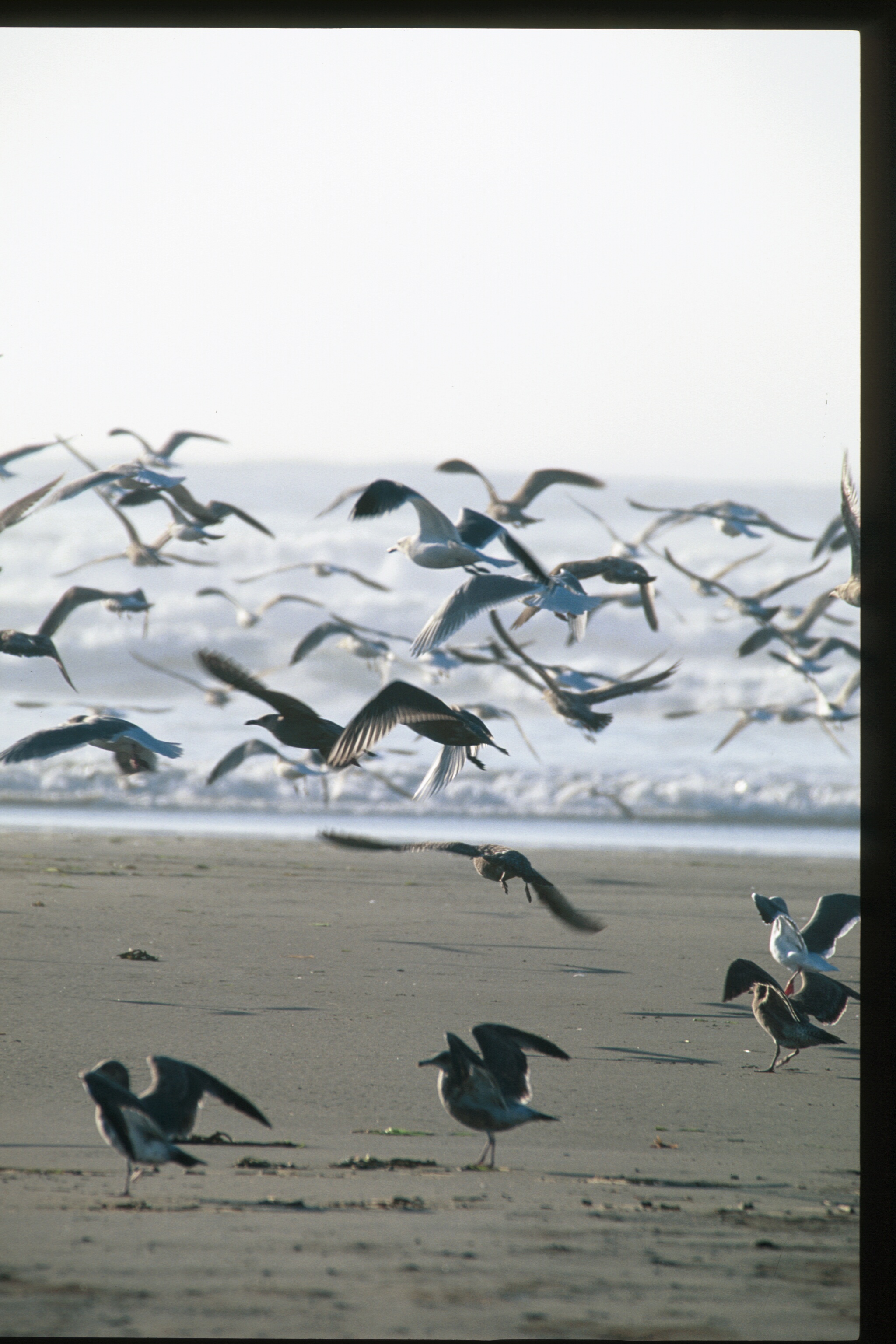
Well into her ‘80s she could be found feeding the gulls at the nearby Seaview Pacific Ocean beach approach or walking her dog, Duffy, along the quiet streets of her small coastal town neighborhood.

Aunt Bert was an exceptionally kind and caring woman who will be missed by people and animals alike.

Photography ©Jim Robertson, 2013. All Rights Reserved
Photography ©Jim Robertson, 2013. All Rights Reserved

Letting Wildlife Live Makes Good Economic Sense

Hunting vs Birding and Wildlife Watching

June 2012
Peter M. W. Murray

•Birding and Wildlife watching contributed $38.4 billion dollars to the nation’s economy in 2001. This resulted in $95.8 billion added to the economy, accounted for over 1 million jobs and 13 billion in tax revenue.
•Birdwatching is the fastest growing form of outdoor recreation….up 236 % from 1982- 2001. Birders spent $32 billion, generating $85 billion of economic benefits to the country, produced $13 billion of tax revenue and accounted for 863,406 jobs.
•Hunting and Fishing contributed $24.8 billion to the nation’s economy in 2001. This added $67 billion to the economy and accounted for over 575,000 jobs. $2.3 billion in taxes were generated by this sector of the economy.(Int Ass of Fish and Wildlife Agencies)
•2010 Yellowstone had 3,640,205 visitors.
•$2.5 billion was spent by tourists in Montana in 2010.

Photo copyright Jim Robertson

Photo copyright Jim Robertson