Hunting is Legal Animal Cruelty

When is an act of cruelty to animals not considered a crime?

When it’s committed in the name of sport.

“Injuring or killing any animal, outside of its permitted hunting season, is a crime.”

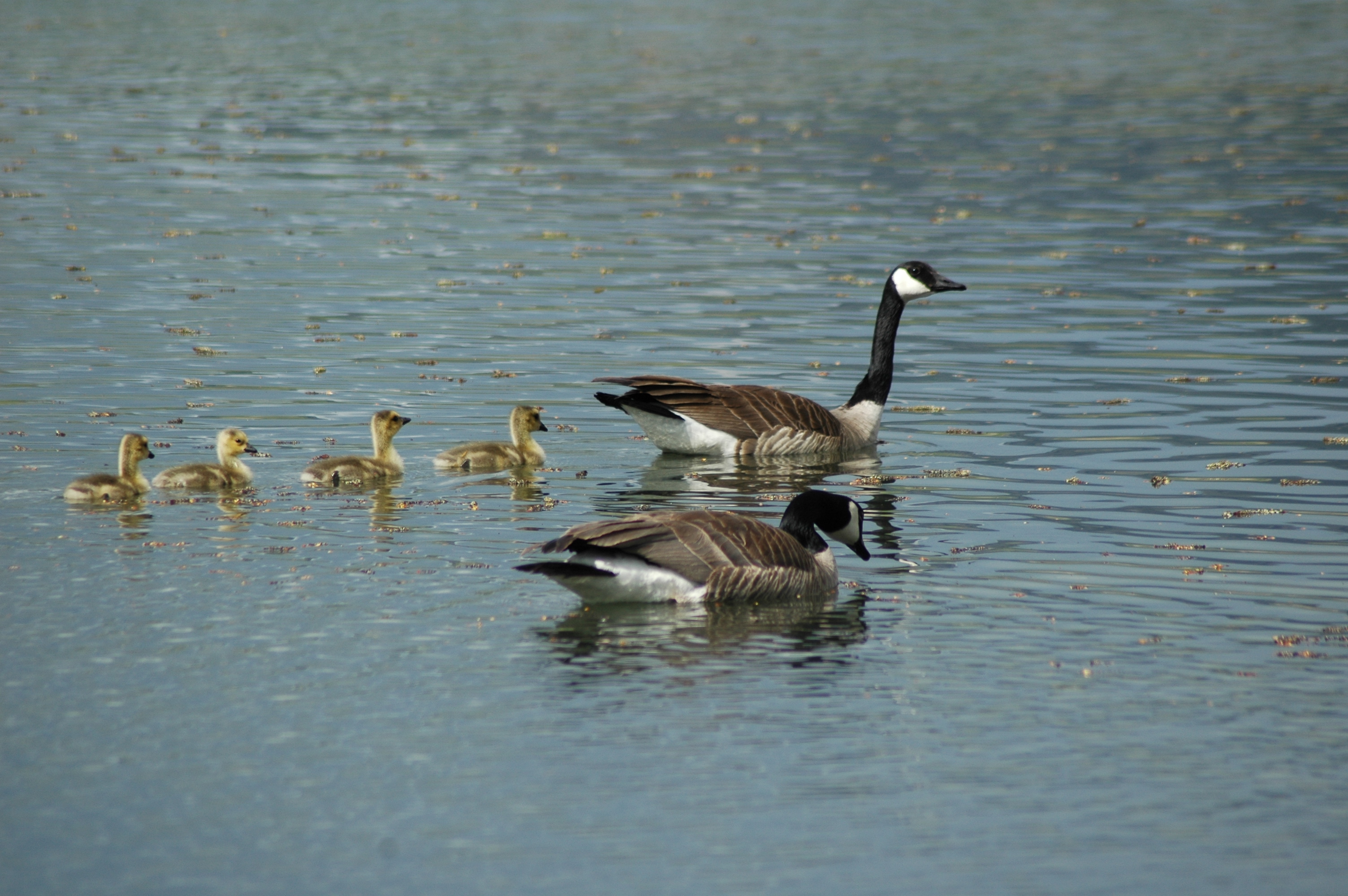
That quote was from Putnam County SPCA Chief Ken Ross, in response to the shooting of a Canada goose by a man annoyed that geese leave their droppings in an area where human children might play. The entire quote read: “In New York State, all animals are protected under cruelty statutes. Injuring or killing any animal, outside of its permitted hunting season, is a crime” (my emphasis added).

Clearly, even in a state as progressive as New York, “sportsmen” like hunters, fishers and trappers are given a free pass to get away with the crime of animal cruelty. At the risk of undermining the few laws currently in existence protecting non-humans, it’s time to recognize the tradition of hunting as nothing more than legalized cruelty to animals.

Text and Wildlife Photography ©Jim Robertson, 2013. All Rights Reserved

Text and Wildlife Photography ©Jim Robertson, 2013. All Rights Reserved

Sick Minds Think Alike

Well, the Boston bombers are finally caught or killed and the streets are safe to jog on once again. Now, the only questions that remain are, what kind of people use gunpowder and ball bearings to kill their fellow sentient beings, and why? Well, I ask those questions every day—at least during waterfowl hunting season.

Maliciously spraying lead into a flock of migratory birds may not seem like terrorism to you, but to the ducks and geese on the receiving end of the shrapnel, it certainly does. Don’t get me wrong and somehow think I’m in any way trying to belittle or brush off the horrendous cruelty inflicted on others by the Boston bombers. No, quite the opposite—I want to get to the root of this kind of evil and weed it out of our species, if possible.

So why do people do it? What could possibly motivate someone to bury any scrap of compassion they might have and prey on the innocent? How do they justify the act of killing so many and how can they rationalize away the cruelty they’ve inflicted?

Perhaps the answer can be found in a recent quote from filmmaker Jennifer Siebel Newsom, in this case talking about the growing menace of violence against women: “…it’s about a culture that views women as objects to be acted upon rather than fully realized human beings,”

Objectification—now, isn’t that just what we’re talking about when someone kills, bullies or otherwise victimizes another to further an agenda or satisfy their own self interests? Just as the abuser objectifies women and the bomber objectifies innocent bystanders, hunters view their non-human targets as objects to be acted upon, rather than as fully realized beings.

And speaking of objectifying birds, here’s Huffington Post travel blogger William D. Chalmers’ idea of a joke in the face of a potential global pandemic: an article entitled, “Avoiding Avian Flu While Traveling in China,” wherein he lists the “…top 10 things to avoid in Shanghai as a traveler during the recent avian flu outbreak:

1. No wet markets where chickens are “processed” for dinner. They do things different here in China, no plastic-wrapped boneless chicken breasts in aisle three… they eye-ball their dinner.

2. No squab on a stick as pigeons may be a migratory transmitter. Oh, sorry, you didn’t know squab was pigeon! The things you learn traveling.

3. No less-than-over-hard runny eggs for breakfast. And push away that soft boiled egg too.

4. Avoid alternative modes of popular transportation used by farmers, such as chicken buses!

5. Attracting and posing for pictures with flocks of pigeons in local parks and gardens is probably not a good use of your time.

6. Although well-cooked poultry is fine, you might want to rethink that kung pao chicken or chicken satay. And chicken soup may not be the cure for what ails you.

7. Look on the bright side: eating out in Shanghai is cheaper as KFC is offering super special promotions.

8. While visiting China and jet-lagged up at 3 a.m., maybe you should change the channel when Alfred Hitchcock’s Birds comes on.

9. Try to forget the menacing virus; odds are you’ll probably succumb to the smog or a traffic accident.

10. Three words: designer surgical masks! They are all the rage among fashionistas here.”

Okay, well I’ve got another point to add to his list:
11. Forget the KFC or other over-cooked poultry products—try the tofu; that way you won’t bring the bird flu back home with you to spread among the rest of us…

DSC_0035

How Do I Hate Thee, Let Me Count the Ways

Now before you go taking offense to this post’s title, let me reassure you that it’s not directed specifically to you, dear reader. I know human beings are not infallible, yet only a few are irredeemable. No, the title is meant for the species Homo sapiens in general, as in…

Humankind, how do I hate thee, let me count the ways:

– I hate that whenever I walk quietly past a local pond, all the ducks, geese and herons rise up and take flight in mortal terror at the sight of a possibly armed and potentially deadly human.
– I can’t stand that the fear of man has become so prevalent that many of our fellow mammalian species have had to adapt by becoming nocturnal.
– I hate that there’s almost nowhere left on the planet where you don’t hear some annoying human noise during the day or see their lights at night.
– I loathe the fact that soon the only species in existence will be those that are forced to serve humankind.
– I hate that the only time wildlife can catch a break is when humans are busy warring with each other.
– And I find insufferable that the most evil genes over the ages keep getting passed on to future generations.

Text and Wildlife Photography ©Jim Robertson, 2013. All Rights Reserved

Text and Wildlife Photography ©Jim Robertson, 2013. All Rights Reserved

A Sick Repugnance

Washington’s “waterfowl” (duck and goose) season is finally over—and not a moment too soon. As I mentioned in yesterday’s post, the Elmers were out in force on the last day of the season, declaring all-out war-on-all-things-avian for the last time…until the next fall.

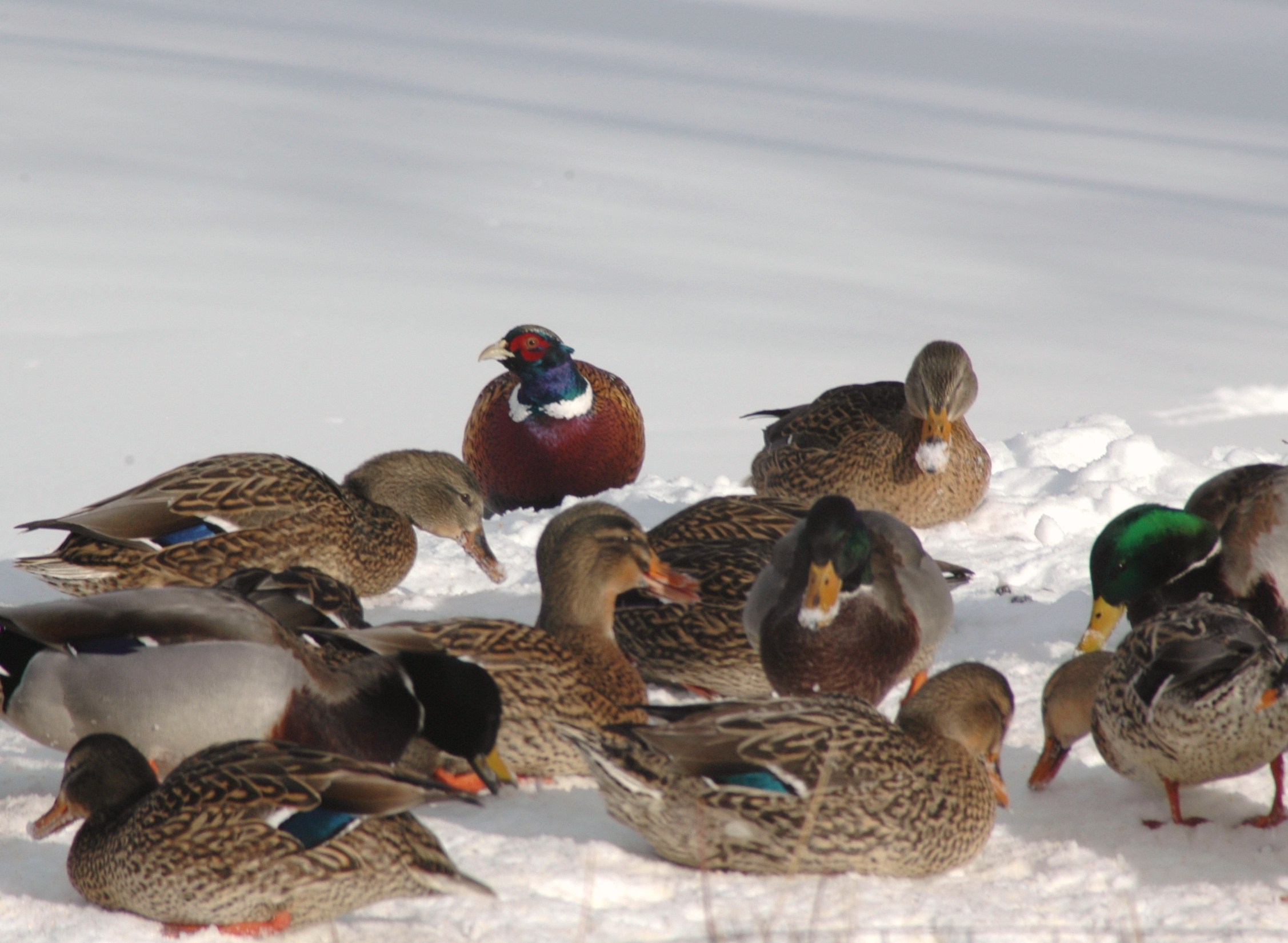
But the war is over for now and, as if right on cue, the geese are pairing up for their breeding season. Hunting them this time of year is especially cruel, considering that geese mate for life.

Farley Mowat writes here of the wrongheadedness of hunting intelligent animals such as geese:

the dawn was pierced by the sonorous cries of seemingly endless flocks of geese that cam drifting, wraithlike, overhead. They were flying low that day. Snow Geese, startling white of breast, with jet-black wingtips, beat past while flocks of piebald wavies kept station at their flanks. An immense V of Canadas came close behind. As the rush of air through their great pinions sounded in our ears, we jumped up and fired. The sound of the shots seemed puny, and was lost at once in the immensity of wind and wings.

One goose fell, appearing gigantic in the tenuous light as it spiralled sharply down. It struck the water a hundred yards from shore and I saw that it had only been winged. It swam off into the growing storm, its neck outstreched, calling…calling…calling after the fast-disappearing flock.

Driving home to Saskatoon that night I felt a sick repugnance for what we had done…

DSC_0014 (3)

Chapter Titles

Here’s the Table of Contents for Exposing the Big Game?
Foreword by Captain Paul Watson

Introduction

Chapter 1) Hide-hunting Holocaust Survivors Still under Fire

Chapter 2) An Act of Bison Altruism

Chapter 3) War on Coyotes an Exercise in Futility and Cruelty

Chapter 4) Time to End a Twisted Tradition

Chapter 5) Avian Superstar Both Athlete and Egghead

Chapter 6) From the Brink of Oblivion and Back Again?

Chapter 7) A Day in the Sun for the Hayden Wolves

Chapter 8) Critical Cornerstone of a Crumbling Castle

Chapter 9) Bears Show More Restraint than Ursiphobic Elmers

Chapter 10) The Fall of Autumn’s Envoy

Chapter 11) Inside the Hunter’s Mind

Chapter 12) A Magical World of Oneness

Chapter 13) Living Targets of a Dying Sport

Chapter 14) A Few Words on Ethical Wildlife Photography

In Closing

Acknowledgements:

Looking back, this was not, at the outset, planned as a podium from which to lambaste anyone’s hobby or heritage, but was originally intended as a venue for relating some of the behaviors and capabilities I’d observed among animals living in the wild, and as a celebration of life along the compassion continuum. However, after delving deeper into the histories of the species covered here—thanks in part to the invaluable references listed below—I found it impossible to simply depict their natural activities without also chronicling the shocking stories of abuse they have suffered at the hands of man. It would have been doing the animals a disservice to merely record how they naturally lived without at least alluding to the far-reaching and pervasive ways that human actions have altered their lives and sometimes their very natures. And the facts are clear: there has been no greater direct human impact on wildlife than the ongoing threat of hunting. As with the other pertinent and profound quotes from a variety of enlightened sources, this one from Edward Abbey proficiently puts it in a nutshell, “It is not enough to understand the natural world. The point is to defend and preserve it.”

The Dreaded Day is Upon Us

I awoke this morning to the sound of angry gunfire. Not just the occasional, distant pop, pop but a constant blam, blam, blam symptomatic of wartime—or of people shooting blindly into a whole flock or herd of fleeing animals. I knew it was almost “general deer season,” but this sounded more like the kind of mindless blasting that goes on during goose and duck season in the winter months around here. So I checked the Washington “game” regulations and sure enough, an all-out “incredible war on wildlife” (as Cleveland Amory put it) had begun!

Not only is Oct. 13th (fittingly) the opening day of deer season, it’s also an early opener on ducks and geese today as well. From now until the end of November, no deer, elk, goose, duck or bear is safe from human harm. Meanwhile, species like cougar, bobcat, fox or raccoon will be under the gun until mid-March. And coyotes, crows and other “common” animals can be killed year-round in this supposedly blue state. The only beings not on the list of allowable targets are six endangered species (who of course were driven to the edge of extinction by overhunting decades ago).

I knew this dreaded day was coming; I just hoped it wouldn’t get here this soon. On the bright side, this is also the first day of a long streak of steady fall rain storms which should make for some rusty guns, water-logged campsites and miserably wet nimrods.

Text and Wildlife Photography ©Jim Robertson

For the Bragging Rights

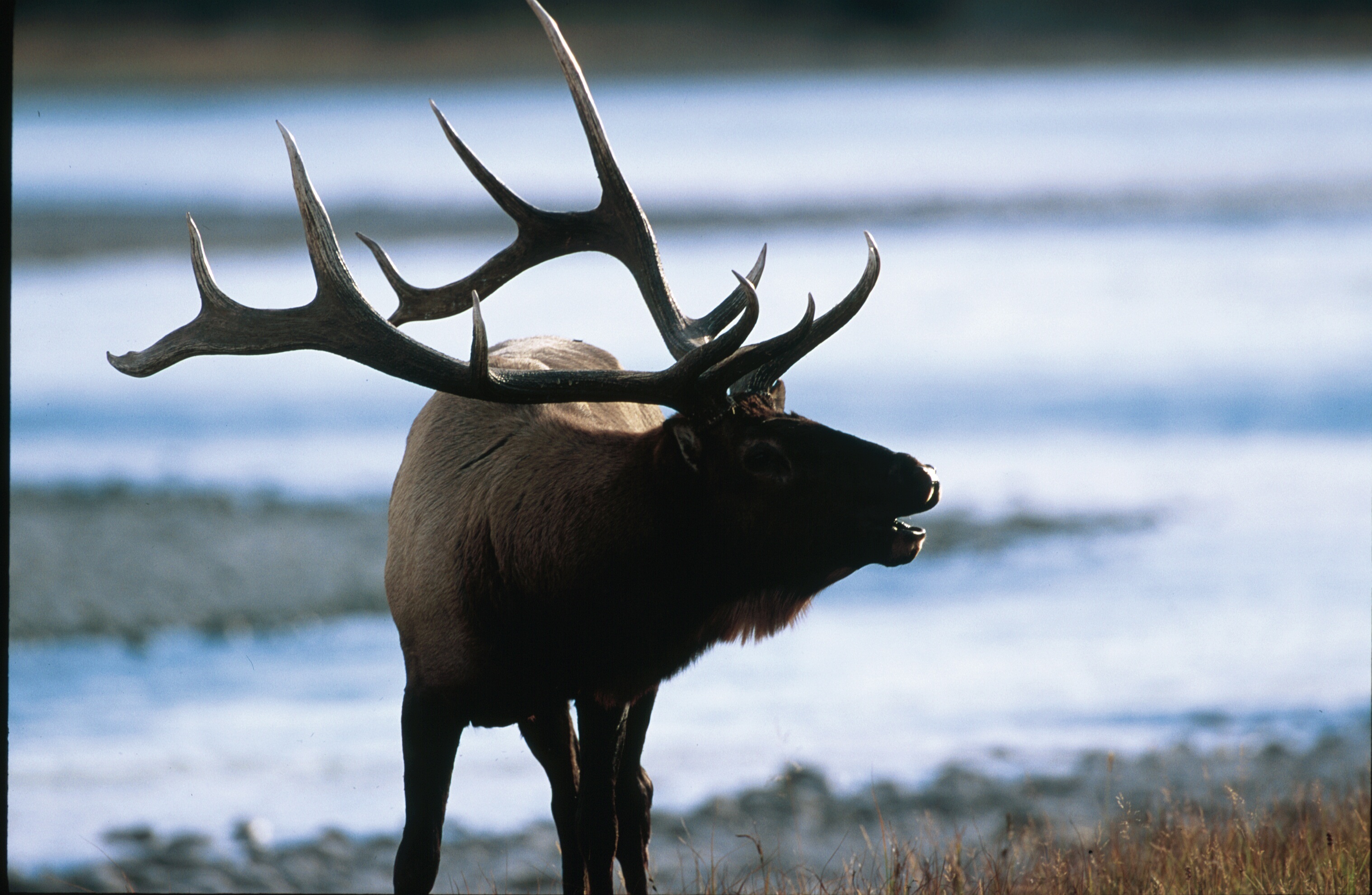
Autumn in elk country would not be complete without the stirring sound of solicitous bulls bugling-in the season of brightly colored leaves, shorter days and cooler nights. Nothing, save for the clamor of great flocks of Canada geese, trumpeter swans or sandhill cranes announcing their southward migration, is more symbolic of the time of year. And just as any pond or river along their flyway devoid of the distinctive din of wandering waterfowl seems exceedingly still and empty, any forest or field bereft of the bugling of bull elk feels sadly deserted and lifeless.

Yet there are broad expanses of the continent, once familiar with these essential sounds of autumn, where now only the blare of gunfire resounds. By the end of the nineteenth century, the great wave of humanity blowing westward with the force of a category five hurricane—leveling nearly everything in its destructive path—had cut down the vast elk herds, leaving only remnants of their population in its wake.

Nowadays, a different kind of rite rings-in the coming of autumn across much of the land. Following in the ignoble footsteps of their predecessors who hunted to extinction two subspecies, the Mirriam’s and the Eastern elk, nimrods by the thousands run rampant on the woodlands and inundate the countryside, hoping to relive the gory glory days of the 1800s.

On the way back from a trip early last evening I saw one such nimrod as I turned at the local mini-market on the final stretch home. I have no doubt in my mind that he was parked there just to show off his kill; the antlers of a once proud, now degraded and deceased bull elk were intentionally draped over the tailgate of the assassin’s truck—clearly on display.

I can’t say that I see just what the hunter was so proud of. It’s not like he personally brought down the mighty animal with his bare hands. Elk follow a pretty predictable path this time of year, and the bulls are distracted and preoccupied with escorting their harems around. Taking advantage of them during their mating season is about as loathsome as anything a human can come up with (and that’s saying a lot).

All a deceitful sportsman has to do is blow an imitation elk bugle to lure a competitive bull within range of their tree stand or wait in hiding above the herd’s traditional trail to the evening feeding grounds. When the procession passes by (right below the camouflaged killer’s perch), the most challenging thing for the sniper is deciding which individual animal to shoot or impale with an arrow.

The fact that they let groups of cows and young spike bulls pass by and wait for the largest, “trophy” bull is proof positive that they’re not hunting for food, but rather for sport—and for bragging rights.

____________________________

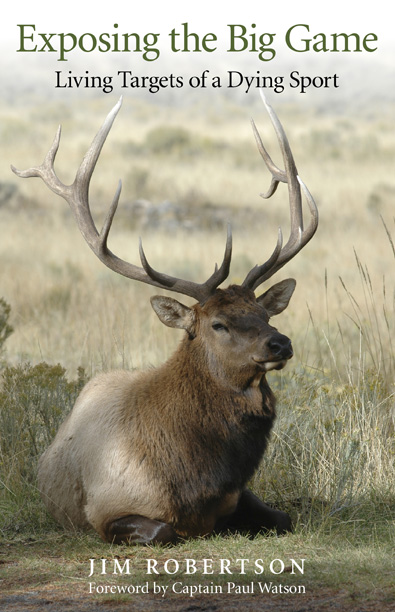
The first portion of this post was excerpted from the chapter, “The Fall of Autumn’s Envoy,” in the book, Exposing the Big Game: Living Targets of a Dying Sport

Text and Wildlife Photography ©Jim Robertson