Why did the Crown waste resources prosecuting woman who gave water to pigs?

Animal rights activist Anita Krajnc gives water to a pig in a truck

http://news.nationalpost.com/full-comment/christie-blatchford-on-anita-krajnc

by Christie Blatchford

These days, you can hardly pick up a paper or click on a news site without reading another story about the woes of the Canadian criminal courts.

They’re chronically short of judges! There aren’t enough Crown prosecutors! Legal aid is a mess and no one qualifies to get a lawyer any more! The buildings are old and crumbling!

And delay: Such a hue and cry about delay in the courts.

Since about six months ago, when in a case called R v Jordan the Supreme Court of Canada pronounced upon the unacceptable length of time it takes to get a case to trial in this country, and blamed what it called “a culture of complacency,” knickers have been in a knot across the land.

Defence lawyers are pressing to have charges against their clients dismissed because of egregious delay, years sometimes. Prosecutors say no, wait a minute – we’re doing our best here with limited resources. Judges are all over the map, here throwing out cases, there throwing up their hands. There is wild talk of such drastic measures as doing away with preliminary hearings.

Halton Region, west of Toronto, is no different, and maybe worse.

A simple Google search reveals that for the past five years, there’s been a steady drumbeat of whingeing emanating from the bar and the judiciary in the area, particularly about the “unmitigated disaster” that is the Milton courthouse, as one local lawyer has called it.

Area judges have taken judicial notice of the situation, meaning they’ve worked criticism of government into their decisions.

“Let the ministries that fund and operate the various arms of our court system be forewarned,” Ontario Court Judge Stephen Brown said in a March 8, 2012 decision in which he tossed a case of impaired driving. “Failure to increase judicial and physical resources to match the growing population will quite possibly result in a floor of delay applications being granted.”

Seven months later, Brown was at it again: “Because of the chronic persistent and growing demands on the limited resources in Halton Region, we are slipping further into a crisis situation where the lack of allocation of government resources by way of an increase in judicial resources and a proper physical plant and infrastructure to deal with the explosive growth in this region is leading to a breaking point.”

So the point is made, and undoubtedly legitimate: There’s no time or resources to waste in the justice system.

It’s in this light that the trial of animal rights activist Anita Krajnc might be considered.

On June 22 two years ago, Krajnc and other activists on a traffic island took advantage of a stopped tractor trailer (it was stopped at a red light) to talk to and pet the 190 pigs inside being taken to a nearby slaughterhouse in Burlington.

As a short video that was played at trial shows, the pigs were clearly thirsty and some of them were panting, and breathing open-mouthed.

Krajnc began giving some of them water.

The truck driver got out of the vehicle, approached her and asked what she was doing, told her to stop, and then phoned 911. He later went to the local police station to file a complaint, and Krajnc was charged.

(In the interests of full disclosure, let it be known that I have a white-and-pink English bull terrier, aka “a pig dog”, so named for its magnificent resemblance to a pig – big pig ears, piggy sort of snout and body, sort of dogs in pig skin. Balancing off that bias, I eat bacon, or at least I did until I read the expert report of Dr. Lori Marino, a neuroscientist who testified at trial. Her evidence was that in fact pigs are dog-like, every bit as sentient and capable of feelings as dogs are. They are also ridiculously cute, but that’s just my view.)

In any case, however one sees Krajnc’s cause, the fact is that the overburdened and impoverished justice system nonetheless allowed this prosecution not only to proceed, but also to eat up seven full days of court time, and all the public resources that entails – seven days of salary for the judge and prosecutor Harutyun Apel, court officials and security officers, court reporter and clerk, etc.

Blessedly, both for Krajnc and the taxpayer, she was represented pro bono by lawyers Gary Grill and James Silver.

Prosecutors had offered to settle the case with a peace bond, Grill said in a phone interview, but that was hardly reasonable given “she believes she’s done absolutely nothing wrong” and also recognized a PR and public education opportunity when she sees one.

A request for comment to prosecutor Apel Thursday resulted in a referral to the spokesperson for the attorney general’s ministry, who at first referred the query to the agriculture ministry, but when pressed – this is an issue which is clearly within the AG’s bailiwick — then declined to comment until the appeal period is over.

The government is considering an appeal? What, insufficient public funds haven’t yet been squandered?

As Gary Grill said, “There’s definitely real money being spent on this. Nobody in Milton can ever say they don’t have the resources.” Amen.

My Trip to the Ice: Visiting Baby Harp Seals with Sea Shepherd

My Trip to the Ice: Visiting Baby Harp Seals with Sea Shepherd

By Camille Labchuk, Executive Director

The commercial seal slaughter has long been a bloody stain on Canada’s reputation. Every spring, the Canadian government lets sealers club, shoot, and skin baby seals in Atlantic Canada—most of them only a few weeks or months old—simply so their fur can be turned into luxury products for foreign markets.

I was pleased to team up this year with our friends at the Sea Shepherd Conservation Society as a crew member for Operation Ice Watch 2017. Sea Shepherd and its founder Paul Watson have been fighting to save seals for over 40 years. On this trip our mission was to visit seals on the ice with Hollywood actress Michelle Rodriguez, and remind the world to keep pressuring Canada to end the bloody slaughter of baby seals.

The seal slaughter has always been devastating to me. I grew up in Prince Edward Island—not far from where the killing takes place—and I can still remember the shock and sadness I felt as a child when I first saw footage of gentle baby seals seals being chased and clubbed by sealers.

Since then, I’ve been lucky enough to meet harp seals in their icy nursery. Spending time with these creatures is an incredible experience, but meeting them makes it even more heartbreaking to return to the ice a few short weeks later when sealing season opened. Working with Humane Society International/Canada, I’ve helped document the slaughter, expose its cruelty to people around the world, and push other countries to ban seal product imports. Fighting to save seals helped inspire me to become a lawyer and use the law as tool to protect animals.

© Bernard Sidler

Ten years after my first visit to the ice, I returned. On our first day the Sea Shepherd team took off from the Charlottetown airport and flew out to the Gulf of St. Lawrence, hoping to find the seal nursery. Searching for seals is akin to finding a needle in a haystack. The Gulf is around 155,000 square kilometres, and spotting a patch of seals that may be only a few kilometres wide can sometimes feel impossible.

But as I looked down from the helicopter, not only did I not see seals, I didn’t even see any ice. I saw large expanses of dark, open water instead of the solid, packed sea ice that should be there at that time of year. Harp seals are an ice-dependent species; they need thick sea ice to give birth to their babies on, nurse them, and let them learn to swim and fish on their own. If mother seals can’t find enough ice to give birth on, or if it melts from underneath them, seal pups will drown.

Camille Labchuk, Yana Watson, Brigitte Breau, Clementine Palanca. © Bernard Sidler

After hours of flying, we finally found a small patch of packed ice and a harp seal nursery with only a few thousand seals—a far cry from the tens of thousands we expected. We landed on the ice and stepped out into the icy wonderland in the midst of hundreds of baby whitecoat seals—newborn animals who were still nursing their mothers.

Whitecoat harp seal. © Camille Labchuk

No matter how many times I visit seals, it always feels magical. Baby seals are incredibly trusting; they have never seen humans before and don’t fear us. They look up with black, liquid eyes, make soft noises, and if you lay still on the ice they may even come up to have a closer look. It’s especially incredible to watch them doze in the sun, warm in their thick fur.

Beater seal. © Camille Labchuk

We also saw a few “beater” seals—still babies, but slightly older as they have shed their white fur in favour of a silvery, spotted coat. (They’re called beaters because they beat their flippers in the water while learning to swim.) Whitecoats are protected from being killed, but once they begin to moult at only a few weeks of age and become beaters, they will be clubbed and shot. Their silver, spotted fur is what sealers are after.

On our second day, we returned to the area where the nursery had been only to find the solid ice was broken up by warmer weather and strong storm winds. After hours of zigzagging back and forth in search of the nursery, we feared the worst—that the babies drowned when the ice smashed and melted beneath them.

On our third and final day, we cheered after finally spotted a small scattering of seals, but the ice was still broken and thin. The helicopters couldn’t land on the precarious ice pans, so they dropped us off and hovered nearby. Our worst fears were confirmed—the larger patch of seals we saw on the first day was still nowhere to be found, suggesting they likely perished in the melting and broken ice.

Sealing, 2009, © Camille Labchuk

Harp seals have endured centuries of being clubbed and shot to death for their fur, but now they’re also facing global warming, which is literally melting their habitat out from underneath them. Sea ice has declined drastically over the past few decades, yet even with so many drowned seal pups, the Canadian government opened the hunt up early. It’s heartbreaking to think of the peace and beauty of the harp seal nursery being shattered by industrial sealing boats, gunfire, and hakapiks, with the baby seals bloodied and dead.

The good news is that dozens of countries around the world, including the entire European Union, have closed their borders to products of the cruel commercial seal slaughter. With markets shrinking, pelt prices are lower and fewer seals are being killed.

The seal hunt is an outdated, dying industry that is being kept on artificial life support by massive cash subsidies from taxpayers—even though most Canadians oppose commercial sealing. Please ask Prime Minister Justin Trudeau to end the East Coast seal hunt, buy back sealing licenses, and support humane ecotourism instead of brutal seal killing.

Saskatoon zoo opening research facility to study orphaned grizzly bears

Bears Mistaya and Koda will help shed light on those in the wild

By Alex Soloducha, CBC News Posted: Apr 25, 2017 4:12 PM CT

The Saskatoon Forestry Farm Park and Zoo is beginning a new partnership with the Foothills Research Institute to start a grizzly bear research program in the city.

The five-year agreement between the two organizations will allow Foothills scientists to use Saskatoon zoo facilities to take part in conservation research on a variety of animals of different species currently housed there, starting with two orphaned grizzly bears.

The Saskatoon Zoo acquired two young grizzly bears in 2006. Mistaya and Koda were both orphaned in Alberta, paired at the Calgary Zoo and later transferred to their permanent home in Saskatoon.

Manager of the Saskatoon zoo, Tim Sinclair-Smith, said the organization is working to make research and conservation a priority.

“We shouldn’t have them here at all if we’re just going to display them,” he said.

Foothills researchers have been working on long-term conservation of grizzly bears in Alberta since 1999.

Their primary objective is to understand how the health of individual grizzly bears is influenced by human activities and changing environmental conditions. The second goal is to examine how that health affects the growth, stability and resilience of grizzly bear populations.

This year, during the bears’ hibernation, management at the zoo was working on making a connection with Foothills.

The City of Saskatoon will pool in-kind resources to create a Wildlife Health Centre, consisting of a laboratory for Foothills researchers. No changes will be done to the structure of the facilities, which are being outfitted with necessary lab equipment.

“For them to build a facility … you’re talking millions and millions of dollars,” Sinclair-Smith said. “This was a great opportunity for them to be able to utilize the data they can gather from these guys and use them for a baseline for all the research that they’re doing with the bears in the wild.”

The Foothills scientists will test samples of hair, feathers and scales picked up through non-invasive sample gathering.

Their research findings will often be communicated directly with zoo visitors.

With files from Charles Hamilton

 
http://www.cbc.ca/news/canada/saskatchewan/saskatoon-zoo-opens-new-med-facility-1.4085359

87% of B.C. Grizzly Deaths Due to Trophy Hunting

https://www.desmog.ca/2017/04/12/87-b-c-grizzly-deaths-due-trophy-hunting-records-reveal?utm_source=Newsletter&utm_medium=DSCWeekly&utm_campaign=April_13_2017

Grizzly bear trophy hunt

Eighty-seven per cent of known, human-caused grizzly bear deaths in B.C. are attributable to trophy hunters, who have killed 12,026 grizzly bears since the government began keeping records in 1975, according to data obtained by David Suzuki Foundation.*

In 2016, 274 grizzlies were killed by humans — the vast majority of which (235) were killed by trophy hunters.

B.C. currently sanctions a legal trophy hunt by both resident and foreign hunters. Non-resident hunters killed almost 30 per cent of the grizzlies in the 2016 hunt.

The trophy hunt has become a hot election issue with the NDP and Green Party vowing to end the hunt if elected. An Insights West survey conducted in the fall of 2016 found 91 percent of British Columbians are opposed to trophy hunting.

Meantime, Tweet: The @BCLiberals are the party of choice for international #trophyhunters http://bit.ly/2p7i3c2 #bcpoli #bcelxn17 #grizzlyhunt #BanBigMoneythe B.C. Liberals are the party of choice for international trophy hunters — who donated $60,000 to the Guide Outfitters Association of B.C. to help prevent an NDP win.

The Canadian chapter of Safari Club International posted to Facebook: “NDP have vowed to end the Grizzly hunt in BC if elected. SCI chapters from CANADA and the USA banded together donating $60000.00 [sic].”

The Guide Outfitters lobby to continue trophy hunting, which attracts wealthy customers from around the world who pay as much as $20,000 for a hunt. The annual spring bear hunt began April 1.

Source: David Suzuki Foundation

B.C. Premier Christy Clark is a vocal supporter of the trophy hunting industry and a past winner of the Guide Outfitter association’s President’s Award.

B.C. has some of the weakest political donations rules in Canada, which allows anyone (including foreign corporations) to donate unlimited amounts of cash.

The New York Times recently called B.C. the ‘wild west’ of political cash and a Globe and Mail investigation revealed that lobbyists are routinely making political donations under their own names while being reimbursed by corporations — something that is illegal.

The B.C. NDP and B.C. Green Party have vowed to ban corporate and union donations if elected while the B.C. Liberals have promised to appoint a panel to review campaign finance rules if re-elected.

* Article updated to clarify data is based on known, human-caused grizzly bear deaths and does not include natural mortality (most of which is unknown).

TV hunting personality Chris David guilty of breaking Sask. wildlife laws

http://www.cbc.ca/news/canada/saskatoon/chris-david-wild-tv-hunting-alberta-saskatchewan-1.4065846

Jason David, also known as Chris David, had his unlawful kill aired on Wild TV

CBC News Posted: Apr 11, 2017 11:39 AM CT Last Updated: Apr 11, 2017 11:39 AM CT

Former hunting television personality Jason David, also known as Chris David, was recently fined after being found guilty of breaking Saskatchewan wildlife laws.

Former hunting television personality Jason David, also known as Chris David, was recently fined after being found guilty of breaking Saskatchewan wildlife laws. (Facebook)

A television celebrity from Alberta has been fined and suspended for unlawful hunting after a trip to Saskatchewan that aired as an episode on Wild TV.

Jason David, 43, also known as Chris David on shows like The Hunting Chronicles and No Limits TV, came to the Grenfell, Sask., area to shoot white-tailed deer in 2011.

But the visit ended up playing out in the courts after an investigation by wildlife officials.

They found that the deer had been shot in the wrong wildlife management zone and was then unlawfully taken back to Alberta.

David was recently fined $5,600 after a Broadview, Sask., provincial court judge found him guilty on several charges under the Saskatchewan Wildlife Act.

He also received a one-year hunting suspension.

The TV shows also pulled the plug on David’s appearances.

Chris David kill

David, shown here after a successful hunt in northern Alberta in 2010, has been banned from hunting for one year. (Facebook )

Polar bear shot by wildlife officers after being deemed public safety risk

Polar bear shot by wildlife officers near Catalina after being deemed public
safety risk

By Geoff Bartlett,
CBC News
Posted: Apr 10, 2017

.. Newfoundland and Labrador’s Department of
Fisheries and Land Resources says its officers shot and killed a polar on
the Bonavista Peninsula this weekend as a last resort.

The animal was being tracked near the shoreline of Catalina throughout the
day Saturday, after first being spotted earlier in the morning.

The department said officers immediately started following its polar bear
control management policy, which outlines the steps for containing a polar
bear in a community.

The policy puts a priority on capturing the polar bear alive if possible,
and suggests killing the animal only if it is deemed a public safety risk.

Last course of action

According to the department, conservation officers had originally planned to
use a helicopter and tranquillizers to capture the bear alive, but the
helicopter was unable to fly all day due to foggy and windy weather
conditions.

As they continued to monitor the bear, the animal gradually moved closer to
shore. Officers also set up a baited live trap, and used sirens and noise
repellant to try to scare the bear back out on the sea ice.

After those techniques failed – and the bear continued to move towards
nearby homes and people – officers determined the bear was a public safety
risk and decided to go with the lethal option.

“This decision is the very last course of action to take after all other
options are exhausted and only taken when public safety is immediately at
risk,” the department wrote in a statement.

Reaction

CBC received several complaints from people upset that the bear was shot.
There was also some debate on social media as to whether the decision to
kill the animal was justified.

Burin bear

Meanwhile, the Department of Fisheries and Land Resources also had to deal
with a report of polar bear sighting on the Burin Peninsula this weekend.

Officers were able to tranquillize the bear in the Parker’s Cove area Sunday
evening, before successfully capturing and relocating it, according to the
department.

Amid some public outrage, conservation officers say killing a polar bear on
the Bonavista Peninsula this weekend was a last resort.

Man charged with selling bear paws, gall bladders in Cache Creek area

November 15, 2016 – 8:00 PM

KAMLOOPS – Nine charges have been laid against a man who is accused of trafficking parts of a dead bear in B.C.’s Interior and Cariboo regions.

Hong Hui Xie, who’s in his 40s, faces charges including trafficking in bear gall bladders, trafficking in bear paws and unlawful possession of dead wildlife.

“Nine counts have… been laid against a 100 Mile House resident for alleged offences that occurred in 100 Mile House and Cache Creek between October 2015 and September 2016,” the B.C. Conservation Officer Service says on its Facebook page.

Court documents show from Oct. 27, 2015 to Jan. 21, 2016, Xie allegedly trafficked in a bear gall bladder, trafficked in bear paws separate from the carcass and trafficked in deer meat while in the 100 Mile House area.

On Sept. 7, 2016, Xie allegedly trafficked in bear paws and gall bladders while in the Cache Creek area.

Xie is not being held in custody and his first court appearance is expected to be in Kamloops Provincial Court later this month.


http://infotel.ca/newsitem/man-charged-with-selling-bear-paws-gall-bladders-in-cache-creek-area/it36788#.WOJfPMUSHbE.facebook

High cost of big game hunting

http://www.jamestownsun.com/sports/outdoors/4243504-high-cost-big-game-hunting

Of the couple hundred big game hunts I have embarked upon on this fortunate continent, only about 15 were guided, and most of those were hunts where a guide was required by law (i.e., grizzly bears in British Columbia, Dall and Stone sheep in B.C., the Yukon and Northwest Territories.)

I have nothing against guided hunting trips. However, the current cost of most North American hunting trips has become almost unaffordable. Some hunts almost cause me to swallow my cigar in disbelief!

How about a Stone sheep-hunt? In northern B.C. it runs $43,000. Any additional animals taken require extra costs. For example, a Stone sheep hunt in the Yukon costs $41,500. Add mountain caribou for $6,500, grizzly bear for $8,500, moose for $11,500. That’s $68,000 and you haven’t even bought your plane ticket, bush plane flight, license or paid any tips. I daresay a fellow could spend a month or six weeks in Africa and shoot a dozen animals for about the same cost.

The cheapest Dall sheep hunt I was able to uncover was a 10-day hunt in the Brooks Range of northern Alaska for $16,500. Bear in mind that you have to fly commercially all the way to Anaktuvuk Pass before paying for a bush plane flight into the Brooks Range.

Alaska Range horseback Dall sheep hunts run about $19,000. Go to the Yukon for Dall sheep and the price is $20,500 to $23,500. One outfitter charges an extra $6,000 for a helicopter charter.

I hunted caribou in Alaska four times, only one of those was a guided trip and that cost about $2,000 plus air charter. I shot three good barren ground caribou on those four trips. Today a seven-day guided caribou hunt, two hunters per guide, costs about $7,000. That is for one caribou — not two—as it was when I last hunted caribou in Alaska in 1998.

I went on my one and only mountain goat hunt in B.C. in 1972 and it cost $1,000. Today the price runs from $10,000 to $13,500.

My last northern moose hunt was in Alaska in 2001. I hunted unguided with three partners and managed to shoot a respectable 55-inch bull. One of my partners used his frequent flier miles to buy me a commercial plane ticket. So the hunt cost me little more than my share of the bush plane flight, hunting license and groceries. I don’t think I spent much more than $1,000. Today, a guided moose hunt in Alaska starts at around $18,500. Again, that is just the outfitter’s fee.

My only guided grizzly bear hunt took place in B.C. in 1973. It cost $750. Today grizzly bear hunts run $15,000 to $17,000. Coastal brown bear hunts in Alaska cost $20,000 to $25,000. (I hunted Alaska brown bears three times in the mid-1980s as a resident, and never spent $500 on any single trip.)

One might think that deer and elk hunts in the West might be a comparative bargain. Not so. A guided mule deer hunt in Montana, for example, runs in the $5,000 to $7,000 range. Hunt in Utah with a landowner’s permit (no drawing required) and you are looking at $8,000.

A guided six-day elk hunt in Montana sells for $7,000 to $8,000. A five-day elk hunt in Colorado costs $4,800. Add two days to the hunt and the possibility of taking a mule deer buck, and the charge goes to $7,500.

Guided elk hunts in New Mexico and Utah, utilizing landowner tags, run $9,000 to $13,000 and more.

So you can see that guided hunting for big game in North America has become a high-cost activity. I wish it were not so, and that we could go back to the day when a working man had the ability to save his money and hunt anything in North America. It occurs to me that I did some hunting that a younger man could never do, unless he is making $150,000 a year.

I am glad I was not born any later.

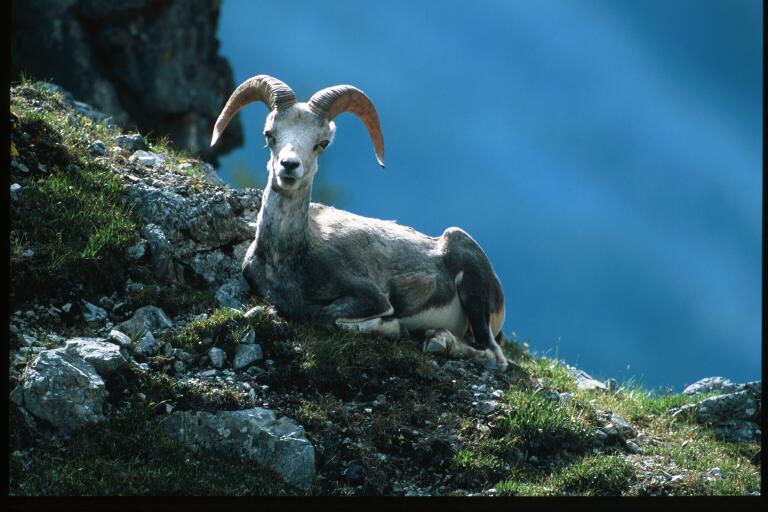
Stone Sheep Photo Coyright Jim Robertson


HUNTER FROM SOUTH CAROLINA ORDERED TO PAY $10K IN FINES AND $2K IN COURT COSTS

CBC News Posted: Mar 31, 2017 4:08 PM CT Last Updated: Mar 31, 2017

A South Carolina man has been found guilty of illegally killing a grizzly bear while hunting in Manitoba.

The province’s Sustainable Development Department said the U.S. citizen was ordered Wednesday to pay $10,000 in fines plus $2,000 in court costs.

The grizzly bear was killed in June 2015 in northern Manitoba. DNA testing later confirmed the bear was a grizzly, an animal protected under Manitoba’s Endangered Species and Ecosystems Act.

Conservation investigators were tipped off about the grizzly killing by a member of the public, Sustainable Development said.

Until the late 1800s, grizzly bears roamed across the Prairies, including in Manitoba’s Red River Valley.

The animals have long been considered extinct in the province, but officials say they are slowly making a return in the northern region of the province.

Researchers in Manitoba’s Wapusk National Park have observed grizzlies entering into traditional polar bear habitat.

Parks Canada estimates about 20,000 grizzly bears remain in western Alberta, Yukon, the Northwest Territories and British Columbia.

Grizzly No. 122, ‘The Boss’ of Banff, wakes up from winter hibernation 

By Daniel Katz, Bow Valley Crag & Canyon

The biggest, baddest grizzly in Banff, No. 122, also known as ‘The Boss’, was spotted Wednesday morning wandering the railway tracks near Castle Junction, the first confirmed sighting of a bear in the mountain national parks so far this year.

No. 122 was first seen by a member of the public, who called in the sighting to Parks Canada.

“He’s just in the Castle Junction area, and is feeding on grain along the railway tracks there,” said Steve Michel, human-wildlife conflict specialist with Banff National Park, stating Parks staff verified the sighting after receiving the report.

Mid-March is the time when large male grizzlies come out of their winter hibernation and begin to be active on the landscape in search of their first meals in months.

Believed to be approximately 16 years old, No. 122 is considered to be one of the largest, most dominant grizzlies on the landscape.

Sporting a thick coat of fur grown over the winter, Michel said No. 122’s weight is estimated to be between 400 and 500 pounds currently.

He was last collared from 2012 to 2013, and wildlife officials found that his range covered more than 2,500 square kilometres in Banff, Yoho and Kootenay parks, mostly along highways and railways. Despite being hit by a train many years ago, he continues to use habitats heavily developed by humans to exploit food resources there.

“Because the Bow Valley is a very busy place and there are a lot of humans that occupy this landscape, he’s well-adjusted to humans and human facilities, and he seems to be relatively indifferent to our presence,” said Michel.

Michel added that snow on the ground will likely cause No. 122 to stay close to railway tracks in order to find food sources.

“We expect to see that he will continue with that behaviour for the next few weeks, and then as additional foraging opportunities become available, such as the first green grass starts to emerge, and dandelions and digging roots, any of these vegetation options he will take advantage of,” said Michel. “He certainly will take advantage of any opportunity he can to find carcasses on the landscape, animals that haven’t survived the harsh winter.”

Starting in May No. 122 is expected to roam the landscape in search of females as we get into the spring breeding season, which will dictate most of movements through May and June.

“Because of his size, he is certainly one of the more dominant grizzly bears that we have in the Bow Valley, and he certainly travels through the landscape with a significant amount of confidence,” said Michel.

Since ‘The Boss’ is not currently radio-collared, it is unknown when he first emerged from his den this season.

He has fathered a number of other high-profile bears in the area, based on a limited DNA analysis of five cubs from two different females. That study revealed he was the father of all those five offspring, and it is possible he may have sired many others, says Michel.

He bred with No. 72, a well-known female from the Lake Louise area, which resulted in two offspring, No. 142 and No. 143.

He also sired three cubs with female grizzly No. 64, a high-profile bear from the Banff area. The litter of that coupling resulted in bears No. 144, 148 and 160.

Grizzly No. 144 was the male who was destroyed by Alberta fish and wildlife officers in 2015 for killing sheep and llamas on a farm near Sundre, and No. 148, a female, has been seen on numerous occasions touring between Canmore and Banff. Last summer, a section of the Legacy Trail outside the Banff east gates closed due to No. 148 travelling close to the bike path.

Over the weekend, fresh grizzly tracks were seen on Kananaskis Country Golf Course, indicating bears were starting to wake up in the region.

John Paczkowski, ecologist with Alberta Environment and Parks, says they do not yet have GPS collar data showing that bears are active.

Parks Canada officials in Waterton and Jasper national parks stated that as of Wednesday they have not received reports of any bears on the landscape.

Sows and cubs usually come out of their dens in middle to late May, depending on the weather, because mothers are still nursing their young and spring is a difficult season to find food.

“Typically, it’s the adult males who come out first, and then the females with cubs are last, so it would be over the next month or even more we’ll see them come out depending on the sex and the reproductive status,” said Paczkowski.

With the arrival of warmer weather, Michel says people need start being aware of the fact that bears are waking up.

“People should now be thinking about bears, and they should be thinking about bears around their homes and campsites with respect to managing attractants … garbage, recycling, bird feeders, barbecues, pet food — all that stuff needs to be really secure,” he said. “When people are out enjoying the landscape, whether it’s hiking or snowshoeing or skiing, they need to be thinking about travelling in a group, being bear aware, carrying bear spray with them and making sure their dogs are kept on a leash.”

DKatz@postmedia.com

http://www.thecragandcanyon.ca/2017/03/23/grizzly-no-122-the-boss-of-banff-wakes-up-from-winter-hibernation