Exposing the Big Game

Forget Hunters' Feeble Rationalizations and Trust Your Gut Feelings: Making Sport of Killing Is Not Healthy Human Behavior

Exposing the Big Game

Climate change: Should you fly, drive or take the train?

  • 24 August 2019
Related Topics

Greta ThunbergImage copyrightGETTY IMAGES

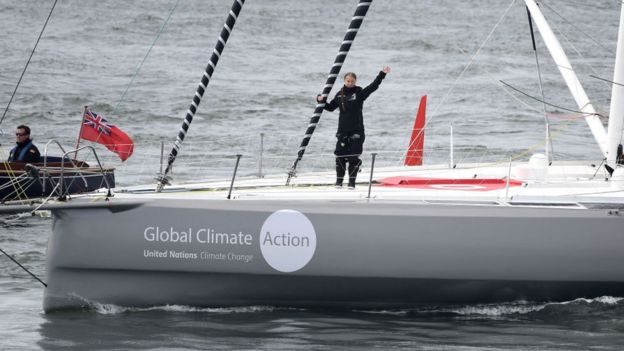
The climate campaigner Greta Thunberg chose to sail to a UN climate conference in New York in a zero-emissions yacht rather than fly – to highlight the impact of aviation on the environment. The 16-year-old Swede has previously travelled to London and other European cities by train.

Meanwhile the Duke and Duchess of Sussex have faced criticism over opting to fly to Sir Elton John’s villa in Nice in a private jet.

So what is the environmental impact of flying and how do trips by train, car or boat compare?

What are aviation emissions?

Flights produce greenhouse gases – mainly carbon dioxide (CO2) – from burning fuel. These contribute to global warming when released into the atmosphere.

An economy-class return flight from London to New York emits an estimated 0.67 tonnes of CO2 per passenger, according to the calculator from the UN’s civil aviation body, the International Civil Aviation Organization (ICAO).

That’s equivalent to 11% of the average annual emissions for someone in the UK or about the same as those caused by someone living in Ghana over a year.

Aviation contributes about 2% of the world’s global carbon emissions, according to the International Air Transport Association (IATA). It predicts passenger numbers will double to 8.2 billion in 2037..

And as other sectors of the economy become greener – with more wind turbines, for example – aviation’s proportion of total emissions is set to rise.
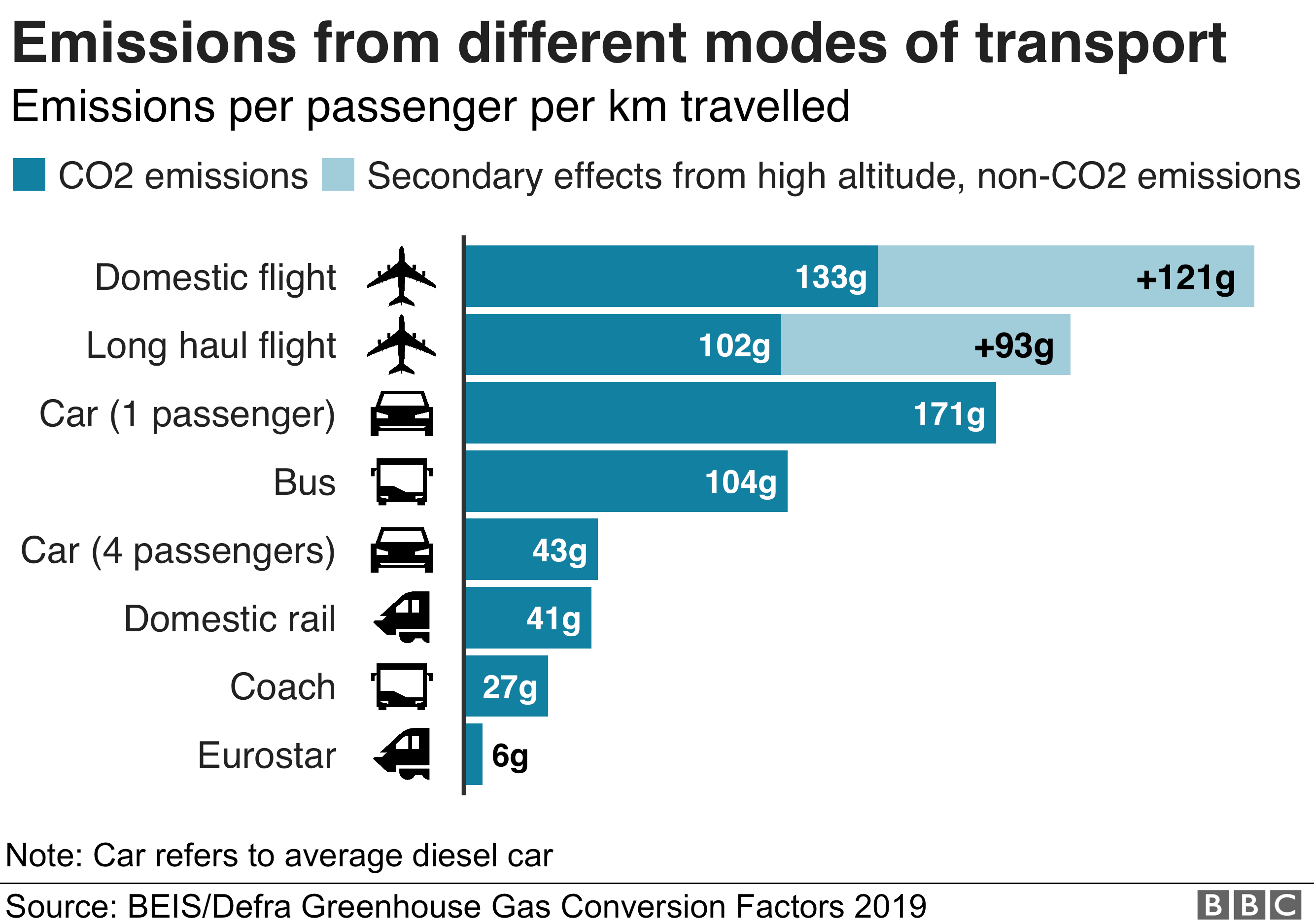
Chart showing emissions from different modes of transport

How do emissions vary?

It depends where passengers sit and whether they are taking a long-haul flight or a shorter one.

The flight figures in the table are for economy class. For long haul flights, carbon emissions per passenger per kilometre travelled are about three times higher for business class and four times higher for first class, according to the Department for Business, Energy and Industrial Strategy (BEIS).

This is because there’s more space per seat, so each person accounts for a larger amount of the whole plane’s pollution.

Taking off uses more fuel than cruising. For shorter flights, this accounts for a larger proportion of the journey. And it means lower emissions for direct flights than multi-leg trips.

Also, newer planes can be more efficient and some airlines and routes are better at filling seats than others. One analysis found wide variation between per passenger emissions for different airlines.

For private jets, although the planes are smaller, the emissions are split between a much smaller number of people.

For example, Prince Harry and Meghan’s recent return flight to Nice would have emitted about four times as much CO2 per person as an equivalent economy flight.
Aeroplane flying overheadImage copyrightGETTY IMAGES

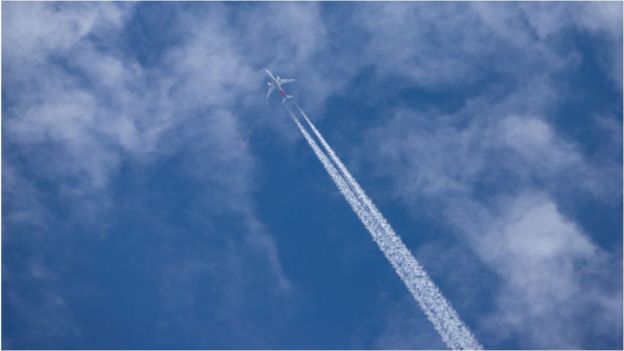
The increased warming effect other, non-CO2, emissions, such as nitrogen oxides, have when they are released at high altitudes can also make a significant difference to emissions calculations.

“The climate effect of non-CO2 emissions from aviation is much greater than the equivalent from other modes of transport, as these non-CO2 greenhouse gases formed at higher altitudes persist for longer than at the surface and also have a stronger warming potential,” Eloise Marais, from the Atmospheric Composition Group, at the University of Leicester, told BBC News.

But there is scientific uncertainty about how this effect should be represented in calculators.

The ICAO excludes it, while the BEIS includes it as an option – using a 90% increase to reflect it.

The EcoPassenger calculator – launched by the International Railways Union in cooperation with the European Environment Agency – says it depends on the height the plane reaches.

Longer flights are at higher altitude, so the calculator multiplies by numbers ranging from 1.27 for flights of 500km (300 miles) to 2.5 for those of more than 1,000km.

In the chart above, the high-altitude, non-CO2 emissions are in a different colour.

How does travelling by train compare?

Train virtually always comes out better than plane, often by a lot. A journey from London to Madrid would emit 43kg (95lb) of CO2 per passenger by train, but 118kg by plane (or 265kg if the non-CO2 emissions are included), according to EcoPassenger.
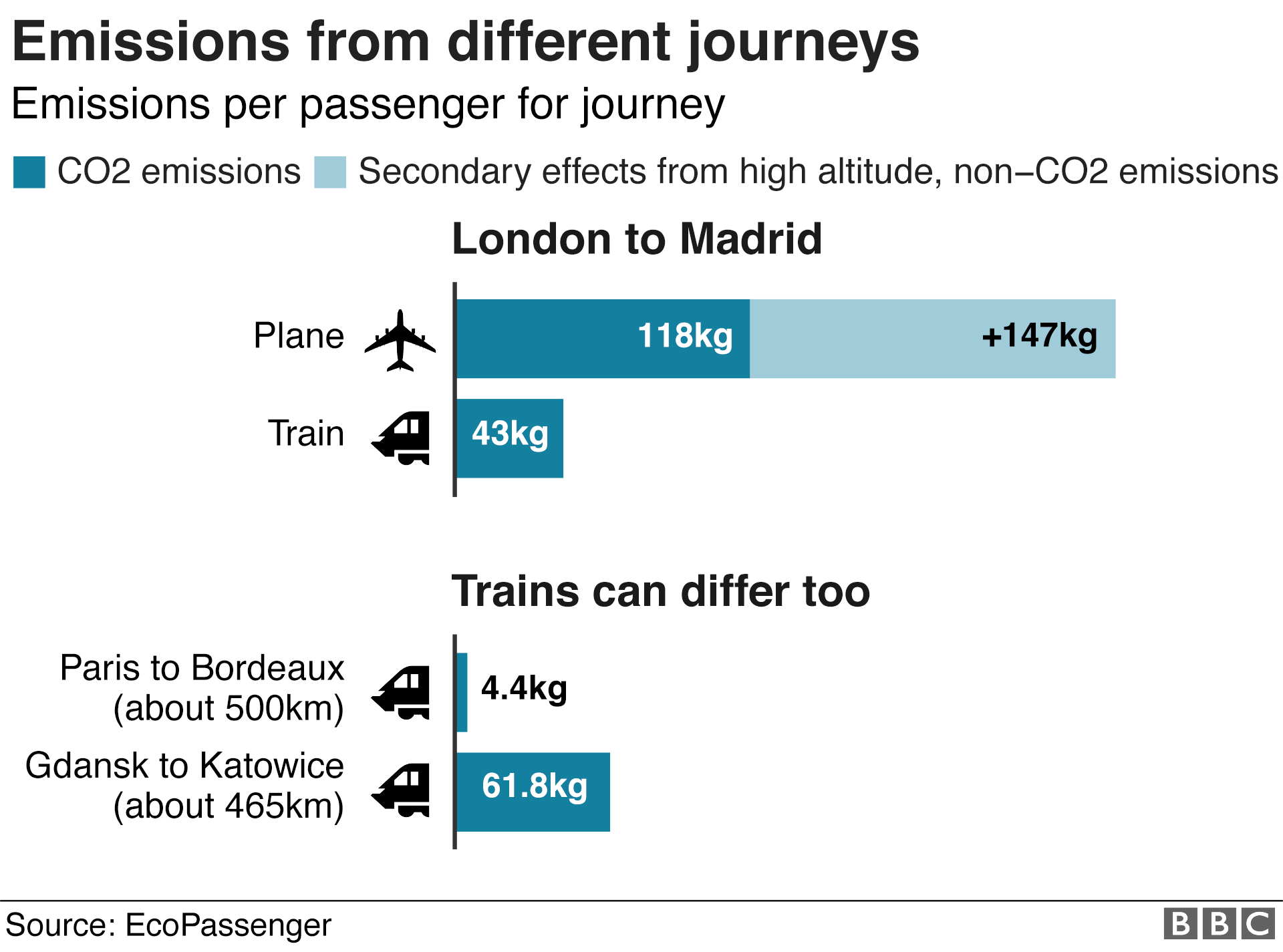
Chart showing emissions for different journ

However, the margin between train and plane emissions varies, depending on several factors, including the type of train. For electric trains, the way the electricity they use is generated is used to calculate carbon emissions.

Diesel trains’ carbon emissions can be twice those of electric ones. Figures from the UK Rail Safety and Standards board show some diesel locomotives emit more than 90g of C02 per passenger per kilometre, compared with about 45g for an electric Intercity 225, for example.

The source of the electricity can make a big difference if you compare a country such as France, where about 75% of electricity comes from nuclear power, with Poland, where about 80% of grid power is generated from coal.

According to EcoPassenger, for example, a train trip from Paris to Bordeaux (about 500km) emits just 4.4kg of carbon dioxide per passenger, while a journey between the Polish cities of Gdansk and Katowice (about 465km) emits 61.8kg.

As with plane journeys, another factor is how full the train is – a peak-time commuter train will have much lower emissions per person than a late-night rural one, for example.
Car exhaustImage copyrightGETTY IMAGES

Can driving be better than flying?

Yes, if the car’s electric – but diesel and petrol cars are also in many cases better options than flying, though it depends on various factors, particularly how many people they’re carrying.

According to EcoPassenger, a journey from London to Madrid can be done with lower emissions per passenger by plane, even accounting for the effect of high altitude non-CO2 emissions, if the car is carrying just one person and the plane is full. If you add just one more person into the vehicle, the car wins out.

Coaches also score well. BEIS says travelling by coach emits 27g of CO2 per person per kilometre, compared with 41g on UK rail (but only 6g on Eurostar) – though again this will vary depending on how full they are and the engine type.
Climate activist Greta Thunberg sailing on yacht to New YorkImage copyrightFINNBARR WEBSTER

What about travelling by boat?

The BEIS has also put a figure on ferry transport – 18g of CO2 per passenger kilometre for a foot passenger, which is less than a coach, or 128g for a driver and car, which is more like a long-haul flight.

But ferries’ ages and efficiency will vary around the world – and a ferry won’t get you to America, although a cruise ship or ocean liner would.

The cruise industry has long been under pressure to reduce environmental impacts ranging from waste disposal to air pollution, as well as high emissions – not only from travel but also from powering all the on-board facilities.

Carnival Corporation and plc, which owns nine cruise lines, says its 104 ships emit an average of 251g of carbon dioxide equivalent per “available lower berth” per kilometre.

And, while the figures are not directly comparable, they suggest cruising falls in similar territory to flying in terms of emissions.

One simple reason we aren’t acting faster on climate change?

Images like that of a polar bear on a melting ice field are iconic. But in terms of getting people to act on climate change, they may be ineffective. Here’s why.


We’ve all seen how powerful images can make abstract crises feel concrete. Think of the photographs of a Chinese man blocking a column of tanks a day after the Tiananmen Square massacre, a naked Vietnamese girl fleeing from napalm in 1972 or of 7-year-old Amal Hussain wasting away from hunger in Yemen. When done well, photographs help people around the world make sense of unseen disasters.

Now close your eyes and try to picture climate change – one of our generation’s most pressing crises. What comes to mind? Is it smoke coming out of power plants? Solar panels? A skinny polar bear?

That’s problematic, says psychologist Adam Corner, director of Climate Visuals, a project that aims to revitalise climate imagery. “Images without people on them are unable to tell a human story,” says Corner.

Researchers have found that images like this one lack a humanising element

Researchers have found that images like this one lack a humanising element that makes them compelling… (Credit: Getty)

…compared to a photograph like this, which shows the local, human impact of pollution

…compared to a photograph like this, which shows the local, human impact of pollution (Credit: Aulia Erlangga/CIFOR)

And that kind of imagery might be a big part of why so few of us are prioritising climate action.

You might also like:
• What can I do about climate change?
• The Arctic town that is melting away
• How climate change will transform business and the work force

Climate change has an inherent image problem. While you can clearly visualise plastic pollution or deforestation, climate change has a less obvious mugshot: the gases that cause global warming, such as carbon dioxide and methane, are colourless, while impacts are slow-paced and not always visually striking.

So in the 1990s, reporters, politicians and others began using the sort of imagery that would help us begin to grasp the situation. That idea helped us understand the subject then. But it now needs revamping. For one thing, climate impacts are more evident now: take the frequency of wildfires, coastal flooding, droughts and heat waves.

Because most people aren’t that familiar with how coral should normally look

Because most people aren’t that familiar with how coral should normally look, researchers found that an image like this one, of coral bleaching, had less impact… (Credit: Getty)

a real person doing research on climate change’s impact on the coral

…than an image like this one, which shows a real person doing research on climate change’s impact on the coral (Credit: NPS)

But another reason to update climate change’s visuals is that, for the general public, ‘traditional’ climate images aren’t that compelling.

Wondering if there was a better way to tell climate change stories, Climate Visuals tested what effect iconic climate images – like that lonely polar bear – really had.

Although iconic, an image of an animal most people have never seen

Although iconic, an image of an animal most people have never seen, living in a place they have never been, may not be as effective… (Credit: Getty)

The search for Hurricane Katrina survivors

…as this image of the search for Hurricane Katrina survivors, which shows the impact of climate change in a more recognisable environment (Credit: Master Sgt Bill Huntington)

After asking people at panel groups in London and Berlin and through an online survey with over 3,000 people, the team concluded that people were more likely to empathise with images that showed real faces – such as workers installing solar panels, emergency respondents helping victims of a typhoon or farmers building more efficient irrigation systems to combat drought.

The researchers found that images like this one often don’t make an impact on the viewer

The researchers found that images like this one often don’t make as much of an impact on the viewer… (Credit: Getty)

as this kind of image

…as this kind of image, which participants thought was an intriguing take on solar energy that encouraged them to want to know more (Credit: Dennis Schroeder/NREL)

It also helped when photographs depicted settings that were local or familiar to the viewer, and when they showed emotionally powerful impacts of climate change.

Respondents in their study were also cynical of ‘staged’ pictures… and of images with politicians.

Climate Visuals’ quest is not entirely new. For over a decade, scholars have analysed the way NGOs and governments represent climate change visually, examined how the public reacts to different types of images and come up with new approaches. What it’s done differently, though, is to create the world’s largest climate image library based on those lessons.

Researchers found that a picture like this one, which highlights an individual behaviour

Researchers found that a picture like this one, which highlights an individual behaviour, can create a defensive reaction in the viewer… (Credit: Getty)

Pork meat production (Credit: Qilai Shen/Panos Pictures)

..while a striking image like this, which shows high-emissions meat production at scale, was more effective (Credit: Qilai Shen/Panos Pictures)

And for better or for worse, it’s no longer that difficult to find human-led photographs of the consequences of climate change.

“The stories we need to tell are all around us in a way they were not 20 years ago when the polar bear became an icon,” says Corner.

Climate crisis needs radical food changes

Climate crisis needs radical food changes

19 Jul 2019
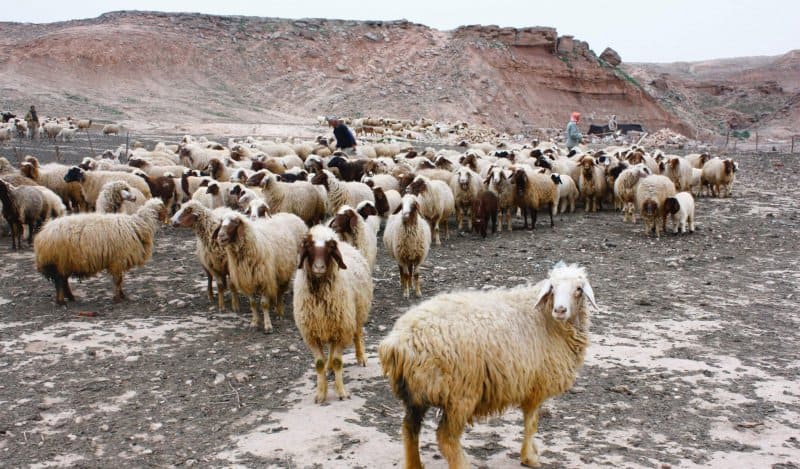
Sheep
The entire food system needs to change, researchers say. Image: By nima hatami on Unsplash

To feed 9 billion people by 2050, and keep planet Earth from overheating, will mean massive and radical food changes – and not just in the way food is grown.

To contain global temperatures to no more than 2 °C above the average for most of human history will require humanity to change its diet, contain its appetite and reform the entire system of food production and distribution.

This is the verdict of the latest study of the challenge set in Paris in 2015, when 195 nations promised to limit global warming – driven by profligate use of fossil fuels and by the conversion of forest, grassland and wetlands into commercial use – to “well below” 2 °C by 2100.

Researchers report in the journal Sustainability that they looked at 160 studies and analyses of global agriculture and food systems and most closely at the world’s smallholders and markets that sustain as many as 2.5 billion people, mostly in the developing world.

Farming’s massive impact

Small farmers account for about a third of global agriculture’s greenhouse gas emissions, but these include also many of the people most vulnerable to the coming climate crisis, which is likely to put harvests at hazard on a global scale.

Agriculture, together with forestry and changes in land use, accounts for a quarter of all the carbon dioxide, methane and oxides of nitrogen that fuel global warming.

Just on its own, the action of growing grain, fruit and vegetables or feeding grazing animals accounts for no more than 12% of global warming, but a third of all the food that leaves the farm gate is wasted before it arrives on the supper table.

This is enough to provide 8% of the world’s emissions, and if just one fourth of the waste could be saved, that would be enough to feed 870 million people for a year.

Agronomists, crop researchers, climate scientists and ministry planners know of many steps that can be taken to reduce the greenhouse impact of agriculture: even under the most hopeful forecasts, these are likely to be deployed slowly.

The researchers see reductions in food loss as a “big opportunity” that will benefit farmers and consumers as well as reduce emissions. A more challenging problem is to change global appetites: the meat and dairy business accounts for about 18% of all human-triggered emissions, counting the clearance of forests and the impact of changes in the way land is used to feed the demand for meat, milk, butter and cheese.

A shift to plant-based diets would save on land and water and deliver more and healthier meals and permit more forest restoration.

“If you think about the two degree increase, efforts need to go beyond the agriculture sector,” said Anna Maria Loboguerrero, of the climate change, agriculture and food security programme of CGIAR, once known as the Consultative Group for International Agricultural Research, who led the study.

Drastic cuts needed

“This means reducing emissions by stopping deforestation, decreasing food loss and waste, reducing supply chain emissions and rethinking human diets, if we really want to get on track to that target.”

The researchers acknowledge that what they propose will constrain farm choices and increase costs. But a second study reports once again that the health benefits of immediate, dramatic cuts in carbon dioxide emissions will save lives, improve human health, and offset the immediate costs of containing planetary heating and adapting to the climate crisis.

“The global health benefits from climate policy could reach trillions of dollars annually, but will importantly depend on the air quality policies that nations adopt independently of climate change,” they write in the journal Nature Communications.

And Mark Budolfson of the University of Vermont, one of the authors, said: “We show the climate conversation doesn’t need to be about the current generation investing in the further future. By making smart investments in climate action, we can save lives now through improved air quality and health.”


Humanity’s climate ‘carbon budget’ dwindling fast

1 / 3

The concept of a carbon budget is dead simple: figure out how much CO2 humanity can pump into the atmosphere without pushing Earth’s surface temperature beyond a dangerous threshold

The concept of a carbon budget is dead simple: figure out how much CO2 humanity can pump into the atmosphere without pushing Earth’s surface temperature beyond a dangerous threshold (AFP Photo/PATRIK STOLLARZ)

More

Paris (AFP) – The concept of a carbon budget is dead simple: figure out how much CO2 humanity can pump into the atmosphere without pushing Earth’s surface temperature beyond a dangerous threshold.

The 2015 Paris climate treaty enjoins the world to set that bar at “well below” two degrees Celsius (3.6 Fahrenheit) in order to avoid an upsurge in killer heatwaves, droughts and superstorms made more destructive by rising seas.

Last year, the UN’s climate science body concluded this already hard-to-reach goal may not be ambitious enough.

Only a 1.5C cap above pre-industrial levels, for example, could prevent the total loss of coral reefs that anchor a quarter of marine life and coastal communities around the globe, the Intergovernmental Panel on Climate Change (IPCC) said in a landmark report.

But calculating exactly how much CO2 — produced mainly by burning fossil fuels but also deforestation — we can emit without busting through either of these limits has been deceptively hard to calculate.

Indeed, scientific estimates over the last few years have differed sharply, sometimes by a factor of two or three.

“The unexplained variations between published estimates have resulted in a lot of confusion,” Joeri Rogelj, a lecturer at Imperial College London, told AFP.

To help clear up that muddle, Rogelj and colleagues set out to solve the carbon budget puzzle — or at least make sure that everyone is reading from the same page.

This seemingly academic exercise, published Wednesday in the journal Nature, has huge real-world repercussions.

“The trillion-dollar question is how much of a carbon budget do we have left?”, Rogelj said.

– Wild cards –

About 580 billion tonnes, or gigatonnes (Gt), of CO2, if we’re willing to settle for a 50 percent chance of capping global warming at 1.5C, according to the October IPCC report, for which Rogelj was a coordinating lead author.

At current CO2 emission rates — 2018 saw a record 41.5 Gt — that budget would be exhausted in less than 14 years.

The CO2 allowance for a coin-toss chance of holding the rise in Earth’s temperature to 2C is more generous, about 1,500 Gt, and would last roughly 36 years.

Has the Earth Ever Been This Hot Before?

Partner Series
Has the Earth Ever Been This Hot Before?

Climate change can make droughts more extreme.

Credit: Shutterstock

Would you ever go on vacation to the North Pole? Unless you like subzero temperatures and Nordic-ski treks, probably not. But if you lived 56 million years ago, you might answer differently. Back then, you would have enjoyed balmy temperatures and a lush green landscape (although you would have had to watch out for crocodiles). That’s because the world was in the middle of an extreme period of global warming called the Paleo-Eocene Thermal Maximum, when the Earth was so hot that even the poles reached nearly tropical temperatures.

But was the planet ever as hot as it is today, when every month the globe seems to be breaking one high-temperature record after another?

It turns out that the Earth has gone through periods of extreme warming more than once. The poles have frozen and thawed and frozen again. Now, the Earth is heating up again. Even so, today’s climate change is a different beast, and it’s clearly not just part of some larger natural cycle, Stuart Sutherland, a paleontologist at the University of British Columbia, told Live Science. [How Often Do Ice Ages Happen?]

Earth’s climate does naturally oscillate — over tens of thousands of years, its rotations around the sun slowly change, leading to variations in everything from seasons to sunlight. Partially as a result of these oscillations, Earth goes through glacial periods (better known as ice ages) and warmer interglacial periods.

But to create a massive warming event, like the Paleo-Eocene Thermal Maximum, it takes more than a change in the tilt of Earth’s axis, or the shape of its path around the sun. Extreme warming events always involve the same invisible culprit, one we’re all too familiar with today: a massive dose of carbon dioxide, or CO2.

This greenhouse gas was almost certainly responsible for the Paleo-Eocene Thermal Maximum. But how did CO2 concentrations get so high without humans around? Scientists aren’t absolutely sure, said Sébastien Castelltort, a geologist at the University of Geneva. Their best guess is that volcanoes spewed carbon dioxide into the atmosphere, trapping heat, and perhaps melting frozen pockets of methane, a greenhouse gas more potent than CO2 that had been long sequestered under the ocean. Just because extreme warming events spurred by greenhouse gases have happened before, doesn’t mean these events are harmless. Take, for instance, the Permian-Triassic extinction event, which struck a few million years before dinosaurs arose on the planet. If the word “extinction” isn’t enough of a clue, here’s a spoiler: it was an absolute disaster for Earth and everything on it.

This warming event, which occurred 252 million years ago, was so extreme that Sutherland calls it the “poster child for the runaway greenhouse effect.” This warming event, which was also caused by volcanic activity (in this case, the eruption of a volcanic region called the Siberian Traps), triggered climate chaos and widespread death.

“Imagine extreme drought, plants dying, the Saharah spreading throughout the continent,” Sutherland told Live Science.

Temperatures rose 18 degrees Fahrenheit (10 degrees Celsius). (This is compared with the 2.1 F (1.2 C) rise in temperature we’ve seen since humans began burning fossil fuels). Around 95% of marine life and 70% of terrestrial life went extinct.

“It was just too hot and unpleasant for creatures to live,” Sutherland said.

It’s uncertain how high greenhouse gas concentrations were during the Permian-Triassic extinction event, but they likely were far higher than they are today. Some models suggest they grew as high as 3,500 parts per million (ppm). (For perspective, today’s carbon dioxide concentrations hover a little over 400 ppm — but that’s still considered high).

But it’s the rate of change in CO2 concentrations that makes today’s situation so unprecedented. During the Permian Triassic extinction event, it took thousands of years for temperatures to rise as high as they did — according to some studies, as many as 150,000 years. During the Paleo-Eocene Thermal Maximum, considered an extremely rapid case of warming, temperatures took 10,000 to 20,000 years to reach their height.

Today’s warming has taken only 150 years.

That is the biggest difference between today’s climate change and past climatic highs. It’s also what makes the consequences of current climate change so difficult to predict, Castelltort said. The concern isn’t just “but the planet is warming.” The concern is that we don’t know how rapid is too rapid for life to adjust, he said. Based on past warming events, no experts could possibly say that the current rate of warming won’t have dramatic consequences, he said. “We just don’t know how dramatic,” he added.

Originally published on Live Science.

Atmospheric CO2 hits record high in May 2019

NOAA reports that carbon dioxide in Earth’s atmosphere continued its rapid rise in 2019, reaching the highest recorded levels in 61 years of observation last month.

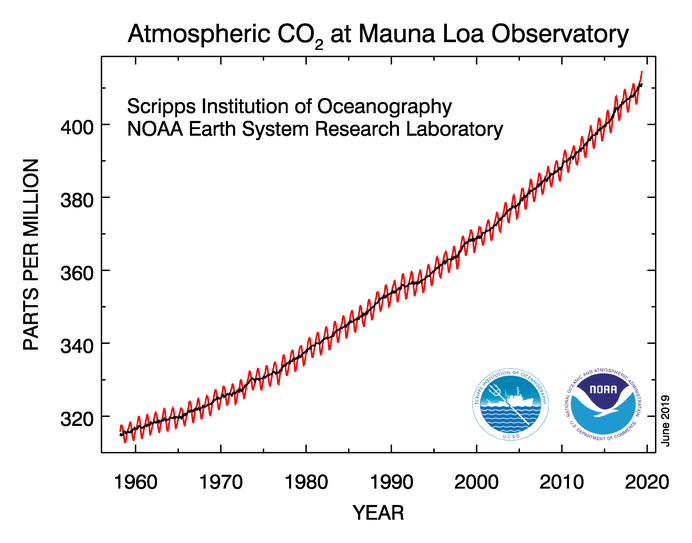
Much of what you see online from those who question human-caused global warming comes in the form of opinion articles – op-eds – usually not written by a scientist and expressing an opinion not affiliated with that publication’s editorial board. So watch for that, and watch for the authors’ affiliations (often, you can easily see their political agenda). What we’re talking about here is not opinion. It’s data, gathered by scientists at Mauna Loa Observatory in Hawaii, which has been monitoring the atmosphere and collecting data related to atmospheric change since the 1950s. In this world’s-longest data set, the highest carbon dioxide (CO2) concentration in Earth’s atmosphere yet measured was recorded last month (May 2019). The data were announced on June 4, 2019.

An increase in carbon dioxide – CO2 – contributes to global warming, according to climate scientists. The 2019 peak value in May 2019 was 3.5 ppm higher than the 411.2 ppm peak in May 2018 and marks the second-highest annual jump on record.

NOAA said in its annoucement:

Atmospheric carbon dioxide continued its rapid rise in 2019, with the average for May peaking at 414.7 parts per million (ppm). That’s not only the highest seasonal peak recorded in 61 years of observations on top of Hawaii’s largest volcano, but also the highest level in human history and higher than at any point in millions of years.

Read more: How do scientists know that Mauna Loa’s volcanic emissions don’t affect the carbon dioxide data collected there?

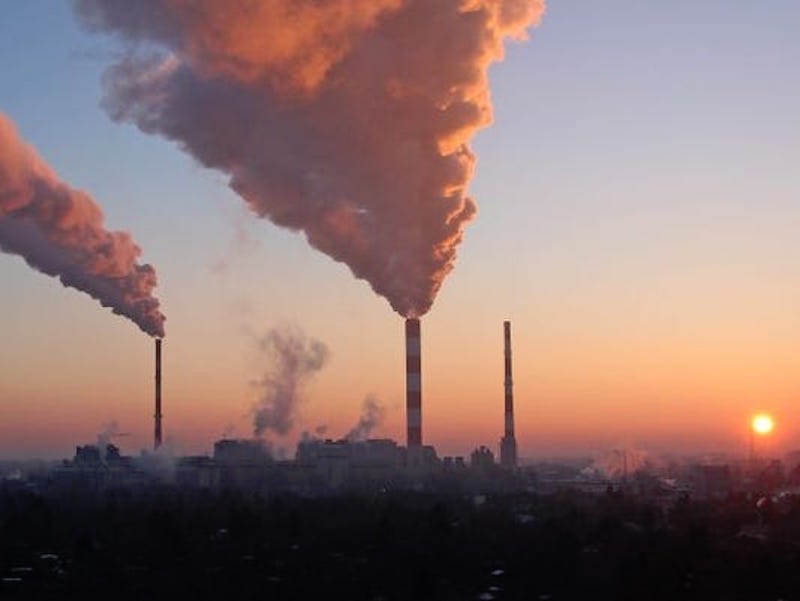
Smoke billowing from two tall, thin smokestacks as sun sets at dusty horizon.

Nearly all climate scientists agree that increases in atmospheric CO2 – the result of the burning of oil, gas and other fossil fuels – is to blame for rising global temperatures. Pieter Tans, senior scientist with NOAA’s global monitoring division, told USA Today:

Many proposals have been made to mitigate global warming, but without a rapid decrease of CO2 emissions from fossil fuels they are pretty much futile.

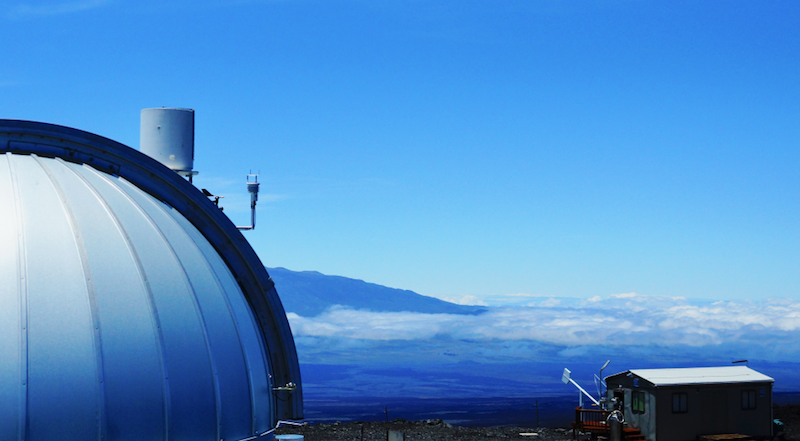
White observatory dome against blue sky background.

Not only is the concentration of CO2 in the atmosphere increasing every year, said NOAA, but the rate of increaseis also accelerating. NOAA said:

The early years at Mauna Loa saw annual increases averaging about 0.7 ppm per year, increasing to about 1.6 ppm per year in the 1980s and 1.5 ppm per year in the 1990s. The growth rate rose to 2.2 ppm per year during the last decade. There is abundant and conclusive evidence that the acceleration is caused by increased emissions, Tans said.

Tans added:

It’s critically important to have these accurate, long-term measurements of CO2 in order to understand how quickly fossil fuel pollution is changing our climate. These are measurements of the real atmosphere. They do not depend on any models, but they help us verify climate model projections, which if anything, have underestimated the rapid pace of climate change being observed.

NOAA pointed out that the highest monthly mean CO2 value of the year occurs in May, just before plants start to remove large amounts of the greenhouse gas from the atmosphere during the Northern Hemisphere growing season.

Bottom line: The highest yet measured concentration of atmospheric carbon dioxide (CO2) was recorded in May 2019, at the Mauna Loa Observatory in Hawaii.

Earth’s carbon dioxide has jumped to the highest level in human history

https://www.axios.com/earth-carbon-dioxide-level-jumped-to-record-high-f11b5e67-4eec-41f2-86da-9c951e70bad0.html

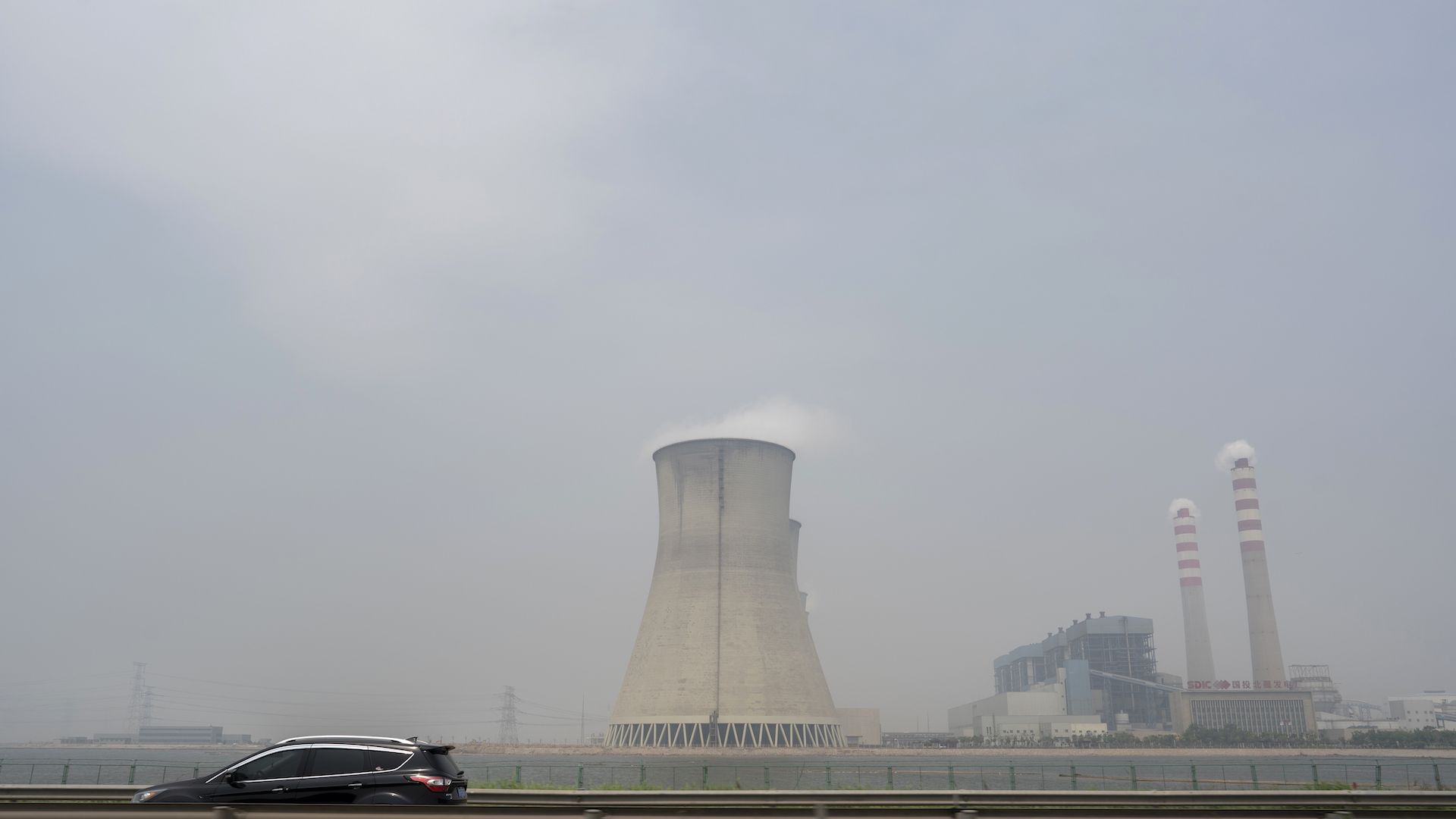
A huge thermal power plant is emitting vapor into the sky, seen from the highway from Tianjin to Beijing.
A thermal power plant located between Tianjin and Beijing. Photo: Zhang Peng/LightRocket via Getty Images

The monthly peak amount of carbon dioxide in the Earth’s atmosphere in 2019 jumped by a near-record amount to reach 414.8 parts per million (ppm) in May, which is the highest level in human history and likely the highest level in the past 3 million years.

Why it matters: Carbon dioxide is the most important long-lived greenhouse gas, with a single molecule lasting in the air for hundreds to around 1,000 years. The continued buildup of carbon dioxide due to human activities, such as burning fossil fuels for energy, is driving global temperatures up and instigating harmful impacts worldwide.

The fact that carbon dioxide levels increased by a near-record amount of 3.5 ppm in just one year illustrates that we’re headed in the opposite direction from what climate scientists have shown is needed to avoid the worst consequences of global warming.

Details: According to Scripps Institution of Oceanography, the average carbon dioxide concentration in the atmosphere recorded at the isolated Mauna Loa Observatory in Hawaii averaged 414.8 parts per million during May, which is the highest seasonal peak since such observations began 61 years ago.

  • The highest monthly mean carbon dioxide value typically occurs in May, before plants take in large amounts of greenhouse gases during the Northern Hemisphere growing season.

The National Oceanic and Atmospheric Administration operates a worldwide greenhouse gas observational network, and its data was close to Scripps’ May year-to-year data.

By the numbers:

  • Readings from NOAA show a seasonal peak of 414.7 ppm, and the second-fastest rate of increase in any year on record.
  • Studies using ice cores and other data on historical carbon dioxide levels show this is unprecedented in all of human history, and likely the highest amount of CO2 in the air during the past 3 million years.
  • The 2019 peak was 3.5 ppm higher than the 2018 monthly peak, which was the second-highest annual jump on record.
  • This continues a 6-year streak of steep global increases in carbon dioxide concentrations.
  • The rate of increase has quickened in recent decades, going from about 1.6 ppm per year in the 1980s to 2.2 ppm per year in the past decade, a trend conclusively tied to human activities.
  • Monthly CO2 values at Mauna Loa first breached the 400 ppm threshold in 2014.
  • Part of the increase since 2018 is thought to be related to an ongoing El Niño event in the tropical Pacific Ocean.

The big picture: Scientists have warned that if the world is to limit global warming to 1.5°C, or 2.7°F, above pre-industrial levels, then sharp emissions cuts have to begin in the next few years, with the world headed for negative emissions by the end of the century.

Background: In the northern fall, winter and early spring, plants and soils give off CO2, which cause levels to rise through May.

What they’re saying: “These are measurements of the real atmosphere,” says Pieter Tans, senior scientist with NOAA’s Global Monitoring Division, in a press release. “They do not depend on any models, but they help us verify climate model projections, which if anything, have underestimated the rapid pace of climate change being observed.”

What’s next: Scientists will announce a new annual figure for 2019 in early 2020, but the monthly peak is considered to be an important climate indicator.

Go deeper: Earth’s carbon dioxide level slips past another ominous milestone

Methane is a potent greenhouse gas. Could turning it into CO2 fight climate change?

Methane is a potent greenhouse gas. Could turning it into CO2 fight climate change?
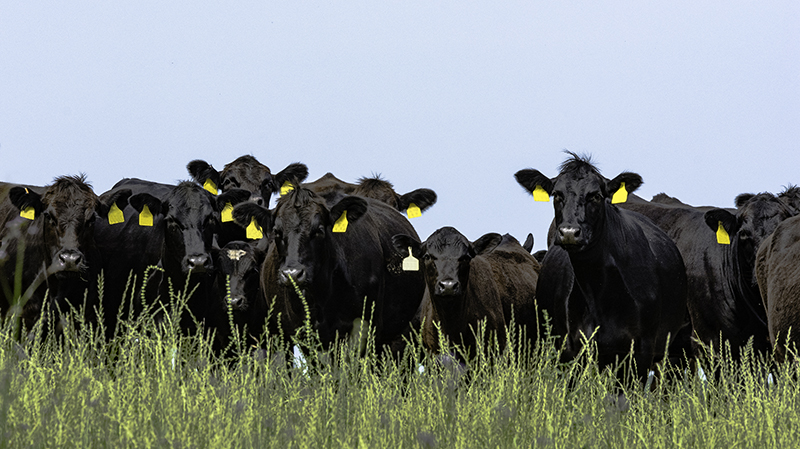
Dairy cows graze in a pasture, producing methane in their guts. A group of scientists suggests that converting methane to carbon dioxide would be a counterintuitive way to fight climate change. (Darryl Dyck / Canadian Press)

Usually, choosing between the lesser of two evils is a dismal decision. But sometimes, it’s an opportunity.

A case in point: Turning methane (a powerful greenhouse gas) into carbon dioxide (also a planet-warming pollutant) could help fight climate change, researchers say.

It’s not that CO2 isn’t a problem — it’s the main problem. But on a molecule-for-molecule basis, methane traps more heat, so converting it into something less potent would reduce its climate impact.

In fact, by restoring the concentration of methane in the atmosphere to preindustrial levels, this counterintuitive strategy could eliminate about a sixth of human-caused warming, according to a paper published Monday in Nature Sustainability. And it would add only a few months’ worth of CO2 emissions to the atmosphere.

“In the grand scheme of carbon dioxide emissions, this would not be a deal-breaker,” said lead author Rob Jackson, an earth scientist at Stanford University.

Jackson, like most scientists, says the best strategy to combat climate change is to stop emitting greenhouse gases.

“Having said that, we’re not getting the job done on reducing emissions, so I think we need to look at some of these other approaches,” said Jackson, who chairs the Global Carbon Project, which tracks greenhouse gases.

Already, it’s clear that people will have to pull huge amounts of carbon dioxide out of the atmosphere to meet the goals of the Paris climate accord, which would limit global warming to less than 2 degrees Celsius above preindustrial levels.

Some scenarios call for removing up to 10 billion metric tons of the gas per year — a quarter of humanity’s annual emissions — by storing it in biomass or soil, or building facilities that directly capture the gas from the air.

“But no one’s talking about this for methane,” Jackson said. “That’s what we want to accomplish with this paper.”

Methane hasn’t caused as much warming as CO2, but humans have had a much bigger impact on the methane cycle, he said.

Over the last 200 years, we have more than doubled its concentration in the atmosphere by extracting fossil fuels, raising livestock, and allowing the gas to escape from landfills and wastewater treatment plants, among other activities. Today, methane levels are 1,860 parts per billion — and rising — compared with 750 ppb before 1800.

Methane also has a more acute warming effect. It traps about 84 times as much heat as CO2 over a 20-year period, and 28 times as much over the course of a century. (Its potency drops because it has a shorter lifetime in the atmosphere.) So turning a molecule of methane into a molecule of CO2 would slash its climate-altering capacity, Jackson and his coauthors say.

And the trade-off would be worth it, they argue. Restoring methane to its preindustrial concentration would involve a one-time conversion of 3.2 billion tons of the gas into CO2. That would increase CO2 levels — which were 280 ppm in preindustrial times and are currently 415 ppm — by less than 1 part per million.

“That’s one of the real selling points in my mind,” Jackson said.

So can it be done?

At this stage, the idea is mostly theoretical, but the authors are cautiously optimistic.

Researchers have started developing ways to oxidize methane into methanol, a valuable compound used for fuel and chemical manufacturing. The same reactions, if allowed to proceed further, could also be used to convert methane into carbon dioxide.

Edward Solomon, a Stanford chemist who worked on the new paper, studies one promising method of processing methane using minerals called zeolites. They catch the gas, and help with oxidation.

Researchers propose removing methane from the atmosphere by pulling air through large fans and using materials like zeolites to catalyze its conversion into carbon dioxide. Thousands of these arrays would be needed to restore preindustrial methane levels.
Researchers propose removing methane from the atmosphere by pulling air through large fans and using materials like zeolites to catalyze its conversion into carbon dioxide. Thousands of these arrays would be needed to restore preindustrial methane levels. (Stan Coffman)

The researchers envision using these kinds of materials in facilities like those being developed to remove CO2, which use fans to draw air into chambers where the gases are captured through chemical reactions.

The low concentration of methane means you’d have to process a lot of air to reduce atmospheric levels, Jackson said. “It would take many thousands of these arrays to make a dent,” he said, although it would be a much smaller effort than what’s been proposed for dealing with CO2.

And the economics could prove attractive — if countries eventually settle on a price for carbon emissions, either through a tax or a cap-and-trade system like the one in California.

Indeed, removing methane could be many times more lucrative than removing CO2, because the value of keeping a greenhouse gas out of the atmosphere typically depends on its heat-trapping ability.

Imagine a system in which the market will pay $50 for every ton of CO2 emissions that can be avoided. In the 100-year scenario in which methane is considered to be 28 times more powerful, the value of eliminating one ton of it would be $1,400. There’d be a small cost for emitting a little bit of CO2 in the conversion process, but even so, the take home would be about $1,250. (A bipartisan bill introduced in the House this year would impose a fee on carbon starting at $15 per ton of CO2 and increasing to more than $100 by 2030; models predict prices could climb as high as $500 later in the century.)

At the upper end of that range, researchers estimate that a methane removal facility the size of a football field could generate millions of dollars of income.

But that could be dangerous, warned Myles Allen, a climate scientist at Oxford University in the U.K. who was not involved in the paper.

Allen fears that, if there’s money to be made — or saved — removing methane from the atmosphere, some emitters may favor doing that instead dealing with CO2.

“That might make good business sense, but it would be terrible for the climate,” he said.

That’s because methane and carbon dioxide affect the climate in different ways.

Methane only stays in the atmosphere for about a decade, so its climate effects are short-lived. CO2, on the other hand, lingers for centuries. Thus, removing some methane might yield a small benefit right now, but won’t help solve the climate problem in the long run, Allen said.

Yet if carbon pricing schemes treat the gases as if they are interchangeable, then companies could offset their CO2 emissions by reducing methane emissions.

“You can imagine the world’s airlines getting on to this and getting all excited because suddenly it looks like they’ve got a very cheap pass and they can just carry on emitting,” he said. “And of course, they’ll just carry on causing global warming.”

Still, Allen agreed that we have to reduce the concentration of methane in the atmosphere. And he endorses the idea of developing technologies to offset the methane emissions that are difficult to eliminate, as the researchers also suggest in the paper.

Rice grows in a watery field near the city of Williams in the Sacramento Valley. Flooded soils produce methane, and rice cultivation represents about 10% of human-caused emissions.
Rice grows in a watery field near the city of Williams in the Sacramento Valley. Flooded soils produce methane, and rice cultivation represents about 10% of human-caused emissions. (Brian van der Brug / Los Angeles Times)

Raising cattle, growing rice and other seemingly essential activities produce the gas and they are unlikely to go away. “It’s hard for me to see any time in the near future when methane emissions will be zero,” Jackson said.

He and his colleagues will keep working to make methane conversion technology a reality, and they hope their paper will encourage others to try as well.

Jackson said part of his motivation is symbolic. Resetting methane concentrations to their preindustrial levels offers a way to “repair the atmosphere,” he said. And that might be inspiring.

“The notion of restoring the atmosphere sends a message of hope to people,” he said. “I would love to see something like this happen in my lifetime.”

Climate change: UK ‘can cut emissions to nearly zero’ by 2050

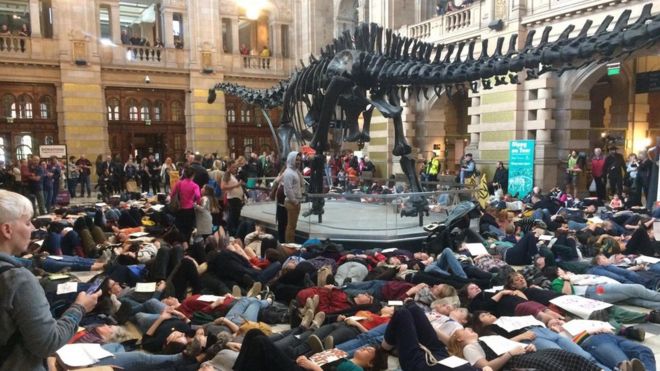
Wee Rebellion protesters stage a "die in" beneath Dippy the Dinosaur at Kelvingrove Art Gallery and Museum in GlasgowImage copyrightPA
Image captionProtesters at a “die in” in Glasgow

The UK should lead the global fight against climate change by cutting greenhouse gases to nearly zero by 2050, a report says.

The Committee on Climate Change (CCC) maintains this can be done at no added cost from previous estimates.

Its report says that if other countries follow the UK, there’s a 50-50 chance of staying below the recommended 1.5C temperature rise by 2100.

A 1.5C rise is considered the threshold for dangerous climate change.

Some say the proposed 2050 target for near-zero emissions is too soft, but others will fear the goal could damage the UK’s economy.

The CCC – the independent adviser to government on climate change – said it would not be able to hit “net zero“ emissions any sooner, but 2050 was still an extremely significant goal.

The main author Chris Stark told me: “This report would have been absolutely inconceivable just a few years ago. People would have laughed us out of court for suggesting that the target could be so high.”

The main change, he said, was the huge drop in the cost of renewable energy prompted by government policies to nurture solar and wind power.

Got beef? No assumptions on carbon emissions should be made before production maturity, warns lab meat innovator

Got beef? No assumptions on carbon emissions should be made before production maturity, warns lab meat innovator

636863369662416570lan grown meat.jpg

21 Feb 2019 — A widely-publicized comparison of the greenhouse gases (GHG) produced by lab-grown and farm-raised beef suggests that the benefits of reducing methane, resulting from cattle, could in the long term be outweighed by increased CO2 levels. As a result, the involved Oxford University researchers have put forward that sustainable “labriculture” will depend on a large-scale transition to a decarbonized energy system and new tech. This study may at first sight come as a disappointment to proponents of lab-grown meat. But considering that the technology is still in its infancy, and that the world would benefit from more clean energy in general, could this be a moot point?

Mark Post, MD, Ph.D., Professor of Physiology at Maastricht University, a key figure in the development of lab-grown meat, warns that no assumptions about “any novel technology should be made before it reaches mature production,” and that also goes for the idea that culturing meat will lead to less GHG emission.

Still some years from large-scale commercialization, the lab-grown meat scene is progressing rapidly, both in terms of R&D and regulatory clarity. “Labriculture” – meat grown in the lab using cell culture techniques – has captured the industry and consumers’ attention for its promise of authentic tasting meat, without the need to raise, and ultimately slaughter, livestock.

Although not an inherent promise of lab-grown meat, environmental concerns have also been put forward as a reason for consumers to perhaps choose this type of meat instead of traditionally farm-reared sources, with agricultural greenhouse gas emissions currently responsible for around a quarter of current global warming.

Mark Post, MD, Ph.D., Professor of Physiology at Maastricht University and Co-Founder of Mosa MeatThe researchers found that although some projections for the uptake of particular forms of cultured meat could indeed be better for the climate, others could actually lead to higher global temperatures in the long run. Currently proposed types of lab-grown meat, they say, cannot provide a “cure-all” for the detrimental climate impacts of meat production.

Considering culture
Current estimates of the environmental benefits of lab-grown meat over farm-reared meat are based on carbon-dioxide equivalent footprints, the researchers note. This can be “misleading” because not all greenhouse gases generate the same amount of warming or have the same lifespan.

“Cattle are very emissions-intensive because they produce a large amount of methane from fermentation in their gut,” says study co-author Raymond Pierrehumbert, Halley Professor of Physics at the University of Oxford.

“Methane is an important greenhouse gas, but the way in which we generally describe methane emissions as ‘carbon dioxide equivalent’ amounts can be misleading because the two gases are very different. Per ton emitted, methane has a much larger warming impact than carbon dioxide, however, it only remains in the atmosphere for about 12 years whereas carbon dioxide persists and accumulates for millennia.”

Methane’s impact on long-term warming is, therefore, not cumulative and is impacted greatly if emissions increase or decrease over time, the researchers warn.

Sustainable labriculture depends on clean energy and new tech
To compare the potential climate impacts of lab-grown meat and beef cattle, the researchers examined available data on the emissions associated with three current cattle farming methods and four possible meat culture methods, assuming current energy systems remained unchanged.

The researchers modeled the potential temperature impact of each production method over the next 1,000 years. And while cattle was found to initially have a greater warming effect through the release of methane, the model showed that in some cases the manufacture of lab-grown meat may ultimately result in more warming.

This is because even if consumption of meat were entirely phased out, the warming from carbon dioxide would persist, whereas warming caused by methane would cease after a few decades.

“This is important because while reducing methane emissions would be good – and an important part of our climate policies – if we simply replace that methane with carbon dioxide it could actually have detrimental long-term consequences,” warns lead author Dr. John Lynch, part of Oxford Martin’s LEAP (Livestock, Environment and People) program.

The study also highlights that both cultured meat and cattle farming have complex inputs and impacts that need to be considered to fully appreciate their effect on the environment.

“The climate impacts of cultured meat production will depend on what level of sustainable energy generation can be achieved, as well as the efficiency of future culture processes,” Lynch concludes.

Future food security
Although widely reported as a potential thorn in lab-grown meat’s proverbial side, the study and the involved researchers are by no means dismissive of the potential of lab-grown meat to be beneficial in environmental terms. They do, however, emphasize the need for continued and expanded labriculture research and especially the development of ways to produce cultured meat as efficiently as possible.

Post, for his part, notes that there are “good reasons to assume three environmental advantages.”

The first is that lab-grown meat could lead to “less GHG through either less energy use (heavily depending on assumptions what the outcome is) or emission poor energy consumption.” Secondly, lab-grown meat would entail less water usage, and thirdly, less feedstock resources and so less land, important for future food security.

“These benefits are interrelated, which makes the modeling very complex. Less land use will, depending on alternative usage of the land, reduce CO2 emission and increase CO2 capture. Less water usage will reduce the need for energy consuming desalination strategies,” Post continues.

“The entire paper is not realistic about what clean meat production will entail at scale. For example, the study assumes current and worst-case energy production for clean meat, but since clean meat uses about 1 percent of the land required by livestock, that is not realistic.”

“Clean meat production will use a tiny fraction of the land required for livestock and that freed up land could be used for clean energy production and carbon sequestration. By freeing up so much land, clean meat production should be a significant net positive for climate change,” he asserts.

Consumer acceptance key
Modeling specifics aside, addressing the environmental constraints to lab-grown meat could prove vital to successfully finding consumer acceptance.

“My expectation is that adverse environmental effects will easily outweigh other potential societal and personal benefits among consumers. The target group for cultured meat will not be willing to compromise with respect to sustainability,” says Wim Verbeke, Professor of Agro-food Marketing and Consumer Behaviour at Ghent University.

“Proven environmental benefits of cultured meat compared to conventional meat production are crucial because this constitutes a key promise and expectation in terms of societal benefits, and it is the issue that spontaneously raises doubt among consumers,” he explains.

“When comparing farm-reared meat and the concept lab-grown options, consumers perceive hardly any personal benefits (e.g. taste, nutrition, health), which is logical because of lack of personal experience with the product,” he notes.

“Therefore, societal benefits are crucial for future acceptance. These relate to ethical animal welfare benefits, global food security and a reduced environmental impact. There seems to be little uncertainty among consumers about the first two, but there are doubts among consumers about the latter,” Verbeke adds.

To this end, he puts forward that technological developments related to energy use and emission in the upscaling and industrial production, convincing life cycle analyses studies and scientific consensus about the environmental impacts of alternative meat production systems will be vital to convincing consumers.

Room for growth
Since we are still a few years away in scaling up lab-grown meat to offer to the mainstream consumer, there is arguably time for the “labricultural” industry to invest in the technologies

“Culturing meat is a controlled system that has ample opportunities for further economization, both financial as resource-related,” Post notes. “As biotechnology and clean energy advance, cultured meat production will become more and more efficient, and thus help to address all of these pressing problems. Conversely, the efficiency gain in conventional meat production has been incremental and is biologically limited, especially in ruminants.”

The higher versatility, he states, of cultured meat production over conventional meat can be translated for instance into co-locating cultured meat production facilities with carbon-neutral energy sources.

“This is already being done by plant-based meat companies. For example, Turtle Island, the makers of Tofurky, has their production facility in the Columbia River valley, so all their power is renewable hydroelectricity. Companies such as Black and Veitch who have decades of experience building large-scale sustainable manufacturing plants are already involved doing forward-looking work with cultured meat companies, even before production has started to scale up.

“It is extremely important to look at individual variables like global warming, but one should also keep an eye on other benefits of cultured meat production over conventional meat production,” he emphasizes.

Such benefits include elimination of antibiotics use for food production, elimination of zoonoses by reducing intensity of livestock farming, and last but not least, the moral issues associated with livestock farming that will be under increasing scrutiny by consumers.

“Early LCAs such as this study are on the one hand very useful in emphasizing the areas where the technology has to develop, but they are also tenuous in the absence of an established industrial practice. This is obviously true for LCAs that are favorable for cultured meat as the ones that are more critical,” Post concludes.

By Lucy Gunn

To contact our editorial team please email us at editorial@cnsmedia.com