South Dakota Reclassifies Wolves as “Varmints”


Earlier today I posted an action alert to Urge Your Representative to Stand Up for Wolves. Well, here is an article by the AP and Mark Watson in the South Dakota’s Black Hills Pioneer (a newspaper that boasts being “local and independent since 1876”—and whose attitude toward wolves obviously has remained unchanged since then), titled, “Wolf bill likely signed into law today.” The “wolf bill” in question is actually a state anti-wolf bill which unintentionally underscores why wolves need to remain on the federal Endangered Species List…

SPEARFISH — Gov. Dennis Daugaard is expected to sign a bill today that would reclassify wolves from protected species in the state to predators or varmints in East River counties.

SB 205 received final Legislative action on Feb. 26 when the House approved it 60-9. It passed in the Senate unanimously 35-0.

The bill will classify wolves the same as coyotes, foxes, skunks, gophers, ground squirrels, chipmunks, jackrabbits, marmots, porcupines, crows, and prairie dogs, but only in Eastern South Dakota. They will still remain protected by federal and state law West River.

In 2012, wolves residing in the Great Lakes population, which includes Eastern South Dakota, were removed from the federal Endangered Species Act. Now the U.S. Fish and Wildlife Service is working on plan that would delist the wolves West River as well.

Wolves don’t often roam across South Dakota, however there have been confirmed sightings. Wolves are occasionally killed by vehicles. One was killed in Harding County by a lethal trap set for coyotes and one was shot in 2012 near Custer. Olson said that one was seen just south of her Harding County ranch in February, however that sighting, like most others, lack physical evidence and are not confirmed.

The wolves that do traverse the state come from both the Rocky Mountain packs as well as the Great Lakes packs. They are typically younger males searching out mates and new territory.

Montana officials said that 255 wolves were killed in the 2012-2013 hunting and trapping season. Wyoming reported about 60 wolves killed. In Wisconsin, 117 were killed and in Minnesota, 395 were killed.

Scott Larson, a field supervisor with the Fish and Wildlife Service in Pierre, said a proposed rule by the service regarding the delisting wolves in West River should be issued this spring.

“It will be part of a larger effort,” Larson said. “The Rocky Mountain population and the Great Lakes populations have been delisted, but they are protected in most of the Lower 48 where we don’t have plans for any recovery efforts. … When you have a recovered population you have transients that move out into area where there is not suitable habitat. It doesn’t make any sense to have the protection status different.”

But dozens of U.S. House members don’t want that to happen.

A letter signed by 52 representatives [the good guys] urged the U.S. Fish and Wildlife Service to not drop wolves from the endangered species list in areas where it hasn’t already been done. The comeback of the wolf populations in the western Great Lakes and the Northern Rockies is “a wildlife success story in the making,” the lawmakers said in a letter distributed by Reps. Peter DeFazio of Oregon and Ed Markey of Massachusetts, both Democrats. But it added that because of lingering human prejudice, “federal protection continues to be necessary to ensure that wolf recovery is allowed to proceed in additional parts of the country.”

The Fish and Wildlife Service is trying to return wolves to the Southwest, despite court battles and resistance from ranchers. It’s also reviewing the status of wolves and their potential habitat in the Pacific Northwest, where perhaps 100 of the animals are believed to roam, and in the Northeast, which has no established population although occasional sightings have been reported.

“The outcome of these reviews will identify which, if any, gray wolves should continue to receive protections under the Endangered Species Act outside of the boundaries of the recovered populations and the Southwest population,” agency spokesman Chris Tollefson said.

…And which wolves, by contrast, will be classified as “varmints,” the same as coyotes, foxes, skunks, gophers, ground squirrels, chipmunks, jackrabbits, marmots, porcupines, crows, and prairie dogs, as South Dakota has done.

Speaking of prairie dogs, please sign on to this pledge for that beleaguered cornerstone species:
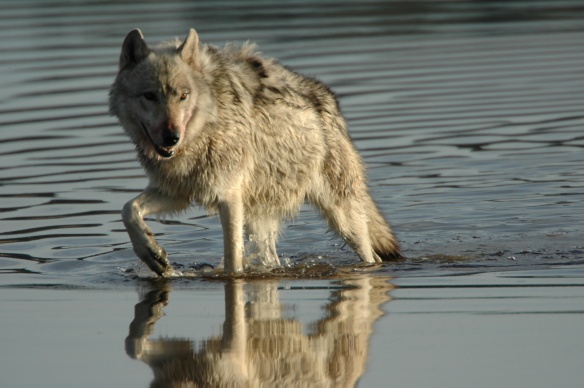
Wildlife Photography ©Jim Robertson

Wildlife Photography ©Jim Robertson

Murder Countless Coyotes, Win a Belt Buckle

“We must never let despair stop us in our mission. I have to believe there are more of us than them.”
~Linda Delano, Boulder, Colorado

From Project Coyote:

We have good news and not so good news about last weekend’s coyote killing contest in California.

The good news is that Project Coyote and allies -with your help- successfully exposed this brutal contest, shining the spotlight on a heartless practice. We generated national media on an event that, until now, had gone virtually unnoticed.

We also generated more than 20,000 letters and emails opposing the gratuitous slaughter bringing this issue to the attention of the California Fish and Game Commission and the Department of Fish and Wildlife. Our live testimony before the Commission in Sacramento was powerful and well-received.

Galvanizing a grassroots force of more than 25 wildlife conservation and animal protection organizations to oppose this hunt – representing more than 1 million Californians – comes on the heels of our success in helping stop a coyote contest hunt in New Mexico. Legislation has just been introduced there to ban contest hunts statewide. This is great news.

The sad news is that we weren’t able to stop this contest hunt in California because the law allows this wanton abuse of our wildlife. Nor do we know how many coyotes died at the hands of 250 eager contestants because the law doesn’t require them to report the body count. Sponsors boasted that the event was “enjoyable” and “successful.” A silver belt buckle was awared to the team with the biggest body count. We worked closely with a reporter documenting the event but it was tense going; he and his 13 year old granddaughter were met with open hostility and harrassment.

We promise this: on behalf of the coyotes who died needlessly that we will not stop working for a better way, a better day for coyotes. With your voice, your support and your heart, we will work to end the heartless persecution of our native Song Dogs.

On this Valentine’s Day, please consider giving a gift to Project Coyote to help us continue to expose these wildlife massacres and to seek reforms in the ways predators are “managed” in the U.S.

logohome

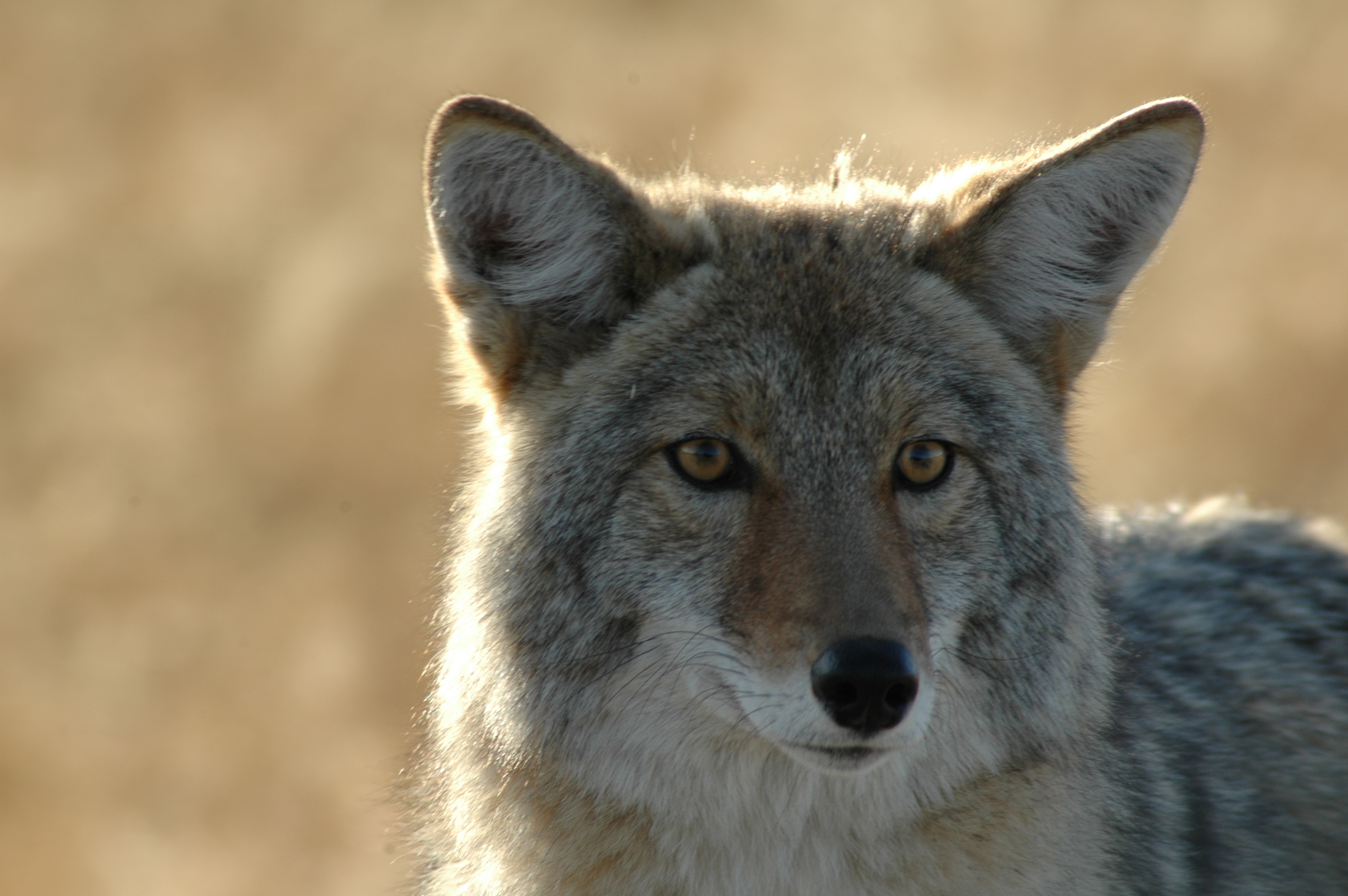
Coyote photo by Jim Robertson

Who’s in “Season” Now?

I just came in from a long walk with our dog. For the most part, it was completely quiet out there. Not a breath of wind today, only the sound of our footsteps and the dog’s hot breath as she dragged me from scent to scent. Just as I started to consciously appreciate how peaceful it all was, the silence was extinguished by some damn neighbor shooting his gun.

What the hell was he shooting at? Who’s in “season” now? Deer and elk “season” are over. There’s an ongoing open season on ducks and geese, but this was no “pop, pop” of a shotgun; it was the echoing report of a high-powered rifle.

Coyotes can be shot on sight year-round, but thanks to assholes like this guy, there’s not much chance of seeing them out this time of day.

No, whoever it was, they were probably just firing off their gun for the fun of it. All’s I know is, it was fuckin’ irritating—and I’m sure the local wildlife found it even more annoying than I did.

Text and Wildlife Photography ©Jim Robertson, 2012. All Rights Reserved

Text and Wildlife Photography ©Jim Robertson, 2012. All Rights Reserved

Just Out for a Bit of Fun

“I think it’s cruel that they would take sport in stuff like that. Very cruel. It’s just sophomoric, juvenile.”

That quote could just as easily have been a humane person’s reaction to witnessing any legal goose, pheasant, elk or wolf hunt, but in this case it was in reference to a speeding driver running over 92 protected shorebirds on the Washington coast (on the same stretch of beach mentioned in this earlier post, Compassion for All, Not Just the Endangered).

Shorebirds, like the dunlins who were senselessly killed, huddle close together on the beaches this time of year, which makes the act of running over nearly eight dozen of them at one time no great challenge for anyone willing to stoop to such an act.

The driver was most likely just out for a bit of fun when they spotted the flock of migratory birds dead ahead. After plowing through the birds—who have an uncanny knack of flying off at the last minute to avoid any vehicle following the posted speed limit of 25mph, but who must not have been ready for someone going twice that speed—chances are the driver said to his passengers something like, “that was pretty neat.”

That same line was uttered by a Dubois taxidermist and outfitter, Joe Hargrave, who, on Oct. 5, just four days after their season opened, became one of Wyoming’s first hunters to legally kill a wolf since 1974.

“It was pretty neat to be able to hunt them because they’re a magnificent animal,” Hargrave said. “I like to see them in the wild just like elk, moose and everything else. It is nice to be able to have the opportunity to hunt them.” (The U.S. Fish and Wildlife Service removed wolves from the endangered species list in Wyoming on Sept. 30, kicking off the first hunting season since wolves were placed on the list in 1974. Conservation groups have filed three lawsuits seeking to re-list the wolves; they are expected to be decided sometime in 2013.)

People for the Ethical Treatment of Animals and the Wildlife Rehab Center of North Coast are offering a reward for information leading to the arrest of the person responsible for the illegal killing of the protected shorebirds. Meanwhile, thousands of unprotected migratory geese, deer, elk, cougars, coyotes and wolves are shot each year by people with the same motive as those thrill seeking, sophomoric, sociopathic beach drivers—they’re just out for a bit of fun.

Text and Wildlife Photography© Jim Robertson

Text and Wildlife Photography© Jim Robertson

The Infertile Union

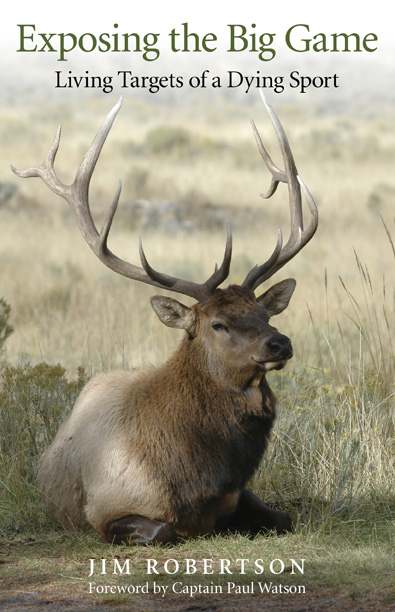
So you don’t get the idea I go around unfairly picking on small grassroots groups, here’s an excerpt from my book, Exposing the Big Game: Living Targets of a Dying Sport, wherein I take on the Goliath of all national green groups for siding with hunting…

Sport hunters have enjoyed so much laudation of late they’re beginning to cast themselves as conservation heroes. What’s worse is that many modern, influential green groups are swallowing that blather, hook, line and sinker. Maybe they ought to reread the words of Sierra Club founder, John Muir:

“Surely a better time must be drawing nigh when godlike human beings will become truly humane, and learn to put their animal fellow mortals in their hearts instead of on their backs or in their dinners. In the meantime we may just as well as not learn to live clean, innocent lives instead of slimy, bloody ones. All hale, red-blooded boys are savage, fond of hunting and fishing. But when thoughtless childhood is past, the best rise the highest above all the bloody flesh and sport business…”

Henry David Thoreau, another nineteenth-century nature-lover whose forward-thinking writings were an inspiration to Muir, cautions, “No humane being, past the thoughtless age of boyhood, will wantonly murder any creature which holds its life by the same tenure he does. The hare in its extremity cries like a child. I warn you, mothers, that my sympathies do not make the usual philanthropic distinctions.”

If those dated messages and mockery are lost on twenty-first-century Sierra-clubbers, Edward Abbey’s sentiment should be obvious enough for anyone, “To speak of harvesting other living creatures, whether deer or elk or birds or cottontail rabbits, as if they were no more than a crop, exposes the meanest, cruelest, most narrow and homocentric of possible human attitudes towards the life that surrounds us.”

Early vanguards of ecological ideology recognized Homo sapiens as just one among thousands of animal species on the planet, no more important than any other in the intricate web of life. They also abhorred sport hunting.

But a shocking turn-around is taking place in the current bastardization of the environmental movement. The Sierra Club and other large, corporate green groups are embracing (read: sleeping with) powerful hunting groups like the Safari Club International and the National Rifle Association (NRA). In a transparent effort to appear down-home and therefore more in touch with nature, they’re making the fatal mistake of joining frces with sportsmen whose conservation “ethic” exists only so their preferred prey species can be slain again and again.

The infertile union between super-sized modern green groups and mega-bucks hunting clubs must have been sired by their shared conviction that humans are the most crucial cogs in the wheel of life (or at least the squeakiest wheels in the dough machine). As the only animal capable of coughing up cash when the collection plate comes around, human beings (every last gourmandizing, carnivorous one of them) are the primary concern; their wants must be given priority over those of all other species. Contemporary environmental organizations, seduced by a desire to engage as many paying members as they can get their hands on (regardless of their attitudes towards animal life), must believe blood-soaked money is as green underneath as any.

Forever stagnating in “thoughtless childhood,” members of hunting groups like the NRA live for the day they can register a record-breaking trophy with the Boone and Crocket Club—formed by Roosevelt “to promote manly sport with rifles.” Fund for Animals creator, Cleveland Amory, took issue with the sporty statesman in his anti-hunting epic, Man Kind? Our Incredible War on Wildlife. A benevolent humanitarian for humans and nonhumans alike, Mr Amory wrote, “Theodore Roosevelt…cannot be faulted for at least some efforts in the field of conservation. But here the praise must end. When it came to killing animals, he was close to psychopathic. Dangerously close indeed (think: Ted Bundy). In his two-volume African Game Trails, Roosevelt lovingly muses over shooting elephants, hippos, buffaloes, lions, cheetahs, leopards, giraffes, zebras, hartebeest, impalas, pigs, the not-so-formidable 30-pound steenbok and even (in what must have seemed the pinnacle of manly sport with rifles) a mother ostrich on her nest.

But don’t let on to a hunter your informed opinion of their esteemed idol, because, as Mr Amory points out, “…the least implication anywhere that hunters are not the worthiest souls since the apostles drives them into virtual paroxysms of self-pity.” Amory goes on to say:

The hunter, seeing there would soon be nothing left to kill, seized upon the new-fangled idea of “conservation” with a vengeance. Soon they had such a stranglehold [think: Ted Nugent] on so much of the movement that the word itself was turned from the idea of protecting and saving the animals to the idea of raising and using them—for killing. The idea of wildlife “management”—for man, of course—was born. Animals were to be “harvested.” They were to be a “crop”—like corn.

Fortunately, a faithful few are seeing through the murky sludge spread where green fields once thrived. Sea Shepherd Conservation Society’s Captain Paul Watson (founder and president of about the only group still using the word conservation to mean protecting and saving animals) recently took another in a lifetime of steadfast stands by resigning from his position on the Board of Directors of the Sierra Club. He refused to be a part of their whorish sleeping with the enemy—their pandering to sportsmen by holding a “Why I Hunt” essay contest, complete with a grand prize trophy hunt to Alaska. To think of how many trees were needlessly reduced to pulp for this profane effort when the answer to why hunters hunt was so succinctly summed up in just one sentence by Paul Watson, “Behind all the chit-chat of conservation and tradition is the plain simple fact that trophy hunters like to kill living things.”

Just as the naïve young girl who falls for the charms and promises of a sunny sociopath learns, the hard way, about his hidden penchant for abuse and violence, the Sierra Club and other middle-ground eco-friendly groups may soon learn the dangers of looking for Mr. Goodbar in all the wrong places. How will they divorce themselves from this unholy alliance when the affair goes sour and sportsmen reveal their malicious, hidden agenda by calling for another contest hunt on coyotes or cull on cougars, wolves or grizzly bears to do away with the competition for “their” deer, elk, moose or caribou?

front-cover-low-res6

Chapter Titles

Here’s the Table of Contents for Exposing the Big Game?
Foreword by Captain Paul Watson

Introduction

Chapter 1) Hide-hunting Holocaust Survivors Still under Fire

Chapter 2) An Act of Bison Altruism

Chapter 3) War on Coyotes an Exercise in Futility and Cruelty

Chapter 4) Time to End a Twisted Tradition

Chapter 5) Avian Superstar Both Athlete and Egghead

Chapter 6) From the Brink of Oblivion and Back Again?

Chapter 7) A Day in the Sun for the Hayden Wolves

Chapter 8) Critical Cornerstone of a Crumbling Castle

Chapter 9) Bears Show More Restraint than Ursiphobic Elmers

Chapter 10) The Fall of Autumn’s Envoy

Chapter 11) Inside the Hunter’s Mind

Chapter 12) A Magical World of Oneness

Chapter 13) Living Targets of a Dying Sport

Chapter 14) A Few Words on Ethical Wildlife Photography

In Closing

Acknowledgements:

Looking back, this was not, at the outset, planned as a podium from which to lambaste anyone’s hobby or heritage, but was originally intended as a venue for relating some of the behaviors and capabilities I’d observed among animals living in the wild, and as a celebration of life along the compassion continuum. However, after delving deeper into the histories of the species covered here—thanks in part to the invaluable references listed below—I found it impossible to simply depict their natural activities without also chronicling the shocking stories of abuse they have suffered at the hands of man. It would have been doing the animals a disservice to merely record how they naturally lived without at least alluding to the far-reaching and pervasive ways that human actions have altered their lives and sometimes their very natures. And the facts are clear: there has been no greater direct human impact on wildlife than the ongoing threat of hunting. As with the other pertinent and profound quotes from a variety of enlightened sources, this one from Edward Abbey proficiently puts it in a nutshell, “It is not enough to understand the natural world. The point is to defend and preserve it.”

Wolves and Coyotes are Ever the Scapegoats

(The following excerpt from the chapter, “War on Coyotes an Exercise in Futility and Cruelty,” in the book, Exposing the Big Game: Living Targets of a Dying Sport, parallels points I raised about wolves being incriminated in yesterday’s post—just substitute wolves for coyotes and sheepman for cattle rancher)…


In removing weak or diseased animals from a given gene pool, coyotes, as well as wolves and cougars, secure healthy traits for future generations. Furthermore, although introduced livestock (their wariness bred out of them through the domestication process) are far more vulnerable, it’s been documented that predators like coyotes would prefer to stick to their usual prey—yet they are ever the scapegoats.

As Jack Olsen, author of Slaughter the Animals, Poison the Earth, put it:

“By simple dint of pounding over and over on the same points, the sheep industry has succeeded in characterizing all predators as deadly killers that would rather dine on lamb than anything else that lives on the range. In the sheepman’s demonology of the coyote, every fallen sheep is brought down by coyotes. If Canis latrans comes across a dead sheep and plays his natural role as carrion-eater, the rancher shows teeth marks as proof of murder. If a sheep falls dead and the coyotes ignore the carcass, the sheepman charges an even more heinous crime: killing for pleasure. No matter what the predator does, a diabolical explanation is provided, and grandiose overstatement becomes the rule. Two lambs dying at birth are transformed into twenty lambs killed by coyotes.” 

Ordinarily a writer of true crime books, such as Son, a Psychopath and his Victims and I, the Creation of a Serial Killer (about a murderous trucker whose violence continuum began with a long history of cruelty to animals, including coyotes), Olson did not have to stray far from that genre in addressing the mentality of the kind of nutcase who would victimize coyotes.

Wildlife Photography Copyright Jim Robertson