200+ Yellowstone Bison Sent to Slaghter

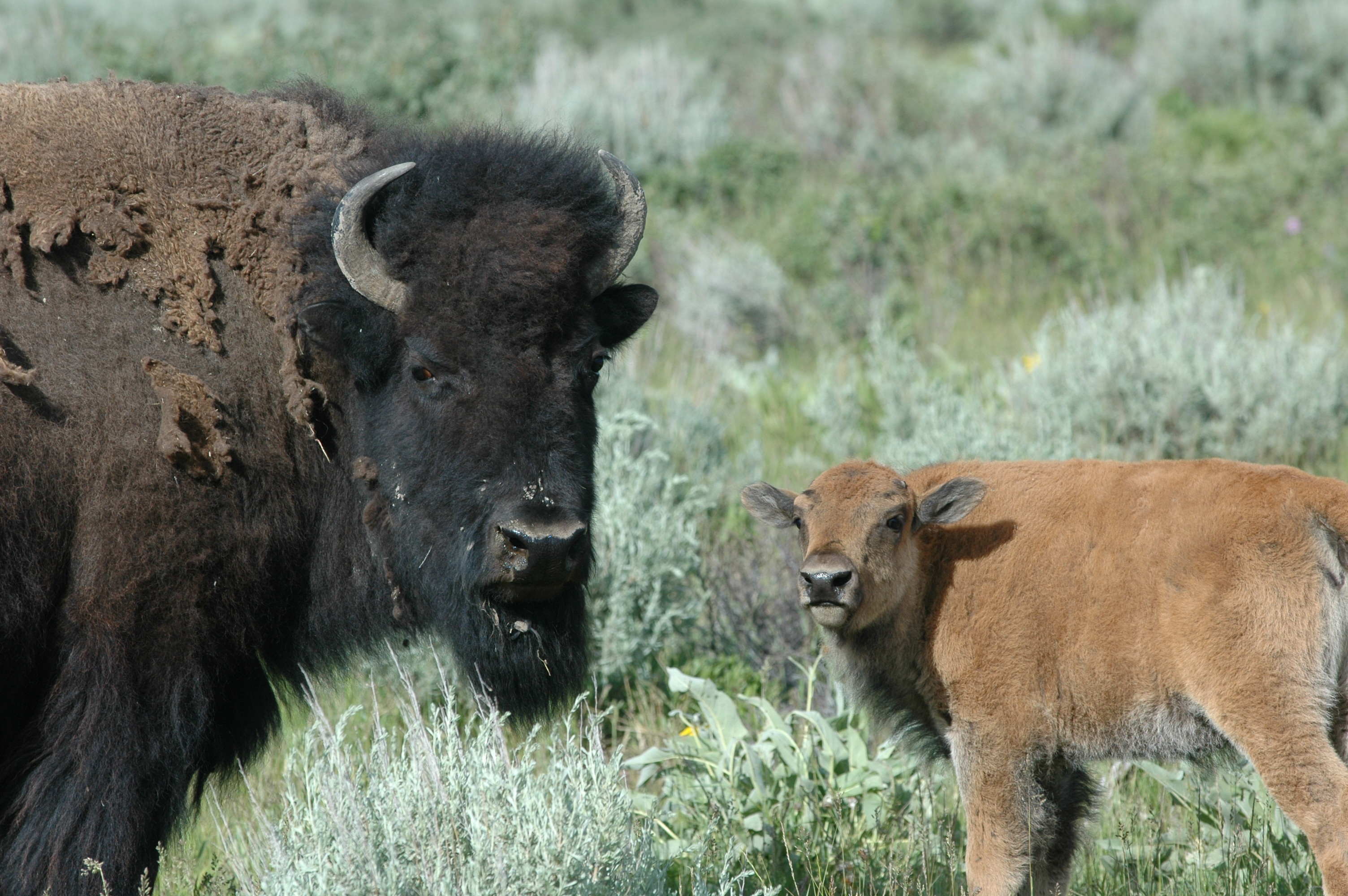
Photo Copyright Jim Robertson

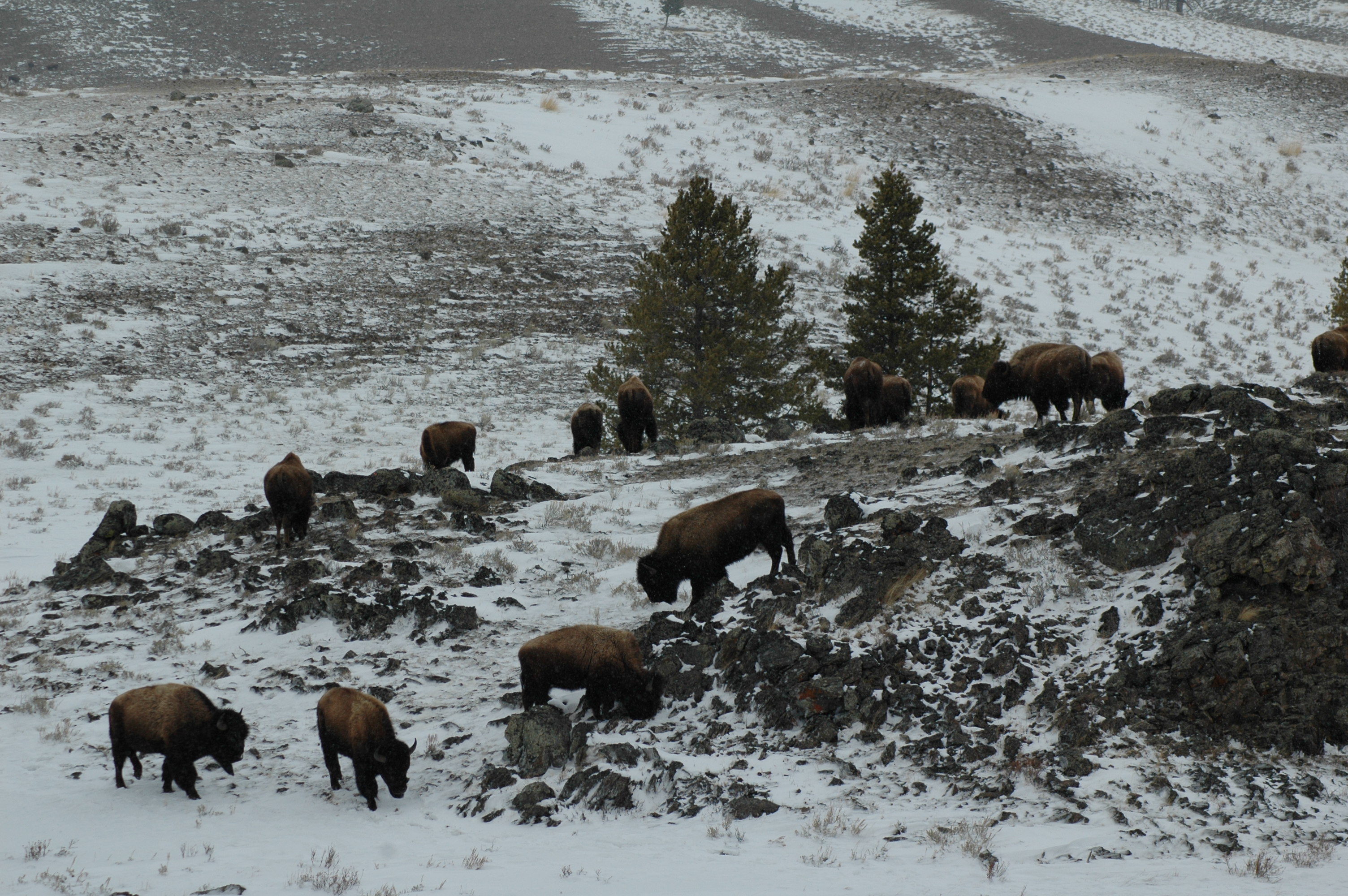
Photo Copyright Jim Robertson

http://www.msn.com/en-us/news/us/at-least-200-yellowstone-bison-have-been-sent-to-slaughter-conservation-group/ar-AA8wPh0

Yellowstone National Park has shipped at least 200 bison near the park boundary with Montana to slaughter as the famed tourist destination seeks to reduce a herd by 900 animals this winter, a U.S. conservation group said on Friday.

A park spokesman, Al Nash, could not immediately confirm how many bison may have been handed over to tribal partners and taken to slaughter. But he said 162 bison had been captured and placed into a holding facility as of a week ago.

The Buffalo Field Campaign, which opposes the culling and has been monitoring it, said the bison had been dispatched to slaughter since Wednesday, and anticipated that 55 more could be sent on Monday.

The culling plan allows the bulk of bison marked for death to be transferred to Native American tribes for slaughter and a certain number of the wandering buffalo to be killed by hunters.

The strategy is designed to address worries by ranchers that bison infected with the bacterial disease brucellosis, which can cause miscarriages in cattle, could transmit it to their herds, potentially threatening Montana’s brucellosis-free status.

The plan this winter to reduce the bison population to 4,000 from 4,900 comes as conservation groups are seeking federal protections for a herd that is a top attraction for the 3 million annual visitors to a park that spans parts of Wyoming, Montana and Idaho.

Buffalo Field Campaign spokeswoman Stephany Seay called the culling practice “the brutal abuse and slaughter of the only wild population of buffalo remaining in this country.”

The iconic hump-backed animals once roamed by the tens of millions west of the Mississippi until hunting campaigns reduced their numbers to the fewer than 50 that found safe harbor at Yellowstone in the early 20th century.

The Buffalo Field Campaign said that roughly another 100 bison have been killed by hunters outside the park in Montana, while Nash, citing state officials, put that number lower, at 70.

Nash said the park usually engages in culling in winter, when bison migrate to lower elevations in search of food. Federal and state officials on horseback have been capturing animals along the park boundary, both inside and outside the park.

Conservationists petitioned the U.S. Fish and Wildlife Service last year to provide federal safeguards for the Yellowstone herd, contending it was the only free-roaming band in the country to retain its genetic integrity.

(Reporting by Eric M. Johnson in Seattle; Editing by Sandra Maler)

Unsworth is Unworthy for Washington Wildlife

The Governor must First approve Unsworth as the new Director of WDFW…..We can’t let this happen!! He’s an avowed wolf hater!! Here is WA Governor Inslee’s contact info…PLEASE call the Governor ASAP and Say NO to Unsworth!!!
http://www.governor.wa.gov/contact/interact/
More info from Jerry:
Idaho exported George Pauley to Montana and now Jim Unsworth to Washington….two avowed wolf haters. Look what Pauley has done in Montana and you can expect the same from Unsworth. To my knowledge Unsworth does not have a fisheries background which you’d think would be very important with the very complicated fisheries situation we have in Washington….seems that didn’t matter to the commissioners. Would like to know which commissioners voted for him…
….

Meanwhile in Illinois, Proof that Governors can occasionally do good things for wildlife, Illinois Gov. just vetoed a bill that would have allowed bobcat hunting there:

Gov. Quinn vetoes bill to allow Illinois bobcat hunting

Sunday, January 11, 2015 04:27PM

Gov. Pat Quinn on Sunday vetoed a bill to allow bobcat hunting in Illinois for the first time in more than 40 years, saying the small, nocturnal cats “continue to need protection” even though they have been removed from the threatened species list.

Quinn issued a brief statement in which he said allowing hunting would violate a responsibility to maintain Illinois wildlife.

“Bobcats are a valuable part of Illinois’ ecosystem and continue to need protection,” he said.

His decision ignores the recommendation of the state Department of Natural Resources, which supported a hunting season as a way to help in long-term management of the species…

http://abc7chicago.com/news/gov-quinn-vetoes-bill-to-allow-illinois-bobcat-hunting-/470922/

[Just how hunting them would help the bobcats was not clear, but the misguided policy falls in line with wildlife “management” actions nationwide.

10846355_862436173776474_7314160412610807927_n

Commission selects Unsworth as new director of WDFW

Let’s see, Unsworth is an avid hunter, has 4 kids, holds a bachelor’s degree in wildlife management from the University of Idaho, a master’s degree in fish and wildlife management from Montana State University and a doctorate in forestry, wildlife and range sciences from the University of Idaho, yes, he should make a fine addition Washington’s wolf management team.

Too bad compassionate Washingtonians didn’t have a vote or voice in this decision…

NEWS RELEASE
Washington Fish and Wildlife Commission
600 Capitol Way North, Olympia, WA 98501-1091

http://wdfw.wa.gov/commission/

January 10, 2015
Contact: Commission Office, (360) 902-2267

Commission selects Unsworth as new director of WDFW
TUMWATER – Dr. Jim Unsworth), deputy director of the Idaho Department of Fish and Game, was chosen today as the new head of the Washington Department of Fish and Wildlife (WDFW).
The Washington Fish and Wildlife Commission voted to select Unsworth after interviewing eight candidates for the director’s position in December and narrowing the field to four finalists. The commission, a citizen panel appointed by the governor to set policy for WDFW, announced its decision at a public meeting Jan. 9-10 in Tumwater.
Unsworth, who will replace Phil Anderson, formally accepted the job today.
Commissioners said they sought a visionary leader with a strong conservation ethic, sound fiscal-management skills and the expertise to work collaboratively with the commission and the department’s constituents.
“After a thorough nationwide search, we’re confident Jim is the right person to guide the department through the many challenges that lie ahead,” said Miranda Wecker, chair of the commission. “His solid understanding of natural resource issues and strong leadership skills will be invaluable in the department’s effort to manage and protect the fish and wildlife resources that are so important to the people of this state.”
As director, Unsworth will report to the commission and manage a department with more than 1,600 employees, and a biennial operating budget of $376 million. His annual salary will be $146,500.
Unsworth, age 57, has spent more than 30 years in wildlife management with the Idaho Department of Fish and Game and has served as deputy director for the agency since 2008. He previously held several management positions for the department, including wildlife bureau chief and state big game manager.
Unsworth holds a bachelor’s degree in wildlife management from the University of Idaho, a master’s degree in fish and wildlife management from Montana State University and a doctorate in forestry, wildlife and range sciences from the University of Idaho.
“I’m thrilled at this opportunity,” Unsworth said. “I look forward to taking on the many exciting challenges that come with managing fish and wildlife in the state of Washington.”
Unsworth and his wife Michele have four adult children. He is an avid hunter and fisher.
Unsworth will replace Anderson, who announced in August he was resigning from his position at the end of 2014. At the commission’s request, he has since agreed to stay on as the head of the agency until a new director is in place.
“Phil’s enormous dedication to managing Washington’s fish and wildlife will truly be missed,” Wecker said. “As director, he was a tireless worker who successfully guided the department through one of the most difficult times in the history of this state. Under his leadership and with his support, the department made important progress in meeting some very challenging issues. We are extremely grateful for his service and all the contributions he made during his career at WDFW.”
Wecker said a statement of appreciation for Anderson will be posted in the next week on the commission’s webpage at http://wdfw.wa.gov/commission/

Wyoming fights wolf decision, files emergency rule to allow hunting season

copyrighted Hayden wolf walking
September 25, 2014 6:00 am  • 
 

Wyoming filed an emergency rule Wednesday with the Secretary of State’s Office, hoping to still begin its wolf hunting season Oct. 1.

The move came a day after a Washington, D.C., judge placed wolves back on the endangered species list, which immediately stopped all wolf hunting in Wyoming.

The emergency regulation would place a Wyoming Game and Fish Commission wolf management plan into effect in an attempt to address the judge’s concerns.


There are no guarantees it will work, said Brian Nesvik, head of the wildlife division of the Wyoming Game and Fish Department.

A coalition of conservation groups argued three points in a lawsuit filed against the U.S. Fish and Wildlife Service in 2012. They said Wyoming’s plan did not ensure a viable population of wolves, that there was not enough genetic exchange with other populations and that the gray wolf is still endangered in some of its range.

U.S. District Judge Amy Berman Jackson wrote in her ruling that while wolves had recovered with sufficient genetic exchange, Wyoming’s plan to have a viable population was not binding.

“It’s just another page in the saga of this whole issue,” said Budd Betts, owner of Absaroka Ranch, a guest ranch and outfitting business near Dubois. “I thought this very well could have happened. This is going to be a recipe for an exploding population.”

At issue in the judge’s ruling is Wyoming’s promise to maintain more than the required 100 wolves and 10 breeding pairs outside the national parks, said Nesvik.

Wyoming put an addendum in its management plan that it would maintain a buffer of wolves above the required number. It did not specify how many or make the buffer binding by law.

The emergency rule the state filed Wednesday changes that addendum and turns it into a regulation, Nesvik said.

“This is a formality is all it is,” he said. “Two-thirds of this decision affirmed the merits of Wyoming’s wolf management plan.”

Gov. Matt Mead signed the emergency rule Wednesday, he said.

Wyoming needs to do more than add a regulation to its plan resolving the buffer to assure wolves’ continued survival in the state, said Mike Senatore, vice president of conservation law and general counsel for Defenders of Wildlife, one of the groups involved in the lawsuit.

“What we hope Wyoming does is they go back and put in place a plan that will actually ensure the long-term recovery and survival of wolves in the state,” he said. “We continue to have major problems with the two-tiered status of wolves in the state.”

Wyoming has a hunting season on wolves in the northwest corner, but outside the area they can be shot on sight in what is called the predator zone. Senatore would like to see the predator zone eliminated or greatly restricted, he said.

Nesvik believes the plan Wyoming implemented is adequate to maintain the required number of wolves. Wyoming had at least 178 wolves and 15 breeding pairs in its trophy management area at the end of hunting season in 2013.

That number does not include wolves living in Yellowstone National Park, the Wind River Indian Reservation or the predator zone.

About 85 percent of the state’s wolf population is in the trophy management area. Nesvik did not have an estimate for the number of wolves in the rest of the state.

In 2012, 42 wolves were killed in the trophy area, and 25 were hunted in the rest of the state, according to Game and Fish. In 2013, 24 wolves were killed in the trophy area and 39 in the rest of the state. Hunters did not kill the quota of wolves allowed during either hunting season.

Wyoming’s attorney general will work with attorneys from the U.S. Department of Justice to bring the case before the judge again.

In the meantime, no more wolf licenses will be sold. The department is working on a system to refund money to the hundreds of hunters who already purchased a 2014 license.

Bigotry Against Bison in Montana

Divided public comment starts rescheduled bison meeting

by LAURA LUNDQUIST, Chronicle Staff Writer The Bozeman Daily Chronicle | 0 Comments

BILLINGS – The group charged with exploring the possibility of a free-roaming bison herd in Montana has hard work ahead, according to many eastern Montana ranchers attending a Fish, Wildlife & Parks meeting.

“This is a pipe dream of somebody’s,” said Greg Oxarart of the South Phillips County Grazing District. “You as a panel — do you want bison in your backyard? Not many people do. I hope you take that into consideration. You have a tough job ahead of you.”

Wildlife Photography © Jim Robertson

Wildlife Photography © Jim Robertson

FWP Director Jeff Hagener created the group to brainstorm where and how a free-roaming bison herd could be created in Montana.

Several of the 50 people in the audience carried signs stating “No free-roaming bison” and wore buttons bearing red X’s over a bison. Most were from Phillips and Valley counties, which contain the C.M. Russell Wildlife Refuge and the AmericanDSC_0128 Prairie Reserve.

Some had attended the first meeting of the discussion group in Lewistown in September. That meeting produced a list of guiding principles for any future plan, including respecting private property rights and managing bison as “wildlife” through a FWP management plan.

The group was scheduled to have its second meeting in Lewistown in April. But after receiving a number of heated emails and phone calls, Hagener canceled the Lewistown meeting at the last minute.

Some people were concerned by a series of events involving Yellowstone bison, including a court ruling that bison in quarantine remain wildlife, but a main complaint was that no time had been scheduled during the meeting for public comment.

On Monday, Hagener said no comment had been scheduled because the informal group was created for discussion and would not make any decisions. He also emphasized that the group had nothing to do with the management of Yellowstone bison.

“We are allowing public comment because a lot of the members of the group thought it was appropriate to have that,’” Hagener said. “Hopefully, we’ll come to a result that’s gone through a process with a lot of public opportunity, and we’ve allowed the public to be involved all the way along.”

Facilitator Ginny Tribe opened the public comment session with the reminder that any resulting plan would have a “no action” alternative where the state would not create a free-roaming herd.

“This group has already agreed on some of these principles so keep that in mind when you make your comments,” Tribe said.

Even so, comment ranged from vehement opposition to any bison to a proposal of the exact location on the CMR Wildlife Refuge where FWP should put 1,200 bison.

Dyrck Van Hyning displayed maps of the Southerland Bay region along the northern shore of the Fort Peck Reservoir in the CMR Refuge and said the 33,000 acres could house up to 1,200 bison, based upon the Bureau of Land Management’s grazing guide of 24 acres per cow.

“There’s no private land. There’s natural boundaries. This would be a good place for a pilot project that could start small,” Van Hyning said.

A Department of the Interior report on U.S. bison herds, released a few weeks ago, named the CMR Refuge as a good site for the transplant of bison but categorized future management as highly complex because of the resistance from nearby ranchers.

Hagener said the DOI would not move to put bison on the CMR Refuge without coordinating with the state of Montana.

That assurance didn’t assuage Phillips County ranchers, who cited concerns about property and fence damage, competition for grazing resources, the loss of livelihood and brucellosis. Some were worried about losing grazing allotments on the refuge.

Craig French of Phillips County said the meeting might not be about Yellowstone bison but ranchers can’t ignore the Yellowstone situation.

“If it was in my power to do so, I would hold these people responsible and throw them in jail for cruelty to the animals and mismanagement of the land,” French said. “At least we agree that things need to be grazed. We’re arguing over what should graze.”

Jim Posewitz of Helena also argued for the animals but said people have a moral responsibility to recover a species that they almost eliminated in the late 1880s.

“What happened in Montana is shameful. We have become the bone yard of a continent,” Posewitz said. “Will this be the point in Montana history where we become committed to finishing the wildlife restoration legacy?”

Sheep rancher Becky Weed of Belgrade said that bison and Montana cattle ranchers shared one trait that could serve as common ground for resolution: both need natural functioning ecosystems.

“It’s up to this group to try and explain to each other why the bison issue and the long-term cattle ranching issues are really one and the same,” Weed said. “This is a plea to the ranchers and to the environmentalists to understand why we all have a vested interest in seeking some kind of resolution to this.”

Following public comment, the group started problem-solving exercises to develop some recommendations by the end of Tuesday.

Every Hunter and Trapper Will Die Someday

10342876_644838815599443_2466424090983508710_n

This photo (allegedly taken in late November, 1947, near Roswell, New Mexico) recalls some of the most common feeble rationalizations humans use to justify the killing and consumption of the other beings with whom we share this planet.

Another equally feeble rationalization just cropped up in a letter to the editor of the Las Vegas Sun, using the twisted logic that since all animals are going to die someday, we might as well kill and eat them.

The letter, entitled, “Hunting, trapping to manage wildlife,” by the president of the Southern Nevada Coalition “for Wildlife,” starts out attacking animal rights activists and defending trappers and hunters:

“The litany of attacks on trappers and hunters by animal rights activists lately are usually based on the claim that trapping and hunting are inhumane. One needs to ask the question: compared to what? Compared to the standards of Walt Disney productions where Bambi and his deer family think and talk things over and where Lion Kings rule? Perhaps so, but in the real world of nature and wildlife, it is a different story.

“Every wild animal will die someday. If animal rights activists think wild animals die comfortably in their beds surrounded by loving family members, they are sadly mistaken. Disease, starvation, dehydration and predation are the most probable causes, and in the absence of management tools like hunting and trapping, entire wildlife populations suffer horribly.

“That is the reason the entire wildlife management profession and every conservation association support regulated hunting and trapping.

“Professionals know that regulated hunting and trapping are far more humane than letting nature run its course unimpeded. The animal rights activists beg to differ, but how is it more humane to allow (or mandate) that wild animals must die by disease, starvation or predation, or, much worse, allow (or mandate) entire populations to suffer this way when there is a much better way?”

A better way? That’s assuming a lot, such as that an unaware animal is killed outright with one clean shot (which almost never happens). And how is trapping an animal and letting it struggle until a human returns to finish it off ever humane?!

Yes all animals are going to eventually die someday, but usually when that day happens, nature steps in and prepares the individual for it through a process that includes shock, withdrawal and the gradual shutting down of the senses. Hospice professionals know the process well; it’s outlined in handouts they share with anyone who is caregiving for the dying.

Ending a healthy life (human or otherwise), before he or she have had the chance to fulfill their life’s journey, is murder, no matter how you rationalize it.

The pro-human predation letter ends with the line: “Since 1937, it’s been proved that regulated hunting and trapping programs are the essential tools of modern wildlife management.” Humans can just thank their lucky stars that no bigger brained beings have rationalized away their existence…yet.

Know thy Enemy, Do the Opposite

Part of the reason hunters get their way so often when it comes to “game management” decisions is that they don’t hesitate to make their wishes known to state agencies. Why should they, they’re all one in the same, right? But wildlife lawmakers are required to acknowledge all sides; the more input they get from the animals’ side, the harder it will be for them to act like hunters are the only one’s with a stake in the issues.

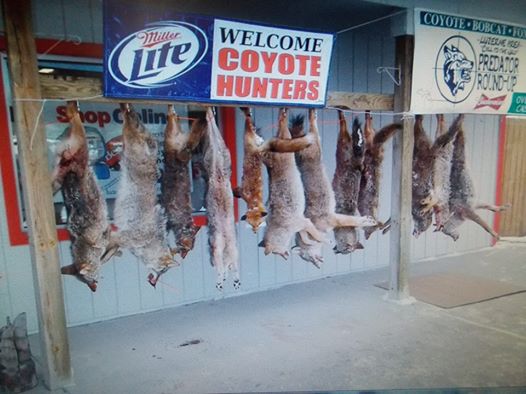
Here’s something posted on a hunting chat board promoting contest hunts that begs for an equal and opposite reaction from the coyote’s side…

Re: Important: Will WDFW make Coyote contests illegal?

« Reply #86 on: Today at 10:23:06 AM »
remember, the squeaky wheel gets the grease, keep the messages going…  :tup:
I would like to ask all hunters to take one minute and send a short friendly message to the Washington Wildlife Commission now. You should also ask friends, family members, and members of any sporting groups you belong to do the same
Here is a sample message, add an additional point or two if desired, but keep it short and friendly:.

Quote

Send To…. commission@dfw.wa.gov Subject….. I Support Coyote Hunting Contests
Dear WDFW Commissioners, I would like to express my strong support for coyote hunting contests. These contests provide a great deal of recreation for hunters across the state and much needed management of Washington’s undermanaged coyote population.
Thank you for your consideration, (your name & address here)

1795706_473627576096881_1329203140_n

Anti-hunters Outnumber Hunters by Three to One

whoownschart

It’s like the 1% vs. the 99% ratio. This graph came from an opinion piece entitled, “Who Owns the Wildlife?” which starts out:

More and more we as a society are facing problems with how wildlife of all types are managed in the United States. We see increasing conflicts and polarization between hunting and anti-hunting groups. On the one side, invoking the pioneer tradition of our ancestors, hunting groups contend that the right to hunt is undeniable and is essential to the sound management of our wildlife resources. On the other hand, anti-hunting groups contend that the need to kill wildlife animals is no longer justified and hunting represents a next to barbaric act against living, feeling animals.

Long line of hunters on a mountain trail.

Long line of hunters walk a mountain trail. Hunters contend that they are the only ones who should have a say in how wildlife are managed.
[I just want to interject here that as a wildlife photographer/watcher, the parking permit I purchase (the same one that comes with a hunting or fishing license) allegedly goes toward enhancing habitat. I recently saw the results of my contribution when I pulled down what used to be a quiet road which ends at a river and found that the “game” department had built a huge paved parking lot with 20 lined, blacktop spaces for trucks and boat trailers. They also put in a boat launch with a brand new dock and installed a shiny new 2-seater pit toilet–all for the sake of duck hunters and sport fishermen. Meanwhile, they did nothing for ducks or wildlife habitat.]


On one side, hunters contend that because they pay the bills for the management of wildlife resources through their licenses and a federal excise tax on their hunting equipment, they are the only ones who should have a say in how wildlife are managed. On the other side, anti-hunters argue that moral objections to the slaying of innocent animals overrides any priority as to who has a say in these matters. 

And the arguments go on and on….

Hunters: the More you Harvest, the Faster they Breed

1897936_534225470025483_669736540_n

The hunter population has gotten out of control and it’s time to do something about it.

Certain do-gooders have envisioned a policy of targeting only the males and displaying their manly parts above the fireplace or barn door as trophies. Other self-appointed regulators submit that that would unfairly skew the sex ratio of the species, especially in light of the rapidly increasing epidemic of female hunters. They suggest the best way to ease the overpopulation of hunters is to sell tags for both sexes. To recruit more hunter hunters, children aged ten or younger would be encouraged to join in the cull.

But, unfortunately, the notion that we can control their numbers through regulated harvest is a myth. The more you take down, the more their survivors breed to make up for their losses.

Bill to Fund Killing up to 500 Wolves Survives Committee

http://magicvalley.com/news/local/govt-and-politics/bill-to-fund-killing-up-to-wolves-survives-committee/article_1dbf6eec-87dd-11e3-bbcb-0019bb2963f4.html

January 28, 2014
By Kimberlee Kruesi –

BOISE • Gov. C.L. “Butch” Otter’s proposed $2 million fund to kill as many as 500 wolves barely passed its preliminary vetting Monday by the House Resources and Conservation Committee.

Committee members quizzed sponsors state Sen. Bert Brackett, R-Rogerson, and Rep. Marc Gibbs, R-Grace, on the effectiveness of creating a separate fund — which would come with a five-member oversight board — when the state already funds a predator damage board.

Bracket and Gibbs responded that the proposed expense would keep the focus on wolves instead of splitting resources on the state’s Animal Damage Control Board.

Federal support to control wolves will stop in 2016, Brackett said. In Fiscal Year 2013, the federal government provided $650,000 of the state’s $1.4 million wolf management budget.

If the bill passes, the $2 million would be a one-time appropriation with the livestock industry and hunting license fees contributing $110,000 each year.

“The priority of this whole effort is to keep the wolves delisted,” Brackett said.

Idaho’s wolves were taken off the endangered species list in 2011. Today, the state’s wolf population is estimated to be around 680 animals, according to the Idaho Department of Fish and Game. If it falls below 150, the species will be once more classified as endangered by federal regulators.

The committee repeatedly questioned the need for two boards dedicated to killing predator animals that cause damage to livestock or Idaho’s elk population.

“How is this a more cost-effective approach to start a new board than to put a little more money into Idaho Fish and Game?” asked state Rep. Illan Rubel, D-Boise.

Gibbs countered that a separate board allows the state to be flexible.

The new wolf fund would not pay for livestock killed by wolves but to kill wolves that cause damage, Gibbs said.

“There are no new ways to control wolves being projected or being created by this bill,” Gibbs said. “They are simply subject to the tools we have today, which is sport hunting, trapping and aerial gunning.”

The committee voted 9-8 to move the legislation forward, with the chairman initially declaring the bill failed before Gibbs speaking out he hadn’t voted and provided the “yes” needed for the bill to be printed.

This is the second consecutive year lawmakers have tried to secure funding dedicated wolf control. Last year, Otter vetoed a bill that would have diverted money from Fish and Game to a wolf management fund. The bill was sponsored by Rep. Judy Boyle, R-Midvale, who voted against Brackett’s and Gibbs’ proposal.

Boyle said committee recommendations from the summer of 2013 supported added money to the Animal Damage Control Board for wolf damage.

“I feel like this is a breach of contract of what was promised in that committee,” she said.

Brackett said that while a committee may have submitted recommendations, their bill was based on what the governor wanted.

Idaho’s wolf control management strategies have received criticisms recently after Fish and Game hired a trapper for the first time to kill two packs in the Middle Fork of the Salmon River.

Wolf activists also spoke out against Idaho’s elk management plan during a recent public hearing updating the document.

copyrighted wolf in river