Ranchers Insistence On Cheap Grazing Keeps Wolf Population In The Crosshairs

http://www.forbes.com/sites/jamesmcwilliams/2013/11/05/ranchers-insistence-on-cheap-grazing-keeps-wolf-population-in-the-crosshairs/

by James McWilliams

If the October headlines were any indication, the quickest way for a wolf to make the news is to get shot. The Jackson Hole News and Guide reported the story of a Wyoming hunter who bagged a wolf, strapped him atop his SUV, and paraded his trophy through Town Square. A Montana landowner shot what he thought was a wolf (it turned out to be a dog hybrid) amid concerns that the beast was harassing house cats. The Ecologist speculated that hunters were chasing wolves from Oregon, where hunting them is illegal, into Idaho, where it’s not, before delivering fatal doses of “lead poisoning.”

Predictably, these cases raise the hackles of animal right advocates and conservationists alike. Both groups typically view hunting wolves as a fundamental threat to a wolf population that, after a history of near extermination, is struggling to survive reintegration into the Northern Rockies. According to Michael Robinson, a conservation advocate with the Center for Biological Diversity, “Hunting is now taking a significant toll on wolf populations.”

While the anger directed toward irresponsible wolf hunters makes perfect sense, it should not obscure the essential reason for the wolf wars in the first place: livestock. Michael Wise, a history professor at the University of North Texas and the author of a forthcoming book on wolves on the Canadian border, says that “The challenge of wolf recovery is reintegrating the animals within a region that was transformed by industrial agriculture during the carnivore’s sixty-year absence.” Protecting migration corridors, expanding habitats, and fostering genetic diversity are integral to this goal. But, as Wise notes, “Opposing the wolf hunts does not address these larger issues.”

Understanding what would address these larger issues requires momentarily looking backward. Historically speaking, wolves got the shaft. When Lewis and Clark explored the American west at the dawn of the nineteenth century, thousands of wolves thrived across the Northern Rockies. Lewis admiringly called them “the shepherds of the buffalo.”

But the systemic destruction and commodification of their natural prey–including the buffalo, deer, elk, antelope, and bighorn sheep–as well as the subsequent replacement of wild animals with domesticated livestock, effectively transformed wolves–who wasted no time attacking helpless livestock–from innocent wildlife into guilty predators. Federally sponsored extermination programs–which included the U.S. Bureau of Biological Survey (later the U.S. Fish and Wildlife Service) hiring hunters to kill wolves en masse–succeeded so well that wolf numbers dropped to virtually nil by 1930. In such ways was the West won. (A similar battle continues, to an extent, in the attempt to remove wild horses today).

Six decades later, buffeted by the Endangered Species Act of 1973 and the emergence of a modern environmental movement, conservationists were working diligently to restore wolves to their former climes. But the livestock industry had, throughout the century, radically altered the old terrain, not to mention the rules governing it. Twentieth-century grazing practices denatured the wolf’s traditional habitat, reducing the landscape to ruins while securing ranchers’ presumed right to continue exploiting the wild west for tame animals. Michael Robinson, noting that the process of land degradation began in the nineteenth century, puts it this way: ”the west was picked clean of anything of value.”

Cattle had indeed wrecked havoc. They destroyed watersheds, trampled riparian vegetation, and turned grasslands to hardpan, triggering severe erosion. To top it off, the livestock industry spent the twentieth century securing cheap access to public lands through thousands of grazing permits now granted by the Bureau of Land Management and the U.S. Forest Service. Today, ranchers enjoy tax-supported access to 270 million acres of public land. Seventy-three percent of publicly-owned land in the west is currently grazed by privately owned livestock. Some of that grazing might be done responsibly. Most of it, according to the BLM itself, is definitely not.

No matter what the quality of prevailing grazing practices, one thing remains the same as it did a century ago: ranchers have a clear incentive to kill wolves. As environmental groups worked to form a united front in support of wolf reintegration in the mid-1990s, anti-wolf advocates articulated their opinions with vicious clarity. Hank Fischer, author of Wolf Wars and an advocate of wolf reintroduction, recalled the arguments he confronted as he pushed the pro-wolf agenda in Montana. “The Wolf is the Saddam Hussein of the Animal World,” read the placard of one protester. “How Would You Like to Have Your Ass Eaten by a Wolf?,” asked another.

Politically sanctioned release of pent-up vituperation against wolves came in 2012. It was then when gray wolves were completely removed from endangered species lists. Hunting season commenced with a bang in Idaho, Montana, and Wyoming. Recreational hunters and ranchers–not to mention the federal Wildlife Services–have since shot hundreds of wolves that ostensibly posed a threat to livestock. At times, such as last week, hunts have evinced grotesque, vigilante-like displays. According to James William Gibson, writing in The Earth Island Journal, “The Northern Rockies have become an unsupervised playpen for reactionaries to act out warrior fantasies against demonic wolves, coastal elites, and idiotic environmentalists.”

Fortunately, as the debate over wolf hunting rages, cooler heads are trying to prevail. Camilla Fox , Executive Director of Project Coyote, an organization dedicated to the peaceful coexistence of humans and animals, advocates policies that promote, in her words, “predator conservation and stewardship.”

Working closely with ranchers, she encourages them to have “tolerance and acceptance of wolves on the landscape.” She highlights several non-lethal methods of management, including using guard animals (such as Great Pyrenees and llamas) to deter wolves and coyotes from attacking livestock, better fencing, range-riders, fladry (flags that whip and flap in the wind), and grazing allotment buyouts, a solution that allows private parties to pay ranchers to relinquish their grazing permits. Project Coyote’s work has already had a dramatically successful impact on resolving conflicts between sheep owners and coyotes in Marin County, California.

Whatever techniques are eventually used to keep wolves off the headlines and in the wilderness, critics of wolf hunting should not lose sight of the fact that, while hunters are an easy (and perhaps legitimate) target for their ire, a lead poisoned wolf in 2013 is ultimately the victim of a century of disastrous decisions regarding land use–specifically, the use of livestock on the landscape. Eliminating grazing permits for western cattle ranchers would negatively impact no more than 10 percent of the beef industry in the United States. Ten percent! Seems a modest tonnage of flesh to sacrifice in order to save a species that symbolizes the beautiful essence of a landscape we have lost.

As Camilla Fox notes, “they do a lot better when we leave them alone.”

copyrighted Hayden wolf in lodgepoles

Duck Dynasty’s Evil is Spreading

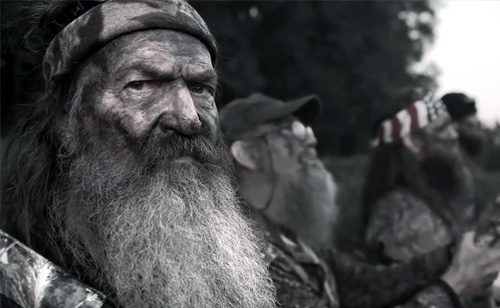
Some folks may be wondering why we let ourselves get worked up over a stupid faux “reality” TV show like Duck Dynasty; what harm are they doing by showing their hairy mugs for money and attention (and a lot of both). Well, I’ll tell you what’s wrong with it: their idiocy seems to be catching.

In all the years I’ve lived by this waterfowl wintering area, people have been respectful of the No Hunting Access sign. Now you find spent shotgun shells along the road overlooking the bay–a sure sign that bozo Robertson wanna-bes are shooting out at ducks who take refuge in the calm waters there.

And just today a boat full of duck hunters motored their boat through a flock of 100

—Text and Wildlife Photography ©Jim Robertson, 2013. All Rights Reserved

—Text and Wildlife Photography ©Jim Robertson, 2013

trumpeter swans, driving them across the river to an island infested with hunters shooting from their duck blinds.

It only takes a few boneheads to ruin it for everyone–especially if they have their own TV show.

1482896_10152099792278588_77995892_n

The Wisconsin Center for Investigative Journalism Blows the Lid Off Of Scam Hounder “Depredation” Payments.

dvoight09's avatarWisconsin Wildlife Ethic-Vote Our Wildlife


**UPDATE 01-05-2014** The Wisconsin Center for Investigative Journalism has posted a chart along with numerous arrogant quotes from the convicted poachers and other violators that received “depredation” payments at this link:

State pays scofflaws over hound deaths

The end of the 2013-2014 Wisconsin wolf slaughter season marked the first time that dogs have been allowed to “legally” go after wolves. With the help of traps and packs of vicious dogs Wisconsin oversaw the slaughter of 257 wolves in a little over two months. The quota was 251 but the hounders and wolf haters had to make sure they exceeded that number for the second year in a row.

Wolf haters also took their vile bloodlust to a new low this year on the various anti-wolf hate pages that pollute Facebook and the internet. In between the countless snuff pics showing bloody dead wolves and the ginning sadists that killed them, were hundreds…

View original post 1,013 more words

Stop the exterminat​ion of Idaho wolf packs!

A hit man sent by the Idaho Department of Fish and Game may be the last thing the Monumental and Golden Creek wolf packs will see before they die.

Yes, you read that correctly.

The U.S Forest Service (USFS) has ignored their own wilderness management policy and allowed the Idaho Department of Fish and Game (IDFG) to send a trapper out to exterminate two wolf packs deep within the vast Frank Church-River of No Return Wilderness.

This is a massive betrayal of the public trust. Tell the USFS, the agency in charge of protecting this Wilderness Area, to immediately stop the wolf eradication program in the Frank Church-River of No Return Wilderness area.

The future of wolves in Idaho is grim if we don’t act against their brutal anti-wolf agenda. In 2012, IDFG funded the aerial killing of 14 wolves, paying a bounty of $1600 per dead wolf. And now the Forest Service is letting it happen – against their own policies.

Enough is enough. Tell the USFS that their reckless decision to allow entire wolf packs to be exterminated in a protected wilderness area is unconscionable.

There isn’t any time to lose – as you read this, the state’s hit man is out laying his traps which by Idaho law can be left unchecked for up to 72 hours – leaving anything caught to bleed to death or succumb to exposure while waiting to be shot by the returning trapper.

This is going on as we speak – time is of the essence.

Please, take action immediately! Tell the USFS that it’s their duty to protect the wild in Wilderness Areas – and they must stop this reckless wolf extermination!

Thank you for all that you do.

https://secure.defenders.org/site/Advocacy?cmd=display&page=UserAction&id=2679

528624c939a88_preview-620

Duck Dynasty Gun Ads: Blowing A Duck’s Head Off Makes Phil Robertson Happy

Duck Dynasty Gun Ads: Blowing A Duck’s Head Off Makes Phil Robertson Happy

The Connecticut based weapons manufacturer Mossberg & Sons announced a partnership with the self-proclaimed “rednecks” Duck Dynasty last summer to sell a line of 12 DD themed weapons. The weapons are coated in camouflage and have the words “Faith. Family. Ducks.” displayed on them.

A series of ads featuring the Duck patriarch, Phil Robertson, aired right before Robertson made anti-LGBT and racist comments in a December GQ interview.

In one of the ads, two of the DD sons prepare to kill ducks as Father Phil recites the opening lines from the Constitution.

 “Those are rights that no government can take from you to live, be free and pursue happiness,” Robertson says in a voice-over. “You know what makes me happy, ladies and gentlemen? To blow a mallard drake’s head smooth off.”

In addition to the DD weapons that kill ducks dead, Mossberg’s website also advertises .22 caliber weapons that are “perfect for small game, plinking (and) target shooting – or cleaning cottonmouths out of your duck blind.”

Of course no Duck Dynasty weapon advertisement would be prudent without utilizing a biblical reference: “Where there is a design, there is a designer. We were designed to kill ducks.”

The DD themed weapon collection also includes military-style designs with large capacity magazines that hold at least 25 rounds that are too powerful for small game. The entire line consists of nine different shotguns, as well as two semiautomatic rifles and a semiautomatic pistol.

Mossberg says each gun will come with an American flag bandana.

After Papa Duck made his homophobic and racist comments in the GQ article, A&E announced the suspension of Robertson. Conservatives flipped out. Days later, Robertson was reinstated. …coughcoughpublicitystuntcoughcough….

Article and Video here: http://samuel-warde.com/2014/01/duck-dynasty-gun-ad/?utm_source=feedburner&utm_medium=email&utm_campaign=Feed%3A+SamuelWarde+%28Samuel+Wynn+Warde%29

Phelps 5th Annual Predator Hunt for 2014

http://www.phelpswi.us/phelps-5th-annual-predator-hunt-for-2014

PHELPS 5TH ANNUAL PREDATOR HUNT

January 3rd, 2014 – January 12th, 2014

Meeting at Great Escape, Friday January 3rd, 2014, 7:00 PM
Hunting starts immediately after meeting and ends at noon on Sunday January 12th, 2014. Entry forms can be picked up at Great Escape.
Entry fee is $40.00 per 1 man or 2 man teams, plus 3 non-­‐perishable items. Please bring non-­‐perishable items to the meeting.

Entry forms can be mailed to:
Rick Brown, PO Box 133, Phelps, WI 54554

There will be a big dog contest; each team entering will pay $10.00.

Prizes awarded on Sunday, January 12th, 2014 at Great Escape with a lunch provided. Winners will be determined by total number of points.
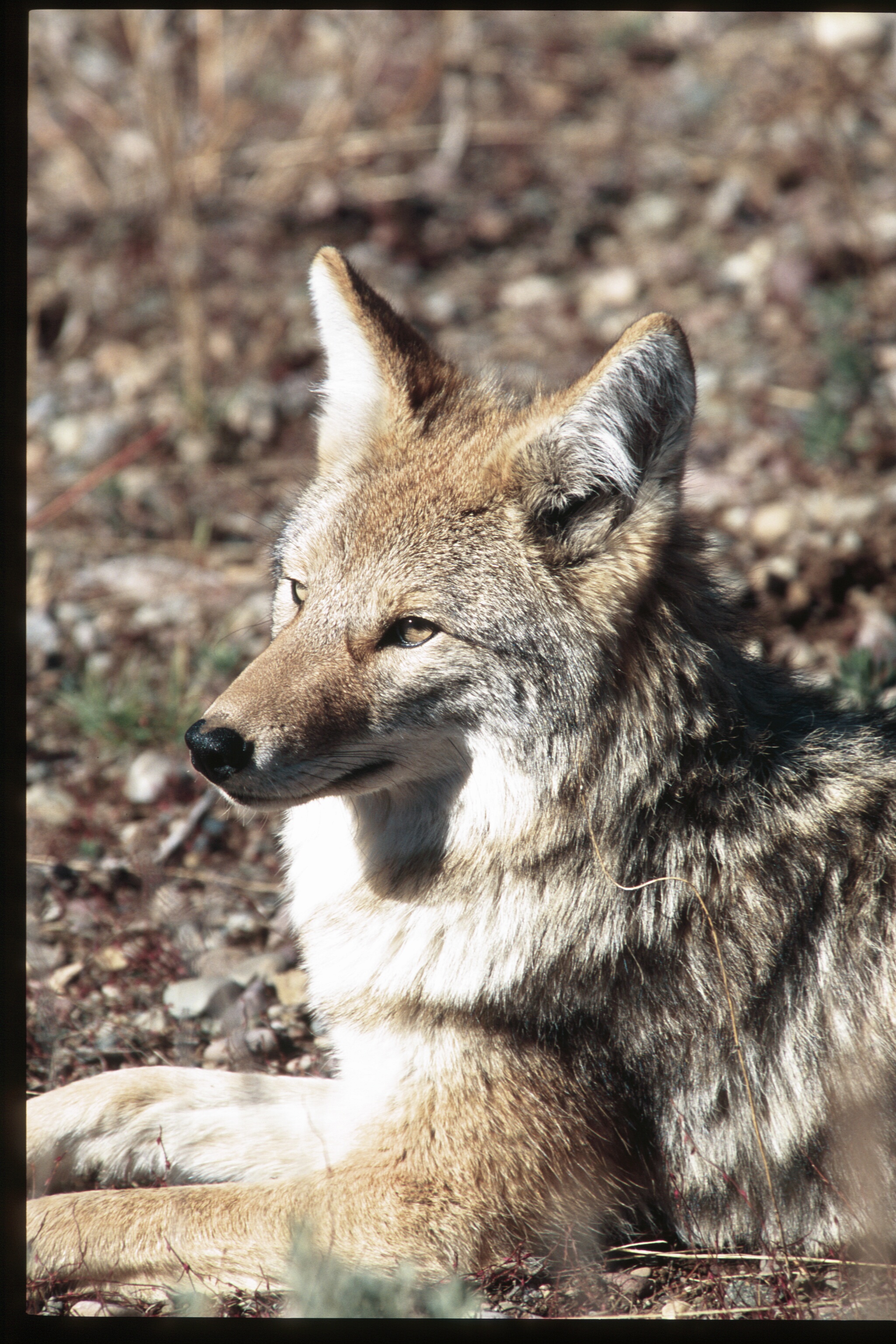
Coyote: 20 points Fox: 15 points

Open to Wisconsin and Michigan hunters. 
Calling and stalking is allowed.
Baiting and running with dogs is not allowed.

All predators will be taken to Great Escape for weighing.
Bring all predators shot during the contest to Great Escape on Sunday.

Any questions call: Rick Brown 715-­617-­0196
or Ralph Spurgeon 715-891-2906

Photo Copyright Jim Robertson

Photo Copyright Jim Robertson

Salmon Idaho Derby “Winners” Announced

The photo is one sent by someone that was at the Derby. It is not from the Salmon Recorder-Herald weekly newspaper, which is not on line, and which has ranted against wolves since 1995. A friend summarized what the article said in today’s paper.
 from left to right (according to the Recorder-Herald)
Jeremiah Jones, Terry Cummings, Cody Morgan, Casey Thompson, Chip Johnson, Ray Whittier
Caption in paper reads:
“WINNERS IN THE coyote and wolf derby stand together with their winnings and trophies.  Left to right are Jeremiah Jones, Terry Cummings, Cody Morgan, Casey Thompson, Chip Johnson and Ray Whittier.  The pots were divided between the winners and trophies awarded.”
according to the article – $1,000 and trophies for most coyotes (5) went to Ray and Chip.
Largest female pot of cash went to Cody Morgan – 26.5 lbs
Largest male pot of cash went to Terry Cummings – 31 lbs
Chip Johnson had the most females
Mark Anderson won a camo suit (door prize??)
film crew from Montana Public TV shot video and Eric Stuart of London, England shot still photos for “Shooting Times”
billi jo beck quoted in article saying that the $1,000 wolf prize would carry over until the second annual derby.
Also see:

Advertising for videos of “coyote dogs”
 And:
Upcoming JMK Coyote Hunt this weekend out of Crane Oregon. $100 fee for 2-man teams.

Action Alert: Urge Long Island to Halt Deer Massacre

Urge Long Island to Halt Deer Massacre!

cute deer

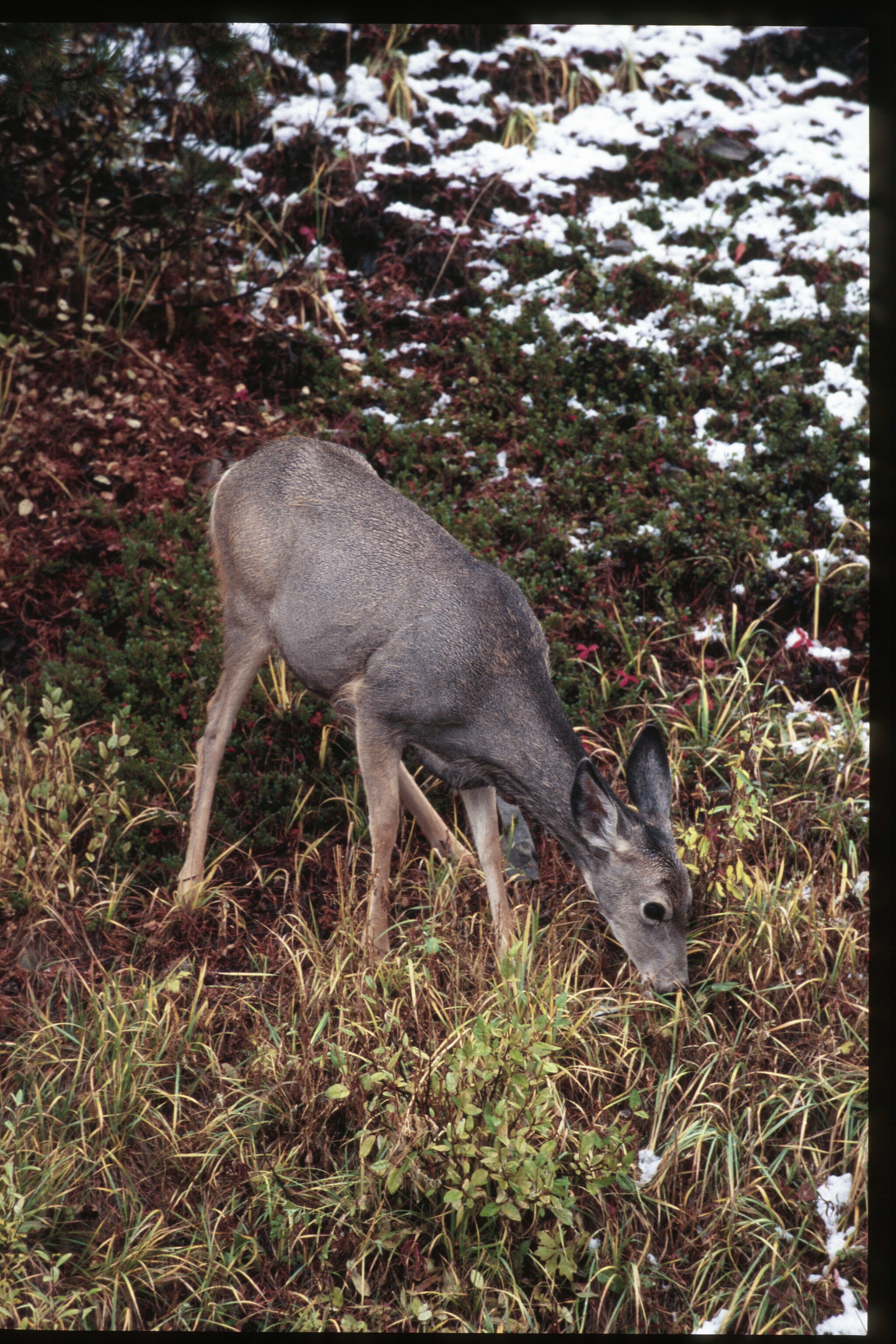
According to news sources, the Long Island Farm Bureau intends to contract with the U.S. Department of Agriculture’s Wildlife Services to kill deer in local municipalities by using sharpshooters or by using netting to catch them so that they can be slaughtered, apparently in hopes of controlling the deer population. Animals who are shot often do not die outright. Wounded deer commonly “disappear,” only to succumb unseen to their injuries or to die from extreme stress or in attacks by other animals. And netting is a terrifying ordeal for these easily frightened prey animals, who thrash frantically when ensnared, often harming themselves in the process, and then endure rough handling before finally being killed.
Deer are beneficial to ecosystems because they distribute key nutrients. Even if population control is insisted upon, there is no need for lethal measures when effective, humane methods exist. Please politely urge the Long Island Farm Bureau to halt this cruel initiative—and then forward this alert widely!

Take Action Here: https://secure.peta.org/site/Advocacy?cmd=display&page=UserAction&id=5221

NYT Approves of Killing 3,000 Deer on Long Island

THE NEW YORK TIMES EDITORS APPROVE OF KILLING 3,000 DEER ON LONG ISLAND

by Anne Muller

When The New York Times editorial staff gives its imprimatur to an idea, policy, politician, or event, it carries a lot of weight. I’m an avid online reader of the NYT, sometimes waking at 3:45 a.m. to read the NYT in my inbox. As an anti-hunting advocate, the subject of wildlife management has been a specialty of mine for many years, so I was disappointed to read that the killing of deer was given short shrift by the Times’ editors.

There’s something wrong when the killing of 3,000 living, breathing beings is given a thumbs-up by an esteemed newspaper. I prefer to believe that the support shown for this “cull” is not a lack of ethics, but rather a lack of information about how deer populations increase. It’s important to know the truth in order to apprehend the real culprit.

To allow hunters to remove a considerable percentage of the deer population while ensuring a continuing “crop” for the next hunting season, land manipulation and hunting regulations are designed to increase their birthrate and food supply. The current goal of wildlife management agencies is to sustain hunting from season to season. (There is an exception to this form of management but it would be too lengthy to discuss here.)

Wildlife Services, which operates almost as a separate fiefdom within the USDA, benefits greatly from killing “excess” wildlife that occurs due to sloppy miscalculations by state game departments, and their indifference to wild animal suffering. It’s a win-win situation for both a state wildlife management agency and the federal Wildlife Services, but it is a huge loss for the general public, the deer, and those who love them.

Both state game agencies and Wildlife Services operate as if they were private enterprises functioning within a larger government entity, enjoying all the benefits of public money and the credibility that municipal governments attribute to them. Yet, the very survival of Wildlife Services depends on outside contracts from private or government entities; and the survival of state game departments depends on hunting license sales and excise taxes on handguns, other firearms, and ammunition used legally against wild animals and illegally against people.

While hunting has been given a pass by President Obama and other gun control proponents, there are certain fiscal inequities that need to be exposed, and opposed as vigorously as other wrong laws plaguing our society.

I wonder if those who believe that gun control is needed but hunting is okay understand that every firearm purchased and every bit of ammunition used in the killing and injury of students, theater goers, elected officials, and thousands of individuals shot in urban areas, increases the revenue of the Conservation Fund whose purpose is to fund game agencies so that they can continue to benefit from the excise taxes on weapons and ammunition. Put another way, the goal of wildlife management agencies is to increase the use of firearms and ammunition in order to collect the excise tax.

Isn’t it time to revisit the Pittman-Robertson Act, which created an insulated and circular business that cares little about how firearms are used just so long as they are used?

Wouldn’t it only be fair that funds derived from the sale of guns and ammunition be allocated to compensate victims, or their care-takers, to mitigate the impact of losses from death, injury, or property damage resulting from the use of such weapons and ammunition?

Does it really seem right that all conservation funds are used to promote hunting and more use of firearms and ammunition?

Wildlife management needs to shift from a weapons-based and hunting-based foundation to a non-consumptive, wildlife watching one. That alone will reduce the artificially increased number of deer, thus obviating the pretense of a “necessary cull” due to natural causes rather than the choreography of wildlife management agencies.

How much longer must we and wildlife suffer with our current form of wildlife management? How much longer should families of victims of gun violence be left without compensation to cover the financial burden of their loss? How much longer should the public be kept in the dark about the funding scheme of firearms use? How much longer should our wild animals suffer as a result of mismanagement and a lack of ethics regarding their welfare?

Killing the Long Island deer is wrong both morally and strategically. The real culprit is wildlife management’s connection to the firearms industry. Slaughter of these precious beings will not solve anything, but it will allow the nightmare to continue. Hunting should not be a sacred cow for gun control proponents. It’s time to take it on and change the game.

Anne Muller, VP

Committee to Abolish Sport Hunting

New Paltz, NY and Las Cruces, NM

Photo Copyright Jim Robertson

Photo Copyright Jim Robertson

Why are poaching, bush meat trading and elephant killing still happening?

ele-with-tusks-feature

http://www.themalaysianinsider.com/sideviews/article/why-are-poaching-bush-meat-trade-and-elephant-killing-still-happening-james

The year 2013 will go down in history as an annus horribilis. The gruesome death of 14 Borneo pygmy elephants (near Gunung Lara Forest Reserves) will not be easily forgotten nor can the killers be forgiven.

It was a horrible year; bush meat was sold in broad daylight while poachers were flouting the laws.

Bush meat markets

During an operation on December 11, Sabah Wildlife Department (SWD), arrested three sellers and confiscated 145kg of sambar deer meat and 15kg of barking deer meat which were being sold at a “tamu” without valid permits.

Trade of wildlife meat occurred in Nabawan as well as in Keningau where the SWD office is located and it has been going on for quite sometime.

The credit for the tip-off should go to the bloggers (http://tengoktvonline.blogspot.com/2013/12/keunikan-pasar-tamu-di-sabah.html) who uploaded the pictures.

Wildlife meat trading in Nabawan is just the tip of the iceberg. What were SWD enforcement officers doing all this while?

Why was the arrest of small-time offenders given so much media publicity?

It appears that our politicians, bureaucrats and Danum Girang Field Centre were competing for public attention.

Sabah’s Tourism, Culture and Environment Minister Masidi Manjun was talking tough when he warned: “The war on illegal wildlife trade and poaching has just begun, so hunters and poachers in Sabah be warned that there will be no compromise as we will be prosecuting and we will charge them to the highest extent of the law. Be ready to go to jail”.

The bureaucrats were talking big too. SWD director Laurentius Ambu said: “SWD will be increasing regular surveillance on all districts in Sabah for illegal poaching and trading by beefing up its wildlife enforcement capabilities and efficiency by setting up a separate unit.”

On December 20, nine days after the Nabawan raid, yet another case of poaching was exposed.

Senior Programme Manager for WWF and three SWD honorary wardens were patrolling near Benta Wawasan Tawau (palm oil plantation wholly owned by Innoprise Corporation, Yayasan Sabah) when they stopped a four-wheel-drive vehicle with a cooler box containing two Palanok (greater mouse deer) carcasses and one Lutung merah (maroon or red leaf monkey/langur) carcass and six Bekakuk (homemade guns).

The patrol team was told by two men wearing military fatigues that they went hunting to get some meat (pusas) for Christmas and that they were waiting for three other people who were still in the jungle.

The hunters spoke Murut among themselves; they bragged to the patrol team that they went hunting with “permission” from a high-ranking law enforcer in Sandakan.

Even after being threatened, the WWF senior manager and wardens insisted that the carcasses should be surrendered to SWD in Tawau.

The patrol team lodged a police report but no action was taken against the armed hunters.

Poaching is rampant

Poaching is still rampant, right under the SWD’s nose. Illegal bush meat trading is the unintended consequences of government intervention in a market with shrinking supply but expanding demand.

The Wildlife Enactment 1998 is a primary example where the coercive power of the law has reduced the supply for bush meat.

It works both ways, the permissions for sporting, commercial and animal kampung licences are granted with temporal and spatial limitations. Another is the trading licence for selling bush meat.

Not sure if SWD is aware of the fact that licensing is more efficient if it is used for monitoring hunting activities rather than to generate revenue.

This is because what licensing actually does is, it rations wildlife or bush meat, it is a means to an end, one of the ways used by the authorities to allocate limited resources.

In this case, licensing on hunting and trading of wild animal meat is like throwing sand in the wheels. The end market result of substantial reduction in supply is the vicious cycle of ever increasing price of exotic meat that encourages more hunting.

Licensing will never generate substantial revenue, mainly because hunters can and will evade it. Furthermore, the fees have always been less than the real value of the wildlife.

What then is a real price and value of wildlife died – or alive, endangered or otherwise?

The licensing fee for sport hunting a sambar deer is RM100 per head (RM150 for commercial); common barking deer is RM50 (RM75 for commercial); greater mouse deer is RM20 per head (RM35 for commercial) and bearded wild boar RM5 (RM50 for commercial).

The market price for these four species is the price per kg a consumer is willing to pay at the illegal market place.

The fees, however, must be paid before going on a hunt, if the chance of catching an animal is less than 50-50, then it is only rational for hunters to evade getting a licence and having to pay the fees.

Again, if the fee for licences is not the real value of wildlife, why is SWD still charging more for a commercial hunting licence but less for sport and animal kampung?

The real value of these species is determined by the remaining wild population. Bearded pigs are red listed as vulnerable by the International Union for Conservation of Nature (IUCN) due to the rapid loss of its forest habitat and high hunting pressure.

Studies by Bennett L.Elizabeth et al (2000) and A.A.Tuen et al (2002) in the Crocker Range Park and Sunda Bearded Pig Specialist Group shows that wild boars are still in abundance, especially in oil palm plantations and areas with Muslim population.

The market prices of wild boars are not that high as compared with its close substitutes – the feral and domesticated pigs.

The higher price during festive seasons is due to the restriction on pork importation rather than dwindling population.

Most oil palm plantation owners, whether big or small, do not value the wild boar; when there is a population explosion, wild boars become a pest.

Sambar deer is also red listed as vulnerable to extinction by IUCN, studies shows some population survived in Danum Valley (Heydon, 1994), in Tabin Wildlife Reserve (Matsubayashi and Sukor, 2005) and in Deramakot Forest Reserves (Matsubayashi et al, 2007).

The market price of sambar deer will continue to increase faster than the price of meat from domesticated deer as more hunters enter poaching hotspots.

The barking deer and both the greater and lesser mousedeer are listed by IUCN as least concern; they are still in superabundance in Danum Valley, Ulu Segama, Malua Biobank, Lower Kinabatangan Wildlife Sanctuary, Luasong and Karamuok.

That is why the barking deer and mousedeer are the cheapest exotic food in town.

Who are the poachers?

The records on arrest show that the majority of poachers are local people from the lower income group. Almost all are married men who lives in urban areas but maintain close family connection with their villagers (place of origin).

Three sellers arrested at Nabawan “tamu” are “orang kampung”. Arresting them for not having licences to sell bush meat will have no deterrent effects.

Firstly, due process at the district level takes forever. The district SWD officer said there were 10 similar cases pending prosecution.

Justice delayed is not justice denied, you said? Wrong! Sellers at the “tamu” are poor people.

Income from selling high-priced bush meat means a lot to them. I am surprised how very obedient they were; only one of them resisted the arrest by SWD.

What with the three sellers who managed to run away? They were either related to the poachers or are the poachers themselves.

Secondly, arrest and fines will make poor sellers even worse off. It seems to me that sellers at the Nabawan “tamu” is just like the Bakas Sinalau hawkers (sellers of roasted wild pigs located along Kimanis-Keningau-Tambunan roads), they rather pay fines than get a licence.

The reason is simple: they are not qualified to apply for a licence as they don’t have a licensed gun. To transfer an ownership of a licensed gun is a very lengthy and daunting process, getting a new one is almost impossible.

So, they buy illegal bekakuk, again taking a high risk of getting caught (14 years jail under section 4 of the Firearms Act 1971).

The cartridges can be bought from licensed gun owners. Don’t you think it is kind of sad that poor people are taking so many risks?

The poor, relative to the rich, have more to gain and less to lose by taking risks that are likely to result in small increases in income, as long as the increased probability of total loss remains relatively small.

Prosecuting poor people may be counterproductive

So, what will happen to the offenders? If and when they are prosecuted, can they not plea bargain? Can the accused agree to plead guilty in exchange for some reduction in sentence sought by the prosecution?

Ignorance of law is no defence. However, prosecuting poor people may be counterproductive when it creates fear rather respect or trust towards the SWD.

Fines are a punishment best imposed against the wealthy; they are in a position to afford it although it also encourages them to commit more offences.

Rich offenders usually can get away with impunity by using their political connections or bribery or simple misuse of their positions.

In addition, convicting rich criminals is costly as they have better lawyers.

Thirdly, the fines are a punishment for not having a licence. It said nothing about how wrong it is to hunt species listed in appendix II CITES (the Convention on International Trade in Endangered Species of Wild Fauna and Flora) such as the lutung merah. If the poachers in Tawau were prosecuted, found guilty and went to jail, will they be feeling guilty or remorseful?

Grand finale – dead elephants

The grand finale of this article is the story told by the “orang kampung” during my family’s New Year celebration.

My cousins seated at one of the tables were talking about the 14 elephants which died last January.
I overheard my cousin who lives in Tabin saying loudly that four dead elephants were believed to have been poisoned.

Another very competitive but already inebriated cousin (he lives in Kinabatangan) interjected, saying: “Try Kinabatangan, we saw another eight dead elephants also poisoned. You can smell the pesticide from the carcass.”

So, I went to join their table. Stop spreading rumours, I said. Being a researcher, I asked those at the table what kind of people would be so sadistic as to let the elephants die a slow death?

My cousins answered with clear and penetrating insights. They are not heartless but angry, frustrated and hopeless not with Nenek (elephants) but with the oil palm big players for greedily taking and fencing off all the space, including the elephants’ forage routes and their natural habitats.

Forget the SWD, if they were doing their job, the elephants would not have ended up destroying farms and palm oil and forest plantations.

Who is going to compensate the owners for that? It all makes sense, what my cousins were talking is the distribution of costs and benefits of conserving the elephants.

The benefits of having more elephants alive appeal mostly to the general public, NGOs, State (SWD) and tourism players in Kinabatangan. But none of them actually have to pay the private costs in term of damaged crops.

It is not that these people don’t love animals. Elephants cannot be conserved successfully unless gainers are willing to compensate the losers. – January 1, 2014.

Note: This article is dedicated to those risking their lives and working beyond the call of duty to protect endangered wildlife.

* James Alin is with the School of Business and Economics, Universiti Malaysia Sabah.

* This is the personal opinion of the writer or publication and does not necessarily represent the views of The Malaysian Insider.